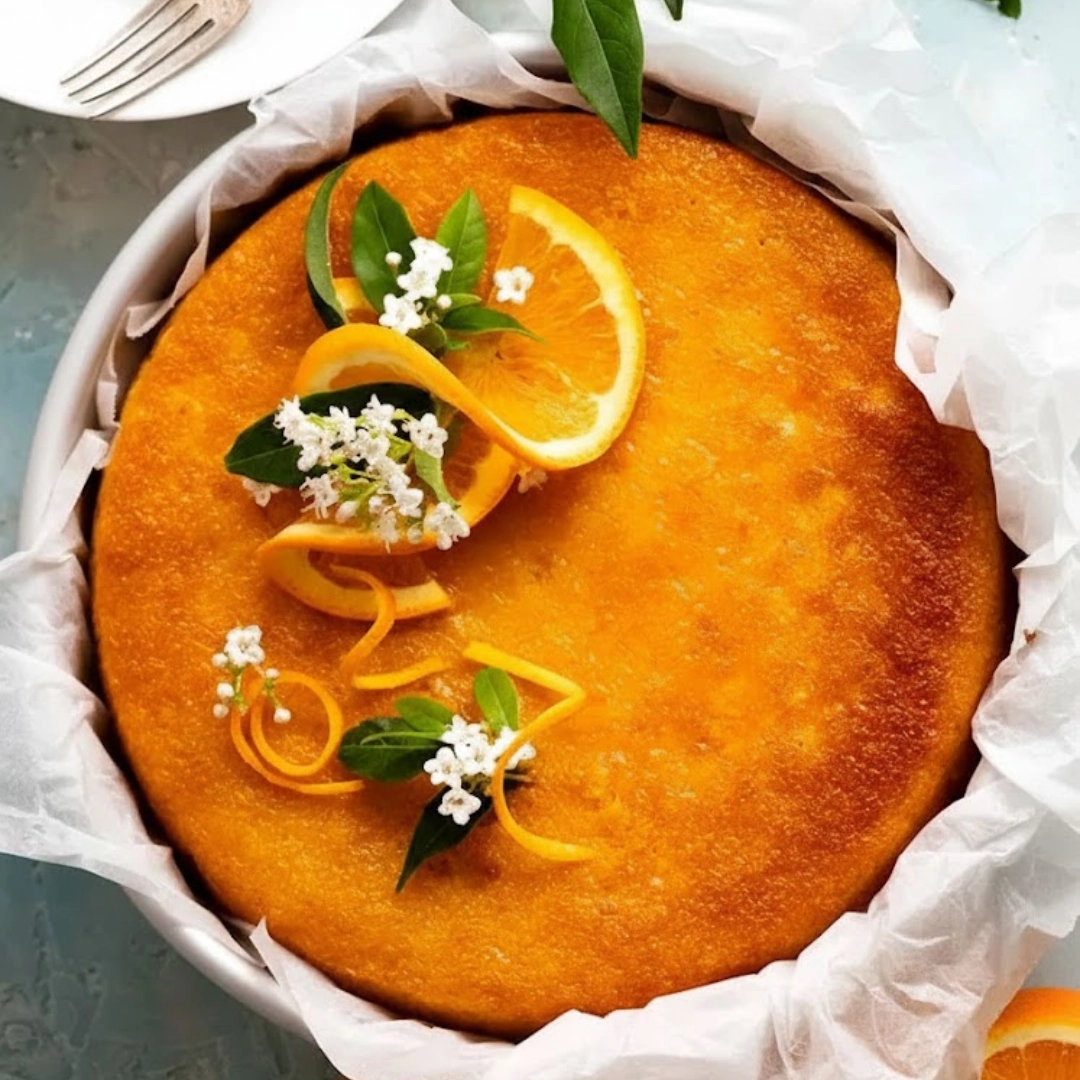
There is a profound simplicity in a cake that manages to be simultaneously moist, deeply flavorful, and incredibly straightforward to prepare. This Whole Orange Cake is exactly that—a celebration of citrus where the entire fruit is utilized, creating an intense, almost marmalade-like depth of flavor and a wonderfully dense, rich crumb. It’s a versatile dessert, perfect for an elegant afternoon tea when dusted with powdered sugar, or sophisticated enough to serve as the centerpiece of a dinner party, especially when paired with a light, barely sweetened cream. Unlike recipes that rely on zest or juice alone, this method ensures no part of the orange’s essence is lost, resulting in a unique, sun-drenched experience that truly captures the heart of winter baking.
Table of Contents
The Essential Ingredients for Success
The magic of this recipe lies in its brevity. High-quality, fresh ingredients are paramount, as the orange flavor is the star, and there is no flour to mask lesser flavors.
For the Cake
- Oranges: Two medium, thick-skinned oranges (about seven hundred grams total). Navel or Valencia varieties work beautifully.
- Eggs: Six large eggs, separated into yolks and whites.
- Sugar: Two hundred and fifty grams (one and one-quarter cups) of granulated white sugar, plus one quarter cup (fifty grams) reserved for whipping egg whites.
- Almond Meal: Two hundred and fifty grams (two and one-half cups) of finely ground almond meal or almond flour.
- Baking Powder: Two teaspoons.
For the Simple Orange Glaze (Optional)
- Powdered Sugar: One hundred grams (one cup).
- Orange Juice: Two tablespoons, freshly squeezed.

The Method: Simple Steps for a Stunning Cake
This recipe utilizes a unique preparation method involving the oranges, which is key to its depth of flavor. Read through the process entirely before beginning.
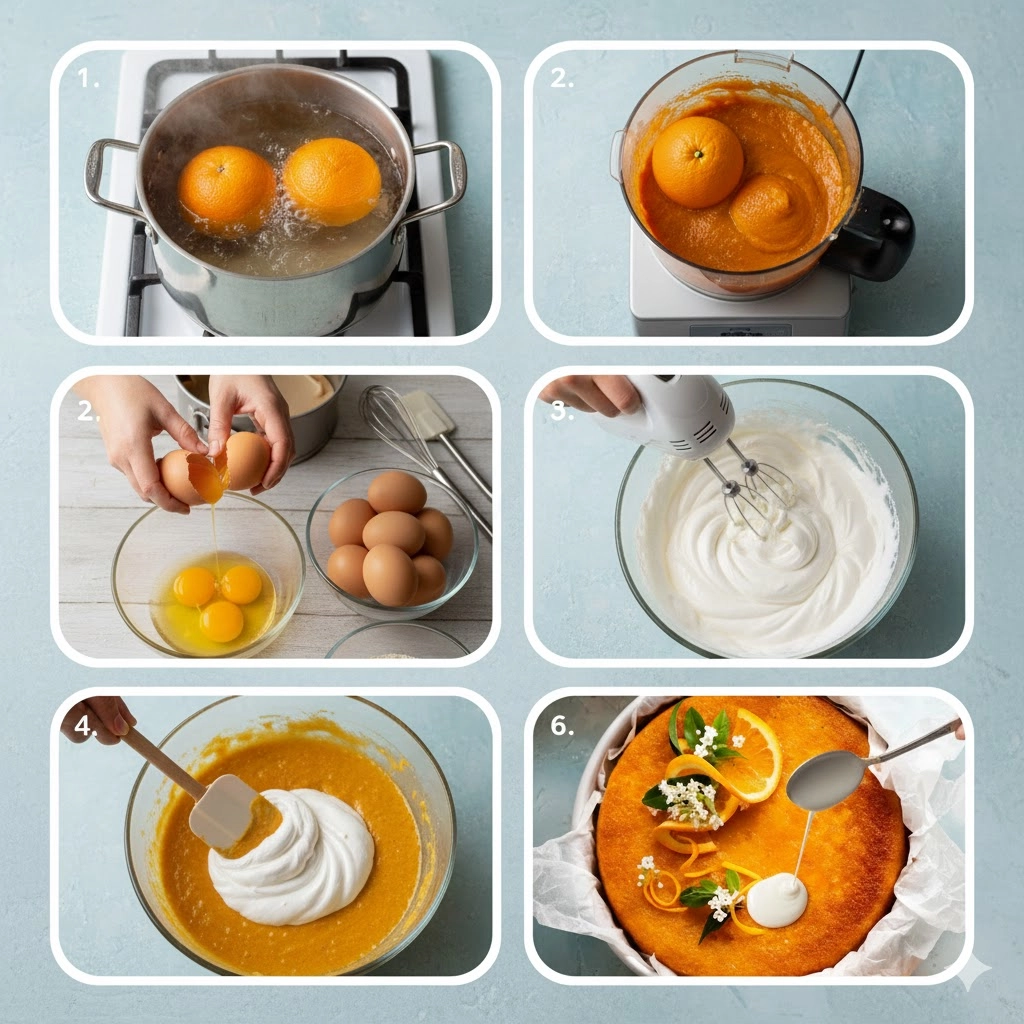
- Prepare the Oranges: Place the two whole oranges into a pot, cover them completely with cold water, and bring to a boil. Simmer them gently for approximately two hours, topping up the water as needed, until they are very soft.
- Preheat and Prepare: Set your oven to three hundred twenty-five Fahrenheit. Grease and line a nine-inch springform pan with parchment paper on the bottom and sides.
- Process the Oranges: Once the boiled oranges are cool enough to handle, cut them open, remove any seeds, and place the flesh and softened peel into a food processor. Process until a completely smooth, thick puree is formed.
- Combine the Batter: In a large bowl, whisk together the orange puree, egg yolks, the main portion of the sugar, almond meal, and baking powder until just combined.
- Whip the Egg Whites: In a separate, impeccably clean bowl, whip the six egg whites until soft peaks begin to form. Gradually add the reserved fifty grams of sugar and continue whipping until stiff, glossy peaks are achieved.
- Fold and Bake: Gently fold the whipped egg whites into the orange batter in two additions. Pour the mixture into the prepared springform pan and bake for sixty to seventy-five minutes.
- Cool and Glaze: Let the cake cool completely in the pan before inverting it onto a serving plate. Whisk the glaze ingredients together and drizzle over the cooled cake before slicing.
Achieving the Ideal Texture: Deep Dive into Each Stage
The success of a flourless cake rests entirely on meticulous attention to texture. We’re not simply mixing ingredients; we are coaxing structure and moisture from the almonds and eggs.
The Two-Hour Simmer
The single most vital stage is the pre-cooking of the oranges. A quick boil will not suffice. Simmering the whole fruit for a minimum of one hundred twenty minutes softens the sometimes bitter pith and the robust peel, rendering them fully tender and edible. When they are finished, the oranges should yield easily to gentle pressure. The aroma released during this process is also an essential indicator—the kitchen will fill with a sweet, concentrated citrus fragrance, signaling the oils are ready to be fully incorporated into the batter. This protracted simmer concentrates the oils and sugars, reducing the bitter edge of the pith and maximizing the citrus intensity in the final cake.
Puréeing the Core Flavor
When you process the cooled, boiled oranges, the goal is a perfectly smooth consistency. There should be zero distinguishable chunks of peel or flesh. The resulting purée is essentially a homemade, warm marmalade. This step is critical because any remaining fibers or large pieces will make the cake crumb uneven and potentially dense. Use a high-powered food processor and continue running it for a full sixty seconds after you think it’s smooth enough, scraping down the sides to ensure uniformity.
The Role of Separated Eggs
This cake contains no gluten, so the air and structure must come exclusively from the eggs. Separating the eggs is non-negotiable.
- The Yolks are mixed directly with the puree and sugar. Their job is to emulsify the heavy, oily orange mixture and provide richness and color.
- The Whites are whipped to stiff peaks to capture air. This air is the cake’s only leavening agent besides the small amount of baking powder. The whites must be whipped until they form firm, shiny peaks that hold their shape.
The Folding Technique
Folding is the difference between an airy, moist cake and a flat, dense one. Once the stiff egg whites are ready, take one-third of them and vigorously mix them into the main batter. This is called sacrificial folding; it lightens the thick almond-orange base, making the subsequent folds easier without deflating the remaining whites. Then, gently incorporate the rest of the whites in two stages. Use a wide rubber spatula, cutting down through the center of the batter and sweeping up the sides, rotating the bowl a quarter turn with each movement. Stop immediately when no white streaks remain. Over-mixing will deflate the batter and produce a tough, heavy cake.
Checking for Doneness
Because this Whole Orange Cake is naturally gluten-free and very moist, the traditional visual cues for doneness can be misleading. The crust will be dark golden brown, almost burnished, and the top will appear set. However, the most reliable check is the internal temperature. When fully baked, the cake’s center should register between two hundred and five and two hundred and ten Fahrenheit using an instant-read thermometer. Alternatively, a clean wooden skewer inserted into the center should emerge with a few moist, sticky crumbs clinging to it—not wet batter.
Master Baker Secrets and Key Techniques
Even the simplest recipe has nuances that elevate it from good to truly exceptional.
- Water Quality Matters for Boiling: If your tap water has a strong mineral or chlorine taste, use filtered water for boiling the oranges. The fruit absorbs a slight amount of the boiling liquid, and impurities can subtly compromise the clean citrus flavor.
- The Glaze Temperature: The optional orange glaze should only be applied once the cake is entirely cool. Applying it while the cake is warm will cause the glaze to melt immediately and soak into the crumb, creating a sticky layer instead of a clean, defined coating.
- Use a Good Quality Almond Meal: Avoid coarsely ground or slivered almonds. The texture of the final cake depends on the fineness of the almond meal (often labeled as “almond flour”). A fine grind ensures the cake bakes up tender and uniform, mimicking the structure of a flour-based cake.
- Salt Balances the Sweetness: While not listed in the main ingredients, a small pinch (about one quarter teaspoon) of fine sea salt added when whipping the egg whites or mixing the batter will enhance the bright citrus notes and prevent the cake from tasting cloyingly sweet.
- Adjusting Acidity: If your oranges are particularly sweet, consider substituting one-third of the orange juice in the glaze with fresh lemon juice. This sharpens the citrus profile and adds a welcome zing of acidity to cut through the richness of the almond base.
- The Pan Liner Trick: The moisture in this cake means it can stick easily. After greasing the pan, lay a strip of parchment paper around the entire circumference of the side wall, letting it rise two inches above the rim. This creates a collar that supports the tall, delicate cake as it bakes and simplifies the release process significantly.
Clever Ingredient Swaps and Dietary Adjustments
This cake’s naturally flourless foundation makes it inherently accessible, but a few substitutions can broaden its appeal even further.
- Sweetener Swap: Granulated sugar can be substituted one-for-one with coconut sugar for a more caramel-like depth of flavor, though the finished cake will be a darker brown color. Alternatively, a granular sugar substitute designed for baking can be used, following the manufacturer’s volume recommendations.
- Nut-Free Option: While the almond meal provides the structure, you can create a nut-free version using an equal weight of finely ground sunflower seeds or pumpkin seeds. The resulting cake will have a more pronounced, earthy flavor and a slightly heavier crumb, but the fundamental citrus profile will remain intact.
- The Glaze Alternative: For a simpler, less sweet finish, skip the powdered sugar glaze entirely. Instead, whisk together two tablespoons of orange juice and one tablespoon of sugar, gently heat until the sugar dissolves, and brush this bright syrup over the warm cake immediately after it comes out of the oven.
Flavor Pairings and Presentation Ideas
This rich, moist dessert is versatile enough to be dressed up or down.
- Classic Cream Pairing: A dollop of Crème Fraîche or Greek yogurt provides the ideal counterpoint. Their mild tanginess cuts the richness of the almond and the intensity of the citrus beautifully. Avoid heavily sweetened whipped cream; a light dairy product lets the orange remain the dominant flavor.
- A Simple Drizzle: For an elegant presentation, melt dark chocolate (around sixty percent cacao) and drizzle it sparingly over the top. The pairing of bitter dark chocolate and bright orange is a time-tested culinary match.
- Garnishes for Contrast: Thinly sliced, crystallized orange peel provides a textural contrast and visual appeal. For a holiday theme, a scattering of toasted slivered pistachios adds a vibrant green color and a subtle crunch.
- Beverage Suggestions: This cake pairs exceptionally well with strong, hot black tea (like Earl Grey or Darjeeling) or a small glass of Moscato d’Asti, whose light effervescence and low alcohol content complement the cake without overwhelming its delicate structure.
Troubleshooting and Common Questions
Expert bakers rely on knowing how to fix common issues. Here are a few things that often arise when tackling this Whole Orange Cake recipe.
Q: Why did my cake turn out dense and flat?
A: The primary cause of a flat or dense cake is the deflation of the whipped egg whites. This happens either from under-whipping the whites (not reaching stiff peaks) or, more commonly, from over-mixing the batter when folding in the meringue. Be exceptionally gentle during the folding stage, stopping the moment the whites are just incorporated.
Q: Can I skip boiling the oranges if I use only the zest and juice?
A: No, the long boiling process is what makes this recipe unique and successful. It renders the entire peel, including the bitter pith, tender and mellow, allowing you to use the whole fruit. Simply using zest and juice will not provide the deep, complex, moist texture that the puréed, softened pith and peel contribute.
Q: How long can I store this cake, and how should I keep it fresh?
A: Due to its high moisture content, this cake keeps exceptionally well. Store it tightly wrapped in plastic at room temperature for up to three days, or in the refrigerator for up to five days. It can also be frozen, wrapped well, for up to three months. Thaw it overnight in the refrigerator before serving.
Q: My cake cracked on top—did I do something wrong?
A: Cracking is quite common with nut-based, flourless cakes, which often develop a crust quickly. It usually indicates that the oven temperature was slightly too high, causing the exterior to set before the interior finished expanding. The cake is likely fine, but to prevent it next time, ensure your oven thermometer is accurate and consider lowering the baking temperature by twenty-five Fahrenheit.
Estimated Nutritional Breakdown
| Nutrient | Amount per Serving |
| Calories | 345 kcal |
| Protein | 10 g |
| Carbs | 45 g |
| Fat | 16 g |
| Fiber | 4 g |
| Sugar | 35 g |
| Sodium | 55 mg |
Disclaimer
Nutrition information is an estimate and may vary based on preparation and ingredients used.
PrintWhole Orange Cake: A Citrus Masterpiece

This Whole Orange Cake recipe utilizes the entire fruit, including the peel and pith, to create an intensely moist, flavorful, and naturally gluten-free almond cake.
- Prep Time: 25 mins
- Cook Time: 3 hours 15 mins
- Total Time: 3 hours 40 mins
- Yield: 10 servings 1x
- Category: Dessert
- Method: Baking
- Cuisine: Mediterranean
Ingredients
2 medium oranges (approx. 700g total)
6 large eggs, separated
250g granulated sugar
50g granulated sugar (reserved for egg whites)
250g finely ground almond meal
2 teaspoons baking powder
100g powdered sugar (for glaze)
2 tablespoons fresh orange juice (for glaze)
Instructions
1. Place the two whole oranges into a pot, cover completely with cold water, and bring to a boil. Simmer gently for 120 minutes (two hours), topping up the water as needed, until they are very soft.
2. Set your oven to 325 F. Grease and line a 9-inch springform pan with parchment paper on the bottom and sides.
3. Once the boiled oranges are cool, cut them open, remove any seeds, and process the flesh and softened peel in a food processor until a completely smooth purée is formed.
4. In a large bowl, whisk together the orange puree, egg yolks, the main portion of the sugar, almond meal, and baking powder until just combined.
5. In a separate, clean bowl, whip the six egg whites until soft peaks form. Gradually add the reserved 50g of sugar and continue whipping until stiff, glossy peaks are achieved.
6. Gently fold the whipped egg whites into the orange batter in two additions. Pour the mixture into the prepared springform pan.
7. Bake for 60 to 75 minutes.
8. Let the cake cool completely in the pan before inverting it onto a serving plate. Whisk the glaze ingredients together and drizzle over the cooled cake.
Notes
For the best texture, ensure you use finely ground almond meal.
Always apply the optional glaze only once the cake is entirely cool.
This cake keeps very well at room temperature for up to three days when tightly wrapped.
Nutrition
- Serving Size: 1 slice
- Calories: 345
- Sugar: 35g
- Sodium: 55mg
- Fat: 16g
- Carbohydrates: 45g
- Fiber: 4g
- Protein: 10g