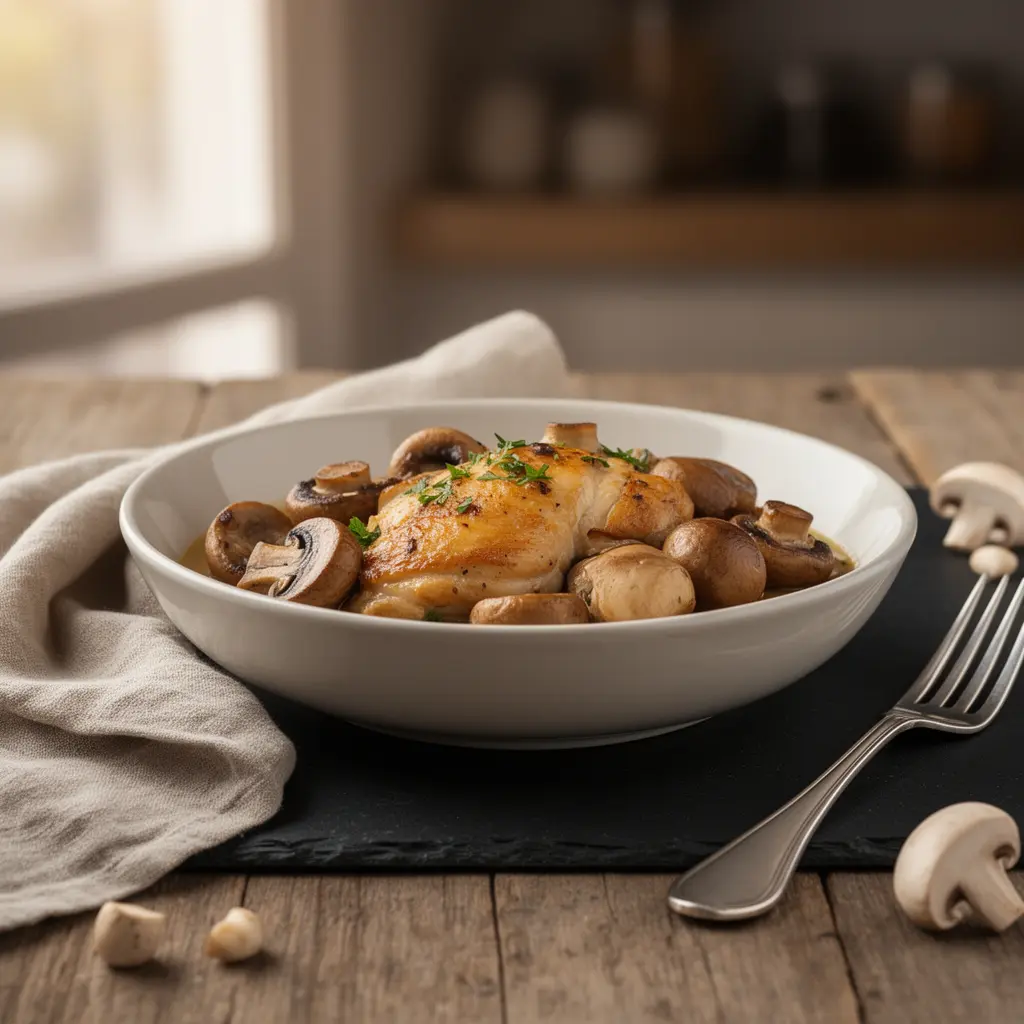
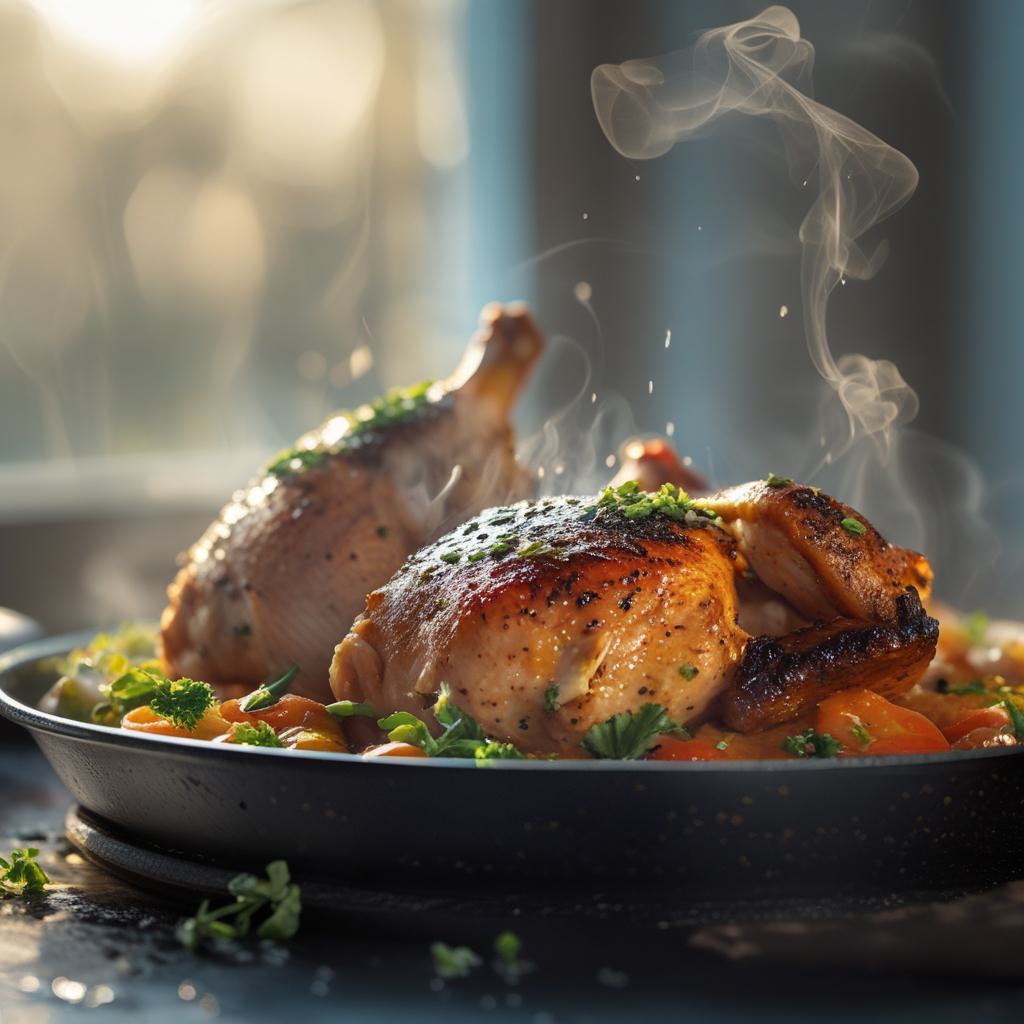
The moment golden chicken skin shatters under your knife, releasing steam that carries whispers of rosemary and smoked paprika, you understand why this dish transcends mere sustenance. Chicken – that humble canvas – becomes liquid poetry when treated with culinary reverence. The alchemy begins as heat coaxes amino acids and reducing sugars into Maillard reactions, that glorious bronze crust forming like edible amber. Notice how thyme stems crackle in browned butter, their earthy fragrance merging with garlic’s pungent punch to create an olfactory sonnet. This is architecture on a plate: crisp skin strata yielding to succulent strands beneath, each layer textured for contrast – a gastronomic echo of Frank Lloyd Wright’s organic designs. When plated beside blush-edged radicchio and saffron-tinted potatoes, the composition sings with colors borrowed from autumnal forests at twilight.
Table of Contents
Ingredient Deep Dive
| Ingredient | Quantity | Purpose |
|---|---|---|
| Chicken Supreme (bone-in skin-on) | 4 pieces | Collagen-rich cut for moisture retention |
| Dijon mustard (smooth) | 2 tbsp | Emulsifier for marinade adhesion |
| Smoked paprika | 1.5 tsp | Liquid smoke alternative for depth |
| Nutritional yeast | 1 tsp | Umami booster replacing MSG |
| Dry vermouth | 120ml | Alcohol-soluble flavor extraction |
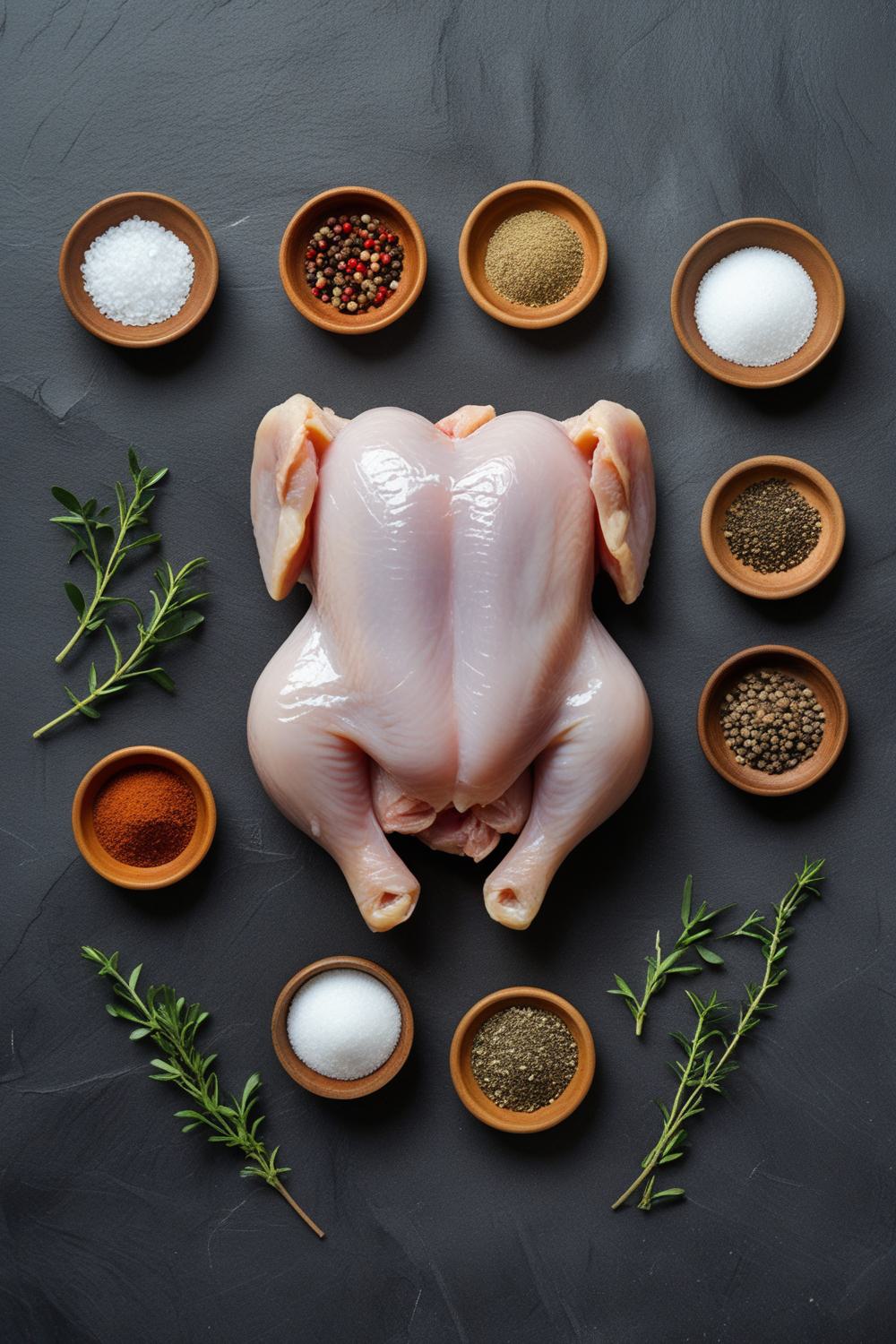
Protein denaturation begins with acidic marinades – the Dijon’s vinegar tenderizes muscle fibers while its lecithin binds oil-based spices to hydrophobic skin. We select bone-in supremes over boneless breasts not merely for presentation, but because the ossein releases gelatin during cooking, creating self-basting meat protected by the dermal collagen shield. Smoked paprika serves dual purposes: its capsanthin pigment enhances visual appeal while guaiacol compounds simulate wood-fired aromas without an actual smoker notice the absence of black pepper in the rub. That’s intentional. Piperine would overwhelm the delicate verjus we’ll introduce later.
Substitutions & Swaps
For gluten-sensitive diners, replace bread crumbs in the optional panade with crushed rice crackers – their lower moisture absorption rate actually yields crispier texture. Vegan adaptations prioritize lion’s mane mushrooms: when scored crosswise and roasted, their fibrous structure mimics chicken’s muscle grain. Use Agaricus bisporus extract for savory depth instead of nutritional yeast. Dairy-free? Substitute browned coconut oil for butter; its high smoke point (177°C) prevents scorching during the searing stage. If vermouth proves elusive, Fino sherry or even low-sodium chicken stock boosted with citric acid can provide necessary acidity. Crucially, avoid olive oil splashes during high-heat cooking by using refined avocado oil – its neutral taste won’t compete with aromatic compounds.
Equipment Guide
Your pan selection dictates textural destiny. Cast iron delivers unparalleled heat retention for crispy skin, but its weight demands wrist strength during deglazing. Carbon steel offers similar conductivity with easier maneuverability. Nonstick pans – while convenient – prevent proper fond development; that caramelized crust at the pan’s bottom becomes tomorrow’s sauce gold. Use a infrared thermometer probe to verify oven temperature hysteresis; most home ovens fluctuate ±15°C. Wire roasting racks elevate chicken above rendered fats, preventing sogginess. A microplane zester preserves lemon oil glands intact – vital for finishing brightness. Crucially, resting must occur on a warmed (not hot) ceramic plate – metal conducts heat away too rapidly.
Step-by-Step Walkthrough
- Pat chicken supremes dry with unbleached parchment paper – residual moisture inhibits browning.
- Combine marinade ingredients in a chilled glass bowl to preserve volatile aromatics.
- Gently separate skin from meat using a silicone spatula, creating a cavity for dry brine.
- Refrigerate uncovered for 8 hours to dehydrate skin surface for optimal crackling.
- Sear presentation-side down in cold oil, heating gradually to trigger staggered Maillard reactions.
- After flipping, baste continuously with clarified butter using a rosemary sprig as brush.
- Transfer to oven preheated to 85°C for slow-render phase (45 minutes minimum).
- Rest tented with perforated foil for 12 minutes – fibers relax without steaming skin soft.
Real professionals know searing’s key lies in temperature gradients. Place room-temp chicken in cold oil, then gradually bring pan to 160°C. This staggered heating allows subcutaneous fat to render before the crust forms, preventing underdone blubber beneath beautiful skin. When flipping, use fish spatulas – their thin edge won’t tear delicate crusts. During oven phase, insert probes monitoring both internal meat temp (62°C target) and ambient oven air. Resting isn’t negotiable: Myofibrillar proteins need time to reabsorb expelled juices.
Expert Tips & Troubleshooting
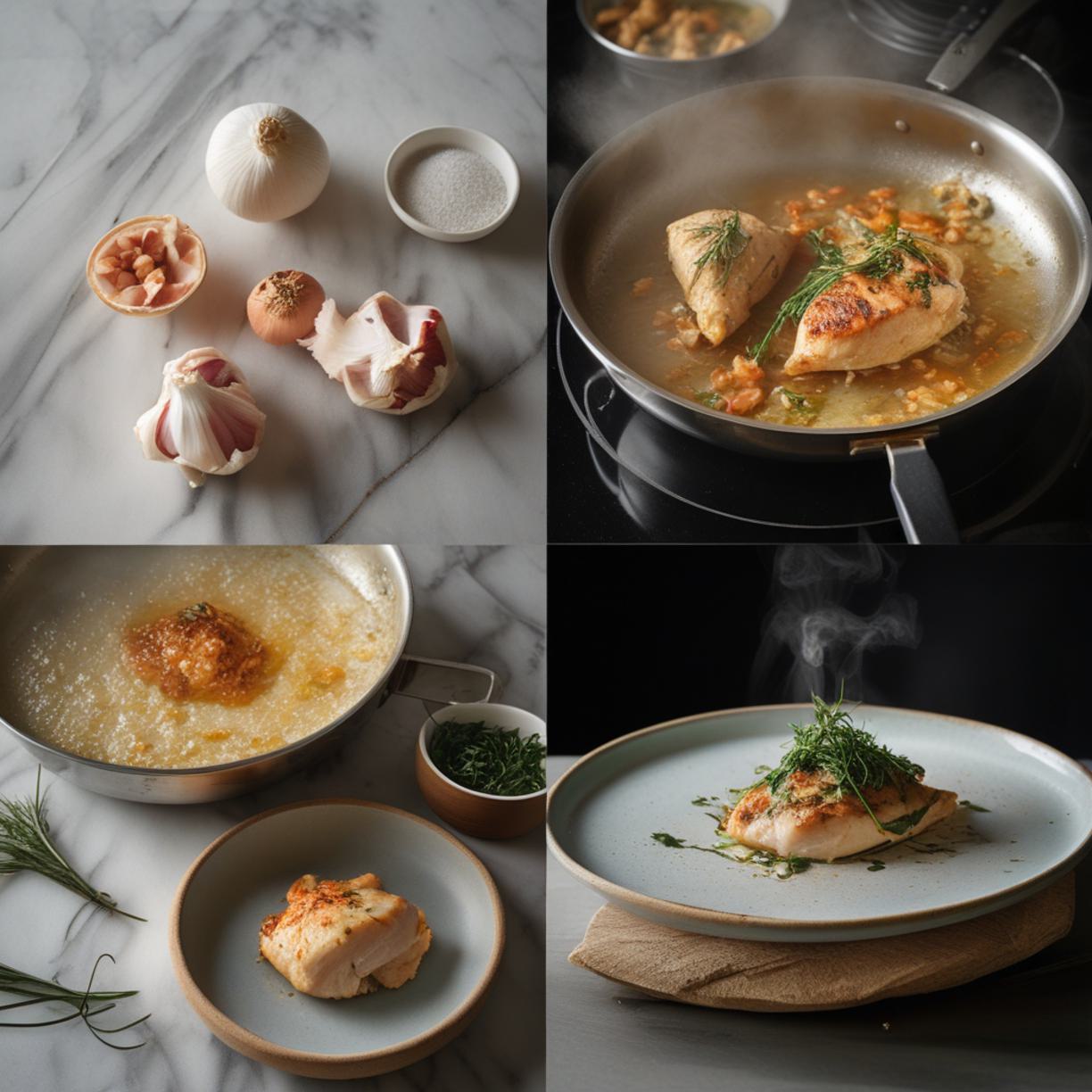
When skin sticks, don’t panic. It indicates proper fond formation. Simply deglaze with vermouth after removing chicken, using wooden spatula to dissolve caramelized bits. Fluid will emulsify with butter later. If oven-roasting causes splatter, place a sheet pan with 250ml water on the rack below – steam moderates temperature spikes. Notice uneven browning? Rotate pan front-to-back (not side-to-side) midway through searing – most burners have hot spots. For sauce that splits, whisk in teaspoons of cold butter off-heat – milk proteins will re-emulsify fats. Crucially – if internal temp overshoots 68°C, immediately plunge chicken into ice bath for 90 seconds to halt carryover cooking.
Flavor Variations
For spicy incarnations, infuse oil with Kashmiri chilies and fenugreek seeds pre-sear – their capsaicin dissolves better in lipids than water-based marinades. Children’s palates favor sweetness: substitute smoked paprika with ground freeze-dried strawberries, adding tang without heat. Japanese umami bombs involve substituting vermouth with sake and mirin, garnishing with shiso strips. Leftover applications? Shredded meat folded into béchamel becomes next-day chicken à la king served in vol-au-vents. For summer, finish with pickled gooseberries cut en brunoise rather than heavy sauces.
Storage & Reheating
Refrigerate components separately within 90 minutes: chicken on wire rack over paper towels, sauce in sealed jar. Avoid freezing cooked skin – ice crystals destroy its cellular structure. To reheat, use convection oven at 120°C with bowl of steaming water beside chicken. Microwave reheating denatures proteins excessively; if unavoidable, drape soaked cheesecloth over meat. Crisp skin separately in cast iron for 3 minutes before reassembly. Consume within 72 hours for optimal quality.
FAQ Section
Q: Why remove chicken from fridge early?
A: Cold meat contracts – room temp ensures even cooking beyond 20mm thickness.
Q: Can I brine if kosher?
A: Kosher chickens already undergo salt purification; reduce saline ingredients by 30%.
Q: Pink spots near bone post-cooking?
A: Oven hemoglobin – harmless collagen conversion, not underdone meat. Target 62°C internal temp.
Q: Rustic vs fine salt?
A: Diamond Crystal Kosher dissolves fastest; avoid iodized for brining – metallic aftertaste.
The Recipe Card
Golden Phoenix Chicken Supreme
Serves 4 | Active: 25 mins | Total: 9 hrs
Crisp-skin chicken with verjus pan sauce elevated via gourmet techniques. Features Maillard optimization, collagen preservation, and aroma layering. Performance-grade dish suitable for special occasions requiring showstopper appeal.
Nutrition Information
| Nutrient | Per Serving |
|---|---|
| Calories | 412kcal |
| Protein | 35g |
| Carbohydrates | 4g |
| Saturated Fat | 6g |
| Iron | 1.8mg |
Disclaimer: Nutritional estimates utilize USDA data but vary by ingredient brands and preparation methods. Not medical advice.