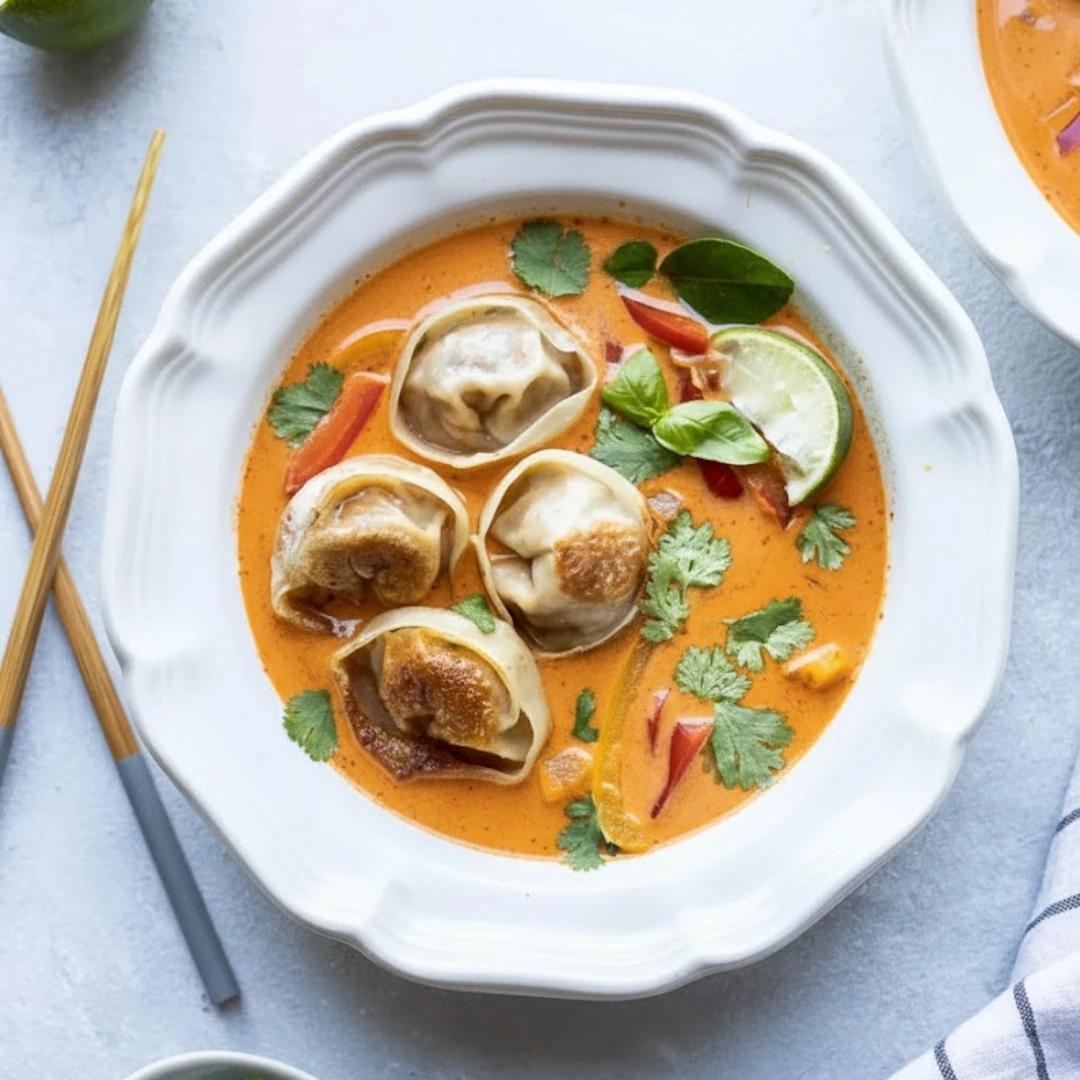
The Marriage of Two Culinary Traditions
The modern weeknight kitchen is a place where culinary borders blur, and this dish is a testament to that beautiful, flavor-forward convergence. At its heart, this recipe delivers the luxurious, creamy depth of Thai red curry, known for its layered notes of chili, lemongrass, and galangal, but it reimagines the experience by introducing the comforting, yielding chew of Asian-style dumplings. The result is a profoundly satisfying, one-bowl meal that feels both exotic and familiar. It is the ideal candidate for cooler evenings when you crave warmth and texture without spending hours at the stove. This Vegan Red Curry Dumpling Soup manages to be simultaneously hearty and bright, making it a standout recipe for plant-based enthusiasts and curry lovers alike.
Table of Contents
Essential Components for a Flavorful Broth and Tender Dumplings
For the Dumplings:
- One 14-ounce package firm or extra-firm tofu, pressed thoroughly
- One cup finely chopped shiitake mushrooms
- Two cloves garlic, minced
- One tablespoon finely minced fresh ginger
- One half cup finely shredded carrots
- Two tablespoons soy sauce or tamari
- One teaspoon toasted sesame oil
- One fourth teaspoon white pepper
- One package square or circular wonton wrappers (about 40 wrappers)
For the Soup Base:
- One tablespoon coconut oil
- Two shallots, thinly sliced
- One fourth cup quality vegan red curry paste
- Four cups low-sodium vegetable broth
- One 13.5-ounce can full-fat coconut milk
- Two tablespoons tamari or soy sauce
- One tablespoon maple syrup or brown sugar
- Juice of one lime
- One cup water
- One cup snow peas, halved
- One fourth cup chopped fresh cilantro, for garnish
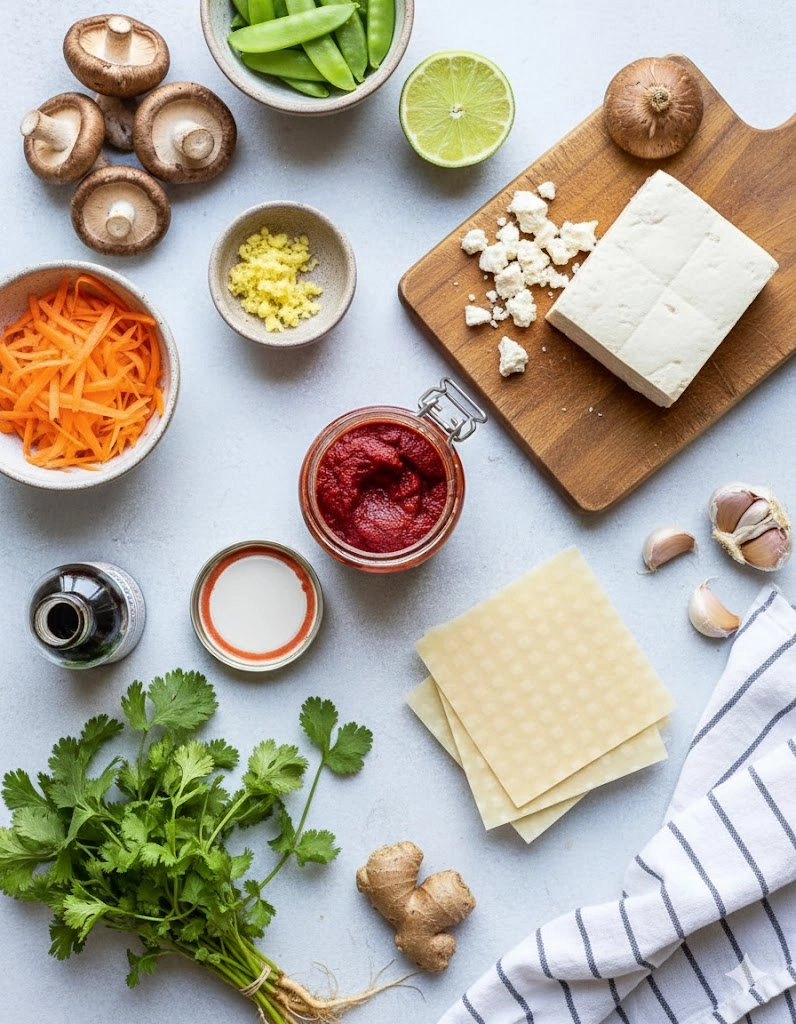
High-Level Preparation Steps: From Pantry to Pot
- Prepare the Dumpling Filling: Combine the pressed tofu, mushrooms, aromatics, and seasonings. Mix well until cohesive.
- Assemble the Dumplings: Fill each wonton wrapper with about one teaspoon of the mixture and seal the edges tightly with water.
- Build the Broth Aromatics: In a large pot, melt the coconut oil and sauté the shallots until they begin to soften.
- Bloom the Curry Paste: Stir in the red curry paste and cook for one to two minutes until fragrant.
- Simmer the Soup: Add the vegetable broth, coconut milk, tamari, water, and sweetener. Bring the mixture to a gentle simmer.
- Cook the Dumplings: Carefully drop the assembled dumplings into the simmering broth in small batches.
- Add Final Vegetables: Stir in the snow peas and cook until they are tender-crisp.
- Finish and Serve: Remove the pot from the heat, stir in the fresh lime juice, and ladle the soup into bowls, garnishing with cilantro.

Mastering the Nuances: Technique for Maximum Flavor Extraction
The difference between a good soup and a truly memorable one lies in the details—how the aromatics are treated, the texture of the filling, and the careful final seasoning. This Vegan Red Curry Dumpling Soup is highly reliant on layering flavor, so approach each stage with intention.
Building the Aromatic Base
Before introducing any liquid, you must establish a deep, fragrant foundation. When you melt the coconut oil, ensure it is just shimmering before you add the sliced shallots. Sauté the shallots slowly over a medium heat, coaxing out their sweetness rather than rushing them to brown. They should become translucent, almost melting, which takes roughly five minutes.
The critical step that follows is blooming the curry paste. When you add the quarter cup of red curry paste, push the shallots aside and let the paste directly hit the hot oil. This process of “blooming” is essential for releasing the full, volatile aromas and fat-soluble compounds in the spices. Stir the paste constantly for ninety seconds to two minutes. You will notice the color deepen slightly, and the fragrance will intensify dramatically, shifting from a flat spice scent to a complex, heady mix of chili, turmeric, and spice. If you skip this step, the curry flavor will remain muted and powdery in the final soup.
Simmering for Depth
Once the curry paste is bloomed, pour in the vegetable broth and the full can of coconut milk. Use full-fat coconut milk for the best texture and mouthfeel; the reduced-fat versions will yield a thin, watery broth that lacks the signature richness of a good curry. Stir thoroughly to ensure the paste is fully dissolved and incorporated, leaving no clumps at the bottom of the pot.
Bring the soup to a very gentle simmer—not a rolling boil. A high boil can cause the coconut milk to separate, resulting in an oily, broken consistency. The goal is a steady, gentle bubble. Once simmering, add the tamari and maple syrup. The tamari contributes the necessary salinity and umami depth, while the maple syrup acts as a balancer, tempering the acidity of the curry paste and the richness of the coconut milk. Allow this broth to simmer, uncovered, for ten to fifteen minutes. This period is crucial for the flavors to marry and deepen, transforming from separate ingredients into a cohesive, aromatic liquid. Taste frequently during this period and adjust the salt level with a splash more tamari if necessary.
The Art of Dropping Dumplings
The tofu filling should be firm, not wet. After pressing the tofu, crumble it finely and mix it thoroughly with the other ingredients, ensuring the sesame oil and soy sauce are evenly distributed. The filling should hold its shape when squeezed. When assembling the dumplings, use a small bowl of water to lightly moisten the edges of the wonton wrapper. Fold the wrapper over the filling and press firmly to expel all air and create a tight seal. A loosely sealed dumpling will absorb too much liquid and may burst during cooking.
When cooking, keep the broth at a low simmer. Drop the dumplings carefully into the liquid, ensuring not to overcrowd the pot. If the pot is too full, the temperature will drop instantly, and the dumplings will stick together. Cook them in two or three batches if necessary, maintaining that gentle simmer. The dumplings are done when they float to the surface, which typically takes five to seven minutes, depending on their thickness. Once floating, let them simmer for one additional minute to ensure the filling is heated through. This gentle cooking process guarantees a silky, intact wrapper and a tender filling, adding a wonderful structural element to the soup.
Chef’s Secrets for Elevated Vegan Red Curry Dumpling Soup
- Maximize Tofu Pressing: Do not simply drain the tofu. Press it for at least thirty minutes using a dedicated press or by wrapping it in several layers of paper towels and placing a heavy object (like cast iron skillets) on top. Removing excess water is the single most important factor for achieving a chewy, non-mushy dumpling filling that absorbs flavor better.
- Toasting the Dumpling Wrap: For a slight textural variation and nuttier flavor, lightly brush the assembled dumplings with a tiny amount of neutral oil and bake them at three hundred fifty Fahrenheit for five minutes before dropping them into the soup. This creates a slightly firmer skin that is less prone to becoming overly soft.
- Use Quality Paste: The flavor of the entire dish hinges on the red curry paste. Opt for an authentic, high-quality Thai brand that is confirmed vegan (some contain shrimp paste). Freshness matters; if your paste has been open in the fridge for six months, the flavor will be muted. Always smell it before you use it.
- Citrus Last: Always reserve the lime juice for the very end, once the soup is off the heat. Boiling lime juice destroys its delicate acidity and freshness, leaving a dull, cooked flavor. The late addition provides a bright, essential lift that cuts through the coconut richness.
- Infuse with Kaffir Lime: If you can source them, adding two or three whole kaffir lime leaves to the simmering broth will infuse it with an incomparable citrus and floral aroma. Bruise the leaves lightly with your palm before dropping them in, and remember to remove them before serving.
- The Fresh Herb Finish: The recipe calls for cilantro, but consider a mix of fresh herbs. A combination of cilantro, Thai basil, and mint, coarsely chopped and sprinkled over each individual bowl, provides a complex bouquet of aromas that dramatically enhances the eating experience.
Adapting the Recipe: Ingredient Swaps and Dietary Adjustments
This recipe is highly flexible and welcomes substitutions based on what you have on hand or what your dietary needs dictate.
- Gluten-Free Requirements: The primary sources of gluten are typically the soy sauce/tamari and the wonton wrappers. For the broth, use gluten-free tamari instead of soy sauce. For the dumplings, seek out rice paper wrappers, or use pre-made gluten-free wrappers (often rice-based). If using rice paper, you will need to gently steam the dumplings rather than boiling them in the broth to maintain their structural integrity.
- Protein Base Swaps: If you are not a fan of tofu, you can substitute the entire block with one and a half cups of cooked and shredded jackfruit, or a blend of finely minced walnuts and lentils for a meatier texture. Ensure any substitute is also pressed or dried well before seasoning.
- Vegetable Variety: Snow peas are bright and crisp, but you can easily swap them for other quick-cooking vegetables. Chopped bok choy, slivered bell peppers, or sliced bamboo shoots all provide excellent texture. Add heartier vegetables like broccoli florets or sliced carrots earlier in the simmering process (about ten minutes before adding the dumplings) to ensure they cook through.
- Spice Level Adjustment: The spice level is determined by the curry paste. If you prefer a milder soup, start with two tablespoons of paste instead of the full quarter cup. For an extra kick, finely slice a few Thai chili peppers (Bird’s Eye chilis) and sauté them with the shallots at the start.
Presentation and Pairing: Completing the Experience
This soup is a nourishing meal in itself, but a thoughtfully plated presentation and a strategic pairing can elevate it to a dinner party centerpiece.
- Garnish with Texture: While cilantro provides the fresh green note, add contrasting texture elements. Finely sliced scallions (the white and green parts), a light sprinkle of toasted peanuts or cashews, or even a tablespoon of crispy fried shallots (available jarred in most Asian grocery stores) offer a satisfying crunch against the soft dumplings and creamy broth.
- A Simple Carbohydrate Companion: The soup already contains the carbohydrate element in the form of dumplings, but serving it alongside a small bowl of steamed jasmine rice is traditional and highly recommended. The rice is excellent for soaking up the residual, intensely flavored broth at the end. For a lighter pairing, a crusty piece of toasted sourdough bread or a side of naan bread is also excellent for dipping.
- Drink Pairing: The rich, aromatic nature of the curry pairs beautifully with something crisp and refreshing. A dry Riesling or a Grüner Veltliner are excellent wine choices. For a non-alcoholic option, consider sparkling water infused with fresh mint and cucumber, which provides a cooling contrast to the curry’s heat.
Your Most Pressing Soup Questions Answered
Can I freeze leftover Vegan Red Curry Dumpling Soup?
It is generally not recommended to freeze the entire soup together. While the broth freezes very well, the dumplings, once cooked and frozen, tend to become rubbery and break apart when reheated. It is best to freeze the broth separately, and if you have uncooked dumplings, freeze them raw on a sheet pan, then transfer them to a sealed bag, cooking them fresh when you prepare the reheated broth.
What is the best way to ensure the dumplings don’t stick to the pot?
The main causes of sticking are overcrowding and a low broth temperature. Ensure the broth is at a steady simmer before adding any dumplings. Gently stir the broth once after adding the dumplings, being careful not to puncture them, and cook them in batches if your pot is not large enough to hold all of them with ample space to circulate.
Can I make the dumpling filling ahead of time?
Yes, the dumpling filling is excellent for make-ahead meal prep. You can prepare the mixture and store it tightly covered in the refrigerator for up to two days. When you are ready to assemble, simply take it out, fill the wrappers, and proceed with the rest of the recipe immediately.
Is it acceptable to substitute coconut cream for coconut milk?
You can substitute coconut cream, but you will need to thin it down substantially. Coconut cream is much thicker and richer. For every one can of coconut milk called for, use about one half can of coconut cream and add another half cup to one full cup of vegetable broth or water to achieve the desired consistency.

Complete Nutritional Breakdown
| Nutrient | Amount per Serving |
| Calories | 450 kcal |
| Protein | 20 g |
| Carbs | 65 g |
| Fat | 15 g |
| Fiber | 8 g |
| Sugar | 7 g |
| Sodium | 800 mg |
Disclaimer
Nutrition information is an estimate and may vary based on preparation and ingredients used.
PrintCrafting the Perfect Vegan Red Curry Dumpling Soup: A Balanced Weeknight Meal

This recipe delivers the luxurious, creamy depth of Thai red curry, combined with comforting, yielding plant-based dumplings. It’s a profoundly satisfying, one-bowl meal that’s both hearty and bright.
- Prep Time: 45 mins
- Cook Time: 30 mins
- Total Time: 1 hour 15 mins
- Yield: 6 servings 1x
- Category: Soup
- Method: Stovetop
- Cuisine: Asian, Thai
Ingredients
One 14-ounce package firm or extra-firm tofu, pressed thoroughly
One cup finely chopped shiitake mushrooms
Two cloves garlic, minced
One tablespoon finely minced fresh ginger
One half cup finely shredded carrots
Two tablespoons soy sauce or tamari
One teaspoon toasted sesame oil
One fourth teaspoon white pepper
One package square or circular wonton wrappers (about 40 wrappers)
One tablespoon coconut oil
Two shallots, thinly sliced
One fourth cup quality vegan red curry paste
Four cups low-sodium vegetable broth
One 13.5-ounce can full-fat coconut milk
Two tablespoons tamari or soy sauce
One tablespoon maple syrup or brown sugar
Juice of one lime
One cup water
One cup snow peas, halved
One fourth cup chopped fresh cilantro, for garnish
Instructions
1. Prepare the Dumpling Filling: Combine the pressed tofu, mushrooms, aromatics, and seasonings. Mix well until cohesive.
2. Assemble the Dumplings: Fill each wonton wrapper with about one teaspoon of the mixture and seal the edges tightly with water.
3. Build the Broth Aromatics: In a large pot, melt the coconut oil and sauté the shallots until they begin to soften.
4. Bloom the Curry Paste: Stir in the red curry paste and cook for one to two minutes until fragrant.
5. Simmer the Soup: Add the vegetable broth, coconut milk, tamari, water, and sweetener. Bring the mixture to a gentle simmer.
6. Cook the Dumplings: Carefully drop the assembled dumplings into the simmering broth in small batches.
7. Add Final Vegetables: Stir in the snow peas and cook until they are tender-crisp.
8. Finish and Serve: Remove the pot from the heat, stir in the fresh lime juice, and ladle the soup into bowls, garnishing with cilantro.
Notes
Use full-fat coconut milk for the best, creamiest texture.
For gluten-free, use rice paper wrappers and gluten-free tamari.
The lime juice must be added at the very end to preserve its freshness.
Nutrition
- Serving Size: 1 bowl
- Calories: 450
- Sugar: 7g
- Sodium: 800mg
- Fat: 15g
- Saturated Fat: 10g
- Unsaturated Fat: 4g
- Trans Fat: 0g
- Carbohydrates: 65g
- Fiber: 8g
- Protein: 20g
- Cholesterol: 0mg