
The ultimate twice-baked potatoes are more than just a side dish; they are a culinary experience that combines the earthy comfort of a roasted potato with the decadent creaminess of a loaded mash. This recipe delivers a luxurious texture and a bold, savory flavor profile that has made it a staple in American households for generations. Whether you are looking for the perfect accompaniment to a grilled steak or a standalone comfort meal that satisfies every craving, these potatoes offer a symphony of melted cheddar, crisp bacon, and fresh green onions.
Table of Contents
Ingredients
- 4 large baking potatoes
- 8 slices bacon
- 1 cup sour cream
- 1/2 cup milk
- 4 tablespoons butter
- 1/2 teaspoon salt
- 1/2 teaspoon pepper
- 1 cup shredded Cheddar cheese, divided
- 8 green onions, sliced, divided

Instructions
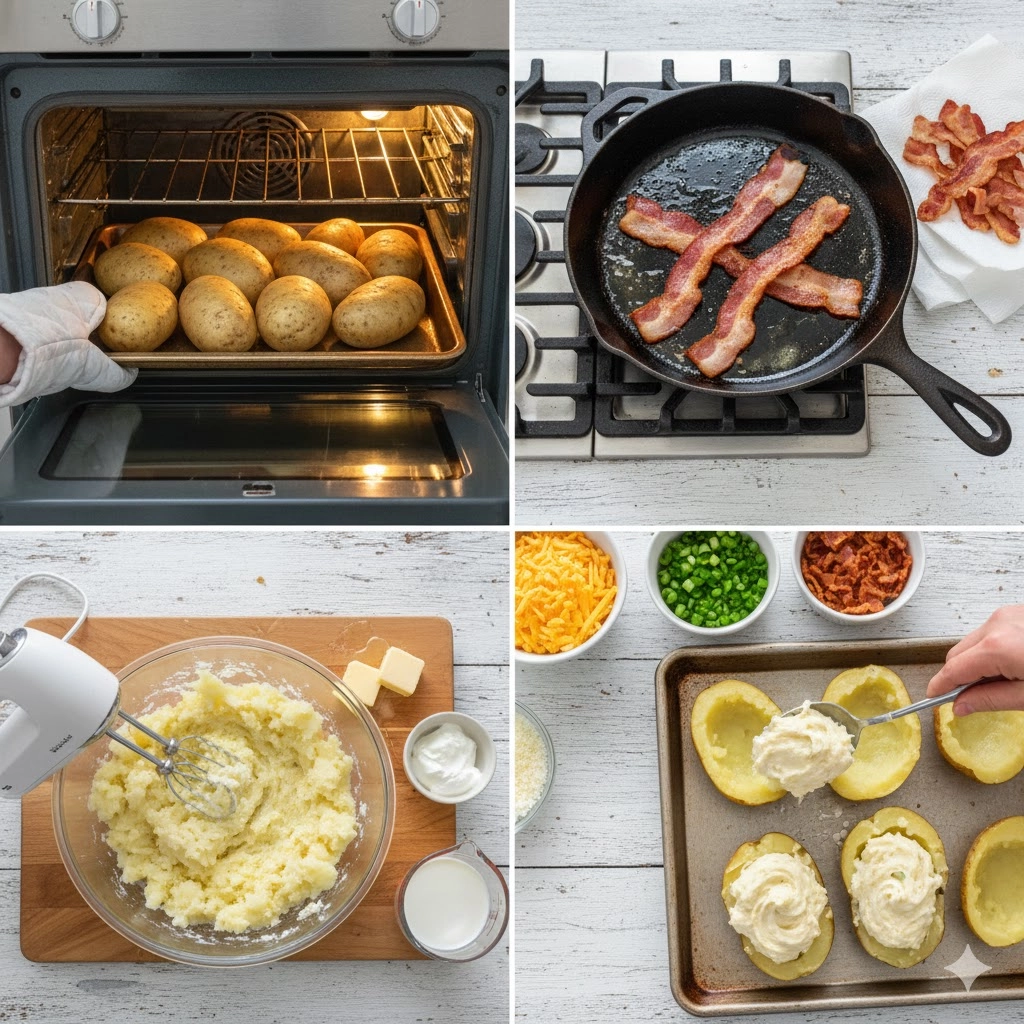
- Preparation and Oven Setup: Begin by gathering all your ingredients to ensure a smooth cooking process. Preheat your oven to 350 Fahrenheit (175 Celsius). Scrub the potatoes thoroughly under cold water to remove any debris, as the skins will serve as the structural vessels for your filling.
- Initial Baking Phase: Place the whole potatoes directly on the oven rack or on a baking sheet. Bake in the preheated oven until the centers are completely tender. This typically takes about 1 hour, though the exact duration will vary based on the specific dimensions of your potatoes. Once soft, remove them and set them aside until they are cool enough to be handled safely.
- Crisping the Bacon: While the potatoes are cooling, place the bacon slices in a large, deep skillet. Cook over medium-high heat, turning occasionally, until the fat has rendered and the bacon is evenly browned and crispy. Remove the strips and place them on paper towels to drain. Once cooled, crumble the bacon into small pieces and set aside.
- Extracting the Potato Flesh: Using a sharp knife, slice each potato in half lengthwise. Carefully scoop out the hot potato flesh and transfer it into a large mixing bowl. Be sure to leave a thin layer of potato against the skin to maintain the structural integrity of the “shells.” Save the hollowed-out skins for later.
- Creating the Creamy Filling: To the bowl of potato flesh, add the sour cream, milk, butter, salt, and pepper. Incorporate 1/2 cup of the shredded Cheddar cheese and exactly half of the sliced green onions. Use a hand mixer to whip the ingredients together until the mixture is well blended and achieves a smooth, creamy consistency.
- Stuffing the Shells: Carefully spoon the whipped potato mixture back into the reserved skins, distributing it evenly among the eight halves. The filling should be mounded slightly above the rim of the skin.
- The Final Topping: Sprinkle the remaining 1/2 cup of Cheddar cheese, the rest of the green onions, and the crumbled bacon over the top of each stuffed potato.
- The Second Bake: Return the loaded potatoes to the preheated oven. Continue baking for approximately 15 minutes, or until the cheese has melted completely and the toppings are heated through. Serve while hot and bubbling.
Achieving the Ultimate Creamy Consistency
To reach the gold standard of twice-baked potatoes, the texture of the filling is paramount. The science of a perfect potato mash lies in the breakdown of starches. By using a hand mixer as specified, you aerate the potato flesh while incorporating the fats from the butter and sour cream. This creates a silkiness that is impossible to achieve with a hand masher alone. If you find the mixture feels too stiff, the 1/2 cup of milk acts as your primary hydrating agent, ensuring that the final result is velvety rather than gluey.
Furthermore, the temperature of your ingredients plays a hidden role. Adding room-temperature butter and milk helps them emulsify more effectively with the warm potato starch. This prevents the “seizing” of the mixture, which can sometimes lead to a lumpy or grainy mouthfeel. When these elements are perfectly balanced, the filling mimics the luxury of a fine-dining pomme purée, but with the added rustic charm of a baked potato shell.
Modifications and Substitutions
While the classic recipe is a masterpiece of balance, there are ways to adapt the components based on what you have in your pantry. If you find yourself without sour cream, full-fat Greek yogurt offers a similar tang and moisture level. For the fat component, while the recipe calls for 4 tablespoons of butter, some adventurous home cooks have substituted a portion of this with heavy cream for an even richer profile.
Regarding the cheese, while sharp Cheddar is the traditional choice for its bold flavor and excellent melting properties, you could experiment with Monterey Jack for a milder, creamier melt or Smoked Gouda for a deeper, wood-fired essence. If you are looking to increase the aromatic profile, adding a dash of garlic powder or smoked paprika to the mash can provide a subtle complexity without distracting from the primary flavors of bacon and onion.
Strategic Accompaniments and Serving Ideas
These potatoes are incredibly versatile. In a formal dinner setting, they serve as the quintessential partner to a pan-seared ribeye or a roasted prime rib. The acidity of the sour cream in the potatoes cuts through the richness of red meat beautifully. For a lighter pairing, consider serving them alongside a crisp Caesar salad or lemon-garlic roasted asparagus to provide a fresh contrast to the heavy, cheesy filling.
If you are serving these at a casual gathering or a tailgate, they can even function as a “heavy appetizer.” Since they are already portioned into halves, they are easy for guests to grab. To elevate the presentation, you might add a final dollop of fresh sour cream right before serving, or a sprinkle of fresh chives to provide a pop of bright green color against the melted golden cheese.
Massive Expansion of the Step-by-Step Process
The journey to the perfect potato begins long before the oven is turned on. Selecting large baking potatoes, typically Russets, is essential because their high starch content leads to a light, fluffy interior. When you perform the first bake at 350 Fahrenheit, you are not just cooking the vegetable; you are dehydrating the skin to create a crisp, durable bowl. This first hour in the oven is the “foundation phase.” You know they are ready when a fork slides into the center with absolutely zero resistance.
The “extraction phase” is where many beginners stumble. The trick is to work while the potatoes are still warm, but not so hot that they burn your palms. Use a kitchen towel to hold the potato steady. When scooping, leave about a quarter-inch of flesh attached to the skin. This “buffer zone” is what prevents the skins from tearing or collapsing when you try to restuff them.
Mixing the filling is the “transformation phase.” When you introduce the 1/2 cup of milk and 4 tablespoons of butter, you are creating a chemical emulsion. The hand mixer breaks down the large starch granules, allowing the fats to coat each particle. Adding 1/2 of the green onions and 1/2 of the cheese into the mix ensures that every single bite contains the sharp bite of onion and the saltiness of the cheese, rather than just having those flavors sit on top.
Finally, the “gratification phase” occurs during the second 15-minute bake. This is when the flavors meld together. The heat from the oven causes the internal cheese to melt into the potato fluff, while the cheese on top forms a molten crust that traps the steam inside, keeping the potato moist while the bacon reaches its peak crispness.

Deep-Dive FAQ
How can I prevent my potato skins from breaking when I scoop them out?
The secret to durable shells is twofold: variety and technique. Always use a Russet or “baking” potato, as they have a thicker, more fibrous skin compared to thin-skinned red or gold potatoes. When scooping, avoid the temptation to remove every bit of white flesh; leaving a thin lining of potato acts as a structural reinforcement, ensuring the skin holds its shape under the weight of the heavy filling.
Can I prepare these potatoes ahead of time for a dinner party?
Absolutely. These are an ideal make-ahead dish. You can follow the recipe all the way through the stuffing and topping stage, then cover them tightly and store them in the refrigerator for up to twenty-four hours. When you are ready to serve, simply add an extra five to ten minutes to the final baking time to ensure the chilled centers are heated through and the cheese is bubbly.
Is it necessary to use a hand mixer for the filling?
While you can use a manual potato masher or even a fork, a hand mixer is highly recommended for this specific recipe. The mechanical action of the beaters incorporates more air into the mixture, resulting in a “whipped” texture that is much lighter than traditional mashed potatoes. If you prefer a more rustic, chunky texture, a manual masher is fine, but for the “ultimate” experience, the mixer is the way to go.
Why did my potatoes take longer than an hour to bake?
Baking times for potatoes are highly dependent on the density and size of the tubers, as well as the accuracy of your oven temperature. If you are at a high altitude, the lower atmospheric pressure can cause cooking times to increase significantly. Additionally, if your potatoes are exceptionally large, they may require up to ninety minutes to reach the desired level of tenderness. Always use the “fork-tender” test rather than relying solely on the clock.
Unique Culinary Insights
One of the most overlooked aspects of the ultimate twice-baked potato is the seasoning of the shell itself. While the recipe focuses on the internal salt and pepper, many professional chefs suggest lightly rubbing the exterior of the potato with a small amount of oil and a pinch of salt before the first bake. This encourages the skin to become exceptionally crispy, turning the “wrapper” of the dish into a delicious component rather than just a container.
Another professional tip involves the bacon. To ensure the bacon remains crisp even after the second bake, make sure it is cooked until it is quite firm before crumbling. Since it will spend another 15 minutes in the oven atop the moist potato filling, starting with very crispy bacon prevents it from becoming chewy or limp. These small attentions to detail—the texture of the skin and the crispness of the protein—are what separate a standard side dish from a culinary masterpiece.
A Masterpiece of Textures and Flavors
These potatoes represent the pinnacle of comfort food, offering a sophisticated blend of simple ingredients that satisfy the palate on every level. By following this precise sequence of double-baking, you transform the humble Russet into a vessel of creamy, cheesy, and smoky delight. Whether you are prepping them for a holiday feast or a cozy weeknight dinner, the result is always a crowd-pleaser that guests will remember long after the meal is over. Enjoy the process of crafting these savory treats, and savor every buttery, bacon-filled bite.
Nutrition Table
| Nutrient | Amount Per Serving |
| Calories | 422 |
| Total Fat | 30 grams |
| Carbohydrates | 29 grams |
| Protein | 11 grams |
| Cholesterol | 65 milligrams |
| Sodium | 580 milligrams |
Disclaimer
The nutritional information provided is an estimate based on standard ingredient measurements and may vary depending on the specific brands of products used. Consult with a healthcare professional for specific dietary needs or concerns.
PrintUltimate Twice-Baked Potatoes

The ultimate twice-baked potatoes are a classic comfort dish, featuring a velvety whipped potato filling mixed with sour cream, butter, and cheese, all topped with crispy bacon and fresh green onions.
- Prep Time: 15 mins
- Cook Time: 1 hr 15 mins
- Total Time: 1 hr 30 mins
- Yield: 8 servings 1x
- Category: Classic
- Method: Baking
- Cuisine: American
Ingredients
4 large baking potatoes
8 slices bacon
1 cup sour cream
1/2 cup milk
4 tablespoons butter
1/2 teaspoon salt
1/2 teaspoon pepper
1 cup shredded Cheddar cheese, divided
8 green onions, sliced, divided
Instructions
1. Preheat oven to 350 Fahrenheit. Bake potatoes until tender, about 1 hour. Set aside to cool.
2. Cook bacon in a large skillet until brown and crispy. Drain, crumble, and set aside.
3. Slice potatoes in half lengthwise and scoop flesh into a large bowl, leaving a thin shell.
4. Add sour cream, milk, butter, salt, pepper, 1/2 cup cheese, and half of the green onions to the bowl.
5. Mix with a hand mixer until creamy and well blended.
6. Spoon the mixture back into the potato skins.
7. Top with remaining cheese, green onions, and crumbled bacon.
8. Return to the oven and bake for 15 minutes until cheese is melted and bubbly.
Notes
Use Russet potatoes for the best skin durability.
Leave about 1/4 inch of potato on the skin to prevent tearing.
Make ahead by refrigerating after stuffing and adding 5-10 minutes to final bake time.
Nutrition
- Serving Size: 1 potato half
- Calories: 422
- Sugar: 2g
- Sodium: 580mg
- Fat: 30g
- Saturated Fat: 16g
- Unsaturated Fat: 11g
- Trans Fat: 0g
- Carbohydrates: 29g
- Fiber: 3g
- Protein: 11g
- Cholesterol: 65mg