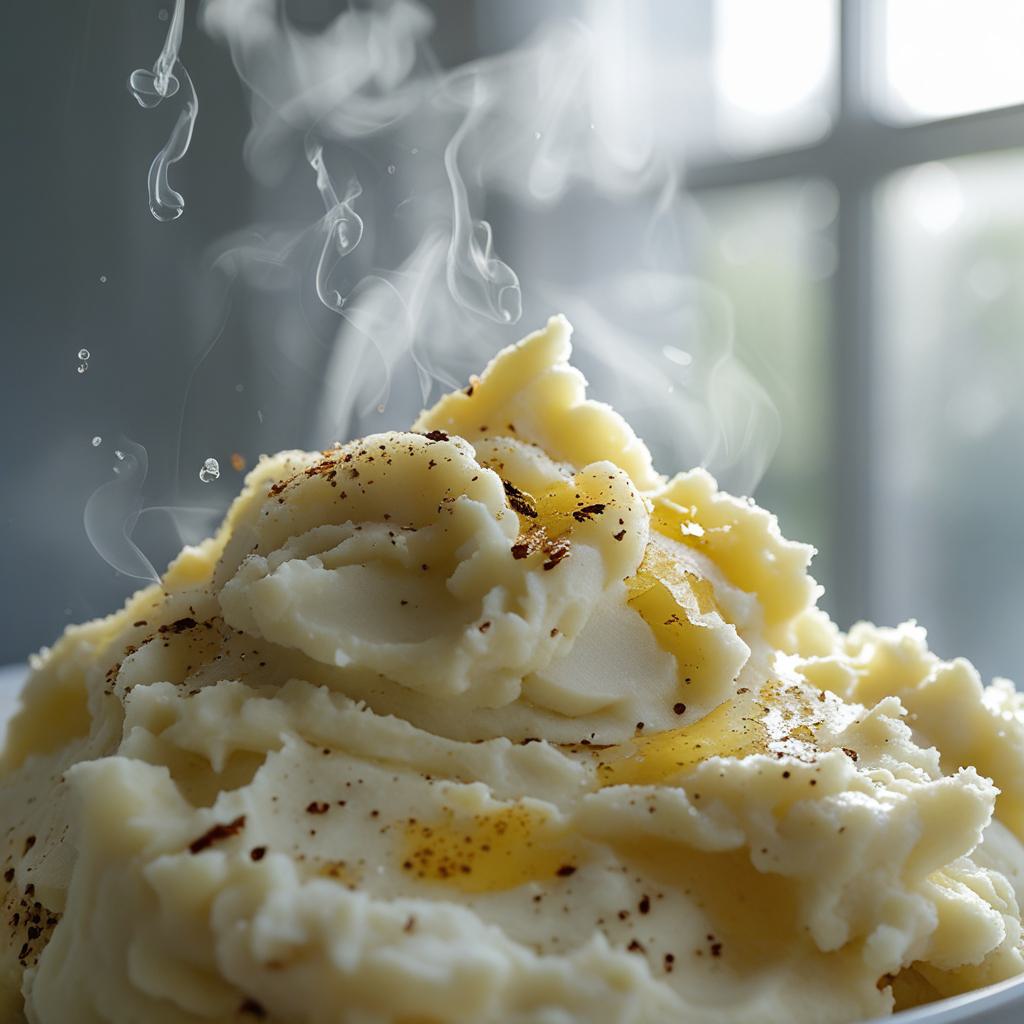
The first wafts of steam rise like culinary incense when you lift the lid from the pot – that unmistakable earthy sweetness of potatoes meeting hot cream and butter. This isn’t just side-dish territory; properly executed, mashed potatoes become silk-lined clouds on a plate. The pinnacle lies in texture: neither gluey library paste nor lumpy peasant fodder, but a luxurious emulsion where starch molecules embrace fat droplets in a velveteen union. Hear the rhythmic crunch of sea salt crystals meeting warm butter, watch golden rivulets cascade over ivory peaks. That haunting aroma of nutmeg – just a whisper, mind you – transports you to Alpine chalet kitchens where generations perfected this humble alchemy. Whether nestled under braised short ribs or standing proud beside seared scallops, these mashed potatoes transcend accompaniment status, becoming the meal’s gravitational center through sheer textural poetry and understated elegance.
Table of Contents
Ingredient Deep Dive
| Ingredient | Quantity | Purpose |
|---|---|---|
| Russet potatoes | 2 lbs | High-starch content creates light, fluffy texture |
| Unsalted butter (European-style) | 1 cup (226g) | 82% fat content emulsifies starch; adds silkiness |
| Heavy cream (40% fat) | 1 cup (237ml) | Prevents gluten development; adds richness |
| Fine sea salt | 1 tbsp + to taste | Enhances potato flavor; controls moisture release |
| White pepper | 1/4 tsp | Provides warmth without visible specks |
| Freshly grated nutmeg | 1/8 tsp | Subtle aromatic complexity |
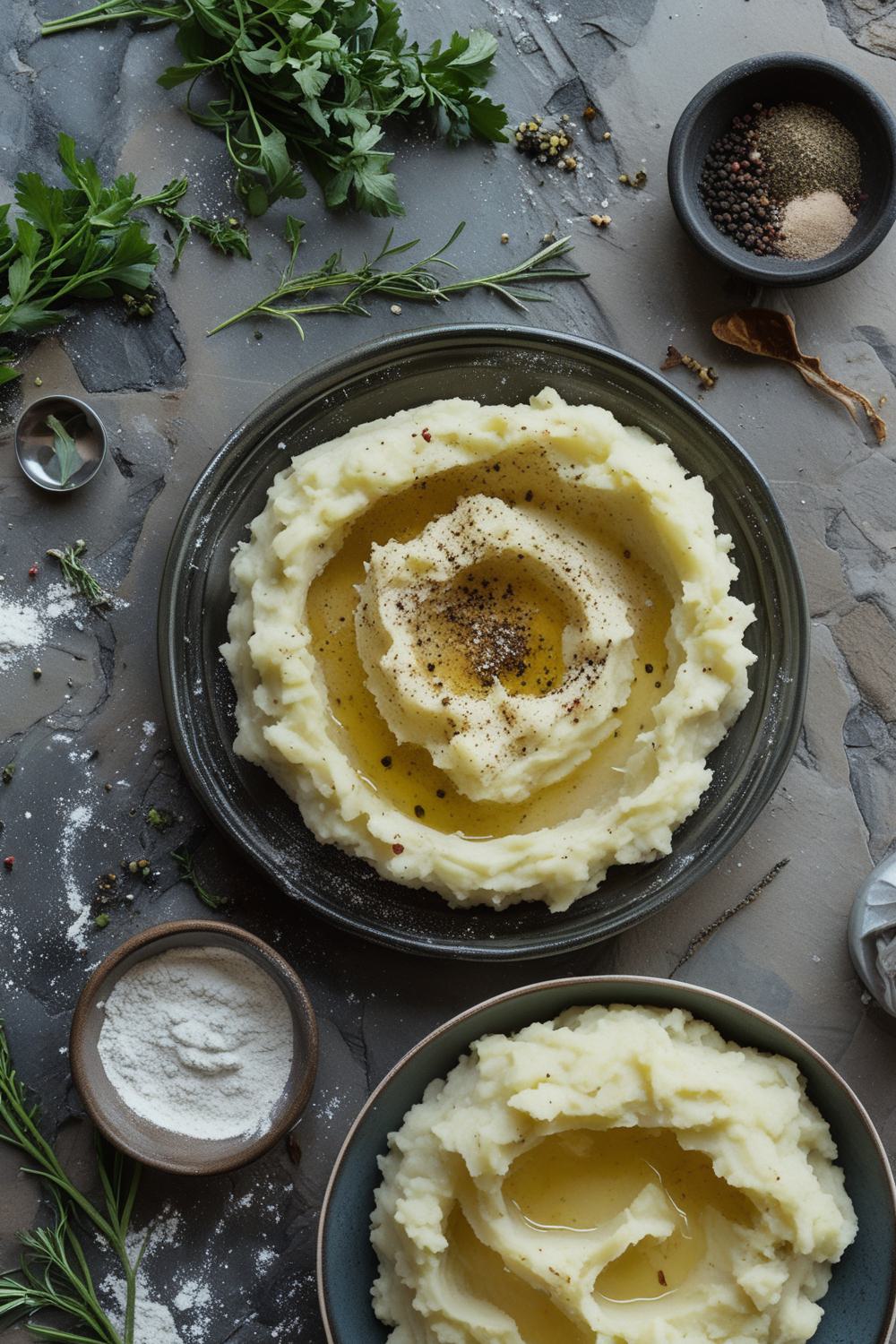
| Roasted garlic paste | 2 tbsp | Deepens umami; reduces raw garlic sharpness |
The russet potato’s oblong shape and rough skin hide its secret weapon: amylose starch molecules that swell dramatically when cooked then readily absorb fats. Unlike waxy varieties that hold their shape, russets fracture easily when heated – exactly what we need for disintegration into creamy oblivion.
Temperature control defines success here. European butter contains lower water content (typically 15% vs American 18-20%), meaning more fat molecules available to coat starch granules. Heavy cream heated to 170°F (77°C) – just below simmering – allows proteins to denature slowly rather than curdling, creating a stable emulsion when whisked vigorously into the potatoes.
Substitutions & Swaps
For our vegan companions, Miyoko’s cultured oat butter provides exceptional emulsion properties with its live cultures acting as natural emulsifiers. Replace cream with warmed, unsweetened oat milk blended with 2 tablespoons refined coconut oil per cup to mimic cream’s viscosity.
Gluten-free needs simply require verifying your dairy sources. Lactose-intolerant cooks can use ghee and lactose-free cream with no texture sacrifice. When russets are unavailable, Japanese sweet potatoes make a stunning orange-hued alternative requiring 25% more butter due to lower starch content.
In emergencies, instant potato flakes redeem themselves if treated like fresh. Hydrate with warm vegetable broth instead of water, then enrich with browned butter. Powdered milk acts as starch protectant – whisk 2 tablespoons into flakes before liquid addition to prevent gumminess.
Equipment Guide
Abandon all-electric mixers – their violent paddles tear potato cells, releasing excess starch that creates paste. A stainless-steel ricer or food mill is non-negotiable, gently pressing cooked potatoes through fine disks without crushing cell walls.
For even heat distribution during the dairy-warming stage, use a heavy-bottomed saucepan – copper-clad for temperature precision or enameled cast iron for heat retention. When mashing final ingredients, a rigid balloon whisk (not silicone) outperforms spoons by incorporating air while maintaining emulsion stability.
Heat-retention matters profoundly. Serve in pre-warmed stoneware bowls, or for dramatic tableside presentation, use a polished copper bain-marie kept over low flame.
Step-by-Step Walkthrough
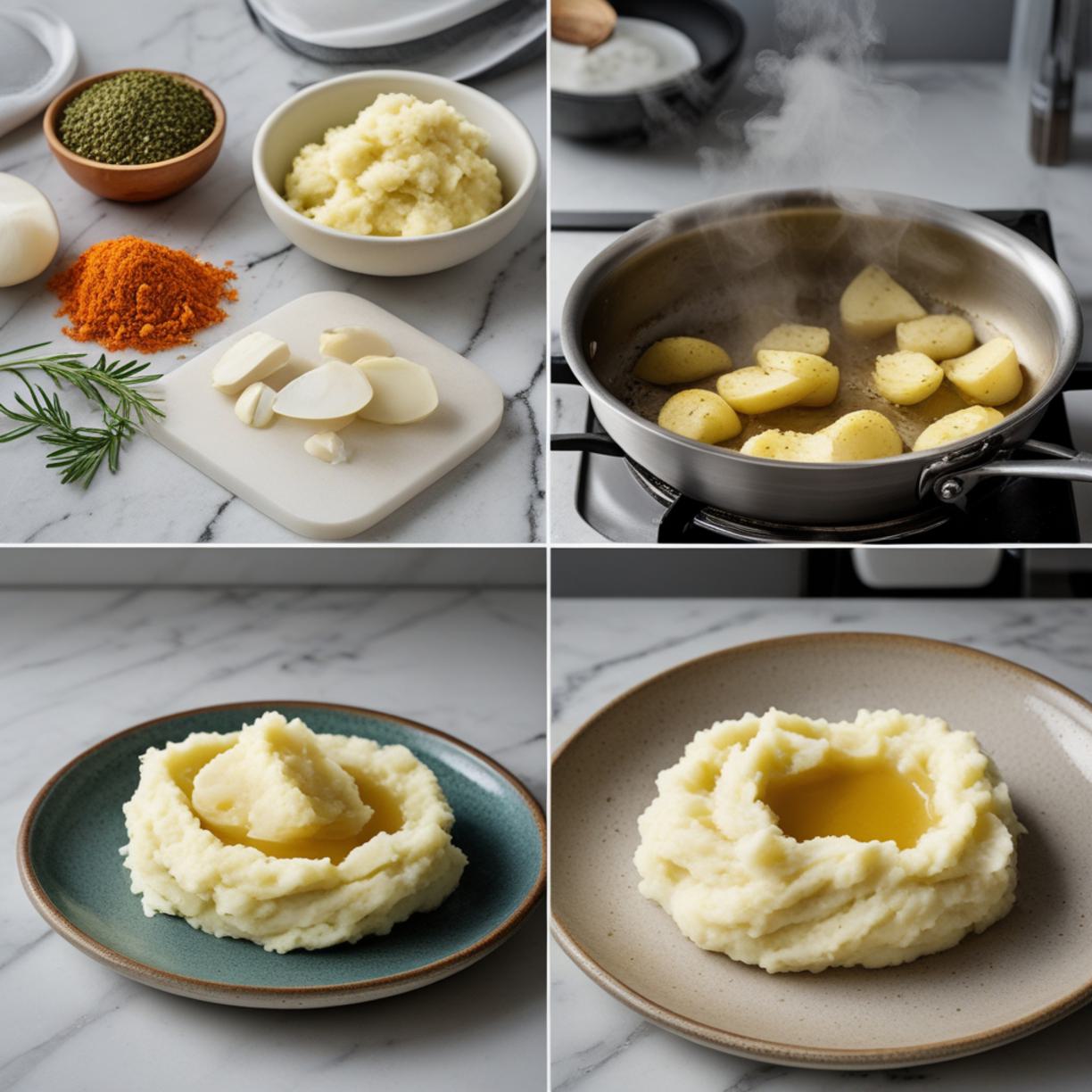
- Peel & Slice – Peel russets completely. Cut into 2-inch chunks. Uniform sizing prevents uneven cooking.
- Cold Water Start – Submerge potatoes in cold water with 1 tbsp salt. The gradual temperature rise promotes even starch gelatinization. Bring to 205°F (96°C) – watch for surface fracturing.
- Steam Dry – Drain immediately when fork-tender. Return to empty pot over low heat 1 minute, shaking gently to evaporate surface moisture. This step prevents watery mash.
- Rice & Rest – Press potatoes through ricer onto baking sheet. Let cool 2 minutes – crucial for moisture evaporation without chilling.
- Heat Dairy – Combine butter, cream, and roasted garlic. Heat to 170°F (77°C), swirling until butter nearly melts. Do not boil – proteins will scramble.
- Emulsify – Create well in center of potatoes. Add half the dairy, whisking vigorously in widening circles. The whisk’s wire loops incorporate air while homogenizing fat.
- Season & Finish – Fold in remaining dairy with silicone spatula. Add white pepper and nutmeg. Taste before final salting – potatoes continue absorbing seasoning.
The cold-water start is non-negotiable. Dropping potatoes into boiling water causes exterior starch gelatinization before interior cooks through, resulting in waterlogged outer layers.
Ricing onto a large surface area (like a baking sheet) allows steam escape. Starch that traps moisture becomes glue – evaporation here improves texture immensely.
Never add cold dairy to hot potatoes. The sudden temperature change causes starches to seize. Warm fat integrates seamlessly, with butterfat coating and separating starch molecules rather than letting them clump.
Expert Tips & Troubleshooting
Achieving the elusive “piping bag velvet” texture starts before cooking: store potatoes at 55-60°F (13-15°C). Cold storage converts starches to sugars, creating gray, sticky mash.
If your emulsion breaks (appearing greasy), add 1 tsp powdered milk mixed with 2 tbsp cream and rewhip. The milk proteins act as emergency emulsifiers.
For restaurant-quality hold, transfer mash to a heatproof bowl set over simmering water. Whisk in 1 tbsp sodium citrate dissolved in cream – this pH-balancing agent keeps mash silky for hours without skin formation.
Gummy texture usually stems from overworking. Use only vertical motions when ricing – no twisting. Whisk east-to-west, not circularly, to prevent overdeveloping gluten-like potato proteins.
If serving delayed, place plastic wrap directly on surface followed by parchment and a damp towel. Reheat over 150°F (65°C) water bath while whisking in 1 tbsp cream per cup to refresh consistency.
Flavor Variations
Smoky Cedar Plank: Cold-smoke cooked potatoes over cedar chips 5 minutes before ricing. Whisk in smoked gouda and crispy pancetta.
Children’s Dream: Replace cream with warmed buttermilk, stir in sharp cheddar and fold through oven-crisped potato skin “croutons” for textural play.
Fragrant Umami: Infuse cream with kombu and bonito flakes, strain. Substitute miso butter for regular butter, finish with black garlic oil drizzle.
Spicy Sichuan: Bloom ground Sichuan peppercorns in browned butter. Garnish with chili crisp and cilantro stems.
Storage & Reheating
Cool completely in under 90 minutes (danger zone avoidance). Press plastic wrap onto surface; store up to 3 days.
Reheating requires gentleness: fluff with fork. Add 1 tsp cream per cup. Either microwave at 50% power in 45-second bursts, stirring between, or bake covered at 300°F (150°C) with water bath for 20 minutes. Freezing not recommended – ice crystals disrupt emulsion.
FAQ Section
Why do chefs add potato cooking water?
Reserved starchy water contains dissolved amylose, acting as natural thickener for adjusting consistency without dilution.
Can you leave skins on mashed potatoes?
Only with waxy varieties like Yukon Golds – skin particles disrupt russet’s emulsion stability.
How to fix salty mashed potatoes?
Stir in plain cold-mashed russets (no salt), or add 1 tsp white vinegar per cup to trick tastebuds.
Is baking soda ever helpful?
A pinch (1/16 tsp) raises pH, speeding starch gelatinization – useful only if undercooked potatoes were used.
Nutrition Information
| Nutrient | Per Serving | % Daily Value |
|---|---|---|
| Calories | 410kcal | 21% |
| Carbohydrates | 38g | 14% |
| Fiber | 3g | 10% |
| Protein | 6g | 12% |
| Fat | 27g | 35% |
| Vitamin C | 15mg | 17% |
| Calcium | 84mg | 6% |
Disclaimer: Percent Daily Values based on 2000 calorie diet. Values are estimates; actual nutrients may vary based on ingredient sourcing and preparation methods. For precise dietary needs, consult a nutritionist.