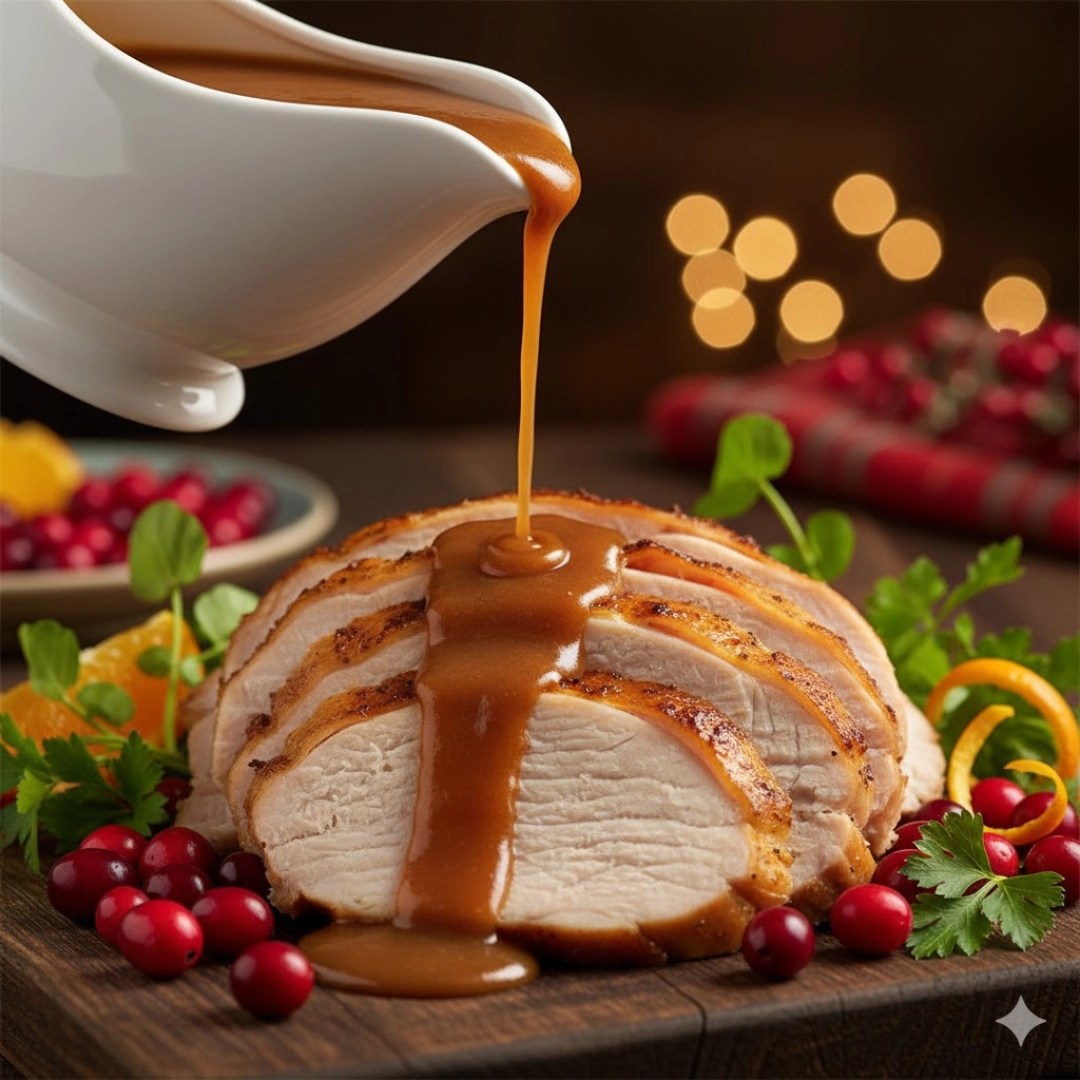
This Turkey with Gravy Sauce recipe delivers all the rich, savory flavor of a classic holiday gravy—without relying on pan drippings. Instead of depending on the roasting pan, this method builds depth through layered aromatics, well-balanced seasoning, and proper browning techniques. The result is a velvety, deeply flavorful gravy that tastes just as authentic as traditional versions and can be made any time of the year.
By focusing on foundational culinary principles, such as creating a strong flavor base and forming a smooth, stable roux, this recipe ensures a consistently rich sauce that pairs perfectly with turkey, mashed potatoes, stuffing, and roasted vegetables. It’s a reliable, quick, and versatile gravy that elevates everyday meals and holiday dishes alike.
Table of Contents
The Science of Rich Gravy Flavor: Making Turkey with Gravy Sauce Without the Bird
If you’ve ever had thin, bland gravy, it’s likely because the cook missed the crucial step of building a flavor base. When turkey drippings aren’t available, we have to manually create the concentrated, savory depth they provide.
Why the Maillard Reaction is Your Secret Weapon
The Maillard reaction is the chemical process that gives browned foods their complex flavor. We utilize this by browning our aromatics and toasting the flour used for the roux. This simple step concentrates the sugars and amino acids in the ingredients, transforming raw flour taste into a nutty, savory foundation for your Turkey with Gravy Sauce.
The Best Stock Choices for a Deep, Savory Base
The liquid you choose is everything. Avoid thin, watery broth. Since the focus keyword is Turkey with Gravy Sauce, using a high-quality turkey or chicken stock is non-negotiable for flavor authenticity.
- Turkey Stock: The best choice for the most authentic flavor. Look for low-sodium options.
- Chicken Stock: A readily available and excellent alternative. I suggest simmering it with a halved onion, a few peppercorns, and a bay leaf for 15 minutes before using it to deepen the flavor.
- Avoid Broth: Broth is usually lighter and less concentrated. For the best body and flavor, always opt for stock.
What You’ll Need: Key Ingredients for the Sauce
A great homemade gravy only requires a few simple components, but their quality matters.
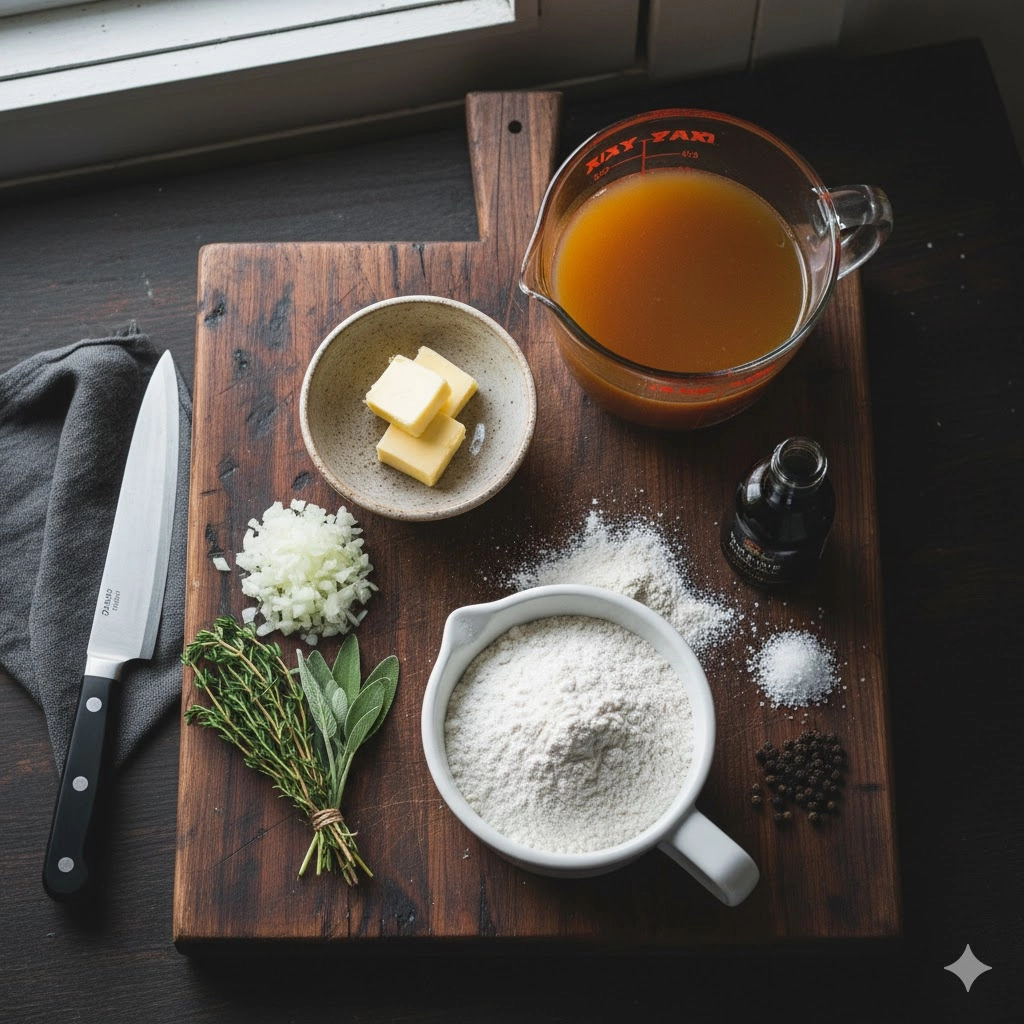
- Fat: Unsalted butter is standard and offers a creamy flavor.
- Aromatics: Finely chopped onion and a small amount of minced fresh garlic and dried herbs (like sage or thyme).
- Thickener: All-purpose flour is traditional.
- Liquid: High-quality turkey or chicken stock.
- Seasonings: Salt, black pepper, and a small splash of low-sodium soy sauce or Worcestershire sauce for deep umami flavor.
My Tested Step-by-Step Method for Perfect Turkey with Gravy Sauce
After testing this recipe multiple times, I have perfected a foolproof process that ensures a smooth, richly flavored gravy every time.
| Ingredient | Quantity | Note |
| Unsalted Butter | 4 tablespoons | |
| Onion | 1/4 cup, finely minced | Or 1 large shallot |
| All-Purpose Flour | 1/4 cup | Use a scoop and sweep method for accuracy |
| Turkey or Chicken Stock | 4 cups | Warm the stock before adding |
| Soy Sauce (low sodium) | 1 teaspoon | For umami depth |
| Dried Thyme/Sage | 1/2 teaspoon total | |
| Salt and Pepper | To taste |
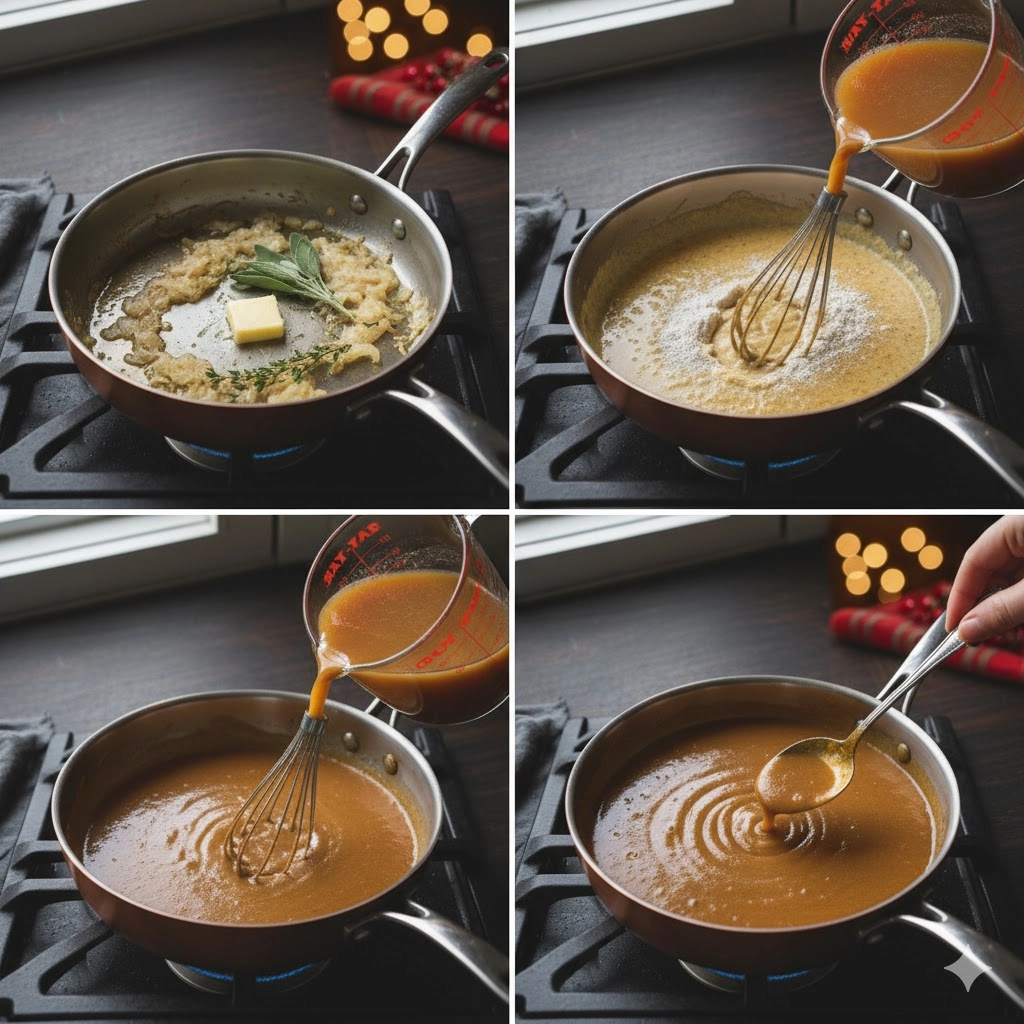
Instructions:
Step 1: Building a Deep Flavor Base (Sautéing Aromatics)
Melt the butter in a medium saucepan over medium heat. Add the finely minced onion and cook, stirring occasionally, for about 5 minutes until softened and translucent. Add the dried herbs and cook for 30 seconds until fragrant. This foundational layer is vital for achieving a rich-tasting Turkey with Gravy Sauce.
Step 2: Creating the Velvety Roux (Flour-to-Fat Ratio)
Sprinkle the flour over the melted butter and cooked onions. Whisk continuously for 1 to 2 minutes. The mixture will look like a thick, pale paste (the roux). Continue cooking until the roux turns a light peanut butter color. This is where the Maillard reaction happens, eliminating the raw flour taste and ensuring a savory depth. As someone who has cooked this dish for years, I emphasize this step is critical—do not rush it.
Step 3: Whisking in the Liquid for a Smooth Sauce
Slowly—and I mean slowly—pour in the warm stock while whisking constantly. Adding the liquid slowly prevents lumps from forming. Start by adding about half a cup, whisking until smooth, then gradually add the rest of the stock. The mixture will immediately begin to thicken.
Step 4: Simmering and Seasoning for Maximum Depth
Bring the gravy to a simmer over medium-low heat. Let it simmer gently for 5 to 8 minutes, stirring occasionally, until it reaches your desired thickness. Stir in the teaspoon of soy sauce for an extra boost of savory flavor. Taste the sauce, then adjust the salt and black pepper as needed.
Culinary Tips and Essential Substitutions
Good culinary practice means knowing how to adapt.
Making It Gluten-Free: Cornstarch vs. Flour
If you need a gluten-free Turkey with Gravy Sauce, you can easily substitute the flour with cornstarch or arrowroot powder.
- Cornstarch Method: Omit the flour and fat completely. Whisk 2 tablespoons of cornstarch with 4 tablespoons of cold stock (a slurry). Bring the remaining stock to a simmer and slowly whisk in the slurry. Simmer until thickened. Note that cornstarch gives a shinier, more translucent finish than flour. For an excellent side dish, consider pairing this with a batch of homemade gluten-free naan bread recipe.
Expert Prep and Make-Ahead Strategies
This gravy is excellent for making ahead, which is a lifesaver during busy holidays.
- Make-Ahead: Complete the recipe entirely. Allow the gravy to cool fully, then store it in an airtight container in the refrigerator for up to 4 days.
- Reheating: Gravy often thickens significantly upon cooling. To reheat, place it in a saucepan over low heat and gradually whisk in a splash or two of stock until it reaches the desired consistency. Do not boil it rapidly.
Storage and Reheating Best Practices
Store leftover gravy in the refrigerator for 3–4 days or freeze it for up to 3 months. When freezing, use an airtight container and leave about an inch of headspace, as the liquid will expand.
Serving Suggestions and Pairing
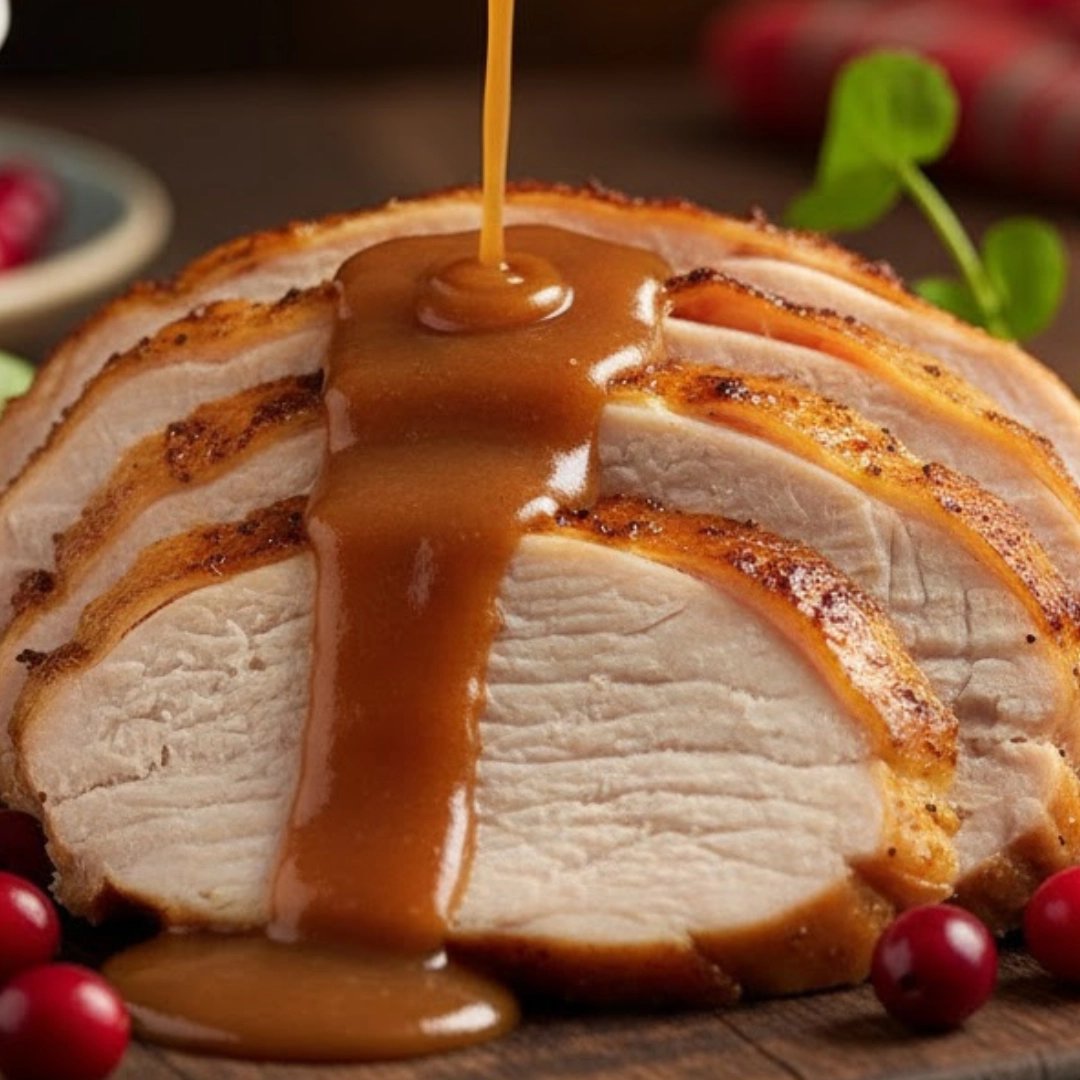
This deeply flavored Turkey with Gravy Sauce is truly versatile.
- Classic Comfort: It is the perfect accompaniment for roast turkey, mashed potatoes, and stuffing.
- Breakfast: Drizzle it over homemade biscuits or a savory egg hash.
- Modern Pairings: Use it as a sauce for pan-seared meats like our crispy oven-baked chicken or even to elevate hearty winter vegetable bakes.
Don’t miss to follow us in Pinterest.
FAQs: Troubleshooting Your Turkey with Gravy Sauce
1. What can I use instead of turkey drippings for flavor?
The best replacements are high-quality, concentrated turkey or chicken stock combined with sautéed aromatics (onions, celery, carrots) and a small amount of umami boosters like soy sauce or mushroom powder. Sautéing your flour for a minute or two (creating a darker roux) also adds significant depth.
2. How do I make my homemade turkey gravy thicker?
If your gravy is too thin, create a quick slurry: whisk 1 tablespoon of cornstarch or flour with 2 tablespoons of cold water or stock until smooth. Whisk this mixture slowly into the simmering gravy. Let it simmer for 1–2 minutes after adding. Repeat if necessary, one slurry at a time.
3. Can I make this turkey gravy recipe ahead of time?
Absolutely. Gravy can be made 3–4 days in advance and stored in the refrigerator. When reheating, it will be very thick. Simply warm it gently over low heat and whisk in a little extra stock until it reaches your desired pourable consistency.
4. How do I fix lumpy turkey gravy?
The easiest fix is to strain it. Pour the lumpy gravy through a fine-mesh sieve set over a bowl, pressing the lumps with a spoon. For small batches, you can also use an immersion blender or transfer it carefully to a regular blender to quickly emulsify the lumps.
5. What is the difference between gravy and sauce?
While the terms are often used interchangeably, traditionally, gravy is a sauce made using the drippings (juices and fat) from roasted meat or poultry, thickened with a roux. A sauce, such as a traditional brown sauce, is made using concentrated stock and thickener but doesn’t necessarily rely on meat drippings. Since this recipe does not require drippings, it is accurately described as a rich Turkey with Gravy Sauce.
The Ultimate Homemade Turkey with Gravy Sauce Recipe (No Drippings Needed!)
A rich, deeply savory, and easy homemade turkey gravy sauce that uses quality stock instead of meat drippings. Perfect for holidays or any weeknight.
Ingredients
4 tablespoons Unsalted Butter
1/4 cup finely minced Onion (or 1 large shallot)
1/4 cup All-Purpose Flour
4 cups Turkey or Chicken Stock (low sodium)
1 teaspoon Soy Sauce (low sodium)
1/2 teaspoon Dried Thyme/Sage blend
Salt and Black Pepper to taste
Instructions
1. Melt the butter in a medium saucepan over medium heat. Add the minced onion and cook for about 5 minutes until soft. Add the dried herbs and cook for 30 seconds until fragrant.
2. Sprinkle the flour over the cooked onions and fat. Whisk continuously for 1 to 2 minutes until the roux turns a light peanut butter color. This eliminates the raw flour taste.
3. Slowly pour in the warm stock while whisking constantly. Start with a small amount until smooth, then add the remaining stock gradually to prevent lumps.
4. Bring the gravy to a gentle simmer and let it cook for 5 to 8 minutes, stirring, until it reaches your desired thickness. Stir in the soy sauce, then taste and adjust the salt and black pepper.
Notes
For a gluten-free option, use a cornstarch slurry instead of flour.
This gravy can be made 3–4 days in advance and reheated gently with extra stock to adjust consistency.
Store leftovers in the refrigerator for up to 4 days or freeze for up to 3 months.