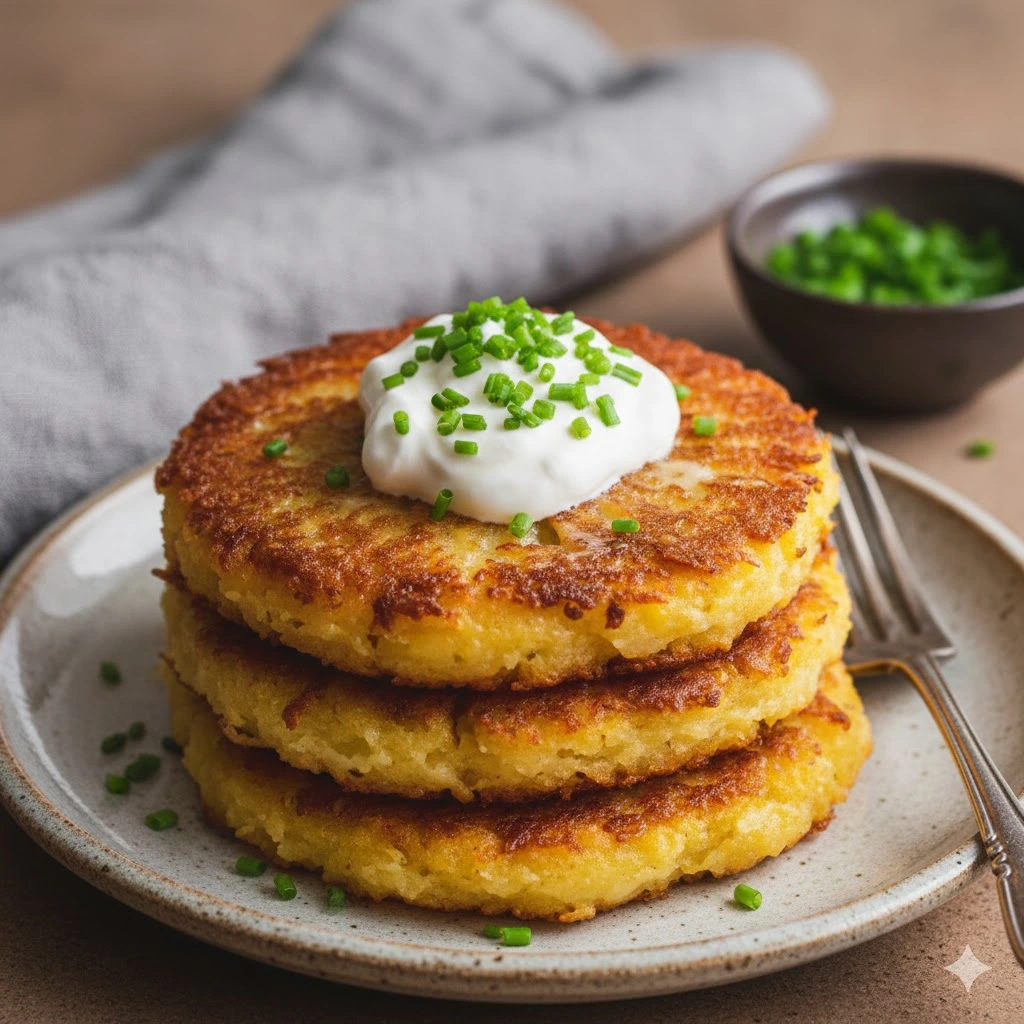
There is something profoundly soul-soothing about a plate of warm, crispy Old-Fashioned Potato Cakes. For many of us, these savory patties are more than just a side dish; they are a culinary time machine. They evoke memories of quiet weekend mornings in a sunlit kitchen or a quick, resourceful Tuesday night dinner where nothing went to waste. This recipe is the epitome of farmhouse brilliance—taking humble, leftover mashed potatoes and transforming them into a gourmet experience with a crunch that resonates and a center that melts away.
In an era of over-complicated recipes and hard-to-find ingredients, the beauty of the potato cake lies in its simplicity. It relies on the basic chemistry of starch, protein, and heat. By binding cold mashed potatoes with a fresh egg and a touch of flour, you create a versatile canvas. Whether you serve them alongside a stack of thick-cut bacon for breakfast or as a starchy companion to a roasted chicken dinner, these cakes stand as a testament to the fact that the best meals are often born from the most modest beginnings.
Ingredients for Success
To create these nostalgic delights, you will need a handful of pantry staples. Using high-quality fats and fresh aromatics will elevate the flavor profile from simple to extraordinary.
- 2 cups cold mashed potatoes (leftover potatoes are highly recommended for structural integrity)
- 1 large egg
- 1/4 cup all-purpose flour (keep a little extra nearby if your mash is particularly creamy)
- 1/2 cup shredded cheddar cheese
- 1/4 cup chopped green onions or chives
- Salt and black pepper to taste
- 1/2 teaspoon garlic powder
- 2 tablespoons vegetable oil or butter for frying
- Sour cream and extra chopped chives for serving as an optional garnish
Primary Cooking Instructions
Follow these steps carefully to ensure your cakes achieve that signature contrast between the shattered-glass crispness of the exterior and the cloud-like interior.
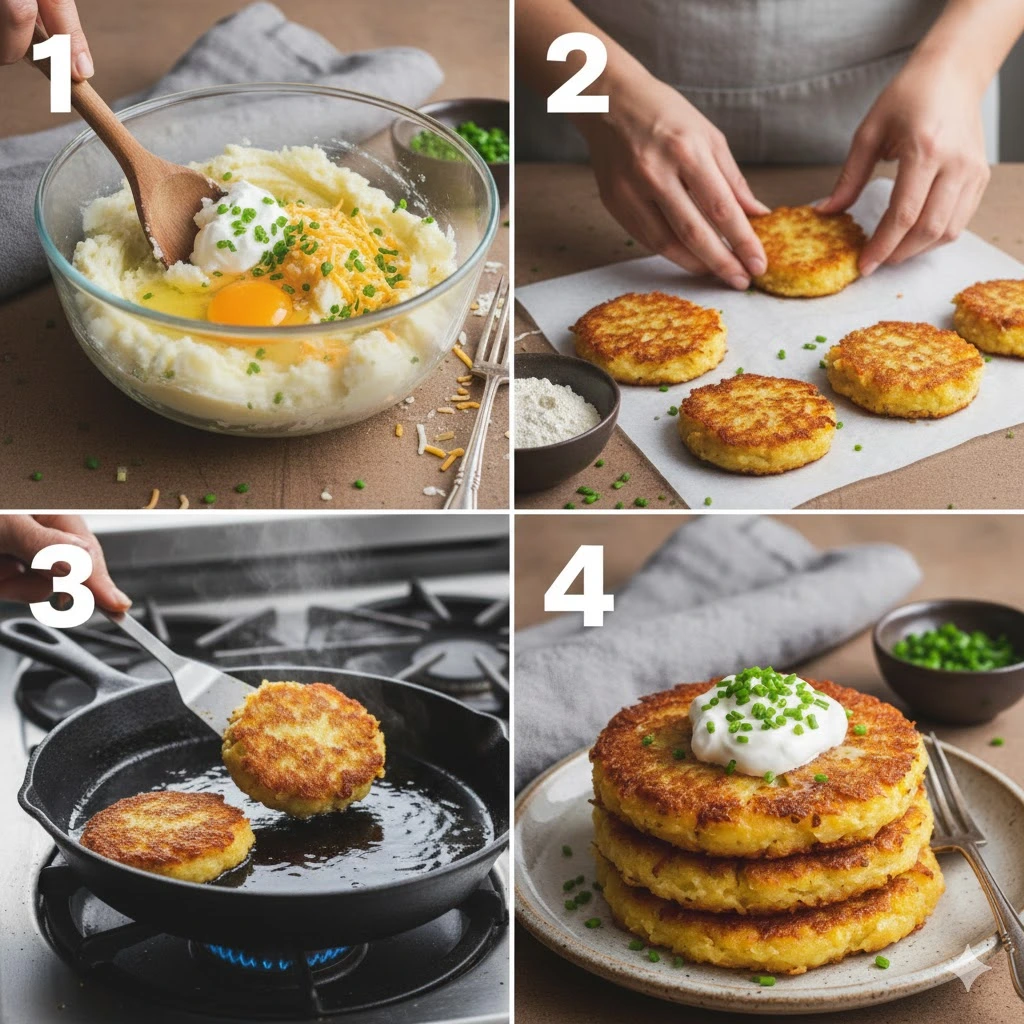
- Begin by placing your cold mashed potatoes into a large glass or stainless steel mixing bowl. Add the large egg, all-purpose flour, shredded cheddar cheese, chopped green onions, garlic powder, salt, and black pepper.
- Stir the mixture thoroughly until the egg and flour are fully integrated into the potatoes. The goal is a cohesive dough that holds its shape when pressed.
- Portion the mixture into six to eight evenly sized balls. Gently press each ball between your palms to form a patty approximately 1/2 inch thick.
- Set a large cast iron skillet or a reliable non-stick pan over medium heat. Add the vegetable oil or butter. Wait until the fat is shimmering and hot before proceeding.
- Carefully lay the patties into the hot skillet. Ensure there is plenty of space between each cake to allow steam to escape.
- Fry the patties for three to four minutes on the first side. Do not move them until a deep golden crust has formed.
- Flip the cakes carefully and cook for another three to four minutes.
- Once both sides are bronzed and crisp, transfer them to a plate lined with paper towels to remove any lingering surface oil.
- Serve immediately while the cheese is still molten and the crust is at its peak.
Massive Expansion of the Cooking Process
Understanding the “why” behind the “how” is what separates a good cook from a great one. When making Old-Fashioned Potato Cakes, the temperature of your base ingredient is the most critical factor. Using leftover mashed potatoes that have spent at least twelve hours in the refrigerator is a non-negotiable step for the best results. As mashed potatoes cool, the starches undergo a process called retrogradation. This makes the potatoes firmer and less “sticky” than when they are freshly whipped. When you mix cold potatoes with flour and egg, you are creating a temporary emulsion that sets quickly in the heat of the pan.
The shaping process is where you define the texture. If you handle the dough too much, the heat from your hands can soften the butter or cream already present in the leftovers, making the patties floppy. Use a light touch. When you press them into 1/2 inch discs, try to keep the edges smooth. Ragged edges tend to break off in the oil, which can lead to burnt bits in your skillet.
The frying phase is a lesson in patience. Most people flip their potato cakes much too early. When the patty first hits the hot oil, it actually sticks to the pan for a moment. As the Maillard reaction occurs—the chemical reaction between amino acids and reducing sugars that gives browned food its distinctive flavor—the cake will naturally “release” from the surface of the pan. If you feel resistance when you try to slide a spatula underneath, give it another sixty seconds. That resistance is the potato telling you the crust isn’t finished yet.
Furthermore, the choice of fat matters. Butter provides a rich, nutty flavor but has a lower smoke point. Vegetable oil allows for a higher heat and a more neutral taste. Many home chefs prefer a blend of both: the oil prevents the butter from burning, while the butter provides that classic diner-style finish.
Unique Culinary Insights for Perfect Patties
Achieving the ultimate potato cake requires more than just following a list; it requires a bit of kitchen intuition. One professional secret is to “dredge” the formed patties in a very light coating of extra flour just before they hit the pan. This creates a microscopic barrier that prevents the potato from absorbing too much oil, ensuring the result is crispy rather than greasy.
Another insight involves the moisture content of your mashed potatoes. If your original recipe was heavy on the heavy cream or milk, you might find the mixture feels a bit like wet cement. In this case, do not just dump in more flour, as this can make the cakes taste “pasty” or bread-like. Instead, try adding a tablespoon of fine breadcrumbs or even dehydrated potato flakes. These ingredients absorb moisture without toughening the texture.
Temperature control is your best friend. If the oil is too cold, the potato cake will act like a sponge, soaking up the fat and becoming heavy. If the oil is too hot, the outside will char before the egg inside has a chance to cook through and set the structure. You are looking for a gentle but consistent sizzle. If the sizzle dies down, wait a moment before adding the next batch to let the pan regain its thermal energy.
Deep-Dive FAQ
Can I use instant mashed potatoes for this recipe?
While real, home-cooked mashed potatoes provide the superior texture due to their natural starch structures, you can use instant potatoes in a pinch. The key is to prepare them with slightly less liquid than the package directs so they remain stiff. Ensure they are completely chilled before you attempt to mix in the egg and flour, otherwise, you will end up with a batter that is too thin to form into patties.
How do I prevent my potato cakes from falling apart in the pan?
Structural failure usually happens for two reasons: the mixture is too wet, or the pan wasn’t hot enough. Make sure your egg is fully incorporated to act as the “glue.” Additionally, once you place the patty in the oil, leave it alone. Every time you poke or prod the cake before the crust has formed, you risk breaking the protein bonds that hold the disc together.
Is it possible to bake these instead of frying them?
Yes, you can bake them, though they will have a different character than the fried version. To bake, preheat your oven to 400 degrees Fahrenheit. Line a baking sheet with parchment paper and brush the patties generously with melted butter or oil on both sides. Bake for about twenty minutes, flipping halfway through. They will be delicious, though they won’t have the same deep, golden-fried saturation as the skillet method.
What is the best way to reheat leftovers?
Avoid the microwave at all costs; it will turn your beautiful crispy crust into a soggy, rubbery mess. Instead, use a toaster oven or a dry skillet over medium-low heat. This allows the internal fats to liquefy again and recrisps the exterior. About five minutes at 375 degrees Fahrenheit in an oven usually does the trick perfectly.
Strategic Modifications and Substitutions
This recipe is a fantastic “clean out the fridge” meal because it is so forgiving of changes. If you don’t have cheddar, almost any meltable cheese will work. Pepper Jack adds a lovely spicy kick, while Gruyere or Swiss can lend a more sophisticated, nutty undertone.
For those looking to add more texture, consider folding in half a cup of frozen corn kernels or finely diced bell peppers. If you have leftover bacon from breakfast, crumble it up and mix it right into the dough for a smoky, salty upgrade. For a vegetarian twist that feels even more substantial, try adding some very finely chopped steamed broccoli.
If you are out of all-purpose flour, you can substitute cornstarch or even a gluten-free flour blend. Cornstarch will actually result in an even crispier, though somewhat more fragile, crust. If you want a more rustic, “latke” style experience, you can mix in a few tablespoons of grated raw onion, but be sure to squeeze the moisture out of the onion first so it doesn’t thin out your batter.
Perfect Accompaniments and Serving Suggestions
While a dollop of sour cream is the traditional crowning glory, there are endless ways to serve these cakes. For a savory brunch, top each potato cake with a perfectly poached egg. When the yolk breaks, it creates a rich, natural sauce that soaks into the potato.
In some households, potato cakes are served sweet and savory—much like Swedish potato pancakes—with a side of applesauce or even a spoonful of lingonberry jam. The tartness of the fruit cuts through the richness of the fried potato and cheese.
If you are serving these as a side for dinner, they pair beautifully with braised meats like pot roast or short ribs. They act as a sturdy vessel for gravy. Alternatively, serve them alongside a crisp green salad with a sharp lemon vinaigrette to provide a refreshing contrast to the warm, fried cakes.
Nutritional Information and Profile
This table provides an estimate based on the ingredients listed, assuming the recipe yields eight individual cakes.
| Nutrient | Amount Per Serving |
| Calories | 120 |
| Total Fat | 6 grams |
| Saturated Fat | 2 grams |
| Cholesterol | 30 milligrams |
| Sodium | 180 milligrams |
| Total Carbohydrates | 14 grams |
| Dietary Fiber | 1 gram |
| Sugars | 1 gram |
| Protein | 3 grams |
Nutritional Disclaimer
The nutritional values provided are estimates based on standard ingredient data. Actual values may vary depending on the specific brands of ingredients used and the exact size of the portions created. For those with specific dietary requirements, please calculate values based on your specific kitchen measurements.
A Final Word on This Timeless Classic
Making these potato cakes is about more than just filling a plate; it is about honoring a tradition of kitchen resourcefulness. There is a deep satisfaction in taking something that might have been discarded and turning it into the highlight of the meal. As the scent of browning butter and toasted garlic fills your home, you will realize why this recipe has survived for generations. It is honest, flavorful, and incredibly rewarding. I hope these golden patties bring as much warmth to your table as they have to countless others over the years.
PrintThe Secret to Perfectly Golden Old-Fashioned Potato Cakes
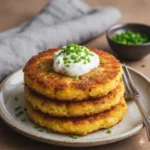
Golden, crispy on the outside and delightfully fluffy on the inside, these Old-Fashioned Potato Cakes are a heartwarming comfort food that transforms leftover mashed potatoes into a masterpiece.
- Prep Time: 10 minutes
- Cook Time: 10 minutes
- Total Time: 20 minutes
- Yield: 6–8 cakes 1x
- Category: Breakfast
- Method: Pan-Fry
- Cuisine: American
- Diet: Vegetarian
Ingredients
2 cups cold mashed potatoes
1 large egg
1/4 cup all-purpose flour
1/2 cup shredded cheddar cheese
1/4 cup chopped green onions or chives
Salt and black pepper to taste
1/2 tsp garlic powder
2 tbsp vegetable oil or butter for frying
Sour cream and extra chives for topping
Instructions
1. In a mixing bowl, combine mashed potatoes, egg, flour, cheese, green onions, garlic powder, salt, and pepper. Mix until well combined.
2. Form into 6–8 evenly sized patties, about 1/2 inch thick.
3. Heat oil or butter in a skillet over medium heat until shimmering.
4. Place patties in skillet without overcrowding. Cook 3–4 minutes per side until golden brown.
5. Remove and drain on paper towels.
6. Serve warm with sour cream and chives.
Notes
Use cold mashed potatoes for the best texture and easy shaping.
Don’t overcrowd the pan — it helps each cake crisp up perfectly.
Let the cakes sit undisturbed while cooking to form a proper crust.
Nutrition
- Serving Size: 1 cake
- Calories: 120
- Sugar: 1g
- Sodium: 180mg
- Fat: 6g
- Saturated Fat: 2g
- Unsaturated Fat: 3g
- Trans Fat: 0g
- Carbohydrates: 14g
- Fiber: 1g
- Protein: 3g
- Cholesterol: 30mg