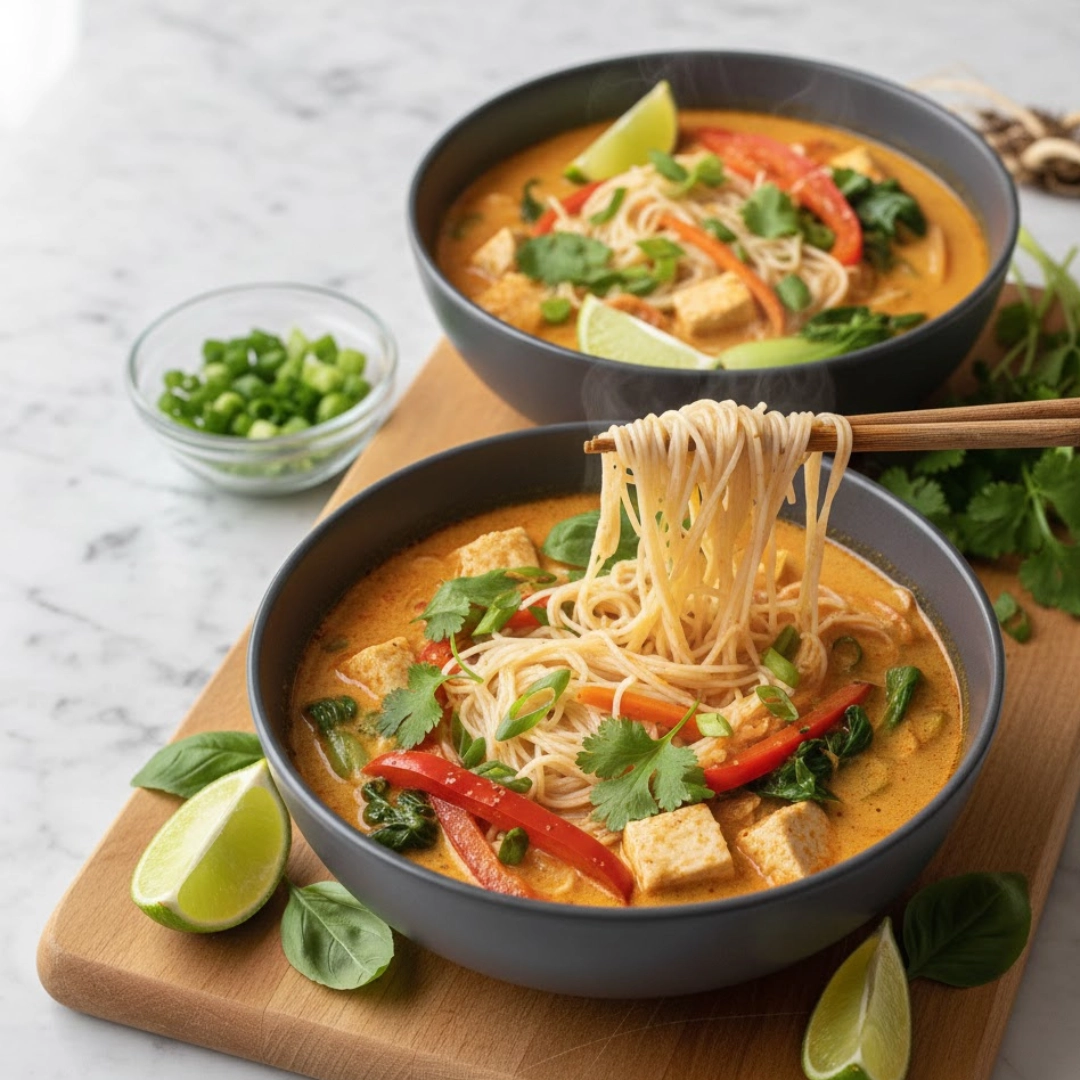
The deep, complex warmth of authentic Thai cuisine meets the speed of weeknight preparation in this truly satisfying Thai Curry Noodle Soup. This dish delivers a remarkable balance of creamy richness from coconut milk, a lively spice profile from red curry paste, and the bright, herbal counterpoint of fresh aromatics. It’s a complete meal in a bowl, featuring tender noodles, vibrant vegetables, and a savory broth that is ready to serve in under thirty minutes. Perfect for cooling evenings or anytime you crave a taste of the exotic, this soup is a guaranteed new favorite.
Table of Contents
The Pantry for the Perfect Pot
Gathering your ingredients first ensures a seamless cooking experience. This recipe is built on layers of flavor, so quality ingredients truly shine.
- For the Aromatic Base
- One tablespoon vegetable oil (or coconut oil)
- One medium yellow onion, thinly sliced
- Two cloves garlic, minced
- One tablespoon freshly grated ginger
- One quarter cup Thai red curry paste (adjust to heat preference)
- Four cups (32 ounces) chicken or vegetable broth, low sodium
- One (thirteen and one-half ounce) can full-fat coconut milk
- For the Noodles and Vegetables
- Eight ounces rice vermicelli noodles
- One red bell pepper, thinly sliced
- One cup thinly sliced carrots
- One cup chopped baby bok choy or spinach
- One-half cup cilantro, fresh, roughly chopped
- One-quarter cup basil, fresh, roughly chopped
- For Seasoning and Finish
- One tablespoon brown sugar
- One tablespoon fish sauce (or soy sauce for vegetarian option)
- Two limes, one for juice, one for wedges

Quick-Start Instructions for the Curry
- Sauté the Aromatics: Heat the oil in a large pot or Dutch oven over medium heat. Add the sliced onion and cook until softened, about five minutes. Stir in the minced garlic, grated ginger, and red curry paste. Cook for one minute, stirring constantly, until very fragrant.
- Build the Broth: Pour in the chicken or vegetable broth and the full can of coconut milk. Bring the mixture to a gentle simmer, stirring to fully dissolve the curry paste.
- Season the Soup: Stir in the brown sugar and the fish sauce (or soy sauce). Reduce the heat to low and allow the soup base to simmer gently for ten minutes, giving the flavors time to deepen.
- Prep the Noodles: While the broth simmers, prepare the rice vermicelli noodles according to package directions—usually soaking in hot water for a few minutes until tender—then drain well.
- Add the Vegetables: Introduce the sliced red bell pepper and carrots to the simmering broth. Cook for four to five minutes until they are tender-crisp.
- Finish and Serve: Stir in the bok choy or spinach and the cooked, drained noodles. Cook for just one to two minutes until the greens wilt. Remove the pot from the heat, stir in the juice of one lime, then ladle the Thai Curry Noodle Soup into bowls. Garnish generously with fresh cilantro and basil, serving with extra lime wedges.
Mastering the Technique: From Paste to Perfect Simmer
Achieving that signature depth of flavor requires a few key culinary moves. This section expands on the critical steps, focusing on what to look for at each stage to ensure an exceptionally aromatic and balanced final bowl.
Developing the Flavor Foundation
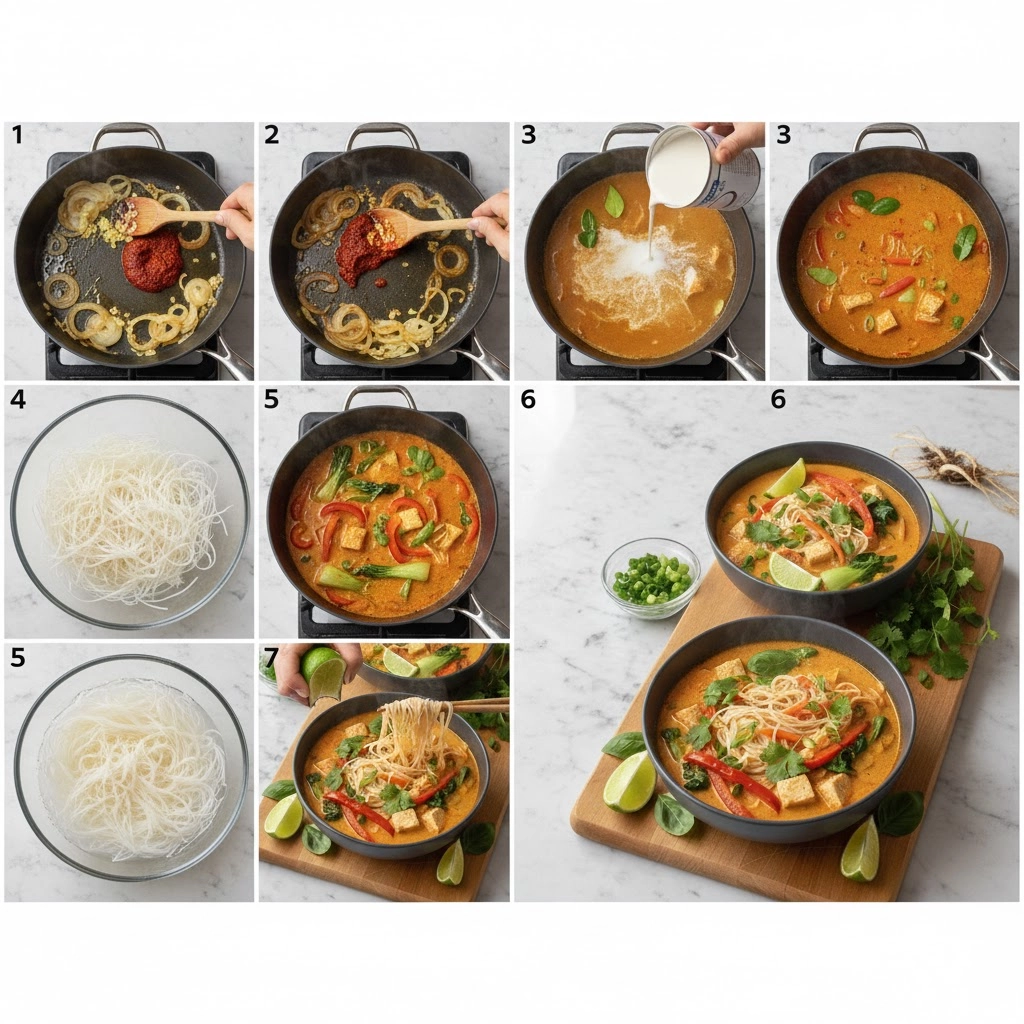
The most crucial step is the careful blooming of the red curry paste. Once the onion is translucent, adding the garlic, ginger, and curry paste to the hot oil and cooking them for a quick sixty seconds (Step 1) releases their fat-soluble flavor compounds. You’re looking for the paste to slightly darken and become intensely aromatic—it’s a dramatic shift from its initial state. Mistake to Avoid: Cooking the paste for too long will cause it to burn, resulting in a bitter flavor. Keep the heat controlled and stir constantly.
Integrating the Coconut Milk and Broth
When adding the liquids (Step 2), pour them in slowly while stirring. The fat from the coconut milk and the pigments from the curry paste must emulsify with the broth. A good, slow simmer after this step is essential for flavor fusion. You want a gentle bubble, not a rolling boil, as vigorous boiling can sometimes cause the coconut milk to “break,” resulting in an oily separation rather than a smooth, unified broth. The ten-minute simmer in Step 3 is non-negotiable; this is where the raw spice notes mellow and become a harmonious, rounded background.
Achieving Optimal Vegetable Texture
The timing for adding the vegetables (Step 5) is dictated by their density. Harder vegetables like carrots and bell peppers need five minutes to reach a state that is tender but still retains a slight snap, known as al dente or tender-crisp. The leafy greens, like bok choy or spinach, should only be added at the very end. The residual heat of the soup is enough to wilt them in a minute or two (Step 6). Overcooking the greens turns them muddy and loses their bright color and fresh texture.
The Final, Essential Brightness
The finishing touches are as important as the start. The addition of lime juice and fresh herbs right before serving provides the necessary acidity and brightness (Step 6) to cut through the richness of the coconut milk. Stir the lime juice in off the heat to preserve its fresh, sharp flavor. The vibrant aroma of fresh basil and cilantro, torn just before use, is the final sensory cue that defines this dish. Don’t skimp on the fresh herbs—they are the soul of the final presentation.
Expert Tips for a Restaurant-Quality Bowl
To elevate this simple soup from great to outstanding, focus on these small but impactful details.
- Boost Umami with Broth: Instead of plain chicken broth, use a concentrated seafood stock or mushroom stock for an even deeper, more complex savoriness. This small swap dramatically enhances the final taste profile.
- The Power of Kaffir Lime: Before the ten-minute simmer, tear three to four kaffir lime leaves and add them to the broth. Remove them before serving. Their intensely fragrant, citrus-floral aroma is central to authentic Thai cuisine and adds an incredible dimension.
- Char the Vegetables: For an additional layer of smokiness, flash-grill or quickly char the bell pepper and carrots in a separate dry, very hot pan before adding them to the soup base. This caramelization adds depth.
- Use the Whole Coconut Can: When opening the full-fat coconut milk, do not shake the can. The thick cream will have risen to the top. Scoop this thick cream out first and add it to the initial sauté with the curry paste. This boosts the initial richness and helps the paste bloom more effectively.
- Noodle Management: Never cook the rice noodles directly in the soup. They will absorb too much liquid and release starch, thickening the soup unpleasantly. Always cook them separately and add them only at the very end, directly to the serving bowls, or just before ladling.

Varietal Routes: Substitutions and Enhancements
This recipe is highly adaptable. Feel free to swap out proteins or alter the spice level to fit your preferences or what you have on hand.
- Protein Swap:
- Chicken: Thinly slice two boneless, skinless chicken breasts and quickly poach them in the simmering broth during the last five minutes.
- Shrimp: Add twelve peeled and deveined large shrimp during the final two minutes of cooking. They are done when they turn pink and opaque.
- Tofu: Use one block of firm or extra-firm tofu, pressed and cubed, then pan-fried until golden brown before adding it to the soup at the very end.
- Spice Level Control:
- To Mellow: Start with two tablespoons of the red curry paste instead of a quarter cup. You can always add more, but you cannot take it away. Adding a half teaspoon of peanut butter also provides a tempering richness.
- To Intensify: Stir in one to two minced Thai bird chilis along with the garlic and ginger, or simply use a generous pinch of red pepper flakes during the sauté step.
- Adding Complexity:
- A splash of soy sauce or tamari can replace the fish sauce for a vegetarian/vegan take while still providing necessary savoriness.
- A teaspoon of sesame oil swirled into the soup right before serving adds a nutty aroma that complements the red curry beautifully.
Practical Pairing: Presentation and Serving
A dish as vibrant as this deserves thoughtful serving companions. Since the soup is a full meal, the accompaniments should be simple and enhance the existing flavors.
- Crisp, Fresh Toppings: A small bowl of mixed fresh toppings placed on the table allows everyone to customize their bowl. Include crunchy roasted peanuts, extra fresh basil leaves, finely sliced green onions, and a few slivers of fresh jalapeño for heat.
- A Simple Green Side: Serve alongside a small, simple side salad dressed with a light, bright vinaigrette. The cool, vinegary crunch of the salad offers a wonderful contrast to the warm, creamy soup.
- Carb for Sopping: While the rice noodles are already filling, a small side of perfectly steamed jasmine rice is ideal for soaking up any leftover broth after the noodles are gone. The delicate fragrance of the rice works perfectly with the coconut milk base.
- Beverage Choice: An unsweetened iced tea, perhaps infused with a little lemongrass or mint, provides a palate cleanser that doesn’t compete with the rich spices of the curry.
Common Questions on Thai Preparation
Can I make the broth ahead of time?
Absolutely. The broth base—Steps 1 through 3—can be prepared up to three days in advance and stored in the refrigerator. In fact, making it ahead often allows the flavors to meld and deepen even further. When ready to serve, bring the broth to a simmer and proceed with adding the vegetables and noodles.
What kind of noodles are best?
Rice vermicelli is the most traditional choice due to its light texture and quick cooking time. However, wide rice noodles (like Pad Thai noodles) or even regular spaghetti or linguine (an inauthentic but convenient substitution) will work. Just ensure you pre-cook them separately and add them drained at the very end.
Why is my soup separating or oily?
This is often caused by using low-fat coconut milk or by boiling the soup too vigorously after the coconut milk is added. Full-fat coconut milk is essential for stability. If separation occurs, try whisking in a small spoonful of cornstarch mixed with cold water, or stir in a final tablespoon of coconut cream off the heat to help re-emulsify the broth.
Can I freeze the leftovers?
Freezing is not recommended for this particular soup. The rice noodles will break down and become mushy upon thawing, and the coconut milk can sometimes separate into an unpleasant texture. It is best enjoyed fresh or kept refrigerated for up to two days.
What is the purpose of the fish sauce?
Fish sauce (known as nam pla) is a quintessential element of Southeast Asian cooking. Its purpose is not to make the dish taste “fishy” but to provide a salty, intensely savory depth, or umami, that balances the sweetness and acidity. It is a fundamental seasoning for authentic flavor.
Nutritional Snapshot
| Nutrient | Amount per Serving |
| Calories | 480 kcal |
| Protein | 12 g |
| Carbs | 55 g |
| Fat | 25 g |
| Fiber | 6 g |
| Sugar | 10 g |
| Sodium | 680 mg |
Nutrition Disclaimer
Nutrition information is an estimate and may vary based on preparation and ingredients used.
PrintEffortless and Flavorful Thai Red Curry Noodle Soup
A quick and satisfying recipe for a creamy, spicy Thai Curry Noodle Soup featuring red curry paste, coconut milk, and rice vermicelli noodles. Perfect for an aromatic weeknight meal.
- Prep Time: 10 mins
- Cook Time: 20 mins
- Total Time: 30 mins
- Yield: 4 servings 1x
- Category: Soup
- Method: Stovetop
- Cuisine: Thai
Ingredients
1 tablespoon vegetable oil (or coconut oil)
1 medium yellow onion, thinly sliced
2 cloves garlic, minced
1 tablespoon freshly grated ginger
1/4 cup Thai red curry paste
4 cups (32 ounces) chicken or vegetable broth, low sodium
1 (13.5 ounce) can full-fat coconut milk
8 ounces rice vermicelli noodles
1 red bell pepper, thinly sliced
1 cup thinly sliced carrots
1 cup chopped baby bok choy or spinach
1/2 cup cilantro, fresh, roughly chopped
1/4 cup basil, fresh, roughly chopped
1 tablespoon brown sugar
1 tablespoon fish sauce (or soy sauce for vegetarian option)
2 limes, one for juice, one for wedges
Instructions
1. Sauté the Aromatics: Heat the oil in a large pot or Dutch oven over medium heat. Add the sliced onion and cook until softened, about five minutes. Stir in the minced garlic, grated ginger, and red curry paste. Cook for one minute, stirring constantly, until very fragrant.
2. Build the Broth: Pour in the chicken or vegetable broth and the full can of coconut milk. Bring the mixture to a gentle simmer, stirring to fully dissolve the curry paste.
3. Season the Soup: Stir in the brown sugar and the fish sauce (or soy sauce). Reduce the heat to low and allow the soup base to simmer gently for ten minutes, giving the flavors time to deepen.
4. Prep the Noodles: While the broth simmers, prepare the rice vermicelli noodles according to package directions—usually soaking in hot water for a few minutes until tender—then drain well.
5. Add the Vegetables: Introduce the sliced red bell pepper and carrots to the simmering broth. Cook for four to five minutes until they are tender-crisp.
6. Finish and Serve: Stir in the bok choy or spinach and the cooked, drained noodles. Cook for just one to two minutes until the greens wilt. Remove the pot from the heat, stir in the juice of one lime, then ladle the Thai Curry Noodle Soup into bowls. Garnish generously with fresh cilantro and basil, serving with extra lime wedges.
Notes
The broth base can be prepared up to three days in advance and stored in the refrigerator.
Use full-fat coconut milk for the best flavor and to prevent the soup from separating.
For an authentic touch, add 3-4 kaffir lime leaves during the simmering step.
Nutrition
- Serving Size: 1 bowl
- Calories: 480
- Sugar: 10g
- Sodium: 680mg
- Fat: 25g
- Carbohydrates: 55g
- Fiber: 6g
- Protein: 12g