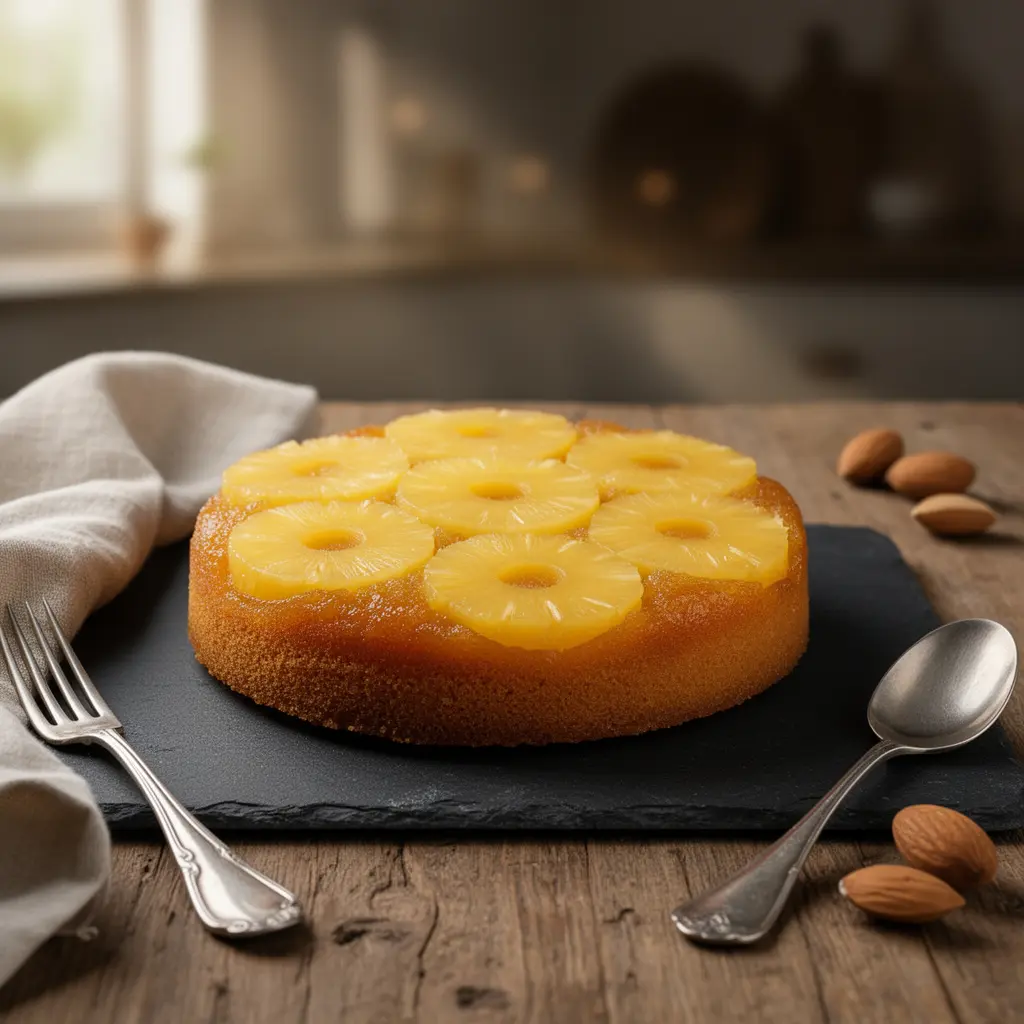
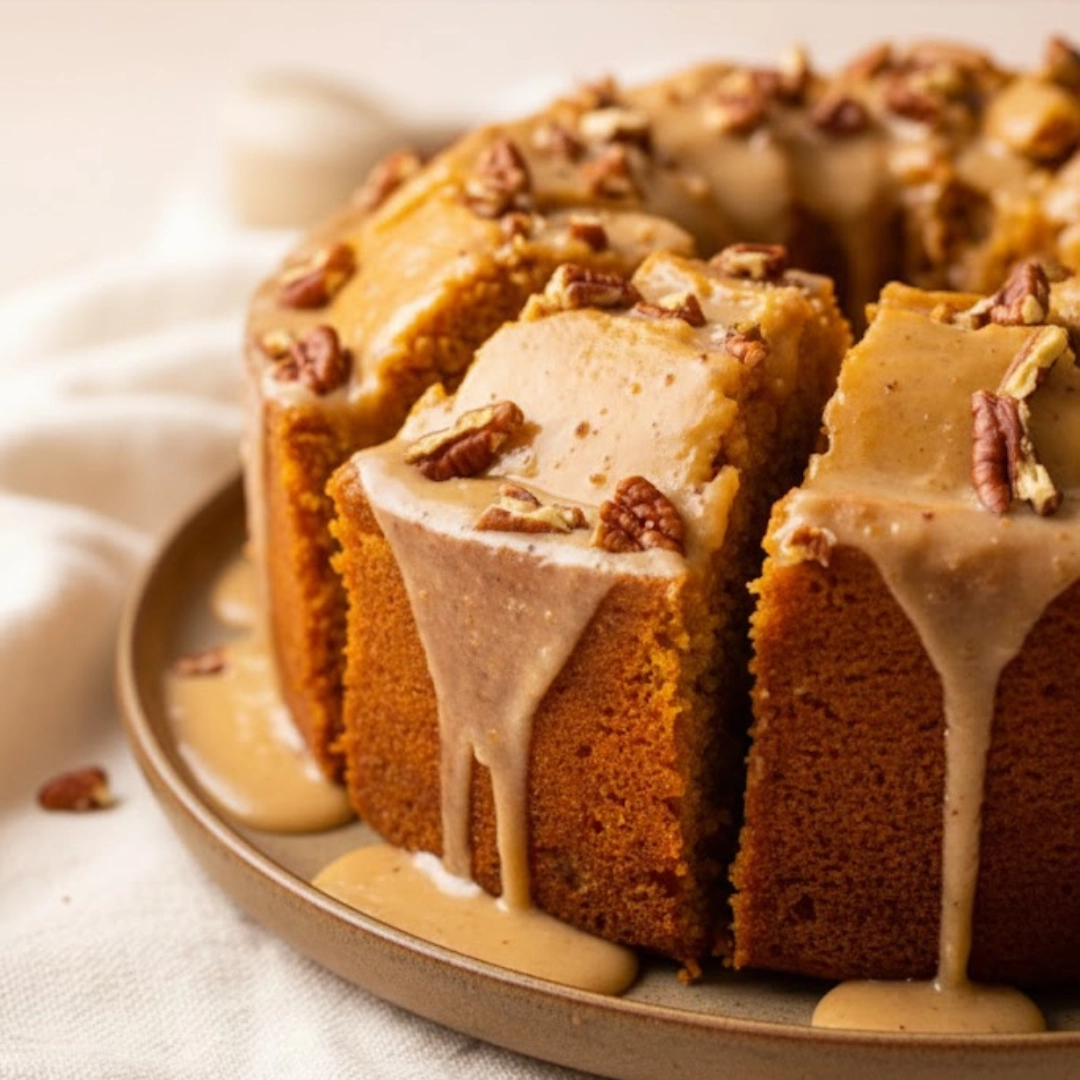
Sweet potato cake is a cornerstone of American dessert tradition, often taking the form of a light layer cake or a deeply spiced bundt. This particular Sweet Potato Butter Cake, however, elevates the experience entirely, blending the earthy richness of mashed sweet potatoes with the luxurious, tender crumb of a classic butter cake. It’s a denser, more finely-textured cake than a pound cake, boasting a moistness that lasts for days, making it an excellent choice for holiday gatherings, Sunday dinner dessert, or simply an elevated coffee break treat. With its subtle autumnal spice and profound buttery flavor, it offers comfort in every slice while remaining sophisticated enough for any formal table.
Table of Contents
The Components: A Culinary Blueprint
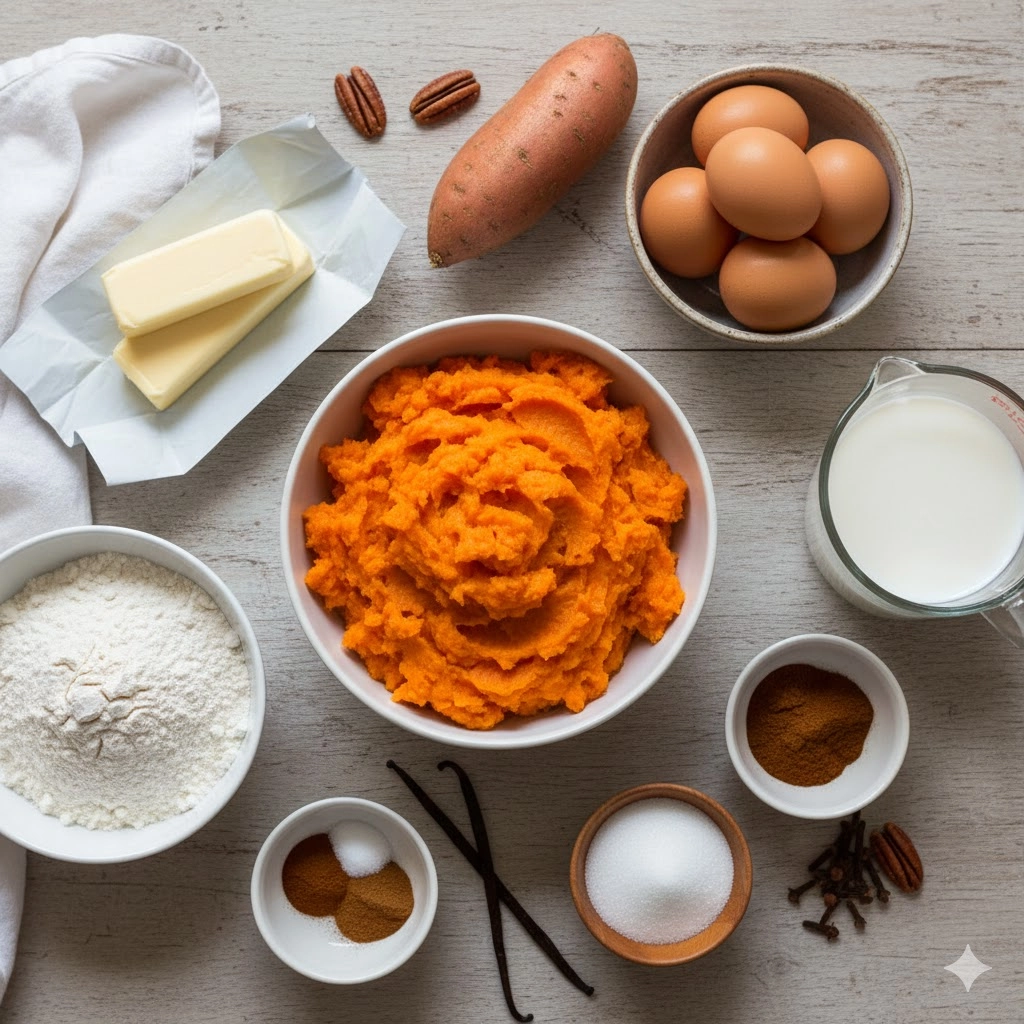
This recipe relies on precise measurements and quality ingredients to achieve its signature rich texture and complex flavor. The ratio of butter to flour, along with the careful inclusion of mashed sweet potato, is what gives this cake its decadent crumb structure.
Dry Ingredients
- 3 cups all-purpose flour (360 grams)
- 2 teaspoons baking powder
- 1 teaspoon fine sea salt
- 1 teaspoon ground cinnamon
- Half teaspoon ground nutmeg
- Quarter teaspoon ground cloves
Wet Ingredients
- 1 cup (2 sticks) unsalted butter, softened to room temperature
- 2 cups granulated sugar
- 4 large eggs, at room temperature
- 1 teaspoon vanilla extract
- 1 cup whole milk, at room temperature
- 1 cup smoothly mashed, cooked sweet potato (about 1 medium sweet potato)
Simple Glaze (Optional)
- 1 cup powdered sugar
- 3 tablespoons whole milk
- Half teaspoon vanilla extract
Preparing the Cake: Step-by-Step Method
Following these numbered steps will ensure a beautifully risen, uniformly textured cake with a perfectly golden crust and tender interior.
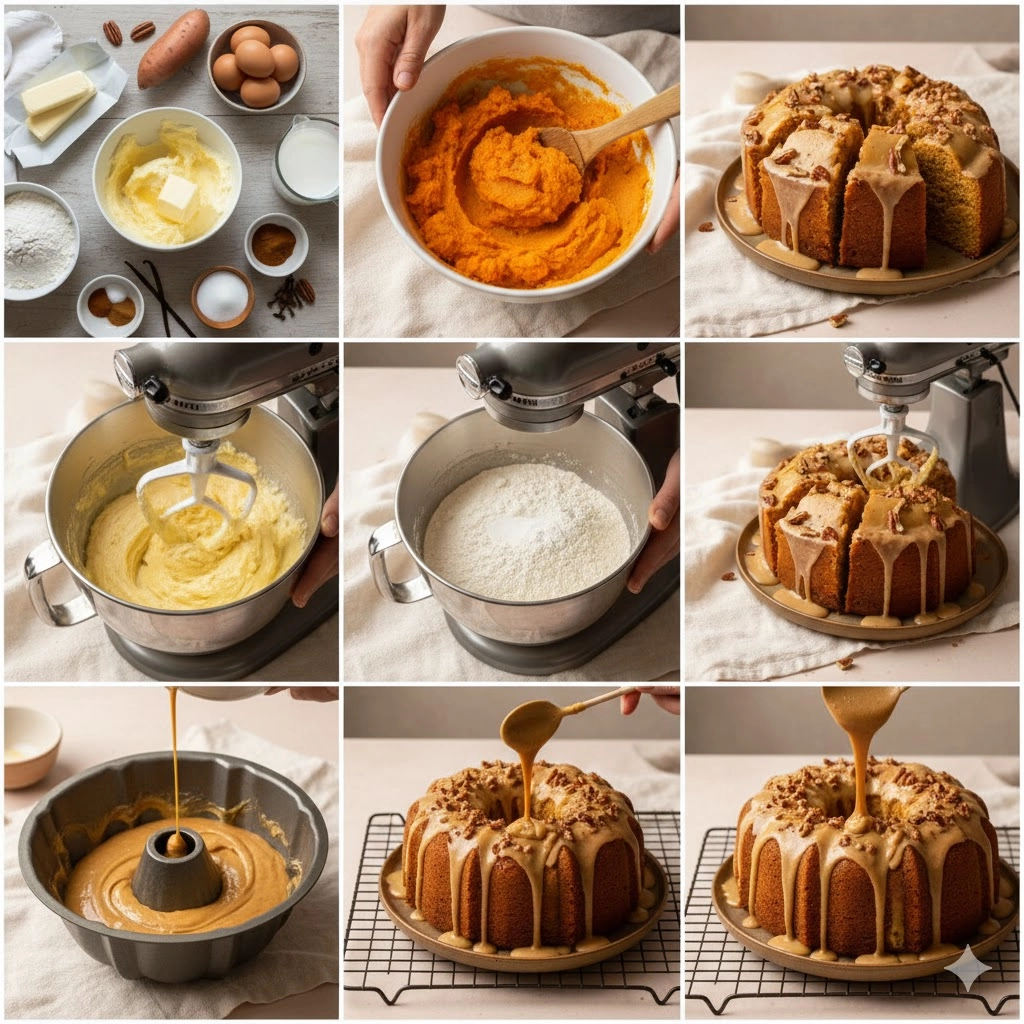
- Preparation and Oven Setting: Preheat your oven to three hundred twenty-five Fahrenheit. Grease and lightly flour a ten-inch bundt pan or a nine-by-five-inch loaf pan. Whisk the dry ingredients together in a medium bowl and set aside.
- Creaming the Butter and Sugar: In a large mixing bowl, beat the softened butter until light and creamy. Gradually add the granulated sugar, beating on medium speed for four to five minutes until the mixture is visibly pale and fluffy.
- Incorporating Eggs and Vanilla: Add the eggs one at a time, beating well after each addition until fully incorporated. Mix in the vanilla extract. Scrape down the sides of the bowl as needed to ensure even mixing.
- Mixing the Sweet Potato: Gently fold the mashed sweet potato into the creamed butter mixture until just combined. Be careful not to overmix at this stage.
- Alternating Dry and Wet: On low speed, begin adding the flour mixture and the milk, starting and ending with the flour. Add one-third of the flour, half of the milk, another third of the flour, the remaining milk, and then the final third of the flour. Mix only until the last streaks of flour disappear.
- Baking: Pour the batter evenly into the prepared pan. Bake for sixty to seventy-five minutes for a bundt cake, or seventy to eighty-five minutes for a loaf cake.
- Cooling and Glazing: Let the cake cool in the pan for ten minutes before inverting it onto a wire rack. Whisk together the glaze ingredients until smooth. Once the cake is completely cool, drizzle the glaze over the top.
Achieving the Signature Crumb: Essential Detailed Pointers
The true beauty of a butter cake lies in its velvety, uniform texture. Achieving this requires attention to a few sensory and technical details during the mixing process.
On Bringing Ingredients to Temperature
The importance of using room temperature ingredients cannot be overstated. When the butter, eggs, milk, and sweet potato are all the same moderate temperature, they emulsify cleanly during the creaming process. If an egg or milk is cold, it will immediately chill the creamed butter, causing it to seize, resulting in a heavier, tougher cake. Your butter should yield easily to gentle pressure, but not be melting. Your eggs and milk should feel neither warm nor cold to the touch.
Recognizing a Proper Creaming
The goal of the creaming stage—beating the butter and sugar—is not just to combine them, but to incorporate air. This is the primary leavening for a butter cake. After four to five minutes of beating, the mixture should transform from dense yellow to a pale, almost white hue, and its volume should increase noticeably, taking on a fluffy, mousse-like appearance. This trapped air is what creates the cake’s fine, signature structure.
Handling the Sweet Potato Mash
For the smoothest crumb, the sweet potato mash must be entirely free of lumps and moisture. Use sweet potatoes that have been baked or steamed until extremely tender, then pureed in a food processor or pressed through a fine sieve. The mash should be thick, not watery. Gently folding it into the batter ensures you don’t overwork the gluten developed in the creaming stage, which would lead to a dense, chewy cake.
The Doneness Check
Due to the moisture from the sweet potato and the low baking temperature, a visual check alone is not enough. The top of the cake should be a deep golden-brown, and the edges should look slightly pulled away from the pan. To confirm doneness, insert a long wooden skewer or toothpick into the deepest part of the cake. It should emerge with a few moist, sticky crumbs clinging to it, but not wet batter. If the skewer is clean, the cake is likely overbaked.
Expert Baker’s Insights for Success
Making an excellent Sweet Potato Butter Cake is about technique and observation. Use these unique insights from years of baking to perfect your finished product.
- Flour Weighting: While cups are provided, using a kitchen scale to measure the flour (360 grams) ensures you don’t accidentally incorporate too much, which is the fastest way to a dry cake.
- Pan Preparation Nuance: After greasing your bundt pan, dust it with a small amount of the dry flour mixture. Rotate the pan to coat all surfaces, then invert it and tap out the excess. For extra insurance against sticking, you can dust the pan with a small amount of cocoa powder instead of flour for a darker crust that is less prone to showing white patches.
- Bundt Pan Placement: If using a bundt pan, place a baking sheet underneath it in the oven. This helps insulate the bottom of the pan, promoting more even baking across the entire surface and preventing the bottom from over-browning before the center is done.
- Gentle Mixing: Once the flour is introduced, mix the batter on the lowest speed possible and stop the moment you no longer see white streaks of flour. Any more mixing activates the gluten unnecessarily, resulting in a tougher texture. The goal is to bind the ingredients, not develop elasticity.
- Moisture Control for Mash: If your sweet potato mash seems watery (often the case with boiled sweet potatoes), spread it thinly on a sheet pan and bake it at two hundred fifty Fahrenheit for ten minutes to evaporate some of the excess liquid before incorporating it into the batter.
- Patience in Cooling: Do not rush the cooling process in the pan. The initial ten minutes allow the cake structure to set and firm up before the stress of inverting. If you flip it too early, the center may collapse or stick. If you wait too long, it may create condensation and also stick.
Flavor Adjustments and Substitutions
A classic butter cake is forgiving and can handle small adjustments to suit personal preference or pantry availability.
- Spice Level Boost: For a more assertive autumnal flavor, substitute a quarter cup of the granulated sugar with light brown sugar. This adds a subtle molasses note that complements the existing cinnamon and nutmeg.
- Citrus Zest: A teaspoon of finely grated orange zest, added during the creaming stage, introduces a bright contrast to the richness of the sweet potato and butter. Orange is a classic pairing for sweet potato desserts.
- Dairy Swap: If whole milk is unavailable, equal parts buttermilk or full-fat Greek yogurt thinned slightly with water can be used. Buttermilk will introduce a slight tang and react with the baking powder to create an even more tender crumb.
- Nutty Inclusion: For added texture, fold in half a cup of toasted, chopped pecans or walnuts just before the final mix. Toasting is crucial to maximize flavor.
- Glaze Alternative: Instead of a simple powdered sugar glaze, consider a Maple-Pecan Drizzle by substituting two tablespoons of the milk with pure maple syrup and adding a pinch of salt to balance the sweetness.
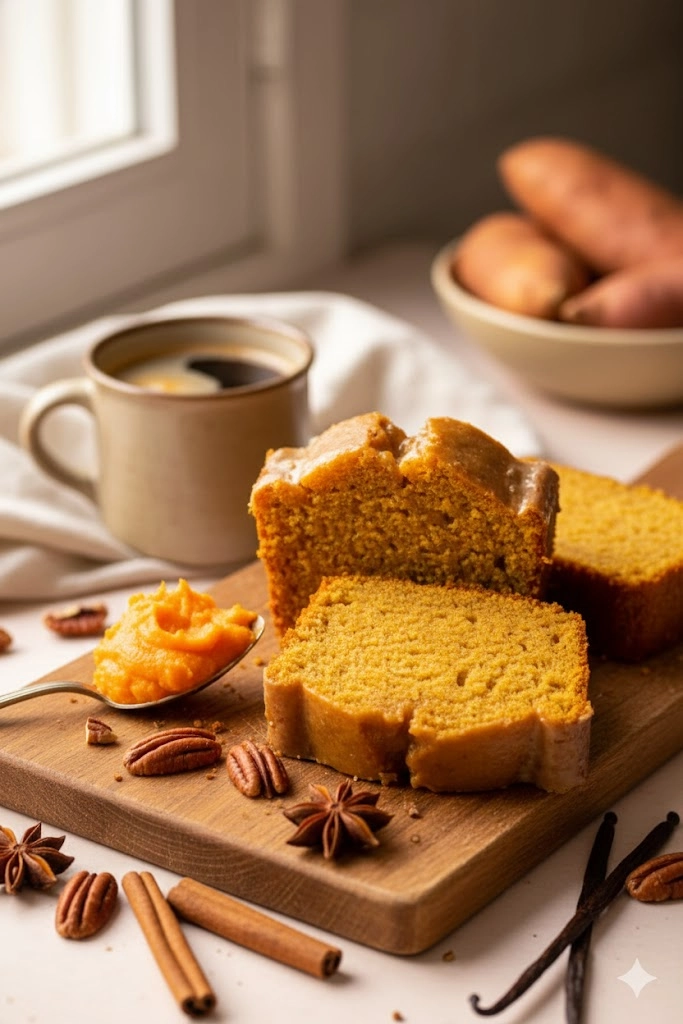
Presenting the Cake: Serving Suggestions
The simple elegance of this butter cake means it pairs wonderfully with a variety of textures and temperatures, making it versatile for many dessert scenarios.
- Whipped Cream and Spice: Serve slices alongside a generous dollop of freshly whipped heavy cream that has been lightly sweetened and dusted with a pinch of nutmeg or allspice.
- Warm Dessert Sauce: Offer a side of warm caramel sauce or a burnt butter glaze. The warmth and complexity of these sauces play beautifully against the cake’s earthy notes.
- Seasonal Fruit Compote: A tart, simple berry compote—such as cranberry or blackberry—offers a desirable textural and flavor contrast to the cake’s richness and density.
- Coffee Pairing: Given its substantial texture, this cake is an ideal accompaniment to a robust espresso, a dark roast coffee, or a spiced chai latte, where the beverage cuts through the cake’s butteriness.
Kitchen Queries: Sweet Potato Cake FAQs
Here are some of the most common questions bakers have when preparing a sweet potato butter cake.
Can I use canned sweet potato puree instead of fresh?
Yes, canned sweet potato puree can be used, but it must be one hundred percent sweet potato with no added sugar or spices. Ensure you measure out exactly one cup and consider blotting it with a paper towel if it appears overly moist, as commercial purees can sometimes be wetter than homemade mash.
How do I store the leftovers to maintain moistness?
To keep the cake fresh, store it at room temperature in an airtight container for up to three days. The high-fat content of a butter cake helps it resist staling. If you plan to keep it longer, wrap it tightly in plastic wrap and store it in the refrigerator for up to one week.
Can I freeze the cake?
This cake freezes exceptionally well, particularly before it has been glazed. Cool the cake completely, wrap it tightly in two layers of plastic wrap followed by a layer of aluminum foil, and freeze for up to three months. Thaw it overnight in the refrigerator, and then allow it to come to room temperature before glazing and serving.
Why is my cake sinking in the middle?
A sinking center is usually the result of one of two issues: either the cake was removed from the oven before it was fully baked, or the batter was overmixed, causing the air bubbles created during creaming to collapse in the heat. Ensure you check for doneness only with the moist-crumb test, and mix the batter gently after the flour is introduced.
Is it possible to make this recipe gluten-free?
While untested with this specific recipe, a one-to-one gluten-free baking blend that contains xanthan gum should provide a decent result. Note that the texture may be slightly more delicate, so handle the cooled cake with care when removing it from the pan.
Nutritional Estimation
It is important to remember that these figures are estimated based on the listed ingredients and preparation methods. Actual values can vary slightly.
| Nutrient | Amount per Serving |
| Calories | 420 kcal |
| Protein | 5 g |
| Carbs | 65 g |
| Fat | 16 g |
| Fiber | 2 g |
| Sugar | 40 g |
| Sodium | 150 mg |
Disclaimer
Nutrition information is an estimate and may vary based on preparation and ingredients used.
PrintThe Ultimate Sweet Potato Butter Cake for Any Occasion

This Sweet Potato Butter Cake offers a refined, dense, and incredibly moist crumb, blending the earthy sweetness of mashed sweet potato with rich buttery notes and subtle autumn spice.
- Prep Time: 20 mins
- Cook Time: 1 hour 15 mins
- Total Time: 1 hour 35 mins
- Yield: 12 servings 1x
- Category: Dessert
- Method: Baking
- Cuisine: American
Ingredients
3 cups all-purpose flour
2 tsp baking powder
1 tsp fine sea salt
1 tsp ground cinnamon
½ tsp ground nutmeg
¼ tsp ground cloves
1 cup (2 sticks) unsalted butter, softened
2 cups granulated sugar
4 large eggs, room temperature
1 tsp vanilla extract
1 cup whole milk, room temperature
1 cup smoothly mashed, cooked sweet potato
Simple Glaze (Optional):
1 cup powdered sugar
3 tbsp whole milk
½ tsp vanilla extract
Instructions
1. Preheat your oven to three hundred twenty-five Fahrenheit. Grease and lightly flour a ten-inch bundt pan. Whisk the dry ingredients together in a medium bowl and set aside.
2. In a large mixing bowl, beat the softened butter until light and creamy. Gradually add the granulated sugar, beating on medium speed for four to five minutes until the mixture is visibly pale and fluffy.
3. Add the eggs one at a time, beating well after each addition. Mix in the vanilla extract. Scrape down the sides of the bowl as needed.
4. Gently fold the mashed sweet potato into the creamed butter mixture until just combined.
5. On low speed, begin adding the flour mixture and the milk alternately, starting and ending with the flour. Mix only until the last streaks of flour disappear.
6. Pour the batter evenly into the prepared pan. Bake for sixty to seventy-five minutes for a bundt cake.
7. Let the cake cool in the pan for ten minutes before inverting it onto a wire rack. Once completely cool, whisk together the glaze ingredients and drizzle over the top.
Notes
For the smoothest crumb, ensure the sweet potato mash is entirely free of lumps and moisture.
Use room temperature ingredients (butter, eggs, milk) for a perfect emulsion and fine texture.
Do not overmix the batter once the flour has been added to prevent a tough cake.
Nutrition
- Serving Size: 1 slice
- Calories: 420
- Sugar: 40g
- Sodium: 150mg
- Fat: 16g
- Saturated Fat: 10g
- Unsaturated Fat: 4g
- Trans Fat: 0g
- Carbohydrates: 65g
- Fiber: 2g
- Protein: 5g
- Cholesterol: 80mg