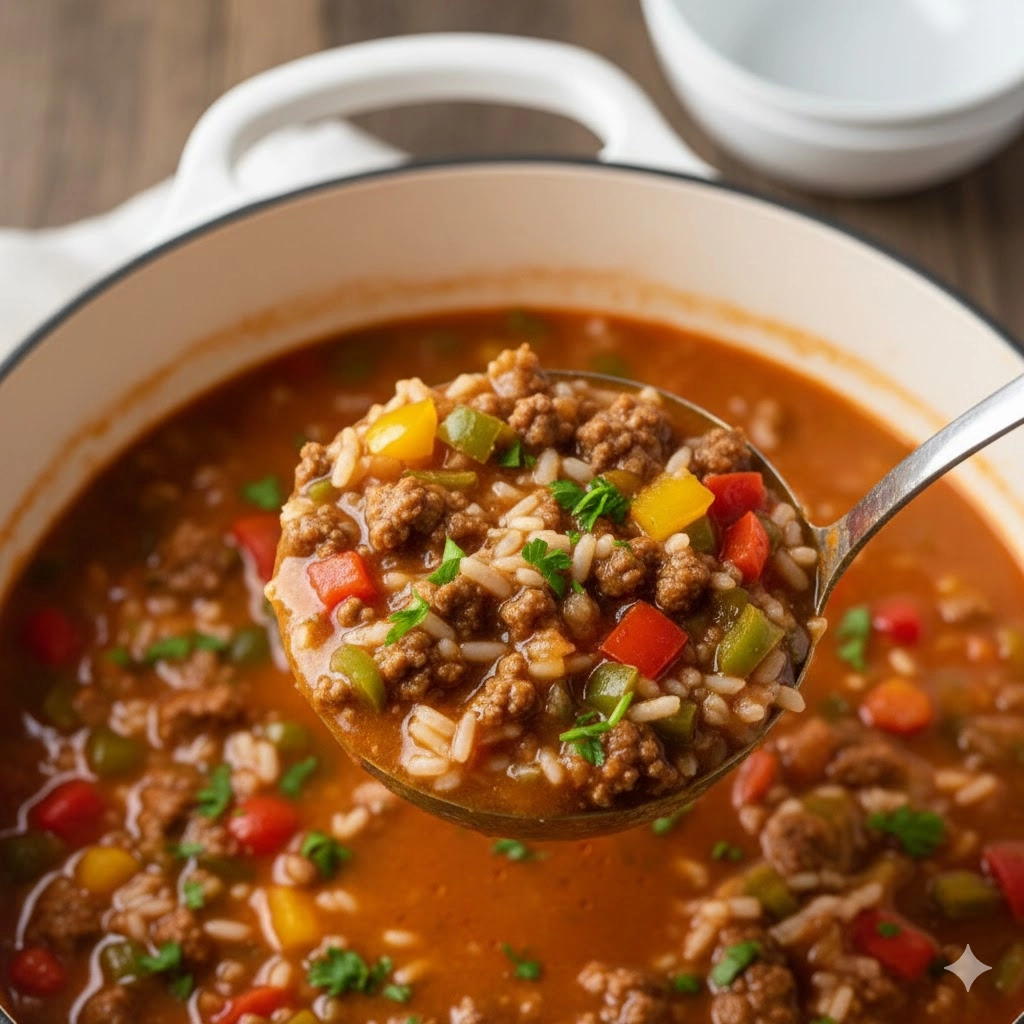
This soup is the very definition of pragmatic kitchen alchemy, taking all the rich, savory character of a classic bell pepper stuffing and translating it into a satisfying bowl. It’s an approachable, one-pot dish that captures the essence of home cooking without requiring hours of meticulous stuffing and baking. Imagine sweet bell peppers, seasoned ground beef, rice, and a robust tomato base melding together in a slow, gentle simmer—that is the experience we are chasing. This Stuffed Pepper Soup provides exceptional depth of flavor and texture, making it the ideal centerpiece for a cozy weeknight meal or a comforting starter for a weekend gathering. It is the best way to enjoy all the satisfying flavors of its inspiration in a fraction of the time.
Table of Contents
The Essential Building Blocks: What You’ll Need
The secret to a complex soup lies in the careful selection of fundamental ingredients. For a batch that serves eight generously, keep this list close. Measurements are listed using standard US volume first, with optional metric equivalents provided for precision.
Produce and Aromatics
- 1 tablespoon olive oil
- 1 medium yellow onion, finely diced (about one cup, or 150 grams)
- 3 cloves garlic, minced
- 3 large bell peppers (a mix of red, yellow, and green for color), diced into half-inch pieces (about 450 grams)
- 1 (15-ounce) can tomato sauce (425 milliliters)
- 1 (14.5-ounce) can diced tomatoes, undrained (411 grams)
Proteins and Grains
- 1.5 pounds lean ground beef, preferably eighty-five to ninety percent lean (about 680 grams)
- 1 cup uncooked long-grain white rice (about 200 grams)
Liquids and Seasonings
- 4 cups beef broth (low sodium preferred, 946 milliliters)
- 1 cup water (237 milliliters)
- 1 teaspoon dried oregano
- 1 teaspoon dried basil
- 1 teaspoon Worcestershire sauce
- 1.5 teaspoons kosher salt, plus more to taste
- Half teaspoon freshly cracked black pepper
- 2 tablespoons fresh parsley, chopped (for garnish)
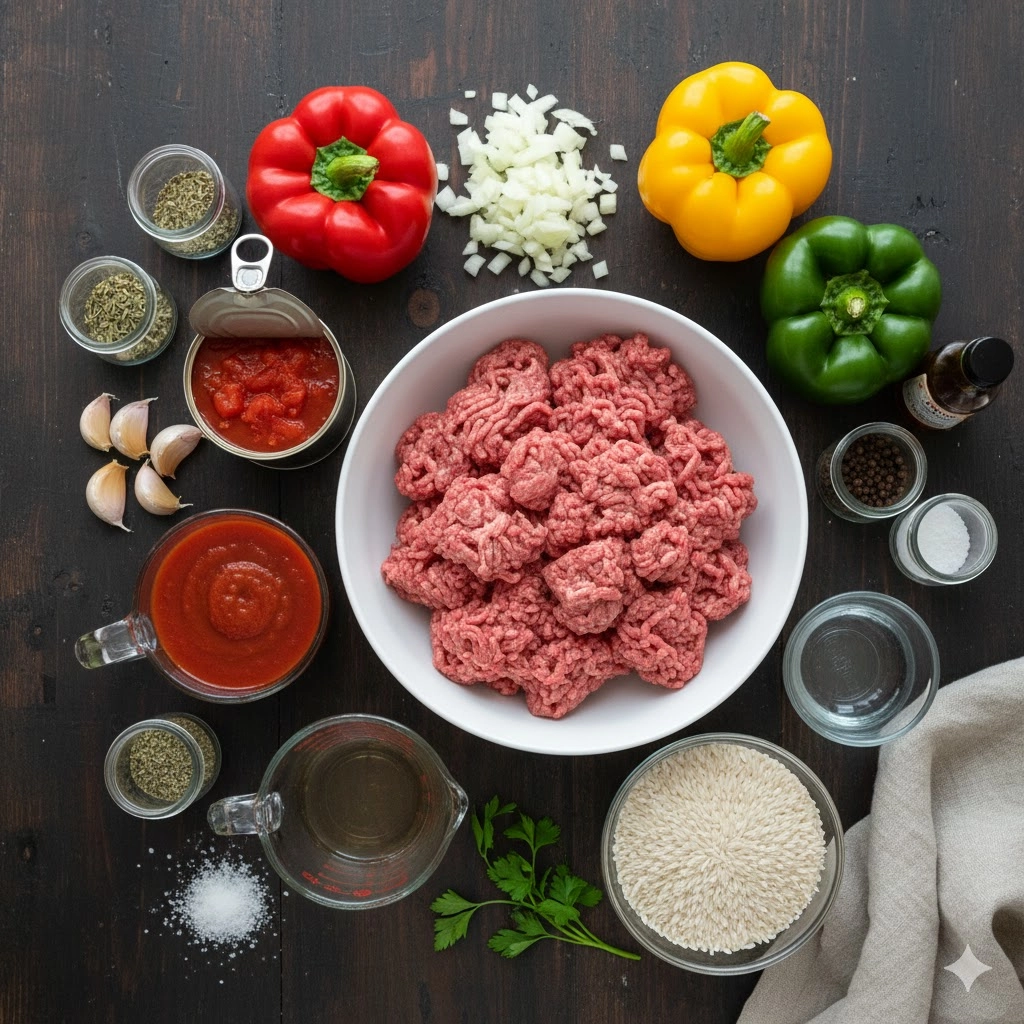
Preparing the Components: A Step-by-Step Guide
This process streamlines the traditional approach into a simple, sequential progression. Follow these high-level instructions, then consult the detailed section for texture cues and flavor checkpoints.
- Sauté the Base: Heat the oil in a large pot or Dutch oven and cook the diced onion until softened. Add the ground beef and brown it, breaking it up as it cooks.
- Infuse the Aromatics: Drain any excess fat, then incorporate the minced garlic and the dried herbs (oregano and basil), stirring constantly for sixty seconds.
- Build the Broth: Pour in the canned tomato sauce, diced tomatoes, beef broth, and water. Stir in the Worcestershire sauce, salt, and black pepper. Bring the mixture to a full boil.
- Introduce the Peppers and Rice: Add the diced bell peppers and the uncooked rice to the boiling liquid. Stir well to ensure the rice is fully submerged and dispersed.
- Simmer and Develop: Reduce the heat immediately to low, cover the pot with a tight-fitting lid, and allow the soup to simmer gently for forty-five minutes.
- Rest and Garnish: After simmering, turn off the heat and let the soup rest, covered, for ten minutes. Stir gently, taste for final seasoning adjustments, and serve immediately, topping each bowl with fresh parsley.

Mastering the Simmer: Detailed Cooking Techniques
Creating a soup with truly layered flavor requires attention to detail at every phase, from the initial sizzle to the final moment the rice reaches perfect tenderness.
Sautéing for Depth
The foundation of this Stuffed Pepper Soup is a deeply flavored aromatic base. When sautéing the onion, aim for translucency—not browning. This sweetens the onion and prevents any harsh, raw bite. Once the onions have softened, add the ground beef. The key here is not just to cook the beef, but to achieve a deep, rich brown on its surfaces, which locks in an immense amount of savory umami. Breaking the beef up finely is crucial, as the small granules will mimic the loose texture of a stuffed pepper filling.
After draining any rendered fat, which prevents the final soup from tasting oily, the addition of garlic and dried herbs marks a critical phase. Garlic and herbs should only cook for sixty seconds maximum. This short, aggressive bloom in the hot oil wakes up their essential oils, multiplying their fragrance and taste. If you cook them longer, the garlic will become bitter and the herbs will lose their vibrancy. The resulting aroma should be powerfully savory and earthy before you add any liquid.
The Art of the Simmer
Once the liquids (broth, water, and tomatoes) are introduced, the goal shifts from active cooking to passive flavor development. Bringing the liquid to a rolling boil initially ensures the entire pot is at the right temperature for the rice to begin its hydration process. However, the subsequent reduction to a low simmer is where the magic happens. A true simmer is gentle: tiny, slow bubbles should periodically break the surface, but the liquid should not be churning violently.
If the heat is too high, the rice will absorb the liquid too quickly and scorch on the bottom of the pot, creating an unpleasant charred flavor that permeates the entire dish. Furthermore, vigorous boiling can break up the diced peppers and the ground beef too much, resulting in a mushy texture. By covering the pot and keeping the heat low for forty-five minutes, you create a steamy environment that cooks the rice and softens the peppers evenly, allowing the slow release of flavor compounds from the herbs, spices, and tomato base into the broth.
Final Adjustments and Serving
The final ten-minute rest is non-negotiable. This time allows the heat to stabilize and the last bit of steam to be absorbed by the rice grains, guaranteeing they are fully plumped and tender without being waterlogged. When you uncover the pot, the soup should look thick, rich, and cohesive—the bell peppers tender but still holding their shape.
Before serving, you must taste and adjust the seasoning. This is the moment to transform a good soup into a great one. The saltiness will depend heavily on the broth you used, so add small pinches of kosher salt until the flavors truly pop. If the soup tastes dull, it needs more salt. If it tastes too acidic (due to the tomatoes), a pinch of granulated sugar can balance the flavor profile without making it sweet. A few dashes of a high-quality vinegar, like red wine or sherry, can also add brightness if the flavor feels flat or muddy. Stir in the fresh parsley just before serving—its sharp, clean flavor is a perfect counterpoint to the deep, savory broth.
Beyond the Basics: Advanced Tips for an Elite Broth
Achieving an expert-level result requires moving past the simple instructions and embracing nuances that elevate the finished product.
- Toast the Rice: Before adding the rice to the pot, briefly sauté the dry grains in the hot oil (after removing the beef, if necessary) for sixty to ninety seconds until the edges look opaque. This toasting process, similar to making risotto, adds a subtle nuttiness to the grain and helps the rice hold its shape better during the long simmer, preventing it from turning into a starch paste.
- Use Better Than Bouillon: Instead of relying solely on carton or canned broth, substitute three cups of water and dissolve three teaspoons of a concentrated beef base (like Better Than Bouillon) into the liquid component. The concentrated flavor paste provides a much richer, more roasted, and complex flavor than most store-bought liquid broths.
- Soften the Peppers First: If you prefer your bell peppers to be extremely soft—melting into the broth rather than holding their shape—add them to the pot along with the diced onion and sauté them for five to seven minutes before adding the ground beef. This head start ensures they completely break down during the long simmering phase.
- Add a Parmesan Rind: During the simmering stage, drop one two-inch piece of leftover hard Parmesan rind into the broth. It will slowly dissolve, infusing the entire soup with a magnificent depth of salty, nutty, savory flavor. Be sure to fish it out and discard it before serving.
- Use Fire-Roasted Tomatoes: Instead of regular diced tomatoes, use canned fire-roasted diced tomatoes. The roasting process adds a subtle, smoky sweetness that greatly enhances the complexity of the tomato base and complements the rich beef flavor.
- Thicken with Cornstarch: If you find your soup is too thin at the end of the cooking process, mix one tablespoon of cornstarch with two tablespoons of cold water to create a slurry. Stir this slurry slowly into the simmering soup and cook for two minutes until the broth thickens slightly. This is far better than overcooking the rice to release more starch.

Swapping and Styling: Customizing Your Soup
This recipe is inherently flexible. Once you have the core technique down, you can adapt the ingredients to suit different dietary needs or simply vary the flavor profile.
Protein Alternatives
You can easily swap the ground beef with other types of meat. Ground turkey or chicken work beautifully for a lighter dish, though they may require an extra tablespoon of olive oil to prevent sticking and often benefit from a little more salt. For a plant-based option, substitute one and a half pounds of brown or green lentils (rinsed) or two cans of drained, rinsed black beans. If using lentils, you may need to increase the simmering time by twenty minutes; if using beans, add them only during the final ten minutes of simmering to prevent them from becoming mushy.
Grain and Fiber Swaps
If white rice is not your preference, you have several excellent options. You can use brown rice, but be aware that the total cooking time will increase by approximately twenty to thirty minutes. Pearl barley is another fantastic substitution that provides a satisfying, chewy texture; it will require up to sixty-five minutes of simmering. If you are avoiding grains, substitute the rice with two cups of cauliflower rice. In this case, add the cauliflower rice only during the last fifteen minutes of simmering, as it cooks very quickly.
Flavor Profile Shifts
To move this dish away from the traditional Italian-American profile, consider these changes:
- Smoked Paprika: Add two teaspoons of smoked paprika and a pinch of cayenne pepper while sautéing the aromatics to give the soup a Spanish or Hungarian edge.
- Mediterranean Herb Mix: Swap the oregano and basil for a mix of dried dill, mint, and a lemon zest strip (removed before serving) for a brighter, Greek-inspired taste.
- Southwest Kick: Replace the Worcestershire sauce with one tablespoon of chili powder and half a tablespoon of ground cumin for a mild, warming southwest flavor.
Completing the Meal: The Perfect Accompaniments
While this stuffed pepper soup is hearty enough to stand alone, the right side dish can enhance the experience by offering a textural contrast or a refreshing counterpoint.
- The Cheesy Element: A classic pairing is a simple, grilled cheese sandwich cut into small dipping strips. The salty, buttered bread and sharp cheese contrast beautifully with the rich, slightly sweet tomato base of the soup. Alternatively, serve with a dollop of sour cream or a light sprinkle of shredded smoked Gouda on top.
- Crusty Bread: You cannot go wrong with thick slices of rustic sourdough or a crusty French baguette, perfect for soaking up the remaining flavorful broth at the bottom of the bowl. Toast the bread lightly with a smear of herb butter for an extra touch of decadence.
- Bright Green Salad: Because the soup is so rich and savory, a simple, palate-cleansing side salad is a great choice. Dress mixed greens, cucumber, and a few thinly sliced radishes with a very light vinaigrette based on lemon juice and olive oil. The acidity and crunch provide a refreshing break from the intensity of the soup.
Quick Answers for the Cook: Essential Questions
These are the common points of confusion that arise when making this kind of soup for the first time.
Why is my rice still crunchy after forty-five minutes?
This typically happens if the heat was too low, the pot wasn’t covered tightly, or the type of rice used was incorrect. Ensure your heat is low but producing small bubbles, and always use a tight lid to trap the steam necessary for cooking the rice. If using brown rice or wild rice, you must extend the cooking time significantly, often by an additional fifteen to twenty-five minutes, checking every five minutes for doneness.
Can I prepare this soup in a slow cooker?
Yes, this recipe adapts very well to a slow cooker. You must complete the first two steps (sautéing the aromatics and browning the beef) on the stovetop first, then transfer everything except the rice to the slow cooker and cook on low for six hours. Add the uncooked rice during the final thirty minutes of cooking, and continue until the rice is tender.
How should I store and reheat leftovers?
Leftovers should be stored in an airtight container in the refrigerator for up to four days. Be aware that the rice will continue to absorb the liquid as it sits, making the soup much thicker. To reheat, place the desired portion in a saucepan and add a splash of water or beef broth (one quarter to one half cup per serving) to return it to a soup-like consistency. Heat gently over medium-low heat until piping hot.
What if I don’t have bell peppers available?
While bell peppers are essential to the namesake and flavor, you can substitute other vegetables in a pinch. Consider using a mix of one large zucchini, one large yellow squash, and a couple of large carrots, all diced to the same half-inch size. They will provide a similar tender texture and absorb the surrounding broth, though the sweet, earthy pepper flavor will naturally be absent.
Nutritional Snapshot
This table provides an estimation of the nutritional content for one serving of the final soup, assuming eight total servings.
| Nutrient | Amount per Serving |
| Calories | 385 kcal |
| Protein | 29 g |
| Carbs | 35 g |
| Fat | 15 g |
| Fiber | 4 g |
| Sugar | 8 g |
| Sodium | 650 mg |
Disclaimer
Nutrition information is an estimate and may vary based on preparation and ingredients used.
PrintThe Ultimate Hearty Stuffed Pepper Soup

A hearty, one-pot Stuffed Pepper Soup that captures all the savory flavors of classic baked peppers in a comforting, easy-to-make tomato and beef broth. Perfect for a satisfying dinner.
- Prep Time: 15 mins
- Cook Time: 55 mins
- Total Time: 70 mins
- Yield: 8 servings 1x
- Category: Soup
- Method: Stovetop
- Cuisine: American
Ingredients
1 tablespoon olive oil
1 medium yellow onion, finely diced
3 cloves garlic, minced
3 large bell peppers (mix of colors), diced
1 (15-ounce) can tomato sauce
1 (14.5-ounce) can diced tomatoes, undrained
1.5 pounds lean ground beef (eighty-five to ninety percent lean)
1 cup uncooked long-grain white rice
4 cups beef broth (low sodium preferred)
1 cup water
1 teaspoon dried oregano
1 teaspoon dried basil
1 teaspoon Worcestershire sauce
1.5 teaspoons kosher salt
Half teaspoon freshly cracked black pepper
2 tablespoons fresh parsley, chopped (for garnish)
Instructions
1. Sauté the Base: Heat the oil in a large pot or Dutch oven and cook the diced onion until softened. Add the ground beef and brown it, breaking it up as it cooks.
2. Infuse the Aromatics: Drain any excess fat, then incorporate the minced garlic and the dried herbs (oregano and basil), stirring constantly for sixty seconds.
3. Build the Broth: Pour in the canned tomato sauce, diced tomatoes, beef broth, and water. Stir in the Worcestershire sauce, salt, and black pepper. Bring the mixture to a full boil.
4. Introduce the Peppers and Rice: Add the diced bell peppers and the uncooked rice to the boiling liquid. Stir well to ensure the rice is fully submerged and dispersed.
5. Simmer and Develop: Reduce the heat immediately to low, cover the pot with a tight-fitting lid, and allow the soup to simmer gently for forty-five minutes.
6. Rest and Garnish: After simmering, turn off the heat and let the soup rest, covered, for ten minutes. Stir gently, taste for final seasoning adjustments, and serve immediately, topping each bowl with fresh parsley.
Notes
If the soup is too thick after resting, add a splash of beef broth or water when reheating.
For a smoky flavor, use fire-roasted diced tomatoes.
To ensure even cooking, maintain a very low, gentle simmer for the duration.
Nutrition
- Serving Size: 1 bowl
- Calories: 385
- Sugar: 8g
- Sodium: 650mg
- Fat: 15g
- Saturated Fat: 7g
- Unsaturated Fat: 6g
- Trans Fat: 0g
- Carbohydrates: 35g
- Fiber: 4g
- Protein: 29g
- Cholesterol: 85mg