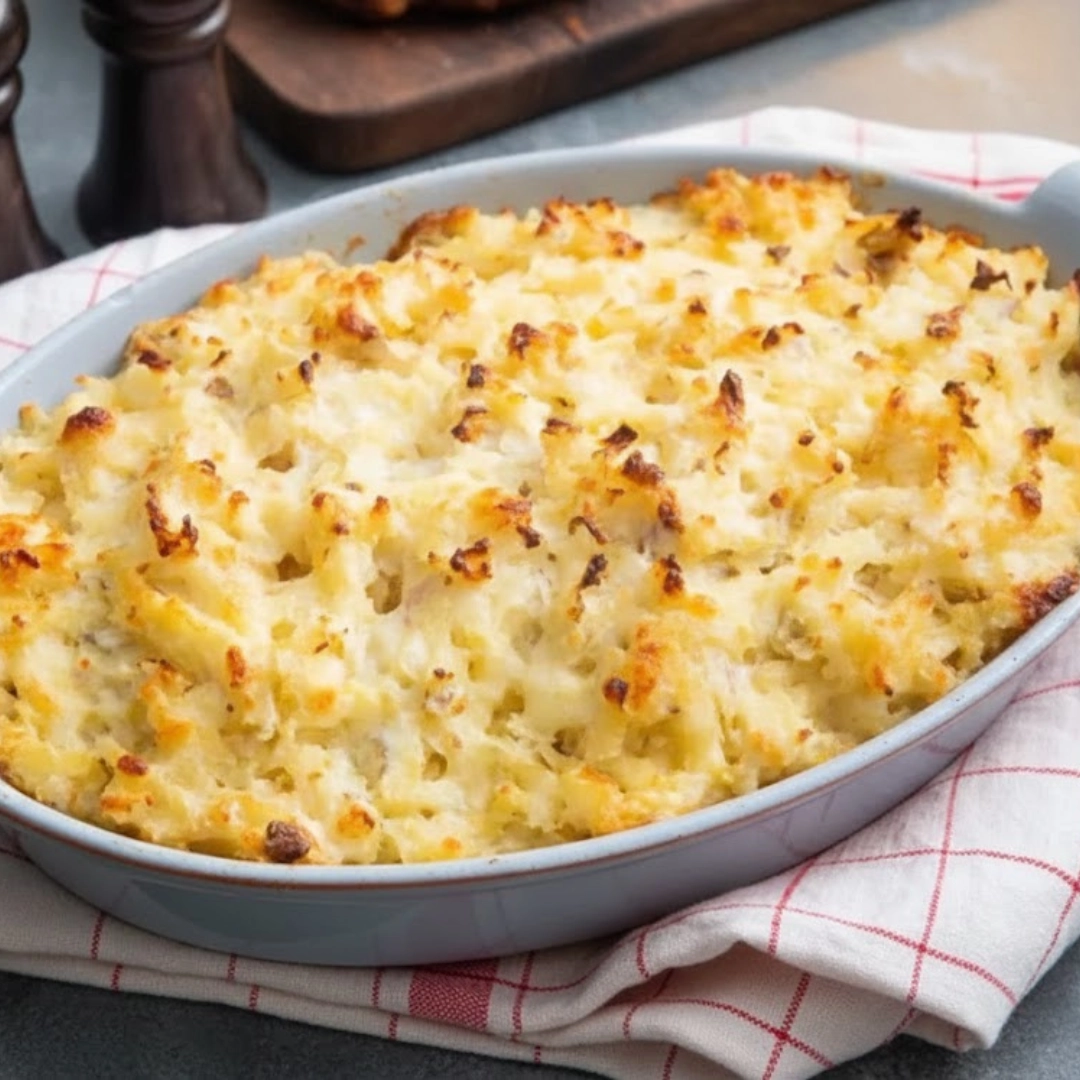
For those who appreciate the finer points of a classic steakhouse dinner, the side dish is often as crucial as the main event. Enter Steakhouse Potatoes Romanoff: a dish of magnificent density, where humble baked potatoes transcend their everyday form to become a rich, creamy, and undeniably decadent casserole. This is not merely cheese and potatoes; it is a calculated study in texture and flavor contrast, featuring fluffy, shredded russets bound by a tangy sour cream base, laced with sharp Cheddar, and finished with a whisper of aromatic heat. Designed for grand occasions or simply an elevated home supper, this casserole is the consummate companion to a beautifully seared prime cut, delivering a level of luxury that few other side dishes can match. The preparation is thoughtful, requiring patience for the essential chilling step, but the reward is a dish that speaks of culinary expertise and pure, unadulterated comfort.
Table of Contents
ESSENTIAL COMPONENTS: THE INGREDIENT LIST
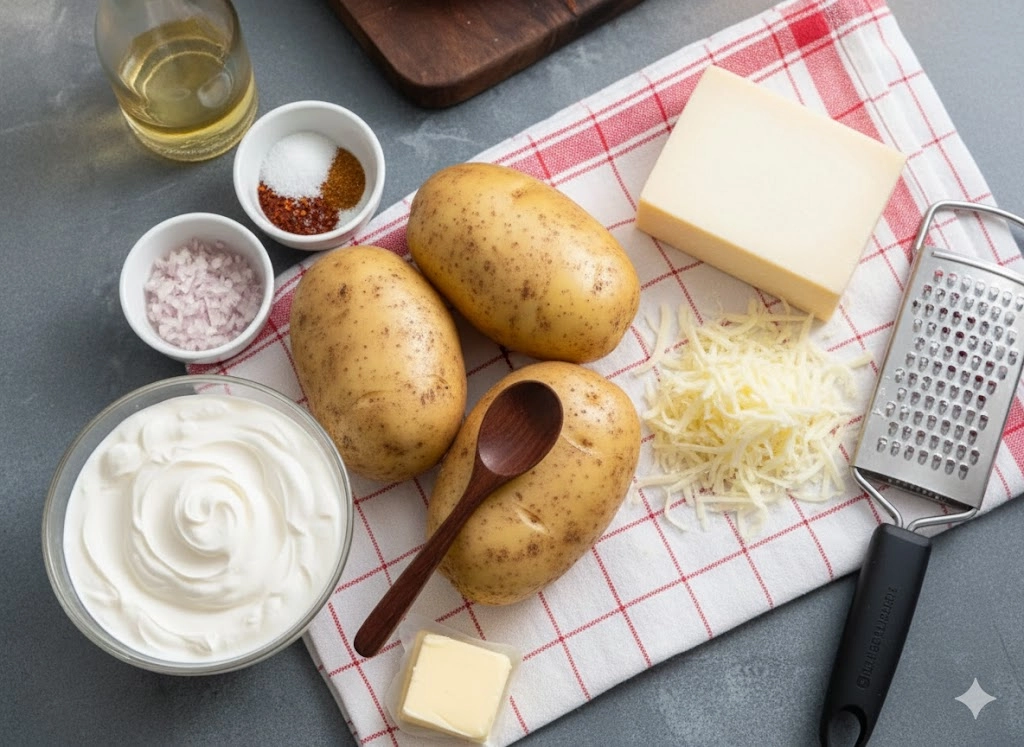
Achieving the characteristic texture of Potatoes Romanoff relies on precise quantities and the proper preparation of high-quality ingredients. Ensure your measuring spoons and cups are level for the best structural integrity of the final bake.
For the Potatoes:
- Three large Russet potatoes (approximately two and a half pounds or 1.1 kilograms total)
- One teaspoon neutral cooking oil, such as grapeseed or canola
For the Cream Base and Flavoring:
- One and three quarters cups sour cream (full-fat is highly recommended)
- Two and a half cups sharp white Cheddar cheese, freshly shredded
- One quarter cup minced shallots
- Three teaspoons Kosher salt
- One half teaspoon freshly ground white pepper
- A generous pinch of cayenne pepper, or to taste
- One teaspoon unsalted butter, softened, for preparing the casserole dish
THE CULINARY SEQUENCE: OVERVIEW
The process of preparing this dish is divided into two distinct phases: the foundational baking and chilling, and the final assembly and gratinée. Plan ahead, as the chilled potatoes are non-negotiable for the perfect shredded texture.
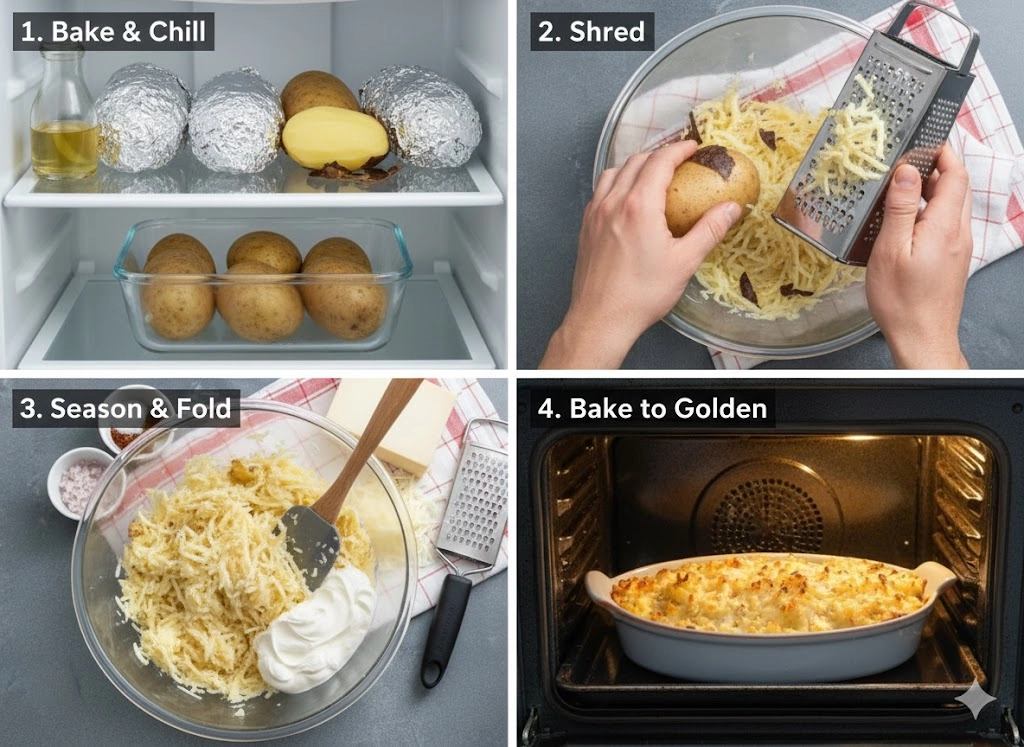
- Initial Bake: Prepare the russet potatoes by washing, oiling, and wrapping them in foil. Bake them until they are fully tender, ready for shredding.
- Cooling and Chill: Allow the potatoes to cool completely at room temperature, then unwrap and refrigerate for a minimum of eight hours or, preferably, overnight.
- Preparation of Aromatics: Mince the shallots finely and prepare the remaining spices and shredded cheese.
- Shredding the Base: Once thoroughly chilled, shred the potatoes—skin on—using a standard box grater into a large, sturdy mixing bowl.
- Flavor Integration: Add the shallots, Kosher salt, white pepper, and cayenne to the shredded potatoes. Gently toss to distribute the seasonings evenly.
- Cheese Incorporation: Add the shredded Cheddar to the potato mixture, using a gentle hand to mix everything without compressing the strands.
- The Cream Binding: Carefully fold in the sour cream until the mixture is just combined and uniformly moist, taking care not to overmix.
- Casserole Transfer: Lightly butter a standard two-quart casserole dish, then transfer the potato mixture into it, mounding it slightly and patting the surface very gently.
- The Final Bake: Bake the casserole in a preheated oven until the center is piping hot, the cream base is set, and the top has developed a deep, golden-brown crust.
- Rest and Serve: Allow the baked Romanoff potatoes to rest briefly out of the oven before serving to permit the internal structure to stabilize.
DEEP DIVE INTO TECHNIQUE: ACHIEVING THE LUXE TEXTURE
The success of Steakhouse Potatoes Romanoff hinges on technical precision, particularly in how the potato is handled before and after the chilling phase.
Step 1 & 2: Mastering the Potato Bake and Chill
The initial bake must be thorough. We are not aiming for standard eating potatoes; we want completely tender flesh that yields with zero resistance. Wrap each potato individually after poking holes and rubbing with oil. The oil helps keep the skin pliable and prevents it from sticking to the foil during the long bake at four hundred Fahrenheit. The potatoes are done when a thin skewer pierces them easily, about one hour and fifteen minutes.
The chilling process is vital. Shredding a warm or even lukewarm potato results in a pasty, sticky mess, similar to mashed potatoes, which will compact in the final bake. By chilling the starch granules fully, they firm up, allowing the grater to produce distinct, fluffy shreds that retain air pockets. This aeration is what contributes to the casserole’s final, light, yet rich texture. Unwrap the potatoes after cooling to room temperature, and ensure they are chilled overnight for the best results.
Step 3 & 4: The Art of the Shred
Use the large holes of a box grater for shredding. Do not discard the potato skin—it adds a rustic aesthetic, a touch of texture, and critical flavor, reminiscent of a baked potato. Shredding the cold potato directly into your mixing bowl minimizes handling. The goal is to produce long, distinct strands, not a pulpy mass. Work quickly to keep the potatoes cold.
Step 5 & 6: Layering the Flavor Base
The shallots must be minced very finely, as they are added raw and rely on the baking process to mellow slightly. Adding the salt, white pepper, and cayenne early allows these core seasonings to distribute thoroughly across the potato strands before the fat is introduced. Use a gentle, two-fork tossing motion, lifting and aerating the potatoes rather than stirring.
Introduce the sharp white Cheddar next. Sharpness is essential here to cut through the richness of the sour cream. Always shred your own cheese; pre-shredded cheese contains anti-caking agents that hinder the melting and binding process, resulting in a less creamy final texture. Incorporate the cheese lightly, aiming for even distribution without crushing the potato shreds.
Step 7: The Gentle Fold
Sour cream is the binding agent, providing the characteristic tang and moisture. Add the full amount and fold it in with a rubber spatula or two forks. The key word is fold—not stir, and certainly not beat. Overmixing at this stage activates the starch released during shredding, transforming the airy mixture into a heavy, glue-like compound. Stop folding the moment no dry streaks of sour cream remain visible. The mixture should look moist and cohesive, yet still airy.
Step 8 & 9: Forming the Casserole and Final Bake
Use a two-quart, oven-safe baking dish that is shallow rather than deep, as a larger surface area maximizes the glorious golden crust. Rub the butter across the entire interior surface. When transferring the mixture, pile it high but resist the urge to compress it significantly. A very light pat on the top is all that is needed to level the surface slightly.
Preheat the oven to four hundred twenty-five Fahrenheit for the final bake. This higher temperature ensures rapid heating of the interior while promoting a deep golden crust. Bake for thirty to thirty-five minutes. Doneness is confirmed not only by the deep color of the top but, more importantly, by the vigorous bubbling visible around the edges and a faint, savory scent of caramelized cream and cheese. The internal temperature should register at least one hundred sixty-five Fahrenheit.
MASTERING THE BAKE: EXPERT FLAVOR AMPLIFIERS
Achieving the legendary status of true Steakhouse Potatoes Romanoff involves going beyond the basic recipe with expert-level details.
- Roast Your Shallots First: While the recipe calls for raw minced shallots, sautéing them briefly in one tablespoon of butter until translucent (about five minutes) before adding them to the mixture yields a sweeter, milder flavor profile. This step removes the raw sharpness and introduces a subtle, caramelized depth, highly recommended for a smoother taste.
- The Secret Ingredient: Nutmeg: A whisper of freshly grated nutmeg (no more than one eighth of a teaspoon) introduced with the white pepper is a classic French technique for cream and potato dishes. It heightens the overall savoriness without being explicitly detectable, adding a layer of warmth and complexity.
- Use Cultured Dairy: For a noticeably superior, richer flavor, seek out European-style sour cream or crème fraîche. These products have a higher milkfat content and a more pronounced tangy culture, elevating the final texture and taste from good to truly gourmet.
- The Double-Cheese Strategy: Divide the two and a half cups of Cheddar cheese. Use two cups mixed into the potatoes, and save the remaining half cup to sprinkle over the top of the casserole during the last ten minutes of baking. This ensures a beautifully molten, stretching layer of cheese on the surface, distinct from the binding cheese within.
- Achieve Crisp Edges: If possible, use a wide, shallow baking dish (such as a nine by thirteen-inch rectangular dish, though the mixture may not completely fill it) rather than a deep, two-quart casserole. More surface area means more crunchy, caramelized edges, which are often the most coveted parts of the dish.
- Avoid Aluminum Foil Reheating: If you plan to reheat leftovers, do so in a preheated oven at three hundred fifty Fahrenheit uncovered, or briefly under the broiler. Reheating in foil or a covered dish creates steam, which will instantly destroy the crispy top layer and result in a waterlogged texture.
ADAPTING THE BASE: VARIATIONS AND SUBSTITUTIONS
The foundation of the creamy potato casserole is robust enough to accommodate several thoughtful ingredient adjustments without compromising its core appeal.
1. The Smoked Lardon Enhancement
For a richer, smoky dimension, introduce four ounces of rendered pancetta or thick-cut bacon lardons. Dice the meat finely, render it until crisp, and drain all but one tablespoon of the fat. Mix the crispy lardons into the potato-and-sour-cream base. If using bacon, reduce the added Kosher salt by one half teaspoon, as bacon itself contributes significant sodium. This variation adds a crucial savory counterpoint to the sharp cheese.
2. Herbaceous Romanoff
Incorporate one quarter cup of finely chopped fresh herbs along with the shallots. Excellent choices include a blend of chives and parsley, or a more autumnal mix of sage and thyme. Fresh dill can also provide an interesting, slightly European lift. Add the herbs right before the sour cream to prevent the oils from being released prematurely through excessive mixing.
3. The Cheesy Alternative
While sharp white Cheddar is traditional, other cheeses can provide equally compelling results. Consider Gruyère for a nutty, complex melt, or a blend of Monterey Jack and Fontina for maximum stretch and mildness. If using a high-oil cheese like mozzarella, use slightly less, perhaps two cups total, to avoid an overly greasy finish.
4. Low-Moisture Potato Prep
If you are pressed for time and cannot chill the potatoes overnight, you can use frozen, thawed hash brown potatoes, provided they are made of shredded Russets and contain no additives. Thaw them completely and squeeze them vigorously in a clean kitchen towel to remove excess moisture. Substitute approximately six cups of thawed, dried hash browns for the three large baked potatoes. This drastically cuts the prep time but still requires the initial careful mixing.
THE PERFECT COMPANION: PAIRING AND SERVICE
The inherent richness of this casserole demands thoughtful pairing to balance the fat and creaminess. Its steakhouse heritage guides the ideal accompaniments.
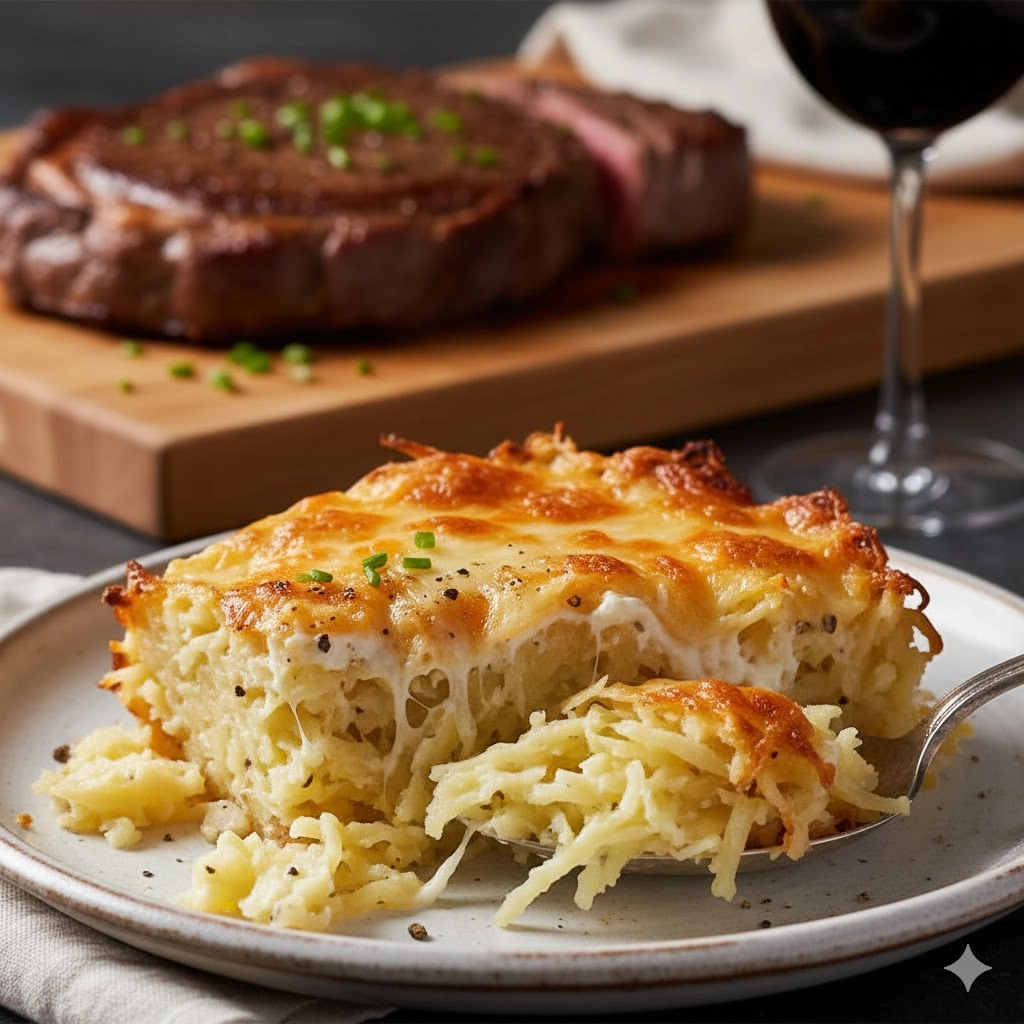
1. The Red Meat Standard: The classic and correct pairing is a quality cut of seared beef: a bone-in ribeye, a strip steak, or a perfectly roasted prime rib. The unctuousness of the potatoes acts as a perfect counterpoint to the deeply savory, protein-rich main course. For a more casual setting, even a robust, pan-seared pork chop works wonderfully.
2. Contrast with Fresh Greens: To cut through the dairy, serve the Potatoes Romanoff with something sharp and green. A simple vinaigrette-dressed salad of peppery arugula and shaved Parmesan is ideal. Alternatively, serve steamed, crisp-tender asparagus spears lightly seasoned with lemon zest and a pinch of flake salt. The acidity and bitterness of the greens provide a necessary palate cleanser.
3. Elevated Poultry: This side dish is far too flavorful for simple chicken breast. If serving poultry, opt for a highly seasoned roast chicken, or consider serving it alongside a braised duck leg or confit. The richness of the duck fat stands up well to the deep flavor of the cheesy potatoes.
4. Wine Pairing: This dish calls for a red wine with structure and good tannin to slice through the fat. Look to a high-quality California Cabernet Sauvignon, a bold Argentinian Malbec, or a robust, earthy Bordeaux. The tannins in these wines refresh the palate after each creamy, savory bite.
COMMON CULINARY QUERIES
This section addresses specific questions that often arise during the preparation and handling of this recipe.
How can I prepare this dish ahead of time for a gathering?
The initial chilling of the potatoes is essential, but the final assembly can also be done in advance. Complete all steps up to and including transferring the mixture to the buttered casserole dish. Cover it tightly with plastic wrap and refrigerate for up to twenty-four hours. When ready to bake, remove it from the refrigerator about one hour before baking to take the chill off, then proceed with the recipe’s final baking instructions, potentially adding five to ten minutes to the total bake time.
Why did my finished casserole turn out watery or loose?
Wateriness usually results from either insufficient chilling of the potatoes or using a high-moisture cheese. If the potatoes were not cold enough before shredding, they released too much starch and water. Also, ensure you used full-fat sour cream, as low-fat alternatives have a higher water content and break down easily during baking, leading to a runny result. Using high-quality, freshly grated sharp Cheddar helps absorb moisture.
Can I use pre-cooked, refrigerated mashed potatoes instead?
No, using mashed potatoes will not work. Potatoes Romanoff relies on the distinct, fluffy strands created by grating a baked and chilled potato. Mashed potatoes will simply result in a solid, compressed block of potato paste when baked, completely lacking the luxurious, airy texture this casserole is known for.
What is the best way to safely freeze leftovers?
Potatoes Romanoff freezes very well. Bake it in a disposable foil pan for easier freezing and cleanup. After baking, let it cool completely. Wrap the dish tightly in two layers of plastic wrap, followed by a layer of heavy-duty aluminum foil. Label and freeze for up to one month. To reheat, thaw overnight in the refrigerator, then bake uncovered at three hundred fifty Fahrenheit until heated through, approximately thirty to forty minutes.
My edges are getting too dark before the center is hot. What should I do?
If the top and edges are browning too quickly, gently place a sheet of aluminum foil over the casserole for the remainder of the bake time. This acts as a shield, focusing the heat on the internal mixture while preventing the surface from burning. Ensure the foil is tented slightly so it does not touch the molten cheese.
NUTRITION PROFILE
| Nutrient | Amount per Serving |
| Calories | 385 kcal |
| Protein | 15 g |
| Carbs | 31 g |
| Fat | 24 g |
| Fiber | 3 g |
| Sugar | 3 g |
| Sodium | 980 mg |
Disclaimer
Nutrition information is an estimate and may vary based on preparation and ingredients used.
PrintCrafting the Perfect Steakhouse Potatoes Romanoff
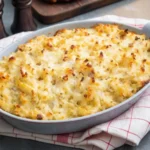
A rich, creamy, and decadent potato casserole made with shredded baked russet potatoes, sharp Cheddar, and a tangy sour cream base, perfect for pairing with any premium cut of steak.
- Prep Time: 25 mins
- Cook Time: 1 hour 45 mins
- Total Time: 10 hours 10 mins
- Yield: 8 servings 1x
- Category: Side Dish
- Method: Baking
- Cuisine: American
Ingredients
3 large Russet potatoes
1 teaspoon neutral cooking oil
1 3/4 cups full-fat sour cream
2 1/2 cups sharp white Cheddar cheese, freshly shredded
1/4 cup minced shallots
3 teaspoons Kosher salt
1/2 teaspoon freshly ground white pepper
1 pinch cayenne pepper, or to taste
1 teaspoon unsalted butter, softened, for preparing the casserole dish
Instructions
1. Prepare the oven to four hundred Fahrenheit. Poke holes into the potatoes, rub with oil, wrap individually in foil, and bake until very tender, about one hour and fifteen minutes.
2. Allow the potatoes to cool completely, then unwrap and refrigerate for a minimum of eight hours or overnight.
3. Prepare the oven to four hundred twenty-five Fahrenheit. Thoroughly butter a two-quart casserole dish.
4. Using a box grater, shred the chilled, skin-on potatoes into a large mixing bowl. Add the minced shallots, Kosher salt, white pepper, and cayenne. Toss gently with two forks to combine.
5. Add the shredded Cheddar cheese and mix lightly. Carefully fold in the sour cream until just combined, ensuring not to overmix the mixture.
6. Transfer the potato mixture to the prepared baking dish, mounding it and patting the surface very lightly to level.
7. Bake in the preheated oven until the casserole is piping hot and the top is deeply browned, approximately thirty to thirty-five minutes.
8. Remove from the oven and allow to rest for five to ten minutes before serving.
Notes
The chilling process is vital for the correct fluffy texture, so do not skip the overnight refrigeration of the baked potatoes.
For a smoother flavor, consider sautéing the shallots briefly in butter before adding them to the potato mixture.
If the top browns too quickly, cover the casserole loosely with foil for the remainder of the bake time.
Nutrition
- Serving Size: 1 serving
- Calories: 385
- Sugar: 3g
- Sodium: 980mg
- Fat: 24g
- Saturated Fat: 20g
- Unsaturated Fat: 4g
- Trans Fat: 0g
- Carbohydrates: 31g
- Fiber: 3g
- Protein: 15g
- Cholesterol: 70mg