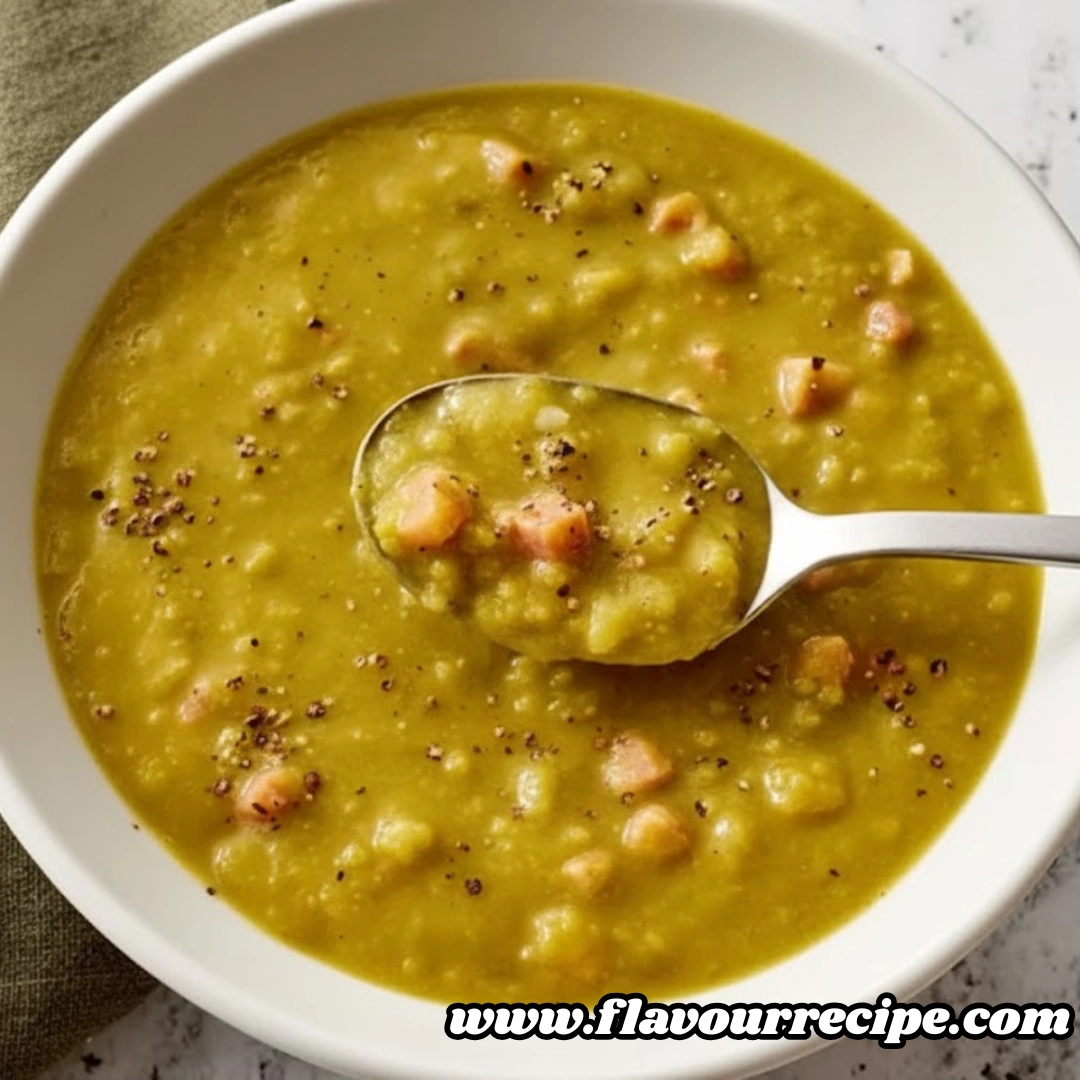
The arrival of cooler weather naturally draws us toward the stove, seeking recipes that offer substance and deep, developed flavors. This traditional split pea soup represents the pinnacle of rustic kitchen wisdom, transforming humble dried legumes and leftover proteins into a thick, velvety meal. It is a dish defined by its patience; as the peas break down, they create a naturally creamy texture that requires no heavy dairy to achieve. Whether you are looking to utilize a holiday ham bone or simply want a reliable, protein-packed lunch for the week, this preparation delivers a balance of smoky saltiness and earthy sweetness.
In this version, we focus on the foundational techniques that elevate a simple soup into something memorable. By gently sweating the aromatics and allowing the peas to simmer until they lose their structural integrity, you create a base that is both filling and sophisticated. This is an ideal selection for quiet Sunday meal prepping or as a restorative evening meal served alongside a crusty loaf of sourdough.
Table of Contents
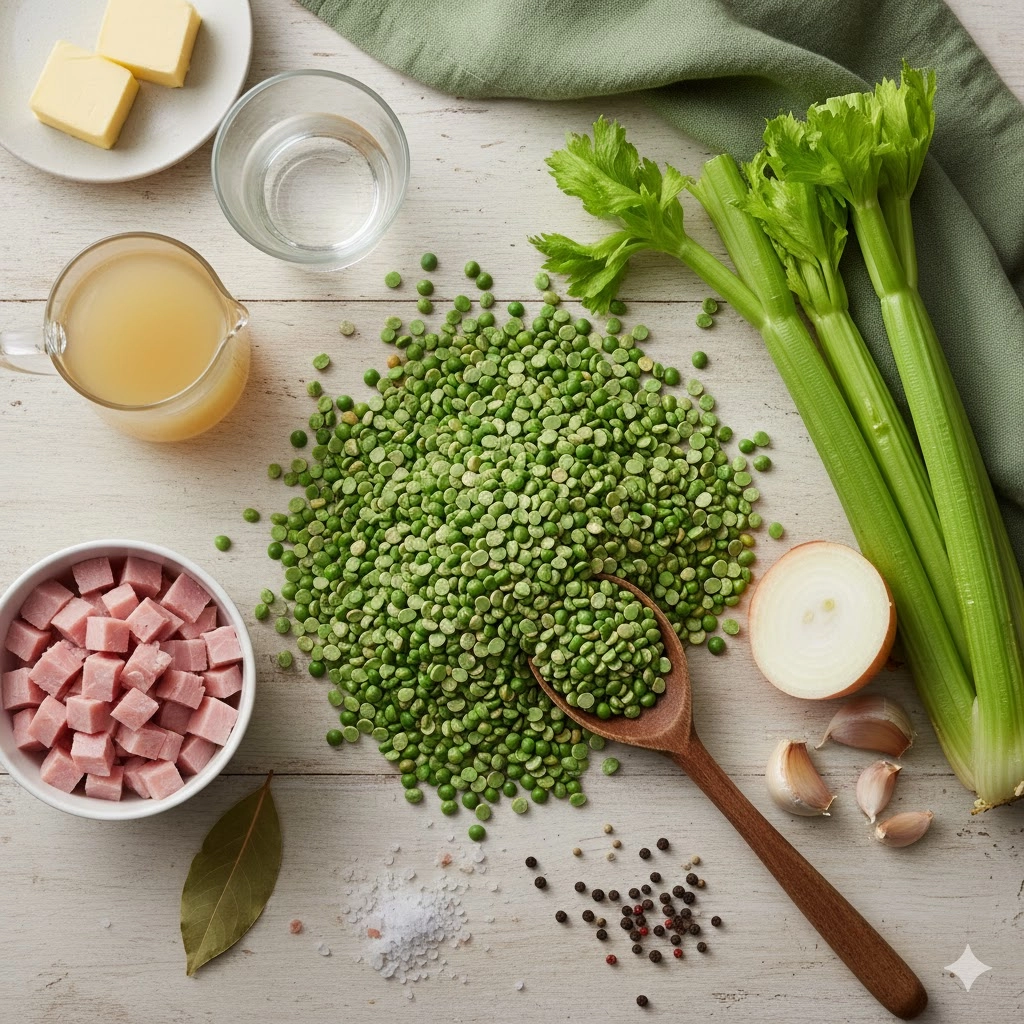
Essential Ingredients for the Base
Gathering high-quality components is the first step toward a successful simmer. While the peas are the star, the supporting cast of vegetables and seasonings provides the necessary depth.
- Butter: Two tablespoons (unsalted is preferred to control the salt level).
- Celery: Two large ribs, finely diced to provide a subtle herbal backbone.
- Onion: One half of a large yellow onion, diced uniformly.
- Garlic: Three cloves, thinly sliced to release oils without burning.
- Dried Split Peas: One pound, thoroughly rinsed and picked over for small stones.
- Cooked Ham: One pound, cut into bite-sized cubes (leftover honey-glazed or smoked ham works beautifully).
- Bay Leaf: One large dried leaf for a tea-like aromatic quality.
- Chicken Stock: One quart (thirty-two ounces) of low-sodium stock.
- Water: Two and one half cups of filtered water.
- Seasoning: Fine sea salt and freshly cracked black pepper to taste.
Primary Preparation Sequence
- Begin by melting the butter in a heavy-bottomed Dutch oven or stockpot over a medium-low flame.
- Incorporate the celery, onion, and garlic, stirring frequently until the onions are soft and translucent.
- Add the rinsed split peas, the cubed ham, and the bay leaf into the pot.
- Pour in the chicken stock and the water, ensuring all ingredients are well submerged.
- Raise the heat slightly to reach a gentle boil, then immediately reduce to a low simmer.
- Cover the pot partially and cook for approximately seventy-five minutes, or until the peas have dissolved into a thick consistency.
- Taste the liquid and add salt and pepper as needed before removing the bay leaf for service.

Detailed Culinary Process and Sensory Cues
The success of a great split pea soup lies in the transition from individual ingredients to a cohesive, porridge-like texture. When you begin sautéing your mirepoix (the onion and celery), you aren’t looking for color. You want the vegetables to “sweat,” which means they should become soft and release their moisture without turning brown. If the garlic begins to turn dark brown, it will impart a bitter note to the entire pot; keep the heat low and steady.
Once the liquids are added, the peas will initially settle at the bottom. It is vital to stir the pot every fifteen to twenty minutes. As the starch releases, the liquid will thicken, and the bottom of the pot becomes prone to scorching. You will know the soup is approaching readiness when the individual peas are no longer distinct beads but have softened into a mash. The aroma should be intensely smoky from the ham, with a sweet, vegetal undertone from the peas.
If the soup appears too thick before the peas are fully tender, do not hesitate to add an extra half-cup of water. Conversely, if it seems too thin after seventy-five minutes, remove the lid entirely for the final ten minutes of cooking to allow for evaporation. The final texture should be heavy enough to coat the back of a wooden spoon thickly.
Technical Tips for Success
- The Rinse Cycle: Always rinse your dried peas in a fine-mesh strainer. Unlike beans, they don’t require an overnight soak, but rinsing removes dusty starch that can make the soup feel “gritty” rather than smooth.
- Sodium Management: Ham and store-bought chicken stock both contain significant salt. Refrain from adding any extra salt until the very end of the cooking process to avoid an over-seasoned dish.
- The Bay Leaf Rule: Always count your bay leaves. While they add an indispensable woody aroma, the leaves themselves remain tough and are a choking hazard; ensure you fish it out before serving.
- Texture Control: For those who prefer a completely smooth “London Fog” style soup, you can use an immersion blender for thirty seconds before adding the ham back in, though the traditional rustic texture is often preferred.
- Acid Balance: If the soup feels “heavy” or one-dimensional at the end, a tiny splash of apple cider vinegar or a squeeze of lemon juice can brighten the earthy flavors of the peas.
Recipe Variations
- The Vegetarian Alternative: Omit the ham and butter. Sauté the vegetables in olive oil and use a high-quality vegetable broth. To replicate the smoky flavor, add one teaspoon of smoked paprika or a drop of liquid smoke.
- Root Vegetable Boost: Add one cup of diced carrots and one cup of peeled, diced gold potatoes at the same time as the peas. This adds more color and a different type of starchiness to the bowl.
- Spicy Kick: Stir in a pinch of red pepper flakes or a diced jalapeño (seeds removed) during the vegetable sauté phase for a modern heat profile.
Serving and Presentation
Presentation is key for a dish that is essentially a monochromatic green. Serving this in wide, shallow bowls allows for creative garnishing. A swirl of heavy cream or a dollop of Greek yogurt can provide a visual contrast and a cooling element.
For texture, consider topping each bowl with homemade garlic-butter croutons or a sprinkle of crispy fried leeks. A side of toasted rye bread or a sharp cheddar grilled cheese makes for a complete, high-protein lunch. If you are serving this for a dinner party, a sprinkle of fresh parsley or chives adds a necessary pop of vibrant green.
Frequently Asked Questions
Can this soup be made in a slow cooker?
Yes, you can combine all ingredients in a slow cooker and set it to low for seven to eight hours. However, for the best flavor, it is still recommended to sauté the onions, celery, and garlic in a pan before adding them to the crock.
Why are my split peas still hard after an hour?
Hard peas are usually the result of using old stock or adding salt/acid too early in the process. Older dried legumes take much longer to soften. If they remain hard, continue simmering and add a pinch of baking soda to help break down the fibers.
How long will leftovers stay fresh?
This soup stores exceptionally well because the flavors continue to marry. It will last in an airtight container in the refrigerator for up to four days. Note that it will thicken significantly as it cools, so you may need to add a splash of water or broth when reheating.
Can I use a ham hock instead of diced ham?
Absolutely. Using a smoked ham hock provides an even deeper smoky flavor. Simmer the hock whole with the peas, then remove it at the end, shred the meat off the bone, and stir the meat back into the soup.
Nutrition Information
| Nutrient | Amount per Serving |
| Calories | 374 kcal |
| Protein | 25 g |
| Carbs | 37 g |
| Fat | 14 g |
| Fiber | 12 g |
| Sugar | 4 g |
| Sodium | 890 mg |
Disclaimer
Nutrition information is an estimate and may vary based on preparation and ingredients used.
PrintA Timeless Pot of Savory Homemade Split Pea Soup

This traditional split pea soup represents the pinnacle of rustic kitchen wisdom, transforming humble dried legumes and leftover ham into a thick, velvety meal.
- Prep Time: 15 mins
- Cook Time: 1 hour 30 mins
- Total Time: 1 hour 45 mins
- Yield: 8 servings 1x
- Category: Soup
- Method: Stovetop
- Cuisine: American
Ingredients
2 tablespoons butter
2 ribs celery, diced
1/2 onion, diced
3 cloves garlic, sliced
1 pound dried split peas, rinsed
1 pound cooked ham, diced
1 bay leaf
1 quart chicken stock
2 1/2 cups water
Salt and ground black pepper to taste
Instructions
1. Melt butter in a large soup pot over medium-low heat.
2. Stir in celery, onion, and sliced garlic; cook until translucent.
3. Stir in split peas, diced ham, and bay leaf.
4. Pour in chicken stock and water; stir to combine.
5. Bring to a gentle boil, then reduce heat to low.
6. Simmer for approximately 75 minutes until peas are tender and soup has thickened.
7. Season with salt and black pepper to taste.
8. Remove the bay leaf before serving.
Notes
Rinse dried peas thoroughly to remove extra starch.
Avoid adding salt until the end as ham and stock are naturally salty.
If the soup is too thick after cooling, add a splash of water or broth when reheating.
Nutrition
- Serving Size: 1.5 cups
- Calories: 374
- Sugar: 4g
- Sodium: 890mg
- Fat: 14g
- Saturated Fat: 6g
- Unsaturated Fat: 8g
- Trans Fat: 0g
- Carbohydrates: 37g
- Fiber: 12g
- Protein: 25g
- Cholesterol: 45mg