
This particular dish represents everything we love about weeknight Italian cooking: bright, bold flavors, minimal effort, and a satisfying depth that belies its speed. When oil-cured sun-dried tomatoes—sweet, tangy, and deeply umami—meet fresh garlic, vibrant wine, and earthy spinach, the result is a truly remarkable meal. This pasta is a masterpiece of texture and taste, where the heat of the crushed red pepper, the sharpness of the cheese, and the lushness of the tomato oil coat the strands of pasta in a silky, unforgettable finish. We are creating more than just a quick meal; we are crafting a genuinely expressive plate of Spinach Sun Dried Tomato Pasta that elevates simple pantry staples to extraordinary status.
Table of Contents
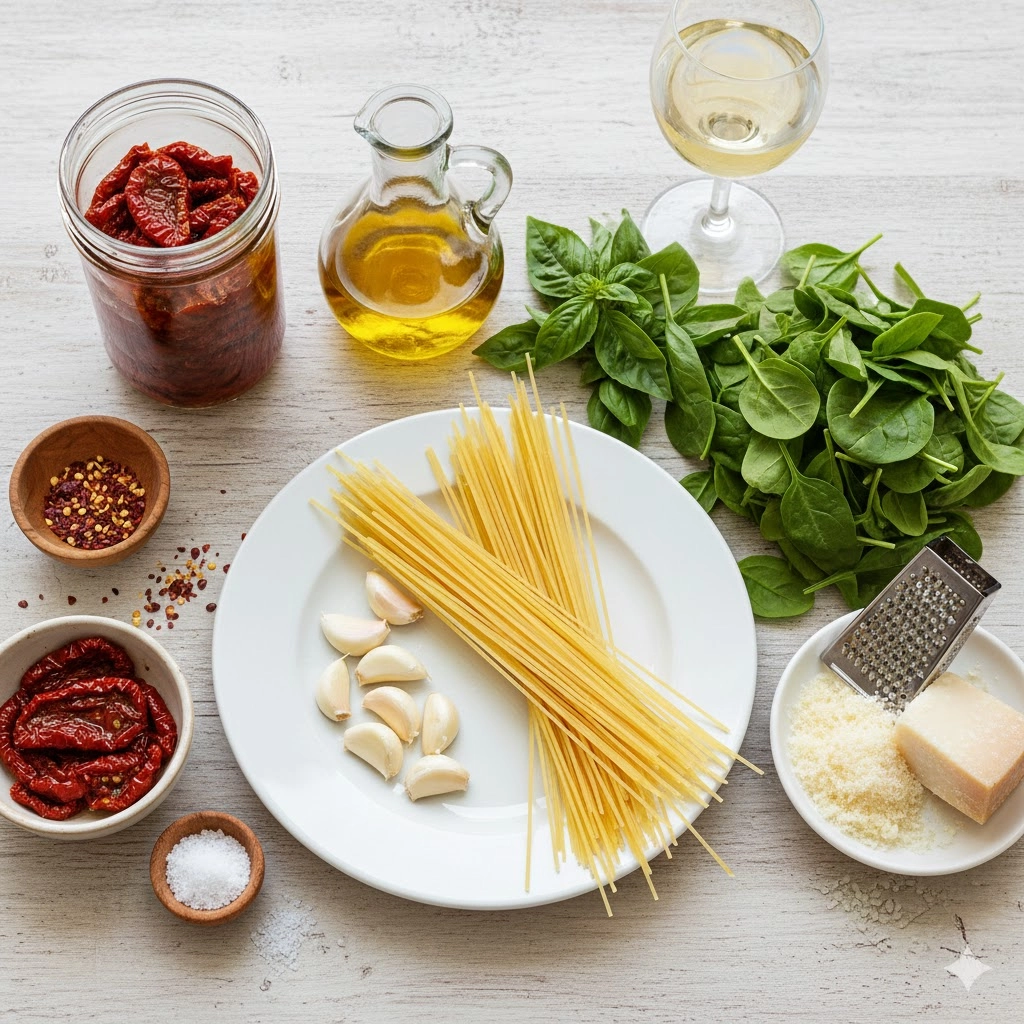
Components for the Perfect Dish
The key to a truly great pasta dish with minimal ingredients lies in ingredient quality. Use the best olive oil and dried pasta you can find.
Pantry and Produce
- 1 pound (450 grams) long, thin pasta (such as linguine, angel hair, or spaghetti)
- 1 large jar (about twelve ounces) oil-packed sun-dried tomatoes, drained, with the oil reserved
- half cup extra virgin olive oil, plus extra for serving
- 6 cloves fresh garlic, thinly sliced
- half teaspoon crushed red pepper flakes
- 1 cup dry white wine (Pinot Grigio or Sauvignon Blanc)
- 8 ounces fresh baby spinach
- half cup fresh basil leaves, hand-torn
- Kosher salt and freshly ground black pepper, to taste
Finishing Touches
- 1 cup reserved pasta cooking water
- half cup grated Pecorino Romano or Parmesan cheese, plus more for serving
The Essential Cooking Process
This recipe moves quickly, so ensure all ingredients are measured and ready before you begin the first step.
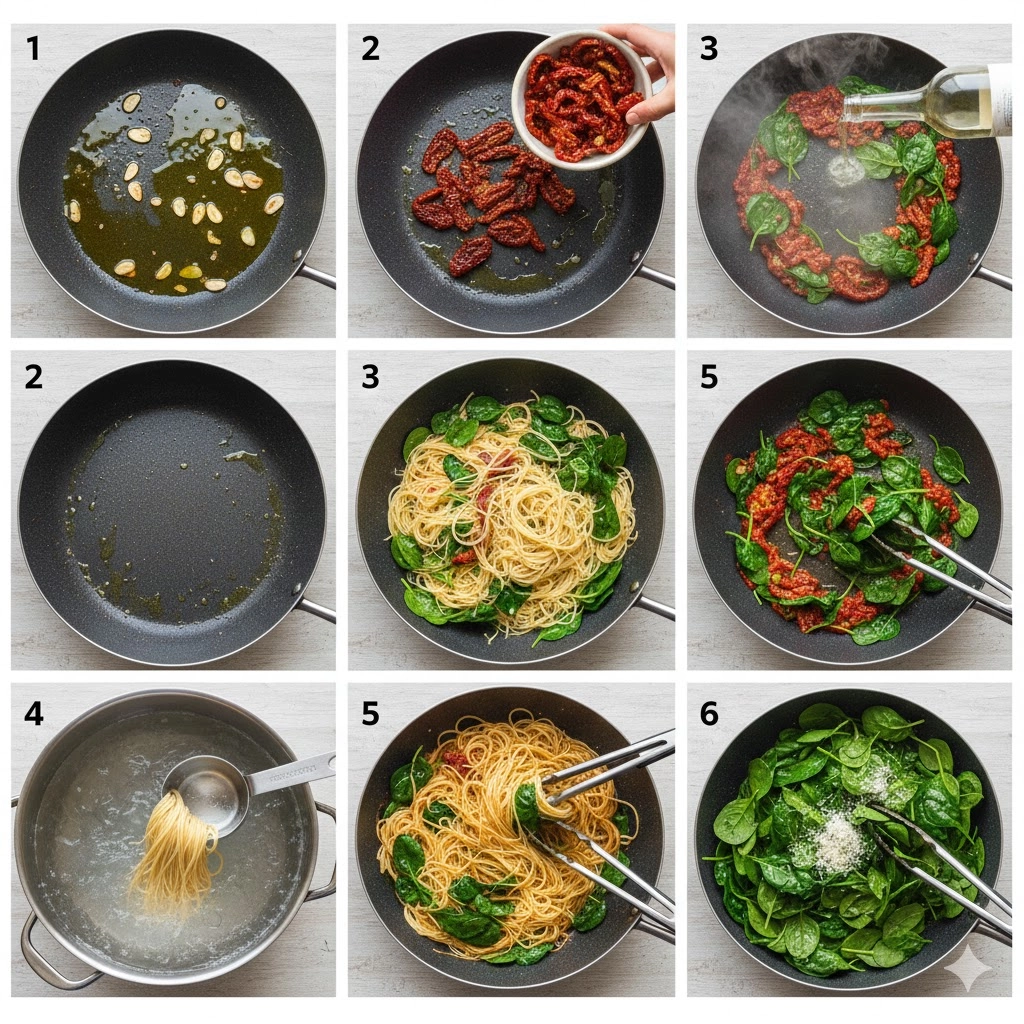
- Prepare Pasta Water and Aromatics: Bring a large pot of water to a rolling boil. Season liberally with kosher salt until it tastes like the sea. While the water heats, thinly slice the garlic and drain the tomatoes, reserving the oil.
- Infuse the Oil: Heat the half cup of olive oil (or a mixture of olive oil and reserved sun-dried tomato oil) in a wide, deep pan over medium-low heat. Gently sauté the sliced garlic and red pepper flakes until fragrant, taking care not to burn the garlic.
- Bloom the Tomatoes: Add the sliced sun-dried tomatoes to the oil and garlic mixture. Cook for one minute, allowing the heat to release their concentrated flavor into the oil.
- Deglaze with Wine: Pour in the white wine, increase the heat to medium-high, and bring to a simmer. Cook until the wine has reduced by roughly half, concentrating its acidity and flavor. Reduce the heat back to low.
- Cook the Pasta: Add the pasta to the boiling water and cook until it is about two minutes shy of al dente—it should still be very firm. Before draining, scoop out at least one cup of the starchy pasta cooking water.
- Unify the Sauce: Add one cup of the reserved pasta water to the pan sauce and stir to combine. Immediately add the partially cooked pasta and toss vigorously for one to two minutes until fully al dente and coated in the now-emulsified sauce.
- Wilt the Greens and Finish: Remove the pan from the heat. Stir in the fresh spinach, torn basil, salt, and pepper. The residual heat will wilt the spinach. Add a handful of the grated Pecorino Romano and toss one last time.
- Serve: Plate immediately with a generous drizzle of the reserved sun-dried tomato oil or high-quality extra virgin olive oil and a final grating of cheese.
Master the Sauce: Technique and Sensation
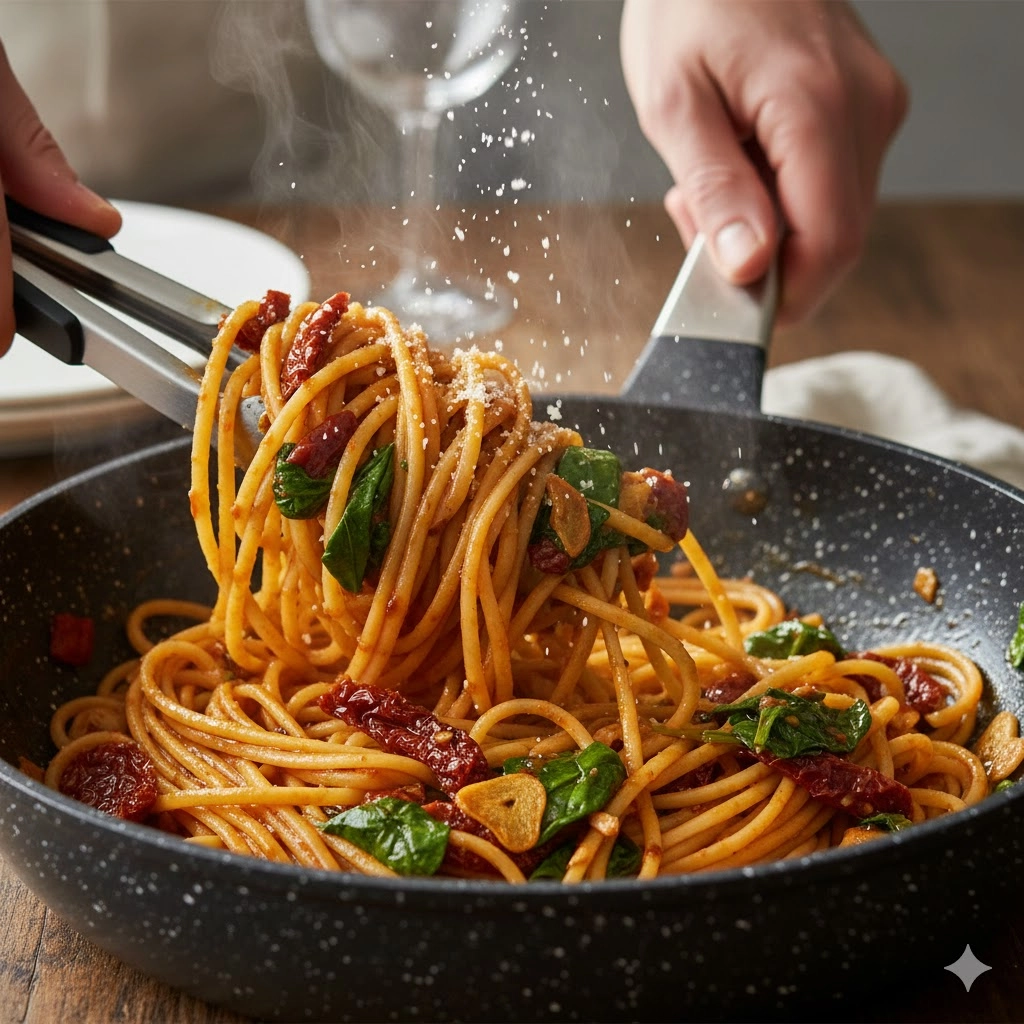
Achieving the perfect texture in a pasta dish—where the sauce clings affectionately to every strand—is often the difference between a decent meal and an excellent one. The success of this recipe hinges on careful execution, especially the emulsification of the sauce.
When heating the oil and garlic, maintain a gentle, slow heat. Garlic burns quickly, and once it turns dark brown or black, it will introduce an acrid, bitter note that cannot be fixed. We are looking for the garlic slices to become translucent and just barely golden around the edges—a process that takes about three minutes over medium-low heat. At this stage, the kitchen should be filled with a rich, nutty aroma, signaling that the olive oil has been successfully infused with flavor. The red pepper flakes, added briefly before the tomatoes, provide a flash of warmth and color as their heat is released into the fragrant oil.
The addition of the sun-dried tomatoes follows. These gems, being oil-packed, are already tender, so they only need a minute to heat through and allow their infused oil to blend seamlessly with the initial garlic oil. This step builds the foundation of the sauce’s depth.
The deglazing step with dry white wine is crucial for balance. When the wine hits the hot pan, the increase in temperature helps lift any caramelized bits (the fonds) from the bottom, integrating them into the liquid. As the wine reduces, its alcohol evaporates, leaving behind concentrated flavor and acidity that cuts through the richness of the oil and the sweetness of the tomatoes. Watch for the volume to drop by about fifty percent before reducing the heat. If you substitute with broth, you will not need to reduce it as much, as the goal is merely to incorporate flavor, not to burn off alcohol.
The integration of the pasta requires the final, essential element: the starchy pasta water. When you reserve the water, you are holding onto a natural emulsifier created by the gluten released from the pasta during boiling. When this starchy water is added to the wine and oil base, and then combined with the pasta itself, the vigorous stirring or tossing creates a creamy, cohesive emulsion. The sauce should transition from oily and thin to glossy and opaque. If the sauce looks too thick, add more pasta water, a splash at a time. If it looks too thin, continue tossing over very low heat for thirty to forty-five seconds until it tightens up.
Finally, the spinach and basil are introduced after the heat source is fully off. Fresh basil, especially when hand-torn, releases more of its volatile oils than if it were sliced with a knife. The thin leaves of baby spinach require minimal heat to wilt; overcooking them turns them dull, watery, and slimy. By relying only on the residual heat of the pasta and the pan, the spinach retains its vibrant green color and fresh, earthy snap, ensuring it complements the dish rather than overpowering it. This gentle finish maintains the bright integrity of all the fresh components.
Adjusting the Assembly: Substitutions and Shifts
The beauty of a pantry-forward pasta like this is its flexibility. A great dish can evolve with the seasons or accommodate dietary needs without sacrificing the central flavor profile.
Protein Integration
While this recipe is fundamentally vegetarian, it handles added protein beautifully. You can easily stir in one and a half cups of cooked, cubed chicken breast or thinly sliced Italian sausage (cooked separately until browned) during the final mixing step, right before the spinach. For a seafood variation, quickly sautéed shrimp or scallops tossed in at the end provides a rich, elegant counterpoint to the acidity of the tomatoes.
Trading the Greens
If baby spinach is not available or desired, substitute it with an equal eight ounces of fresh arugula. Arugula, especially when added just off the heat, retains a peppery bite that introduces another layer of complexity. Alternatively, curly kale can be used, but it requires a slightly longer cooking time—toss it in during the wine reduction step to allow the leaves enough heat to properly tenderize and soften.
Wine-Free Sauce
For those who prefer to omit alcohol, a high-quality, low-sodium vegetable or chicken broth makes an excellent substitute for the dry white wine. The rich flavor of the sun-dried tomatoes is intense enough to carry the dish, and the broth adds necessary moisture without altering the seasoning profile too drastically. If using broth, skip the reduction step and simply bring it to a simmer before adding the pasta water.
Pasta Shape Variety
We recommend thin, long noodles like linguine or angel hair because they cook quickly and provide maximum surface area for the sauce to cling to. However, heartier shapes work well, too. Short, tubular pastas like penne or rigatoni will capture the sliced sun-dried tomatoes and garlic within their structure, creating a delightful bite. Just ensure you adjust the cooking time accordingly, as thicker pasta will need significantly longer in the boiling water.
Culinary Insights for Peak Flavor
Creating a deep, nuanced flavor in Italian-American cooking is often about subtle layering. These five unique tips will help you maximize the sensory experience of your Spinach Sun Dried Tomato Pasta.
- Harness the Tomato Oil: Do not simply discard the oil from the jarred sun-dried tomatoes. This oil is intensely flavored and serves two key purposes. First, use half of it in place of—or in addition to—the initial extra virgin olive oil to sauté the garlic. This instantly deepens the sauce’s tomato character. Second, use a teaspoon of the oil as a finishing drizzle over the plated dish for a final aromatic punch.
- Toasting the Red Pepper Flakes: When adding the crushed red pepper flakes, let them sizzle briefly for just thirty seconds in the warm oil before adding the tomatoes. This brief toasting releases their capsaicin oil and provides a hotter, more defined spice than if they were simply stirred in later. Be careful not to let them burn, which happens quickly.
- The Al Dente Window: Aim to pull the pasta from the boiling water when it is just slightly undercooked—perhaps two minutes before the package directions indicate it is fully al dente. The final cooking stage should happen entirely in the sauce pan. This finishing process, known as risottatura, allows the pasta starch to combine with the sauce, thickening and adhering the sauce to the noodle while ensuring the pasta is perfectly textured and fully seasoned throughout.
- Emulsification Temperature: The temperature of the pan when you add the pasta water and the pasta itself is important. The pan should be just hot enough to keep the liquid bubbling very gently. Tossing or stirring the pasta vigorously in the hot sauce—but off high heat—is what creates that beautiful, glossy, creamy texture without using any cream. If the sauce separates or looks greasy, remove it from the heat and aggressively whisk in another small splash of cold pasta water.
- Salt Adjustments: Tasting and adjusting salt levels throughout is non-negotiable. First, you need salted boiling water. Second, the sauce needs salt after the wine reduces. Finally, after the cheese is added, you may need a final pinch. Remember that Pecorino Romano, if used, is saltier than Parmesan, so adjust your final seasoning carefully. This dish is rich in flavor, and rich flavor relies on proper salt balance.
Pairing and Presentation
This pasta is a relatively light dish with bright, tangy, and savory notes, making it versatile for pairing.
Salad Complements
Serve this pasta alongside a simple, crisp green salad. A classic Arugula Salad with a very light lemon vinaigrette is ideal. The peppery bite of the arugula and the bright, fresh lemon juice offer a refreshing counterpoint to the rich oil base and intense flavor of the sun-dried tomatoes. Avoid creamy dressings, which would make the meal too heavy.
Bread Service
A rustic, crusty bread is mandatory for soaking up the remaining sauce (the scarpetta). Serve a warmed baguette or an Italian loaf alongside the meal. You can optionally brush the bread with garlic butter, or even a bit of the reserved sun-dried tomato oil, and quickly toast it.
Wine Selection
Because the dish contains a dry white wine in the sauce, a glass of the same wine makes an excellent pairing. The high acidity of a cold Pinot Grigio, Sauvignon Blanc, or Vermentino cuts through the oil and complements the tomato acidity. If you prefer red, a light-bodied, slightly chilled Beaujolais or a young, unoaked Sangiovese will work well without overpowering the delicate flavors.
Answering Your Kitchen Queries
Can I use fresh tomatoes instead of sun-dried?
While you technically could, the result would be a completely different dish. Sun-dried tomatoes have a chewy texture and an intensely sweet, concentrated umami flavor that is the backbone of this recipe. Fresh tomatoes contain too much water and lack the depth necessary for the sauce. If you want a fresh tomato flavor, consider adding a handful of halved cherry tomatoes toward the end of the cooking process for a textural pop, but do not use them as a substitute for the dried version.
Why do you specify oil-packed sun-dried tomatoes?
Oil-packed tomatoes are generally much more tender and flavorful than dry-packed ones, which require prolonged rehydration. More importantly, the oil in the jar is already saturated with the tomatoes’ flavor, which we incorporate directly into the sauce foundation. This reserved oil is critical to the dish’s richness and flavor depth.
Can I make this pasta dish ahead of time?
Like most delicate oil-based pasta sauces, this dish is best served immediately after preparation. If made too far in advance, the pasta will absorb all the sauce, becoming dry, sticky, and losing its glossy texture. If you must prep ahead, cook the sauce up to the point before adding the pasta, and store the sauce and the pasta separately. When ready to serve, reheat the sauce gently, cook the pasta fresh, and combine them with plenty of reserved pasta water.
What if my sauce is too oily?
If your finished sauce looks separated or excessively oily, it means the starch and water have not fully emulsified the fat. To fix this, remove the pan from the heat, and using tongs or a wooden spoon, stir or toss the mixture aggressively while slowly adding one to two tablespoons of cold pasta water. The sudden temperature difference and the starch should help shock the fats into integrating with the liquid, creating a smooth, glossy finish.
Nutritional Snapshot
| Nutrient | Amount per Serving |
| Calories | 785 kcal |
| Protein | 22 g |
| Carbs | 95 g |
| Fat | 35 g |
| Fiber | 6 g |
| Sugar | 8 g |
| Sodium | 750 mg |
Nutrition Information
Nutrition information is an estimate and may vary based on preparation and ingredients used.
PrintSpinach Sun Dried Tomato Pasta: A Celebration of Simplicity
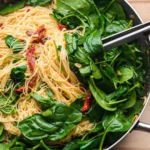
This bright and bold Spinach Sun Dried Tomato Pasta is a weeknight favorite, featuring long, thin pasta tossed in a rich, emulsified garlic-white wine sauce infused with sun-dried tomato oil. Ready in 30 minutes, it’s a simple dish with complex flavor.
- Prep Time: 10 mins
- Cook Time: 20 mins
- Total Time: 30 mins
- Yield: 4 servings 1x
- Category: Main Dish
- Method: Stovetop
- Cuisine: Italian
- Diet: Vegetarian
Ingredients
1 pound long, thin pasta (such as linguine or angel hair)
1 large jar (about twelve ounces) oil-packed sun-dried tomatoes, drained, with the oil reserved
1/2 cup extra virgin olive oil, plus extra for serving
6 cloves fresh garlic, thinly sliced
1/2 teaspoon crushed red pepper flakes
1 cup dry white wine (Pinot Grigio or Sauvignon Blanc)
8 ounces fresh baby spinach
1/2 cup fresh basil leaves, hand-torn
Kosher salt and freshly ground black pepper, to taste
1 cup reserved pasta cooking water
1/2 cup grated Pecorino Romano or Parmesan cheese, plus more for serving
Instructions
1. Bring a large pot of water to a rolling boil. Season liberally with kosher salt. While the water heats, thinly slice the garlic and drain the tomatoes, reserving the oil.
2. Heat the olive oil in a wide, deep pan over medium-low heat. Gently sauté the sliced garlic and red pepper flakes until fragrant, taking care not to burn the garlic.
3. Add the sliced sun-dried tomatoes to the oil and garlic mixture. Cook for one minute to release their concentrated flavor.
4. Pour in the white wine, increase the heat to medium-high, and bring to a simmer. Cook until the wine has reduced by roughly half. Reduce the heat back to low.
5. Add the pasta to the boiling water and cook until it is about two minutes shy of al dente. Reserve at least one cup of the starchy pasta cooking water.
6. Add one cup of the reserved pasta water to the pan sauce. Immediately add the partially cooked pasta and toss vigorously for one to two minutes until fully al dente and coated in the now-emulsified sauce.
7. Remove the pan from the heat. Stir in the fresh spinach, torn basil, salt, and pepper. The residual heat will wilt the spinach. Stir in a handful of the grated Pecorino Romano and toss one last time.
8. Plate immediately with a generous drizzle of the reserved sun-dried tomato oil or high-quality extra virgin olive oil and a final grating of cheese.
Notes
Harness the Tomato Oil: Use half of the reserved sun-dried tomato oil in place of some olive oil when sautéing the garlic for deeper flavor.
The Al Dente Window: Pull the pasta from the water before it’s fully cooked, as it will finish cooking and absorb the sauce directly in the pan.
Salt Balance: Because Pecorino Romano is salty, taste the final dish carefully before adding extra salt.
The sauce is best served immediately, but leftovers can be stored for up to three days.
Nutrition
- Serving Size: 1 serving
- Calories: 785
- Sugar: 8g
- Sodium: 750mg
- Fat: 35g
- Saturated Fat: 15g
- Unsaturated Fat: 18g
- Trans Fat: 0g
- Carbohydrates: 95g
- Fiber: 6g
- Protein: 22g
- Cholesterol: 40mg