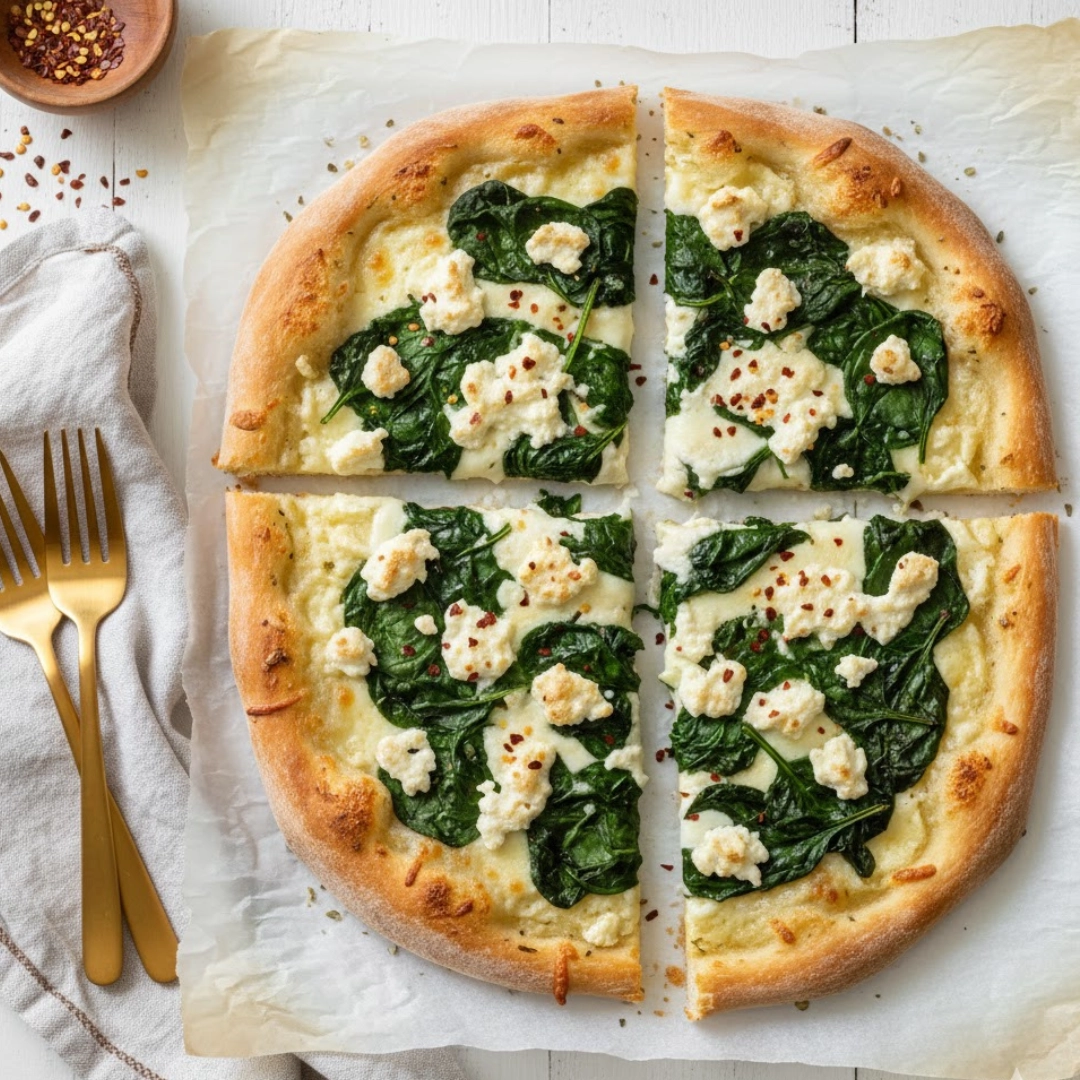
The category of “white pizza” is often understated, yet it offers some of the most satisfying flavor combinations in all of Italian-American cooking. It’s a canvas that begs for bright, fresh ingredients, and nothing answers that call quite like sautéed spinach and salty, briny feta. This style of Spinach Pizza sidesteps the usual tomato sauce, allowing the herbaceous, garlicky quality of the greens and the rich dairy profile of the mozzarella and feta to truly shine. It delivers a marvelous contrast: a crisp, oven-kissed crust supporting a lush, savory topping that is both elegant enough for a casual weekend gathering and straightforward enough for a mid-week dinner. This is the simple vegetarian recipe you’ll return to again and again when you want maximum flavor with minimal fuss.
Table of Contents
The Essential Elements of the Topping
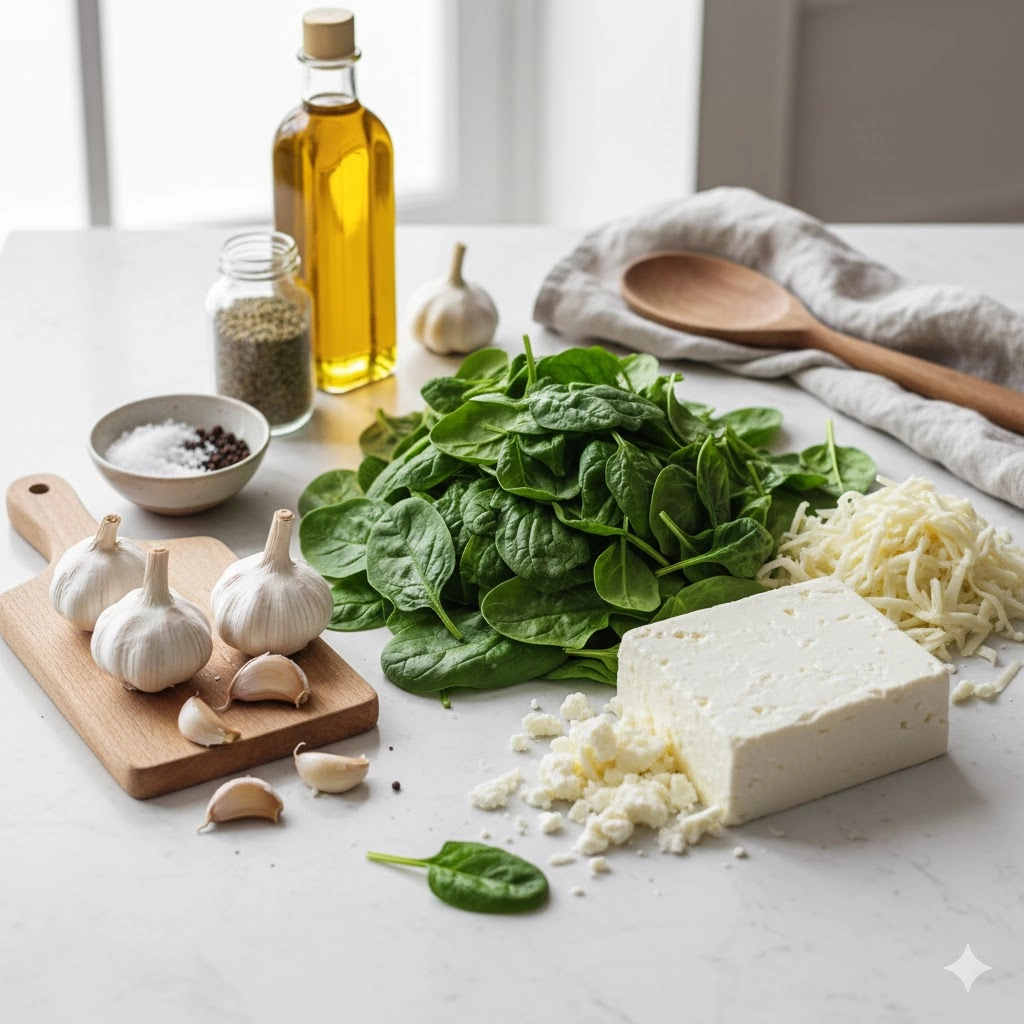
While the quality of the dough is foundational, the success of this pizza truly hinges on the preparation and selection of the supporting cast—the spinach and the cheeses. The amounts listed below are designed to create the perfect balance of savory, salty, and creamy across the surface of a standard twelve-inch crust.
For the Foundation (The Dough)
- One (1) twelve-inch pizza dough ball (homemade or high-quality store-bought)
- Two tablespoons olive oil (for dough preparation and pan)
For the Greens and Aromatics
- Ten ounces (two hundred eighty grams) fresh baby spinach
- Two tablespoons extra virgin olive oil
- Four cloves garlic, minced
- One half teaspoon fine sea salt
- One quarter teaspoon freshly ground black pepper
For the Cheese and Finishing
- Six ounces (one hundred seventy grams) whole milk low-moisture mozzarella, shredded
- Four ounces (one hundred thirteen grams) imported feta cheese, crumbled
- One teaspoon dried oregano
- Pinch of red pepper flakes (optional)
The commitment here is to whole ingredients—use an olive oil you enjoy the flavor of, and certainly mince fresh garlic. For the cheeses, seek out block mozzarella and whole feta submerged in brine; shredding and crumbling these yourself provides better texture and flavor intensity than pre-shredded or pre-crumbled varieties, which often contain anti-caking agents that hinder melt quality.
Assembling and Baking: A Masterclass in Technique
These steps provide the blueprint for constructing a pizza that is evenly cooked, richly flavored, and visually appealing. Prepare your ingredients mise en place before beginning.
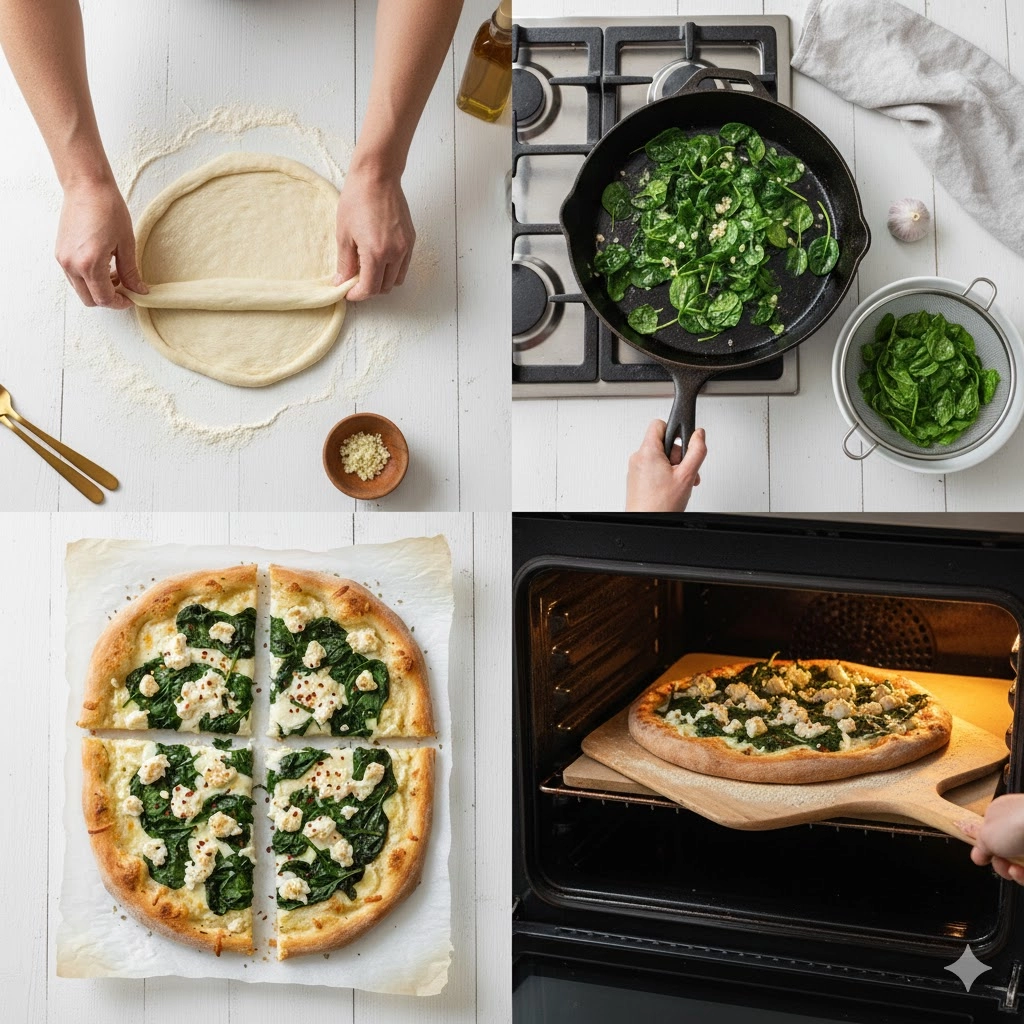
- Prepare the Oven and Baking Surface: Place your pizza stone or steel (or an inverted baking sheet) on the lower rack of your oven. Preheat the oven to four hundred seventy-five Fahrenheit for at least one hour.
- Sauté the Spinach Base: In a large skillet, heat the two tablespoons of olive oil over medium-high heat. Add the minced garlic and cook until fragrant—about thirty seconds—being careful not to let it brown. Introduce the spinach gradually, stirring until it has completely wilted down. Remove from heat, season with salt and pepper, and set the mixture in a sieve over a bowl to drain excess moisture.
- Stretch the Dough: On a lightly floured surface, or directly on parchment paper, gently stretch and press the dough into a twelve-inch round shape. If the dough snaps back, cover it and let it rest for ten minutes, then continue stretching. Brush the crust’s outer edge lightly with olive oil.
- Layer the Toppings: Start by spreading the shredded mozzarella evenly across the dough, leaving a one-inch border for the crust. Follow this with the drained sautéed spinach mixture, distributing it in small clusters across the surface. Finally, scatter the crumbled feta and dried oregano over the entire surface.
- Bake to Perfection: Carefully slide the pizza onto the preheated stone or steel in the oven. Bake for approximately twelve to fifteen minutes.
- Rest and Serve: Remove the finished pizza when the crust is golden-brown and the cheese is bubbling. Let it rest on a wire rack for two minutes before slicing and serving.
The Finer Points of Pizza Making
Achieving restaurant-quality pizza at home is less about expensive gear and more about understanding heat and moisture control. Follow these detailed expansions on the primary steps to ensure a flawless final product.
Wringing Out the Moisture is Key: The sautéing step is more than just cooking the spinach; it’s a critical dehydration process. Raw or even lightly cooked spinach contains too much water, which, when baked, will steam the dough and result in a soggy, undercooked center. After wilting the spinach with the garlic, transfer it immediately to a fine-mesh sieve. Press down firmly with the back of a spoon to force out as much liquid as possible. The resultant spinach should look dry and dense. The garlic oil used in the sauté will have infused the greens deeply, ensuring maximum flavor payoff in the finished pie.
The High-Heat Commitment: Pizza, especially this kind of white pizza, thrives on extreme heat. Preheating your oven to four hundred seventy-five Fahrenheit for a full hour is not an overestimation; it ensures that your baking surface—stone, steel, or pan—is saturated with heat. This thermal mass is what creates the instant “spring” and airy texture in the crust, yielding a desirable crispy bottom and chewy edge. If your oven has a convection or fan-assist setting, use it, as the circulating heat assists in achieving even browning and a shorter cooking time.
Building the Layered Foundation: When assembling the pie, the order matters. The mozzarella should always go down first. This provides an initial barrier between the toppings and the dough, preventing the spinach mixture, even when drained, from leeching further moisture into the crust. Distribute the spinach in a broken pattern, allowing some areas of mozzarella to remain exposed. Finally, the feta should be scattered primarily over the top. Its saltiness and strong flavor profile should be the final note, hitting the palate directly. Avoid overloading the pizza; a thin, even layer of toppings yields better results than a heavy, dense pie.
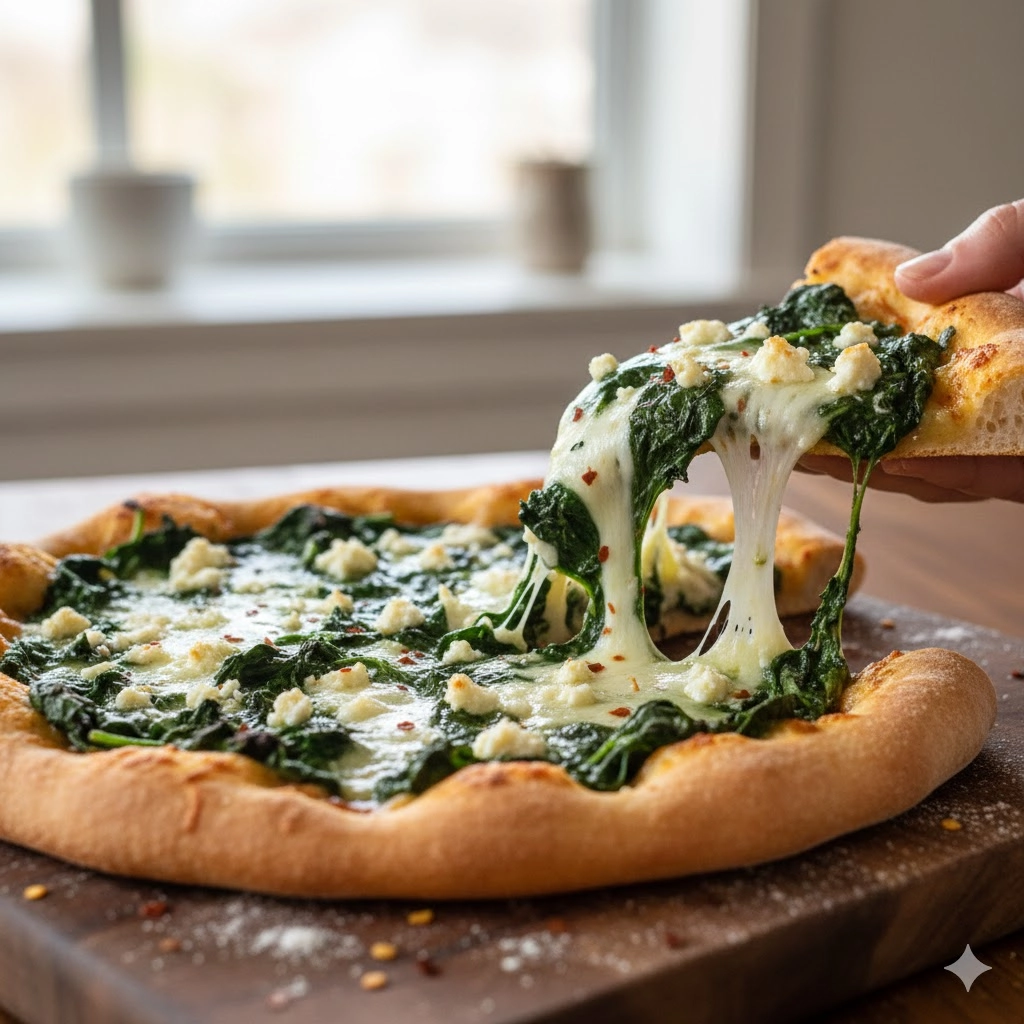
Sensory Cues for Doneness: Do not rely solely on the clock. You will know the pizza is done when the edges of the crust are deeply golden, almost bordering on dark brown in spots, and have puffy, uneven air pockets. The mozzarella should have melted completely and show spots of light golden-brown color—this is the desirable Maillard reaction providing depth of flavor. The aromatics will fill your kitchen, dominated by the toasted garlic, salty feta, and baked dough. If the crust is done but the toppings need more color, switch the oven to the broiler for a final forty-five to sixty seconds, watching constantly to prevent burning.
Expert Upgrades and Flavor Enhancements
Beyond the basic recipe, there are several simple technical adjustments you can implement to elevate this pizza from delicious weeknight fare to true culinary centerpiece.
- Brush the Crust with Garlic Oil: Before baking, instead of just plain olive oil, infuse a quarter cup of olive oil with one clove of finely minced garlic for fifteen minutes. Brush this seasoned oil over the crust perimeter—it adds an aromatic depth that transforms the edge flavor.
- Incorporate Ricotta Blooms: For an extra layer of creamy richness, dollop small spoonfuls of whole milk ricotta cheese across the pizza before adding the spinach and feta. The ricotta, mixed with a little fresh lemon zest, melts beautifully and adds a subtle sweetness to balance the salty feta.
- Use Activated Yeast Dough: If making your own dough, use a longer, slower cold fermentation process (up to twenty-four hours in the refrigerator). This develops exceptional flavor and creates a more complex, structured crust that holds up better to the moist spinach topping.
- Finishing Drizzle of Lemon: Upon removing the pizza from the oven, finish it with a light, even drizzle of fresh lemon juice across the spinach topping. The acidity cuts through the richness of the cheese and provides a lift that makes the entire pie taste incredibly fresh and vibrant.
- Utilize a Wood Peel and Semolina: To easily transfer the stretched dough onto a hot surface, use a wooden pizza peel dusted heavily with semolina flour instead of standard all-purpose flour. The semolina acts like small ball bearings, allowing the dough to slide off without sticking, which is a common hazard when working with hot stones.
- Roast the Garlic, Don’t Sauté It: For a sweeter, milder depth of flavor, replace the sautéed minced garlic with a quarter cup of mashed roasted garlic cloves. This mellows the sharp edge of raw garlic, creating a more sophisticated, rounder aromatic profile.
- Use Aged Mozzarella: Instead of the fresh mozzarella typically stored in water, opt for a good quality, aged, low-moisture mozzarella. It yields a better melt consistency, spreads evenly, and has less risk of releasing excess water onto the dough.
Creative Departures from the Standard
This recipe is incredibly flexible. Once you have mastered the base, these variations offer exciting new directions to explore.
- Pesto Base Swap: Replace the two tablespoons of oil used in the dough prep and the sautéed garlic/oil mixture with two tablespoons of high-quality basil pesto. Spread the pesto lightly over the dough before the mozzarella. This boosts the herbaceous notes and adds a layer of pine nut richness.
- Mediterranean Artichoke Addition: Incorporate one half cup of chopped, oil-packed artichoke hearts (well-drained and patted dry) along with the spinach. The tangy, slightly chewy artichokes provide a textural contrast and deepen the Mediterranean flavor profile established by the feta.
- The Chili-Onion Kick: For those who appreciate heat and bite, add one quarter cup of thinly sliced red onion and one half cup of thinly sliced pepperoncini peppers (or pickled jalapeños) to the pizza before baking. The sharpness of the onion and the vinegar tang of the peppers cut through the fat of the cheese beautifully.
- Mushroom and Truffle Oil Layer: Sauté one cup of thinly sliced cremini mushrooms separately in butter until golden and caramelized. Add these to the spinach mixture. After baking, finish the entire pizza with a light mist of white truffle oil for an earthy, decadent aroma.
Completing the Meal: What to Serve Alongside
A rich, savory pizza like this requires sides that offer textural contrast and bright, clean flavors to refresh the palate.
The Essential Arugula Salad: The best companion for any rich pizza is a simple, peppery salad. Toss two cups of fresh arugula with a light vinaigrette made from lemon juice, extra virgin olive oil, and a pinch of salt. The sharp, bitter edge of the arugula provides a magnificent foil to the creamy, salty cheese.
Balsamic Glazed Cherry Tomatoes: Quickly roast or pan-sear one cup of cherry tomatoes until they begin to burst, then toss them with a drizzle of thick balsamic glaze. The concentrated sweetness and acidity of the glaze, alongside the hot, juicy tomatoes, is wonderful when paired with a slice of this pizza.
Marinated Olives and Charred Peppers: Serve a small bowl of high-quality, oil-marinated olives (like Castelvetrano or Kalamata) alongside a few strips of charred red bell pepper. This offers a robust, salty starter that echoes the Mediterranean elements of the pizza itself.
Common Questions About This Recipe
Can I use frozen spinach instead of fresh?
Yes, you can substitute frozen spinach, but the drainage process becomes even more critical. Thaw a sixteen-ounce package of frozen spinach completely, then squeeze it vigorously in a clean kitchen towel until it is nearly bone-dry. The final yield of drained frozen spinach will be roughly equivalent in mass to ten ounces of wilted fresh spinach, but ensure all moisture is removed before seasoning and topping the pizza.
What is the best way to reheat leftover slices?
The best method for reheating pizza slices to preserve a crispy crust is in a skillet on the stovetop. Place the slices in a dry, cold non-stick skillet over medium-low heat. Cover the skillet loosely with a lid to trap heat and steam the cheese slightly. After about five to seven minutes, the crust will be crisp again, and the cheese will be perfectly melted, avoiding the rubbery texture of a microwave.
I don’t have a pizza stone; what can I use?
The next best tool is an inverted, heavy-duty baking sheet. Place the baking sheet upside-down on the lowest rack and let it preheat with the oven for the full hour at four hundred seventy-five Fahrenheit. This still functions as a heavy thermal mass, providing the initial burst of heat needed for a good crust. You can then slide the pizza (on parchment paper) directly onto the hot metal surface.
Can I make this pizza ahead of time?
While the entire pizza should be baked just before serving, you can prepare the spinach topping several hours in advance. Complete the sauté and draining process, allow the mixture to cool completely, and store it in an airtight container in the refrigerator. When you are ready to bake, stretch the dough, assemble the toppings cold, and proceed immediately to the hot oven.
Culinary Breakdown
| Nutrient | Amount per Serving |
| Calories | 385 kcal |
| Protein | 18 g |
| Carbs | 42 g |
| Fat | 17 g |
| Fiber | 4 g |
| Sugar | 2 g |
| Sodium | 650 mg |
Estimated Nutritional Content
Nutrition information is an estimate and may vary based on preparation and ingredients used.
PrintThe Ultimate Recipe for Garlicky Feta Spinach Pizza
A sophisticated white pizza recipe featuring a blend of garlicky, well-drained spinach, creamy mozzarella, and salty feta, baked to perfection on a high-heat crust.
- Prep Time: 20 mins
- Cook Time: 15 mins
- Total Time: 35 mins
- Yield: 4 servings 1x
- Category: Main Course
- Method: Baking
- Cuisine: Italian-American
- Diet: Vegetarian
Ingredients
One (1) twelve-inch pizza dough ball
Two tablespoons olive oil (for dough preparation and pan)
Ten ounces (two hundred eighty grams) fresh baby spinach
Two tablespoons extra virgin olive oil
Four cloves garlic, minced
One half teaspoon fine sea salt
One quarter teaspoon freshly ground black pepper
Six ounces (one hundred seventy grams) whole milk low-moisture mozzarella, shredded
Four ounces (one hundred thirteen grams) imported feta cheese, crumbled
One teaspoon dried oregano
Pinch of red pepper flakes (optional)
Instructions
1. Place your pizza stone or steel on the lowest oven rack. Preheat the oven to four hundred seventy-five Fahrenheit for at least one hour.
2. In a large skillet, heat the two tablespoons of olive oil over medium-high heat. Add the minced garlic and cook until fragrant—about thirty seconds. Introduce the spinach gradually, stirring until it has completely wilted down. Remove from heat, season with salt and pepper, and set the mixture in a sieve over a bowl to drain excess moisture.
3. On a lightly floured surface, gently stretch and press the dough into a twelve-inch round shape. Brush the crust’s outer edge lightly with olive oil.
4. Start by spreading the shredded mozzarella evenly across the dough. Follow this with the drained sautéed spinach mixture. Finally, scatter the crumbled feta and dried oregano over the entire surface.
5. Carefully slide the pizza onto the preheated stone or steel in the oven. Bake for approximately twelve to fifteen minutes.
6. Remove the finished pizza when the crust is golden-brown and the cheese is bubbling. Let it rest on a wire rack for two minutes before slicing and serving.
Notes
Wring out all excess moisture from the spinach after sautéing to prevent a soggy crust.
Preheating the oven and the baking surface (stone or steel) to four hundred seventy-five Fahrenheit for a full hour is crucial for a crisp crust.
Use fresh lemon juice as a finishing drizzle after baking for a brighter flavor.
If using frozen spinach, ensure it is fully thawed and squeezed dry in a towel before cooking.
Nutrition
- Serving Size: One quarter of pie
- Calories: 385
- Sugar: 2g
- Sodium: 650mg
- Fat: 17g
- Saturated Fat: 10g
- Unsaturated Fat: 5g
- Trans Fat: 0g
- Carbohydrates: 42g
- Fiber: 4g
- Protein: 18g
- Cholesterol: 40mg