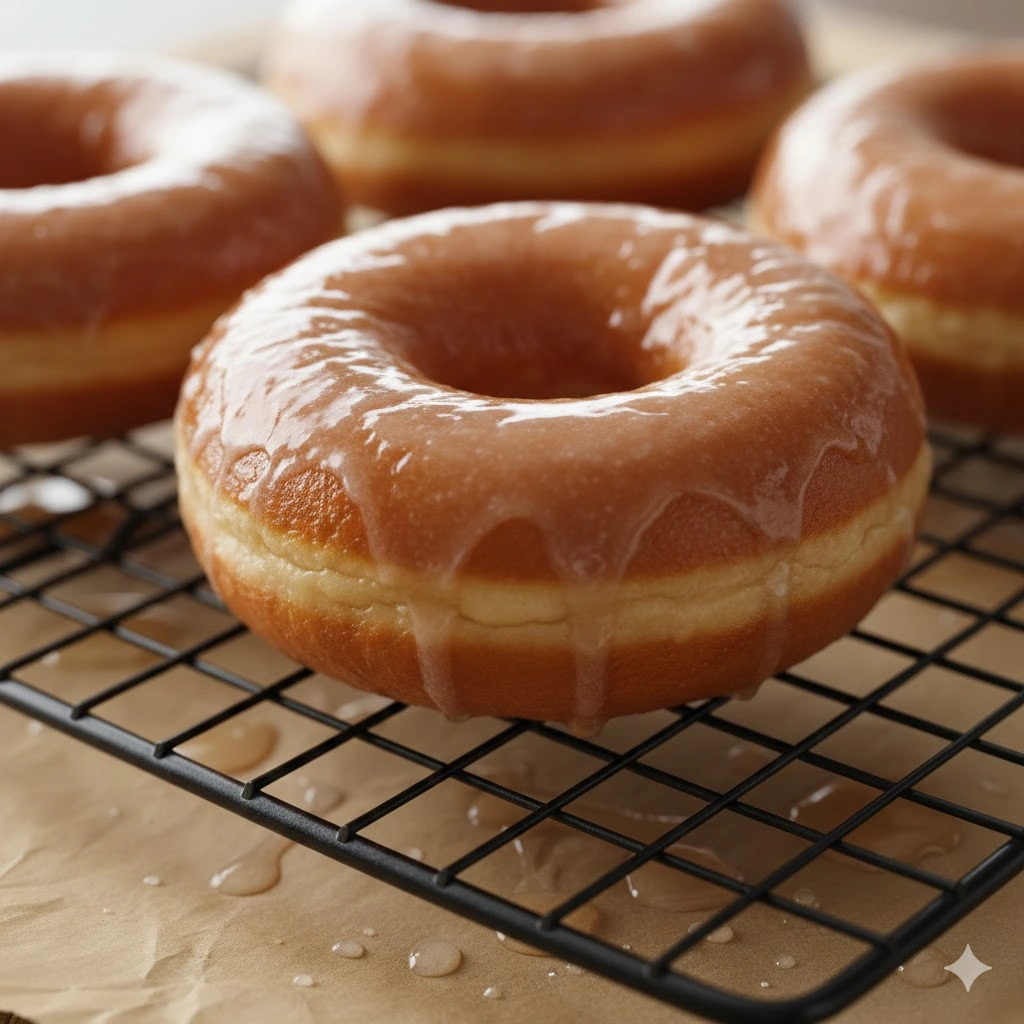
Bringing the bakery experience into your own kitchen is a rewarding endeavor that culminates in the most pillowy, flavorful treats imaginable. These Glazed Sourdough Donuts offer a sophisticated twist on the classic American pastry, utilizing the natural power of a fermented starter to achieve a depth of flavor that commercial yeast simply cannot replicate. Whether you choose to fry them for that traditional golden crunch or bake them for a lighter morning indulgence, this recipe delivers a soft, airy crumb with just a hint of signature sourdough tang.
Table of Contents
Essential Ingredients for the Perfect Batch
To achieve the ideal texture and flavor profile, high-quality ingredients are paramount. This recipe focuses on pantry staples transformed by the magic of fermentation.
The Donut Dough
- 1 cup 100 percent hydration sourdough starter (250 grams): Ensure your starter is active and bubbly for the best rise.
- 1/2 cup whole milk (115 grams): Provides richness and a soft crumb.
- 1 large egg: Acts as a binder and adds to the velvety texture of the dough.
- 1/4 cup raw cane sugar (55 grams): Adds just enough sweetness to the dough itself.
- 1/4 cup melted unsalted butter (50 grams): Infuses the dough with a buttery aroma and tenderness.
- 1 teaspoon vanilla (3 grams): Use pure extract for the most authentic flavor.
- 1 teaspoon salt (4 grams): Enhances the sweetness and strengthens the gluten structure.
- 2 1/4 cups organic bread flour (290 grams): The high protein content is vital for a strong rise and chewy texture.
- 1 to 3 cups coconut oil: This is the preferred fat for frying, providing a clean finish.
The Silky Glaze
- 2 cups powdered sugar: Sifted to ensure a smooth, lump-free coating.
- 1/4 cup whole milk: To thin the sugar into a dip-able consistency.
Detailed Step-by-Step Instructions
Follow these chronological steps to master the art of the sourdough donut. Timing is everything with fermentation, so patience is your best friend in this process.
Phase 1: Creating the Foundation
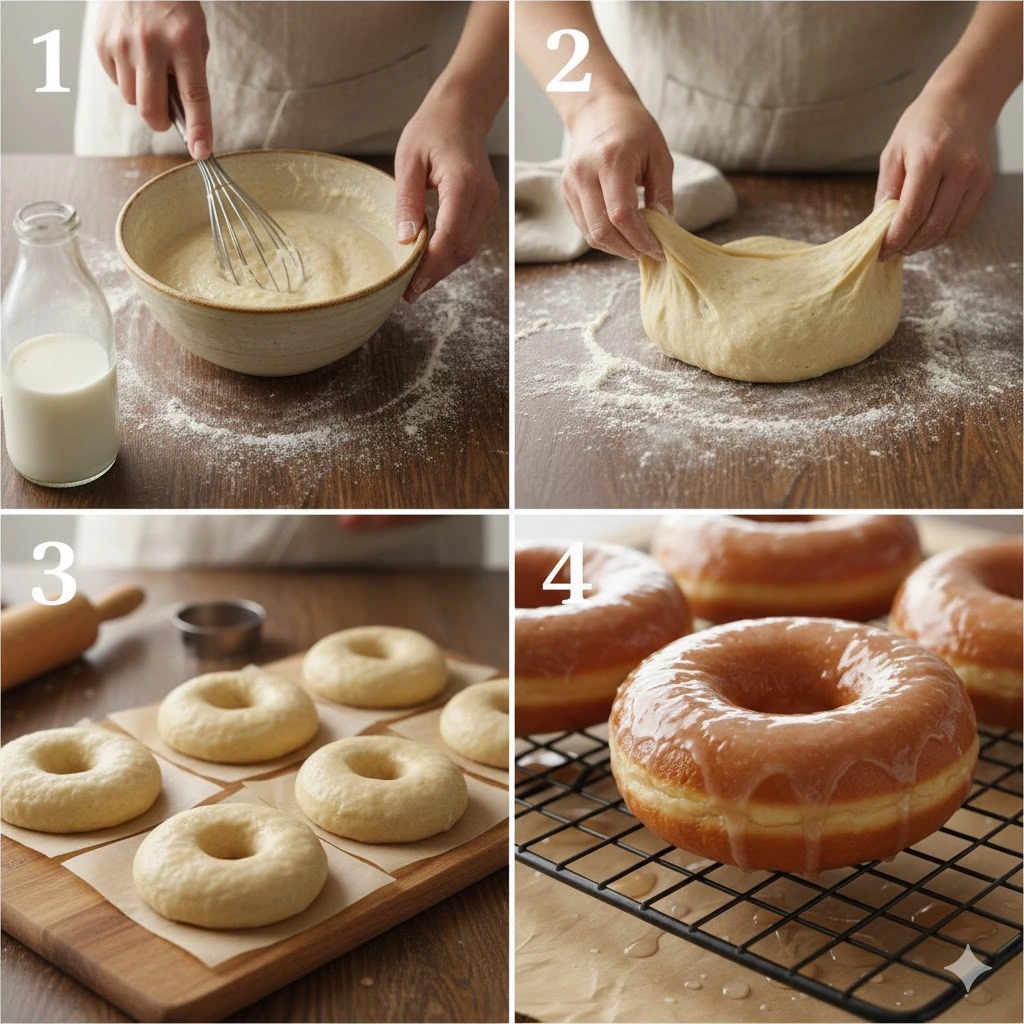
In a large mixing bowl, combine your active sourdough starter and the whole milk. Whisk these two together vigorously until the starter is completely dissolved into the milk, creating a uniform liquid base. Once smooth, incorporate the large egg, the raw cane sugar, the melted unsalted butter, and the vanilla extract. Continue whisking until the mixture is well-incorporated and the sugar has begun to dissolve.
Phase 2: Mixing and Resting
Sift the organic bread flour and salt directly into the wet ingredients. Use a sturdy spoon or spatula to mix until no dry lumps remain. At this stage, the dough will be quite shaggy. Cover the bowl with a damp cloth and let it rest for 30 minutes. This rest period allows the flour to fully hydrate, making the subsequent kneading process much more effective.
Phase 3: Strengthening the Gluten
After the rest, you have two options for developing the dough’s strength:
- Stand Mixer: Using a dough hook, knead on medium speed for 12 minutes. The dough should eventually pull away from the sides of the bowl and appear smooth and elastic.
- Manual Stretch and Folds: If you do not have a mixer, wet your hands and perform three sets of stretch and folds. Pull the edge of the dough up and over itself, rotating the bowl and repeating until you have completed a full circle. Rest the dough for 15 to 30 minutes between each of the three sets.
Phase 4: The Overnight Bulk Rise
Cover the bowl tightly with a damp cloth. Place it in a draft-free spot at approximately 70 degrees Fahrenheit. Allow the dough to ferment for 8 to 10 hours overnight. By morning, the dough should have doubled in volume and feel light and full of air.
Phase 5: Shaping and the Second Rise
Turn the fermented dough onto a surface that has been generously dusted with flour. Gently roll the dough out until it is 1/2 inch thick. Use a 2 3/4 inch biscuit cutter to stamp out circles. For the center hole, pierce the middle with a skewer or chopstick and spin the dough to stretch the opening to 1 inch wide. Place these on parchment paper, 2 inches apart. Cover and let them rise at room temperature for about 2 hours, or until they have increased in size by 50 percent.
Phase 6: Cooking Your Donuts
For Frying: Heat 1 inch of coconut oil in a deep pan to 350 degrees Fahrenheit. Fry each donut for approximately one minute per side until they reach a beautiful golden brown color. Drain on paper towels.
For Baking: Preheat your oven to 350 degrees Fahrenheit. Place the donuts on a baking sheet and bake for 13 to 15 minutes in the center of the oven.
Phase 7: The Finishing Glaze
Whisk the powdered sugar and milk together until smooth. While the donuts are still slightly warm but not hot, dip one side into the glaze. Let them sit on a wire rack for 10 minutes to allow the glaze to set into a crackly, sweet shell.
Mastering the Texture: Step-by-Step Details
The secret to a world-class donut lies in the nuances of the dough handling. When you first mix the flour into the starter and milk, the dough will feel remarkably sticky. Do not be tempted to dump in extra flour. Sourdough thrives on higher hydration, and that stickiness is exactly what transforms into a cloud-like interior once heat hits the dough. The 12-minute knead in a stand mixer is non-negotiable if you want that “springy” bite. You are looking for the “windowpane test” where a small piece of dough can be stretched thin enough to see light through it without tearing.
During the rolling phase, if you find the dough is “snapping back” like a rubber band, it means the gluten is too tight. Simply walk away for 10 minutes. Covering the dough and letting it relax will allow those protein bonds to loosen, making it easy to roll to that perfect 1/2 inch height. When using the skewer method to create the hole, the spinning motion uses centrifugal force to widen the center without deflating the delicate air bubbles you spent all night culturing.
Unique Culinary Insights for Success
Temperature is the most significant variable when working with wild yeast. If your kitchen is cooler than 70 degrees Fahrenheit, your bulk rise might need closer to 12 hours. Conversely, in a very warm environment, the dough could be ready in 6. Always watch the dough, not the clock; it should look pillowy and have visible bubbles just under the surface.
When frying, the 350 degrees Fahrenheit mark is critical. If the oil is too cold, the dough will absorb the fat and become greasy. If it is too hot, the exterior will burn before the interior is fully cooked. Using coconut oil provides a higher smoke point than butter and a much cleaner flavor profile than vegetable oils, allowing the tang of the sourdough to shine through. If baking, consider brushing the hot donuts with a little extra melted butter immediately after they come out of the oven to mimic the richness of the traditional fried version.
Accompaniments and Serving Suggestions
While these donuts are a masterpiece on their own, they pair beautifully with a variety of beverages and toppings. For a classic breakfast, serve them alongside a dark roast coffee or a creamy latte. The acidity of the coffee cuts through the sweetness of the glaze perfectly.
If you want to dress them up for a brunch party, consider these variations:
- Cinnamon Sugar: Instead of the glaze, toss the hot donuts in a mixture of cane sugar and cinnamon.
- Fresh Berries: Serve a side of macerated strawberries or raspberries to add a tart, fresh element to the plate.
- Savory Contrast: A side of thick-cut salty bacon provides a wonderful “sweet and salty” balance that elevates the sourdough flavor.
Modifications and Substitutions
This recipe is versatile enough to accommodate different dietary needs or pantry limitations.
- Dairy-Free: You can easily swap the whole milk for almond milk, oat milk, or coconut milk. For the butter, coconut oil or a high-quality plant-based butter substitute works exceptionally well.
- Flour Choices: While bread flour is highly recommended for the structure, you can substitute up to 1/2 cup with fresh milled kamut or whole wheat flour for a nuttier, more rustic flavor profile.
- Alternative Oils: If you do not have coconut oil for frying, any neutral oil with a high smoke point, such as canola, vegetable, or corn oil, will do the job.
- Glaze Variations: Feel free to add a splash of maple syrup to the glaze or a pinch of cocoa powder for a chocolatey twist.
Deep-Dive Technical Questions
Can I use sourdough discard instead of an active starter for this recipe?
Yes, you can use discard, provided the mother starter it came from is healthy and well-maintained. However, since discard is less active, you must be prepared for a significantly longer fermentation time. Watch the dough carefully, as it may take several extra hours to double in size during the bulk rise compared to using a peak-activity starter.
Why is my dough too sticky to handle even after the long rise?
Sticky dough is often a result of the environment or the flour’s absorption rate. If you find it impossible to roll, ensure your work surface is liberally floured. You can also try a “cold proof” by placing the dough in the refrigerator for an hour before rolling; chilled fats in the butter make the dough much firmer and easier to shape without adding excess flour.
How do I store these donuts to keep them fresh?
Sourdough donuts are best enjoyed within a few hours of glazing. If you have leftovers, store them in an airtight container at room temperature for up to two days. To revive them, a quick 5 to 10 second zap in the microwave will soften the crumb, though the glaze may lose some of its crispness. For longer storage, freeze them unglazed in a heavy-duty freezer bag for up to three months.
Nutritional Information
| Nutrient | Amount Per Serving |
| Calories | 280 |
| Total Fat | 12 grams |
| Saturated Fat | 8 grams |
| Cholesterol | 25 milligrams |
| Sodium | 190 milligrams |
| Total Carbohydrates | 38 grams |
| Dietary Fiber | 1 gram |
| Sugars | 18 grams |
| Protein | 5 grams |
Disclaimer
Nutritional values are estimates based on standard ingredients and common preparations. Actual nutritional content may vary depending on specific brands used and whether the donuts are fried or baked.
The Joy of Sourdough Baking
There is a profound sense of satisfaction that comes from transforming a simple mixture of flour and water into a professional-grade pastry. These donuts represent the best of slow-food culture—taking the time to let natural processes develop flavor and texture. Once you take your first bite of a warm, home-fried sourdough donut, the store-bought versions will never quite measure up again. Happy baking, and enjoy the delicious fruits of your labor!
PrintFluffy Homemade Glazed Sourdough Donuts
These Glazed Sourdough Donuts are soft, fluffy, and perfectly sweet with a slight tang, giving traditional raised donuts a run for their money. Can be baked or fried!
- Prep Time: 13 hours
- Cook Time: 15 mins
- Total Time: 13 hours 15 mins
- Yield: 12 servings 1x
- Category: Breakfast
- Method: Fry or Bake
- Cuisine: American
- Diet: Vegetarian
Ingredients
1 cup 100 percent hydration sourdough starter (250g)
1/2 cup whole milk (115g)
1 large egg
1/4 cup raw cane sugar (55g)
1/4 cup melted unsalted butter (50g)
1 tsp vanilla (3g)
1 tsp salt (4g)
2 1/4 cups organic bread flour (290g)
2 cups powdered sugar
1/4 cup whole milk
1–3 cups coconut oil for frying
Instructions
1. Mix the starter and milk until dissolved, then whisk in egg, sugar, butter, and vanilla.
2. Sift in flour and salt and mix until no lumps remain.
3. Rest for 30 minutes, then knead for 12 minutes (or perform 3 sets of stretch and folds).
4. Bulk rise overnight for 8 to 10 hours at 70 degrees Fahrenheit.
5. Roll dough to 1/2 inch thickness and cut into 2 3/4 inch circles. Stretch center holes to 1 inch.
6. Second rise for 2 hours until increased by 50 percent.
7. Fry in 1 inch of coconut oil at 350 degrees Fahrenheit for 1 minute per side (or bake at 350 for 13 to 15 mins).
8. Dip in a glaze of powdered sugar and milk and let set for 10 minutes.
Notes
Ensure starter is active for best rise.
For the second rise, use the warm oven trick (170 degrees Fahrenheit with door open) to save time.
Freeze unglazed for up to 3 months.
Nutrition
- Serving Size: 1 donut
- Calories: 280
- Sugar: 18g
- Sodium: 190mg
- Fat: 12g
- Saturated Fat: 8g
- Unsaturated Fat: 4g
- Trans Fat: 0g
- Carbohydrates: 38g
- Fiber: 1g
- Protein: 5g
- Cholesterol: 25mg