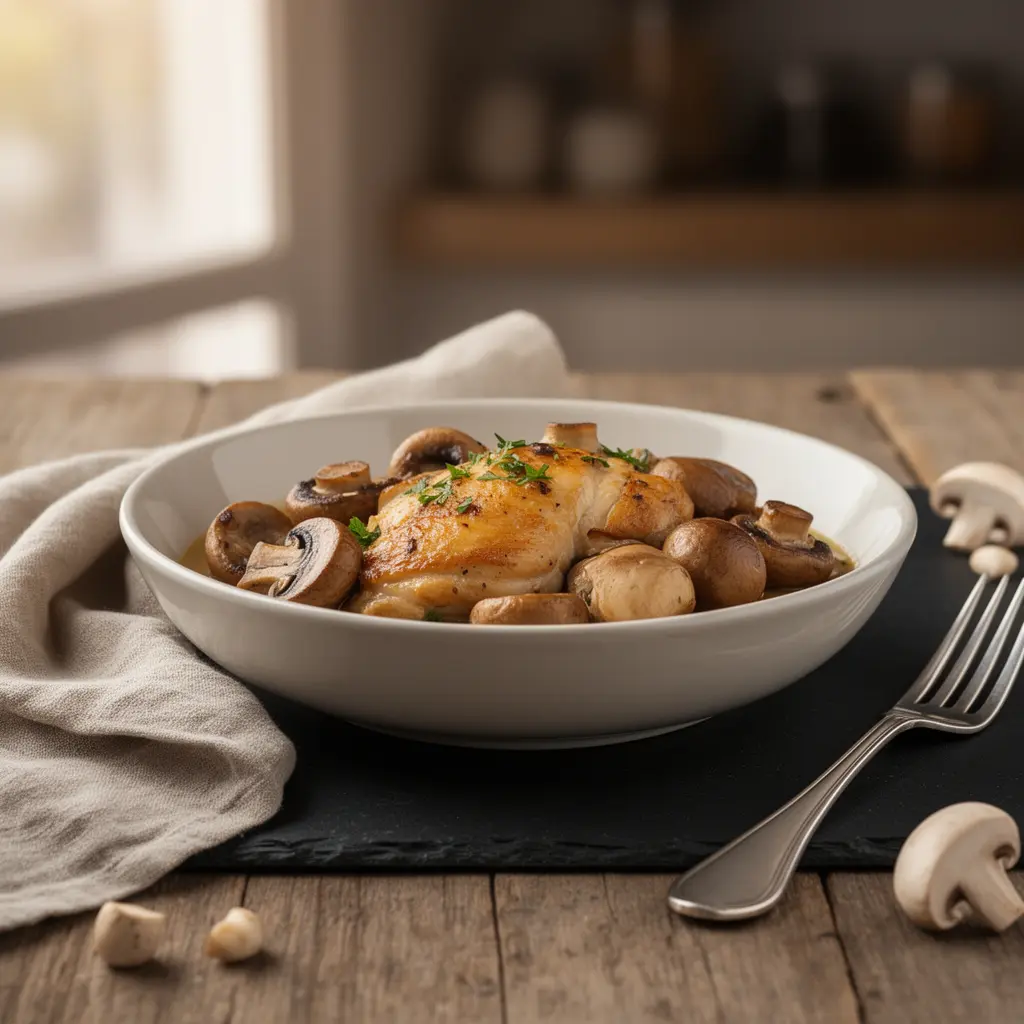
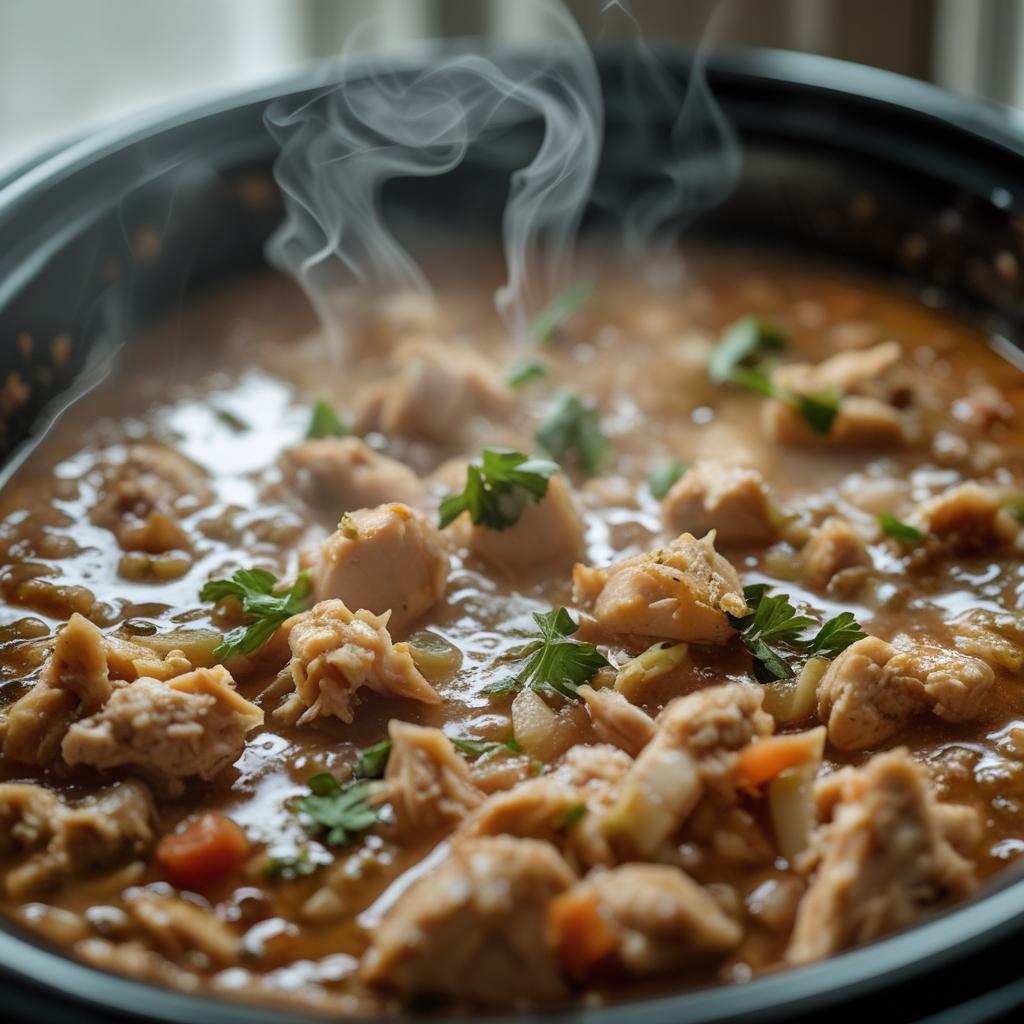
Slow cooker Chicken Jambalaya emerges from its cocoon of steam like a culinary phoenix reborn—a humble dish transformed through the low-and-slow alchemy of Creole tradition. Imagine lifting the lid after seven hours to a crescendo of aromas: smoked paprika flirting with cayenne’s heat, earthy thyme harmonizing with the briny kiss of Andouille sausage. The dark magic happens beneath that lid, where chicken thighs surrender their collagen to the broth, tomatoes dissolve into velvet, and rice swells with the confidence of a thousand bay leaves. This isn’t mere sustenance; it’s a bayou-born symphony conducted by your crockpot.
Table of Contents
Ingredient Deep Dive
| Ingredient | Quantity | Purpose |
|---|---|---|
| Boneless chicken thighs | 1.5 lbs | Collagen-rich for silkiness |
| Andouille sausage | 12 oz | Smoky depth and fat distribution |
| Crushed tomatoes | 28 oz | Acid balance & viscosity |
| Long-grain rice | 1.5 cups | Texture integrity (holds shape) |
| Chicken bone broth | 2 cups | Gelatin foundation for mouthfeel |
| Holy Trinity (celery, bell pepper, onion) | 3 cups diced | Aromatic base layers |
| Garlic | 6 cloves | Flavor amplification |
| Filé powder | 1 tsp | Post-cooking thickener (sassafras) |
| Smoked paprika | 2 tbsp | Umami scaffolding |
Boneless thighs outshine breasts in slow cooking—their intramuscular fat emulsifies into the broth, creating a self-basting effect. Crushed tomatoes (not diced) break down completely, becoming invisible flavor agents rather than distracting chunks. Holy Trinity vegetables must be uniformly ¼-inch diced; too large, and they refuse to soften properly during the rice’s starch release phase. The filé powder addition after cooking is non-negotiable—its sassafras compounds denature if boiled, losing thickening power.

Substitutions & Swaps
For gluten-free needs, verify Andouille sausage labels—many contain wheat-based binders. Vegan architects can replace chicken with smoked king oyster mushrooms and use liquid smoke in vegetable broth. Pantry improvisers may deploy canned chicken in water (drained) but must reduce broth by ½ cup to compensate for added moisture. No fresh thyme? Dried works at 1:3 ratio—1 tsp dried for 1 tbsp fresh, added during the sauté phase to rehydrate. Shellfish enthusiasts might add 8 oz peeled shrimp in the final 15 minutes.
Equipment Guide
A 6-7 quart oval slow cooker is ideal—its shape accommodates sausage links better than round models. Use enameled cast iron for browning meats; its thermal mass prevents hot spots that could burn the fond. Synthetic spatulas won’t scrape precious caramelized bits from the skillet. Infrared thermometers ensure broth hits 165°F before adding rice—critical for starch activation. Avoid glass lids; condensation drips disrupt the rice’s surface tension. A Japanese rice paddle folds ingredients without breaking grains.
Step-by-Step Walkthrough
- Blister sliced sausage in dry cast iron skillet (no oil) over medium-high until fat renders—3 minutes per side.
- Sauté Holy Trinity in sausage drippings until onions turn translucent—4 minutes. Deglaze with ½ cup broth.
- Layer chicken thighs, vegetables, tomatoes, and spices in slow cooker. Pour broth over without stirring.
- Cook on LOW 6 hours. Shred chicken with forks, still in pot.
- Stir in rinsed rice. Cook HIGH 45 minutes covered, then 15 minutes uncovered.
- Remove bay leaves. Dust with filé powder, then rest 10 minutes before serving.
Never stir before the rice phase—disrupting the layers inhibits flavor development. Deglazing liquid should hit the skillet when it’s nearly smoking; instant steam lifts caramelized bits without scrubbing. Rice rinsing removes excess starch that would turn jambalaya gummy—water should run nearly clear. The final uncovered cook mimics pilaf technique, creating a coveted textural contrast between tender bottom and slightly chewy top grains.

Expert Tips & Troubleshooting
Crisis: Rice remains crunchy after cooking. Solution: Add ¼ cup hot broth, cover, cook 10 more minutes. The likely culprit was old rice—grains older than 6 months lose moisture. Preventive Tip: Toast rice in dry skillet before rinsing; this seals the starch coating. Pro Secret: After shredding chicken, press it against the pot walls to release residual collagen—these sticky strands are flavor gold. If acidity overwhelms, stir in 1 tsp honey; its fructose bonds mute tomato sharpness without sweetening. For smoke depth without heat, add ½ tsp ground cumin during the vegetable sauté—its pyrazines echo Andouille’s oakiness.
Flavor Variations
Bayou Inferno: Swap sweet paprika for chipotle powder and add 2 minced habaneros (with seeds) to the Holy Trinity. Seafood Remix: Replace chicken with 1 lb raw shrimp + 8 oz crawfish tails added at rice stage. Picky Eater Edition: Omit cayenne, use sweet Italian sausage, and stir in 1 cup frozen corn with the rice. Gumbo Hybrid: After cooking, fold in 1 cup sliced okra and ½ cup roux—creates a thicker, stew-like consistency.
Storage & Reheating
Cool completely within two hours. Portion into glass containers with wax paper pressed onto the surface to prevent moisture loss. Refrigerate up to 4 days. Freeze without rice for 3 months (cooked rice turns grainy upon thawing). Reheat in a lidded skillet with 1 tbsp broth per cup—direct stovetop heat revives the Maillard flavors better than microwaves.
FAQ Section
Q: Can I use instant rice?
A: Catastrophic idea. Instant rice disintegrates under long cooking. Only long-grain varieties like Jasmine or Basmati hold structural integrity.
Q: My jambalaya looks oily—can I fix it?
A: Immediately refrigerate. The fat will solidify on top—skim it off before reheating. Next time, trim sausage ends before slicing to reduce fat release.
Q: Is it safe to cook chicken on LOW heat?
A: Absolutely. USDA confirms 165°F is achievable on LOW—use a thermometer to verify before adding rice.
Q: Why no tomatoes in authentic Creole versions?
A: We’re crafting a New Orleans hybrid. Traditional Cajun jambalaya omits tomatoes, while Creole versions embrace them. This recipe splits the difference.
Nutrition Information
| Nutrient | Per Serving (1.5 cups) |
|---|---|
| Calories | 487 |
| Protein | 34g |
| Carbohydrates | 42g |
| Dietary Fiber | 3g |
| Sugars | 5g |
| Fat | 19g |
| Sodium | 897mg |
Nutritional data estimated via USDA database. Actual values may vary based on ingredient brands and preparation methods. Consult a nutritionist for medical dietary needs.