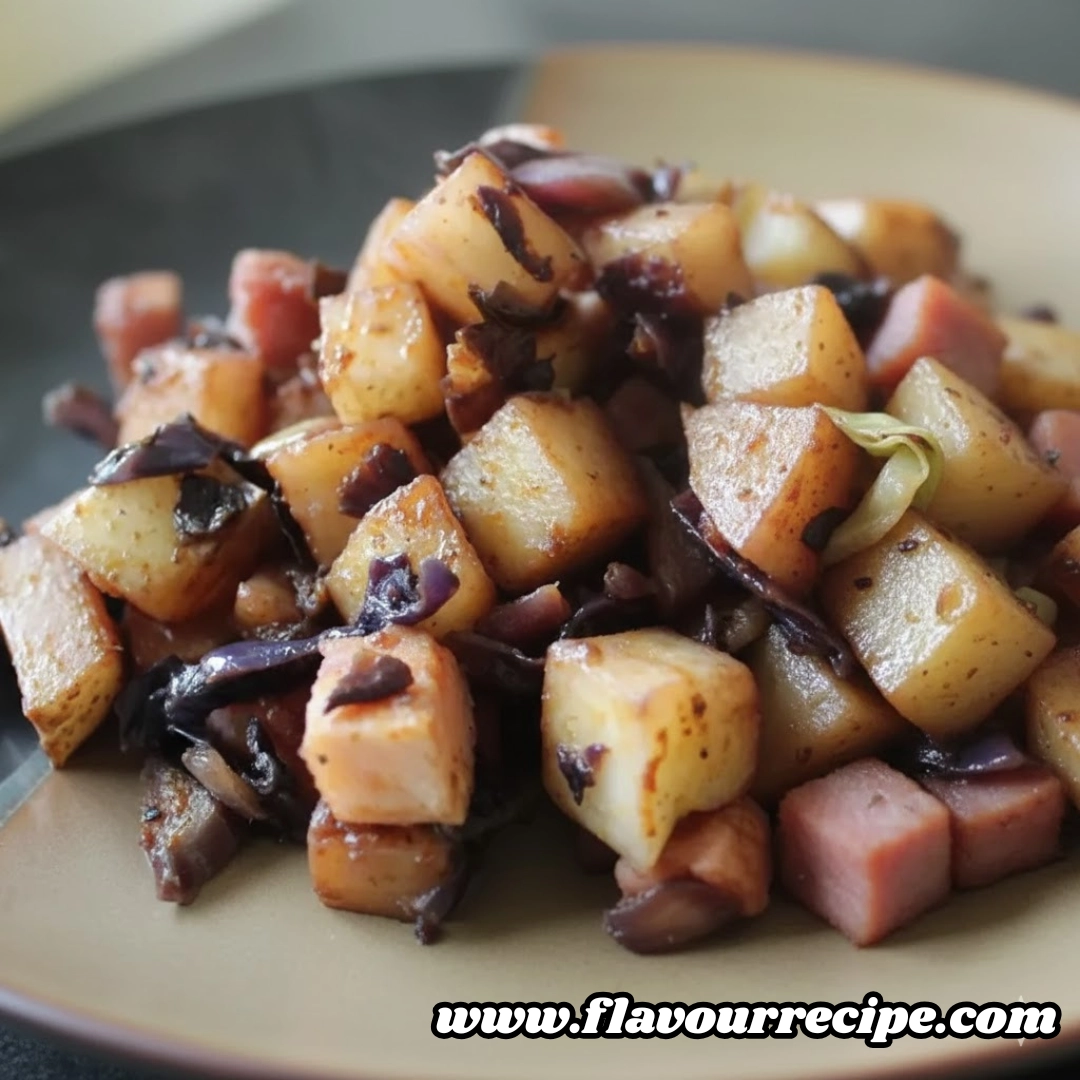
When the air turns crisp or you simply find yourself craving a meal that feels like a warm embrace, few things satisfy quite like the combination of cured meat and earthy vegetables. This Skillet Ham, Cabbage, and Potatoes recipe is the epitome of rustic home cooking. It relies on humble, affordable ingredients that, when simmered together, create a depth of flavor that far exceeds the sum of its parts. By using a single skillet, you not only concentrate the juices of the ham and the sweetness of the cabbage but also keep cleanup to an absolute minimum. It is a practical, nutritious, and deeply nostalgic dish that brings the essence of traditional farmhouse cooking straight to your modern kitchen table.
Table of Contents
Ingredients for the Perfect Skillet Meal
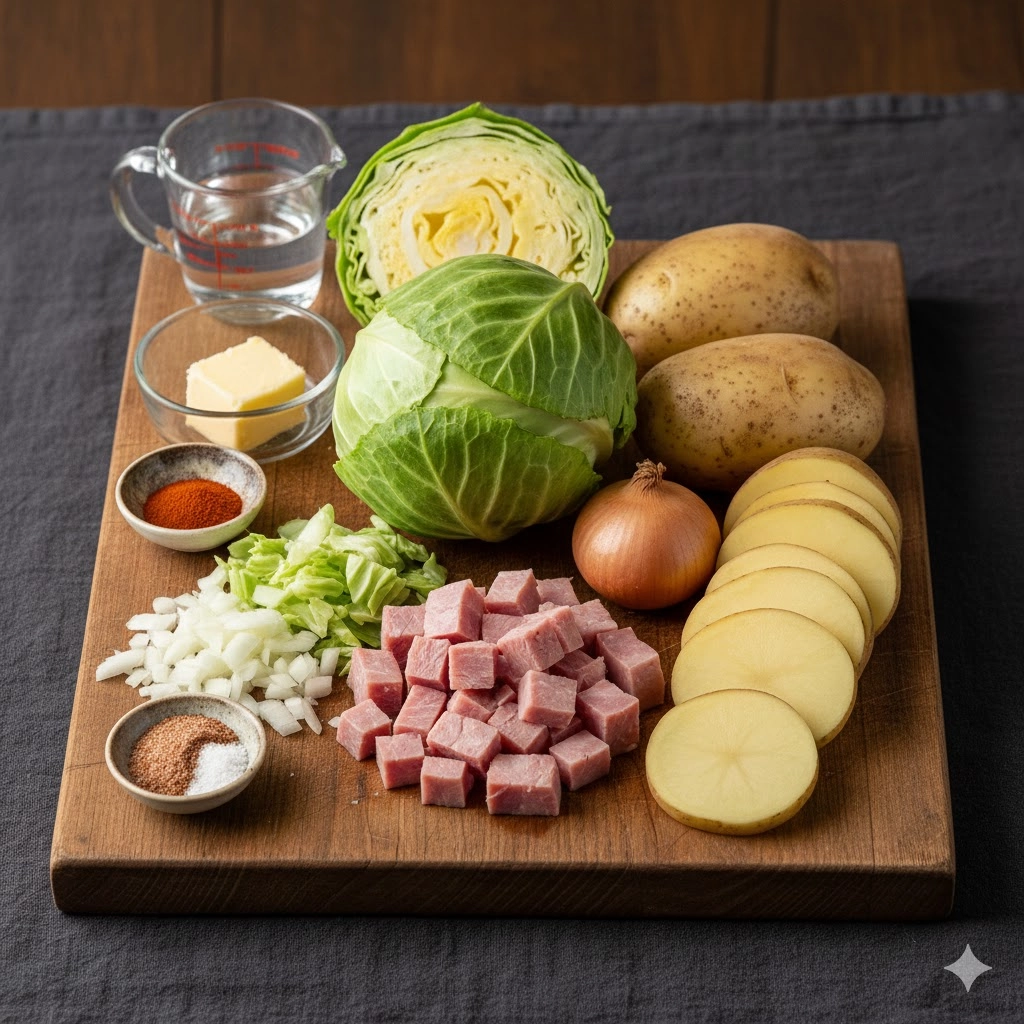
To achieve the best results, ensure your vegetables are fresh and your ham is of high quality. The simplicity of this ingredient list means that each component plays a starring role in the final flavor profile.
- 2 tablespoons butter
- 1 onion, chopped
- 1 small head cabbage, coarsely chopped
- One quarter cup water
- 3 large potatoes, scrubbed and sliced
- 1 dash seasoning salt
- 1 dash paprika, or to taste
- 2 cups cubed cooked ham
Instructions for Cooking
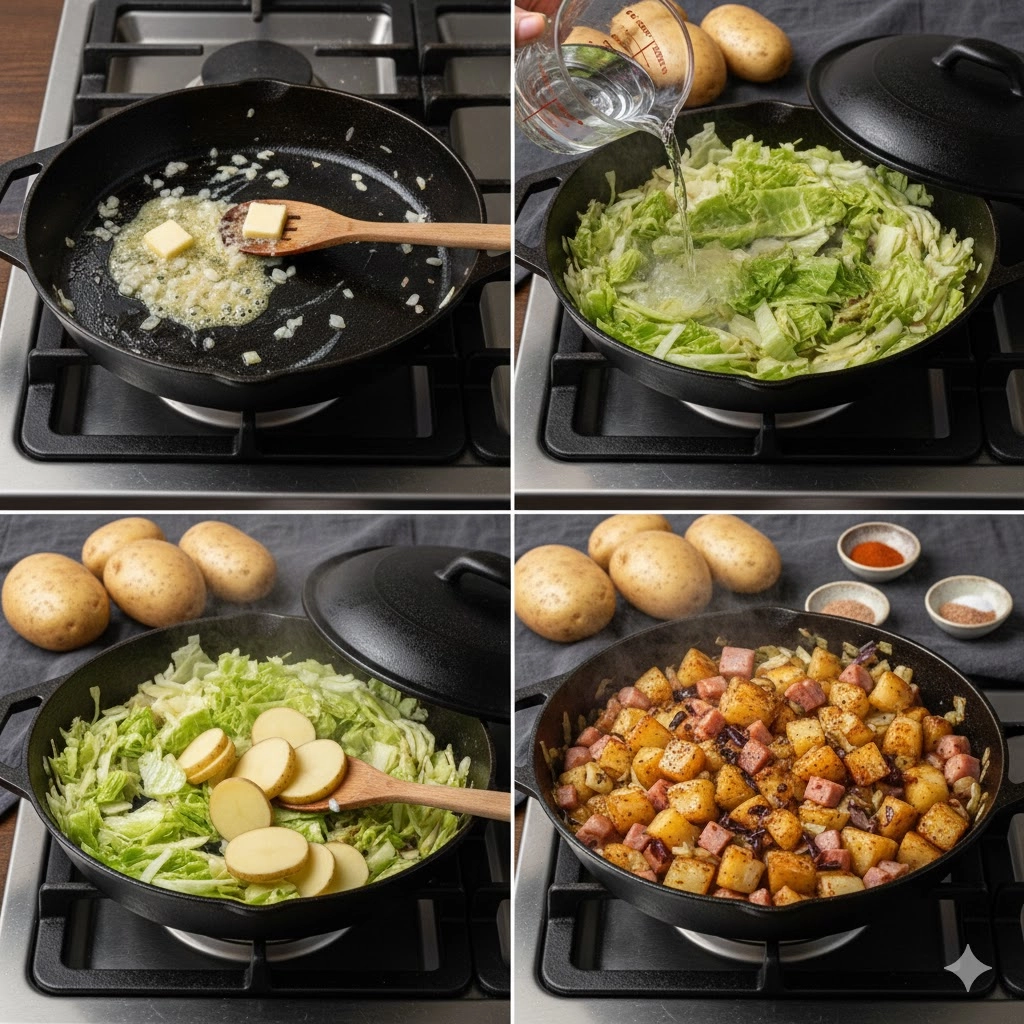
- Begin by placing a large, heavy-bottomed skillet over medium heat. Add the two tablespoons of butter and allow it to melt until it begins to bubble slightly.
- Incorporate the chopped onion into the melted butter. Cook and stir the onions frequently. You are looking for them to soften and turn a beautiful translucent color, which typically takes about 5 minutes.
- Add the coarsely chopped cabbage to the skillet with the onions. Pour in the one quarter cup of water. Place a tight-fitting lid on the skillet and reduce the heat to low. Allow the mixture to simmer gently for ten minutes, which helps the cabbage begin its transformation into a tender, sweet component.
- Carefully lift the lid and add the sliced potatoes. Give the mixture a thorough stir to ensure the potatoes are nestled in with the cabbage and onions. Replace the lid and continue to simmer for an additional 10 minutes. If you notice the pan looking a bit dry, feel free to add a splash more water to maintain the steam.
- Remove the lid to sprinkle the seasoning salt and the paprika over the vegetables. Stir well, cover again, and continue simmering until the cabbage has reached a soft consistency and the potatoes are fork-tender.
- Finally, fold in the two cups of cubed cooked ham. Stir the mixture one last time to distribute the meat evenly. Keep the skillet over the heat just until the ham is heated through and has released its savory essence into the surrounding vegetables.
Mastering the Texture and Flavor Profile
Achieving the ultimate creamy and tender consistency in a skillet meal requires a bit of patience and an understanding of how these specific vegetables interact with heat. Cabbage is a remarkable ingredient; when raw, it is crunchy and peppery, but as it simmers in butter and water, its natural sugars caramelize, leading to a buttery sweetness. To maximize this, ensure your cabbage pieces are “coarsely chopped” rather than shredded too thinly. Larger chunks hold up better during the twenty-plus minutes of simmering, providing a pleasant mouthfeel that isn’t mushy.
The potatoes are the backbone of this dish. By scrubbing them and leaving the skins on, you retain extra nutrients and a rustic texture. When slicing, aim for a uniform thickness—roughly one quarter of an inch. If the slices are too thick, the cabbage may overcook before the potatoes are ready; if they are too thin, they might break apart. The goal is a potato that is “fork-tender,” meaning the tines of a fork slide in with zero resistance, but the slice remains whole.
The role of the “dash” of seasoning salt and paprika cannot be overstated. While they seem like minor additions, the paprika adds a subtle smokiness that bridges the gap between the salty ham and the sweet cabbage. The seasoning salt provides a more complex saltiness than table salt alone, often carrying hints of garlic and onion powder that enhance the aromatic base you built at the beginning of the recipe.
Navigating Modifications and Ingredient Substitutions
While the classic trio of ham, cabbage, and potatoes is timeless, this recipe is incredibly forgiving and can be adapted based on what you have in your pantry. If you find yourself without butter, a high-quality olive oil or even rendered bacon fat can be used to sauté the onions. Bacon fat, in particular, adds a secondary layer of smoky pork flavor that complements the ham beautifully.
For those looking to swap the protein, leftover roast pork or even thick slices of smoked sausage can be substituted for the cubed ham. If you are using a raw sausage, be sure to brown it in the skillet before adding the onions to ensure it is fully cooked through.
If you prefer a different type of potato, Yukon Golds are a fantastic choice because of their naturally buttery flavor and medium starch content, which helps them hold their shape. Red potatoes also work well for a waxier texture. If you want to increase the fiber content, you can use a Savoy cabbage, which has crinklier leaves and a slightly milder flavor, though it may cook a bit faster than a standard green cabbage. For a bit of acidity to cut through the richness of the butter and ham, a teaspoon of apple cider vinegar stirred in at the very end can brighten the entire dish.
Deep-Dive Frequently Asked Questions
Can I make this recipe ahead of time for meal prep?
Yes, this skillet meal is an excellent candidate for meal prepping because the flavors actually deepen as they sit. When you reheat the dish, the potatoes absorb more of the savory ham juices and the paprika, making it even more flavorful the next day. Simply store it in an airtight container in the refrigerator for up to three or four days and reheat it in a skillet or microwave with a tiny splash of water to keep it moist.
What is the best way to prevent the potatoes from sticking to the skillet?
The key to preventing sticking is twofold: the fat and the steam. Ensure the butter is well-distributed before adding the onions, and maintain the lid on the skillet as much as possible. The steam created by the water and the moisture in the cabbage creates a non-stick environment. If you find the potatoes are catching on the bottom, it usually means your heat is a bit too high or the water has evaporated too quickly; simply lower the flame and add a tablespoon of water or broth.
Is there a specific type of ham that works best for this skillet?
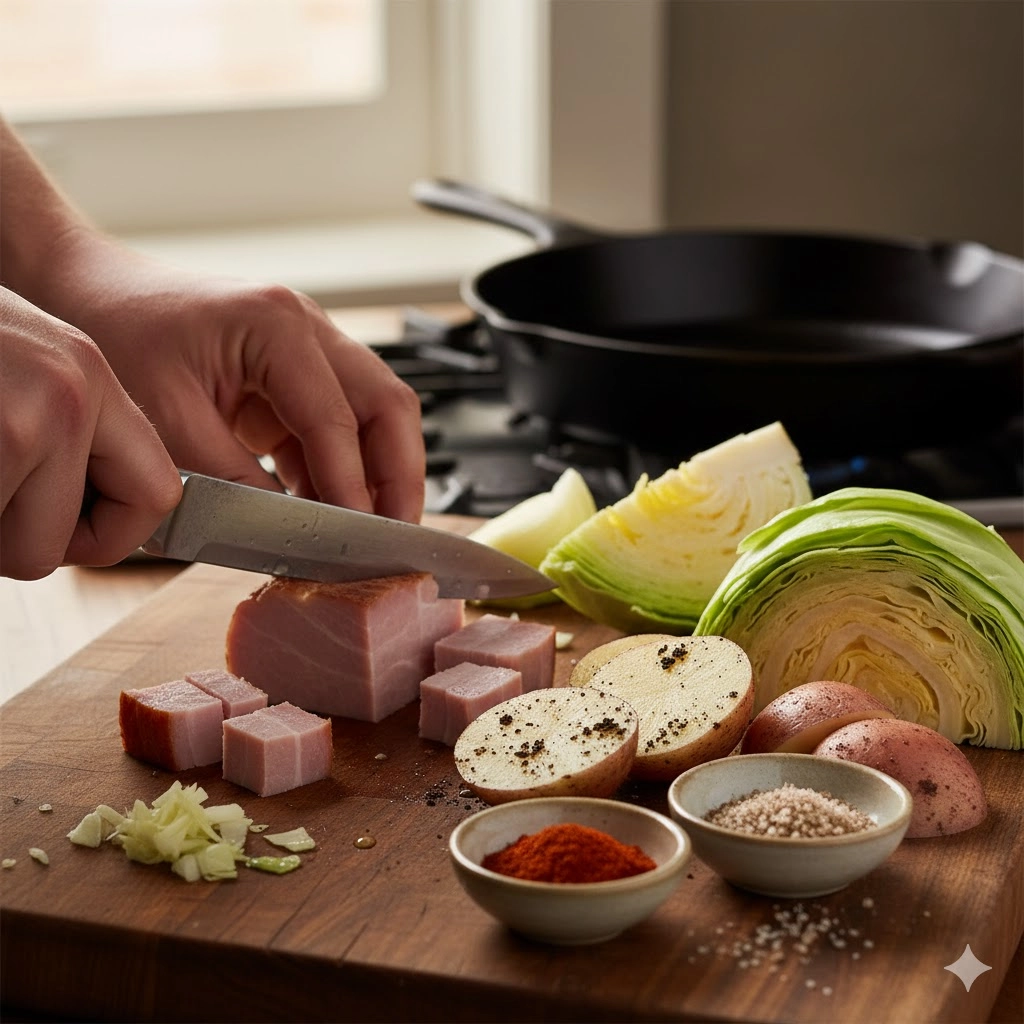
A thick-cut, bone-in ham that has been previously cooked is ideal because it allows you to cut sturdy, uniform cubes. Deli ham is generally too thin and will lose its texture in the heat. Using leftovers from a holiday glazed ham is perfect, as the slight sweetness of the glaze provides a wonderful contrast to the earthy cabbage and savory seasoning salt.
Selecting Accompaniments and Serving Suggestions
This dish is a complete meal on its own, containing protein, carbohydrates, and vegetables. However, if you want to stretch the meal or add more variety to the table, there are several wonderful pairings. A side of crusty soda bread or a warm pumpernickel loaf is perfect for mopping up any remaining butter and juices at the bottom of the bowl. The dense, malty flavor of dark bread pairs exceptionally well with the sweetness of the simmered cabbage.
For a bit of crunch and acidity, serve this alongside a crisp green salad tossed in a sharp vinaigrette or a side of pickled beets. The brightness of vinegar acts as a palate cleanser against the rich, salty ham. If you are serving this for a hearty weekend breakfast, a poached or fried egg placed directly on top of the steaming pile of ham and potatoes adds a luxurious silkiness as the yolk breaks and creates a natural sauce.
Elevating Your Dish with Unique Culinary Insights
One of the best-kept secrets for this recipe is the “low and slow” approach. While it is tempting to turn up the heat to finish the potatoes faster, the gentle simmer is what allows the cabbage to lose its sulfurous edge and become sweet. Furthermore, don’t be afraid of the “brown bits” (known as fond) that might form on the bottom of the pan. When you add the ham and give everything a final stir, those bits release and coat the ingredients in a concentrated blast of flavor.
Another insight involves the preparation of the cabbage. Instead of a uniform dice, try cutting the cabbage into irregular, rustic wedges. This creates a variety of textures—some parts will become very soft and almost melt into the potatoes, while the thicker rib sections will retain a slight, pleasant bite. This variety makes every forkful a slightly different experience, which is the hallmark of a great “peasant-style” comfort dish.
Nutritional Information and Values
The following values are estimates based on standard ingredients and a four-serving yield.
| Nutrient | Amount Per Serving |
| Calories | 453 |
| Total Fat | 16 grams |
| Saturated Fat | 8 grams |
| Cholesterol | 75 milligrams |
| Sodium | 1150 milligrams |
| Total Carbohydrates | 62 grams |
| Dietary Fiber | 9 grams |
| Sugars | 7 grams |
| Protein | 18 grams |
| Vitamin C | 85 percent Daily Value |
| Iron | 15 percent Daily Value |
Disclaimer
The nutritional information provided here is an estimate based on the specific ingredients listed and standard serving sizes. Actual nutritional content may vary depending on the brand of ham used, the size of the produce, and any modifications made during the cooking process. Individuals with specific dietary restrictions or medical conditions should consult with a healthcare professional or registered dietitian.
A Final Look at This Skillet Classic
There is a profound beauty in the simplicity of a one-pan meal like this. It reminds us that you don’t need expensive cuts of meat or exotic spices to create a dinner that feels special. The combination of ham, cabbage, and potatoes is a tribute to resourcefulness and the timeless appeal of home cooking. Whether you are using up holiday leftovers or looking for a budget-friendly way to feed your family, this recipe delivers a satisfying, warm, and flavor-packed experience every single time. It is a dish that tastes like home, regardless of where you are.
PrintSkillet Ham, Cabbage, and Potatoes: A Hearty One-Pan Comfort Meal
This Skillet Ham, Cabbage, and Potatoes recipe is a rustic, one-pan comfort meal. It features tender simmered cabbage, savory cubed ham, and fork-tender potatoes seasoned with smoky paprika.
- Prep Time: 15 mins
- Cook Time: 30 mins
- Total Time: 45 mins
- Yield: 4 servings 1x
- Category: Dinner
- Method: Skillet
- Cuisine: American
Ingredients
2 tablespoons butter
1 onion, chopped
1 small head cabbage, coarsely chopped
1/4 cup water
3 large potatoes, scrubbed and sliced
1 dash seasoning salt
1 dash paprika, or to taste
2 cups cubed cooked ham
Instructions
1. Heat butter in a large skillet over medium heat and stir in chopped onion until soft and translucent.
2. Stir in the chopped cabbage and water. Cover and simmer gently on low heat for 10 minutes.
3. Add the sliced potatoes and stir well. Cover and simmer for 10 more minutes, adding water if the pan looks dry.
4. Sprinkle seasoning salt and paprika over the vegetables. Cover and simmer until cabbage is soft and potatoes are fork-tender.
5. Mix in the cubed ham and continue to simmer just until the meat is heated through.
Notes
For extra flavor, use chicken broth instead of water.
Leftovers store beautifully and can be reheated in a skillet with a splash of water.
Keep the potato skins on for a more rustic texture and extra nutrients.
Nutrition
- Serving Size: 1 plate
- Calories: 453
- Sugar: 7g
- Sodium: 1150mg
- Fat: 16g
- Saturated Fat: 8g
- Unsaturated Fat: 6g
- Trans Fat: 0g
- Carbohydrates: 62g
- Fiber: 9g
- Protein: 18g
- Cholesterol: 75mg