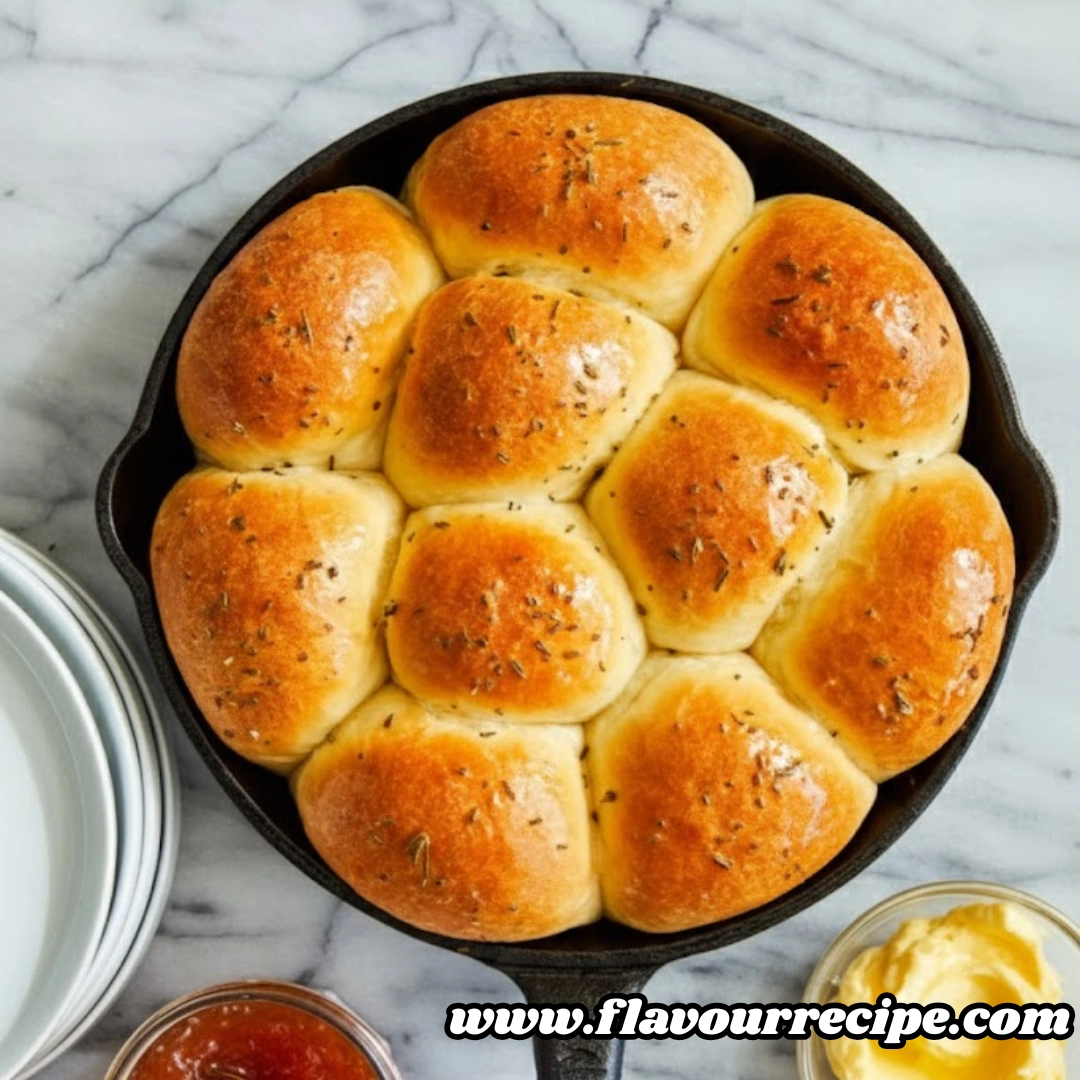
Nothing matches the aroma of yeast rising in a warm kitchen, especially when it promises a batch of golden, buttery bread. These Skillet Dinner Rolls represent the height of home baking, offering a texture that is remarkably light and a crust that carries the subtle crunch of sea salt and earthy herbs. Whether you are preparing a formal holiday feast or simply need a reliable side for a mid-week stew, these rolls provide that sought-after pillowy interior that pulls apart with ease. Utilizing a cast iron pan ensures an even heat distribution, resulting in a beautiful bottom crust that supports the airy crumb above.
Making bread at home can often feel intimidating, but this specific method focuses on approachable techniques that yield professional results. By incorporating fresh rosemary and high-quality butter directly into the dough, every bite is infused with a rich, savory profile. These rolls are best served directly from the pan, still radiating heat, allowing the herb-infused butter to melt into the center. They are substantial enough to hold up to thick gravies yet delicate enough to be enjoyed on their own with a simple smear of honey or additional salted butter.
Table of Contents
Components for the Perfect Roll
To achieve the best results, ensure all your refrigerated items, particularly the egg and butter, have reached room temperature before you begin. This helps the fats emulsify properly into the flour.
- Whole Milk: Three-fourths cup, warmed to between one hundred five and one hundred ten Fahrenheit.
- Active Dry Yeast: One and one-half teaspoons.
- Granulated Sugar: Two tablespoons, divided into two equal portions.
- Unsalted Butter: One-third cup at room temperature for the dough, plus one tablespoon melted for the finish.
- Fresh Rosemary: Two tablespoons, finely minced and divided.
- Kosher Salt: One-half teaspoon.
- Large Egg: One, brought to room temperature.
- All-Purpose Flour: Two and three-fourths cups, divided for staged mixing.

Primary Preparation Steps
- Activate the yeast in the warmed milk with half of the sugar until a thick foam appears.
- Cream the room-temperature butter with the remaining sugar, salt, and half of the rosemary.
- Incorporate the egg and the yeast mixture into the creamed butter.
- Stir in the first portion of flour to create a thick, smooth batter.
- Gradually add the remaining flour using a dough hook until a tacky, elastic ball forms.
- Allow the dough to rise in a greased bowl until it has doubled in volume.
- Divide the dough into ten equal pieces and shape them into tight, smooth rounds.
- Arrange the rounds in a seasoned skillet, brush with butter, and let rise a second time.
- Bake at three hundred seventy-five Fahrenheit until the tops are deeply bronzed.
Detailed Methodology and Sensory Cues
Activating the Yeast
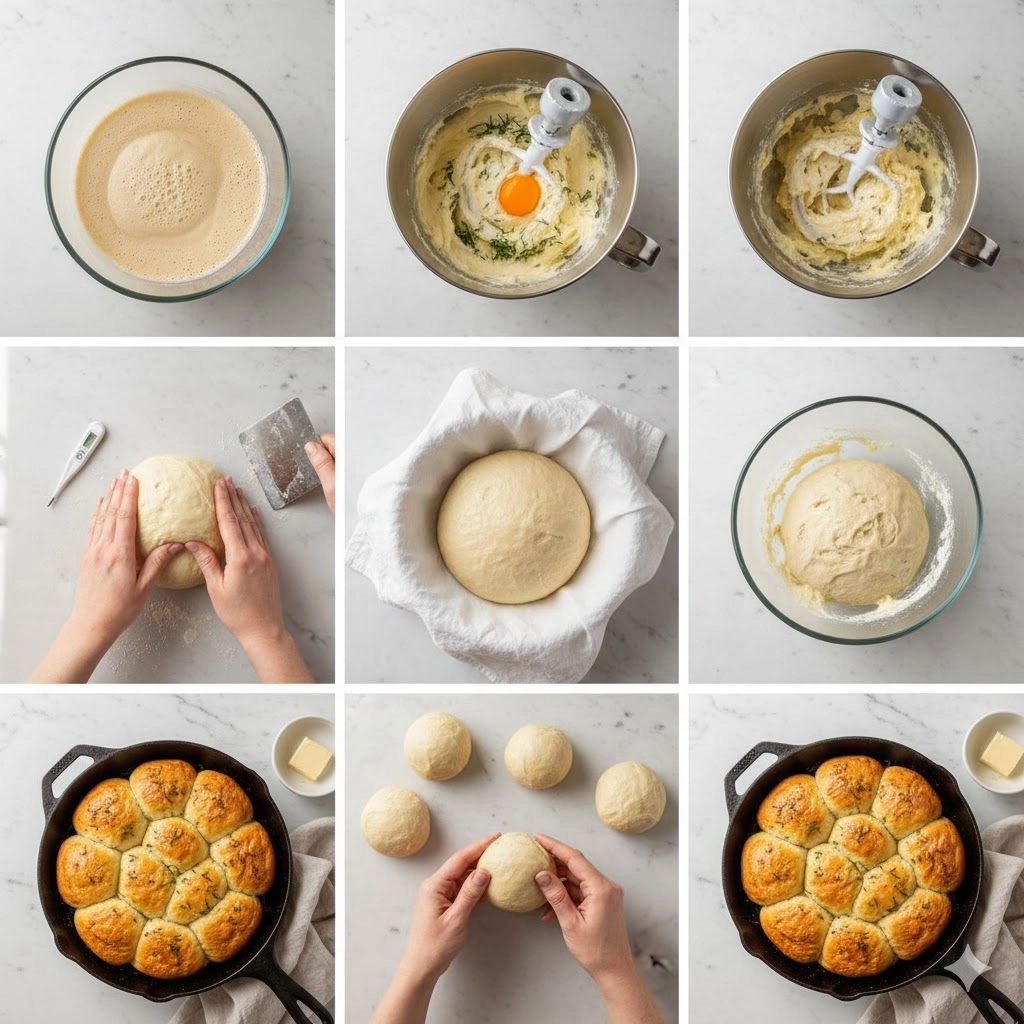
Start by warming your milk. It should feel like warm bath water; if it is too hot, it will kill the yeast, and if it is too cold, the rise will take hours. Once you whisk in the yeast and a tablespoon of sugar, let it sit undisturbed. After about five minutes, you should see a tan, frothy layer on top. This “bloom” is your insurance policy, proving the yeast is alive and ready to lift your Skillet Dinner Rolls.
Mixing and Kneading
When you begin beating the butter and herbs, look for a pale, whipped consistency. Adding the egg at room temperature prevents the butter from curdling. As you switch to the dough hook and add the final cups of flour, pay close attention to the texture. The dough should eventually pull away from the sides of the bowl. It should be “tacky” rather than “sticky”—think of the adhesive on a sticky note. If it clings aggressively to your fingers, add flour one tablespoon at a time.
The First Rise and Shaping
Place the dough in a draft-free spot. A cold kitchen will slow the yeast down significantly. Once doubled, the dough will feel full of air. When you punch it down, you aren’t trying to flatten it completely, just releasing the large gas bubbles. Divide the dough into ten even sections. To shape them, pull the sides of each piece toward the bottom to create a high-tension, smooth surface on top. This tension is what helps the rolls rise upward rather than spreading outward.
The Second Rise and Baking
The second proofing in the skillet is vital for that “pull-apart” texture. As the rolls expand, they should begin to crowd each other, touching lightly. Brushing them with melted butter before they hit the oven helps conduct heat and creates a golden sheen. Bake at three hundred seventy-five Fahrenheit for twenty to twenty-four minutes. You are looking for a hollow sound when the top is tapped and a rich, mahogany-gold color.
Professional Tips for Better Bread
- Temperature Accuracy: Use a digital thermometer for the milk. Aiming for one hundred five Fahrenheit is the “sweet spot” for active dry yeast.
- The Windowpane Test: To check if you have kneaded enough, take a small piece of dough and stretch it. If you can stretch it thin enough to see light through it without it tearing, the gluten is perfectly developed.
- Avoid Excess Flour: It is tempting to keep adding flour when the dough feels soft, but too much flour leads to a dry, heavy roll. Trust the tacky texture.
- Consistent Sizing: If you want your rolls to bake evenly, use a kitchen scale to weigh the total dough and divide by ten. This ensures no small rolls burn while larger ones stay raw.
- Steam in the Oven: For an even softer crust, you can place a small pan of water on the bottom rack of the oven to create a moist environment during the first ten minutes of baking.
Recipe Variations
- Garlic and Parmesan: Replace the rosemary with two cloves of minced roasted garlic and add one-fourth cup of grated Parmesan cheese to the dough during the final mixing stage.
- Honey Wheat: Swap one cup of the all-purpose flour for whole wheat flour and replace the granulated sugar with two tablespoons of honey.
- Everything Bagel Style: Skip the rosemary and top the buttered rolls with a generous sprinkle of everything bagel seasoning before the second rise.
- Sweet Cinnamon: Omit the herbs and salt. Increase the sugar to one-fourth cup and add a teaspoon of cinnamon. Serve with a simple powdered sugar glaze.

Suggestions for Serving
These rolls are the natural companion to a heavy Sunday roast or a creamy potato leek soup. Because of their structural integrity, they also work exceptionally well as “sliders.” Cut them in half the next day and fill them with leftover ham and Swiss cheese or a bit of turkey and cranberry sauce. If serving as a standalone appetizer, provide a small dish of olive oil mixed with balsamic vinegar and cracked black pepper for dipping.
Frequently Asked Questions
Can I make the dough ahead of time?
Yes, you can perform the first rise in the refrigerator overnight. The cold environment slows the yeast, which actually develops a more complex, fermented flavor in the bread. Just let the dough come to room temperature for thirty minutes before shaping.
What if I don’t own a cast iron skillet?
While the skillet provides excellent crust development, a standard nine-by-thirteen inch glass or ceramic baking dish will work perfectly fine. You may need to add two or three minutes to the baking time since glass heats differently than metal.
Why didn’t my rolls rise?
The most common culprits are expired yeast or milk that was too hot (above one hundred twenty Fahrenheit). Always check the expiration date on your yeast packet and use a thermometer to verify your liquid temperatures.
How do I store leftovers?
Keep them in an airtight container at room temperature for up to two days. Avoid the refrigerator, as the cold air recrystallizes the starches and makes the bread go stale much faster. For longer storage, wrap them tightly and freeze.
Nutrition Information
| Nutrient | Amount per Serving |
| Calories | 215 kcal |
| Protein | 5 g |
| Carbs | 28 g |
| Fat | 9 g |
| Fiber | 1 g |
| Sugar | 3 g |
| Sodium | 145 mg |
Disclaimer
Nutrition information is an estimate and may vary based on preparation and ingredients used.
PrintFluffy Homemade Skillet Dinner Rolls with Fresh Rosemary

These soft, pillowy Skillet Dinner Rolls are infused with fresh rosemary and brushed with melted butter. Perfectly golden and easy to make in a cast iron pan.
- Prep Time: 1 hour 30 mins
- Cook Time: 25 mins
- Total Time: 1 hour 55 mins
- Yield: 10 rolls 1x
- Category: Bread
- Method: Baking
- Cuisine: American
- Diet: Vegetarian
Ingredients
3/4 cup whole milk (105–110 Fahrenheit)
1 1/2 teaspoons active dry yeast
2 tablespoons granulated sugar, divided
1/3 cup unsalted butter, room temperature
2 tablespoons fresh rosemary, minced and divided
1/2 teaspoon kosher salt
1 large egg, room temperature
2 3/4 cups all-purpose flour, divided
1 tablespoon unsalted butter, melted
Instructions
1. Combine warm milk, yeast, and 1 tablespoon sugar. Let stand until foamy, about 5 minutes.
2. Beat butter, 1 tablespoon rosemary, salt, and remaining sugar until fluffy. Add egg and mix.
3. Stir in yeast mixture and 1.5 cups flour until smooth.
4. Gradually add remaining flour and knead for 3 minutes until a soft, tacky ball forms.
5. Let dough rise in a warm spot until doubled (30-45 minutes).
6. Shape into 10 balls and place in a greased 10-inch skillet.
7. Brush with melted butter and sprinkle with remaining rosemary.
8. Let rise again for 30-45 minutes.
9. Bake at 375 Fahrenheit for 20-24 minutes until golden brown.
Notes
Ensure the milk is not hotter than 110 Fahrenheit to avoid killing the yeast.
Use a kitchen scale for perfectly even rolls.
Store leftovers at room temperature in an airtight container.
Nutrition
- Serving Size: 1 roll
- Calories: 215
- Sugar: 3g
- Sodium: 145mg
- Fat: 9g
- Saturated Fat: 5g
- Unsaturated Fat: 3g
- Trans Fat: 0g
- Carbohydrates: 28g
- Fiber: 1g
- Protein: 5g
- Cholesterol: 40mg