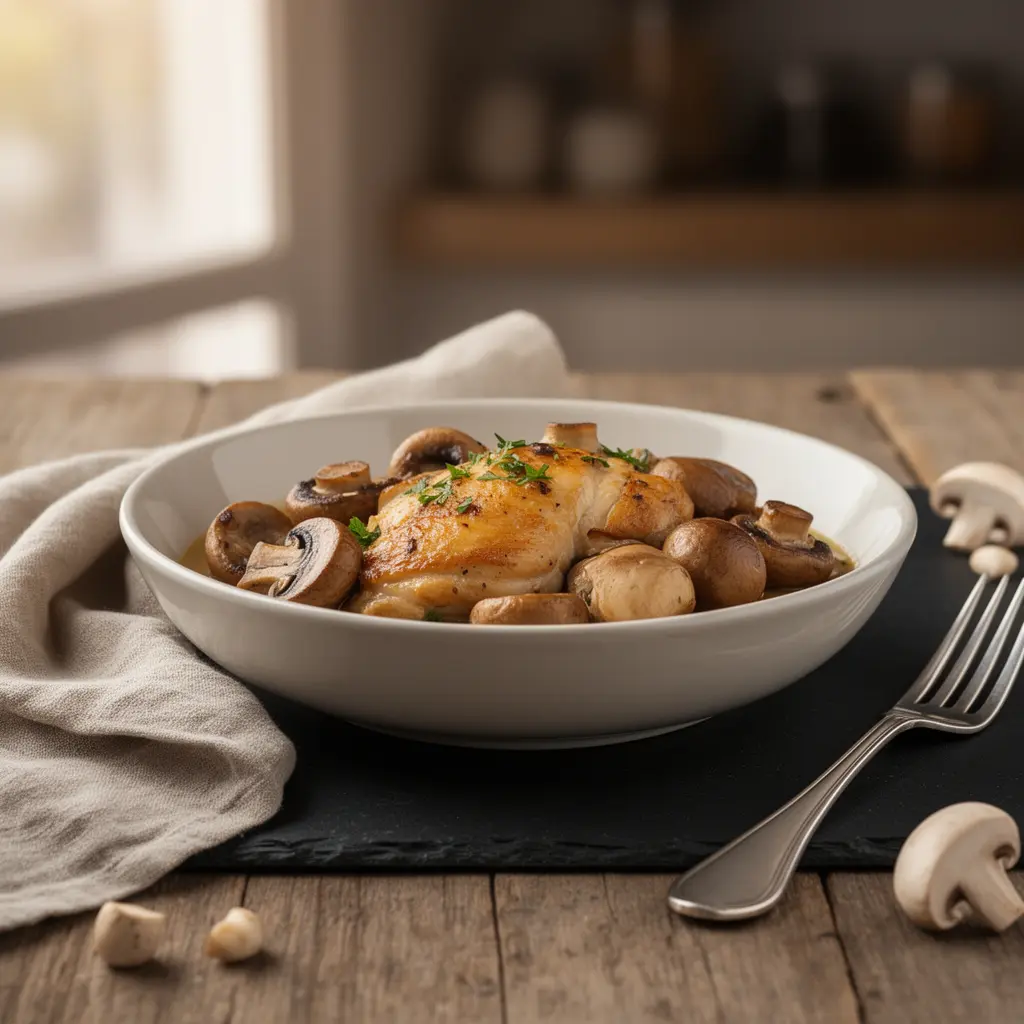
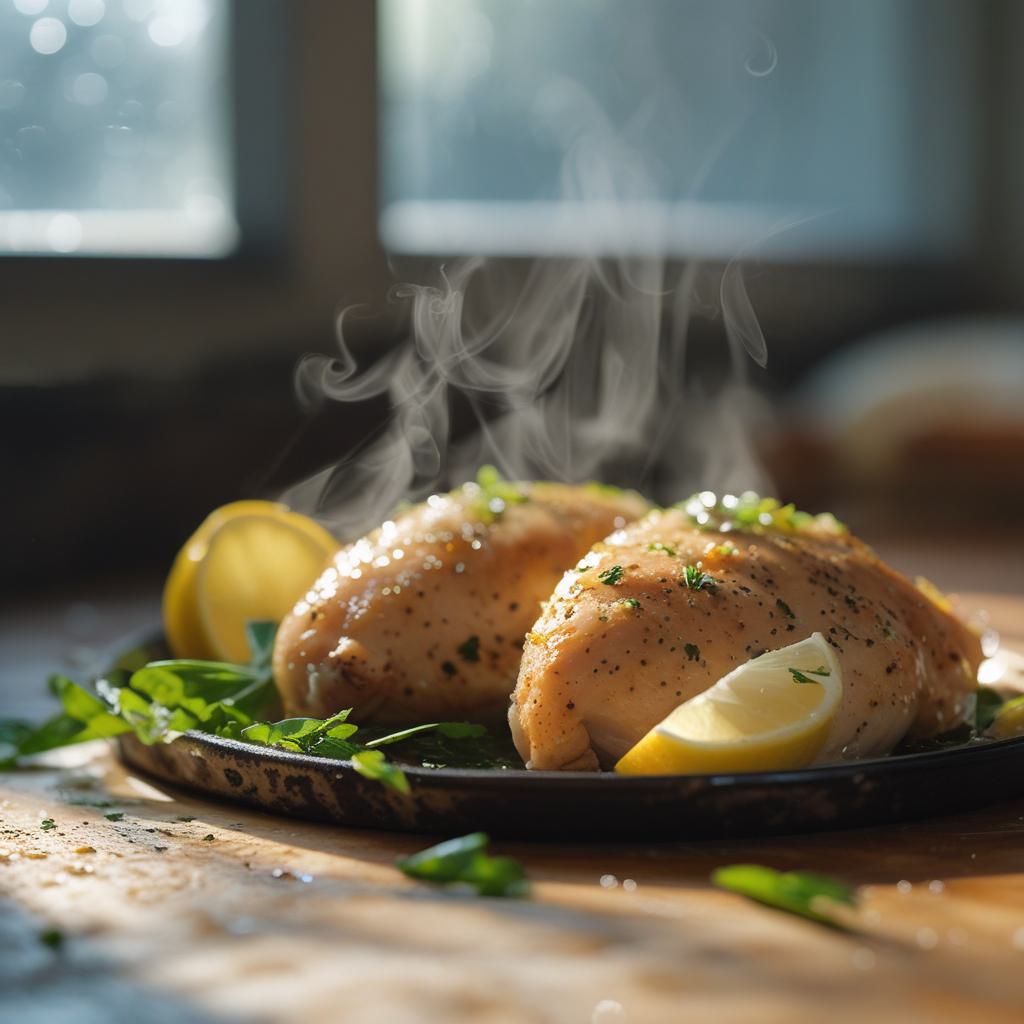
The fragrance hits you first – bright bursts of lemon zest cutting through earthy rosemary and thyme, dancing with caramelizing chicken skin in a symphony of summer. Simple Lemon-Herb Chicken isn’t just a dish; it’s sunlight captured on a plate. Imagine golden poultry, its edges crisped to perfection, glistening with a glossy emulsion of citrus and olive oil that pools like liquid amber around tender flesh. This recipe embodies culinary elegance through restraint, where three core elements (citrus, herbs, quality bird) perform in flawless harmony. The magic lies in transformation: humble ingredients elevated to gourmet heights through technique and understanding. As the chicken sears, lemon juice reduces into complex, bittersweet notes while fresh herbs infuse the fat, creating an aromatic base that permeates every fiber. It’s rustic yet refined – the kind of dish served in Provençal farmhouses and Michelin-starred kitchens alike, proving simplicity often wears the crown in haute cuisine.
Table of Contents
Ingredient Deep Dive
| Ingredient | Quantity | Purpose |
|---|---|---|
| Air-chilled chicken thighs | 6 pieces | Retains natural juices; fat renders for crisp skin |
| Fresh lemon juice | 1/4 cup | Acid tenderizes fibers; emulsifies with oil |
| Lemon zest | 2 tbsp | Concentrated citrus oils for fragrance |
| Extra virgin olive oil | 3 tbsp | High smoke point carrier for herb infusion |
| Fresh rosemary | 1 tbsp minced | Piney notes counterbalance citrus |
| Fresh thyme leaves | 2 tbsp | Earthy foundation note |
| Garlic cloves | 4 sliced | Maillard reaction creates depth |
| Flaky sea salt | 1.5 tsp | Enhances conductivity of heat through protein |
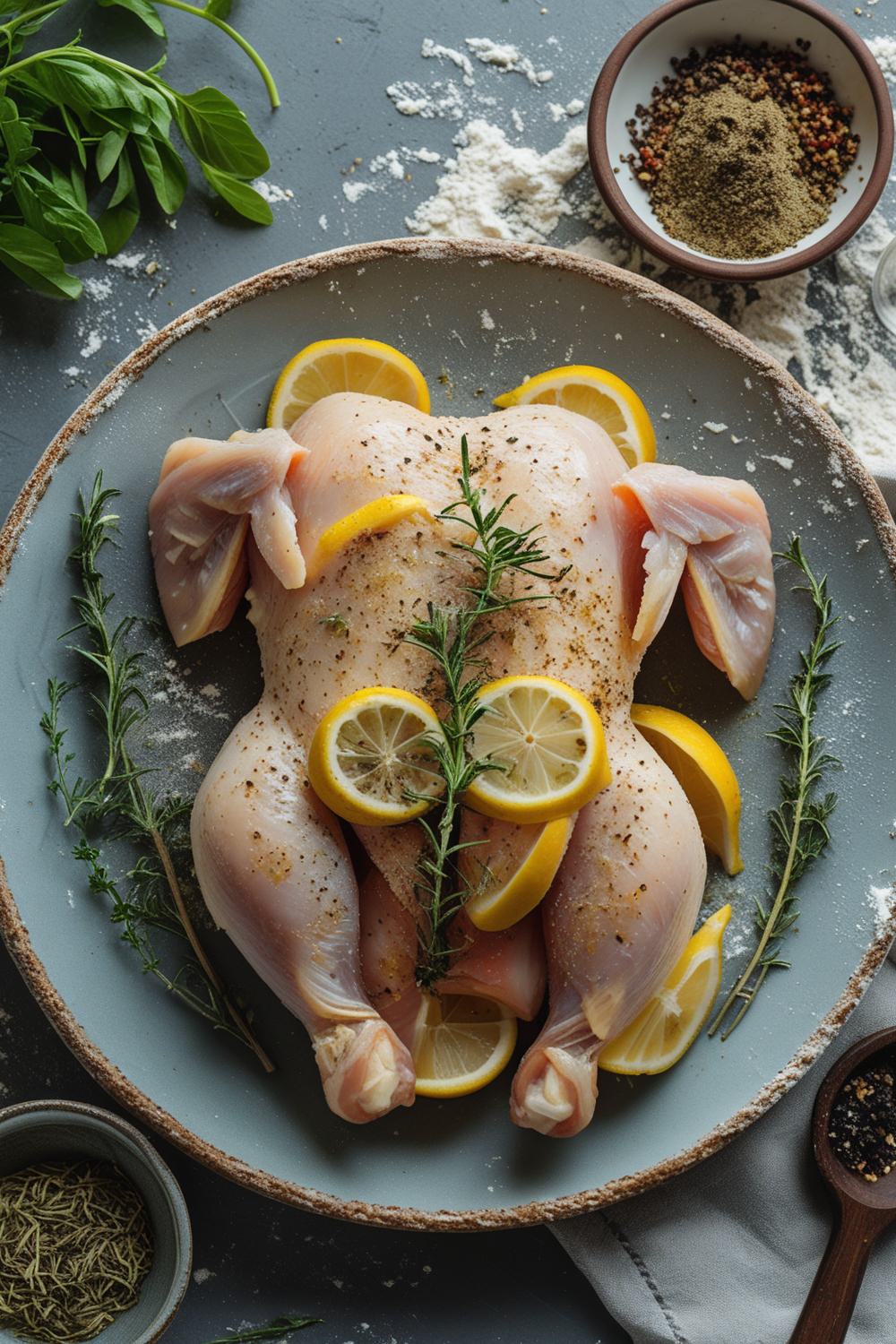
The chemistry begins with air-chilled poultry – water-chilled birds absorb 10-12% moisture, diluting flavor and creating steam that inhibits searing. The higher fat content in thighs acts as both insulator and flavor conductor, allowing slower heat penetration than breast meat. Lemon’s citric acid disrupts muscle proteins at a molecular level (denaturation), similar to buttermilk in fried chicken, while avoiding the muted flavors of dairy marinades.
Temperature matters: cold-pressed olive oil maintains stability at skillet temperatures up to 410°F, unlike butter which burns at 302°F. The monounsaturated fats bind to lipid-soluble compounds in herbs (like thymol in thyme), creating a flavored cooking medium. Flaky salt crystals, with their geometric structure, create micro-abrasions in the skin that lead to accelerated rendering and blister-free crisping.
Substitutions & Swaps
For vegan adaptations, pressed extra-firm tofu or king oyster mushrooms make excellent textural substitutes. Increase marinade time to 2 hours and add 1/2 tsp kombu powder to mimic chicken’s umami. Gluten-free needs are inherently covered, but those avoiding nightshades can replace paprika (if using) with ground sumac. In herb emergencies, 1 tsp dried rosemary equals 1 tbsp fresh, but bloom in warm oil first to release volatile oils. Lemon juice can be replaced with yuzu or preserved lemon brine for complexity, while honey balances acidity if lemons are overly sharp. Coconut oil works for olive oil substitutions but adds subtle sweetness – reduce zest by 25% to compensate.
Equipment Guide
Your skillet is the orchestra conductor here. Cast iron reigns supreme for its unmatched heat retention, creating the steady, even sear needed for golden skin without hotspots. A 12-inch model prevents overcrowding – crowding drops pan temperature, causing stewing instead of searing. Digital probe thermometers (like Thermoworks Thermapen) are non-negotiable; chicken thighs are done at 175°F, not the standard 165°F for breasts, allowing collagen to fully gelatinize. Microplane zesters extract citrus oils without bitter pith, while fish spatulas’ thin edge perfectly slides under crisped skin. Preheat your skillet in a 450°F oven for 20 minutes before stovetop use – this mimics professional ranges’ high BTUs.
Step-by-Step Walkthrough
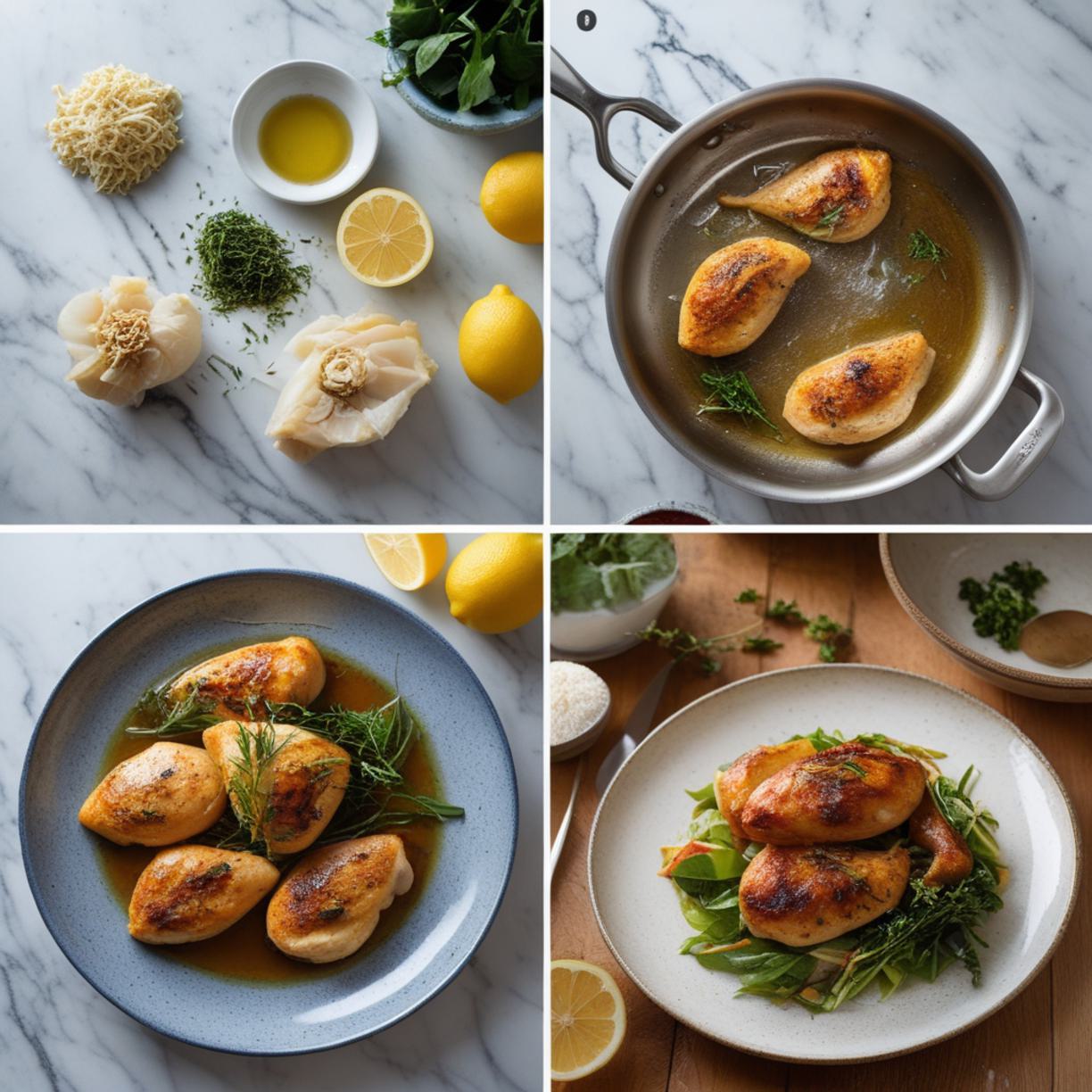
- Pat chicken thighs aggressively dry with paper towels (moisture prevents browning)
- Combine lemon juice, zest, herbs, and 2 tbsp oil in bowl; set aside
- Season chicken skin with salt 15 minutes before cooking (draws moisture for crisping)
- Heat skillet over medium-high until water droplets dance (Leidenfrost effect)
- Add 1 tbsp oil; place chicken skin-side down with weight (brick wrapped in foil) on top
- Sear undisturbed 8 minutes until 60% golden (Maillard reaction requires patience)
- Flip thighs; add garlic slices between pieces (prevents scorching)
- Transfer skillet to 400°F oven; roast 12 minutes until 165°F internal
- Remove chicken; rest on wire rack skin-side up (prevents steaming)
- Deglaze pan with herb-lemon mix, scraping fond; simmer 2 minutes into sauce
- Drizzle sauce over rested chicken; serve immediately
The first sear is sacred: place thighs cold from fridge into the hot pan. This temperature differential helps render subcutaneous fat slowly, creating that glass-like crispness. The weighted press mimics duck confit techniques, maximizing surface contact without steaming.
Oven finishing allows convection heat to cook thighs evenly while skin maintains texture – direct stovetop heat would burn the skin before legs reach temperature. Resting is non-negotiable; muscle fibers need 7 minutes to reabsorb juices redistributed during cooking.
Deglazing must happen immediately after removing chicken while fond (those caramelized bits) retains moisture. Adding acidic marinade later prevents metallic aftertastes from prolonged aluminum interaction if using non-stick.
Expert Tips & Troubleshooting
For failproof crispy skin: salt chicken uncovered in fridge for 4-24 hours. This dry-brine dehydrates the surface and alters pectin structure in skin. If sauce splits (emulsion breaks), whisk in 1/2 tsp cold butter off-heat – milk solids act as stabilizer. Prevented bitter herbs? Add woody stems (rosemary, thyme sprigs) to cold oil and slowly bring to 170°F over 10 minutes (infusion without burning). Chicken sticks? Wait – proper searing releases naturally when crust forms. If oil smokes, remove from heat 30 seconds; return when temp drops to shimmering instead of smoking. Overcooked thighs? Simmer in sauce 5 minutes to rehydrate fibers.
Flavor Variations
For fiery adaptations, add 1 tsp Urfa biber pepper (its raisin-like sweetness complements citrus) to marinade. Kids often prefer mellower notes: substitute lemon with orange zest and replace rosemary with basil. Mediterranean versions include capers and olives in sauce, while Provençal twists add lavender petals. Replace 1/4 cup lemon juice with verjus for sophisticated acidity, or add saffron threads to oil infusion for golden hue. Winter iterations can include roasted garlic purée in marinade and a splash of brandy for deglazing.
Storage & Reheating
Store components separately: chicken on wire rack over plate (prevents sog), sauce airtight. Reheat at 325°F in convection oven 9 minutes. For single portions, use air fryer at 375°F for 4 minutes. Microwave method: place between damp herb-lined parchment, heat 45 seconds at 50% power. Freezing isn’t ideal due to citrus denaturation over time, but vacuum-sealed portions retain texture for 3 weeks.
FAQ Section
Can I use chicken breasts? Not recommended – lean meat overcooks before searing finishes. How to avoid bitter lemon flavor? Remove all white pith when zesting. Can I prep ahead? Marinate 6 hours max; citrus “cooks” proteins longer. Substitute for rosemary? Marjoram provides similar complexity without pine notes.
Nutrition Information
| Nutrient | Per Serving (2 thighs) |
|---|---|
| Calories | 590 |
| Protein | 42g |
| Carbohydrates | 6g |
| Fiber | 1g |
| Sugars | 1g |
| Fat | 44g |
| Saturated Fat | 10g |
| Vitamin C | 32% DV |
Disclaimer: Nutritional estimates derived from USDA databases. Actual values may vary based on ingredient brands and preparation precision. Herbs contribute micronutrients not fully quantified in standard databases.