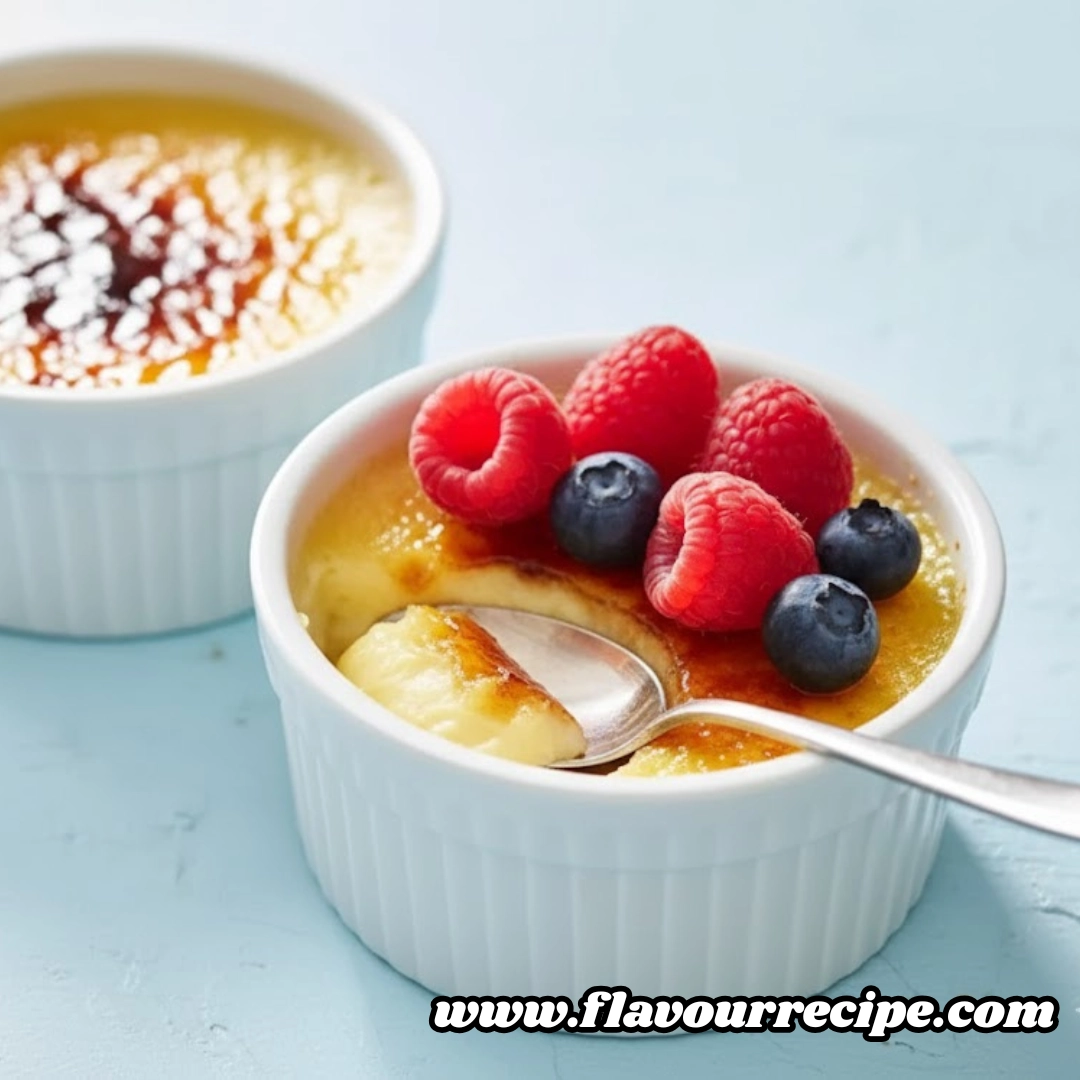
There are few culinary experiences as satisfying as the sharp, musical crack of a spoon breaking through a glass-like layer of caramelized sugar. While many home cooks view the Simple Crème Brûlée Dessert as a high-stakes challenge reserved for French bistros, the reality is far more approachable. This particular version strips away the intimidation, utilizing a streamlined method that focuses on the luxurious harmony between velvet-smooth custard and a charred, amber crust. Whether you are planning an intimate date night or simply want to elevate your weekend indulgence, this recipe delivers a restaurant-quality finish with surprisingly minimal effort.
Table of Contents
Ingredients
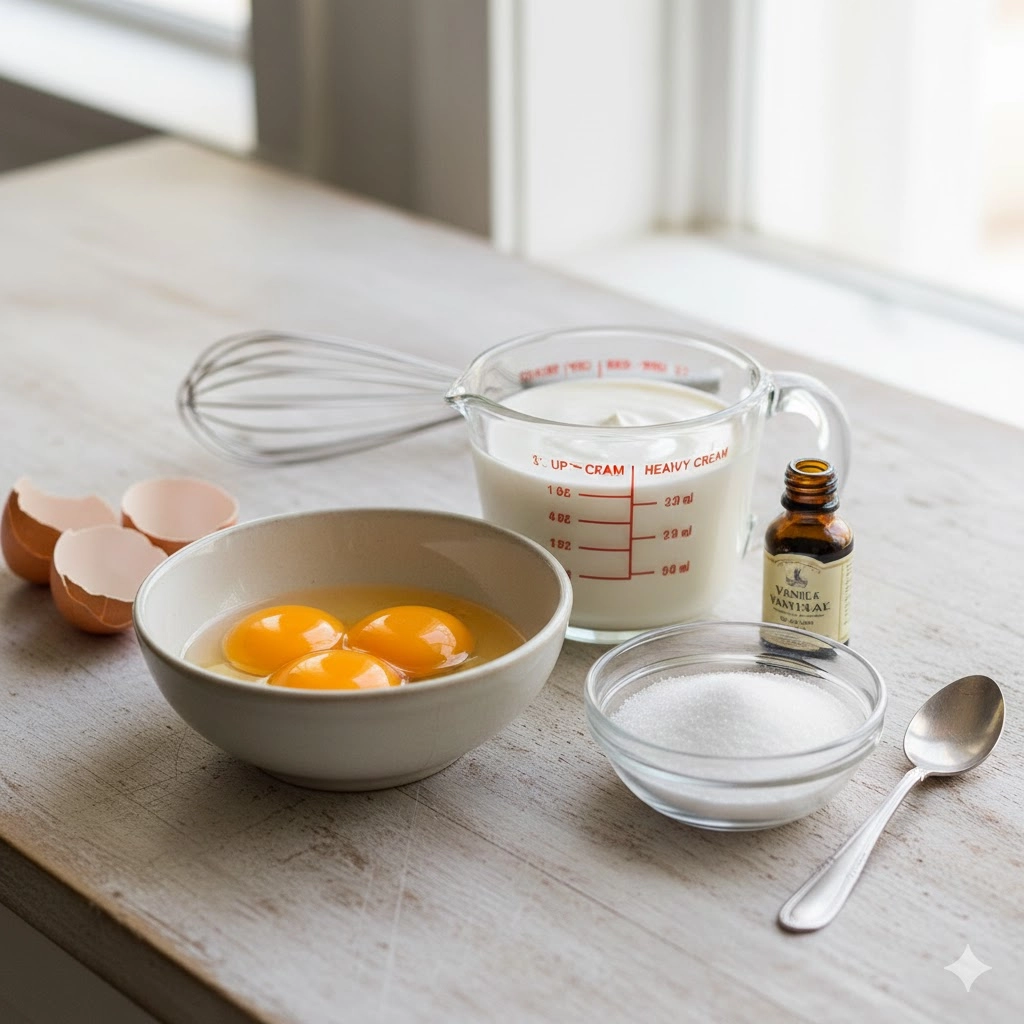
To achieve the perfect texture and flavor profile, ensure your ingredients are fresh and at room temperature before you begin. The beauty of this dessert lies in its short, high-quality ingredient list.
- 1 cup heavy cream
- 3 tablespoons white sugar
- 3 large egg yolks
- 1/4 teaspoon vanilla extract
- 2 tablespoons white sugar (reserved for the divided topping)
Instructions
Following these steps precisely ensures the custard sets correctly and the topping achieves that iconic brittle snap.
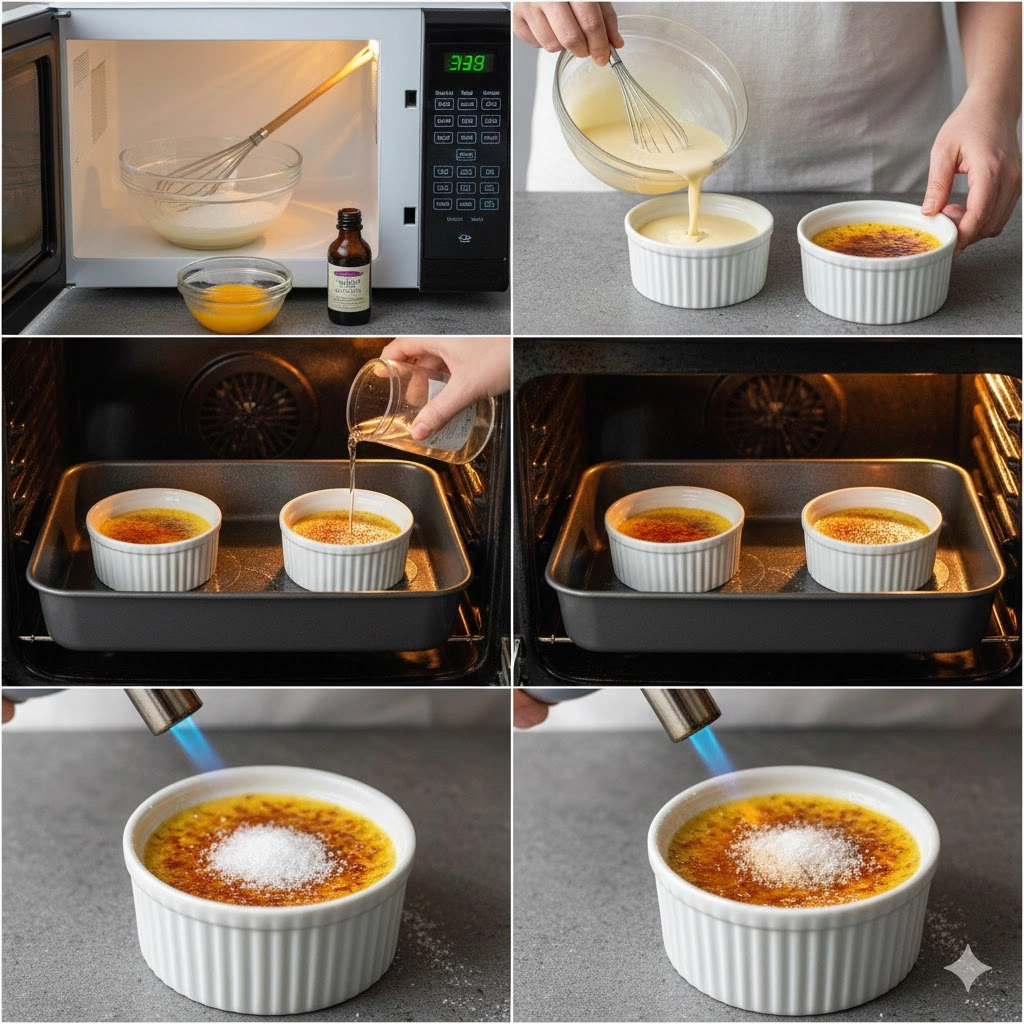
- Preparation and Oven Setup: Begin by gathering all your necessary ingredients and tools. Preheat your oven to 350 Fahrenheit.
- The Microwave Infusion: In a microwave-safe bowl, combine the heavy cream and the initial 3 tablespoons of white sugar. Whisk them briefly to incorporate. Place the bowl in the microwave and heat until the mixture is warm, which typically takes between 1 to 2 minutes. Remove and whisk again vigorously to ensure the sugar is completely dissolved into the cream.
- Tempering and Mixing: Gradually whisk the 3 large egg yolks and the vanilla extract into the warm cream mixture. Continue whisking until the consistency is perfectly smooth and the yolks are fully integrated.
- The Bain-Marie Method: Arrange two ramekins inside a deep roasting pan. Carefully pour the cream and egg mixture into the ramekins. Before placing the pan in the oven, pour hot water into the roasting pan until the water level reaches halfway up the exterior sides of the ramekins.
- The Precision Bake: Slide the roasting pan into the preheated oven. Bake for approximately 50 minutes. You are looking for a custard that is set around the edges but still possesses a slight, jelly-like jiggle in the center when gently shaken.
- The Chilling Phase: Carefully lift the ramekins out of the hot water bath. Allow them to cool slightly on the counter before transferring them to the refrigerator. Let them chill until cold and firm, which requires a minimum of 2 hours.
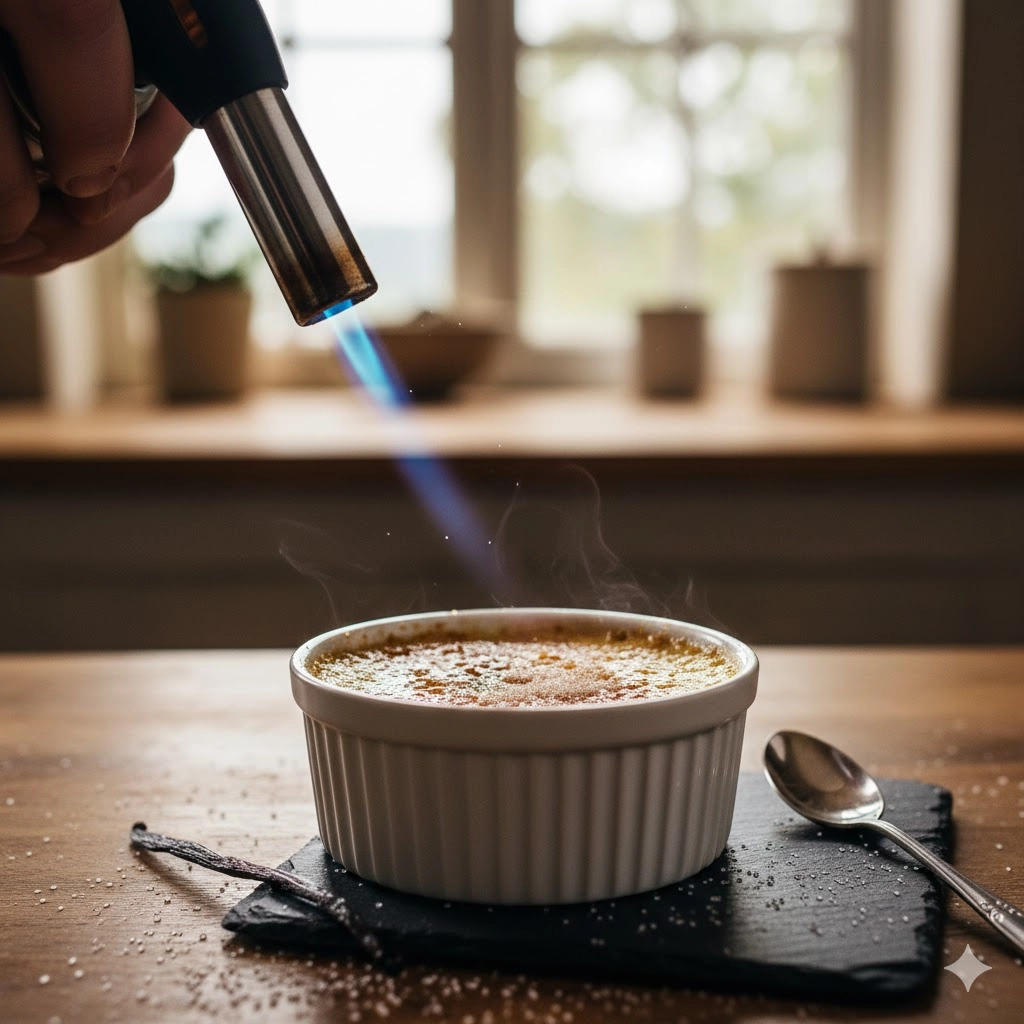
- The Brûlée Finish: Once the custard is chilled and firm, sprinkle 1 tablespoon of white sugar evenly over the surface of each dessert. Using a kitchen torch, move the flame in a circular motion to melt and toast the sugar. The topping should become brown and bubbly, which takes about 30 seconds.
- The Final Set: Allow the caramelized sugar to sit for a minute or two to harden into a solid crust before serving.
Deep-Dive into the Custard Baking Process
The secret to a world-class Simple Crème Brûlée Dessert is not found in the ingredients alone, but in the thermal management during the baking process. When we talk about the “jiggle,” we are looking for a specific physical state of the egg proteins. At 350 Fahrenheit, the oven air is quite dry and intense. By using a water bath, also known as a bain-marie, you create a humid environment that buffers the heat. The water cannot rise above boiling point, which ensures the ramekins stay at a consistent temperature, preventing the eggs from curdling or turning into a rubbery scramble.
During those 50 minutes of baking, the heavy cream and egg yolks undergo a slow transformation. The fat in the cream coats the egg proteins, allowing them to thicken into a delicate web rather than a tough structure. When you pull the ramekins out, that central jiggle is your insurance policy; it means the custard will finish setting as it cools, resulting in a texture that is silky and spoonable rather than firm and gelatinous. If the center is completely stiff in the oven, it is likely overbaked.
Customizations and Flavor Variations
While the classic vanilla profile is iconic, this base recipe acts as a blank canvas for various flavor explorations. If you want to depart from the traditional, consider these modifications:
- Citrus Infusion: You can whisk in a teaspoon of finely grated orange or lemon zest into the cream before microwaving. The heat will help release the essential oils, giving the custard a bright, aromatic lift that cuts through the richness of the heavy cream.
- The Maple Twist: For a more autumnal feel, some bakers replace the internal white sugar with high-quality maple syrup and add a tiny drop of maple extract. This creates a deeper, woodier sweetness that pairs beautifully with the burnt sugar topping.
- Nutty Aromatics: Adding a splash of almond extract alongside the vanilla provides a sophisticated, marzipan-like undertone. This is particularly effective if you plan to serve the dessert with fresh raspberries.
- Alternative Sugars: While white sugar is the standard for the topping due to its clean melt, some prefer a mix of white and brown sugar for the brûlée layer to achieve a more molasses-forward char. However, be careful as brown sugar burns much faster due to its moisture content.
The Science of the Perfect Sugar Crust
The “brûlée” in the name literally translates to “burnt,” but there is a fine line between a beautiful amber caramel and a bitter, blackened mess. To achieve the perfect crust, the sugar must be distributed in a thin, even layer. If the sugar is too thick in one spot, you will end up with a hard “rock” that is difficult to break. If it is too thin, the heat from the torch may melt the custard underneath before the sugar has a chance to caramelize.
Using a kitchen torch is the gold standard because it provides localized, intense heat. This allows you to liquify the sugar molecules and trigger the Maillard reaction without heating up the cold custard below. The contrast between the ice-cold cream and the warm, shattering sugar is the hallmark of a successful Simple Crème Brûlée Dessert. If you do not own a torch, a broiler can be used, but you must watch it with extreme vigilance, rotating the ramekins every few seconds to ensure even browning.
Essential Culinary Insights for Success
To ensure your dessert is flawless every time, keep these professional nuances in mind. First, when whisking your egg yolks into the warm cream, do so gently. You want to avoid creating excess air bubbles. If your mixture is too frothy, those bubbles will rise to the top in the oven and create a pitted, uneven surface that makes it difficult to apply the sugar topping later. If you see bubbles on the surface before baking, you can lightly run a kitchen torch over the raw liquid to pop them.
Secondly, the quality of your vanilla matters. While the recipe calls for extract, using a vanilla bean or vanilla bean paste will add those beautiful tiny black specks throughout the custard, which signals a premium, handcrafted dessert. Finally, always wipe the condensation off the top of the chilled custard with a paper towel before adding the sugar. Any moisture on the surface will dissolve the sugar into a syrup rather than allowing it to crystallize into a hard shell.
Ideal Accompaniments and Presentation
A dish this rich benefits significantly from a touch of acidity or freshness on the side.
- Fresh Berries: A small pile of macerated strawberries, raspberries, or blueberries provides a tart contrast to the heavy cream and sugar.
- Sugared Fruit: For a truly elegant presentation, top the finished crust with a few red currants or a single mint leaf.
- Shortbread: A thin, buttery shortbread cookie served on the side offers a different kind of crunch that complements the creamy interior.
- Beverage Pairings: This dessert pairs exceptionally well with a late-harvest Riesling or a glass of chilled Sauternes. For coffee lovers, a dark roast espresso provides a bitter counterpoint that balances the intense sweetness of the caramelized topping.
Frequently Asked Questions
How far in advance can I prepare this dessert for a dinner party?
You can bake the custards up to two days in advance. In fact, they need at least two hours to set, but a longer chill time often improves the consistency. However, you must wait until the very moment of serving to torch the sugar. If you torch the sugar and then put the ramekins back in the fridge, the humidity will turn your crisp crust into a soft, liquid syrup within thirty minutes.
Why did my custard turn out watery or thin?
There are usually two culprits for a watery custard: underbaking or an incorrect water bath level. If the water in the roasting pan was not hot when it started, the cooking time might need to be extended. Additionally, ensure you are using large egg yolks; the fat and lecithin in the yolks are the primary thickening agents. If the yolks are too small, the custard will struggle to hold its structure.
Can I use half-and-half instead of heavy cream?
While you technically can, it is not recommended for this specific recipe. Heavy cream has a higher fat content (usually around thirty-six to forty percent), which is essential for the velvety mouthfeel and the stability of the custard. Using half-and-half will result in a much thinner, less decadent dessert that is more prone to weeping and may not stand up as well to the heat of the torch.
Nutrition Information
| Item | Amount Per Serving |
| Calories | 612 |
| Total Fat | 51 grams |
| Saturated Fat | 30 grams |
| Cholesterol | 450 milligrams |
| Sodium | 45 milligrams |
| Total Carbohydrates | 36 grams |
| Dietary Fiber | 0 grams |
| Sugars | 35 grams |
| Protein | 6 grams |
Disclaimer
The nutritional information provided is an estimate based on standard ingredient measurements. Actual values may vary depending on the specific brands of dairy and eggs used. Please consult with a healthcare professional for specific dietary requirements.
Final Thoughts on This Elegant Treat
Mastering the Simple Crème Brûlée Dessert is a rewarding journey that proves sophisticated French pastry does not have to be complicated. By focusing on the temperature of your cream, the gentle nature of the water bath, and the precision of the final caramelization, you can create a masterpiece in your own kitchen. This dessert is a celebration of textures—the cold against the warm, the smooth against the brittle. It is a timeless classic for a reason, and once you have heard that first satisfying crack of the sugar, you will find yourself returning to this recipe time and time again.
PrintMastering the Art of the Simple Crème Brûlée Dessert
This easy crème brûlée recipe is rich and creamy. It features a velvet-smooth custard base and a signature glass-like caramelized sugar topping that cracks perfectly with a spoon.
- Prep Time: 15 mins
- Cook Time: 55 mins
- Total Time: 3 hrs 10 mins
- Yield: 2 servings 1x
- Category: Dessert
- Method: Baking
- Cuisine: French
Ingredients
1 cup heavy cream
3 tablespoons white sugar
3 large egg yolks
1/4 teaspoon vanilla extract
2 tablespoons white sugar, divided
Instructions
1. Gather all ingredients and preheat the oven to 350 Fahrenheit.
2. Whisk together cream and 3 tablespoons sugar in a microwave-safe bowl. Microwave 1 to 2 minutes until warm; whisk to dissolve sugar.
3. Whisk in egg yolks and vanilla until smooth.
4. Pour mixture into 2 ramekins in a roasting pan. Add hot water to the pan halfway up the sides of the ramekins.
5. Bake for 50 minutes until set but slightly jiggly. Remove and chill in the refrigerator for at least 2 hours.
6. Sprinkle 1 tablespoon sugar over each. Use a kitchen torch to caramelize until brown and bubbly. Let cool to harden.
Notes
Do not torch the sugar until immediately before serving to keep the crust crisp.
Ensure the water for the bath is hot before putting the pan in the oven.
Use a paper towel to dab any moisture off the custard before adding the sugar topping.
Nutrition
- Serving Size: 1 ramekin
- Calories: 612
- Sugar: 35g
- Sodium: 45mg
- Fat: 51g
- Saturated Fat: 30g
- Unsaturated Fat: 15g
- Trans Fat: 0g
- Carbohydrates: 36g
- Fiber: 0g
- Protein: 6g
- Cholesterol: 450mg