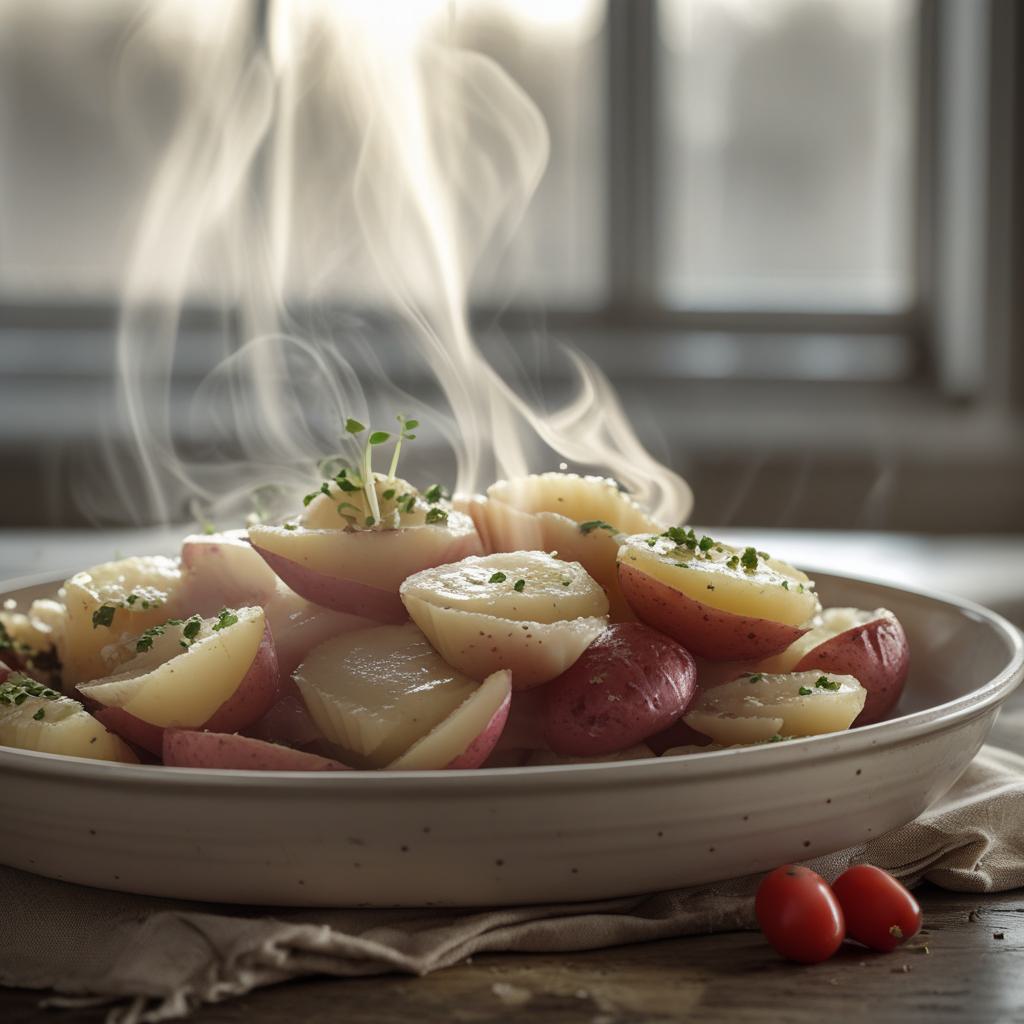
The scent of caramelizing cream and earthy potatoes wafts through the kitchen like a warm embrace, revealing the timeless allure of Scalloped Red Potatoes before the first bite. This dish transforms humble ingredients into a study of contrasts: paper-thin potato slices layered with precision, surrendering their crisp edges to a velvety bath of garlic-infused dairy. As the top layer bronzes into a golden crust, it whispers promises of textural revelation—a crackling surface giving way to tender, herb-speckled strata beneath. What appears deceptively simple demands mastery over three pillars of French technique: emulsion control, starch gelatinization, and precision baking. Red potatoes prove ideal partners here—their waxy flesh holding shape while releasing just enough amylose to thicken the sauce naturally. Unlike russets that crumble or Yukons that weep, these ruby-hued gems maintain structural integrity while contributing creamy mouthfeel. The magic unfolds slowly in the oven’s heat—cheeses emulsifying with cream, thyme oils permeating every layer, and potatoes achieving that elusive state between al dente and spoon-tender. This is soul food refined; a dish equally at home in a farmhouse kitchen or a Michelin-starred tasting menu when executed with intention.
Table of Contents
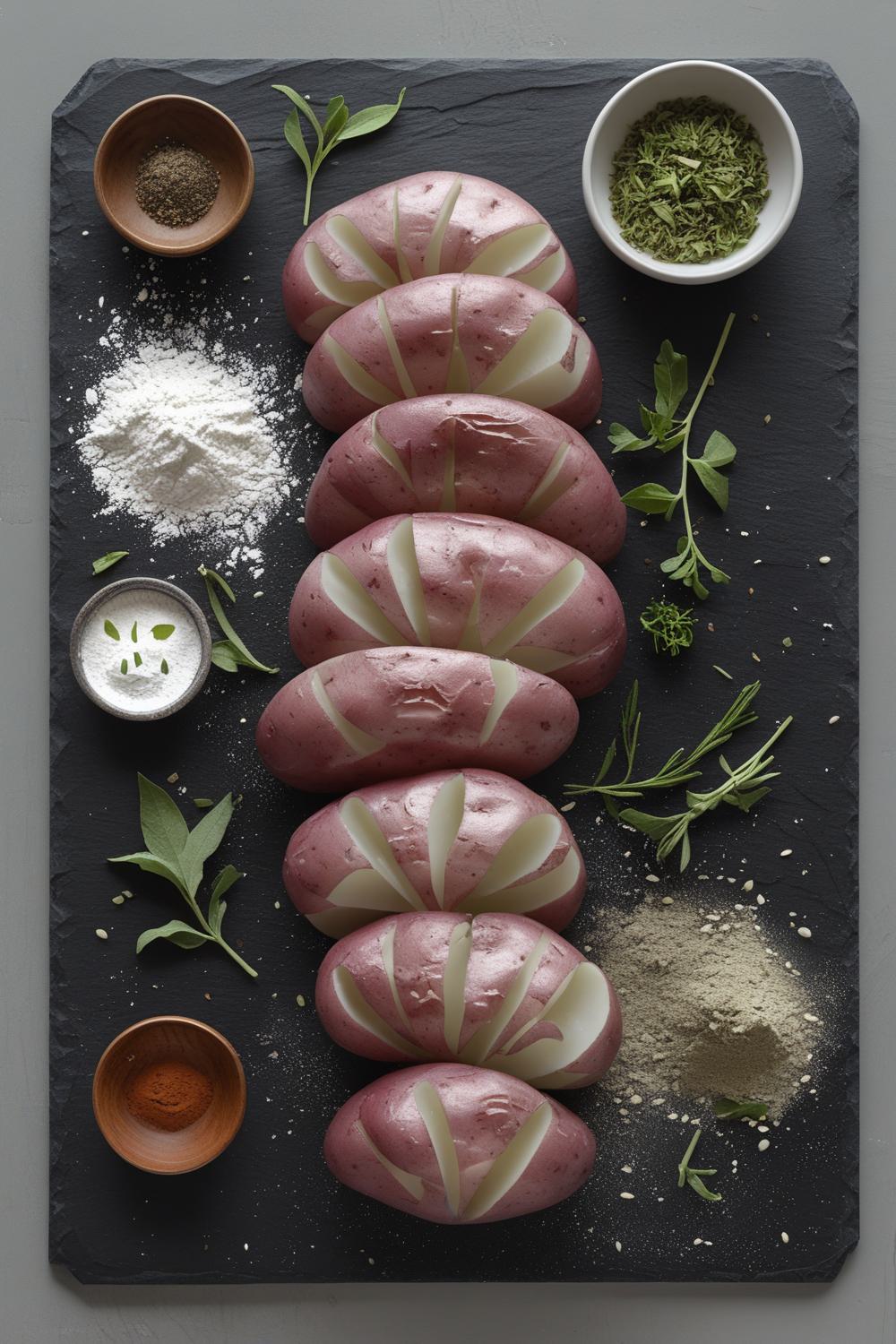
Ingredient Deep Dive
| Ingredient | Quantity | Purpose |
|---|---|---|
| Red potatoes (1.5-2″ diameter) | 2 lbs | High amylopectin starch creates creamy texture without disintegration |
| Heavy cream (36-40% fat) | 1.5 cups | Fat content prevents splitting during prolonged baking |
| Gruyère cheese (freshly grated) | 3/4 cup | Emulsifying properties ensure smooth sauce; nutty depth |
| Parmigiano-Reggiano | 1/3 cup | Umami boost with crystalline texture for crust formation |
| Fresh thyme leaves | 2 tbsp | Volatile oils complement earthy notes of potatoes |
| Garlic (microplaned) | 3 cloves | Alliinase enzymes activated through fine grating for even distribution |
| White pepper | 3/4 tsp | Pungent without visible specks in the cream |
| Fresh nutmeg (grated) | 1/4 tsp | Myristicin oil cuts through dairy richness |
| Unsalted butter | 2 tbsp | Clarified milk solids aid in browning reaction |
| Kosher salt | 1.5 tsp | Larger crystals distribute evenly without over-salting |
Red potatoes’ low starch content requires careful dairy management. Their cellular structure traps moisture, necessitating cream rather than milk to withstand 90-minute baking without breaking. Gruyère’s sodium citrate acts as a natural emulsifier, while aged Parmigiano contributes glutamate crystals that amplify savory notes. White pepper contains higher concentrations of aromatic compounds like sabinene compared to black pepper, performing better in delicate cream sauces.
Thyme’s thymol oil binds with potato starch molecules during baking, creating aromatic bridges between layers. Microplaned garlic maximizes allicin conversion—unlike minced garlic which loses potency when exposed to prolonged heat. The butter serves dual purposes: its milk solids create nucleation sites for Maillard reactions on the surface, while the fat content elevates the cream’s viscosity to properly coat each slice.
Substitutions & Swaps
For dairy-free versions, blend cashew cream with 1/4 teaspoon xanthan gum per cup to mimic heavy cream’s viscosity. Vegan cheeses lack the necessary emulsifying salts, so incorporate 2 tablespoons nutritional yeast and 1/2 teaspoon sodium citrate with oat milk for comparable richness. Gluten-sensitive diners needn’t worry—traditional recipes contain no flour, relying solely on potato starch for thickening.
Pantry modifications: Replace Gruyère with aged Gouda for similar melting properties, or Emmental if requiring lower lactose. Inconsistent potato sizes? Adjust baking time ±15 minutes based on slice thickness. Out of fresh thyme? Use 1/3 the amount of dried, but add it to cold cream 30 minutes before baking for hydrating benefits. For those avoiding nightshades, golden beets or celery root make surprising stand-ins, though baking times decrease by 25%.
Equipment Guide
Your baking vessel dictates texture progression. Enameled cast iron (3-qt capacity) provides ideal thermal mass for even cooking without hotspots, creating distinct texture zones—creamy bottom, tender middle, crisp top. Glass or ceramic dishes require 10% longer baking but allow visual monitoring. Avoid non-stick surfaces; they inhibit proper fond development and browning.
Essential tools: A mandoline set to 1/8” ensures uniform slices for consistent cooking. Use a Kevlar glove for safety—red potatoes’ firm texture demands forceful slicing. A microplane zester delivers garlic to near-paste consistency, while a copper whisk prevents cream scorching during stovetop infusion. Finally, an instant-read thermometer removes guesswork—aim for 185°F at the center for proper starch gelatinization.
Step-by-Step Walkthrough
- Preheat oven to 325°F with rack in lower third position
- Butter 9×13” baking dish using 1 tbsp butter
- Submerge potatoes in cold water scrub with vegetable brush
- Slice potatoes into 1/8” rounds leaving skins intact
- Rinse slices in 3 changes of cold water to remove surface starch
- Layer potatoes in dish creating overlapping concentric circles
- Combine cream, garlic, thyme, white pepper and nutmeg in saucepan
- Heat cream mixture to 145°F (no simmering) whisking constantly
- Pour infused cream slowly over potatoes through fine mesh strainer
- Combine cheeses and distribute evenly over surface
- Dot with remaining butter cut into pea-sized pieces
- Bake covered with foil 60 minutes then uncovered 30 minutes
- Rest 25 minutes before cutting—critical for sauce stabilization
Temperature control distinguishes professional results. Heating cream above 165°F before baking risks fat separation—keep it warm enough to infuse flavors (145°F ideal) without denaturing proteins. When layering, angle slices at 30 degrees rather than flat stacking. This creates micro-channels for cream distribution and increases surface area for controlled evaporation.
The two-stage bake—covered then uncovered—manages moisture perfectly. Foil trapping steam gelatinizes starches during the first phase, while uncovered baking tightens the sauce through controlled evaporation. Resting is non-negotiable; as temperature drops from 185°F to 140°F, starch molecules realign into a stable gel structure.
Expert Tips & Troubleshooting
Watery sauce occurs when starch isn’t properly released—always rinse sliced potatoes thoroughly to eliminate excess surface starch, then pat dry. For cream separation, whisk in 1 teaspoon cornstarch slurry during last 10 minutes of baking. If top browns too quickly tent with foil but never wrap tightly—steam must escape to concentrate flavors.
For uniform doneness: Rotate dish 180 degrees when removing foil. If using deeper casserole dishes, extend covered baking by 20 minutes. Struggling with slicing? Par-freeze potatoes 30 minutes before cutting—the firms flesh allows cleaner slices. When reheating leftovers, place refrigerated portions in cold oven set to 300°F—gradual heating preserves texture.
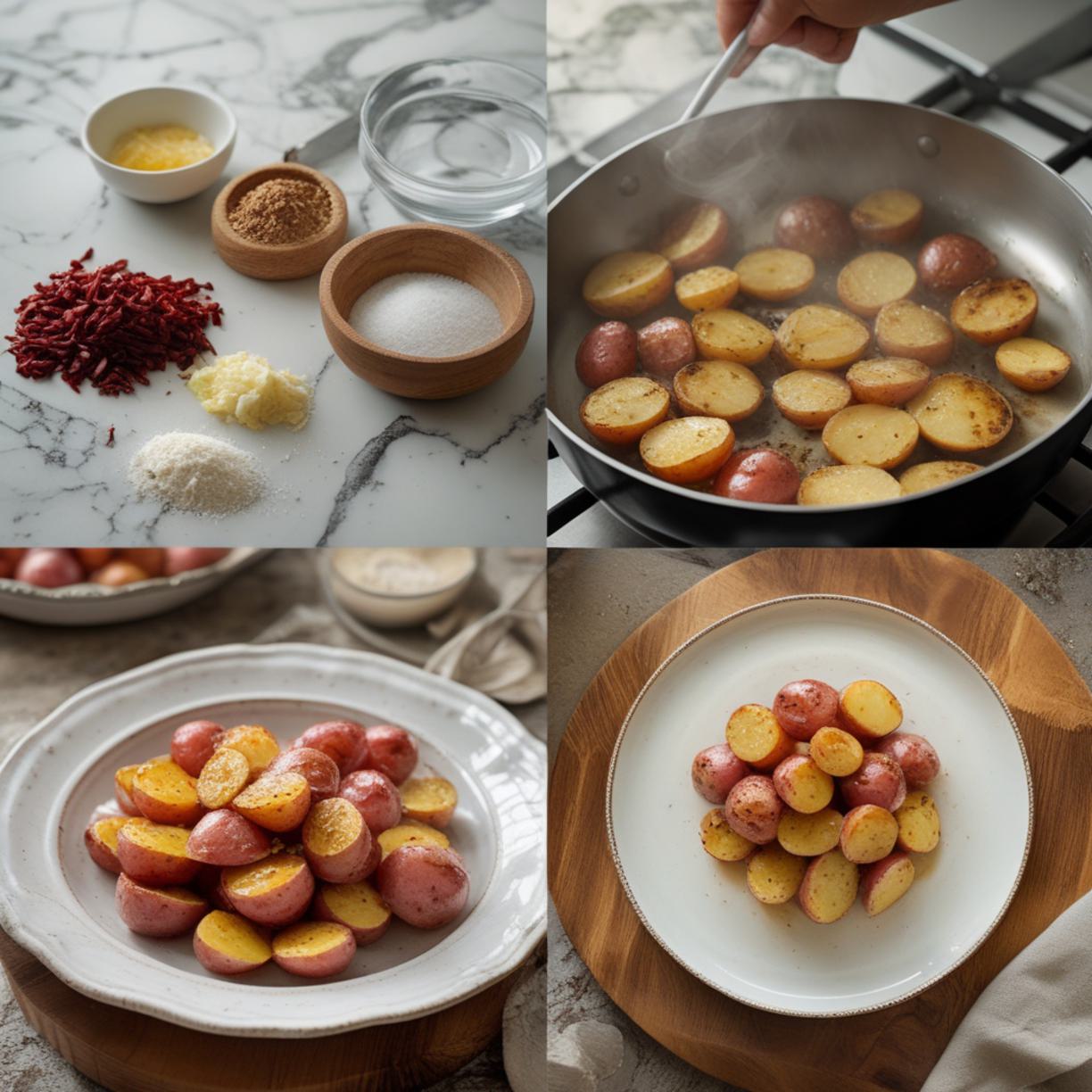
Transform leftovers into croquettes: Mash cooled portions with 1 egg yolk, form into discs, dust with rice flour and pan-fry in clarified butter. Serve with chive crème fraîche for elevated brunch.
Flavor Variations
For Spanish-inspired flair, layer 1/4 cup chorizo between potatoes and substitute Manchego for Gruyère. Kid-friendly versions can incorporate mild cheddar and crispy pancetta bits baked separately for topping. Asian fusion swaps include coconut cream infusion with kaffir lime leaves, finished with fried shallots.
Spice enthusiasts might add 1/4 teaspoon cayenne to the cream with smoked gouda. French Provençal variation incorporates Herbes de Provence and niçoise olives beneath the cheese layer. For autumn menus, intersperse thinly sliced celery root and white truffle oil.
Storage & Reheating
Cool completely within 2 hours, cover surface with parchment paper (not plastic) before refrigerating. Lasts 4 days but develops deeper flavors after 24 hours. To reheat: Place portions in oven-safe dish with 1 tsp cream per cup, cover loosely and bake at 275°F for 20 minutes. Microwave reheating creates rubbery texture—not recommended.
Freezing alters potato cell structure—acceptable only if planning to repurpose in soups or frittatas. Thaw overnight before reheating as above.
FAQ Section
Q: Can I prepare this dish ahead?
A: Assemble up to cheese addition, cover tightly with plastic touching surface, refrigerate 48 hours. Add cheese just before baking—it prevents sogginess.
Q: Why aren’t my potatoes getting tender?
A: Likely insufficient liquid coverage. Press down layers before baking—potatoes should be 90% submerged in cream mixture.
Q: Is this a gratin or scalloped potatoes?
A: Scalloped denotes cream-based without cheese (historically), but modern usage blends techniques. We embrace the hybrid approach.
Q: How do I prevent curdled cream sauce?
A: Bake below simmer point (195°F max), use full-fat cream, and include cheese emulsion stabilizers. Checking internal temp prevents overcooking.
Nutrition Information
| Nutrient | Per Serving (1/6 recipe) |
|---|---|
| Calories | 427 kcal |
| Total Fat | 29g |
| Saturated Fat | 18g |
| Trans Fat | 0.8g |
| Cholesterol | 97mg |
| Sodium | 587mg |
| Total Carbohydrates | 31g |
| Dietary Fiber | 3g |
| Sugars | 4g |
| Protein | 11g |
| Vitamin D | 18mcg |
| Calcium | 280mg |
| Iron | 2mg |
| Potassium | 895mg |
*Disclaimer: Nutritional data estimated using USDA databases. Values may vary based on specific ingredient brands and portion sizes. For dietary restrictions, consult a nutrition professional. Cholesterol content may be reduced using plant-based substitutes. Sodium levels assume no additional salt during serving. Update calculations if using alternative ingredients listed in substitutions section.