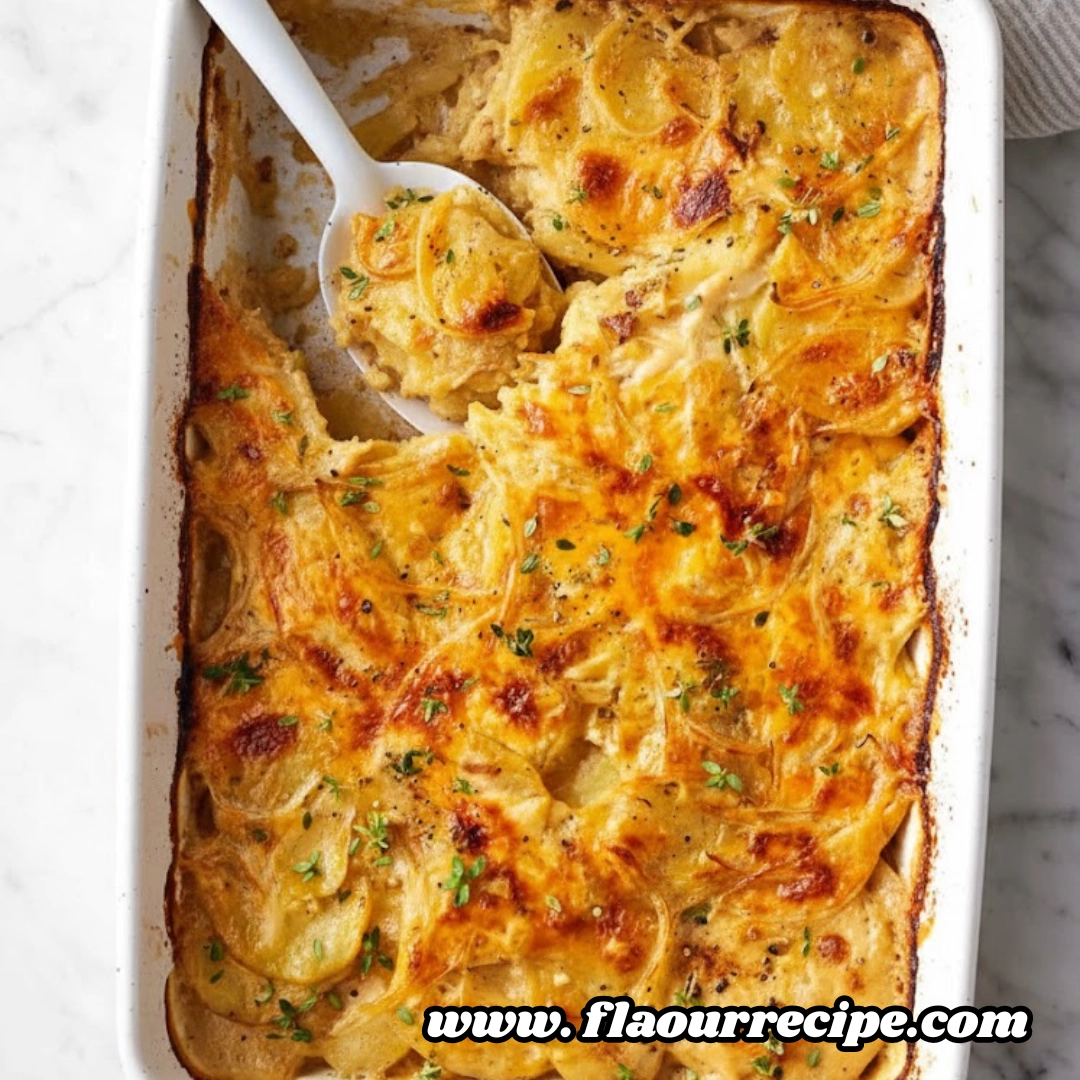
When the air turns crisp or a holiday approaches, my mind immediately drifts toward the kitchen and the specific, nostalgia-inducing aroma of bubbling cheese and earthy tubers. There is a profound sense of warmth that comes from a perfectly baked tray of scalloped potatoes. This dish is far more than just a side; it is a centerpiece of comfort that has graced family dinner tables for generations. Whether it is an Easter brunch, a Thanksgiving feast, or a cozy Sunday supper, these potatoes bring a level of indulgence that few other dishes can match.
The beauty of this recipe lies in its simplicity and the careful balance of textures. We are talking about paper-thin potato slices that become incredibly tender, bathed in a silky, savory sauce that strikes the perfect note between rich creaminess and light herbal freshness. It is a dish that feels sophisticated enough for a formal event yet remains deeply rooted in the kind of home cooking that makes everyone reach for a second helping.
Table of Contents
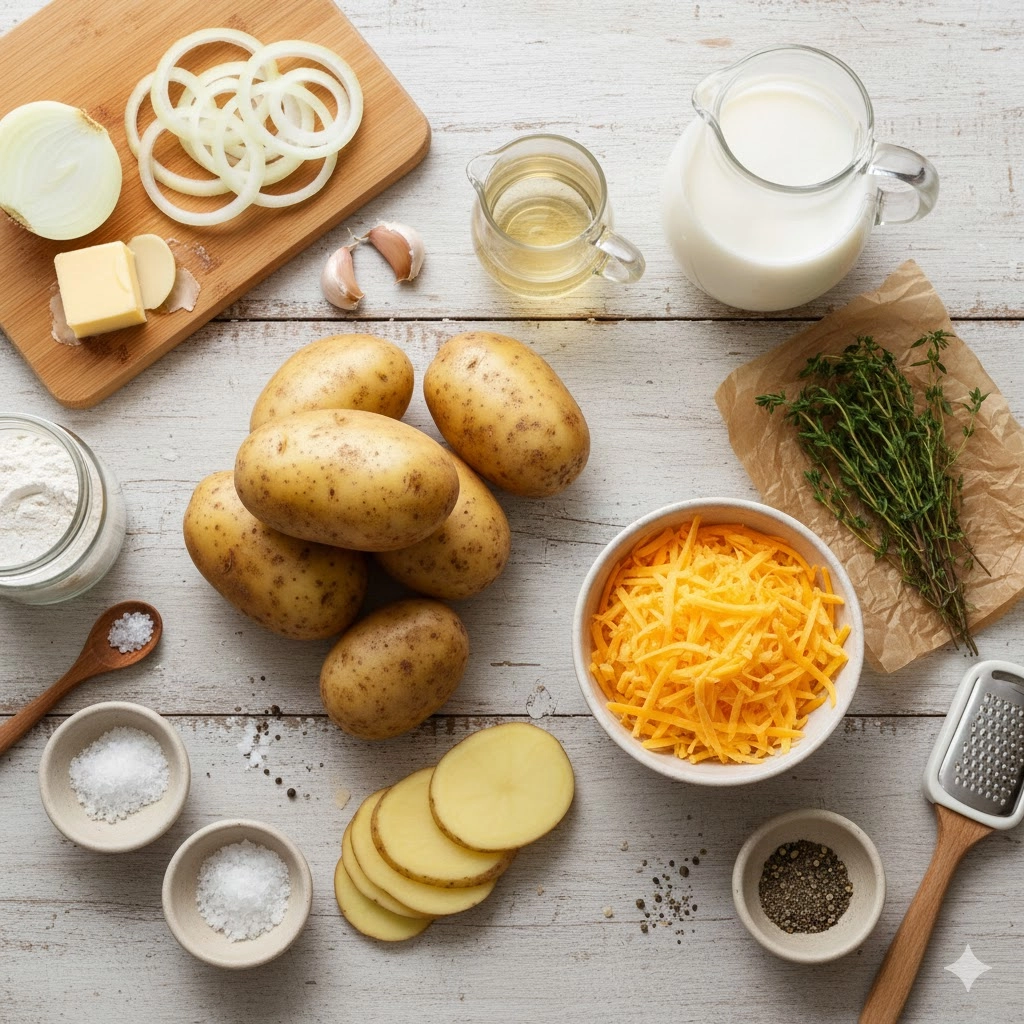
Ingredients for This Classic Casserole
Gathering the right components is the first step toward achieving potato perfection. This recipe relies on high-quality staples that work in harmony to create a complex flavor profile.
- 3 tablespoons unsalted butter
- 3 tablespoons all-purpose flour
- 1 and 1/2 cups whole milk
- 1 cup vegetable broth
- 2 garlic cloves, minced
- 2 teaspoons fresh thyme leaves
- 1 teaspoon sea salt
- 1/2 teaspoon freshly ground black pepper
- 3 pounds Yukon Gold potatoes, scrubbed and sliced 1/8 inch thick
- 1 small yellow onion, thinly sliced into half moons
- 1 and 1/2 cups shredded sharp cheddar cheese, divided
Step-by-Step Instructions for Success
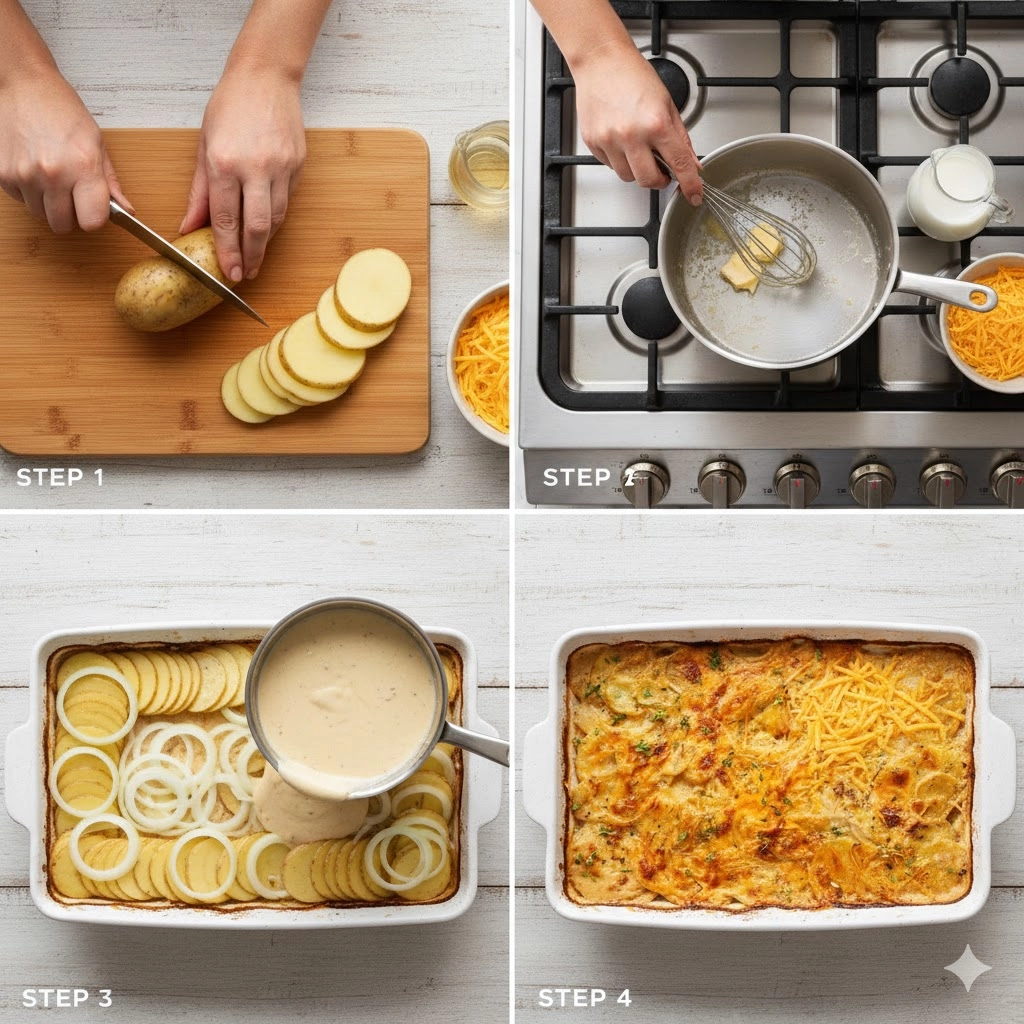
- Begin by preheating your oven to 400 Fahrenheit. Take a moment to thoroughly grease a 9 by 13 inch baking dish with butter or a light coating of oil to ensure nothing sticks to the edges.
- In a medium skillet set over medium heat, melt the butter until it is foaming. Sprinkle in the flour and whisk constantly for about one minute to create a roux. This step is essential for removing the raw flour taste.
- Slowly stream in the whole milk while whisking vigorously to avoid lumps. Once the milk is incorporated, pour in the vegetable broth, continuing to whisk.
- Stir in the minced garlic, fresh thyme, salt, and pepper. Cook the mixture for 2 to 3 minutes, whisking frequently, until the sauce thickens enough to lightly coat the back of a metal spoon. Remove the skillet from the heat immediately.
- Arrange half of the sliced potatoes in an even layer at the bottom of your prepared baking dish. Scatter half of the sliced onions over the potatoes.
- Pour half of the warm cream sauce over the first layer and sprinkle with 1 cup of the shredded cheddar cheese.
- Repeat the process with the remaining potatoes, the rest of the onions, the remaining sauce, and the final 1/2 cup of cheese on top.
- Cover the dish tightly with aluminum foil and bake for 30 minutes.
- Remove the foil and continue baking for another 35 to 40 minutes. You are looking for potatoes that are fork-tender and a cheese topping that is deeply golden brown and bubbling.
- Remove from the oven and allow the dish to stand at room temperature for 20 minutes before serving. This rest period is vital for the sauce to set.
Extensive Guide to the Cooking Process
To truly master this dish, one must understand the interaction between the starch of the potato and the structure of the sauce. The choice of Yukon Gold potatoes is intentional. Unlike Russets, which can become grainy or fall apart entirely, Yukon Golds maintain a certain “toothsome” quality while releasing just enough starch to help thicken the surrounding liquid.
The slicing process is perhaps the most meditative part of the preparation. While many chefs reach for a mandoline to achieve that perfect 1/8 inch thickness, using a sharp chef’s knife allows for more control. The goal is uniformity. If one slice is significantly thicker than another, you will end up with pockets of raw potato in an otherwise cooked dish. As you layer these slices, think of it like building a foundation. You want them to overlap slightly, creating a dense network that can trap the sauce in every nook and cranny.
When creating the roux and subsequent sauce, the transition from milk to vegetable broth is a game-changer. Pure cream or all-milk sauces can sometimes feel heavy or one-dimensional. The addition of vegetable broth introduces a savory, umami-rich backbone that cuts through the fat of the butter and cheese. When the sauce begins to “nappe”—the French term for coating the back of a spoon—it is ready. This indicates that the flour molecules have fully hydrated and expanded, ensuring your casserole won’t be watery.
The final resting period of 20 minutes might be the hardest part of the recipe, but it is non-negotiable. When the dish first comes out of the oven, the sauce will appear quite fluid. As it cools slightly, the starches and proteins stabilize, turning that fluid into a rich, velvety coating that clings to every potato slice.
Strategic Modifications and Substitutions
While the base recipe is designed for a classic flavor profile, there are several ways to adapt it based on what you have in your pantry or your specific dietary preferences.
If you do not have fresh thyme on hand, dried thyme is an excellent substitute. However, because dried herbs are more concentrated, you should reduce the measurement to about 3/4 of a teaspoon. For those who prefer a different aromatic profile, rosemary or even a hint of nutmeg can be used to provide a different kind of warmth to the white sauce.
Regarding the cheese, while sharp cheddar provides a classic tang, you can experiment with Gruyere for a more traditional French “au gratin” feel. Gruyere melts beautifully and offers a nutty complexity that pairs wonderfully with the earthy potatoes. If you are looking for a bit of a kick, a pepper jack cheese can add a subtle heat that contrasts nicely with the creamy sauce.
For a dairy-free variation, you can substitute the butter with a high-quality vegan butter stick and use an unsweetened nut milk, such as almond or cashew milk. Ensure the vegetable broth is flavorful, as it will be doing more of the heavy lifting in a dairy-free version.
Essential Insights for Recipe Excellence
One of the most common pitfalls in making scalloped potatoes is a sauce that “splits” or curdles. This usually happens when the heat is too high or the sauce reaches a violent boil. To prevent this, always keep your skillet at a medium or medium-low heat once the liquids are added. If you notice the sauce starting to separate, remove it from the heat immediately and whisk in a splash of cold milk to bring the temperature down and re-emulsify the fats.
Another tip for success involves the onion preparation. Slicing the onions as thinly as possible ensures they soften at the same rate as the potatoes. If the onion slices are too thick, they may retain a slight crunch that disrupts the otherwise soft texture of the casserole. Some cooks prefer to sauté the onions in the butter before adding the flour, which adds a sweetness through caramelization, though the raw layering method in this recipe provides a brighter, more distinct onion flavor.
Finally, pay attention to the “browned” factor. The last 35 to 40 minutes of baking without foil are where the magic happens. The Maillard reaction occurs on the surface of the cheese, creating those crispy, salty edges that everyone fights over. If your oven runs cool, you can turn on the broiler for the final 2 minutes, but watch it like a hawk to prevent burning.
Ideal Accompaniments and Serving Suggestions
These cheesy scalloped potatoes are quite rich, so they pair best with proteins and greens that offer a bit of contrast. For a holiday meal, they are the natural partner to a glazed ham or a roasted turkey. The saltiness of the meat complements the creamy, mild flavor of the potatoes perfectly.
If you are serving this as part of a vegetarian spread, consider pairing it with a bright, acidic salad. A spinach salad with a lemon-shallot vinaigrette or a fennel and orange salad provides a necessary palate cleanser between bites of the decadent potatoes. Roasted green vegetables, such as asparagus or charred Brussels sprouts, also work well to add a bit of bitterness and crunch to the plate.
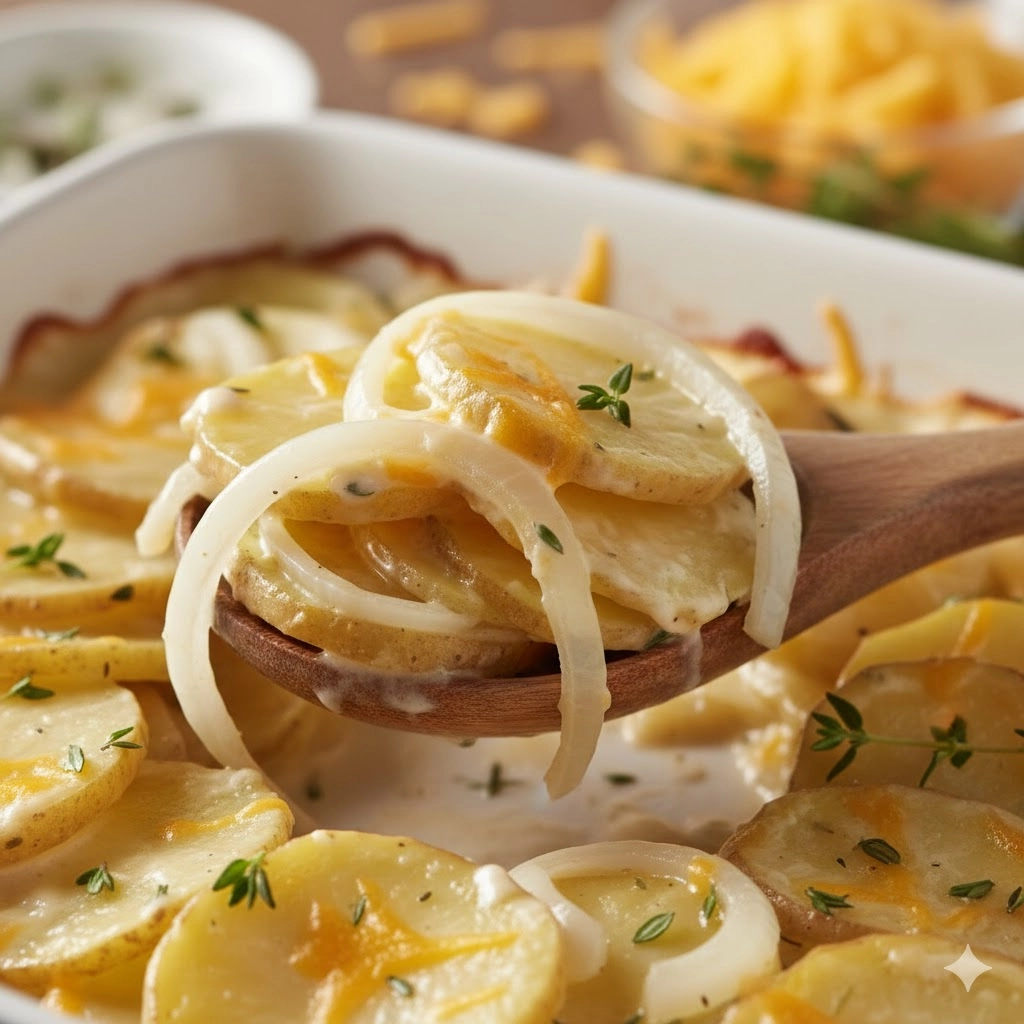
When serving, use a large metal spoon or a spatula to lift out square portions. Because of the layering, the dish holds its shape remarkably well once it has rested, making for a beautiful presentation on the plate where the individual layers of potato are visible.
Frequently Asked Questions
Why did my scalloped potatoes turn out watery?
Watery potatoes usually result from one of two things: either the potatoes were not drained or dried properly if they were soaked, or the dish was not allowed to rest long enough after baking. The 20-minute resting period allows the starch to absorb the excess liquid and thicken the sauce into a cohesive texture.
Can I use a different type of potato like Russets?
While you can use Russets, they have a very high starch content and a mealy texture. They tend to break down and lose their shape, resulting in a dish that is closer to mashed potatoes in a sauce. Yukon Golds are the gold standard here because they hold their shape while still providing a buttery, soft mouthfeel.
What is the best way to reheat leftovers?
The best way to maintain the texture is to reheat them in the oven. Place the leftovers in an oven-safe dish, cover with foil, and bake at 350 Fahrenheit for about 20 to 30 minutes until heated through. This prevents the sauce from becoming oily, which can sometimes happen in the microwave.
Is it necessary to peel the potatoes first?
Peeling is a matter of personal preference. Yukon Gold potatoes have very thin, delicate skins that are perfectly edible and add a bit of rustic charm and nutrition. If you prefer a completely uniform, silky texture, peeling is recommended, but it is not strictly necessary for the success of the recipe.
The Perfect Finish to Your Meal
There is something undeniably heart-warming about pulling a bubbling, golden-brown tray of potatoes out of the oven. This recipe is more than just a list of ingredients; it is a method for creating a memory. By focusing on the quality of your roux, the precision of your potato slices, and the patience of the resting period, you ensure a side dish that will be the talk of the table. These cheesy scalloped potatoes are a testament to the power of simple, honest ingredients treated with care.
Nutrition Information
| Nutrient | Amount Per Serving |
| Calories | 285 calories |
| Total Fat | 14 grams |
| Saturated Fat | 9 grams |
| Cholesterol | 40 milligrams |
| Sodium | 480 milligrams |
| Total Carbohydrates | 32 grams |
| Dietary Fiber | 3 grams |
| Sugars | 4 grams |
| Protein | 10 grams |
Nutrition Disclaimer
Nutrition facts are provided as a courtesy and are estimates only. Values may vary based on specific ingredient brands or slight variations in preparation methods.
PrintThe Most Comforting Cheesy Scalloped Potatoes for Every Holiday Table

These cheesy scalloped potatoes are the ultimate comfort food side dish. Thinly sliced Yukon Gold potatoes are layered with a velvety garlic and thyme cream sauce and plenty of sharp cheddar cheese.
- Prep Time: 20 mins
- Cook Time: 1 hour 10 mins
- Total Time: 1 hour 30 mins
- Yield: 12 servings 1x
- Category: Side Dish
- Method: Baking
- Cuisine: American
- Diet: Vegetarian
Ingredients
3 tablespoons unsalted butter
3 tablespoons all-purpose flour
1 and 1/2 cups whole milk
1 cup vegetable broth
2 garlic cloves, minced
2 teaspoons fresh thyme leaves
1 teaspoon sea salt
1/2 teaspoon freshly ground black pepper
3 pounds Yukon Gold potatoes, sliced 1/8 inch thick
1 small yellow onion, thinly sliced into half moons
1 and 1/2 cups shredded sharp cheddar cheese, divided
Instructions
1. Preheat the oven to 400 Fahrenheit and grease a 9×13-inch baking dish.
2. In a medium skillet, melt butter over medium heat. Whisk in flour for 1 minute.
3. Slowly add milk and vegetable broth, whisking continuously. Add garlic, thyme, salt, and pepper. Cook 2 to 3 minutes until sauce coats the back of a spoon.
4. Layer half of the potatoes and half the onions in the baking dish. Top with half the sauce and 1 cup of cheese.
5. Repeat with remaining potatoes, onions, and sauce. Top with final 1/2 cup of cheese.
6. Cover with foil and bake for 30 minutes.
7. Uncover and bake for 35 to 40 minutes until potatoes are tender and top is browned.
8. Let stand for 20 minutes before serving.
Notes
Letting the dish rest for 20 minutes is critical for the sauce to set properly.
Use a mandoline for perfectly even 1/8 inch potato slices.
If using dried thyme, reduce the amount to 3/4 teaspoon.
Nutrition
- Serving Size: 1 scoop
- Calories: 285
- Sugar: 4g
- Sodium: 480mg
- Fat: 14g
- Saturated Fat: 9g
- Unsaturated Fat: 5g
- Trans Fat: 0g
- Carbohydrates: 32g
- Fiber: 3g
- Protein: 10g
- Cholesterol: 40mg