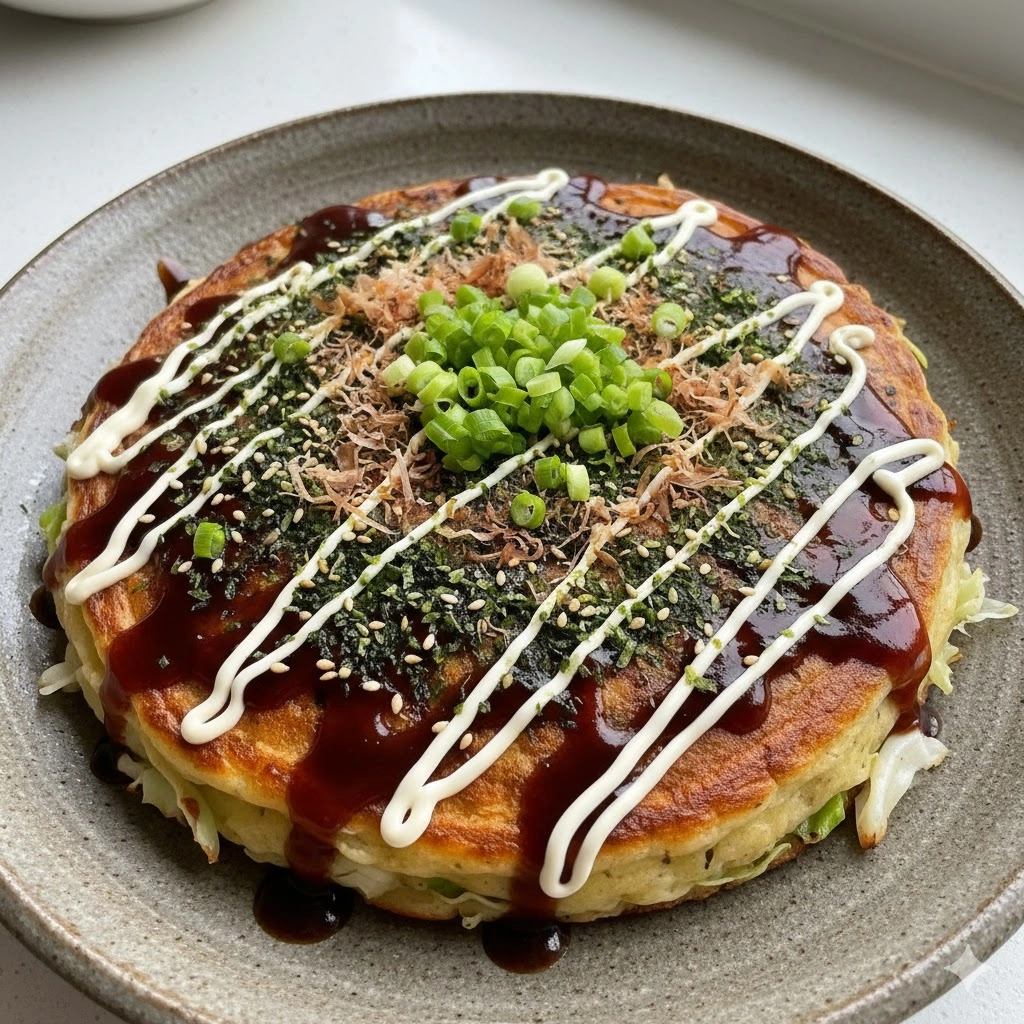
The Savory Japanese Pancake, or Okonomiyaki, is a dish of pure culinary imagination, hailing predominantly from the Kansai (Osaka) and Hiroshima regions of Japan. Its name loosely translates to “what you like, grilled,” immediately telling you this is a recipe that welcomes customization. At its heart, it is a magnificent collision of crunchy cabbage, deeply savory additions, and a simple, ethereal batter, all pan-fried until golden brown and capped with a generous, artistic drizzle of complementary sauces. This preparation delivers an experience far beyond a simple breakfast cake; it is a hearty, deeply satisfying main course, equally at home as a comforting weeknight meal or the star of a casual weekend gathering.
Table of Contents
Building the Essential Batter and Base
Achieving the perfect texture in Okonomiyaki is a delicate balancing act. Unlike Western pancakes that rely on a smooth, flowing batter, this dish requires a thick, almost paste-like mixture designed primarily to bind ingredients rather than provide volume. The true character comes from the fillings, primarily the cabbage, which must be treated with respect to maintain its essential crispness.
The Core Ingredients You Will Need
The quality of the final savory Japanese pancake rests on a few simple, often overlooked ingredients. The specific gravity and hydration of the flour, the aeration provided by the leavening, and the freshness of the cabbage are all non-negotiable details that contribute to a superior final product.
- Flour: Use a low-protein flour, such as cake flour or standard all-purpose flour. The goal is to minimize gluten development, which prevents a tough, bready result.
- Leavening: Baking powder provides the necessary lift without requiring an additional acid, ensuring the pancake remains light amidst the dense volume of cabbage. A half teaspoon is typically sufficient for a standard four-serving batch.
- Liquid: Water, or dashi stock for a depth of umami, should be mixed with egg. Using a cool liquid helps control the hydration and slows down gluten formation, keeping the batter tender.
- Cabbage: This is the soul of the dish. Green cabbage should be shaved as thinly as possible—ideally paper-thin ribbons, not rough chunks. The volume of cabbage should feel overwhelming compared to the batter; this is correct.
Preparing the Cabbage and Mix-ins
Shredding the cabbage fine is the single most important step after measuring the flour. If the pieces are too thick, they will not soften enough during the quick frying process, leading to a raw, overwhelmingly crunchy texture that fails to integrate with the batter. Use a sharp knife or a mandolin to achieve ultra-fine threads. Once cut, the cabbage should be lightly but firmly mixed with the batter and any additions. The technique here is a fold, not a vigorous stir. Overmixing will cause the flour to develop gluten, and, critically, it will cause the salt in the batter to draw moisture out of the cabbage prematurely, leading to a watery, weak base that will fall apart in the pan. Combine just until the cabbage is coated and the mixture holds its shape loosely.
The Preparation Checklist
This recipe yields four generous main-course pancakes and requires approximately thirty minutes of active time.
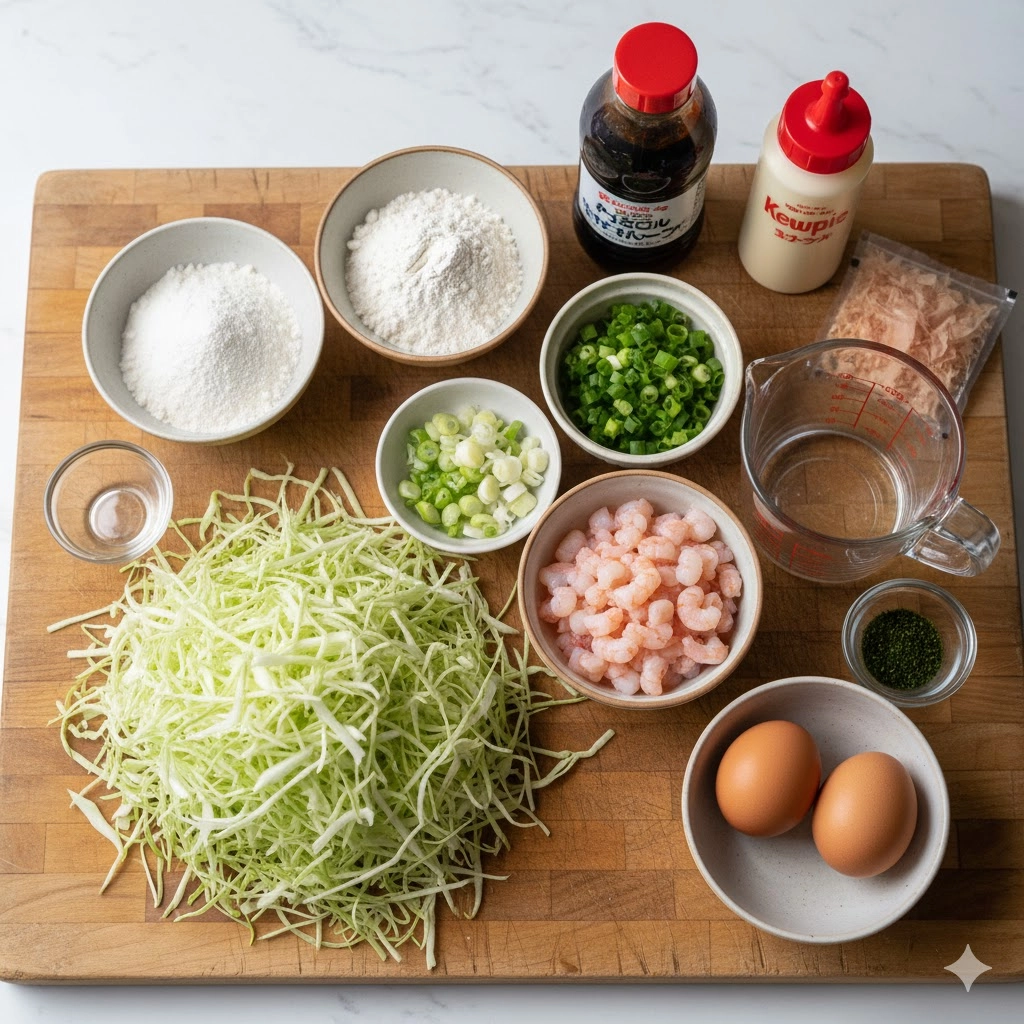
For the Batter and Filling:
- One cup (120g) of all-purpose flour
- One teaspoon of baking powder
- Half a teaspoon of fine sea salt
- Three-quarters cup (180ml) of cold water or dashi stock
- Two large eggs
- Four cups (350g) of green cabbage, very finely shredded
- Half cup (50g) of chopped scallions (green onions)
- Half cup (100g) of raw shrimp, shelled, deveined, and finely diced (see note below for substitutions)
- Two tablespoons of neutral cooking oil (canola, grapeseed, or rice bran) for frying
For the Classic Toppings:
- Okonomiyaki sauce (store-bought or homemade)
- Japanese mayonnaise (Kewpie style is preferred)
- Aonori (dried seaweed flakes)
- Katsuobushi (bonito flakes)
The Frying Process: A Quick Guide
- Combine Dry Ingredients: Whisk the flour, baking powder, and salt together in a large bowl.
- Combine Wet Ingredients: In a separate container, lightly whisk the eggs and water or dashi.
- Form the Batter: Pour the wet mixture into the dry ingredients and stir gently until just combined. A few lumps are preferable to a smooth, overmixed batter.
- Fold in Fillings: Add the shredded cabbage, scallions, and diced shrimp to the batter. Use a large spoon or spatula to fold until everything is coated. Do not stir vigorously.
- Heat the Pan: Place a large frying pan or griddle over medium heat and add one tablespoon of the neutral oil.
- Cook the Pancake: Scoop one-quarter of the mixture into the hot pan, flattening it slightly with the back of the spatula until it is about one inch thick.
- Sear and Flip: Cook for five to six minutes until the edges are firm and the underside is deeply golden brown. Carefully slide the spatula underneath, and with a swift, confident motion, flip the pancake.
- Finish Cooking: Cook on the second side for another five to six minutes, pressing down occasionally to ensure good contact with the heat.
- Serve and Top: Transfer to a serving plate and immediately top with Okonomiyaki sauce, Japanese mayonnaise, Aonori, and a generous sprinkle of Katsuobushi. Repeat with remaining batter.

Mastering the Griddle: In-Depth Technique
The difference between a sticky, raw pancake and a crisp, perfectly cooked Savory Japanese Pancake lies entirely in technique and heat management. The long cooking time is crucial, allowing the steam generated by the cooking cabbage to thoroughly cook the dense interior without scorching the exterior.
Creating the Perfect Pancake Density
When placing the batter mixture into the pan, aim for a diameter of roughly six inches and a uniform thickness of about one inch. Resist the urge to press the mixture down aggressively right away. Instead, form the mound, let it sit for sixty seconds, and then gently press the edges inward and flatten the top surface. This allows the exterior to set quickly, trapping the steam inside. If you press too hard or too early, the pancake will become dense, resulting in a rubbery texture that is difficult to cook through. The structure should be sturdy but still have air pockets within the cabbage network.
Achieving the Golden Crust
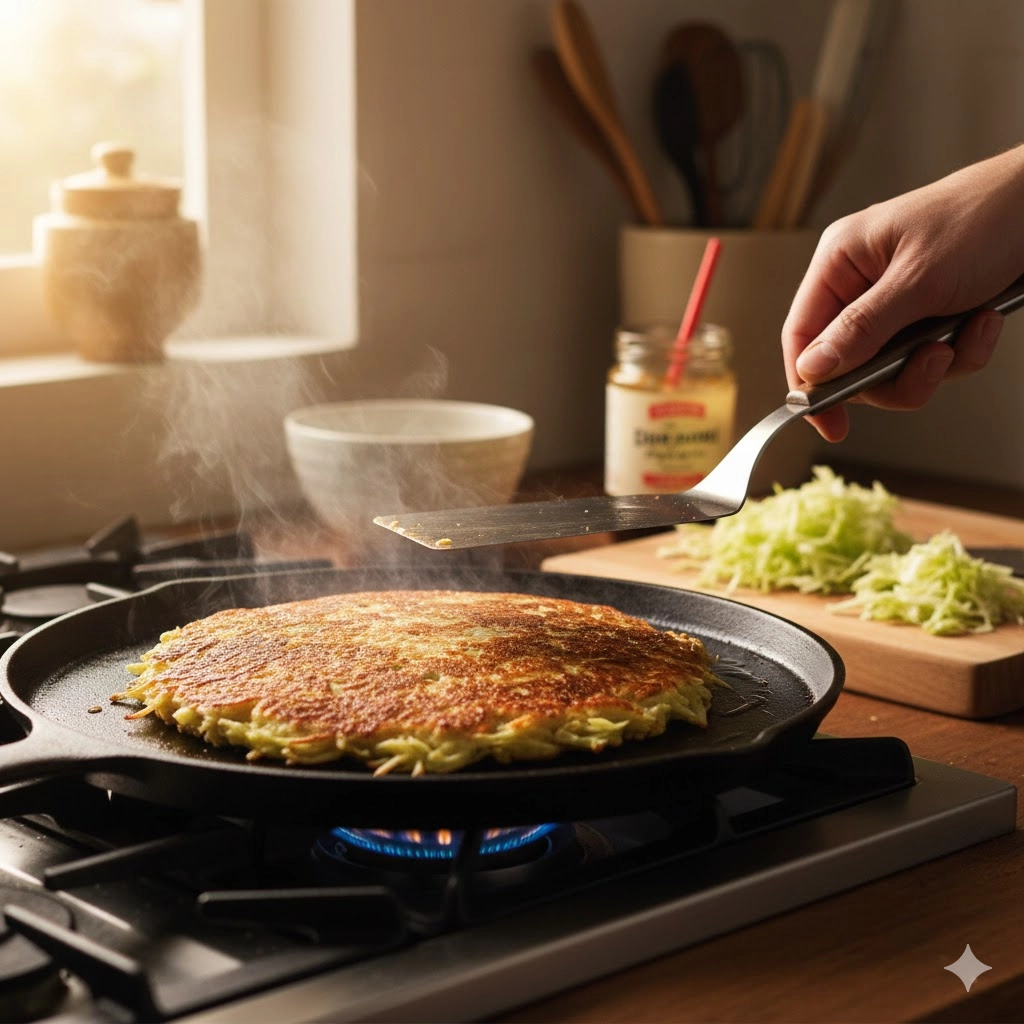
The temperature of the pan should be held steadily at a medium setting. Too high, and the outside will blacken before the inside cooks; too low, and the pancake will soak up excess oil and become soggy. You are looking for a deep, rich mahogany crust—not merely a light brown. This crust development takes patience, typically five to six full minutes on the first side. Observe the edges: when they begin to look dry and firm, and the batter around the bottom edge transitions from pale white to opaque, it is time to check. The golden crust is critical not just for texture but for the toasted, nutty flavor that complements the sweet sauce.
The Critical Flip
The flip is the moment of truth. Ensure your spatula is wide and sturdy, ideally wider than the pancake itself. Slide the spatula completely under the center of the pancake and lift only a quarter of an inch, confirming the pancake is fully released from the pan. Then, move quickly: lift the pancake smoothly a few inches above the pan, turn it over in a rapid arc, and place it gently back down. If the flip is tentative, the pancake may split, or the fragile crust may break. After the flip, add a tiny bit more oil (if the pan looks dry) and press down very gently with the spatula to re-establish full contact with the cooking surface, which encourages even browning on the second side. This secondary cooking period also lasts five to six minutes.
A true doneness check involves inserting a metal skewer into the center. It should emerge clean, with no trace of wet batter. If wet batter clings to the skewer, reduce the heat slightly, cover the pan briefly (two or three minutes), and continue cooking uncovered until firm. The internal temperature of the center should be fully steaming hot.
Insider Tips for Restaurant-Quality Results
These expert insights move the preparation from a standard recipe to an elevated culinary experience.
- Dashi is Non-Negotiable: For true depth of flavor, replace the plain water entirely with cold, unsalted dashi stock (Japanese fish stock). The dashi introduces essential umami that regular water simply cannot provide, elevating the overall savory Japanese pancake profile significantly.
- Batter Consistency Check: After folding in the cabbage, the mixture should feel like dense, wet coleslaw, not a pourable batter. If it appears watery, this likely means your cabbage was not dry enough, or you overmixed it, drawing out moisture. If this happens, stir in an extra tablespoon of flour until the mixture slightly stiffens.
- The Secret to Shredding: Use a mandolin with a guard on the finest setting for the cabbage. Consistent, paper-thin shredding ensures even softening and prevents large, raw pieces from dominating the finished texture. Cut against the grain of the cabbage leaf for the best results.
- Heat the Sauce: Do not serve the Okonomiyaki sauce straight from the refrigerator. Warm the sauce lightly in a small saucepan or microwave just until it is slightly fluid. This prevents the sauce from cooling the freshly cooked pancake and improves its drizzle consistency.
- Use Good Oil: Choose an oil with a high smoke point and neutral flavor, such as refined avocado or rice bran oil. Olive oil is too assertive and will scorch at the necessary cooking temperature. A clean-tasting oil allows the subtle flavors of the cabbage and batter to shine.
- Rest the Finished Pancake: After removing the pancake from the heat, allow it to rest on a wire rack for sixty seconds before topping. This brief resting period allows residual steam to escape and helps maintain the crispness of the crust, preventing the bottom from becoming soggy on the plate.
- The Mayo Application: For a professional look, transfer Japanese mayonnaise into a squeeze bottle with a fine nozzle. Use a back-and-forth or spiral motion to create thin, even lines, rather than blobs, across the surface of the sauce-coated pancake.
- Avoid Batching: Cook the pancakes one or two at a time, depending on the size of your pan. Do not try to hold the cooked pancakes in a stack or a low oven, as they will steam each other and lose their essential crunchy exterior. Serve immediately upon completion of the toppings.
Ingredient Swaps and Flavor Alternatives
The essence of Okonomiyaki is its adaptability, allowing you to tailor the fillings to match local ingredients or dietary preferences. While the cabbage and batter base should remain fixed for structural integrity, the added protein and accent flavors are entirely variable.
Protein Choices
While traditional versions often include sliced pork belly, several excellent compliant alternatives provide the necessary savory depth and textural contrast.
- Shrimp and Scallop: Finely dice raw shrimp and small sea scallops. They integrate seamlessly into the batter and cook quickly, lending a sweet, delicate flavor.
- Vegetarian Umami Bomb: Incorporate chopped, rehydrated shiitake mushrooms and crumbled firm tofu that has been lightly pan-fried until golden. This adds essential texture and a deep, earthy umami note.
- A Simple Egg Boost: For a classic, simple variation, skip the main protein and increase the egg ratio in the batter to three large eggs, resulting in a lighter, custardy interior.
Using Alternative Flours
For those avoiding wheat, the primary challenge is replicating the necessary binding power without the structure of gluten.
- Gluten-Free Flour Blend: Use a commercial gluten-free flour blend that contains xanthan gum. You may need to reduce the liquid slightly, as these blends can absorb moisture differently.
- Rice Flour Base: A mixture of seventy-five percent rice flour and twenty-five percent tapioca starch can mimic the light, non-chewy texture of the ideal batter. It yields a surprisingly crisp exterior but requires slightly more care during the flip.
Vegetable Additions
Beyond the essential cabbage and scallions, you can add other vegetables, provided they are cut extremely small.
- Grated Yamaimo (Mountain Yam): Though less common in home cooking, adding one-quarter cup of grated yamaimo to the batter creates an incredibly light, airy interior texture. This requires sourcing the specific Japanese yam variety.
- Benishōga (Pickled Ginger): Fold one tablespoon of finely chopped red pickled ginger directly into the batter mix. The sharp, slightly spicy vinegar cuts through the richness of the sauces, adding a lively tang to the finished savory Japanese pancake.
What to Serve Alongside Your Savory Japanese Pancake
As a rich, filling dish, Okonomiyaki pairs best with clean, crisp, and refreshing side dishes that offer textural contrast and lightness.
- Sunomono Salad (Japanese Cucumber Salad): Thinly sliced cucumbers marinated in a light, sweet-sour rice vinegar dressing provide a necessary palate cleanser. The cool, watery crispness is the perfect counterpoint to the hot, savory pancake.
- Simple Edamame with Sea Salt: A classic, effortless side. Steamed edamame pods tossed simply with large-flaked sea salt offer a protein boost and a textural break.
- Clear Miso Soup: A light, clear broth made from dashi and white miso paste, perhaps with tiny cubes of soft tofu and wakame seaweed, offers warmth and further enhances the overall Japanese meal theme without adding excessive richness.
- Japanese Pickles (Tsukemono): A small array of lightly salted or vinegared vegetables, such as daikon or eggplant, served in small amounts helps to balance the meal and aid digestion with their bright acidity.
Essential Questions Answered
Can I make the batter ahead of time?
It is highly recommended to prepare the batter and mix-ins separately and combine them immediately before cooking. If you mix the cabbage and batter and let it stand, the salt in the mix will draw water out of the cabbage. This will dilute the batter, resulting in a runny, weak mixture that will not bind properly when cooked and will struggle to crisp up in the pan.
What is the best substitute for Okonomiyaki sauce?
The best functional substitute is a combination of equal parts ketchup, Worcestershire sauce, and oyster sauce (or vegetarian mushroom oyster sauce), with a small dash of honey or brown sugar. This mixture successfully mimics the sweet, savory, and fruity complexity of the authentic sauce. Do not use standard American BBQ sauce without thinning it significantly, as it is generally too thick and smoky.
Why did my pancake fall apart when I flipped it?
The pancake fell apart because the crust had not fully set, which happens when the heat is too low or the cooking time on the first side was insufficient. You need that rich, golden crust to act as a structural shell. Also, ensure your batter-to-cabbage ratio is correct (mostly cabbage, just enough batter to coat) and that you are using a sturdy, wide spatula for the flip.
Can I bake or air-fry the Okonomiyaki instead of pan-frying?
While not traditional, you can finish a partially cooked pancake in the oven. Bake it at three hundred fifty Fahrenheit for ten to fifteen minutes after the flip to ensure the dense middle is fully cooked. Air frying is difficult due to the large, floppy structure of the raw mix, but a small, firm Okonomiyaki may be air-fried at three hundred seventy-five Fahrenheit for twelve minutes, flipping halfway.
Is it necessary to use Japanese mayonnaise?
Yes, for the authentic flavor and texture, Japanese mayonnaise is preferred. It is richer, creamier, and tangier than American mayonnaise due to being made primarily with egg yolks (instead of whole eggs) and often utilizing rice vinegar. This specific flavor profile cuts through the density of the pancake much more effectively.
Nutritional Snapshot
| Nutrient | Amount per Serving |
| Calories | 380 kcal |
| Protein | 18 g |
| Carbs | 45 g |
| Fat | 15 g |
| Fiber | 5 g |
| Sugar | 12 g |
| Sodium | 650 mg |
Disclaimer
Nutrition information is an estimate and may vary based on preparation and ingredients used.
PrintThe Ultimate Recipe for Savory Japanese Pancake

An authentic, expert guide to making Okonomiyaki, the classic customizable **Savory Japanese Pancake**, focusing on perfect batter consistency, crust development, and flavor balance.
- Prep Time: 15 mins
- Cook Time: 20 mins
- Total Time: 35 mins
- Yield: 4 servings 1x
- Category: Main Course
- Method: Stovetop/Pan-Fried
- Cuisine: Japanese
Ingredients
1 cup all-purpose flour
1 teaspoon baking powder
1/2 teaspoon fine sea salt
3/4 cup cold water or dashi stock
2 large eggs
4 cups green cabbage, very finely shredded
1/2 cup chopped scallions (green onions)
1/2 cup raw shrimp, shelled, deveined, and finely diced
2 tablespoons neutral cooking oil for frying
Okonomiyaki sauce, for topping
Japanese mayonnaise, for topping
Aonori (dried seaweed flakes), for topping
Katsuobushi (bonito flakes), for topping
Instructions
1. Whisk the flour, baking powder, and salt together in a large mixing bowl. In a separate container, lightly whisk the two eggs and the water or dashi stock until combined.
2. Pour the wet egg mixture into the dry ingredients and stir gently until just combined. Fold in the finely shredded cabbage, chopped scallions, and diced shrimp. Use a spatula to gently mix until the vegetables are coated, being careful not to overmix.
3. Heat a large frying pan or griddle over medium heat and add one tablespoon of a neutral cooking oil.
4. Scoop one-quarter of the mixture into the hot pan, forming a pancake about six inches wide and one inch thick. Cook for five to six minutes, or until the edges are firm and the underside has formed a deep golden, crispy crust.
5. Carefully slide a wide, sturdy spatula underneath the pancake. In a swift, confident motion, lift and flip the pancake over. Add a small amount of extra oil if the pan is dry, and gently press the pancake to ensure even contact with the heat.
6. Cook on the second side for another five to six minutes until thoroughly cooked through. Transfer the cooked pancake to a serving plate and immediately smother it with Okonomiyaki sauce and a generous zigzag of Japanese mayonnaise. Finish with a sprinkle of Aonori and Katsuobushi. Serve immediately.
Notes
For true depth of flavor, replace plain water entirely with cold dashi stock.
Cook the pancakes one or two at a time; avoid batching as they will steam each other and lose crispness.
If using a gluten-free flour blend, you may need to slightly reduce the liquid.
Nutrition
- Serving Size: 1 pancake
- Calories: 380
- Sugar: 12g
- Sodium: 650mg
- Fat: 15g
- Saturated Fat: 7g
- Unsaturated Fat: 7g
- Trans Fat: 0g
- Carbohydrates: 45g
- Fiber: 5g
- Protein: 18g
- Cholesterol: 110mg