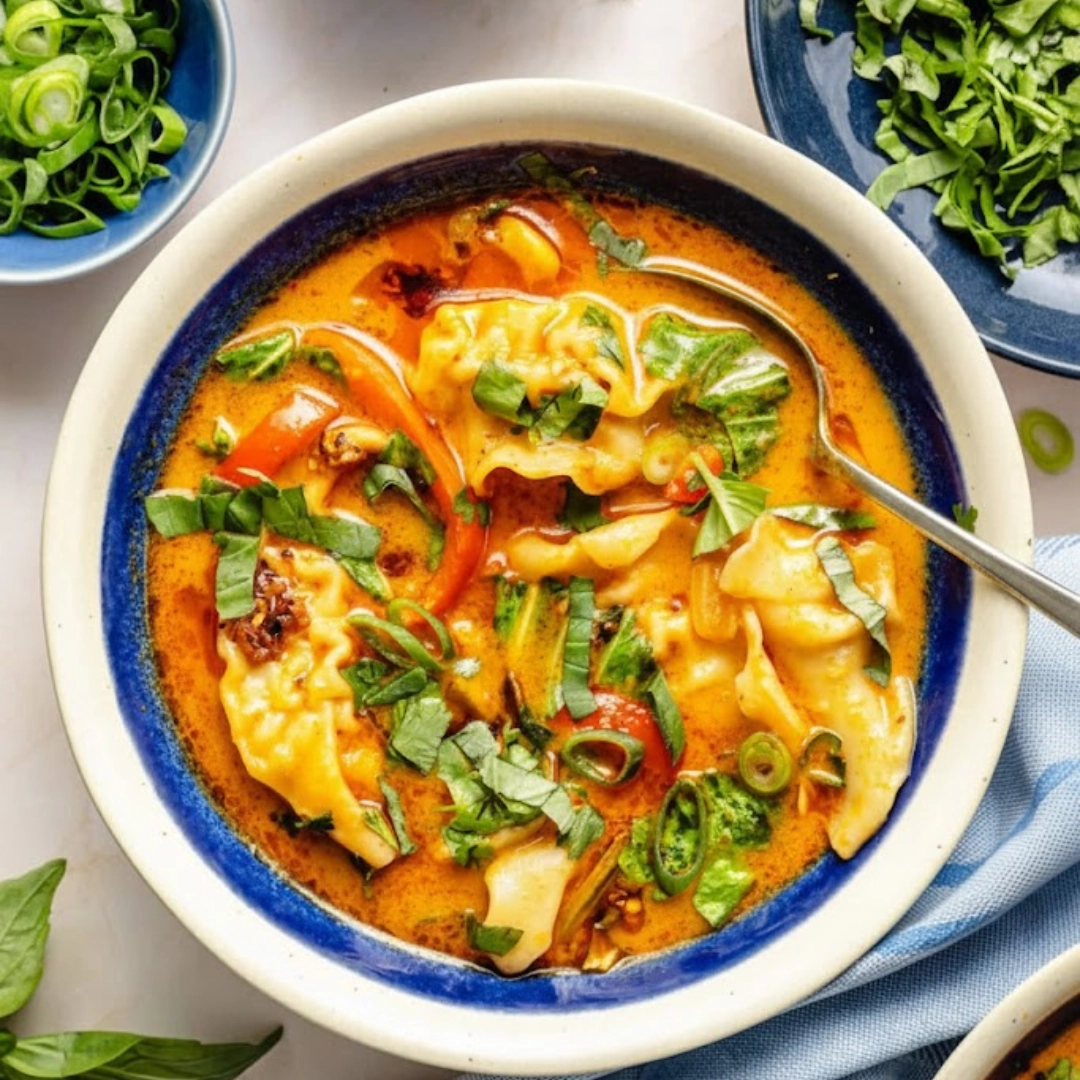
This dish sits at the delicious intersection of creamy, spicy, and satisfyingly savory. A true fusion of Southeast Asian culinary traditions, Red Curry Dumpling Soup brings the bold, complex heat of authentic Thai red curry paste into a comforting broth, then anchors it with plump, tender dumplings. It is an elevated one-bowl meal, perfect for a cool evening when you crave something substantial yet vibrantly flavored. The beauty of this soup lies in the balance: the rich coconut milk softens the chili heat, while fresh aromatics and lime cut through the richness, creating a deeply complex, restaurant-quality experience right in your own kitchen.
The Essential Pantry for a Flavorful Broth
Gathering all components ensures a smooth, focused cooking process. The following list is for a generous four servings.
For the Aromatic Base:
- One tablespoon of neutral cooking oil, such as grapeseed or avocado
- Two cloves of fresh garlic, minced fine
- One tablespoon of fresh ginger, minced fine
- Four to six tablespoons of Thai red curry paste (adjust based on desired heat and paste brand)
- One can (thirteen point five ounces) full-fat coconut milk
- Four cups of low-sodium chicken or vegetable stock
The Dumplings and Filling:
- Twelve to fifteen pre-made frozen dumplings (pork, chicken, or vegetable gyoza work perfectly)
- One cup of thinly sliced shiitake or cremini mushrooms
- One cup of finely chopped bok choy or spinach
For Seasoning and Finish:
- Two tablespoons of fish sauce (or light soy sauce for a vegetarian option)
- One tablespoon of brown sugar or maple syrup
- The juice of one small lime
- One quarter cup of fresh cilantro, roughly chopped, for garnish
- Two scallions (green onions), thinly sliced, for garnish

Preparing the Foundation: A Technique Overview
The success of this soup hinges on properly blooming the red curry paste. This process activates the spices and deepens the resulting flavor profile dramatically.
- Bloom the Curry Paste: Heat the oil in a heavy-bottomed pot or Dutch oven over medium heat. Add the minced garlic and ginger, sautéing briefly until fragrant. Introduce the red curry paste and cook for sixty to ninety seconds, stirring constantly.
- Build the Broth Base: Pour in half of the full-fat coconut milk, stirring vigorously to fully dissolve the curry paste and create a thick, emulsified foundation.
- Simmer and Hydrate: Add the chicken or vegetable stock and the remaining coconut milk. Bring the mixture to a low, steady simmer.
- Introduce Hearty Elements: Stir in the sliced mushrooms and bok choy or spinach, allowing them to soften for several minutes.
- Cook the Dumplings: Gently place the frozen dumplings into the simmering broth. Cover the pot and allow them to cook through completely.
- Final Seasoning: Remove the soup from the heat. Stir in the fish sauce, brown sugar, and fresh lime juice. Taste and adjust the balance before serving.
- Garnish and Serve: Ladle the soup into bowls, ensuring an even distribution of dumplings and broth. Finish with a generous sprinkle of fresh cilantro and sliced scallions.
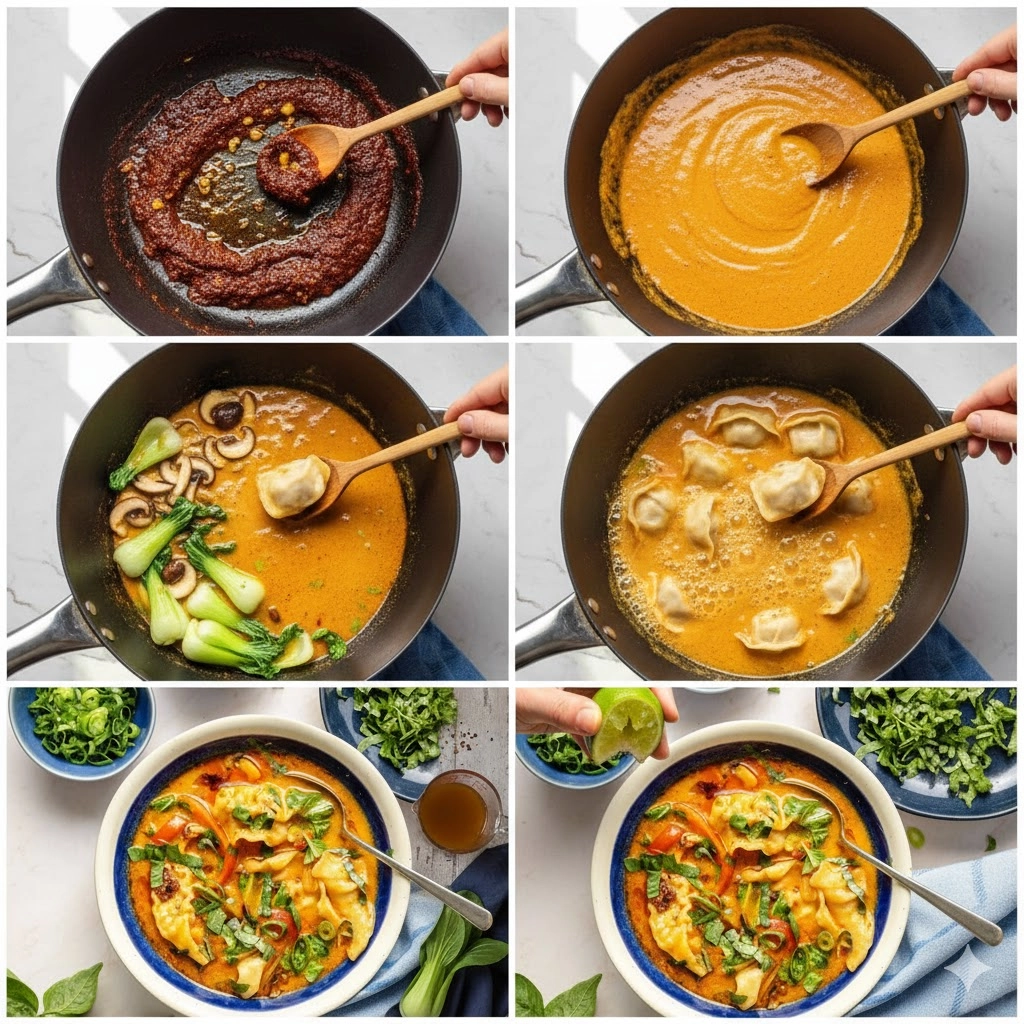
Building Aromatic Layers: Step-by-Step Culinary Guide
A great soup is built on layers, not merely ingredients thrown into a pot. This section details the precise sensory and technical cues you should watch for at each stage to ensure maximum flavor extraction and depth.
The Art of Blooming Aromatics
Begin by setting your pan over medium heat. You want a consistent, gentle warmth, not scorching high heat. Add your chosen oil—a neutral flavor is best here, as it acts purely as a carrier for the spice. Once the oil shimmers slightly, add the minced garlic and ginger. This stage is quick; you are looking for the raw, sharp aroma to mellow and turn nutty, which usually takes less than thirty seconds. The goal is to soften, not brown, the aromatics.
Next, introduce the star: the Thai red curry paste. Press the paste into the warm oil and stir it constantly for about a minute. This is the crucial “blooming” process. As the paste heats, the fat-soluble compounds—the chilies, lemongrass, galangal, and shallots—release their essential oils, intensifying their flavor dramatically. You will notice a profound change in aroma, from a fresh, raw spice scent to a deep, cooked, and highly fragrant complexity. The color will also deepen and become more vibrant. If you skip this step, the final soup will taste flat and underdeveloped.
Achieving a Stable Emulsion
Once the paste is fragrant, pour in only half of the canned coconut milk. The high fat content in the full-fat milk acts as a perfect stabilizer. Whisk or stir vigorously into the bloomed paste. What you are creating is an initial, richly flavored emulsion—a thick, slightly oily foundation that ensures the curry paste does not separate later. This concentrated base is where the soup’s flavor concentration lives. It should look like a thick, creamy sauce before you add the stock.
Following this, pour in the remaining coconut milk and the full four cups of stock. Increase the heat slightly to bring the mixture to a slow simmer. The goal is a gentle bubble, not a rolling boil, which can cause the coconut milk to break down and become grainy or oily. Maintain this low simmer for ten to fifteen minutes. This period allows the water content in the broth to slightly reduce, concentrating the flavors of the curry base and melding them smoothly with the stock. The aroma filling your kitchen should be richly complex, a harmonious blend of coconut, spice, and savory broth.
Incorporating Dumplings and Checking Doneness
When the broth has achieved its desired depth, gently slide the sliced mushrooms and any sturdy greens, like the bok choy stems, into the pot. Let these simmer for about five minutes until they have softened slightly. Then, gently introduce the frozen dumplings. It is vital to maintain a slow simmer; a vigorous boil can cause delicate dumpling skins to tear, releasing their filling and clouding the broth.
If using pre-made frozen dumplings, they typically require between eight and ten minutes of gentle simmering. The visual cue for doneness is the dumpling floating to the surface and its skin appearing translucent and slightly puffy. Once a dumpling is floating, lift one out with a slotted spoon. The skin should feel tender, and if sliced, the internal filling should be uniformly cooked and hot throughout. If the filling is dense or cold in the center, cover the pot and continue simmering for a few more minutes.
The Crucial Finishing Touches
Before serving, take the pot off the heat. The final seasoning requires a delicate balance of sweet, salty, and sour. Add the fish sauce for salinity and umami depth, the brown sugar to balance the heat, and, most importantly, the fresh lime juice. The lime juice is non-negotiable; its bright, fresh acidity cuts through the richness of the coconut milk and curry fat, lifting all the other flavors. Seasoning off-heat prevents the delicate flavor compounds in the fish sauce and lime from boiling off. Taste the broth carefully. Does it need a touch more salt? A pinch more sugar? The Red Curry Dumpling Soup should taste complex and multi-layered, where no single flavor dominates.
Refinements and Chef’s Notes on Execution
These specific, technical tips will elevate your home-cooked bowl to professional standards, focusing on texture, balance, and ingredient quality.
Choosing the Right Coconut Milk: Always use full-fat coconut milk from a can, ideally one that has been unshaken, allowing the rich, solid cream to separate from the water. The higher fat content is crucial for the creamy texture and rich mouthfeel, and it prevents the final broth from tasting thin. Never use refrigerated coconut beverage (often sold in cartons) as a substitute, as it lacks the necessary fat and body.
Managing Curry Paste Heat: Red curry pastes vary wildly in potency between brands. Before committing, consider starting with the lower amount (four tablespoons) and performing a small taste test once the broth is simmering. You can always add more paste, but you cannot easily take it away. To reduce the perceived heat slightly without sacrificing flavor, ensure you are adding the full amount of recommended brown sugar, as sweetness is a key counterpoint to spice.
The Power of Fresh Herbs: The cilantro and scallions are more than just a decoration; they provide a fresh, volatile counter-flavor to the cooked, rich depth of the soup. Do not cook them. Reserve them entirely for the end and add them as a generous garnish just before serving. The contrast in temperature and texture is what makes the final spoonful so dynamic.
Pre-Soaking Dried Ingredients: If you are substituting dried shiitake mushrooms for fresh ones, be certain to soak them in hot water for at least thirty minutes until fully pliable before slicing. The soaking liquid, which is deeply savory, should not be discarded. Strain it through a fine-mesh sieve or cheesecloth to remove any grit, and use this liquid to replace one half-cup of the chicken stock in the recipe, which will significantly intensify the umami flavor of the broth.
Dumpling Integrity Check: If you are using homemade dumplings or a particularly delicate brand, you can steam them separately and gently place them into the finished, hot broth just before serving. This completely eliminates the risk of them splitting or tearing while simmering in the soup.
Expanding the Repertoire: Thoughtful Substitutions
The beauty of a curry-based soup is its inherent flexibility. You can adapt the protein, vegetables, and even the base liquid while retaining the core aromatic profile.
Alternative Proteins
While the recipe calls for pre-made dumplings, you can easily substitute them with other protein sources. For a light option, consider poaching one half-pound of shelled, deveined shrimp directly in the broth for about three minutes until pink and opaque. Alternatively, firm tofu, cut into one-inch cubes and pan-fried until golden before adding to the broth, makes an excellent, hearty vegetarian counterpart. If using chicken, cut boneless, skinless chicken breast or thighs into bite-sized pieces and simmer them gently in the broth until fully cooked, which typically takes eight to ten minutes for breast meat.
Vegetable Variations
The inclusion of bok choy and mushrooms provides texture, but you are not limited to these. Try adding thinly sliced red bell peppers for sweetness and crunch, or cubed winter squash like butternut or kabocha for a creamier texture and earthy note. A cup of chopped green beans or snow peas, added toward the end of the cooking process, also introduces a pleasant snap. Remember to adjust cooking times based on the hardness of the vegetable; root vegetables require longer simmering than delicate greens.
Broth Base Swaps
If you desire a lighter broth profile, you can swap out one cup of the full-fat coconut milk for one additional cup of chicken or vegetable stock. This will make the soup less creamy and richer in savory depth, allowing the spice notes of the curry paste to shine more sharply. Conversely, for an ultra-creamy soup that is closer to a stew, use two full cans of coconut milk and omit the stock entirely, allowing the flavors to become thick and profoundly rich.
Perfect Pairing and Presentation Ideas
The rich, deep flavor of this Red Curry Dumpling Soup calls for accompaniments that offer contrasting textures and cooling elements.
A Bed of Rice
The most traditional and effective serving method is over a small portion of plain, steamed jasmine rice. Ladling the soup over the rice allows the grains to soak up the luxurious curry broth, ensuring none of the rich liquid is left behind. The rice provides a necessary neutral ground and starchiness that makes the meal more filling and balances the assertive spice. Consider shaping the rice into a small dome in the center of the bowl before pouring the soup around it for an elegant presentation.
Fresh Cucumber and Basil Salad
A simple, crisp salad provides a refreshing counterpoint. Slice an English cucumber very thinly and toss it with a dash of rice vinegar, a pinch of sugar, and a handful of torn fresh Thai basil leaves (or sweet basil if Thai is unavailable). The cool crunch of the cucumber and the peppery aroma of the basil offer a palate cleanser that cuts through the soup’s richness. Serve this small salad on the side, not mixed into the soup itself.
Chili Oil and Crispy Shallots
For those who crave texture and an extra layer of complexity, prepare a small topping bar. Offer store-bought chili crisp or a drizzle of homemade toasted sesame oil. Crucially, try making a small batch of crispy fried shallots. Thinly slice two shallots and fry them gently in a tablespoon of oil until golden and crisp. Drain them on a paper towel and sprinkle them over the finished soup. Their brittle crunch and deep, savory-sweet flavor provide an extraordinary final note.

Common Concerns and Clarifications
Can I make the broth ahead of time?
Yes, the curry broth can be made entirely up to two days in advance. Follow all instructions up through the final seasoning with fish sauce and sugar, but do not add the lime juice yet. Store the broth in an airtight container in the refrigerator. When ready to serve, reheat the broth on the stovetop, bring it back to a gentle simmer, add the dumplings, and only introduce the fresh lime juice after the soup is removed from the heat.
What is the best way to store leftovers?
Store any leftover soup in an airtight container in the refrigerator for up to three days. It is important to note that the dumplings will absorb a significant amount of the liquid over time, becoming very soft and swelling considerably. If you anticipate having leftovers, consider cooking only the exact number of dumplings you intend to eat, leaving the rest of the broth plain.
Can I freeze Red Curry Dumpling Soup?
Freezing is generally not recommended for the fully assembled soup. The coconut milk emulsion can break when thawed, resulting in a grainy or separated texture. The dumplings, once cooked and frozen, also become mushy upon reheating. If you must freeze, freeze only the prepared, concentrated curry base (before adding any stock or coconut milk). Thaw this base and proceed with the rest of the recipe when ready to eat.
Is fish sauce essential, or can I omit it?
Fish sauce is the traditional source of deep umami flavor in this cuisine. While you can omit it for an allergy or dietary restriction, the soup’s flavor profile will be noticeably different. The best vegetarian substitution is light soy sauce or, ideally, a tablespoon of white miso paste dissolved in a quarter cup of hot water, which provides a similar savory depth without the fish element.
Nutritional Snapshot
This information provides a general estimate for one serving (one quarter of the recipe).
| Nutrient | Amount per Serving |
| Calories | 420 kcal |
| Protein | 22 g |
| Carbs | 38 g |
| Fat | 21 g |
| Fiber | 4 g |
| Sugar | 5 g |
| Sodium | 850 mg |
Nutritional Disclaimer
Nutrition information is an estimate and may vary based on preparation and ingredients used.
PrintMastering the Comforting Depth of Red Curry Dumpling Soup

A comforting, creamy, and spicy Red Curry Dumpling Soup that balances rich coconut milk with vibrant Thai aromatics and tender dumplings.
- Prep Time: 15 mins
- Cook Time: 30 mins
- Total Time: 45 mins
- Yield: 4 servings 1x
- Category: Soup
- Method: Stovetop
- Cuisine: Thai
Ingredients
1 tablespoon neutral cooking oil
2 cloves fresh garlic, minced fine
1 tablespoon fresh ginger, minced fine
4 to 6 tablespoons Thai red curry paste
1 can (13.5 ounces) full-fat coconut milk
4 cups low-sodium chicken or vegetable stock
12 to 15 pre-made frozen dumplings
1 cup thinly sliced shiitake or cremini mushrooms
1 cup finely chopped bok choy or spinach
2 tablespoons fish sauce (or light soy sauce)
1 tablespoon brown sugar or maple syrup
Juice of 1 small lime
1 quarter cup fresh cilantro, roughly chopped
2 scallions (green onions), thinly sliced
Instructions
1. Heat the oil in a heavy-bottomed pot over medium heat. Add the minced garlic and ginger, sautéing briefly. Introduce the red curry paste and cook for sixty to ninety seconds, stirring constantly, until highly fragrant.
2. Pour in half of the full-fat coconut milk, stirring vigorously to fully dissolve the curry paste and create a thick, emulsified base.
3. Add the chicken or vegetable stock and the remaining coconut milk. Bring the mixture to a low, steady simmer for ten to fifteen minutes to fully develop the flavors.
4. Stir in the sliced mushrooms and bok choy or spinach, allowing them to soften for about five minutes.
5. Gently place the frozen dumplings into the simmering broth. Cover the pot and allow them to cook through completely, typically eight to ten minutes, until they float and are tender.
6. Remove the soup from the heat. Stir in the fish sauce, brown sugar, and fresh lime juice. Ladle into bowls and garnish with fresh cilantro and sliced scallions.
Notes
The best results come from using full-fat canned coconut milk.
Maintain a gentle simmer to prevent the dumplings from tearing or the coconut milk from breaking.
Taste the broth at the end and adjust the balance with small amounts of lime juice or sugar for a perfect sweet, salty, and sour profile.
Nutrition
- Serving Size: 1 bowl
- Calories: 420
- Sugar: 5g
- Sodium: 850mg
- Fat: 21g
- Saturated Fat: 15g
- Unsaturated Fat: 4g
- Trans Fat: 0g
- Carbohydrates: 38g
- Fiber: 4g
- Protein: 22g
- Cholesterol: 0mg