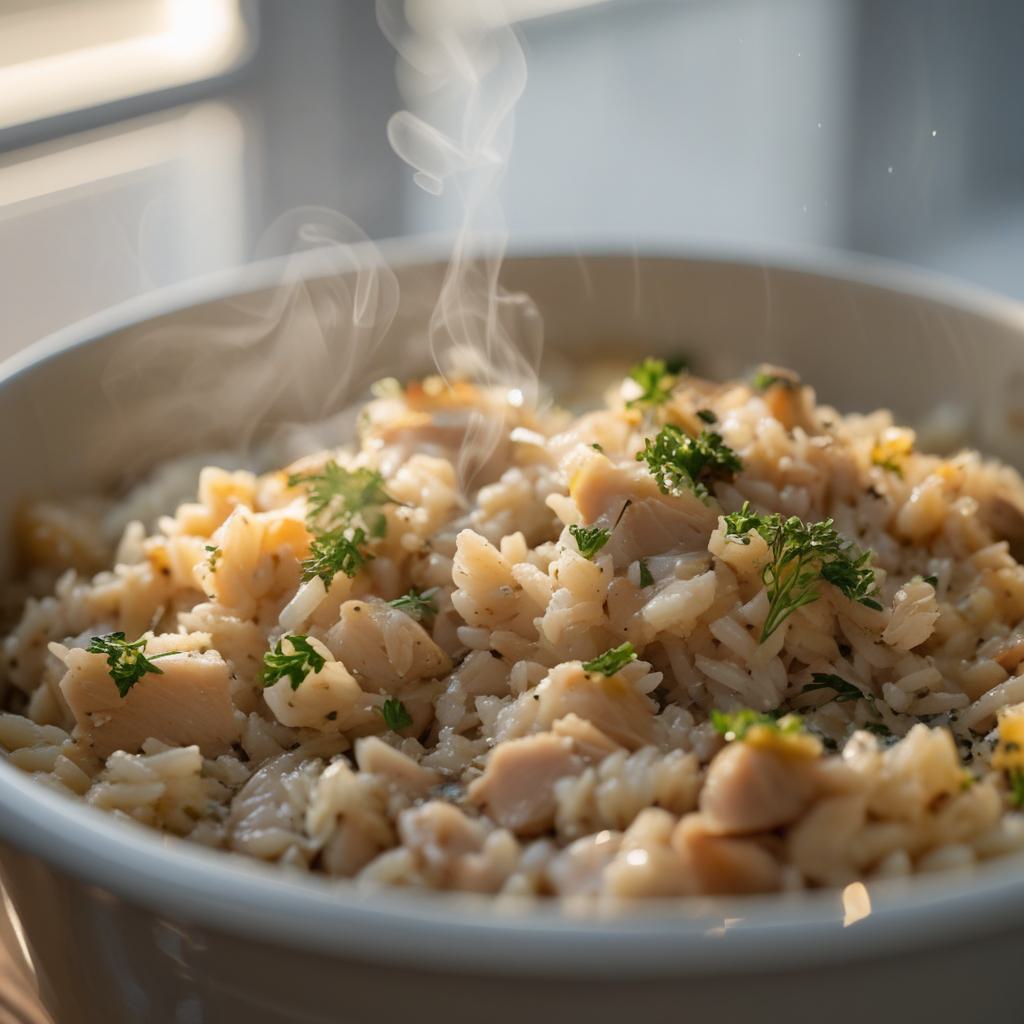
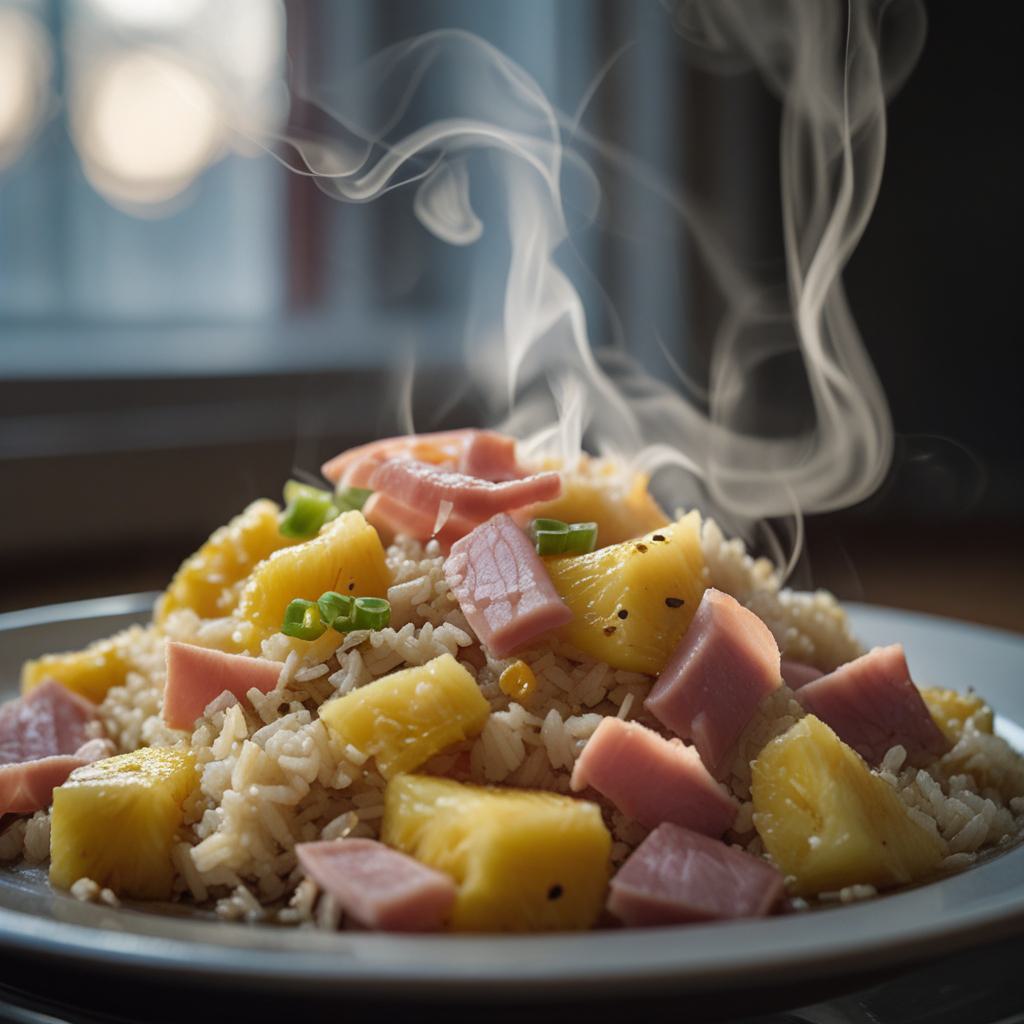
Imagine golden woks dancing over blue flames, the sizzle of jasmine rice hitting blistering-hot oil releasing nutty aromas into the air. This isn’t just fried rice – it’s a tropical symphony where sweet pineapple caramelizes alongside smoky ham, creating burnt honey edges that crunch like nature’s candy. The dish whispers of Thai street markets at dusk, where vendors toss ingredients with balletic precision, yet carries the comforting familiarity of childhood kitchens. What elevates this humble stir-fry to gourmet heights is the alchemy of temperatures: explosive heat creates wok hei (the “breath of the wok”) while cold pineapple chunks provide refreshing contrast. Each bite delivers a play of textures – sticky rice grains, juicy fruit explosions, and salty ham confetti – all bound by a glossy cloak of fish sauce caramel. It’s culinary fireworks in a bowl.
Table of Contents
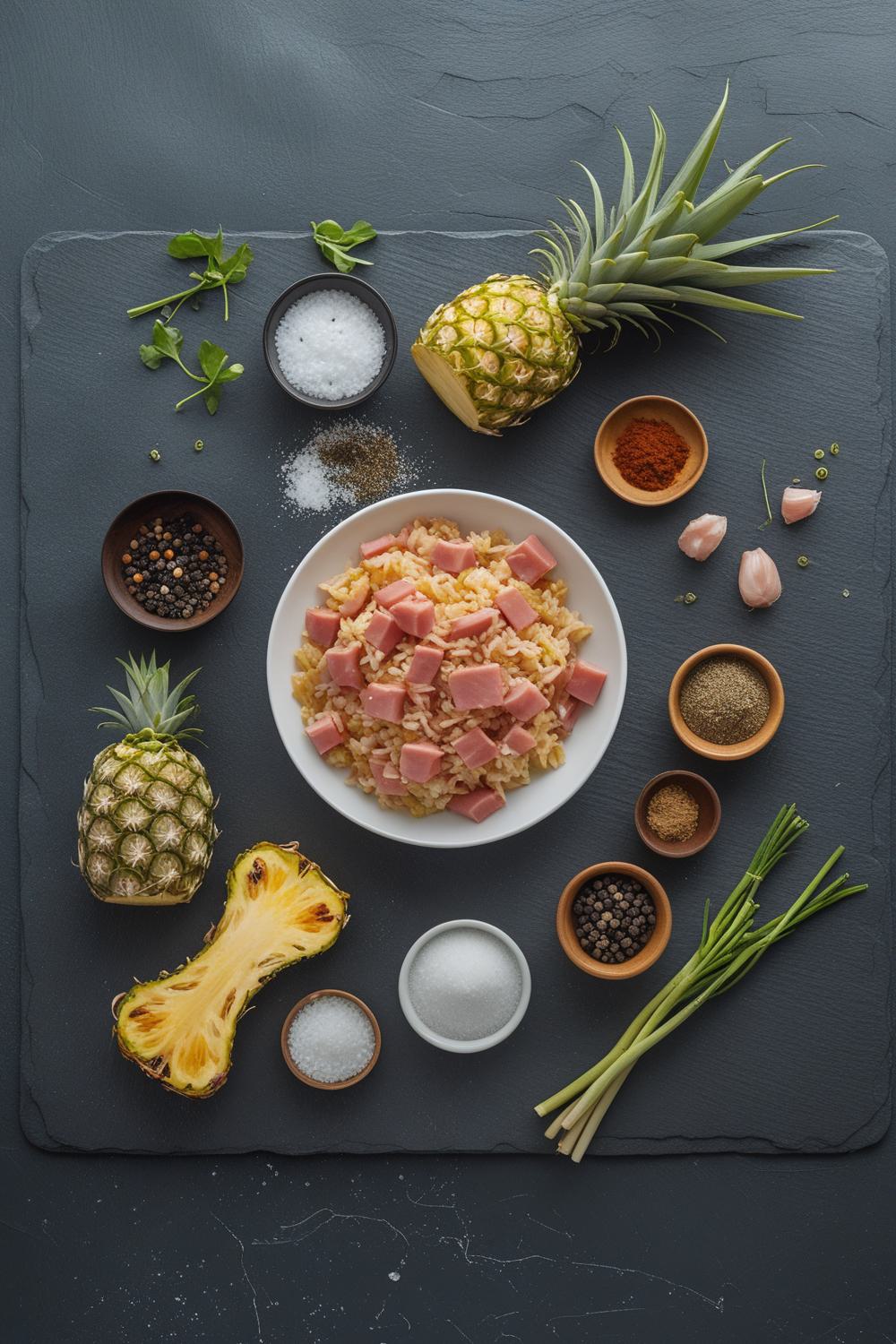
Ingredient Deep Dive
| Ingredient | Quantity | Purpose |
|---|---|---|
| Day-old jasmine rice | 4 cups | Starches crystallize overnight for perfect separation |
| Pineapple (fresh) | 2 cups diced | Enzymes tenderize proteins while sugars caramelize |
| Blackforest ham | 1.5 cups | Smokiness counters sweetness with umami depth |
| Shallots | 3 minced | Milder than onion; melts into background flavor |
| Garlic oil | 2 tbsp | Higher smoke point than butter; infused aroma |
| Fish sauce | 1.5 tbsp | Secret umami backbone (not fishy when cooked) |
| Turbinado sugar | 1 tsp | Crystal structure creates micro-caramelization |
| Kaffir lime leaves | 3 torn | Floral citrus oils cut through richness |
| Thai basil | 1/2 cup | Anise notes bridge sweet & savory elements |
| Prawn crackers | 10-12 | Edible spoon for textural contrast |
The magic begins with day-old rice – refrigeration causes starch retrogradation, where amylose molecules realign into resistant crystals. This molecular shift prevents mushiness while allowing grains to absorb flavors without disintegrating. Fresh pineapple brings bromelain enzymes that naturally tenderize the ham, while its fructose content undergoes Maillard reactions at high heat, creating complex caramel notes impossible with canned fruit.
Smoked ham provides glutamates that synergize with umami-rich fish sauce (containing inosinate), creating a flavor multiplier effect discovered by Japanese scientists called “umami bomb.” The torn kaffir lime leaves release aromatic limonene and citronellol oils only when bruised, weaving bright top notes through the rich base. Every component serves dual purposes – textural, chemical, and aromatic.
Substitutions & Swaps
For vegan adaptations, replace ham with marinated jackfruit (simmered in liquid smoke, maple syrup, and tamari for 20 minutes) while using mushroom-based fish sauce substitutes like Golden Mountain seasoning. Gluten-sensitive cooks should opt for coconut aminos instead of traditional soy-based seasonings.
Don’t have jasmine rice? Basmati or even sushi rice work, but adjust liquid ratios – basmati requires 1:1.5 rice-to-water while sushi needs 1:1.1. Emergency pantry version: use frozen peas/carrots blend and spam instead of fresh veg and ham. For pineapple emergencies, grill pear slices with lime zest – it mimics the sweet-tart profile surprisingly well.
Equipment Guide
Your weapon of choice is a 14-inch carbon steel wok – its concave shape creates varying heat zones. The “dragon’s breath” technique (tossing ingredients up the curved sides) gives alternating sear-and-rest cycles for deeper flavor development. No wok? Cast iron skillets work but require preheating for 10 minutes to achieve thermal mass. Avoid non-stick surfaces – they can’t reach the necessary 500°F+ temperatures for proper wok hei.
Other essentials: a spider skimmer for blanching aromatics, mortar and pestle for bruising lime leaves (never knife-chopped), and a heavy wooden spatula that won’t scratch seasoning layers. Pro tip: keep a spritz bottle of water nearby to control flare-ups when adding sauces.
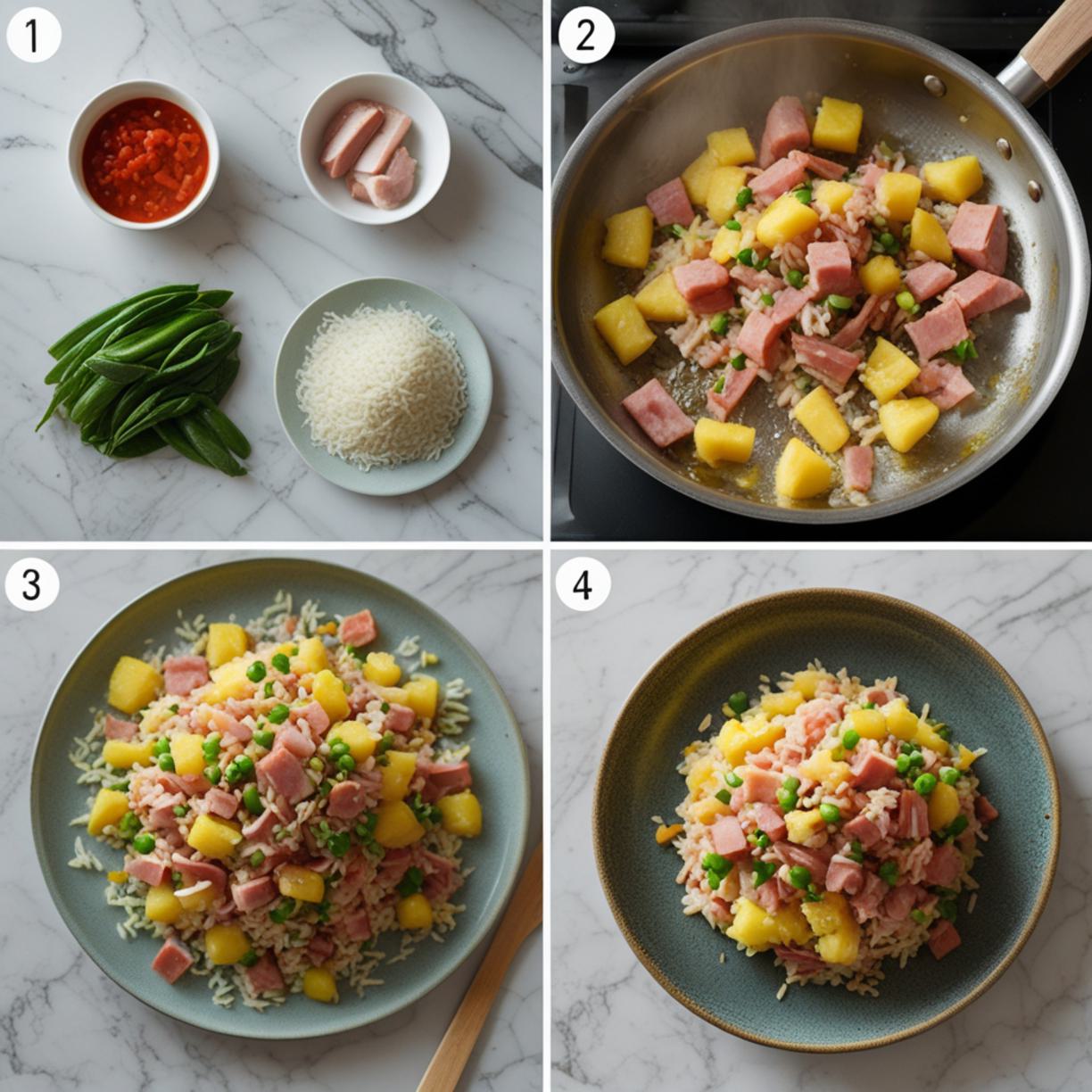
Step-by-Step Walkthrough
- Heat wok until smoking, add 1 tbsp garlic oil
- Sear ham in single layer for 45 seconds until edges crisp
- Remove ham, leaving rendered fat in wok
- Add minced shallots, torn kaffir leaves; sauté 20 seconds
- Push aromatics to sides, crack two eggs into center well
- Scramble eggs halfway, then toss with aromatics
- Add cold rice in batches, pressing grains into hot surface
- Sprinkle turbinado sugar; wait for audible crackle (30 sec)
- Toss ham and pineapple, drizzle fish sauce around edges
- Kill heat, fold in Thai basil until wilted
The Grain Dance: When adding cold rice, spread it across the wok’s surface like caulking a floor. Listen for the “wok cough” – that faint hiss when rice sucks moisture from the pan. This indicates proper dehydration before sauce absorption. Break clumps with the spatula’s edge, never pressing.
The Tossing Rhythm: Use your wrist, not elbow. The motion should resemble flipping pancakes with a circular twist. Ingredients should spend 80% time near the pan’s bottom for caramelization, 20% airborne for cooling. Sync with your breath – exhale as you flick upward.
The Final Umami Bomb: Pour fish sauce along the wok’s equator, not directly onto food. As it hits the scorching metal, liquid instantly vaporizes into a salty mist that coats every grain without making rice soggy. This professional restaurant technique is called “edge saucing.”
Expert Tips & Troubleshooting
Crisp Pineapple Secret: Dust fruit with tapioca starch before adding. The starch absorbs surface moisture, creating glass-like caramelization. For ham that stays juicy inside while crisping outside, slice against the grain into 1/4″ thick matchsticks – this maximizes surface area without drying.
Soggy Rice Salvage: If rice sticks together, spread it on a sheet pan and bake at 300°F for 5 minutes to dehydrate. Return to wok with 1 tsp toasted sesame oil and re-toss.
Egg Overcook Prevention: Create a well in the center where temperature is slightly lower. Pull eggs towards yourself with chopsticks – residual heat will finish cooking them gently as you incorporate other ingredients. Gray edges on eggs mean your wok was underheated.
Flavor Variations
For spicy “Thai Dragon” version, add minced bird’s eye chilies during shallot sauté and finish with roasted chili paste. Kids love “Treasure Island” style: shape rice into pineapple halves, use hot dog cubes instead of ham, and add rainbow bell peppers. Morning-after brunch adaptation: top with fried egg and sriracha hollandaise.
Storage & Reheating
Store in portioned containers with paper towel lining the lid to absorb condensation. Reheating requires violence: Crank burner to max, use minimal oil, and toss continuously for 90 seconds. Microwave resurrection murders texture – the rice turns to glue.
FAQ Section
Q: Can I use fresh cooked rice?
A: Only if you spread it thin on a tray to cool completely. Warm rice releases excess starch, creating mush.
Q: Why no soy sauce?
A: Fish sauce provides deeper umami without overpowering pineapple. If substituting, use dark soy + mushroom powder.
Q: Best pineapple cutting method?
A: Slice crown off, stand pineapple upright. Shave skin downward in strips, then quarter lengthwise before cubing flesh.
Q: Safe for pregnancy?
A: Ensure ham reaches 165°F and use pasteurized eggs. Skip fish sauce if concerned about sodium.
The Recipe Card
A vibrant dance of sweet pineapple and smoky ham over jasmine rice kissed by wok hei magic. Ready in 18 minutes, this Thai-inspired stir-fry balances umami depth with tropical brightness for a restaurant-quality meal from your home kitchen.
Nutrition Information
| Nutrient | Per Serving |
|---|---|
| Calories | 487 |
| Protein | 21g |
| Carbohydrates | 67g |
| Dietary Fiber | 3g |
| Sugars | 14g |
| Fat | 14g |
| Vitamin C | 36% DV |
Disclaimer: Nutritional estimates based on standard ingredients. Values may vary with substitutions.