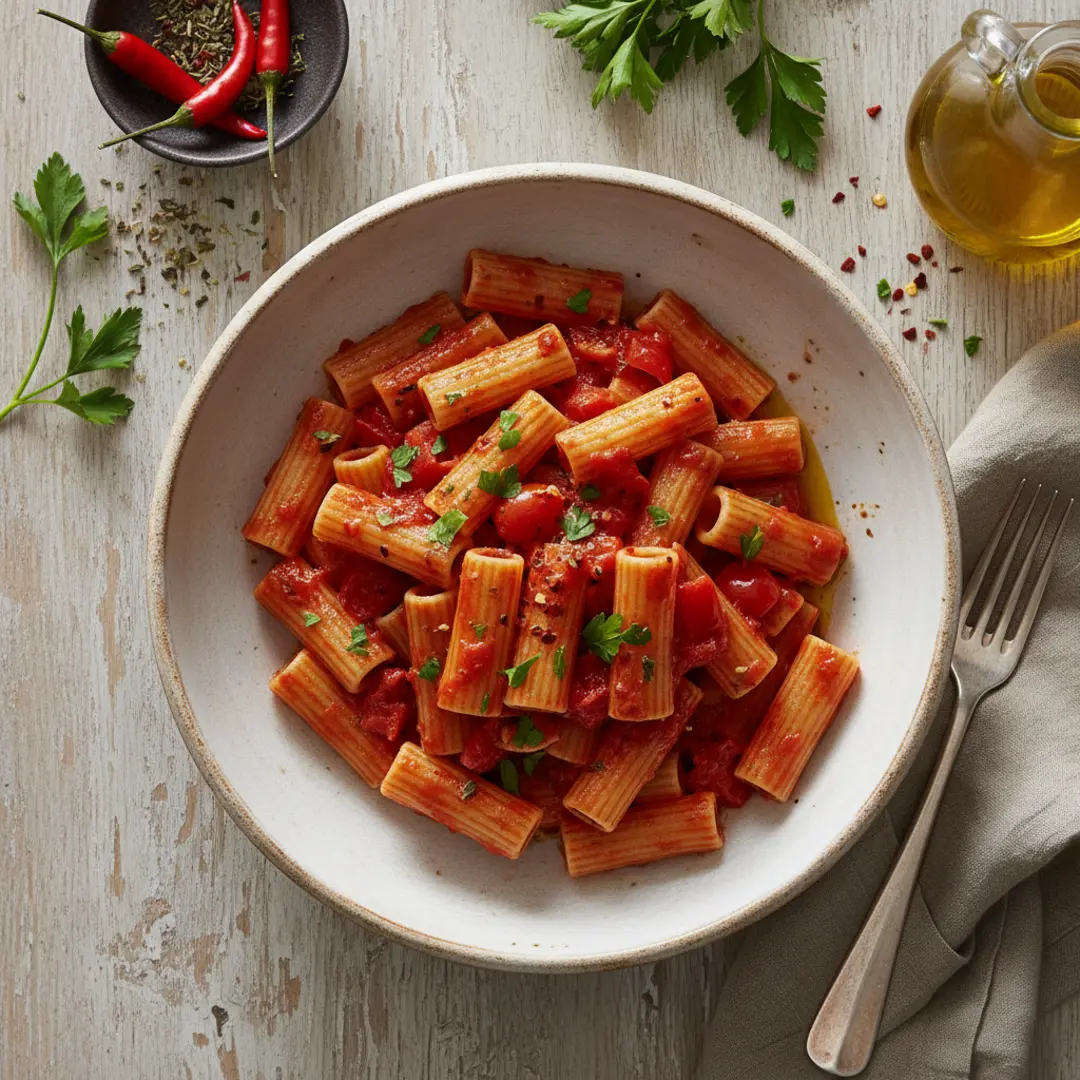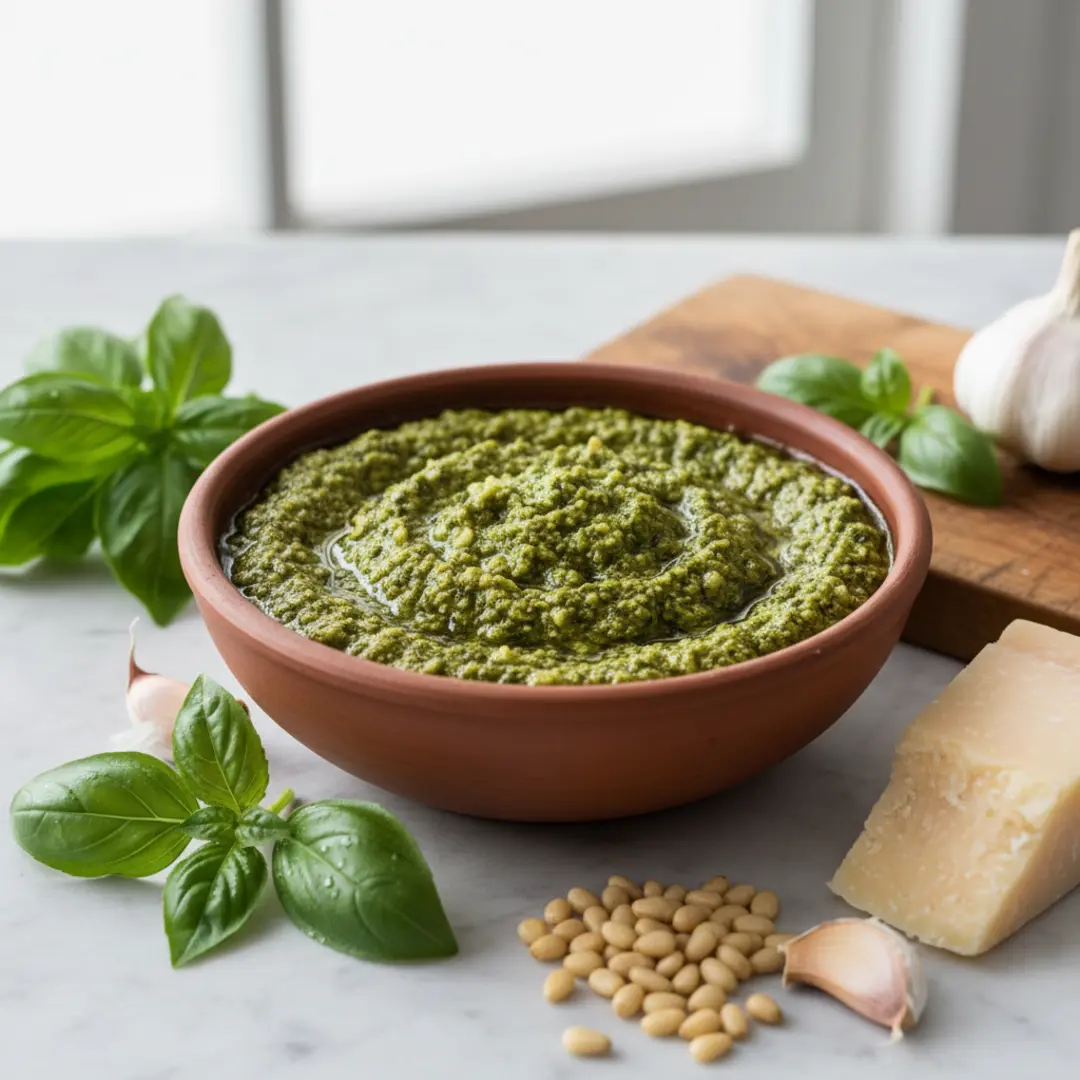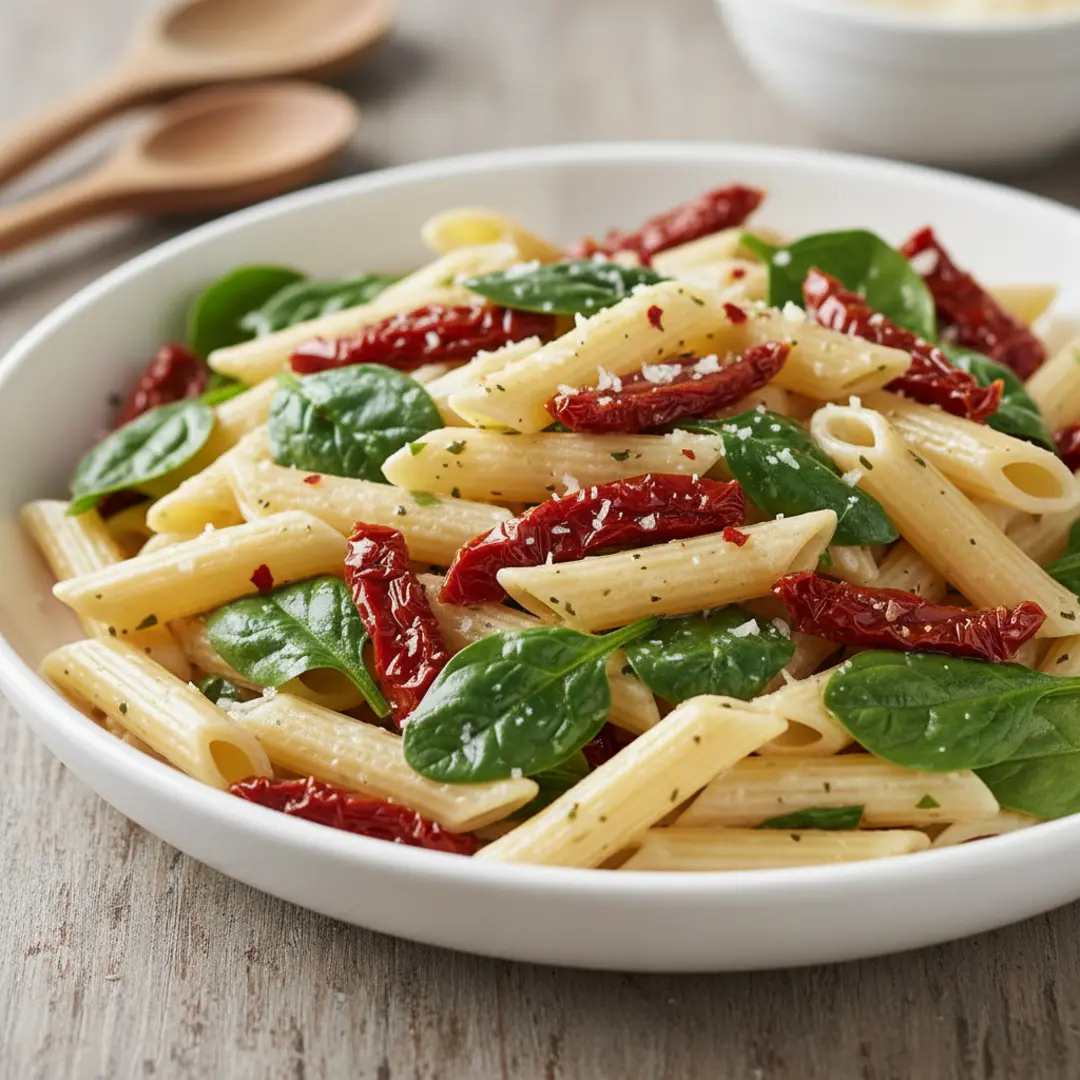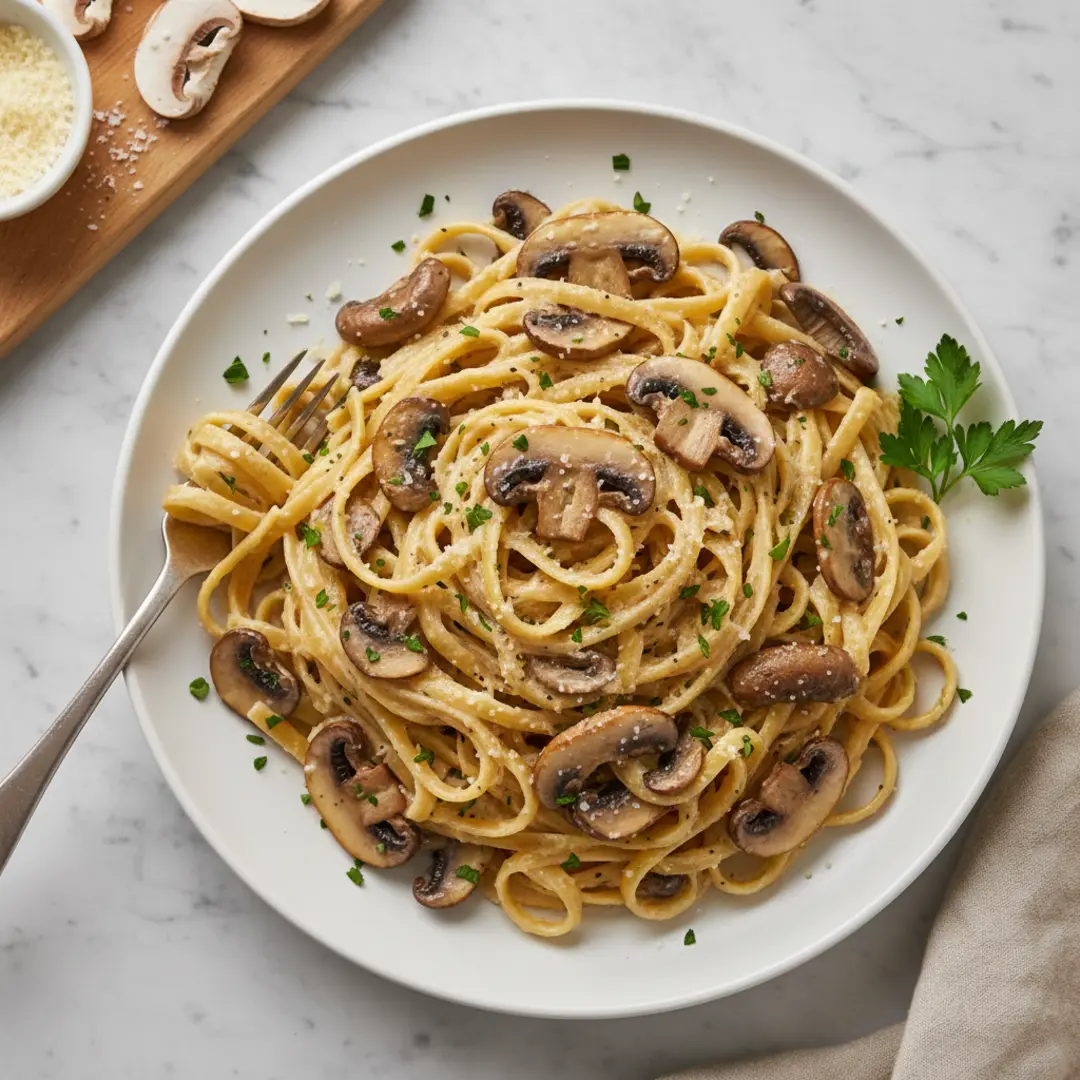
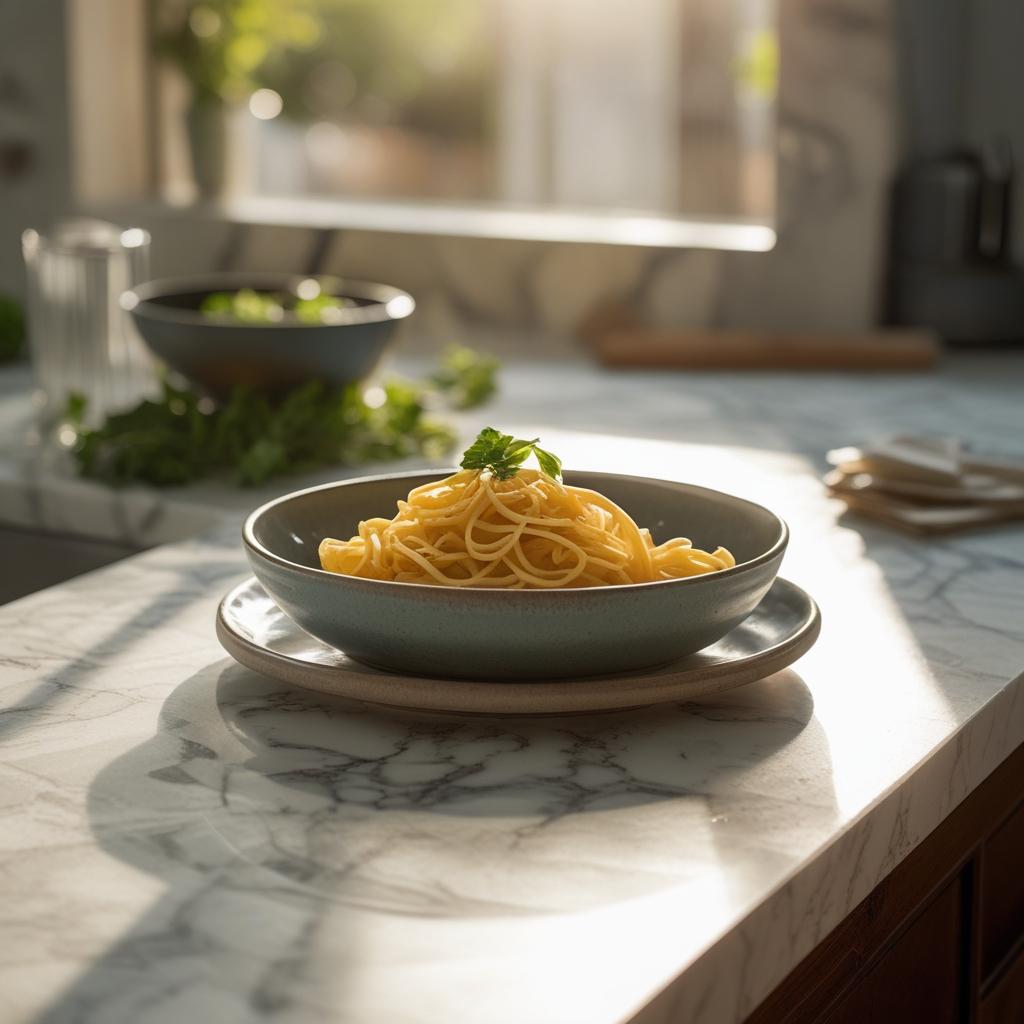
Imagine the embrace of golden starch swirling in boiling water, tendrils of steam carrying whispers of durum wheat rising like culinary incense. Your fingertips graze ridged fusilli spirals—cool, rigid soldiers awaiting transformation. Soon these bronze-hued canvases will drink deeply of sauces, their corkscrew curves trapping velvety crimson tomato reductions and grassy basil chiffonades. Hear the sizzle as minced garlic hits olive oil, its nutty aroma mingling with the electric tang of chili flakes awakening in the heat. This is meal prep pasta reimagined: not mere sustenance shoveled into containers, but a symphony of textures—al dente resistance yielding to creamy burrata, crisp roasted vegetables offering crunch against silken sauces. Each bite becomes a time capsule of flavor, intensifying as it rests, waiting to unleash its layered poetry beneath office microwaves or twilight kitchen lights.
Table of Contents
Noble Components of Gastronomic Architecture
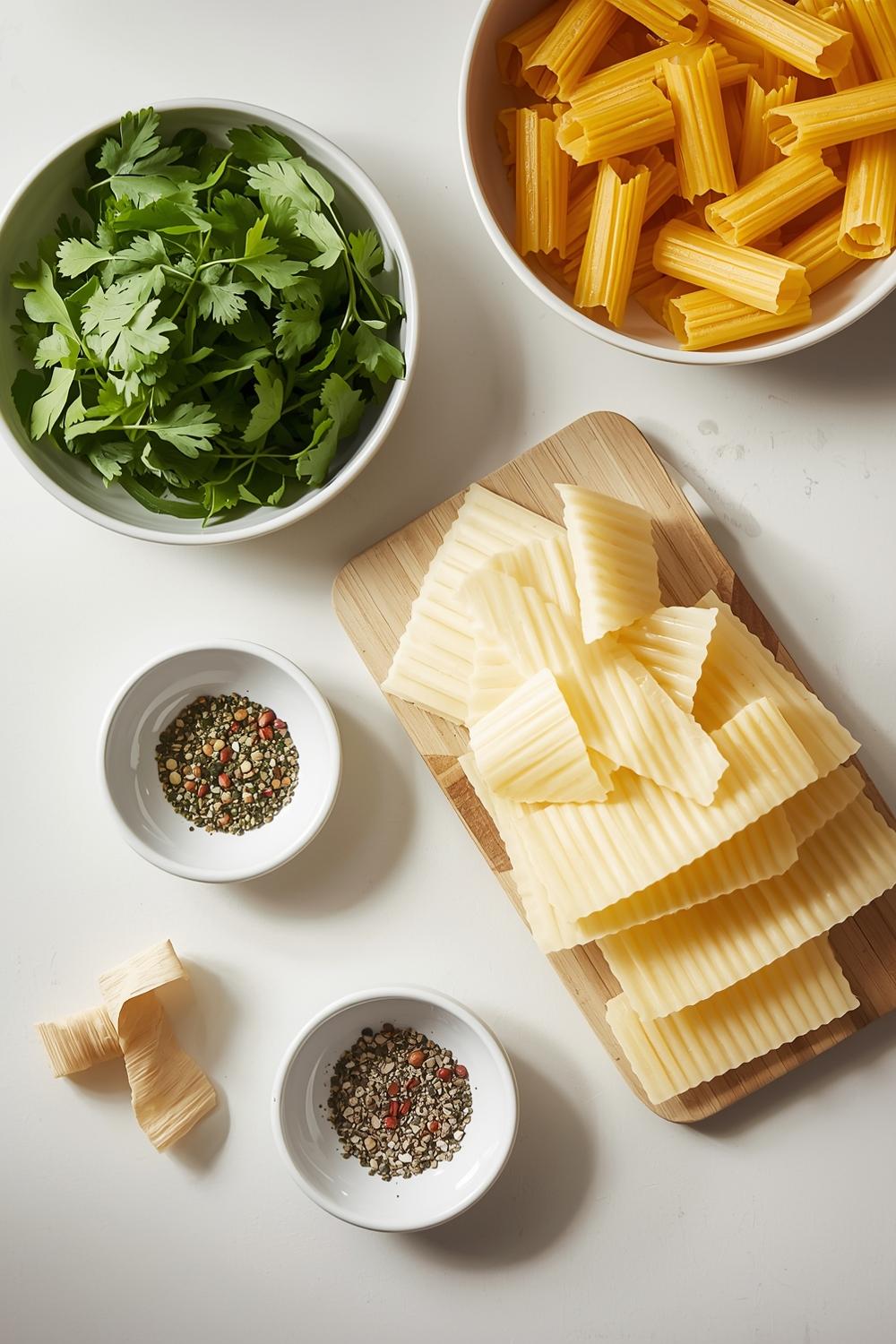
- 450g bronze-die extruded fusilli – Rigate grooves essential for sauce adherence
- 120ml first-press Sicilian olive oil – Fruity with peppery finish (divided)
- 8 garlic cloves – Microplaned for molecular dispersion
- 1.2kg San Marzano DOP tomatoes – Hand-crushed to preserve irregular texture
- 15g Himalayan pink salt flakes – Mineral complexity for brine equilibrium
- 200g roasted heirloom cherry tomatoes – Blistered at 225°C until jammy
- 300g caramelized cipollini onions – Slow-cooked in balsamic glaze
- 150g toasted pine nuts – Activated at 160°C for optimal Maillard response
- 75g aged Parmigiano-Reggiano – 36-month maturity for tyrosine crystals
- 20g fresh opal basil – Torn to prevent enzymatic bruising
- 4 Calabrian chili peppers – Thinly sliced for controlled heat dispersion
The Ballet of Thermal Precision
- Initiate water mineralization: Dissolve 30g salt in 4 liters spring water. Bring to violent boil (100°C precisely).
- Introduce pasta with theatrical flair—fold gradually into vortex. Stir counterclockwise with wooden paddle every 90 seconds.
- At 8 minute mark, deploy al dente testing: fish out single fusillo, blow to cool, bite. Ideal resistance: 2mm crisp core. Drain, reserving 240ml liquid gold aquafaba.
- Construct flavor foundation: Heat 60ml olive oil in 12-inch carbon steel skillet until shimmering (185°C). Add microplaned garlic—sauté 27 seconds until golden whisper emerges.
- Deglaze with tomato carnage: Hand-crushed San Marzanos enter the arena. Simmer 18 minutes until reduced by 40 percent. Integrate chili slices.
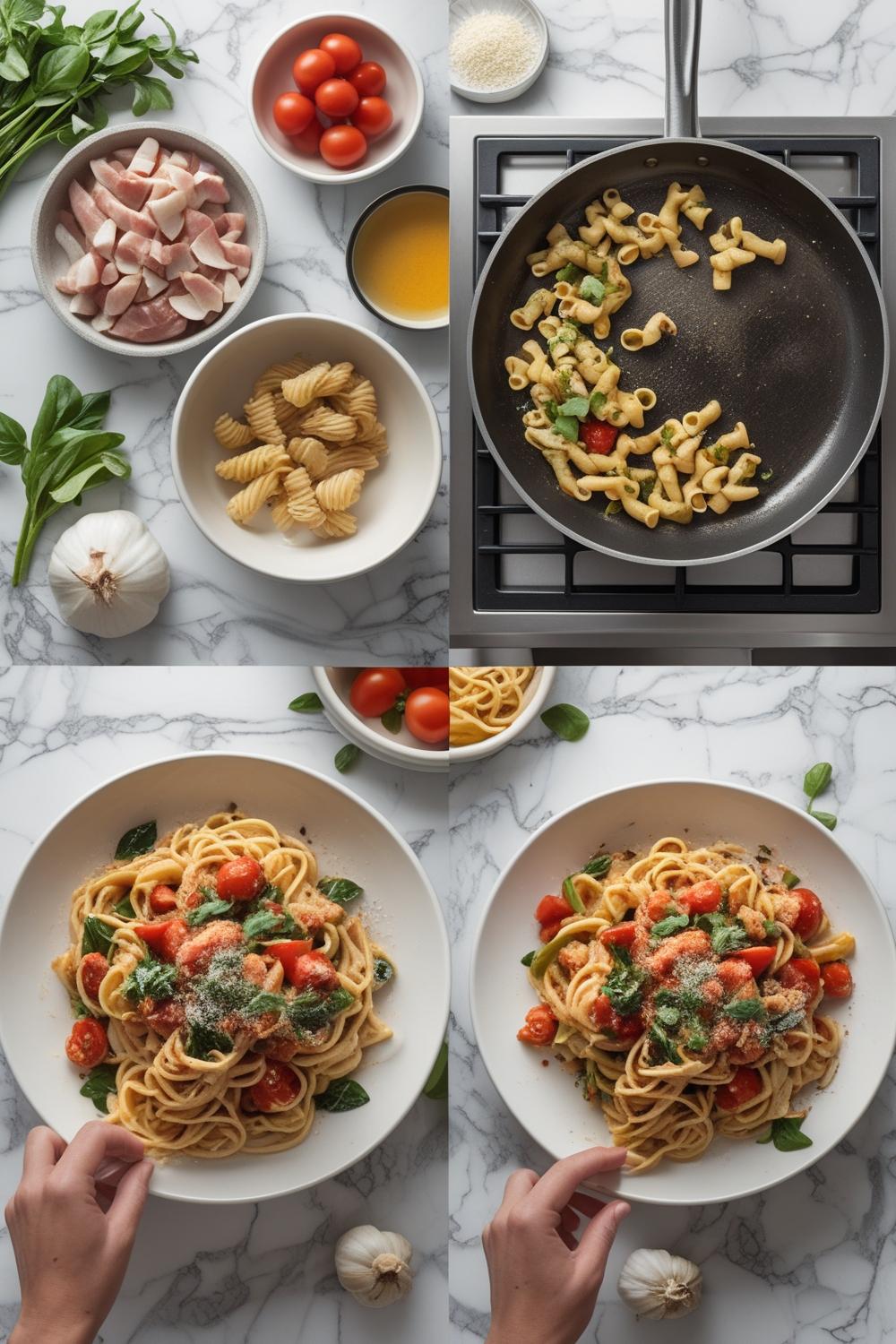
- Incorporate pasta with 120ml reserved starch water. Toss vigorously—sauce should emulsify into velvety cloak adhering to every groove.
- Fold in roasted vegetables and half the pine nuts. Execute vertical box-toss technique for even distribution without crushing.
The Maillard Reaction Mastery
Observe the cipollini onions undergoing their metamorphosis—30 minutes of patient sweating in 80ml olive oil transforms their cellular structure. As natural sugars caramelize at 154°C, pyrazines and thiophenes emerge, creating roasted aromatics that persist through refrigeration. This reaction serves as the flavor anchor, preventing sauce flattening during storage.
Sauce Alchemy: Emulsion Engineering
The starch-laden pasta water contains amylose and amylopectin chains that bind fat molecules—here, the remaining 60ml olive oil becomes suspended in the tomato matrix through vigorous agitation. This hydrocolloidal embrace ensures each refrigerated portion reheats homogenously without oil separation. Test viscosity with the wall-coating test: properly emulsified sauce should leave a 1mm film that doesn’t drip for 12 seconds.
Knife Skills for Precision
Basil requires oblique cuts perpendicular to the midrib at 3mm intervals—this severs fewer cell walls, delaying enzymatic browning. Store herb ribbons atop portions in airtight glass containers, allowing residual heat to gently wilt them upon reheating rather than cooking.
Garnishing with Intent
Reserve 50g pine nuts and entire Parmesan block. Grate cheese tableside over reheated portions to preserve its hygroscopic properties—pre-grated variants lose 60 percent aroma compounds within 48 hours. Toasted nuts added post-reheat maintain their crunch against steamy sauce.
Storage Protocols
- Portion into 1.5-cup borosilicate glass cubes while pasta registers 60°C—this pasteurizes containers during cooling
- Layer basil between parchment paper above pasta—prevents condensation sogginess
- Refrigerate at 3°C maximum for 96-hour optimal flavor maturation
Reheating Renaissance
- Remove lid and cheese compartment. Microwave at 700W for 90 seconds.
- Rest 60 seconds—allows electromagnetic waves to dissipate.
- Stir in 5ml reserved olive oil to revive viscosity.
- Finish with room-temperature garnishes.
Frequently Pondered Queries
Q: Can I substitute fusilli?
A: Only tube-shaped pastas with surface roughness ≥Ra 12.5μm (like rigatoni) provide adequate sauce adhesion. Avoid smooth penne.
Q: How to prevent sauce absorption during storage?
A: The emulsified fat barrier created during tossing slows starch retrogradation. Never refrigerate before sauce fully coats pasta—naked strands absorb moisture irreversibly.
Nutrition Information
| Component | Per Serving | Daily Value* |
|---|---|---|
| Calories | 620 | 31 percent |
| Lipids | 32g | 41 percent |
| Sodium | 890mg | 39 percent |
| Carbohydrates | 68g | 25 percent |
| Fiber | 6g | 21 percent |
| Protein | 18g | 36 percent |
*Percent Daily Values based on 2000 calorie diet. Actual values may vary based on seasonal ingredient variations. Consult your nutritionist for specific dietary needs.