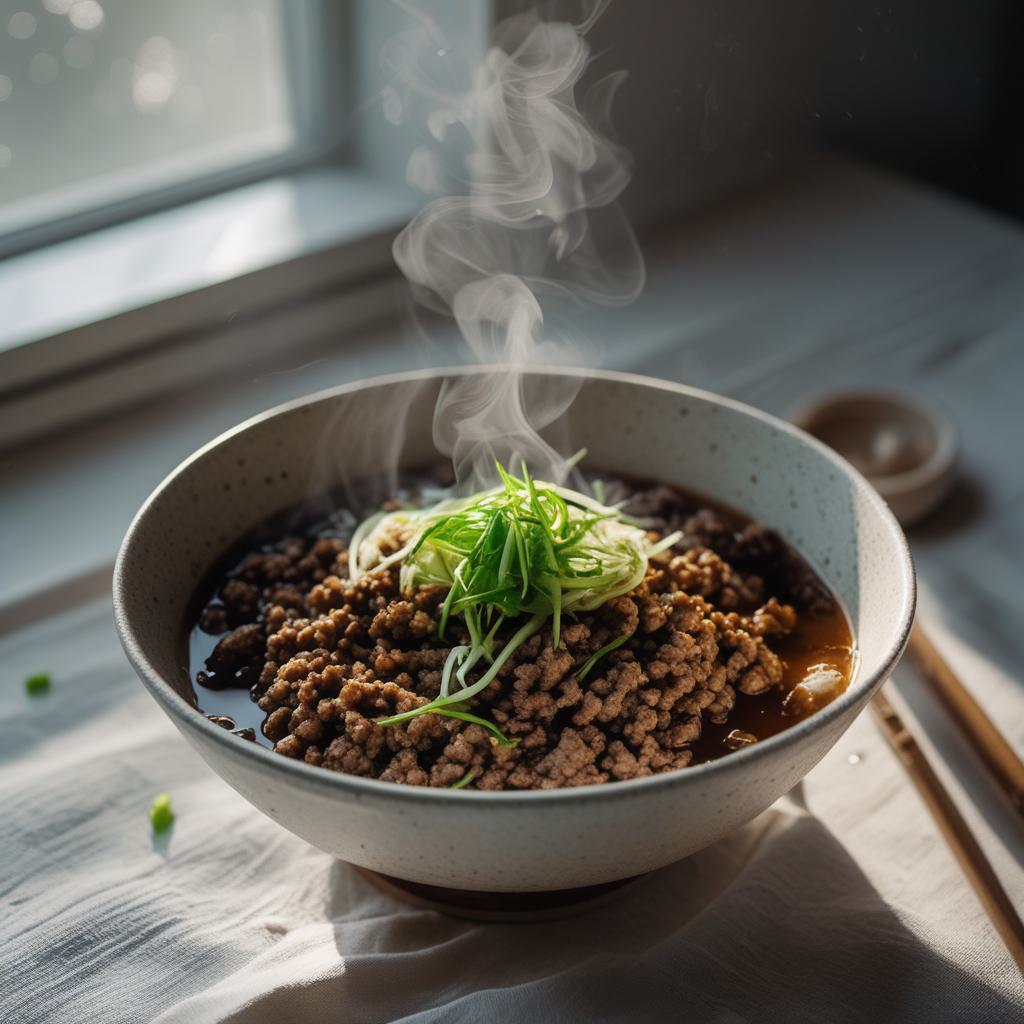
The moment ground beef hits a hot pan with toasted sesame oil, an alchemy begins. Rich umami aromas bloom as caramelizing meats mingle with ginger’s citrusy punch and garlic’s earthy depth. This Korean-inspired bowl captures lightning in a culinary bottle—complex layering achieved through pantry staples in under 20 minutes. What appears humble transforms profoundly: soy sauce’s saline intensity tempered by honey’s floral sweetness, rice vinegar brightening gochujang’s fermented chili warmth. Served over steamed jasmine rice, crowned with sesame seeds and crisp scallions, each bite delivers textural harmony. The dish whispers secrets of Korean cuisine through approachable techniques—proof that fast food need not sacrifice sophistication.
Table of Contents
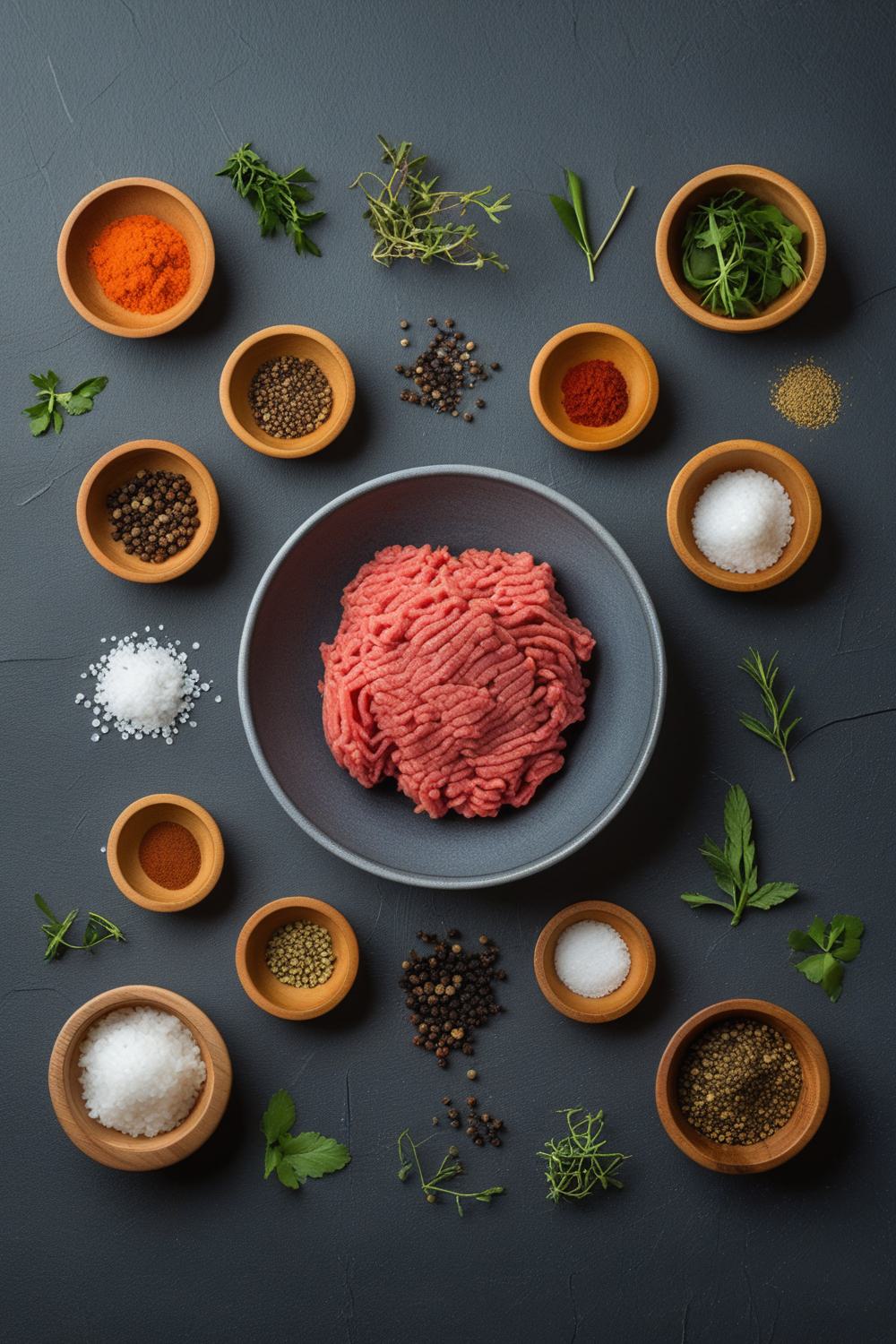
Ingredient Deep Dive
| Ingredient | Quantity | Purpose |
|---|---|---|
| Ground beef (85/15) | 500g | Fat content ensures juiciness & caramelization |
| Soy sauce | 100ml | Salt foundation with glutamates for umami |
| Toasted sesame oil | 15ml | Nutty aromatic base note |
| Fresh ginger | 20g | Enzymatic tenderizer, bright heat |
| Gochujang paste | 45g | Fermented chili complexity |
| Rice vinegar | 30ml | Acidic balance against fat |
| Light brown sugar | 75g | Maillard reaction catalyst |
| Garlic cloves | 4 units | Sulfur compounds enhance meat savoriness |
Fat distribution proves critical—85/15 beef retains moisture without excessive greasiness. The enzymatic power of fresh ginger (versus powdered) actively tenderizes proteins while delivering volatile oils lost in drying processes. Gochujang’s dual fermentation (soybeans and rice) generates glutamates and capsaicinoids that bind fat molecules, creating layered heat. Rice vinegar’s mild acidity (4-5% versus white vinegar’s 5-8%) prevents overwhelming delicate aromatics.
Turbinado-style brown sugar contains molasses impurities that accelerate the Maillard reaction at lower temperatures (140°C vs sucrose’s 160°C), creating complex browning without scorching. Toasted sesame oil’s smoke point (177°C) demands late addition; its flavor compounds sesamol and sesamin degrade rapidly under high heat.
Substitutions & Swaps
Dietary restrictions? Replace beef with 500g firm tofu (pressed, crumbled) or textured vegetable protein soaked in mushroom broth. Soy sauce alternatives include coconut aminos for gluten-free needs or liquid aminos for higher umami concentration. Strict vegans can substitute honey with agave syrup—its fructose content mirrors honey’s hygroscopic properties, maintaining sauce viscosity.
Allergy to sesame? Use perilla oil for nuttiness or neutral avocado oil supplemented with 1/4 tsp smoked paprika. Gochujang substitutions require layered solutions: mix 1 tbsp tomato paste, 1 tsp smoked paprika, 1/2 tsp fish sauce (or miso for vegetarian), and 1 chopped chipotle in adobo. Rice vinegar can become apple cider vinegar diluted with 1 tsp water. Powdered ginger (1 tsp) replaces fresh but add it with wet ingredients to prevent bitterness.
Equipment Guide
Your pan determines texture. Carbon steel skillets (1.5-2mm thick) provide ideal thermal retention for controlled caramelization. Non-stick surfaces prevent fond development crucial for depth—if using, deglaze aggressively with 1 tbsp water during cooking. A heavy rectangular spatula (not slotted) maximizes ground meat contact with the cooking surface. Glass or stainless steel mixing bowls prevent plastic flavor contamination with acidic ingredients.
Use microplanes for ginger and garlic—the increased surface area extracts more oils than chopping. Liquid measurements require conical measuring cups for meniscus accuracy. Prep mise en place containers; reaction speed matters when combining volatile components like garlic and chili paste.
Step-by-Step Walkthrough
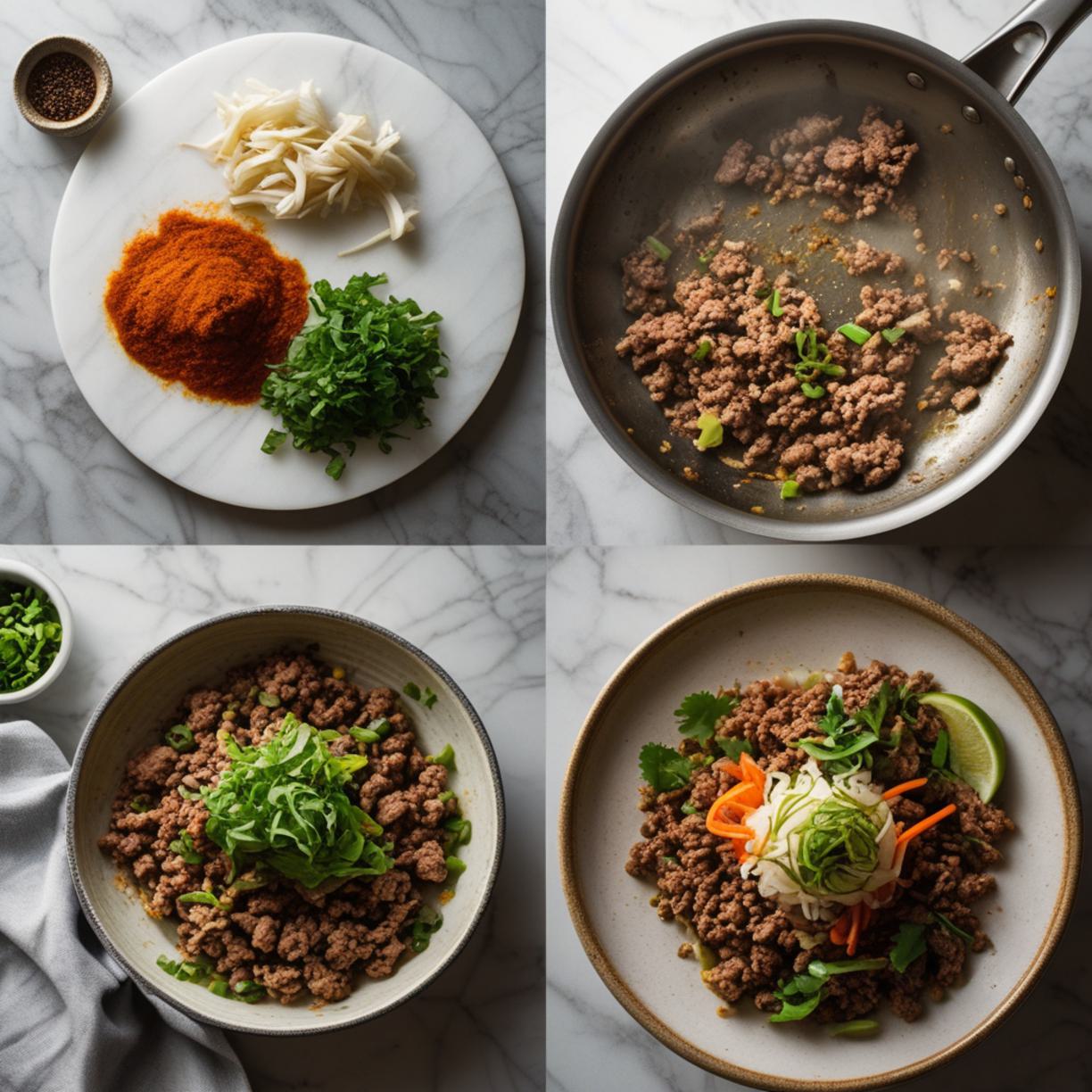
1. Blend 100ml soy sauce, 15ml sesame oil, 20g minced ginger, 45g gochujang, 30ml rice vinegar, 75g brown sugar, and 4 minced garlic cloves
2. Heat skillet to medium-high (200°C surface temp)
3. Add 500g beef in a single layer—DO NOT STIR for 90 seconds
4. Flip sections, brown another 90 seconds
5. Break meat into crumbles, cook 1 minute
6. Add sauce mixture, reduce heat to medium-low (160°C)
7. Simmer 4 minutes until glaze forms
8. Remove from heat, rest 3 minutes
Initial searing creates hydrophobic maillard crusts—this seals juices better than constant stirring. The 90/90 flip technique provides restaurant-grade browning. Adding sauce post-caramelization prevents sugar burning. Simmering below boiling (88-94°C) preserves ginger’s zingibain enzymes. Resting allows albumin proteins to reabsorb liquids—expect 20% sauce volume increase.
Expert Tips & Troubleshooting
PRO TIP: Chill beef 15 minutes before cooking—cold fat renders slower, preventing greasiness. Overcrowding causes steam-boiling; work in batches if skillet diameter is under 30cm. Sauce too thin? Mix 1 tsp cornstarch with 1 tbsp cold water, stir during last 30 seconds of simmering.
Salty overshoot? Add 1 peeled raw potato during simmering—starch absorbs excess sodium. Bland result? Boost with 1/2 tsp MSG or 1 tbsp fish sauce. Vegan version lacks depth? Roast substituted tofu crumbles at 200°C for 12 minutes before saucing—dry heat concentrates flavors.
Burning concerns? Monitor pan temp with infrared thermometer—maintain 160-180°C. Sticking issues indicate insufficient preheating or oil. For extreme heat variations, move skillet on/off burner every 30 seconds.
Flavor Variations
SPICY EDITION: Add 1 tbsp gochugaru flakes + 1 minced bird’s eye chili during sauté. For amplified heat, steep sauce with 1 sliced habanero overnight. SWEET & SMOKY: Replace 25% soy sauce with hoisin sauce, finish with 1 tsp lapsang souchong tea powder.
KID-FRIENDLY: Halve gochujang, substitute mirin for rice vinegar. Add 100g finely diced pineapple—bromelain enzymes tenderize beef further. Umami BOMB: Stir in 1 tbsp dried shiitake powder + 1 tsp bonito flakes at serving.
Storage & Reheating
Refrigerate (<5°C) in airtight containers for 4 days. Freeze (-18°C) in vacuum-sealed bags for 3 months. Thaw overnight in refrigerator. Reheat gently: microwave at 50% power with 1 tsp water covered, stirring every 90 seconds. Stovetop method: medium-low heat with 1 tbsp beef stock. Never boil—emulsions break.
FAQ Section
Q: Can I substitute ground turkey?
A: Yes—increase oil to 20ml and simmer 1 minute longer to compensate for lower fat content.
Q: What if I don’t have jasmine rice?
A: Short-grain sushi rice provides better stickiness; basmati requires 25% more sauce.
Q: Can I prep sauce ahead?
A: Mix wet ingredients 3 days ahead—refrigerated. Add garlic/ginger max 2 hours pre-cooking to prevent bitterness.
Q: Why rest cooked beef before serving?
A: Resting redistributes juices—sliced meat gains 10% retention; ground beef improves sauce adhesion.
The Recipe Card
Quick Korean Ground Beef Bowl serves 4. Savory-sweet glazed beef with aromatic spices over steamed rice. Ready in 18 minutes. Key elements: 90-second sear, gochujang balance, sesame finish. Garnish with scallions and sesame seeds.
Nutrition Information
| Nutrient | Per Serving (450g) |
|---|---|
| Calories | 680 |
| Protein | 38g |
| Carbohydrates | 65g |
| Total Fat | 27g |
| Sodium | 1120mg |
| Fiber | 1.5g |
| Sugars | 22g |
*Nutrition calculated using standard beef (15% fat), includes 150g cooked jasmine rice. Sodium may vary based on soy sauce brand. Consult a nutritionist for dietary needs.