
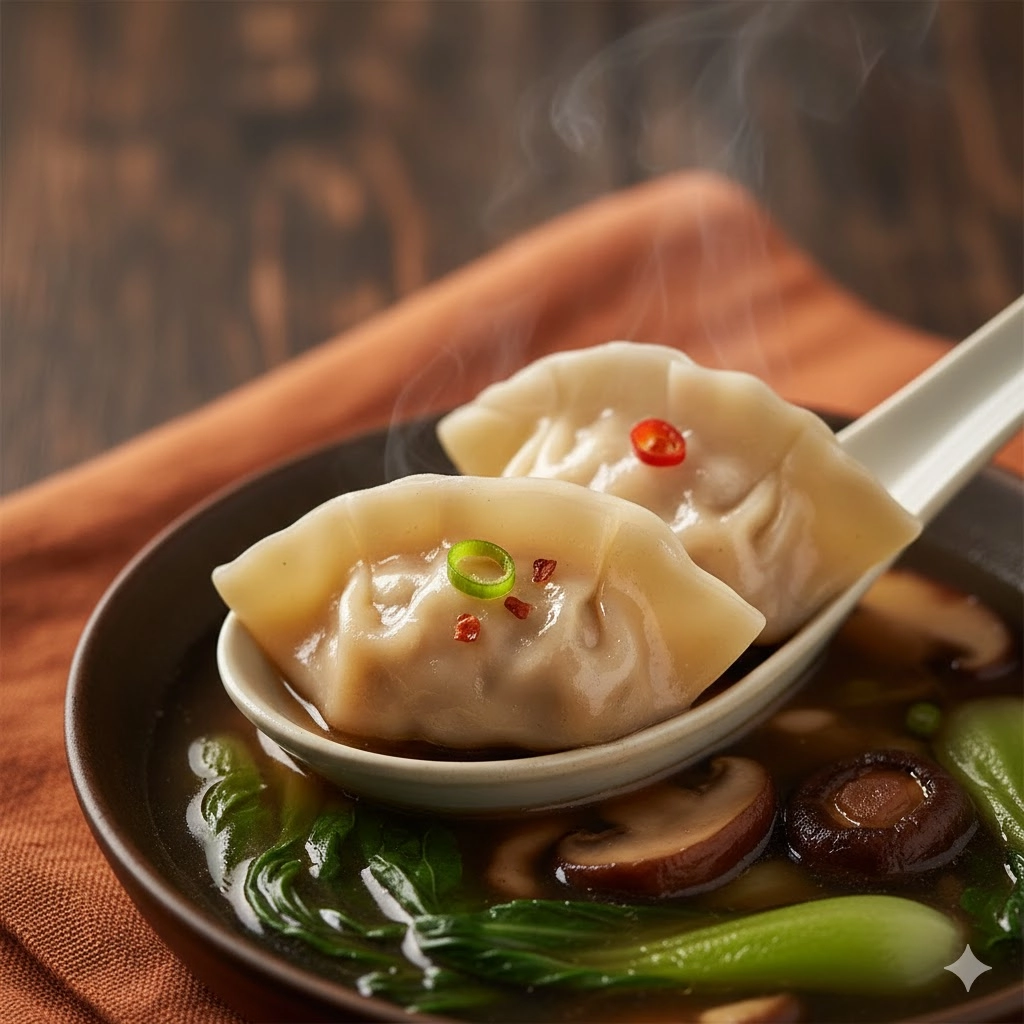
This dish transcends a simple weeknight meal—it is an experience of vibrant, balanced flavors served in a single, warming bowl. At its core, Potsticker Soup is a study in texture: the slippery, tender wrapper of a submerged dumpling meets a rich, clean-tasting broth, accented by crisp-tender vegetables. This recipe focuses on creating a masterful base—a savory, complex liquid foundation—that allows pre-made or scratch potstickers to shine. It is comfort food that feels effortless yet sophisticated, relying on the quality of a few foundational ingredients to deliver maximum impact. It is the perfect remedy for a chilly evening or a quick, satisfying lunch, ready in thirty minutes or less.
The Essential Pantry and Produce List
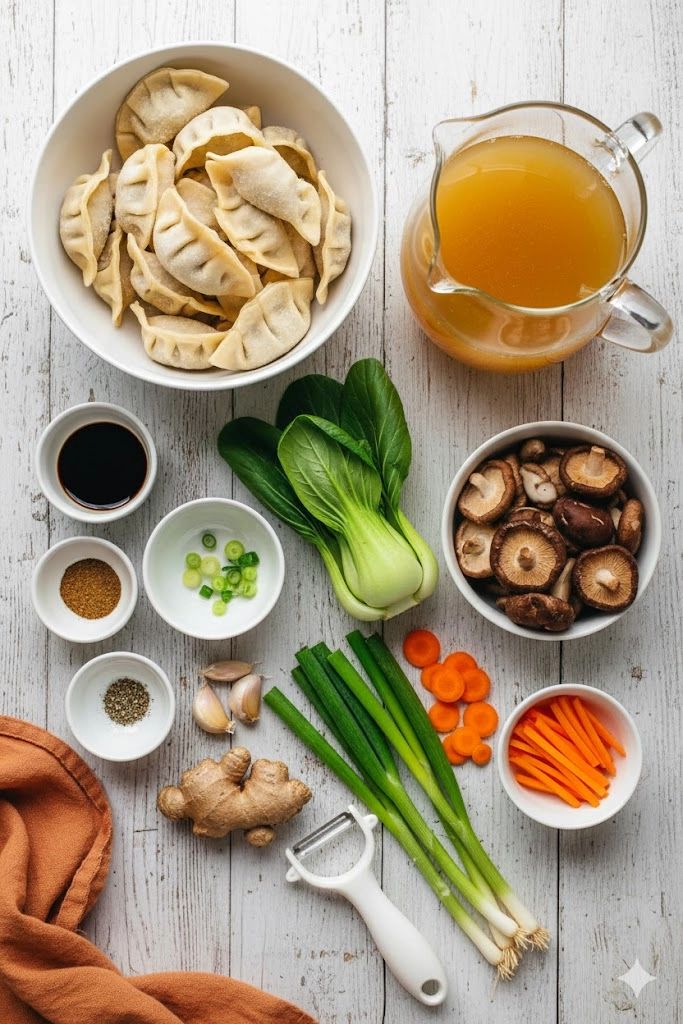
The beauty of this meal is its reliance on readily available ingredients, ensuring speed without sacrificing depth of flavor.
For the Broth Base
- Eight cups (two quarts) low-sodium chicken or vegetable broth
- One tablespoon toasted sesame oil
- One tablespoon rice vinegar
- Two teaspoons freshly grated ginger
- Two cloves garlic, finely minced
- One half teaspoon white pepper
- One fourth cup soy sauce or tamari
For the Assembly
- One pound (about sixteen to twenty-four count) frozen pork, chicken, or vegetable potstickers (store-bought or homemade)
- One small head of bok choy, stems roughly chopped and leaves separated
- One cup sliced shiitake mushrooms
- One large carrot, peeled and thinly sliced into matchsticks
- One fourth cup chopped scallions (green parts only)
- Optional Garnish: A drizzle of chili oil, extra chopped cilantro, or sesame seeds
High-Level Cooking Flow
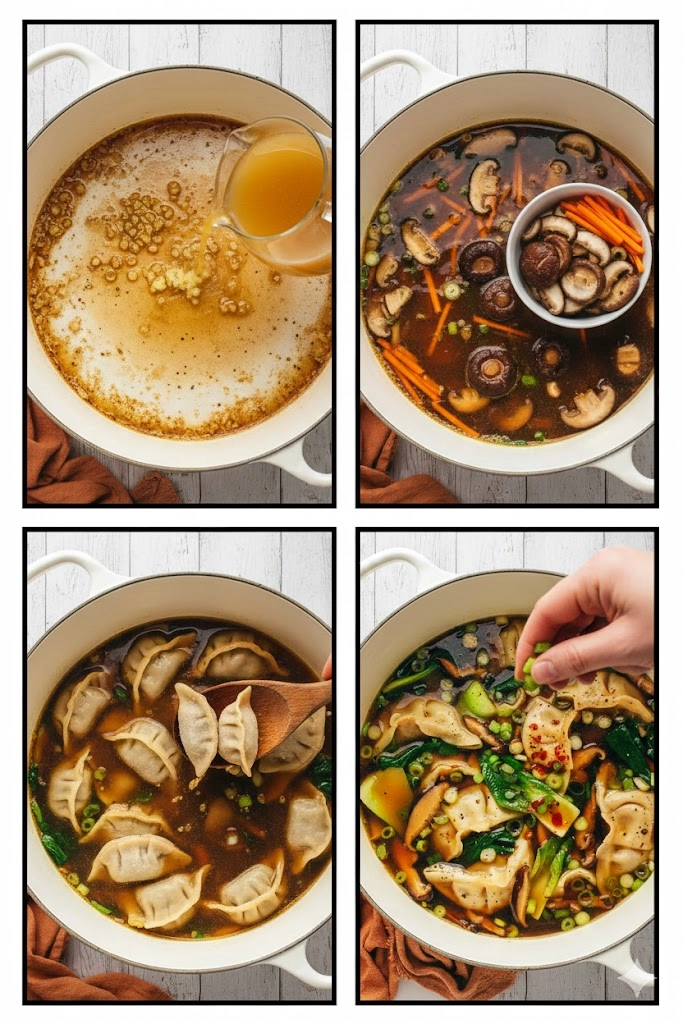
The process is designed for maximum efficiency, moving swiftly from prep to plating. The goal is to build flavor layer by layer before the quick final simmer.
- Prepare the Aromatics: Finely mince the ginger and garlic, and slice all the necessary vegetables, keeping them separate.
- Build the Foundation: In a large stockpot or Dutch oven, gently heat the sesame oil and sauté the minced aromatics until fragrant.
- Introduce the Broth: Pour in the eight cups of broth and add the remaining liquid seasonings (soy sauce and rice vinegar) and the white pepper. Bring the mixture to a strong simmer.
- Add the Vegetables: Introduce the hardiest vegetables first—the carrot matchsticks and the shiitake mushrooms. Allow them to soften slightly for three to four minutes.
- Cook the Potstickers: Gently drop the frozen potstickers into the boiling broth. Maintain a steady simmer for five to seven minutes, or until they float and the internal filling is cooked through.
- Finish and Serve: Stir in the bok choy and cook for one to two minutes until the leaves wilt. Adjust final seasoning, ladle into bowls, and garnish with fresh scallions.
Building the Broth: A Detailed Walkthrough
The secret to a superior soup is treating each ingredient with respect and allowing its distinct characteristics to emerge. Do not simply dump and boil; be intentional about the sequence.
Prepping the Aromatics
Start by utilizing the sesame oil. Unlike a neutral oil, the distinct nutty, rich aroma of toasted sesame oil adds immediate complexity. Heat it gently over medium heat—you are not trying to sear, but to warm and distribute its flavor. Once warm, add the freshly grated ginger and minced garlic. The use of fresh aromatics here is non-negotiable; dried powders will not provide the same bright, pungent lift. Sauté them for approximately thirty seconds to one minute. You will know they are ready when the aroma fills your kitchen and the garlic just begins to turn a pale golden color. Watch closely: burned garlic is bitter and will ruin the entire batch of broth. This quick sauté infuses the fat, which then disperses into the water-based broth, creating a more cohesive flavor profile.
Achieving Depth in the Base
Once the aromatics are fragrant, pour in the chicken or vegetable broth. Using a low-sodium variety is always advisable, as it gives you total control over the salinity later. Stir in the soy sauce or tamari, the rice vinegar, and the white pepper. White pepper is crucial here; it provides a subtle heat and a different, earthier nuance than black pepper, which can sometimes be too sharp in a delicate Asian-style broth. Bring the entire mixture to a rolling boil, then immediately reduce it to a strong simmer. Let it cook, uncovered, for five minutes. This short window allows the volatile compounds in the seasonings to mingle and meld, deepening the flavor of the liquid base. Taste it at this stage. It should taste slightly more intense than you’d want the finished product, as the frozen potstickers and added vegetables will slightly dilute the concentration.
The Potsticker Plunge
Before adding the star of the show, introduce the robust vegetables: the sliced carrots and shiitake mushrooms. They require more cooking time than the delicate bok choy. Allow them to simmer for about three or four minutes until they achieve a pleasing tenderness that retains a slight bite. Now, gently place the frozen potstickers into the simmering broth. Crucially, do not overcrowd the pot. If you are making a double batch, it is better to cook them in two shifts or use a larger vessel. Overcrowding drops the temperature significantly, leading to unevenly cooked fillings or potstickers that steam rather than simmer, resulting in gummy wrappers. The soup must maintain a steady, vigorous simmer (not a soft bubble) to ensure the dumplings cook properly. They are finished when they are completely heated through and have floated to the surface. This typically takes six or seven minutes, depending on their size.
Finally, just before serving, stir in the bok choy, which needs only about sixty seconds to wilt slightly. This maintains its beautiful green color and crisp texture.
Mastering the Finish: Tips for a Better Bowl
Elevating this simple Potsticker Soup from good to exceptional lies in the thoughtful attention to detail during the final stages of cooking and plating.
- The Freshness Factor of Ginger: Always use fresh ginger root, never powdered. For the purest flavor, grate it just before adding it to the pot. If grating is too much trouble, slice it into thin rounds and fish them out before serving. The pungent oil released by fresh ginger is the aromatic backbone of this dish.
- Adjusting for Broth Type: If you are using vegetable broth, consider adding a small piece of kombu (dried kelp) or a teaspoon of white miso paste to the simmering liquid. This adds a layer of savory umami that is often naturally present in quality chicken stock but sometimes lacking in store-bought vegetable bases.
- Preventing Gummy Wrappers: The greatest enemy of a good soup dumpling is overcooking. Frozen potstickers are technically pre-cooked and flash-frozen, meaning you are primarily heating the filling and fully hydrating the wrapper. Once they float, taste one immediately. If the filling is hot and the wrapper is tender (not firm, not mushy), they are done. Pull the soup off the heat immediately.
- Oil Tempering the Scallions: For a burst of intense flavor, finely slice a few extra scallion whites. In a separate small saucepan, heat one tablespoon of neutral oil (like canola or peanut) until shimmering hot. Pour the hot oil over the sliced scallions in a small heatproof bowl. The oil will sizzle and release a pungent, cooked-on-the-spot onion flavor. Drizzle this mixture over the finished bowls instead of plain raw scallions.
- Finishing Salt Strategy: Always taste and adjust salinity at the very end. The soy sauce provides salt, but if the soup tastes flat, add a pinch of kosher salt rather than more soy sauce. Adding straight salt allows the existing flavors to stand out without muddying the delicate broth with too much dark, heavy soy.
Ingredient Swap Ideas
The flexibility of this recipe allows for significant customization based on what is available in your kitchen or dietary needs. These swaps maintain the integrity of the Asian-inspired flavor profile.
- For the Potstickers: If dumplings are unavailable, you can substitute with two cups of wide egg noodles, ramen noodles, or even tortellini for a fusion twist. Add these to the boiling liquid and cook according to package directions.
- For the Bok Choy: Any fast-wilting leafy green works well. Try chopped Napa cabbage, spinach, or even torn kale (which will need two to three minutes longer to soften) for added nutrients.
- For the Protein in the Broth: To make the soup heartier, add pre-cooked shredded chicken breast or thinly sliced pork tenderloin. Stir these into the broth just before adding the potstickers to simply warm through. Alternatively, thinly slice and sauté firm tofu cubes and add them at the end.
- For the Soy Sauce: If a deeper, richer umami is desired, replace the soy sauce with an equal amount of coconut aminos or tamari, especially for gluten sensitivity. For a different profile, a teaspoon of Marmite or a small dollop of fermented black bean paste can add intense, savory depth.
What to Serve Alongside
While this is a complete meal in a bowl, a few simple additions can round out the experience and provide contrasting textures or flavors.
- Quick Cucumber Salad: Whisk together rice vinegar, a touch of sugar, a pinch of salt, and a dash of sesame oil. Pour this dressing over thinly sliced cucumbers. The cool, vinegary crunch provides a wonderful contrast to the warm, savory broth.
- A Simple Brown Rice Bowl: A small side of perfectly steamed brown rice offers a neutral base to soak up any remaining broth. It adds substance without adding a heavy flavor profile.
- Spicy Garlic Green Beans: Quickly blanch fresh green beans and then toss them in a quick stir-fry with minced garlic and a pinch of dried red pepper flakes. The heat and crisp texture stand up well to the subtle broth flavor.
- Shrimp Toast Points: For a fun appetizer or side, make simple shrimp paste, spread it on small rounds of bread, and fry them briefly until golden and crunchy. This adds a comforting, fried element that pairs beautifully with the clean soup.
Common Questions from the Kitchen
A quick reference guide to troubleshoot and enhance your soup-making efforts.
Is it better to use fresh or frozen potstickers?
For this recipe’s method, frozen potstickers are ideal because their structured, frozen state helps them maintain their shape in the boiling liquid. Freshly made potstickers can sometimes break apart more easily or require a slightly gentler simmer to prevent the filling from separating from the wrapper.
Can I make the broth ahead of time?
Absolutely, the seasoned broth can be made up to three days in advance and stored in the refrigerator. When you are ready to serve, bring the broth to a boil, and then proceed with steps four through six, adding the vegetables and the frozen potstickers immediately.
What is the best way to store leftovers?
It is best to store the finished broth and any remaining uncooked potstickers separately. Once cooked and submerged, the wrappers will continue to absorb liquid and become mushy. If you have already cooked the soup, transfer leftovers to an airtight container and consume within two days, keeping in mind the potstickers will be significantly softer.
Can I make this vegetarian?
Yes, this recipe is incredibly easy to adapt. Simply use a high-quality vegetable broth, use only vegetable-filled potstickers, and ensure your soy sauce or tamari is not flavored with any non-vegetarian components. The flavor profile will still be robust and satisfying.
How do I make the broth spicier?
The simplest method is to increase the amount of fresh ginger or white pepper used. For a more intense heat, finely dice a small Thai chili and add it along with the garlic and ginger during the initial sauté, or stir in a tablespoon of chili-garlic paste into the simmering broth.
Nutritional Breakdown
The values provided below are estimates and will vary significantly based on the type of potstickers (pork, chicken, vegetable) and broth used. This table reflects an average serving using store-bought pork potstickers.
| Nutrient | Amount per Serving |
| Calories | 320 kcal |
| Protein | 19 g |
| Carbs | 35 g |
| Fat | 12 g |
| Fiber | 4 g |
| Sugar | 5 g |
| Sodium | 650 mg |
Disclaimer
Nutrition information is an estimate and may vary based on preparation and ingredients used.
PrintThe Ultimate Potsticker Soup Recipe for Cozy Evenings

This Potsticker Soup is a flavorful, ginger-garlic broth base combined with tender dumplings and crisp vegetables. It’s an ideal, quick meal, ready in 30 minutes.
- Prep Time: 10 mins
- Cook Time: 20 mins
- Total Time: 30 mins
- Yield: 4 servings 1x
- Category: Soup
- Method: Stovetop, Simmer
- Cuisine: Asian
Ingredients
8 cups low-sodium chicken or vegetable broth
1 tbsp toasted sesame oil
1 tbsp rice vinegar
2 tsp freshly grated ginger
2 cloves garlic, finely minced
1/2 tsp white pepper
1/4 cup soy sauce or tamari
1 pound frozen potstickers (16–24 count)
1 small head of bok choy, chopped
1 cup sliced shiitake mushrooms
1 large carrot, thinly sliced into matchsticks
1/4 cup chopped scallions (for garnish)
Instructions
1. In a large stockpot, heat sesame oil over medium heat. Sauté minced ginger and garlic for about sixty seconds until fragrant.
2. Pour in broth, soy sauce, rice vinegar, and white pepper. Bring to a strong simmer.
3. Add carrot matchsticks and shiitake mushrooms. Simmer for three to four minutes to soften slightly.
4. Gently drop the frozen potstickers into the boiling broth. Cook for five to seven minutes, or until they float and are heated through.
5. Stir in the chopped bok choy. Cook for sixty to ninety seconds until the leaves are wilted.
6. Taste the broth and adjust seasonings if needed. Ladle into bowls and garnish generously with chopped scallions.
Notes
Always use low-sodium broth to control saltiness.
Do not overcrowd the pot when cooking the dumplings; this lowers the temperature.
Leftovers are best stored with the potstickers and broth separated to prevent mushy wrappers.
Nutrition
- Serving Size: 1 bowl
- Calories: 320
- Sugar: 5g
- Sodium: 650mg
- Fat: 12g
- Saturated Fat: 5g
- Unsaturated Fat: 7g
- Trans Fat: 0g
- Carbohydrates: 35g
- Fiber: 4g
- Protein: 19g
- Cholesterol: 30mg