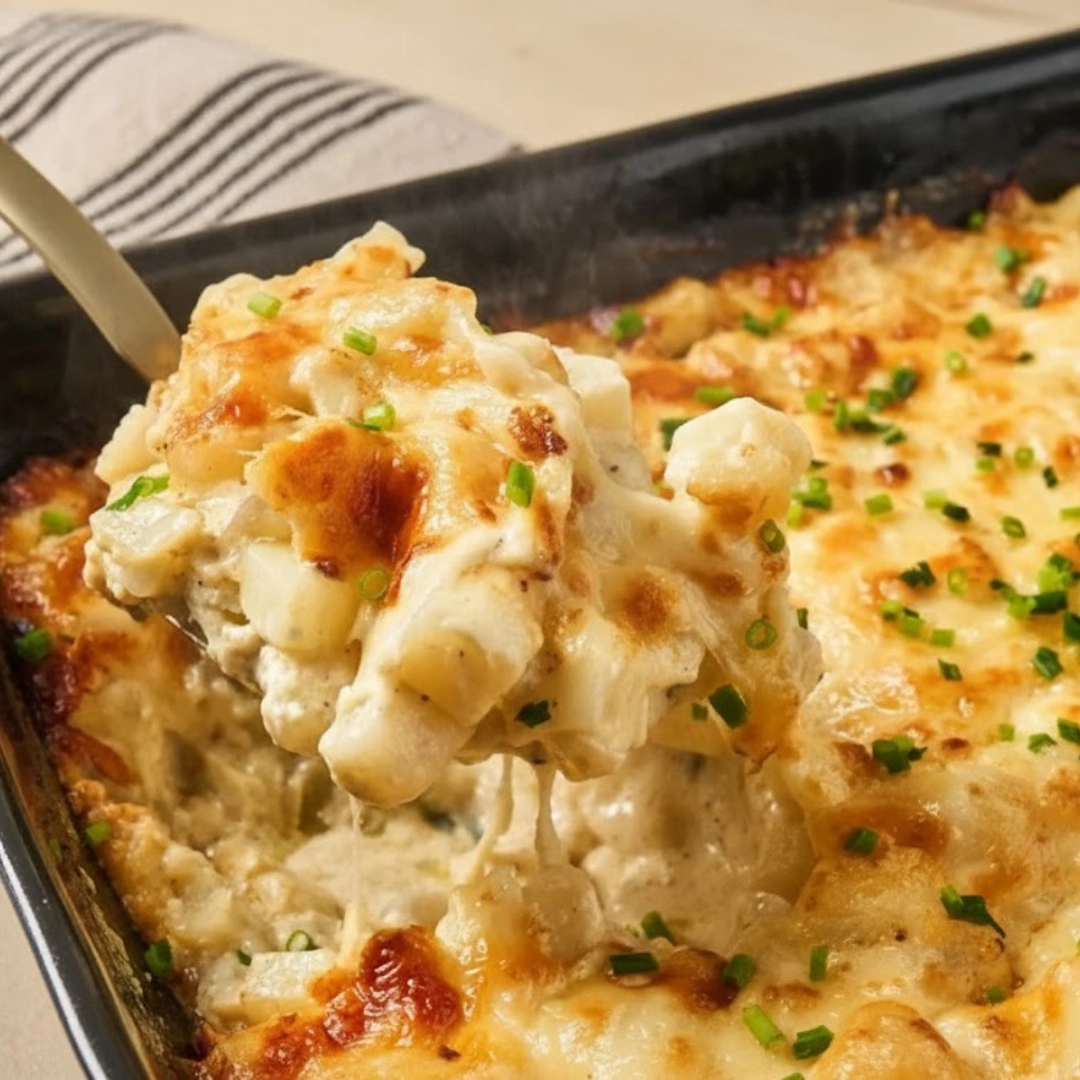
The hallmark of a truly great steakhouse side dish is its ability to stand alongside a premium cut of beef without being overshadowed. Potatoes Delmonico is the gold standard of this category, offering a textural complexity that far surpasses the standard mashed or au gratin varieties. By utilizing a specific technique of cubing pre-cooked potatoes and binding them in a rich, nutmeg-infused Mornay sauce, this dish creates a unified mosaic of flavor. It is the ideal choice for formal gatherings or a high-end Sunday dinner where presentation and decadence are equally prioritized.
What distinguishes Potatoes Delmonico from its culinary cousins is the intentional preservation of the potato’s structure. Instead of thin slices that soften into a singular mass, the uniform cubes provide a distinct “bite” that carries the weight of the sharp white cheddar and heavy cream. This recipe focuses on the foundational French techniques that made the original New York City version famous, ensuring a result that is both creamy and structurally sound. With its deeply bronzed crust and velvety interior, it remains an undisputed king of the American side dish repertoire.
Table of Contents
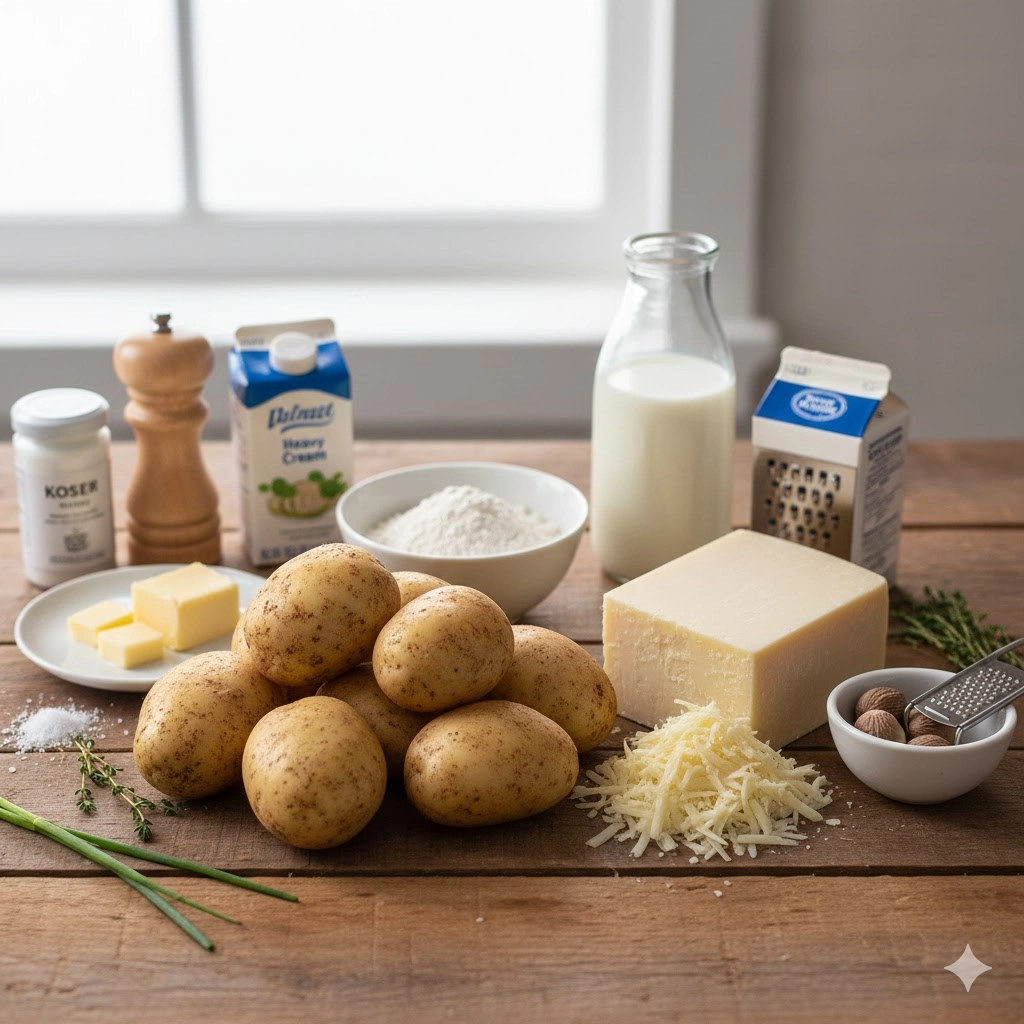
Component Checklist
For the Potato Foundation
- 3 pounds large Russet or Yukon Gold potatoes
- 1 tablespoon sea salt (for the par-boiling water)
For the Mornay Binder
- 4 tablespoons high-quality unsalted butter
- 4 tablespoons all-purpose flour
- 2 1/4 cups whole milk
- 1/2 cup heavy cream
- 2 cups aged white cheddar cheese, hand-shredded
- 1/2 teaspoon kosher salt
- 1/4 teaspoon ground white pepper
- 1/4 teaspoon freshly grated nutmeg
For the Gratin Crust
- 3/4 cup panko breadcrumbs
- 3 tablespoons unsalted butter, melted
- 1/3 cup finely grated Gruyère or Parmesan cheese
- 1 teaspoon dried thyme or fresh chives
Technical Preparation Steps
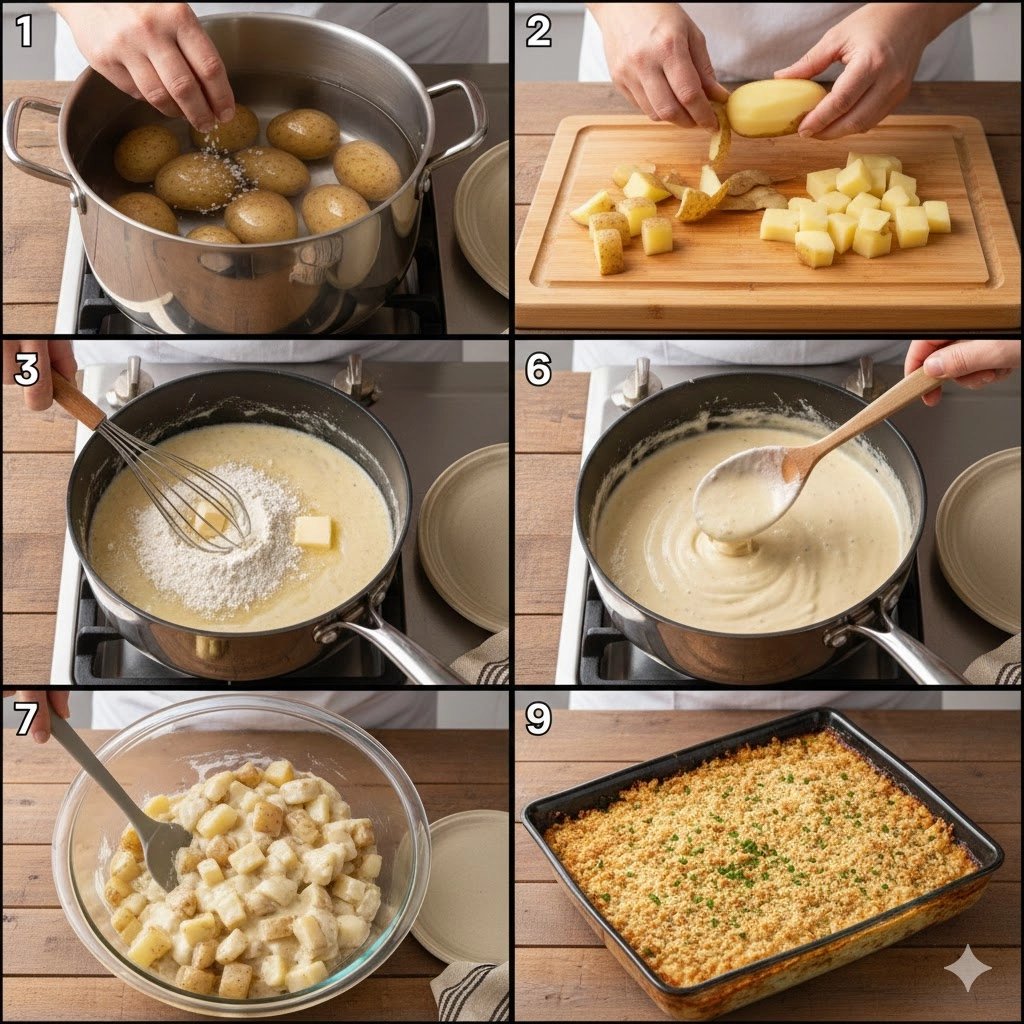
- Submerge the whole, unpeeled potatoes in a large pot of cold water. Bring to a rolling boil and cook for roughly twenty minutes, or until a fork can enter the center with significant resistance.
- Drain the potatoes and move them to the refrigerator until they are completely cold to the touch. Once chilled, remove the skins and cut the flesh into uniform half inch cubes.
- Set your oven to three hundred seventy five Fahrenheit and prepare a shallow baking dish with a light coating of butter.
- In a heavy-bottomed saucepan, melt the four tablespoons of butter over a medium-low flame. Whisk in the flour and continue cooking for three minutes to develop a blond roux.
- Gradually incorporate the milk and heavy cream into the roux, whisking constantly to ensure the emulsion remains smooth and free of lumps.
- Simmer the liquid until it reaches a nappe consistency, meaning it thickens enough to coat a spoon cleanly.
- Extinguish the heat and stir in the salt, white pepper, nutmeg, and shredded white cheddar. Continue stirring until the cheese is fully integrated and the sauce is lustrous.
- Gently combine the diced potatoes with the warm cheese sauce in a large mixing bowl, using a rubber spatula to avoid breaking the cubes.
- Transfer the mixture into your prepared dish. Mix the breadcrumbs, melted butter, and additional cheese in a small bowl, then distribute this over the surface.
- Place the dish in the center of the oven and bake for thirty to forty minutes, or until the top is deeply caramelized and the edges are bubbling.
Mastering Texture and Flavor
Managing the Starch
The initial boil is the most critical phase of the recipe. If you overcook the potatoes at the start, they will turn into a gummy mash when folded into the sauce. The goal is to reach a state where the starch is hydrated but the cell walls of the potato remain intact. This is why cooling the potatoes before dicing is mandatory; the cold temperature allows the starches to retrogradely firm up, which helps the cubes maintain their sharp edges during the final bake.
The Roux and Emulsion
When building the Mornay sauce, patience is your best tool. Adding the milk too quickly can cause the flour and butter to separate into tiny clumps. By introducing the liquid in small stages, you create a stable base that will hold the heavy fats of the white cheddar without “breaking” or becoming oily. Using white pepper instead of black pepper is a professional touch that keeps the sauce looking pristine and ivory-colored without the dark flecks of spice.
Achieving the Perfect Gratin
The topping should provide a distinct acoustic crunch to contrast the soft interior. Using panko rather than traditional breadcrumbs provides a larger surface area for the butter to cling to, resulting in a superior toasted texture. If you notice the edges are bubbling but the center isn’t quite brown enough, you can briefly use the broiler for the last sixty seconds of cooking, though you must watch it carefully to prevent burning.
Essential Chef Tips
- The Peel Trick: Boil the potatoes with the skins on. This prevents the interior from absorbing too much water, which would otherwise dilute the flavor of the cheese sauce later.
- Cheese Selection: Seek out an aged white cheddar with a sharp profile. The aging process reduces the moisture content of the cheese, which leads to a more intense flavor and a more stable melt in the sauce.
- Nutmeg Freshness: Only use whole nutmeg that you grate yourself. The pre-ground powder often loses its aromatic potency and can taste dusty rather than bright and spicy.
- Proper Dicing: Ensure your cubes are as uniform as possible. Uniformity isn’t just for aesthetics; it ensures that every piece of potato reaches the same temperature at the same time in the oven.
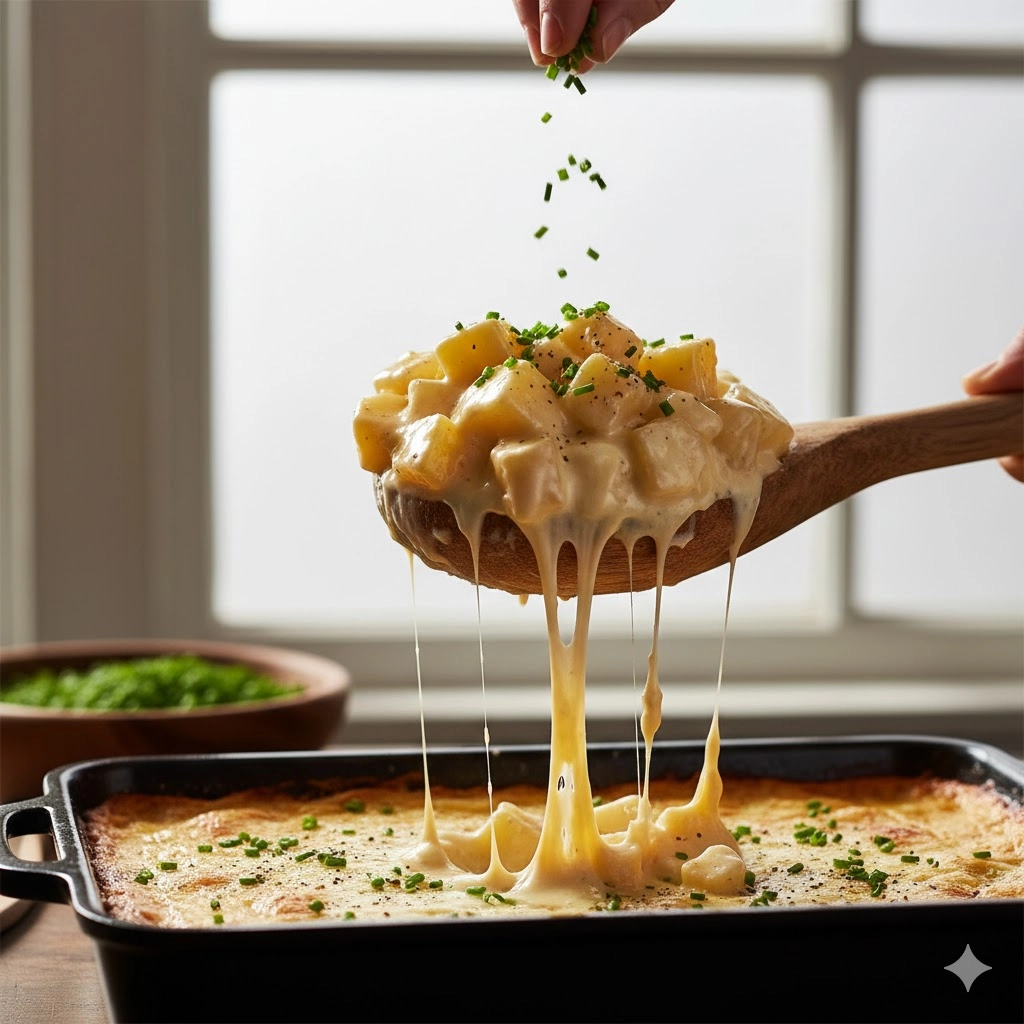
- Resting the Dish: Allow the finished casserole to sit on a wire rack for at least twelve minutes before serving. This resting period allows the sauce to thicken slightly around the potatoes, preventing a “soupy” texture when plated.
Flavor Modifications
- The Allium Addition: For a deeper aromatic profile, sauté two cloves of minced garlic or a small shallot in the butter before adding the flour for the roux.
- Mustard Depth: Add one teaspoon of dry mustard powder to the sauce. This doesn’t make the dish taste like mustard but rather amplifies the sharpness of the cheddar.
- The Truffle Upgrade: Drizzle a small amount of white truffle oil over the top of the potatoes just before serving for a truly decadent steakhouse experience.
- Spicy Variation: Incorporate a pinch of cayenne pepper or a small amount of diced canned green chilis into the potato mixture for a subtle, warming heat.
Ideal Menu Pairings
- Roast Beef or Prime Rib: The high fat content of the beef is perfectly matched by the creamy, acidic notes of the white cheddar sauce.
- Grilled Asparagus: A simple side of charred asparagus with a squeeze of lemon provides a necessary green brightness to cut through the richness of the potatoes.
- Frisée Salad: A bitter green salad with a mustard-heavy vinaigrette serves as an excellent palate cleanser between bites of the decadent Delmonico potatoes.
Frequently Asked Questions
What are the best potatoes for this dish?
Russet potatoes are the traditional choice because their high starch content allows them to soak up the cream sauce, but Yukon Golds are an excellent alternative if you prefer a creamier, more buttery flavor and a firmer texture.
Can I use a different type of cheese?
While sharp white cheddar is the standard for Potatoes Delmonico, you can successfully substitute Gruyère, Fontina, or even a high-quality Swiss cheese if you prefer a different flavor profile.
Is it possible to freeze this recipe?
Freezing is not recommended for this specific dish, as the cream sauce can break and become grainy upon thawing and reheating. It is best enjoyed fresh or kept in the refrigerator for up to three days.
Why is my sauce too thin?
If the sauce appears thin, it may not have simmered long enough before the cheese was added. Ensure the bechamel is thick enough to coat a spoon before you remove it from the heat to stir in the cheddar.
Nutrition Information
| Nutrient | Amount per Serving |
| Calories | 440 kcal |
| Protein | 15 g |
| Carbs | 36 g |
| Fat | 26 g |
| Fiber | 3 g |
| Sugar | 4 g |
| Sodium | 610 mg |
Nutrition Information Disclaimer
Nutrition information is an estimate and may vary based on preparation and ingredients used.
PrintThe Art of the Elevated Casserole: Perfecting Potatoes Delmonico
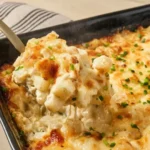
A sophisticated steakhouse classic featuring par-boiled diced potatoes in a rich, nutmeg-scented white cheddar sauce with a crispy panko crust.
- Prep Time: 40 mins
- Cook Time: 45 mins
- Total Time: 85 mins
- Yield: 8 servings 1x
- Category: Side Dish
- Method: Baking
- Cuisine: American
- Diet: Vegetarian
Ingredients
3 lbs Russet potatoes
4 tbsp unsalted butter
4 tbsp all-purpose flour
2 1/4 cups whole milk
1/2 cup heavy cream
2 cups sharp white cheddar cheese, shredded
1/2 tsp ground nutmeg
3/4 cup panko breadcrumbs
1/4 cup grated Parmesan
Salt and white pepper to taste
Instructions
1. Boil whole potatoes in salted water for 20 minutes until par-cooked.
2. Chill potatoes completely, then peel and dice into half-inch cubes.
3. Create a blond roux with butter and flour, then slowly whisk in milk and cream.
4. Remove sauce from heat and melt in the white cheddar and nutmeg.
5. Fold potatoes into sauce and transfer to a greased baking dish.
6. Top with a mixture of panko, butter, and Parmesan.
7. Bake at 375 Fahrenheit for 35 minutes until golden brown.
Notes
Chill the potatoes before dicing to ensure they hold their shape.
Use freshly grated white cheddar for the smoothest melt.
Allow the dish to rest for 10 minutes before serving to set the sauce.
Nutrition
- Serving Size: 1 cup
- Calories: 440
- Sugar: 4g
- Sodium: 610mg
- Fat: 26g
- Saturated Fat: 16g
- Unsaturated Fat: 8g
- Trans Fat: 0g
- Carbohydrates: 36g
- Fiber: 3g
- Protein: 15g
- Cholesterol: 75mg