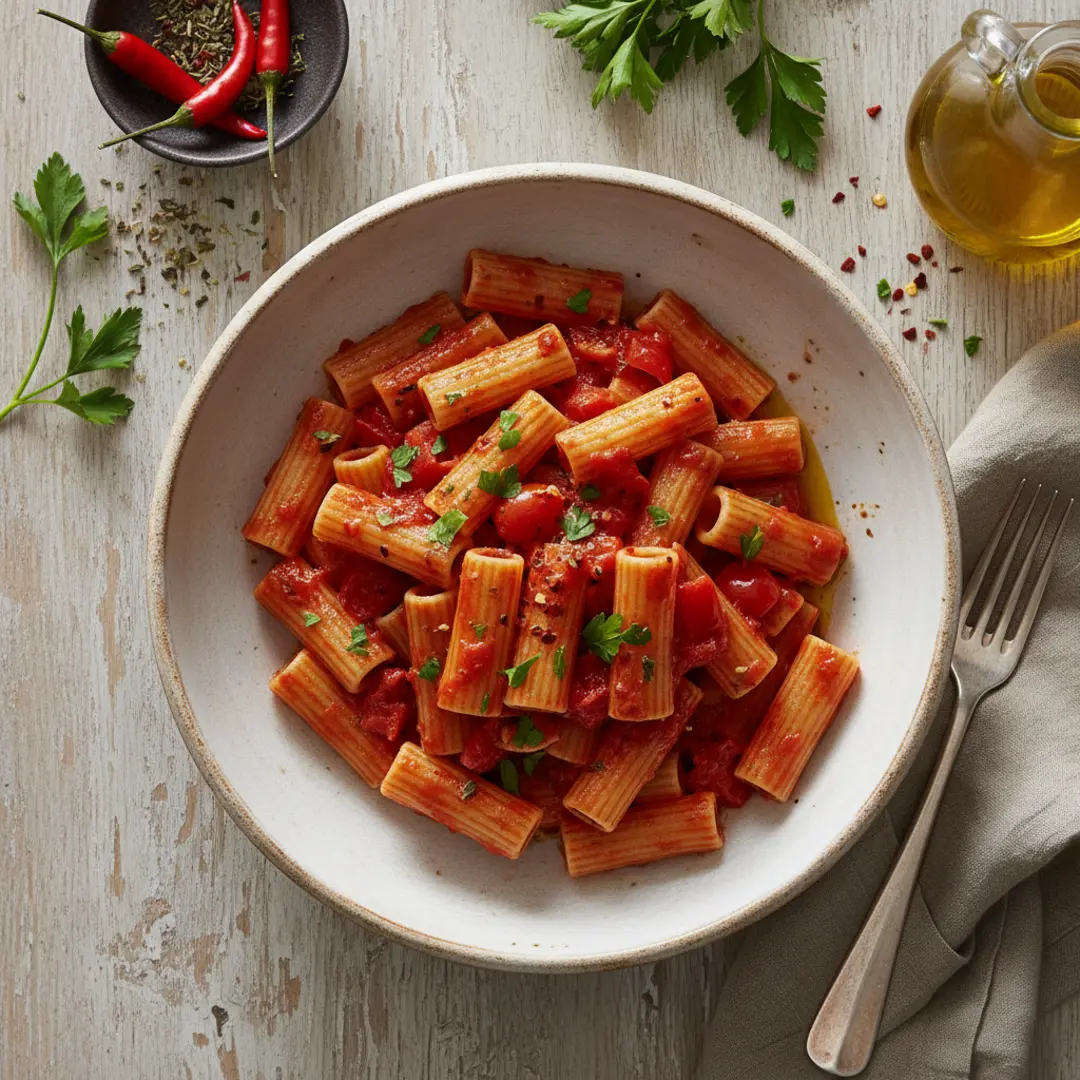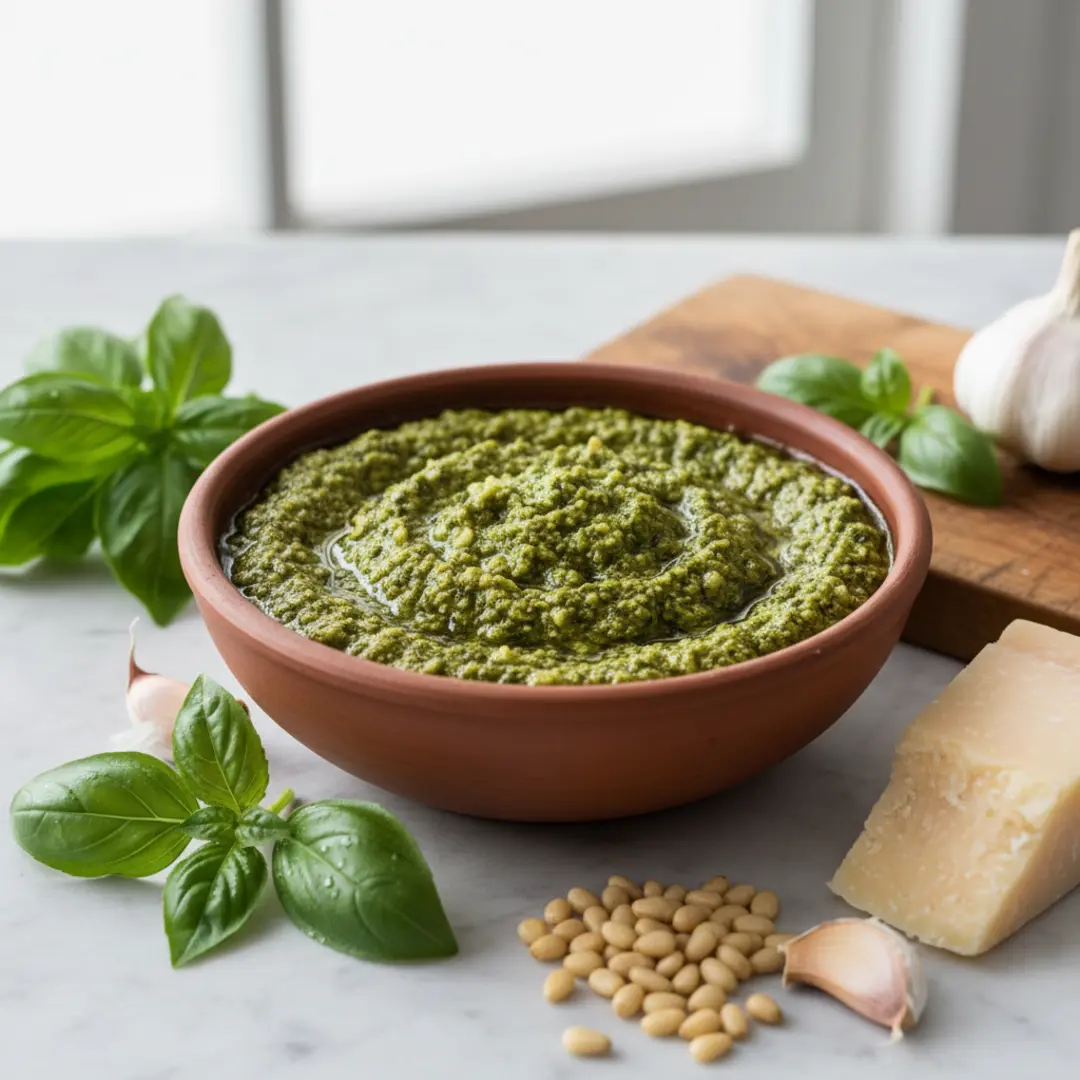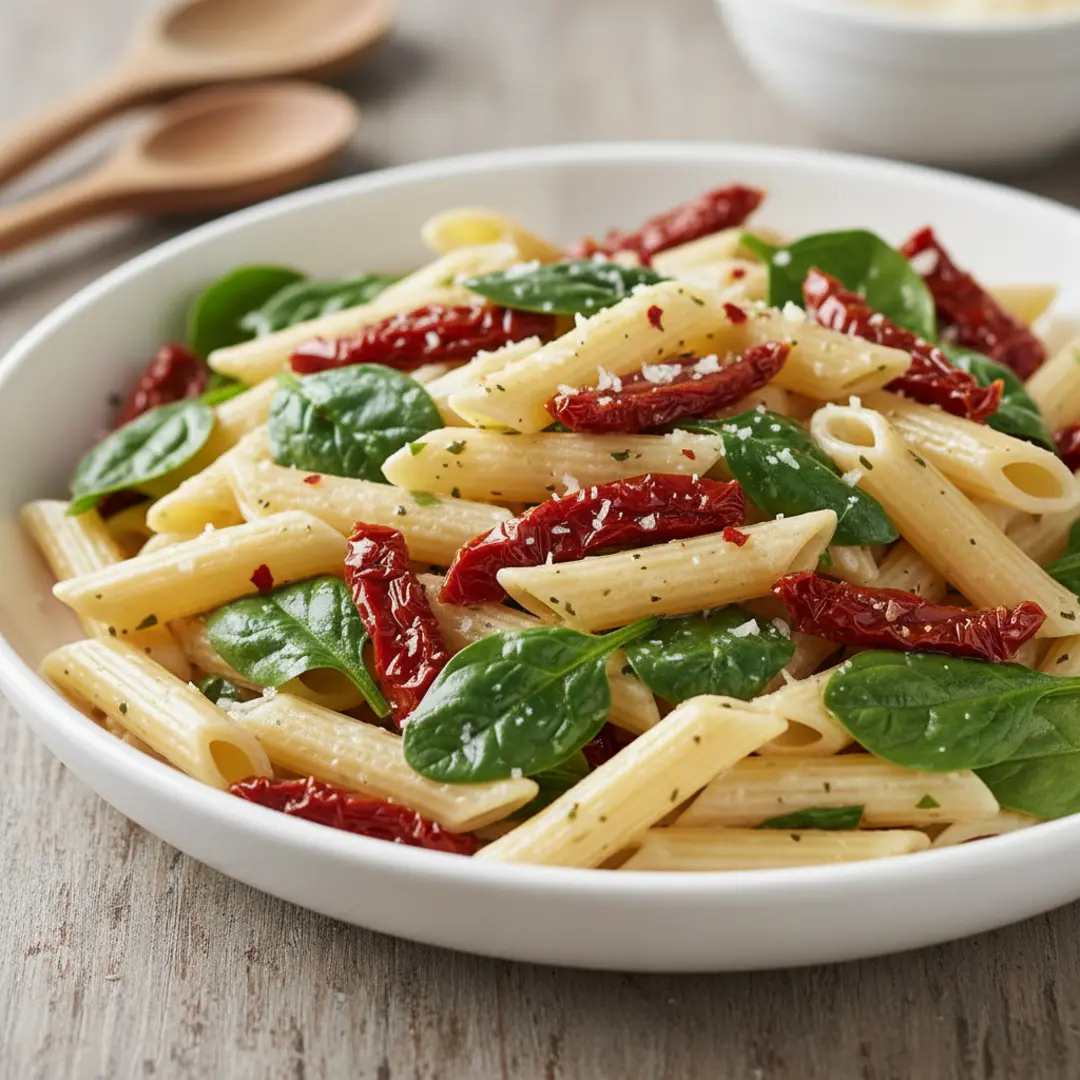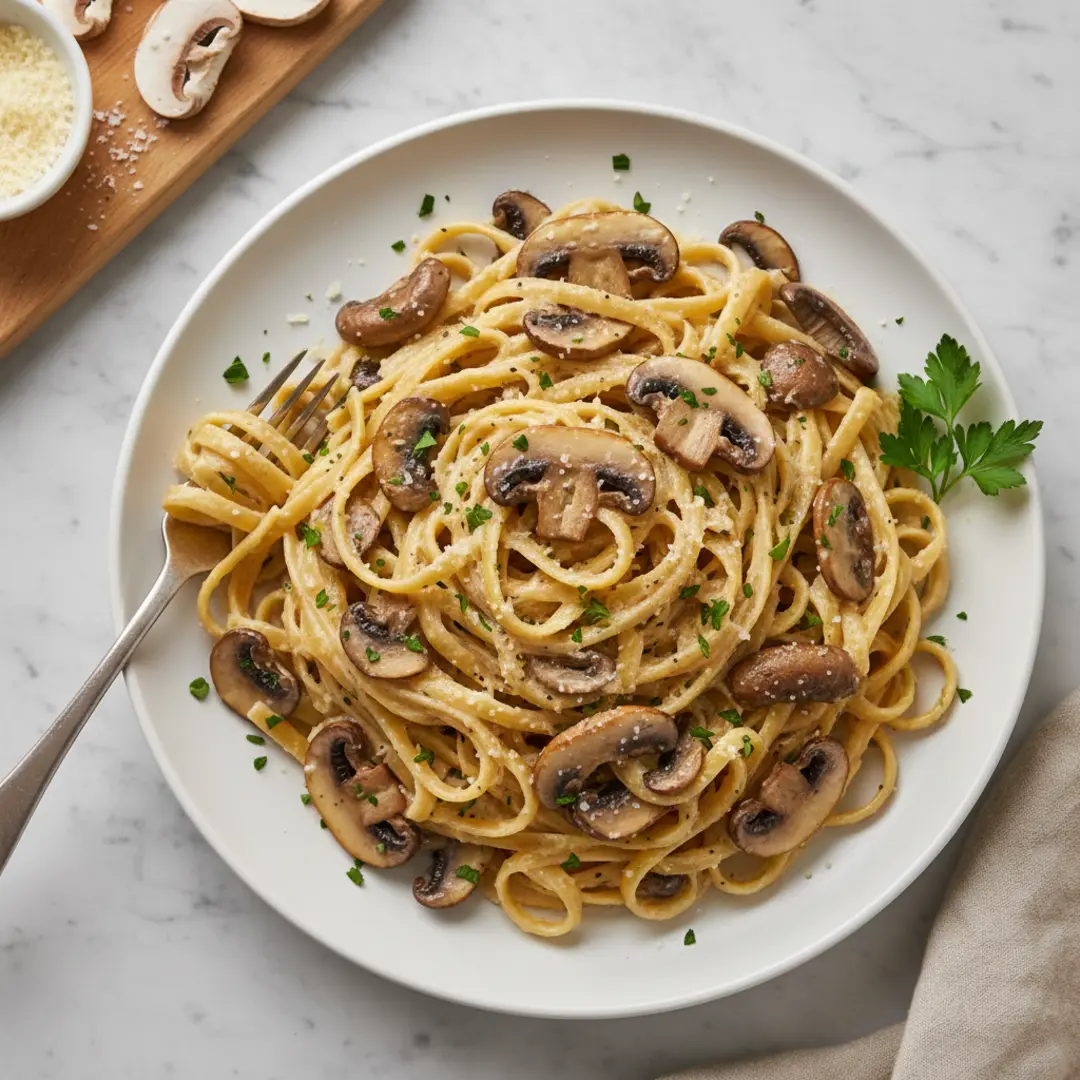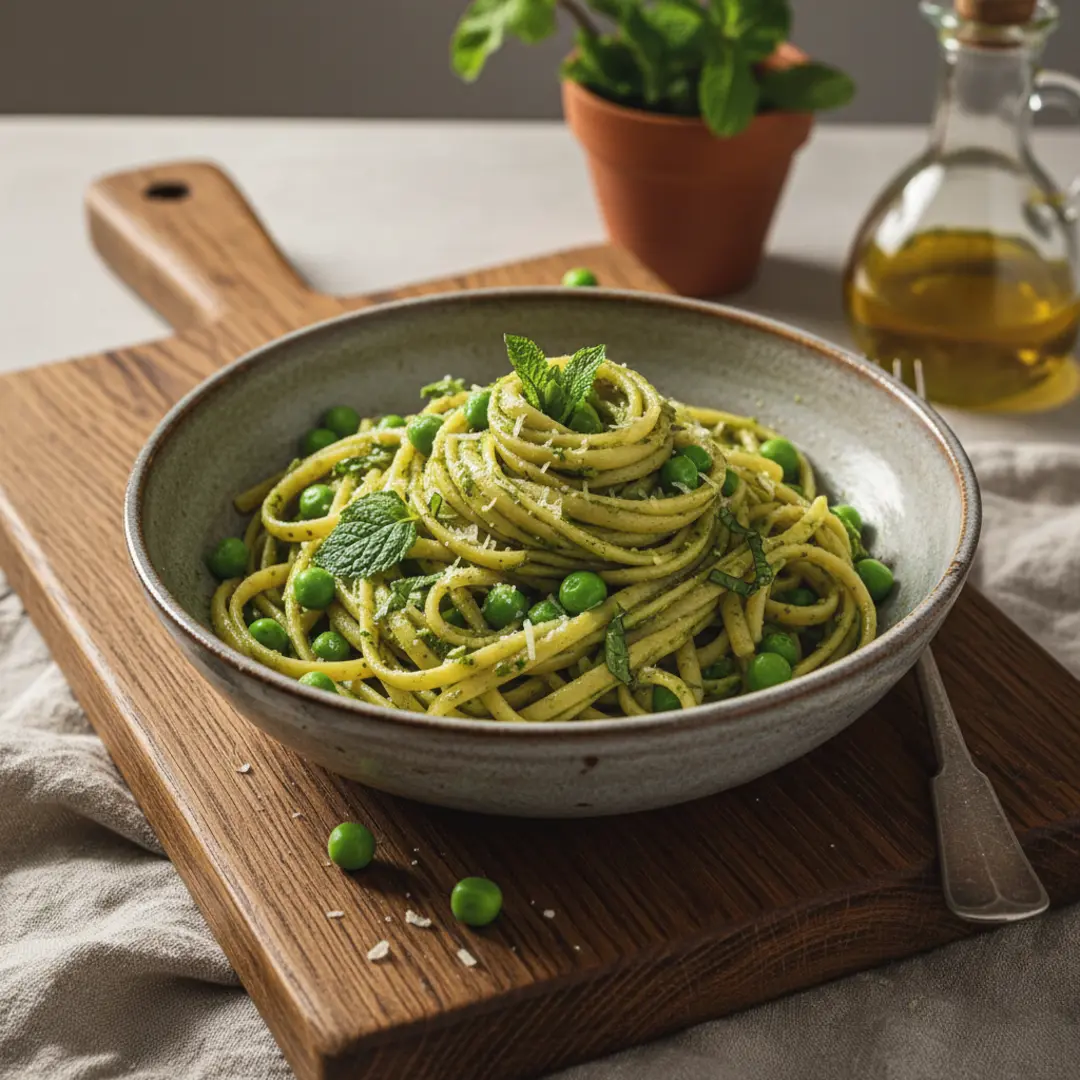
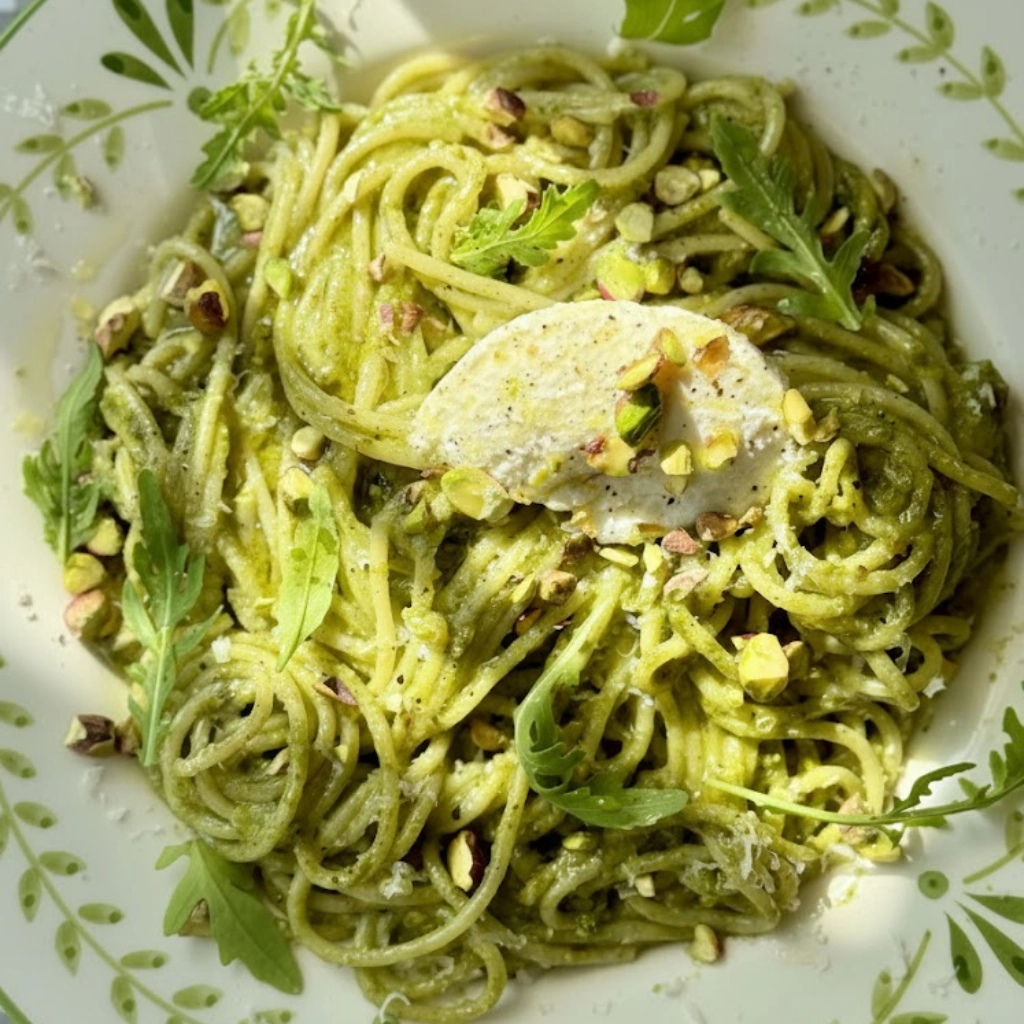
Pistachio pesto pasta is a fresh, vibrant dish made with a creamy blend of roasted pistachios, olive oil, parmesan, and lemon. This Sicilian-style pesto offers a richer, nuttier flavor than traditional basil pesto, and it comes together quickly in a food processor. The sauce coats pasta beautifully, creating a smooth, fragrant dish that works for both easy weeknight meals and elegant dinner presentations. It pairs well with chicken, shrimp, or a spoonful of creamy burrata for extra richness.
This content is for educational purposes only and does not replace professional dietary or health advice.
Table of Contents
Why This Sicilian Pistachio Pesto Pasta Will Win You Over
If you love Italian food but crave something beyond the usual basil pesto, this pistachio pesto pasta will become your new favorite. It’s a dish that delivers gourmet flavor with everyday simplicity no special equipment or advanced cooking skills required.
Here’s why it stands out:
- Quick and effortless. The pesto comes together in less than 10 minutes just blend, toss, and serve.
- Sicilian flavor at home. Roasted pistachios give this sauce a creamy, subtly sweet taste that captures the essence of southern Italy.
- Customizable and versatile. Serve it warm with spaghetti or cold as a pasta salad; it’s equally delicious either way.
- Impressively rich, naturally vegetarian. Made with whole ingredients and heart-healthy fats, this recipe tastes indulgent yet wholesome.
- Batch-friendly pesto. The recipe makes enough for multiple meals perfect for spreading on toast, layering in sandwiches, or stirring into roasted veggies later in the week.
Once you try it, you’ll see why pistachio pesto pasta has become one of Sicily’s most celebrated regional dishes creamy, fragrant, and effortlessly elegant.
Ingredients You’ll Need
Making authentic pistachio pesto pasta is all about using high-quality, simple ingredients that let each flavor shine. Here’s everything you’ll need for both the pesto and the pasta.
For the Pistachio Pesto
- 100 g shelled pistachios ideally roasted and unsalted for rich flavor. If using raw pistachios, lightly toast them in a dry pan to bring out their aroma.
- 100 g fresh basil leaves bright, aromatic, and tender. You can mix in a little parsley for added freshness.
- 1 garlic clove optional; use fresh for a sharp bite or roasted for a mellow flavor.
- 1 lemon (zest and juice) adds brightness and balances the nuttiness.
- 200 ml olive oil a light, fruity oil works best; avoid extra-strong varieties that overpower the nuts.
- 70 g Parmesan (or Pecorino Romano) adds saltiness and depth; choose a vegetarian alternative if preferred.
- ½ tbsp freshly ground black pepper for subtle spice.
- Salt, to taste sea salt or kosher salt for clean flavor.
For the Pasta
- 200 g pasta spaghetti, linguine, penne, or casarecce all work beautifully. Short pasta holds more pesto, while long strands offer a silkier presentation.
- Parmesan or Pecorino extra for serving.
- Optional toppings: a spoonful of ricotta, burrata, or mozzarella for extra creaminess.
Ingredient Notes and Substitutions
- Pistachios: Substitute with almonds, cashews, or walnuts if needed, but the unique Sicilian pistachio flavor is unmatched.
- Cheese: Grana Padano or vegan nutritional yeast can replace Parmesan.
- Basil: Combine with mint or parsley for a slightly different, refreshing twist.
- Olive Oil: Choose a mild oil if you prefer the nut flavor to dominate.
These fresh, pantry-friendly ingredients form the heart of this vibrant Sicilian dish simple, natural, and irresistibly flavorful.
How to Make Pistachio Pesto Pasta (Step-by-Step)
This pistachio pesto pasta comes together in the time it takes to boil your noodles. Follow these easy steps for a restaurant-quality Sicilian meal at home.
Step 1: Toast the Pistachios
Lightly toasting the pistachios deepens their nutty flavor.
- Add them to a dry skillet over medium heat.
- Stir frequently for 5–7 minutes until fragrant and lightly golden.
- Remove from heat and let cool for a few minutes.
(Tip: Don’t walk away pistachios can burn quickly!)
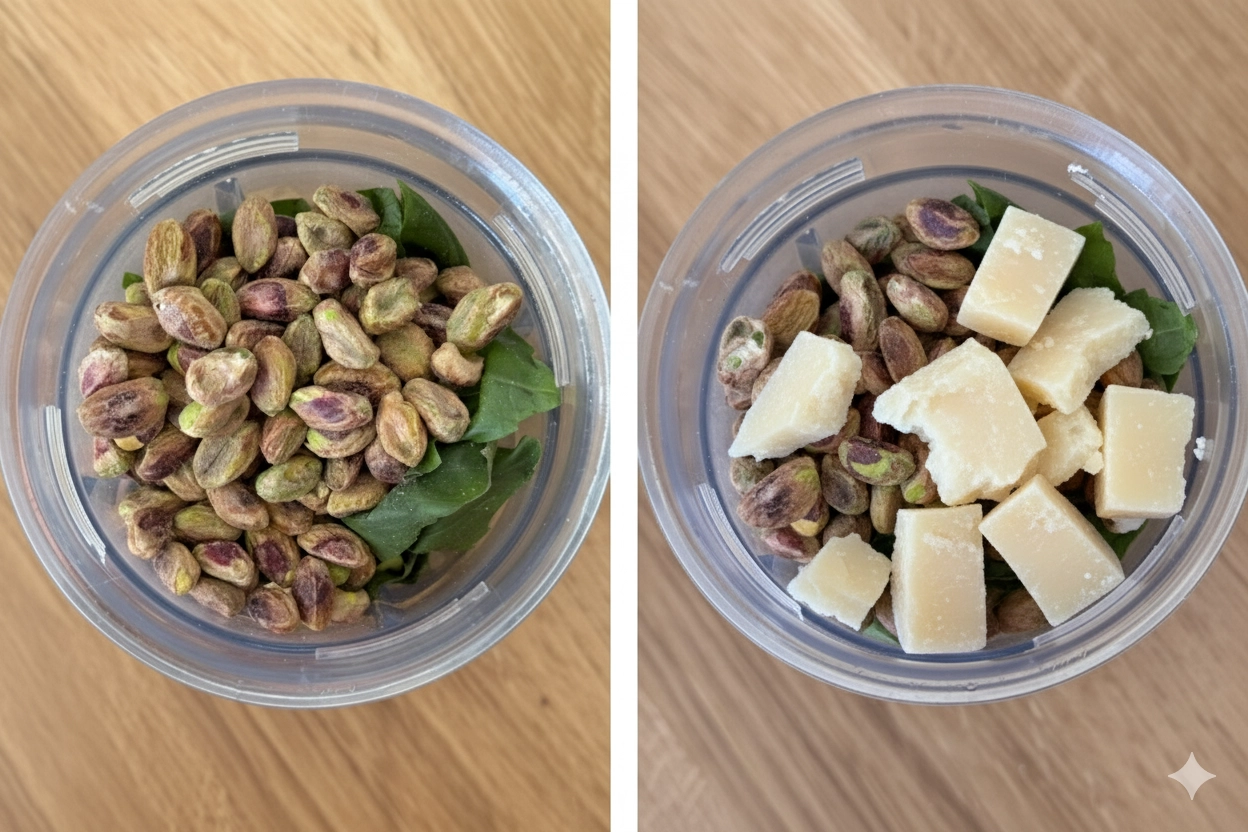
Step 2: Blend the Pest
In a blender or food processor, combine:
- Toasted pistachios
- Basil leaves
- Garlic
- Lemon zest and juice
- Parmesan
- Olive oil
- Salt and black pepper
Pulse until smooth but still slightly textured Sicilian pesto is meant to have some bite. If the pesto seems too thick, drizzle in more olive oil or a tablespoon of warm water.
Step 3 : Cook the Pasta
- Bring a large pot of salted water to a rolling boil.
- Add pasta and cook until al dente, following package instructions.
- Before draining, reserve ½ cup of pasta water this starchy water helps emulsify the pesto sauce.
Step 4: Combine and Serve
- Return the hot pasta to the pan.
- Add 3–4 tablespoons of pistachio pesto and a splash of the reserved pasta water.
- Toss gently over low heat until the sauce coats each strand.
- Adjust consistency with more water or pesto as desired.
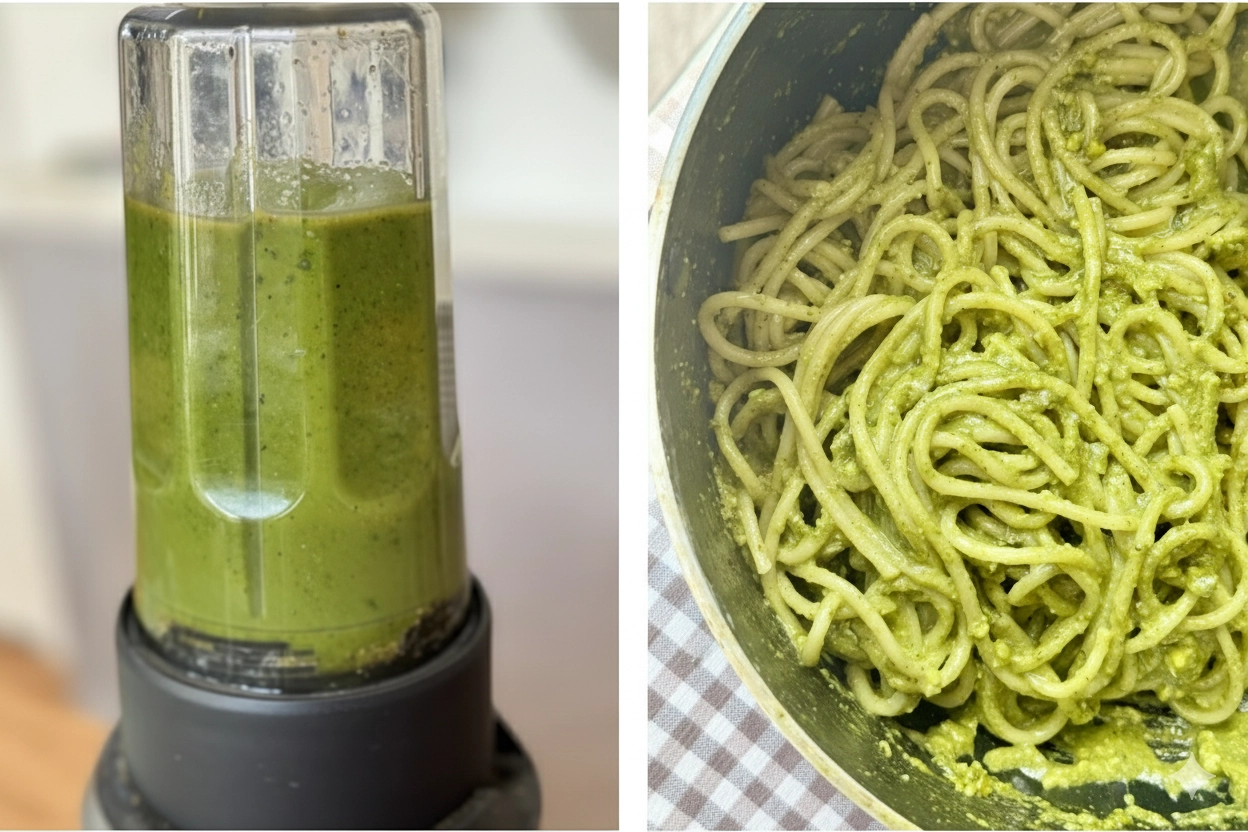
Top with extra grated cheese and, for a creamy finish, a spoonful of ricotta or burrata.
(Tip: Avoid heating pesto directly it can dull the basil’s color and flavor. Always toss gently with warm pasta.)
Expert Tips for the Best Pistachio Pesto
Perfecting pistachio pesto pasta is all about the details the freshness of your basil, the roast on your nuts, and how you blend the sauce. These pro tips ensure your pesto turns out silky, flavorful, and beautifully green every time.
1. Use High-Quality Pistachios
Sicilian pistachios, especially from Bronte, are prized for their rich, buttery taste and natural sweetness. If you can’t find them, choose unsalted roasted pistachios with a vibrant green hue. Avoid heavily salted or flavored nuts, as they can overpower the pesto.
2. Balance Lemon and Oil for Creaminess
Lemon adds brightness and cuts through the richness of the nuts and cheese. For the perfect balance:
- Start with half the lemon juice, then taste and adjust.
- Too tangy? Add a drizzle more olive oil or a touch more cheese to round it out.
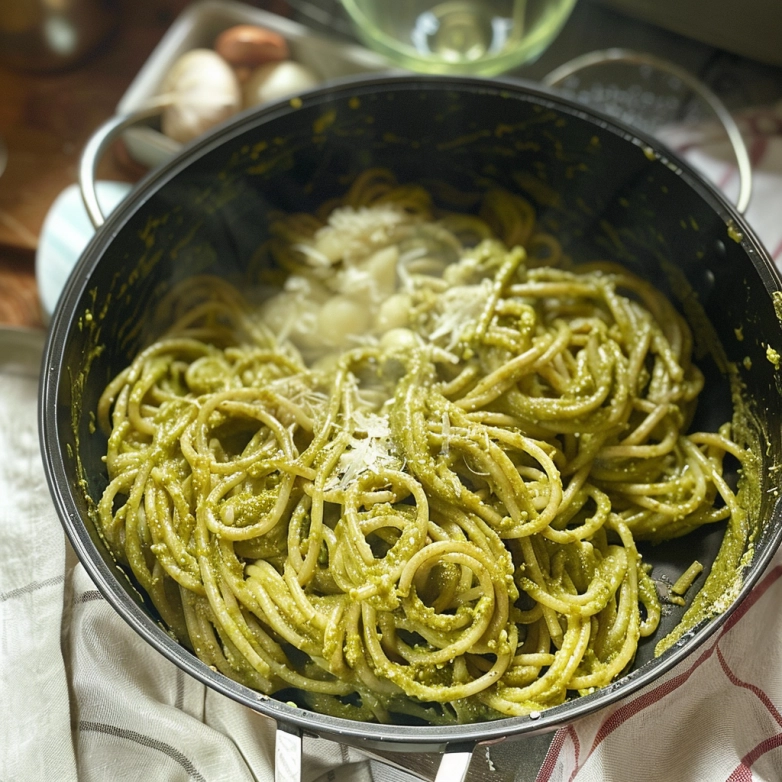
3. Don’t Over-Blend the Pesto
Blend the ingredients in short pulses. Over-blending can heat the sauce, causing it to lose its fresh flavor and vivid color. Aim for a texture that’s smooth but slightly coarse authentic Sicilian pesto should feel rustic, not pureed.
4. Save Pasta Water It’s Liquid Gold
That starchy water helps emulsify your pesto, turning it from oily to luxuriously creamy. Start with a small splash, toss, and add more as needed until the sauce clings perfectly to the pasta.
5. Use Freshly Grated Cheese
Pre-grated cheese often contains anti-caking agents that make your pesto grainy. Grate Parmesan or Pecorino fresh for smoother blending and a cleaner taste.
6. Preserve Color with Gentle Heat
Never cook the pesto directly. Always toss it into warm pasta off the heat this keeps the basil vibrant and prevents oxidation.
Substitutions & Variations
One of the best things about pistachio pesto pasta is its flexibility. You can adjust the ingredients based on your taste, dietary needs, or what’s already in your kitchen without losing that signature Sicilian flair.
1. Nut Variations
While pistachios give this dish its unique flavor, you can easily substitute:
- Almonds – for a milder, slightly sweet pesto (common in Sicilian variations).
- Cashews – for ultra-creamy texture.
- Walnuts – for a deeper, earthier taste.
(Tip: Always toast your nuts to bring out their natural oils and aroma.)
2. Herb Swaps
If you’re short on basil or want a different herbal balance:
- Parsley – adds freshness and reduces bitterness.
- Mint – brightens the pesto and pairs beautifully with seafood.
- Arugula – adds a peppery note for a more robust sauce.
Try mixing herbs (½ basil, ½ parsley or mint) for a more layered flavor.
3. Cheese Alternatives
- Pecorino Romano – saltier and tangier than Parmesan; a great Italian classic.
- Grana Padano – milder, with a buttery finish.
- Vegan option: Use nutritional yeast for a cheesy flavor without dairy.
4. Oil Choices
A mild, high-quality olive oil is ideal but you can also use:
- Avocado oil for a lighter, neutral flavor.
- Walnut oil for a deeper, nut-forward richness.
5. Creative Additions
Give your pistachio pesto pasta a personal twist:
- Add a spoonful of ricotta for extra creaminess.
- Stir in roasted zucchini, cherry tomatoes, or spinach for texture and color.
- Finish with lemon zest or cracked black pepper for a gourmet touch.
These variations make this recipe endlessly adaptable perfect for weeknights or special occasions alike.
How to Store & Reheat Pistachio Pesto Pasta
One of the many advantages of this recipe is how well it stores. Whether you’re meal-prepping for the week or saving leftovers from dinner, this dish stays fresh and flavorful with just a few simple steps.
Storing the Pistachio Pesto
To keep your homemade pesto vibrant and green:
- Transfer to an airtight jar and level the surface.
- Pour a thin layer of olive oil on top to seal out air and prevent oxidation.
- Store in the refrigerator for up to 10 days.
- For longer storage, freeze the pesto in ice cube trays or small containers.
Once frozen, transfer the cubes to a freezer-safe bag they’ll keep for up to 3 months. Defrost at room temperature or stir directly into warm pasta to melt.
Storing Cooked Pesto Pasta
- Place cooled pasta in an airtight container.
- Refrigerate for up to 3 days.
- Drizzle a little olive oil before sealing to prevent clumping.
(Tip: Avoid storing hot pasta it traps steam and causes sogginess.)
Reheating this dish
The key is gentle reheating to preserve the pesto’s delicate texture and bright color:
- Add the leftover pasta to a skillet over medium-low heat.
- Stir in a tablespoon of water or olive oil to loosen the sauce.
- Warm for 2–3 minutes, just until heated through.
- Optionally, add a little fresh pesto or butter for creaminess.
Avoid microwaving, as direct heat can separate the oils and dull the flavor.
Freezer Tip
Want ready-to-go meals? Portion the pasta into single servings before freezing. Reheat from frozen with a splash of warm water and a spoon of fresh pesto for a just-made taste.
Proper storage means you can enjoy pistachio pesto pasta anytime vibrant, fragrant, and just as delicious as the day it was made.
Serving Suggestions
this recipe is versatile enough to fit into almost any meal from an elegant dinner party spread to a quick weeknight comfort dish. The nutty, creamy sauce pairs beautifully with proteins, vegetables, and even a good glass of Sicilian wine.
1. Pasta Pairings
Different pasta shapes highlight the pesto in unique ways:
- Spaghetti or linguine classic choices for a silky, restaurant-style presentation.
- Casarecce or fusilli their twists and curves trap more pesto for extra flavor in every bite.
- Penne or rigatoni ideal for cold pasta salads or make-ahead lunches.
2. Protein Additions
Add a little protein to turn this into a satisfying main course:
- Grilled chicken juicy, lean, and perfect with lemony pesto.
- Shrimp or scallops quick to cook and enhance the dish’s Sicilian coastal flair.
- Crispy pancetta or prosciutto adds a savory crunch and salt balance.
- Tofu or chickpeas
- great vegetarian or vegan protein options that blend well with nutty sauces.
3. Vegetable Complements
Brighten your plate with seasonal vegetables:
- Roasted zucchini or cherry tomatoes – their sweetness balances the pesto’s richness.
- Steamed asparagus or broccoli – adds color and fiber.
- Spinach or arugula – toss them directly into the warm pasta for a fresh, wilted touch.
4. Toppings to Finish
- A spoonful of burrata, ricotta, or mozzarella for creamy contrast.
- A sprinkle of extra pistachios for crunch.
- A drizzle of olive oil and freshly cracked pepper to serve.
5. Wine Pairing
Pair your pistachio pesto pasta with a chilled Sicilian white wine, such as Grillo or Inzolia. Their citrus and floral notes complement the pesto’s richness and lemony brightness beautifully.
For a full Italian-inspired meal, serve this pasta alongside garlic bread, a simple green salad, or roasted vegetables. It’s a dish that’s simple enough for weeknights yet impressive enough for guests.
Nutritional Breakdown (Per Serving)
This recipe is more than just indulgent Italian comfort food it’s also nutrient-dense and filled with heart-healthy fats, plant-based protein, and essential vitamins. Below is an approximate breakdown for one generous serving (based on 200 g cooked pasta and 3 tbsp pesto).
| Nutrient | Amount (per serving) | Notes |
|---|---|---|
| Calories | ~620 kcal | Moderate-calorie main meal |
| Protein | 16 g | From pistachios, cheese, and pasta |
| Fat | 26 g | Healthy fats from olive oil and nuts |
| Saturated Fat | 4 g | Mostly from Parmesan and olive oil |
| Carbohydrates | 80 g | Complex carbs from pasta |
| Fiber | 4 g | Aided by nuts and herbs |
| Sugars | 5 g | Naturally from lemon and pistachios |
| Sodium | 610 mg | Controlled by cheese and salt levels |
| Potassium | 220 mg | Supports muscle and heart function |
| Vitamin A | 1300 IU | From basil and olive oil |
| Calcium | 125 mg | From Parmesan and pistachios |
| Iron | 2 mg | Plant-based source from nuts and greens |
Health Benefits at a Glance
- Heart-Healthy Fats: Pistachios and olive oil are rich in monounsaturated fats, known to support cardiovascular health.
- Antioxidant-Rich: Basil and pistachios contain lutein and polyphenols that help reduce inflammation.
- Protein & Fiber Boost: Keeps you feeling full and energized.
- Naturally Balanced: This meal provides a smart mix of carbs, fats, and protein ideal for a satisfying lunch or dinner.
(Nutrition values are approximate and may vary depending on specific ingredients and quantities used.)
More Delicious Pasta Recipes
If you loved this dish, you’ll definitely want to try these other flavorful pasta creations each with its own unique twist and balance of comfort and creativity.
1. White Spaghetti Bolognese
A creamy, savory take on the Italian classic. This version swaps tomato for a white sauce rich in garlic, herbs, and parmesan the perfect cozy complement to your pesto favorites.
2. Spaghetti Squash Recipe
A light, low-carb alternative to traditional pasta that pairs beautifully with pistachio pesto. The natural sweetness of spaghetti squash adds a fresh twist to nutty sauces.
3. Green Spaghetti
A vibrant green pasta made with spinach and herbs ideal if you love the idea of pesto-based sauces and want to explore new variations of Italian-inspired green pasta dishes.
Each of these recipes offers something special, whether you’re craving creamy comfort, healthy alternatives, or bright, herb-forward flavors. Together, they create a complete collection of dishes that bring Italy’s finest pasta traditions straight to your kitchen.
Love easy, flavorful recipes?
Join us on Pinterest for stunning food boards, meal prep hacks, and family favorites.
Let’s cook something amazing together!
Frequently Asked Questions About Pistachio Pesto Pasta
1. Can I use salted pistachios for this pesto?
It’s best to use unsalted roasted pistachios. Salted varieties can make the pesto overly briny, especially when combined with Parmesan. If salted nuts are your only option, rinse them briefly under warm water and pat dry before blending.
2. What pasta shapes work best with pistachio pesto?
Pistachio pesto pasta works beautifully with almost any shape. Casarecce, fusilli, or rigatoni capture the sauce in their curves, while spaghetti and linguine give a classic, elegant texture. For pasta salads, short pasta shapes like penne are ideal.
3. How long does homemade pistachio pesto last?
Stored in an airtight jar and topped with a thin layer of olive oil, homemade pistachio pesto lasts 7–10 days in the fridge. For longer storage, freeze in small portions (like ice cube trays) for up to 3 months.
4. Can I make this recipe vegan?
Yes! Simply swap the Parmesan for nutritional yeast or a vegan hard cheese alternative. The result is just as creamy and flavorful — with a slightly nuttier taste.
5. Why is my pesto turning brown in the fridge?
Pesto oxidizes when exposed to air, which causes browning. To prevent this, cover the top with a thin layer of olive oil or press plastic wrap directly against the surface before sealing.
6. Can I freeze pistachio pesto pasta?
Yes. For best results, freeze the pesto sauce separately and toss it with freshly cooked pasta when ready to serve. If you must freeze the mixed pasta, reheat gently in a pan with a bit of water and olive oil to restore creaminess.
7. Can I make pistachio pesto without a blender?
Absolutely. The traditional method uses a pestle and mortar. Start by crushing garlic and salt, then gradually add basil, pistachios, and cheese, pounding until a coarse paste forms. Slowly drizzle in olive oil to emulsify the sauce.
Pistachio Pesto Pasta (Authentic Sicilian Recipe)
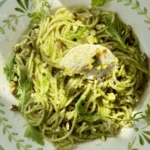
Creamy, nutty Sicilian pistachio pesto pasta made with roasted pistachios, basil, lemon, and Parmesan. Ready in 20 minutes and restaurant-level delicious.
- Prep Time: 10 mins
- Cook Time: 10 mins
- Total Time: 20 mins
- Yield: 2 servings 1x
- Category: Dog Meal
- Method: Stovetop
- Cuisine: Italian
Ingredients
100 g shelled pistachios, roasted & unsalted
100 g fresh basil leaves
1 garlic clove (optional)
1 lemon, zest & juice
70 g Parmesan or Pecorino, grated
200 ml olive oil (mild, fruity)
1/2 tbsp freshly ground black pepper
Salt to taste
200 g pasta (spaghetti, casarecce, or penne)
Optional: ricotta, burrata, or mozzarella for serving
Instructions
1. Toast pistachios in a dry skillet over medium heat 5–7 minutes until fragrant; cool slightly.
2. Blend pistachios, basil, garlic, lemon zest & juice, Parmesan, olive oil, salt, and pepper until mostly smooth with slight texture.
3. Cook pasta in salted boiling water until al dente; reserve 1/2 cup pasta water and drain.
4. Toss hot pasta with 3–4 tbsp pesto and a splash of pasta water over low heat until creamy; adjust with more water/pesto as needed.
5. Serve with extra Parmesan and a spoon of ricotta or burrata if desired.
Notes
Use unsalted roasted pistachios; avoid heavily salted nuts.
Add pasta water gradually to emulsify and get a silky sauce.
Store pesto in a jar topped with a thin oil layer for 7–10 days, or freeze in cubes up to 3 months.
Nutrition
- Serving Size: 1 plate
- Calories: 620
- Sugar: 5g
- Sodium: 610mg
- Fat: 26g
- Saturated Fat: 4g
- Unsaturated Fat: 20g
- Trans Fat: 0g
- Carbohydrates: 80g
- Fiber: 4g
- Protein: 16g
- Cholesterol: 5mg