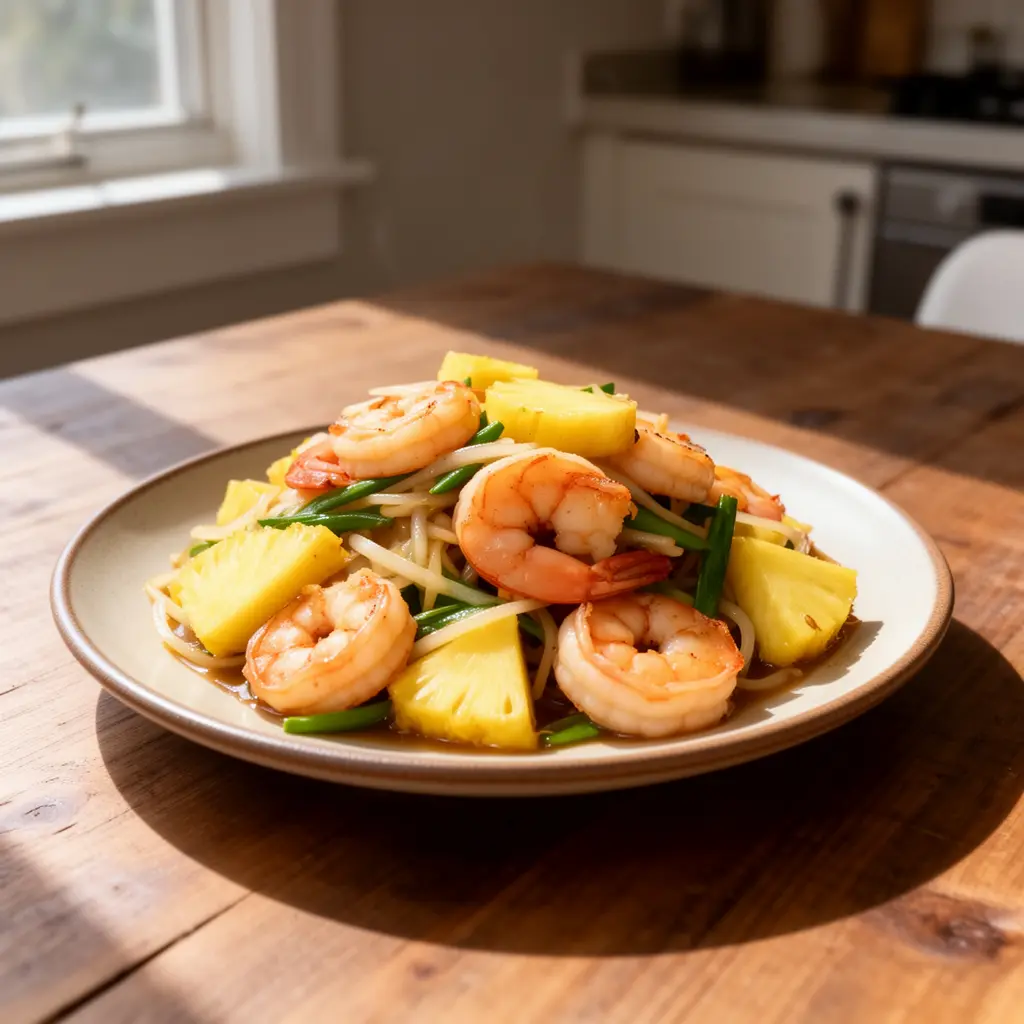
The tropical sun beat down, reflecting off the turquoise water as I haggled with the local fishermen. Today’s catch: plump, glistening shrimp, their shells iridescent in the light. Back in my tiny kitchen overlooking the harbor, the air hummed with anticipation. I imagined the flavors – the sweetness of pineapple, the savory depth of soy, the subtle kick of chili. This wasn’t just dinner; it was an edible vacation, a transportive experience crafted from the day’s bounty. I’d learned the secrets of this dish from a wizened old woman on the island, her movements deliberate and precise, each ingredient measured not with cups and spoons, but with a knowing glance and a pinch of instinct. The recipe had been passed down through generations, a culinary legacy etched in time. I wanted to honor that heritage, to capture the essence of island life in every bite. It was about more than just stir-frying shrimp and pineapple; it was about sharing a story, a connection to a place and its people. I carefully prepped the ingredients, mindful of preserving their individual qualities, knowing that when combined, they would create something truly extraordinary. The marinade mingled and thickened, releasing a symphony of aromas. Fresh ginger and garlic sizzled gently in the wok, filling the air with their pungent fragrance. I knew I was on the verge of something exceptional. This wasn’t just a meal; it was an experience, a culinary voyage rooted in tradition but interpreted with a touch of modern sensibility. Every sizzle, every toss, every aroma was a testament to the power of food to connect us to places and cultures. Now, to create the magic. This dish, a symphony of flavors and textures, is my tribute to the island and its people.
Ingredient Deep Dive
| Ingredient | Quantity | Notes |
|---|---|---|
| Shrimp | 1 pound | Large or jumbo, peeled and deveined |
| Fresh Pineapple | 1 cup | Cut into 1-inch chunks |
| Red Bell Pepper | 1 medium | Sliced into strips |
| Green Bell Pepper | 1 medium | Sliced into strips |
| Onion | 1/2 medium | Thinly sliced |
| Garlic | 2 cloves | Minced |
| Ginger | 1 tablespoon | Minced |
| Soy Sauce | 3 tablespoons | Low sodium preferred |
| Brown Sugar | 2 tablespoons | Packed |
| Rice Vinegar | 1 tablespoon | Unseasoned |
| Cornstarch | 1 tablespoon | For thickening the sauce |
| Sesame Oil | 1 tablespoon | For flavor and aroma |
| Vegetable Oil | 2 tablespoons | For stir-frying |
| Red Pepper Flakes | 1/2 teaspoon | Adjust to taste for spiciness |
| Green Onions | 2 tablespoons | Chopped, for garnish |
| Sesame Seeds | 1 tablespoon | For garnish |
Substitutions & Swaps
If you don’t have fresh pineapple, canned pineapple chunks (in juice, not syrup) can be used; drain them well. For a different protein, chicken or tofu can be substituted for shrimp. If you prefer not to use bell peppers, use other vegetables like broccoli florets, snow peas, or snap peas. Coconut aminos can be used instead of soy sauce for a gluten-free option. Honey or maple syrup can replace brown sugar. If you don’t have rice vinegar, white wine vinegar or apple cider vinegar can be used in a pinch. Arrowroot powder can be used as a substitute for cornstarch. Instead of red pepper flakes, a dash of sriracha or other hot sauce can be added for heat. For nut allergies, sunflower seeds can replace sesame seeds for garnish. Consider using other citrus juices depending on the desired flavor profile.
Equipment Guide
You will need a wok or large skillet for stir-frying. A cutting board and knife for prepping vegetables and shrimp. A small bowl for mixing the sauce. A measuring cup and spoons for measuring ingredients. A wooden spoon or spatula for stirring. Serving bowls for serving the finished dish. A rice cooker (optional) for preparing rice to serve alongside.
Step-by-Step Walkthrough
1. Prep the Shrimp: Pat the shrimp dry with paper towels. This helps them brown properly in the stir-fry.
2. Prepare the Marinade: In a small bowl, whisk together the soy sauce, brown sugar, rice vinegar, and cornstarch. Set aside.
3. Cut the Vegetables: Slice the red and green bell peppers into strips. Thinly slice the onion. Mince the garlic and ginger. Cut the pineapple into 1-inch chunks.
4. Heat the Wok: Heat the vegetable oil in a wok or large skillet over high heat until it shimmers.
5. Stir-Fry the Aromatics: Add the garlic and ginger to the hot oil and stir-fry for about 30 seconds, until fragrant.
6. Add the Shrimp: Add the shrimp to the wok and stir-fry for 2-3 minutes, until they turn pink and opaque. Remove the shrimp from the wok and set aside.
7. Stir-Fry the Vegetables: Add the sliced onion and bell peppers to the wok and stir-fry for 3-4 minutes, until they are tender-crisp.
8. Add the Pineapple: Add the pineapple chunks to the wok and stir-fry for 1-2 minutes, until they are slightly caramelized.
9. Pour in the Sauce: Pour the marinade over the vegetables and pineapple. Bring to a simmer and cook for 1-2 minutes, until the sauce thickens.
10. Return the Shrimp: Return the cooked shrimp to the wok and toss to coat with the sauce.
11. Season and Serve: Stir in the sesame oil and red pepper flakes. Taste and adjust seasonings as needed. Serve immediately over rice, garnished with green onions and sesame seeds.
Expert Tips & Troubleshooting
Ensure your wok or skillet is hot before adding the ingredients. This helps to create a proper sear and prevent sticking. Don’t overcrowd the wok; stir-fry in batches if necessary to maintain high heat. Pat the shrimp dry before stir-frying to promote browning and prevent steaming. If the sauce is too thick, add a splash of water or broth to thin it out. If the sauce is too thin, continue cooking it for a few more minutes to allow it to reduce and thicken. Avoid overcooking the shrimp, as it can become tough and rubbery. Adjust the amount of red pepper flakes to your desired level of spiciness. Prepare all of your ingredients before you start cooking. This is called mise en place and will make the stir-frying process much smoother. If you are using frozen shrimp, make sure to thaw them completely and pat them dry before cooking. Use high-quality soy sauce for the best flavor. Stir-frying needs constant motion to prevent burning. Make sure to use a spatula or wok utensil to move the ingredients around continuously.
Flavor Variations
Try adding a splash of coconut milk for a creamier, more tropical flavor. Incorporate other Asian sauces like oyster sauce or hoisin sauce for added depth. Add a squeeze of lime juice at the end for a burst of acidity. Experiment with different vegetables, such as zucchini, carrots, or mushrooms. Add cashews or peanuts for a crunchy texture. Use different types of chili peppers for varying levels of heat. Consider adding chopped cilantro or basil for a fresh, herbal element. Make it a complete meal by adding rice noodles or quinoa to the stir-fry. Change the spice profile with curry powder or garam masala to move away from the Southeast Asian profile.
Storage & Reheating
Store leftover Pineapple Shrimp Stir-Fry in an airtight container in the refrigerator for up to 3 days. To reheat, you can microwave it on medium power for 1-2 minutes, or until heated through. Alternatively, you can reheat it in a skillet over medium heat, adding a splash of water or broth if needed to prevent it from drying out. Reheating frozen stir-fry isn’t usually recommended, because the texture can become quite mushy. However, if you must freeze it, make sure to cool it to room temperature before transferring it to a freezer safe container. Thaw in the refrigerator overnight before reheating.
FAQ Section
Q: Can I use frozen pineapple instead of fresh?
A: Yes, but fresh pineapple is preferable. If using frozen, thaw it completely and pat it dry before adding it to the stir-fry to prevent excess moisture. However, the flavor will likely be diminished when compared to fresh pineapple.
Q: How do I prevent the vegetables from becoming soggy?
A: Make sure to use high heat and don’t overcrowd the wok. Stir-fry the vegetables until they are tender-crisp, not overcooked. Cutting your vegetables uniformly may also help ensure even cooking for a great texture.
Q: Can I make this dish vegetarian or vegan?
A: Absolutely! Substitute the shrimp with firm or extra-firm tofu, cut into cubes and pressed to remove excess water. Ensure your soy sauce is vegan and that you are using plant-based oil. To give the tofu the flavor of the shrimp, you can try marinating it in a seafood seasoning mix.
Q: What kind of rice should I serve with this stir-fry?
A: Jasmine rice or long-grain white rice is a classic choice. Brown rice is a healthier option. Quinoa is also another great option. The choice depends entirely on the desired taste and dietary preference.
Nutrition Information
| Nutrient | Amount per serving (approximate) |
|---|---|
| Calories | 350 |
| Protein | 30g |
| Fat | 15g |
| Saturated Fat | 3g |
| Cholesterol | 200mg |
| Sodium | 800mg |
| Carbohydrates | 30g |
| Fiber | 3g |
| Sugar | 15g |
(Note: Nutritional information is approximate and may vary based on specific ingredients and portion sizes.)
Disclaimer: This recipe is intended for informational purposes only. Individual results may vary. Always practice safe food handling techniques. Consume responsibly.