The Art of the Roman Countryside: Authentic Pici Cacio e Pepe
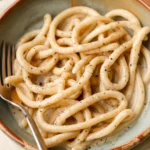
Learning to make Pici Cacio e Pepe is a study in texture and technique, yielding a profoundly satisfying meal that feels both ancient and utterly contemporary. The thick, hand-rolled strands of pasta catch the creamy, emulsified sauce perfectly.
- Prep Time: 45 mins
- Cook Time: 15 mins
- Total Time: 60 mins
- Yield: 4 servings 1x
- Category: Main Course
- Method: Stovetop
- Cuisine: Italian
Ingredients
2 cups (240 grams) Semolina flour
3/4 cup (180 milliliters) lukewarm water
1 tablespoon extra virgin olive oil
1/2 teaspoon fine sea salt
1 cup (100 grams) Pecorino Romano cheese, finely grated
2 teaspoons freshly cracked black pepper
1/2 cup (120 milliliters) reserved pasta cooking water
Instructions
1. Form the dough: Mix flour, water, oil, and salt to form a shaggy dough, then knead until smooth and elastic. Allow it to rest for at least thirty minutes.
2. Roll the Pici: Cut the dough into small pieces and hand-roll them into long, thick strands (pici), about three millimeters in diameter.
3. Toast the Pepper: Gently toast the black pepper in a large skillet over low heat until intensely fragrant, about one to two minutes.
4. Cook the Pici: Cook the fresh pici in well-salted, boiling water for four to seven minutes until tender. Reserve 1/2 cup of the starchy cooking water.
5. Create the Emulsion: Whisk the grated Pecorino Romano with the warm reserved pasta water until a thick, glossy cream is formed.
6. Combine and Finish: Add the drained pici and the cheese emulsion to the skillet with the toasted pepper. Toss vigorously off the heat to coat every strand. Serve immediately.
Notes
The number one cause of a grainy sauce is using water that is too hot. Aim for water that is around one hundred forty Fahrenheit.
Use only finely, freshly grated Pecorino Romano—pre-grated cheese contains anti-caking agents.
Cacio e pepe is not a dish that waits well. Serve it immediately after the final toss in warm, shallow bowls.
Nutrition
- Serving Size: 1 bowl
- Calories: 480
- Sugar: 1g
- Sodium: 850mg
- Fat: 18g
- Saturated Fat: 10g
- Unsaturated Fat: 6g
- Trans Fat: 0g
- Carbohydrates: 58g
- Fiber: 3g
- Protein: 25g
- Cholesterol: 30mg
Find it online: https://www.flavourrecipe.com/pici-cacio-e-pepe/