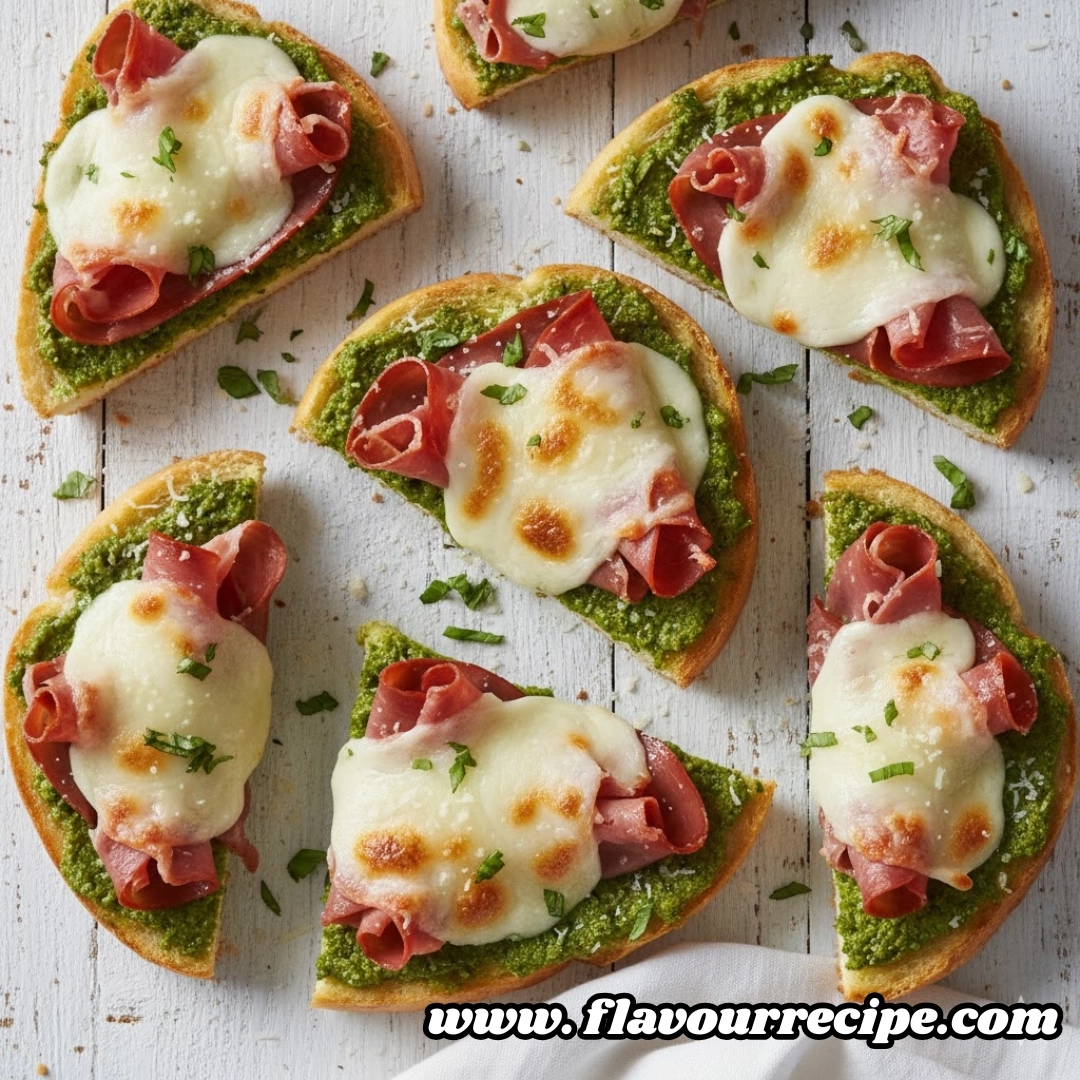
This preparation reimagines the traditional pizza base by utilizing a crusty loaf of French bread, which offers a sturdy foundation for robust Mediterranean flavors. By replacing a standard red sauce with a concentrated basil pesto, the profile shifts toward something herbaceous and bright. This Pesto Pizza is particularly suited for casual gatherings or mid-day meals where a quick turnaround is necessary without sacrificing the complexity of cured meats and melted cheeses. The contrast between the toasted exterior of the bread and the molten mozzarella creates a satisfying texture that holds up well under the weight of the savory capicola.
Table of Contents
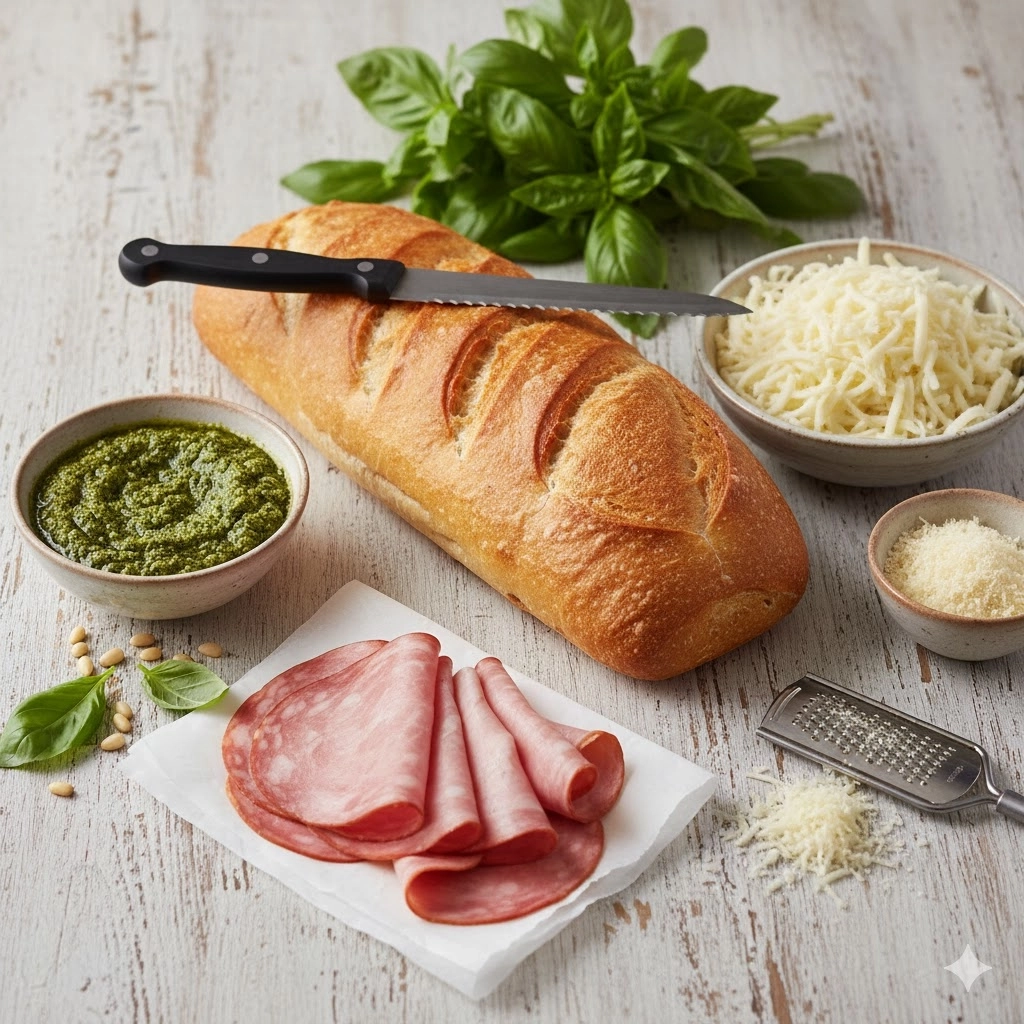
Components for the Build
The Foundation
- 1 large loaf French bread, sliced open lengthwise
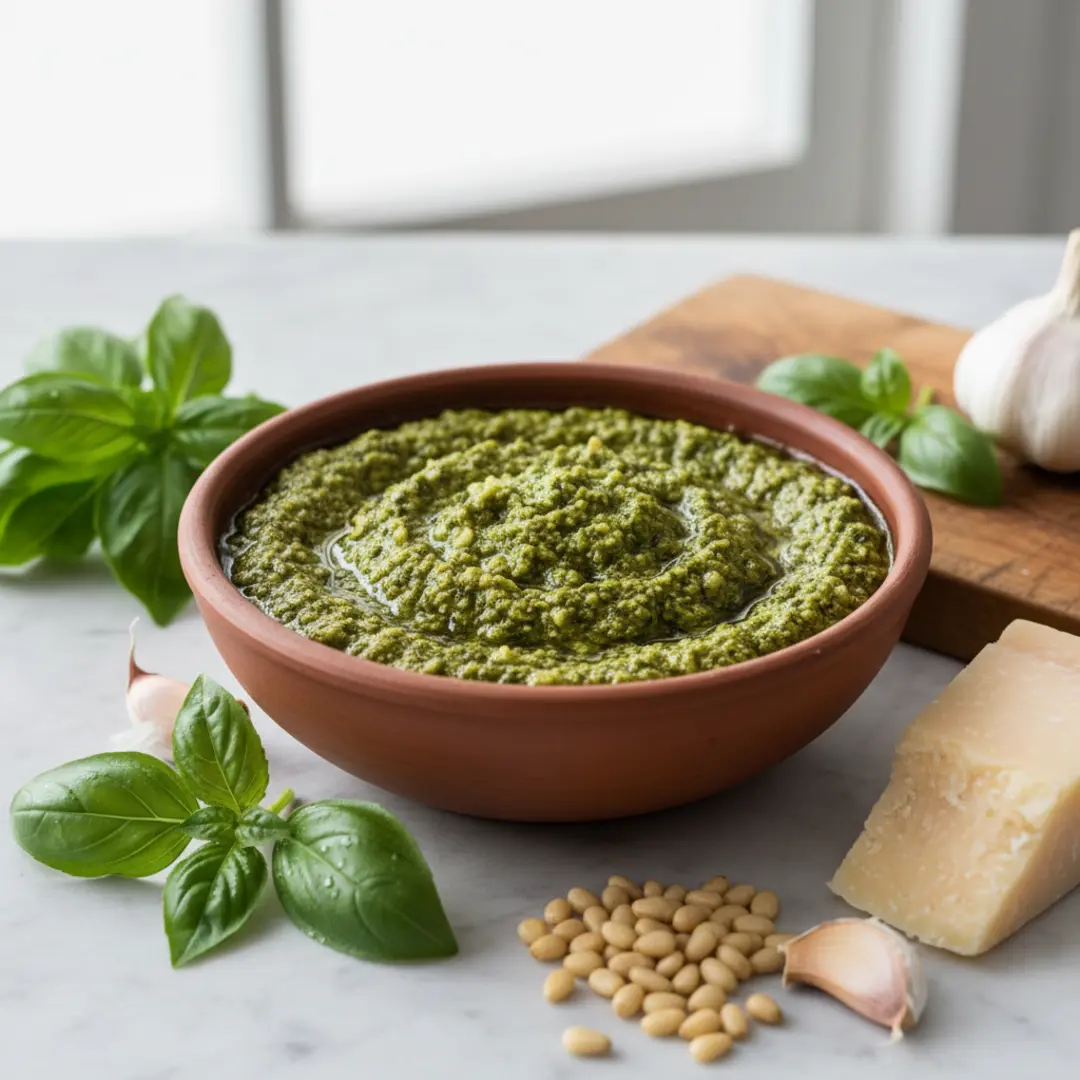
- 1 cup high-quality prepared basil pesto
The Proteins and Cheeses
- 8 ounces (one half pound) thinly sliced capicola
- 2 cups whole-milk mozzarella, shredded
- One half cup Parmigiano-Reggiano or Parmesan, finely grated
Final Flourish
- One quarter cup fresh basil leaves, roughly chopped
Preparation Summary
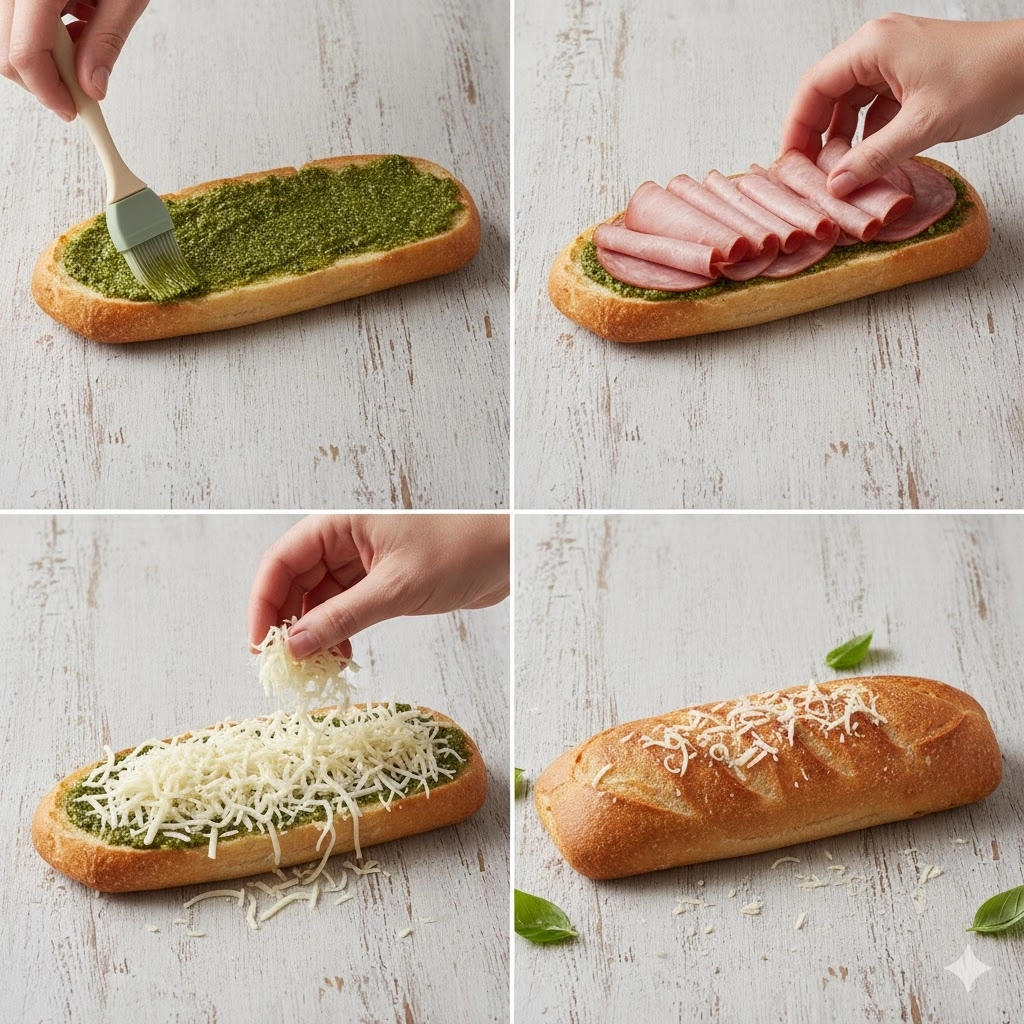
- Arrange the oven rack to the upper third position and activate the broiler.
- Lay the bread halves cut-side up on a heavy-duty rimmed baking sheet.
- Distribute the pesto evenly across the crumb of the bread, reaching the edges.
- Layer the sliced capicola over the pesto base in a slightly ruffled pattern.
- Cover the meat with a generous layer of shredded mozzarella.
- Dust the top with the grated Parmesan cheese.
- Broil until the cheese is bubbling and showing golden spots.
- Garnish with fresh basil and slice into individual portions.
Detailed Execution and Sensory Cues
Preparing the Canvas
Selecting the right bread is the first step toward success. A standard French loaf provides a soft interior that absorbs the oil from the pesto while the crust becomes shatteringly crisp under the broiler. When you split the loaf, try to keep the halves even in thickness. If the bread is particularly airy, you can lightly press down on the center of the crumb to create a shallow “well” that will better contain the melting cheese.
Layering for Flavor Balance
Apply the pesto using a pastry brush or the back of a large spoon. You are looking for a vibrant green coating that fully saturates the surface. When adding the capicola, avoid laying the slices perfectly flat. By folding or ruffling the meat, you create little pockets that catch the melting cheese and prevent the meat from becoming one solid, leathery layer. The mozzarella should be distributed to the very edges of the crust to prevent the bread from burning before the cheese has finished melting.
Managing the Heat
The broiler is an intense heat source, so vigilance is required. Once the baking sheet is under the flame, do not walk away. You will first notice the aroma of toasted nuts and garlic from the pesto, followed by the sound of the cheese beginning to sizzle. The ideal Pesto Pizza is ready when the mozzarella has transitioned from opaque white to a translucent, bubbling state with small, charred leopard spots. The edges of the French bread should look deeply toasted but not blackened.
The Final Touch
Residual heat is an important factor here. Let the pizza sit for about two minutes before adding the fresh basil. If the basil is added to a scorching hot surface, it will oxidize and turn black almost instantly. Waiting a moment allows the herbs to wilt slightly and release their essential oils without losing their bright green color. Use a serrated knife to saw through the crust, ensuring clean slices that don’t pull the cheese off the bread.
Professional Insights for Success
- Pesto Quality: Since pesto is the primary seasoning, use a brand kept in the refrigerated section or a homemade version. Shelf-stable jars often have a duller flavor and a more brownish hue.
- Moisture Control: If your pesto has a thick layer of oil on top, give it a good stir before spreading. Too much excess oil can lead to a soggy bread crumb.
- Cheese Temperature: Use cold mozzarella straight from the refrigerator. Because the broiler is so hot, cold cheese takes slightly longer to melt, which gives the bread more time to toast properly.
- Capicola Variations: Sweet capicola offers a mild, buttery fat profile, while spicy (hot) capicola provides a sharp contrast to the creamy mozzarella. Choose based on your heat preference.
- Bread Freshness: Surprisingly, bread that is a day old often works better than very fresh, soft bread. The slightly drier crumb absorbs the pesto oil more efficiently without becoming mushy.
- Even Broiling: Rotate the baking tray halfway through the broiling process. Most home broilers have “hot spots,” and rotating ensures one half of the loaf doesn’t burn while the other is still pale.
Customization and Substitutes
- The Herb Profile: If basil pesto feels too traditional, try a sun-dried tomato pesto for a sweeter, more acidic base, or a kale and walnut pesto for an earthy undertone.
- Alternative Meats: If capicola is unavailable, prosciutto cotto or even thinly sliced spicy salami (soppressata) provides a similar salty kick. For a vegetarian version, replace the meat with very thinly sliced roasted red peppers.
- Cheese Swaps: For a more sophisticated melt, swap half of the mozzarella for Fontina or Gruyere. These cheeses have a lower melting point and add a nutty complexity.
- Bread Options: While French bread is standard, a large ciabatta loaf split open provides even more nooks and crannies for the pesto to settle into.
Presentation and Pairing
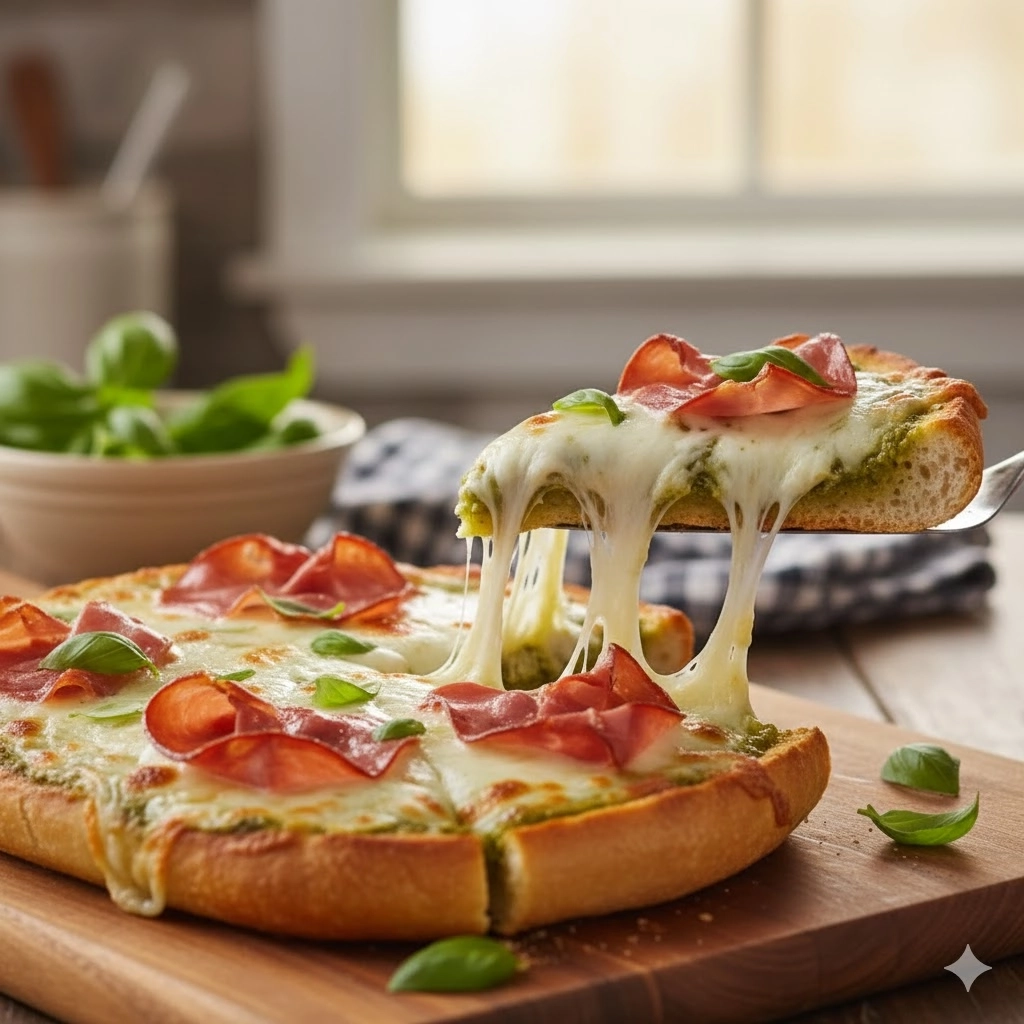
This dish is best served family-style on a large wooden cutting board. Because the flavors are quite rich and salty, a bright, acidic side dish is the ideal accompaniment. A simple arugula salad with a sharp lemon vinaigrette cuts through the fat of the cheese and capicola perfectly.
For a more substantial meal, serve the pizza alongside a chilled gazpacho or a light tomato broth. If serving as an appetizer, cut the bread into smaller, two-inch wide strips or “fingers” to make them easier for guests to handle.
Frequently Asked Questions
Can I make this ahead of time?
You can assemble the bread with the pesto and meat up to four hours in advance, but do not add the cheese until you are ready to broil. Store the assembled halves in the refrigerator wrapped loosely in foil to keep the bread from drying out.
How do I prevent the roof of my mouth from getting burned?
The high fat content in the mozzarella and pesto retains heat significantly. Always allow the pizza to rest for at least three minutes after it comes out of the oven to let the internal temperature of the cheese stabilize.
My bread always burns before the cheese melts, what am I doing wrong?
Your oven rack might be too close to the heating element. Lower the rack by one notch. Additionally, ensure the cheese covers the bread all the way to the crust edges, as the cheese acts as an insulator for the bread.
Can I use frozen bread for this recipe?
Yes, but you should thaw the bread completely at room temperature before slicing and topping. If the bread is still frozen in the center, the pesto will not penetrate the crumb, and the middle of the pizza will remain cold.
Nutrition Information
| Nutrient | Amount per Serving |
| Calories | 580 kcal |
| Protein | 28 g |
| Carbs | 42 g |
| Fat | 34 g |
| Fiber | 3 g |
| Sugar | 4 g |
| Sodium | 1450 mg |
Disclaimer
Nutrition information is an estimate and may vary based on preparation and ingredients used.
PrintSimple French Bread Pesto Pizza
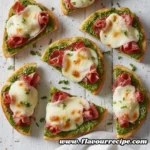
This simple French bread Pesto Pizza reimagines the traditional pizza base by utilizing a crusty loaf of French bread, vibrant basil pesto, and savory capicola for a 15-minute meal.
- Prep Time: 10 mins
- Cook Time: 5 mins
- Total Time: 15 mins
- Yield: 4 servings 1x
- Category: Main Course
- Method: Broil
- Cuisine: American-Italian
Ingredients
1 large loaf French bread, split lengthwise
1 cup high-quality prepared basil pesto
8 ounces thinly sliced capicola
2 cups whole-milk mozzarella, shredded
1/2 cup Parmesan cheese, finely grated
1/4 cup fresh basil leaves, chopped
Instructions
1. Preheat the broiler and position the rack in the top third of the oven.
2. Lay bread halves cut-side up on a baking sheet.
3. Distribute pesto evenly across the crumb of the bread.
4. Layer sliced capicola over the pesto in a ruffled pattern.
5. Cover with a generous layer of shredded mozzarella and Parmesan.
6. Broil for 3 to 5 minutes until cheese is bubbling and golden.
7. Garnish with fresh basil and slice with a serrated knife.
Notes
Use cold mozzarella straight from the fridge to prevent the bread from burning before the cheese melts.
Rotate the baking tray halfway through broiling for an even toast.
Wait 2 minutes before adding fresh basil to prevent it from turning black.
Nutrition
- Serving Size: 2 slices
- Calories: 580
- Sugar: 4g
- Sodium: 1450mg
- Fat: 34g
- Saturated Fat: 16g
- Unsaturated Fat: 14g
- Trans Fat: 0g
- Carbohydrates: 42g
- Fiber: 3g
- Protein: 28g
- Cholesterol: 85mg