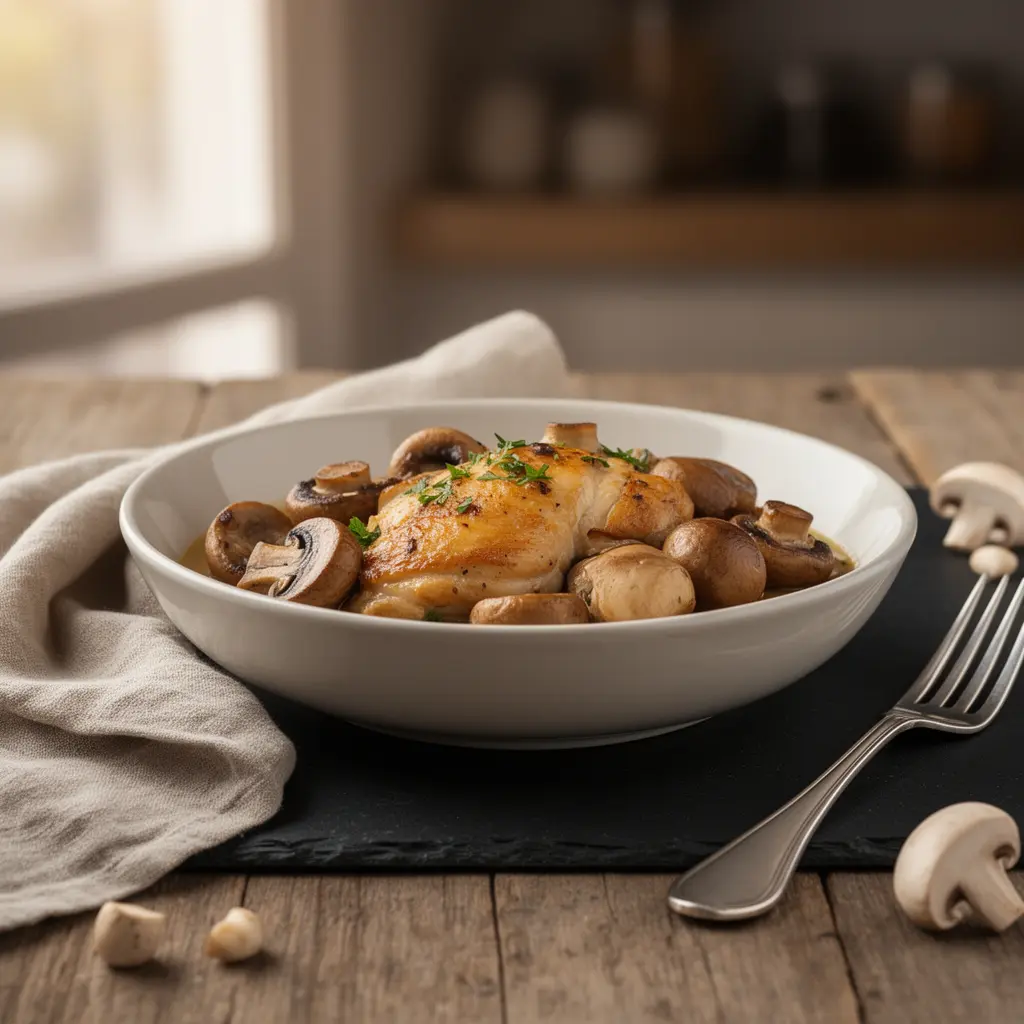
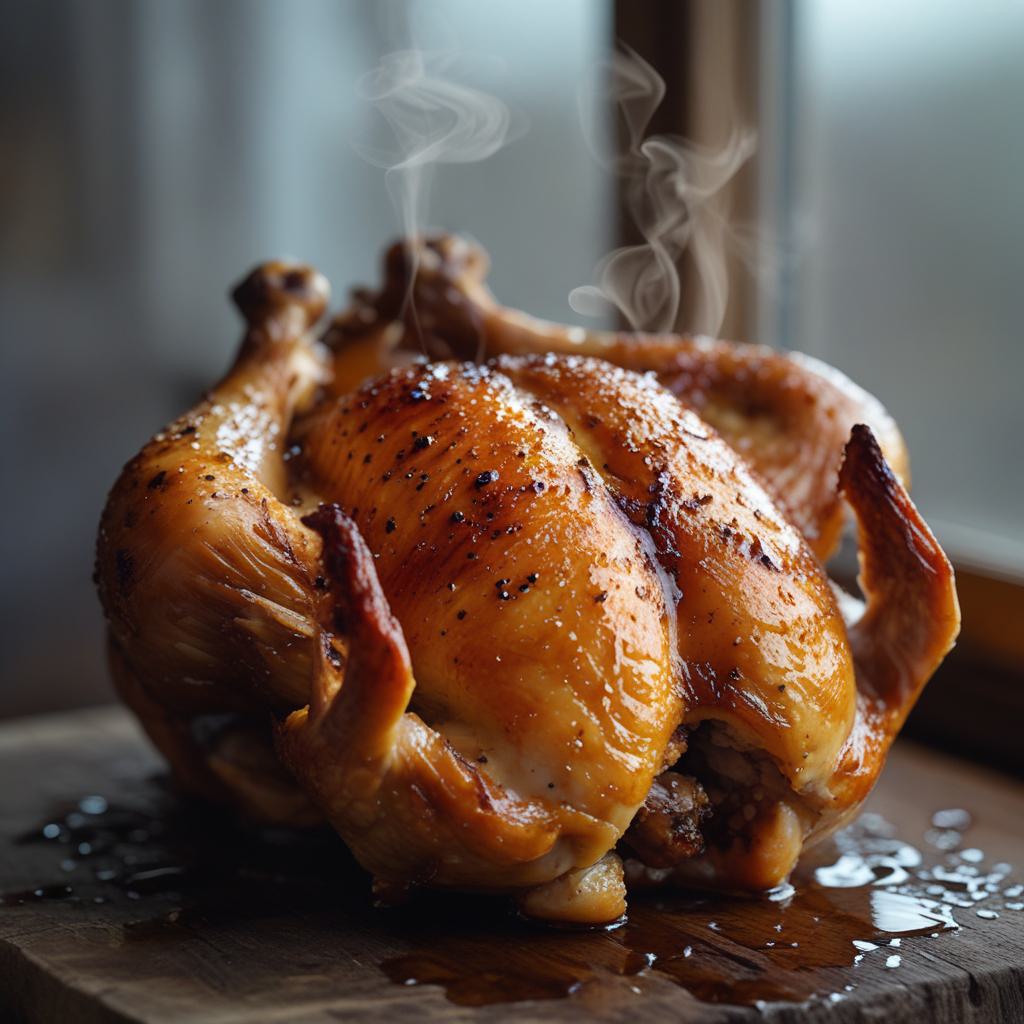
The moment juicy roasted chicken enters the oven, a primal alchemy begins. As heat penetrates the golden skin, aromatic compounds awaken—thyme’s piney earthiness pirouettes with garlic’s pungent allure while butter caramelizes into nutty profundity. This isn’t mere cooking; it’s a multisensory crescendo where crispness collides with succulence. The skin contracts into a lacquered armor, sealing steam that bathes the breast in self-basting luxury. Leg joints loosen as collagen surrenders to temperature, weeping savory jus into the roasting tray. What emerges transcends sustenance—it’s a bronzed masterpiece whispering of Sunday suppers and Parisian rotisseries, its perfume straddling nostalgia and indulgence. For chefs, mastering this dish is akin to conducting an orchestra: timing the drumstick’s wiggle to signify doneness, balancing brine and dry heat to defy dryness. When carved, steam erupts like culinary applause—a standing ovation of flavor.
Table of Contents
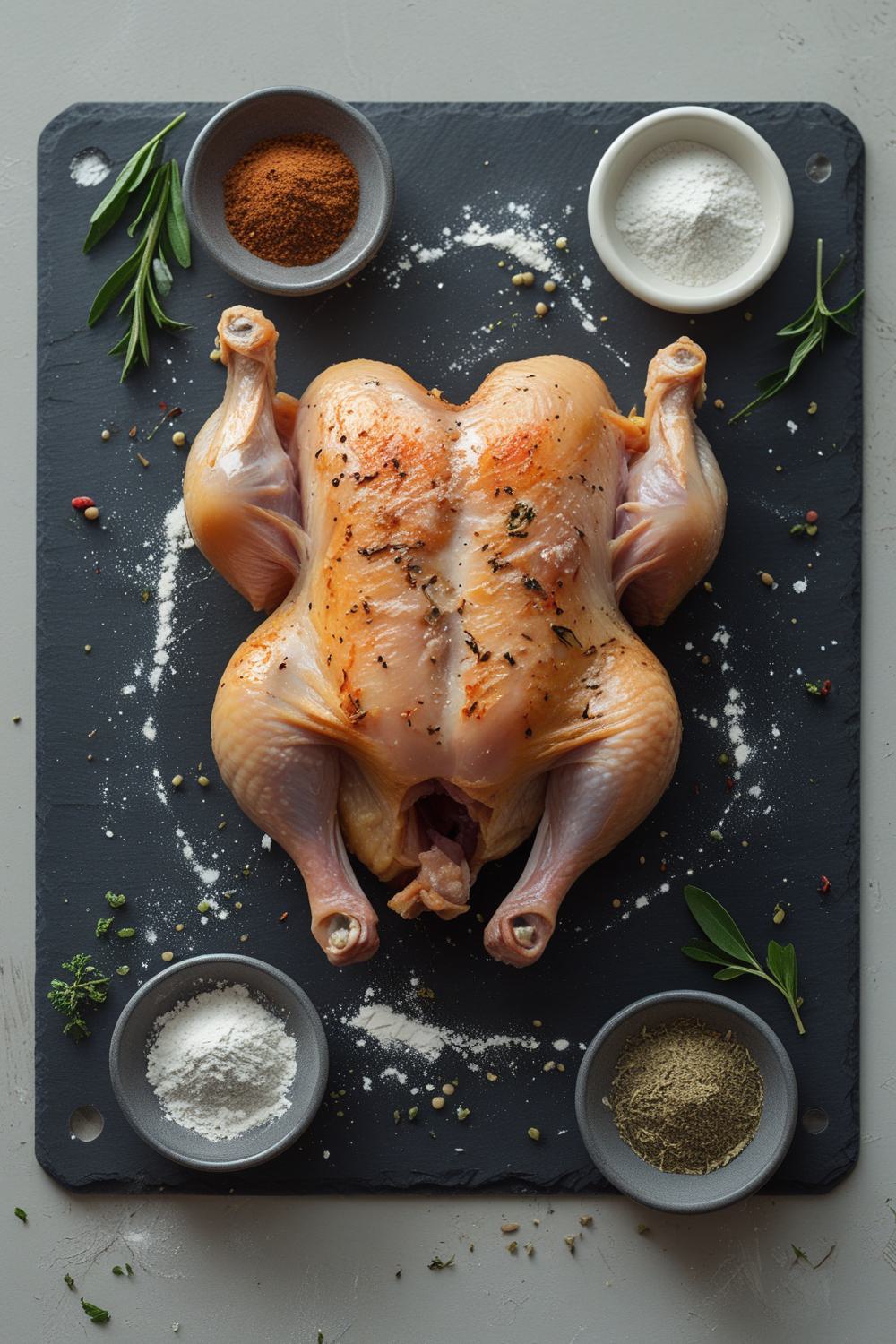
Ingredient Deep Dive
| Ingredient | Quantity | Purpose |
|---|---|---|
| Whole Chicken (air-chilled) | 4 lbs | Higher moisture retention vs. water-chilled |
| Kosher Salt | 2 Tbsp | Denatures proteins for tender meat |
| Unsalted Butter | 6 Tbsp | Fat-soluble flavor carrier, promotes Maillard reaction |
| Fresh Thyme | 1/4 cup | Volatile oils mitigate heterocyclic amine formation |
| Garlic Cloves | 8 | Alliinase enzyme creates allyl mercaptan upon roasting |
| Lemon (zest + juice) | 1 | Acid balances fat, citral enhances perception of juiciness |
| Black Pepper (fresh crack) | 2 tsp | Piperine boosts salivation for heightened flavor impact |
Salt performs structural wizardry here—it dissolves muscle proteins, creating a gel matrix that traps juices during roasting. Air-chilled birds avoid water-logged meat (common in water-processed poultry), enabling crisper skin. Butter’s milk solids caramelize between 250-300°F, accelerating the Maillard reaction where amino acids and reducing sugars create hundreds of new flavor compounds. Thyme’s thymol oil has a higher smoke point than parsley or cilantro, standing up to prolonged roasting without bitterness.
The lemon’s dual-phase use—zest under the skin, juice in the cavity—capitalizes on terpenes (limonene) in the zest and citric acid in the juice. Citrus acid also acts as a mild brine, disrupting poultry proteins just enough to tenderize without curing. Garlic strategically placed in the cavity steams rather than burns, converting harsh allicin into sweet, nutty sulfides that perfume the entire bird from within.
Substitutions & Swaps
For gluten-sensitive diners, ensure bouillon or broth replacements are certified GF—many contain hidden wheat derivatives. Vegan adaptations demand structural creativity: cauliflower steaks or whole roasted tofu blocks (pressed 24 hours) can mimic chicken’s heft. Blend miso + nutritional yeast + smoked paprika for an umami “skin” effect. Palm oil-free margarine works for butter swaps but lacks milk solids; amplify browning with a light maple syrup brush.
Pantry limitations? Dried thyme revives with a 10-minute vinegar soak (use apple cider vinegar). No fresh lemon? Combine grapefruit zest with rice vinegar for brightness. If kosher salt isn’t available, halve table salt quantity—its compact crystals deliver twice the salinity per volume. For oil instead of butter, choose high-oleic sunflower oil; its monounsaturated fats better mimic butter’s browning behavior than olive oil.
Equipment Guide
Metal supremacy reigns here: cast iron skillets or roasting pans with wire racks guarantee superior heat conduction. Avoid glass or ceramic—their slow thermal response causes uneven cooking. An instant-read thermometer (Thermapen recommended) is non-negotiable; breast meat dries past 165°F while dark meat requires 175°F for collagen breakdown. Basting bulbs outperform spoons—they collect hot fat from pan corners without cooling the oven. If trussing, silicone-coated twine won’t scorch like plain cotton. For crispiest skin, consider a preheated pizza stone under your roasting pan to radiate bottom heat.
Step-by-Step Walkthrough
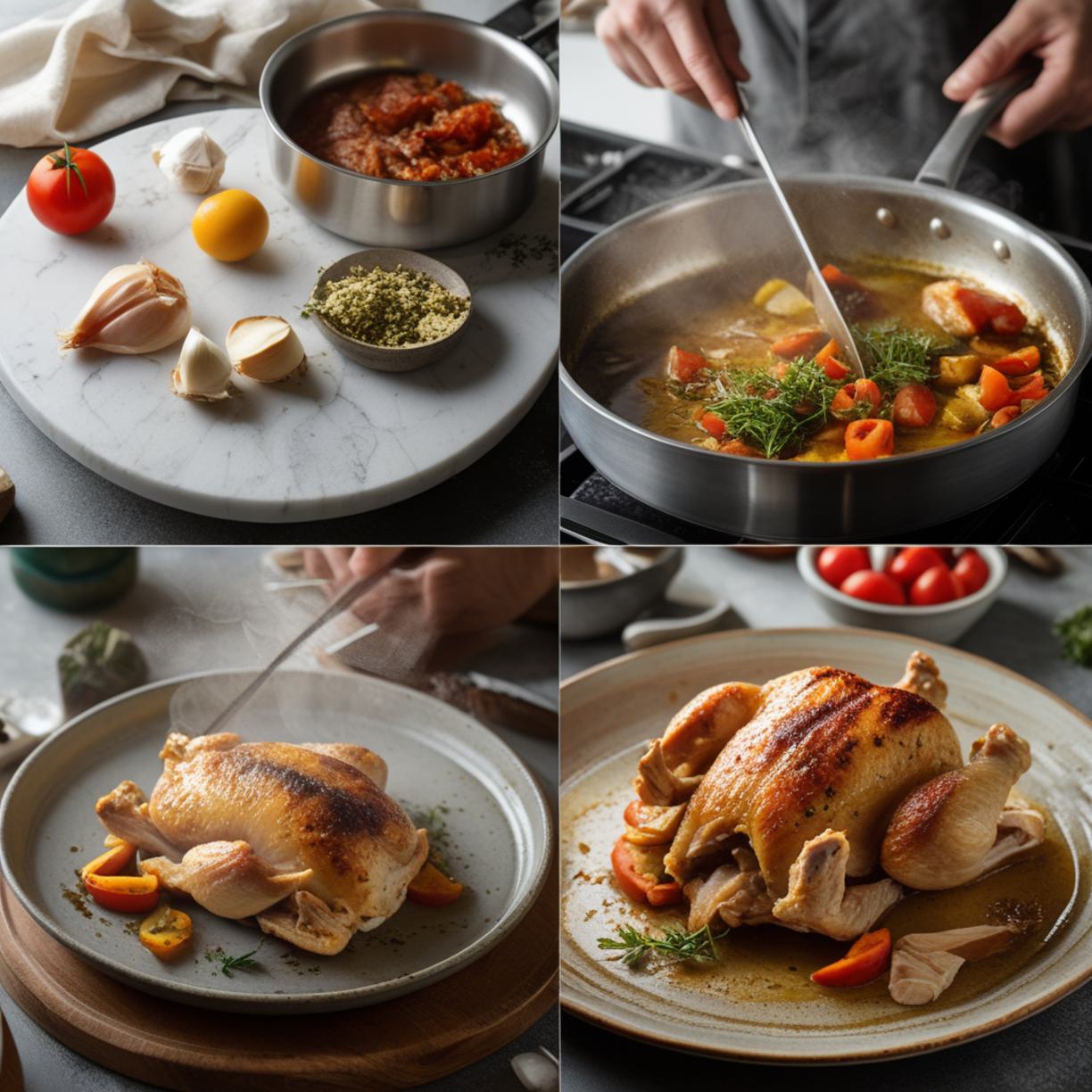
1. Dry brine: Pat chicken dry. Rub 1 Tbsp salt under breast skin, 1 Tbsp inside cavity. Refrigerate uncovered 12-48 hours.
2. Herb butter: Mash softened butter with thyme, lemon zest, pepper.
3. Prep: Stuff cavity with lemon halves + 4 garlic cloves. Gently separate skin from breast; spread herb butter underneath.
4. Truss: Loop twine around drumsticks, pulling wings tight against body.
5. Roast: Place breast-up on rack in pan. Roast at 450°F for 25 mins, then reduce to 375°F.
6. Baste: Every 20 mins with pan juices until internal thigh hits 175°F (~75 mins total).
7. Rest: Tent loosely with foil 30 mins before carving.
Professional Insights:
High initial heat shocks the skin’s proteins, creating micro-fissures that later crisp into shards. Reducing temperature after 25 minutes allows heat to penetrate deeper tissues without scorching. Basting isn’t about moisture—it’s about lipid redistribution; each brush layers fat onto skin, accelerating rendering.
Resting is non-negotiable. As meat cools, proteins reabsorb up to 15% of expelled juices. Slicing too soon surrenders those fluids to the cutting board.
Carve strategically: Remove legs first by finding the hip joint with your knife tip. For breast, slice diagonally across the grain at 45 degrees—this shortens muscle fibers for more tender bites.
Expert Tips & Troubleshooting
Pro Secrets:
– For ultra-crisp skin, add 1/2 tsp baking powder to dry brine—it raises skin pH, accelerating rendering.
– Place halved onions under the roasting rack—they elevate the chicken while caramelizing into gravy gold.
– Spatchcocking alternative: Remove backbone with shears for 25% faster cooking, but sacrifice cavity herb infusion.
Troubleshooting:
Problem: Pale skin → Insufficient drying pre-brine or overcrowded oven. Solution: Pat skin with paper towels after brining. Roast alone—vegetables release steam.
Problem: Dry breast despite thermometer → Your bird likely had woody breast syndrome. Solution: Brine 12 hours minimum; flip bird breast-down last 20 minutes to protect white meat.
Problem: Burnt herbs → Butter atop skin chars quickly. Solution: Put herbs under skin only; rub skin with neutral oil instead.
Flavor Variations
Spicy Madras: Replace thyme with 1 tbsp ground coriander + 1 tsp Kashmiri chili. Brush with ghee.
Nordic Forest: Use juniper berries + dill in butter; glaze last 10 mins with lingonberry jam.
Kid-Friendly: Substitute thyme with smoked paprika + honey. Omit pepper; add orange zest for sweetness. Serve with dipping sauces—curry ketchup or garlic aioli.
Storage & Reheating
Refrigerate within 2 hours. Store meat submerged in pan juices to prevent oxidation. Consume within 3 days. Reheating: Place chicken on wire rack over simmering water—steam revives moisture without overcooking. Alternatively, cold chicken thighs make exceptional chicken salad with pickled grapes and toasted pecans.
FAQ Section
Q: Can I roast vegetables alongside?
A: Not recommended initially—they release moisture preventing crisp skin. Add during last 30 minutes after removing excess fat.
Q: Why no olive oil in herb butter?
A: Olive oil’s low smoke point burns at roasting temps. Butter’s milk solids actually protect against scorching.
Q: How to adjust for convection ovens?
A: Reduce temperature by 25°F and check doneness 15 minutes earlier—convection accelerates surface drying.
Q: Substitute for thyme?
A: Tarragon for anise notes, or marjoram for softer earthiness. Dried equivalents: use 1/3 quantity.
Nutrition Information
| Nutrient | Per Serving (6 oz meat + skin) |
|---|---|
| Calories | 340 |
| Protein | 42g |
| Fat | 18g |
| Saturated Fat | 6g |
| Cholesterol | 145mg |
| Sodium | 720mg |
| Potassium | 490mg |
Disclaimer: Nutritional values are estimates. Actual numbers may vary based on ingredient brands and cooking methods. Consult a nutritionist for medical dietary needs.