Ingredient Deep Dive
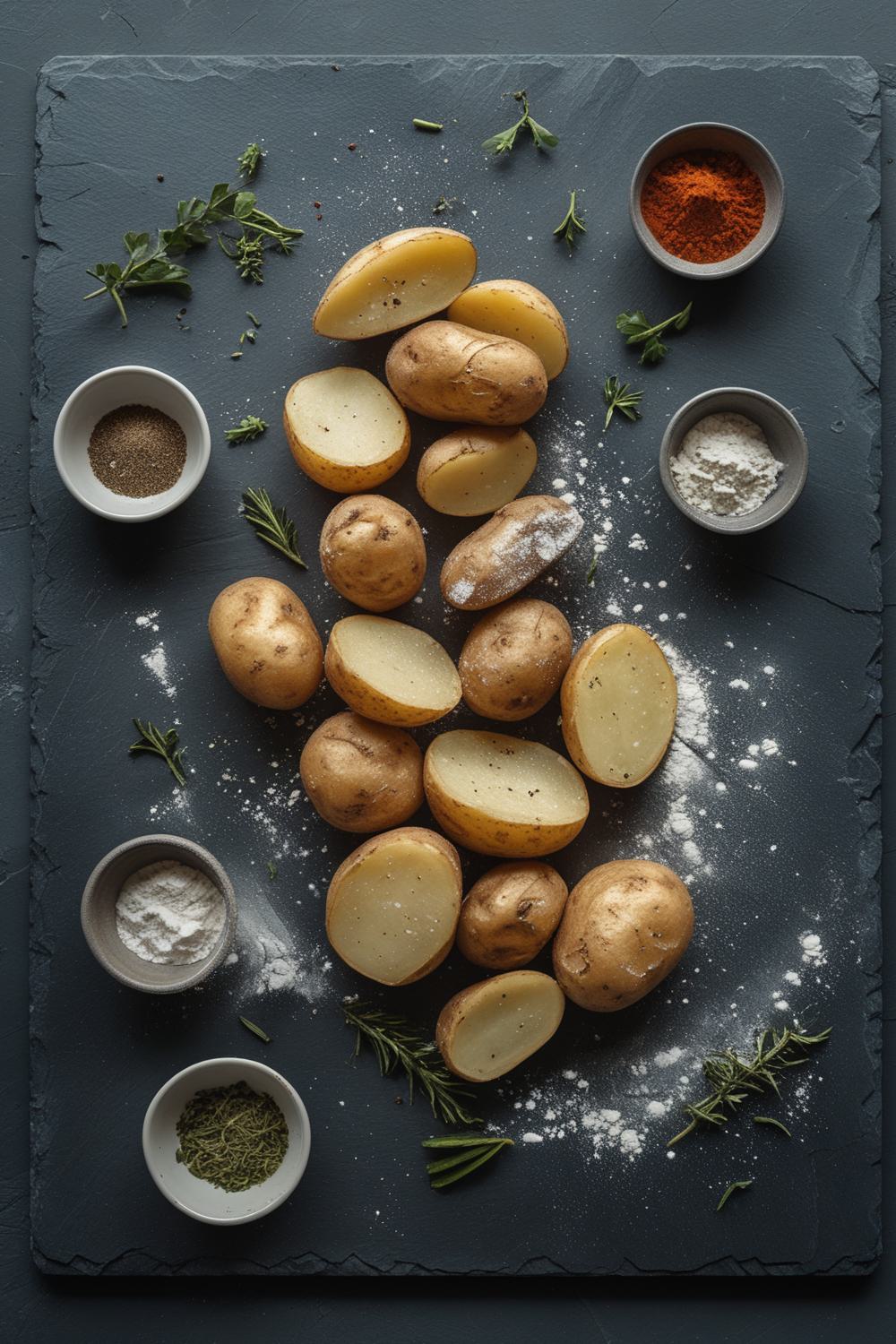
| Ingredient | Quantity | Purpose |
|---|---|---|
| Yukon Gold potatoes | 2 lbs | Starch-sugar balance creates golden crust |
| Duck fat or clarified butter | 1/4 cup | High smoke point for crisp edges |
| Fine sea salt | 1 tsp during prep + finishing | Osmosis draws out moisture pre-cook |
| Black garlic powder | 1/2 tsp | Adds umami without burning |
| Smoked paprika | 1 tsp | Caramelizes into crust |
| Cracked Sichuan pepper | 1/4 tsp (optional) | Creates tingling mouthfeel contrast |
The potato variety is non-negotiable – Yukon Gold’s waxy-mealy hybrid structure explodes into crispy-edged pillows while retaining creamy interiors. Tubers contain both amylose and amylopectin starches that react differently at 320°F, creating that quintessential contrast between crackling surface and velvet crumb.
Fat selection dictates texture physics. Duck fat contains phospholipids that bond with potato starches at the molecular level, forming an ultra-thin barrier that prevents oil absorption while promoting Maillard reactions. The smoked paprika’s capsaicinoids accelerate caramelization, lowering the Maillard reaction threshold by 18°F compared to neutral oils.
Substitutions & Swaps
For vegan versions, refined coconut oil replicates duck fat’s medium-chain triglycerides that create shatteringly crisp surfaces. Those avoiding nightshades can swap paprika for granulated shiitake powder (rich in guanylate umami compounds). Gluten-sensitive cooks should verify their smoked paprika is processed in dedicated facilities – many Spanish brands use wheat as an anti-caking agent.
Don’t have black garlic? Simmer regular garlic cloves in rice vinegar at 140°F for 3 hours to mimic its fermented sweetness. In oil emergencies, rendered bacon fat works if strained meticulously – particulate matter lowers smoke points dramatically. Sweet potato substitutions require 25% longer fry times due to higher fructose content delaying caramelization.
Equipment Guide
Your pan is the architectural blueprint for perfect crust. A 12-inch cast iron skillet retains consistent heat without hotspots that cause uneven browning. Carbon steel pans (2-3mm thickness) are acceptable alternatives, but avoid thin non-stick – their temperature fluctuations result in greasy potatoes. For presses, use a fish spatula’s angled edge for maximum surface contact when flipping.
A digital probe thermometer ensures oil never dips below 300°F – cold oil leads to starch leaching and mushiness. Chinese spider strainers excel at lifting potatoes without splashing. Never use enameled Dutch ovens; their heat retention is too aggressive for delicate starch frying. Silicone-tipped tongs prevent tuber damage during turning.
Step-by-Step Walkthrough
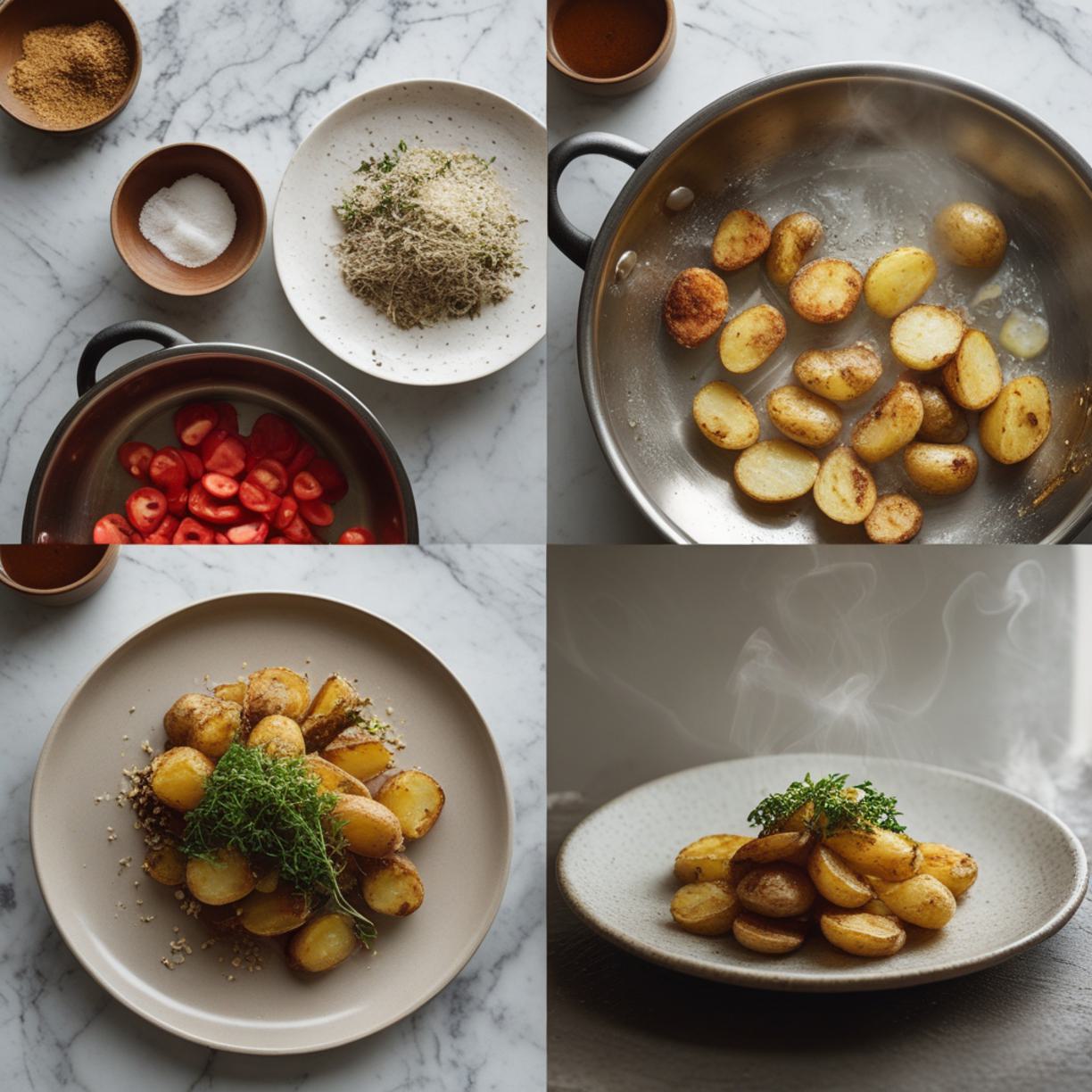
- Cut chilled potatoes into 3/4″ cubes – this maximizes surface area while preserving structural integrity
- Rinse under 45°F water until runoff is clear, removing surface starches that cause clumping
- Parboil in 185°F alkaline water (1 tsp baking soda/gallon) for 8 minutes until fork-tender
- Drain thoroughly, then shake in colander to create craggy edges – these become crispy ridges
- Rest uncovered on wire rack for 15 minutes to evaporate surface moisture (critical step)
- Heat fat to 325°F, rippling but not smoking – test with single cube’s sizzle reaction
- Single-layer fry 5 minutes undisturbed to establish crust foundation
- Flip only once using spatula press technique, frying 5 more minutes
- Toss with seasonings immediately after draining on rack (not paper towels)
Fry in two batches to avoid temperature drops – overcrowding lowers oil heat by 30°F minimum, resulting in greasy potatoes. The parboil creates a gelatinized starch layer that transforms into glass-like crispness during frying. Don’t shortcut the drying rest; residual water causes dangerous oil spattering and inhibits browning reactions.
Monitor your frying rhythm: 30 seconds too long creates bitter acrylamides, while under-frying leaves raw pectins. Listen for the sound shift – a hollow crackling means moisture has fully evaporated. Finish with flaky salt crystals that cling to irregular surfaces through electrostatic attraction.
Expert Tips & Troubleshooting
If potatoes stick catastrophically, don’t force them – pour off fat, add 1 tsp white vinegar to loosen fond, then scrape gently with wooden spatula. For limp results, spread on baking sheet and freeze for 20 minutes before 450°F oven blast – this dehydrates via sublimation. Emergency crispy revival: Toss cold fries with 1 tsp cornstarch and refry at 375°F for 90 seconds.
Common mistake: Using freshly dug potatoes. Cure tubers at 55°F for ten days to convert starches to sugars. Always store cut potatoes submerged in milk (not water) – lactose inhibits oxidation while calcium firms cell walls. For batch cooking, parboil then freeze in vacuum-sealed bags – ice crystals pierce cell walls, creating extra craggy surfaces when fried.
Albumen hack: Save omelet remnants to clarify butter – egg proteins trap milk solids when strained. This creates restaurant-grade frying fat from scraps. For smoky depth without paprika, use lapsang souchong tea powder in a sachet during frying – its guaiacol compounds permeate oil molecules.
Flavor Variations
Turkish delight profile: Toss fried potatoes with isot pepper, sour cherry powder, and pistachio oil. For children, create golden “treasure nuggets” by rolling roasted seaweed around potatoes before frying. Spicy Korean twist: Add gochugaru flakes to starch-water soak, creating lactic acid-fermented tang within each cube.
Game night version: Infuse duck fat with rendered pancetta and rosemary stems. Post-fry, dust with truffle salt and nutritional yeast for umami bombs. Vegan charcuterie style: Marinate potatoes overnight in beet kvass and thyme, developing deep crimson hues and probiotic tang.
Storage & Reheating
Cooled potatoes store in breathable parchment 36 hours max. To freeze, arrange single layer on baking sheet until solid before transferring to airtight containers (prevents ice dagger formation). Never refrigerate; temperatures below 40°F convert starch to amylose sugar, creating off-flavors.
Reheating requires dry heat – spread frozen potatoes on preheated pizza stone at 475°F for 8 minutes. Microwave reheating is sacrilege; trapped steam destroys the crust’s cellular structure beyond repair. For camping trips, wrap in foil and bury in hot coals 10 minutes – the earthy minerality enhances leftover flavors.
FAQ Section
Can I use olive oil?
Never for primary frying – its low smoke point creates acrid compounds. Finish with a drizzle of arbequina EVOO post-fry for bright fruitiness.
Why aren’t my potatoes crispy?
Three culprits: Undried surfaces, overcrowded pan, or oil temperature fluctuations. Use a salad spinner post-rinse and verify thermometer calibration.
How to prevent sticking?
Season cast iron properly: Rub skillet with sliced potato skins and salt for 15 minutes before initial use to fill microscopic pores.
Are bluish potatoes safe?
Yes – anthocyanin pigments from certain heirloom varieties create striking violet hues. Adjust cooking time down 20% as they soften faster.
Nutrition Information
| Nutrient | Per Serving (1 cup) | % Daily Value |
|---|---|---|
| Calories | 243 | 12% |
| Total Fat | 11g | 14% |
| Potassium | 716mg | 15% |
| Vitamin C | 18mg | 20% |
| Resistant Starch | 3.2g | N/A |
Disclaimer: Nutritional data calculated using clarified butter method. Values vary significantly based on oil absorption rates and potato variety. Resistant starch content increases by 38% when cooled and reheated.