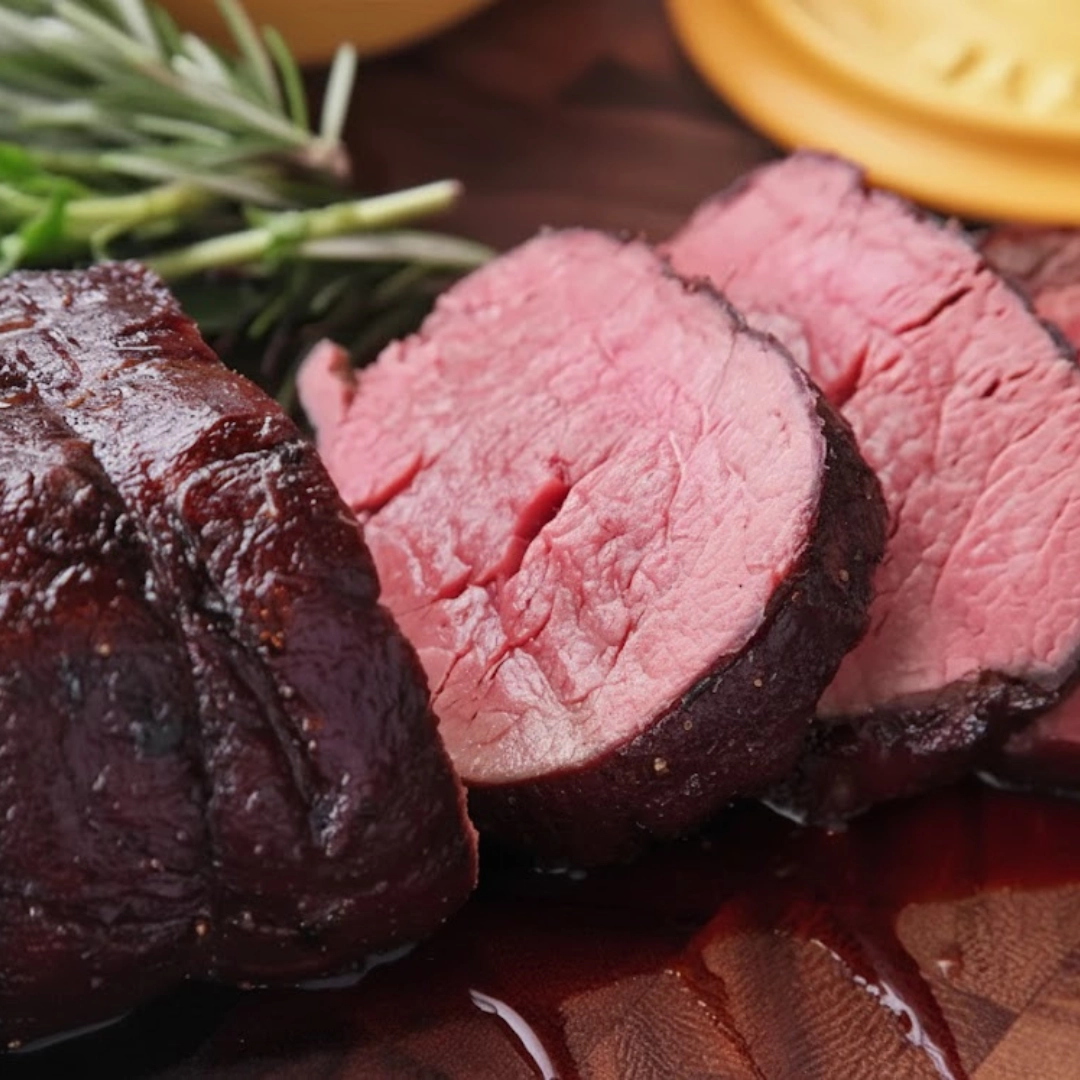
The beef tenderloin is, without question, the most elegant cut of beef for any special occasion. Its remarkable tenderness and mild flavor demand a technique that showcases its delicate nature while preventing the dreaded “bullseye” effect—where the edges are overcooked and gray before the center reaches medium-rare. The key to absolute perfection lies in the slow-roasting method, a gentle process that ensures edge-to-edge pinkness and astonishing succulence. This approach to cooking an Oven Beef Tenderloin turns a simple meal into a centerpiece worthy of the grandest table, delivering unmatched flavor and texture with minimal fuss.
Unlike traditional high-heat roasting, which creates a thick layer of overcooked meat beneath the crust, the slow-roast technique relies on low, consistent heat for even internal temperature rise, followed by a brief, high-temperature sear. This two-phase process yields a roast that is uniformly tender and moist throughout, capped with a deeply flavorful, crusty exterior that contrasts beautifully with the meltingly soft interior.
Table of Contents
The Core Components: What You’ll Need
The beauty of tenderloin lies in its simplicity. High-quality ingredients are crucial, as the flavor of the beef is the star. When shopping, seek out a center-cut tenderloin (the Chateaubriand section) if possible for the most uniform shape.
For the Roast:
- 1 whole Beef Tenderloin, center-cut, approximately four to five pounds, trimmed of silver skin
- 4 tablespoons high-quality unsalted butter (or two ounces)
- 3 tablespoons olive oil, divided
- 2 tablespoons kosher salt, plus more for finishing
- 1 tablespoon finely cracked black peppercorns
- 4 cloves garlic, minced or pressed
- 2 sprigs fresh rosemary
- 4 sprigs fresh thyme
Necessary Equipment:
- Instant-read meat thermometer
- Oven-safe wire rack
- Rimmed baking sheet
- Butcher’s twine

Pre-Roast Preparation: Setting the Stage for Success
Proper preparation is non-negotiable for achieving a flawless roast. The following high-level steps detail the necessary actions before the tenderloin ever enters the oven.
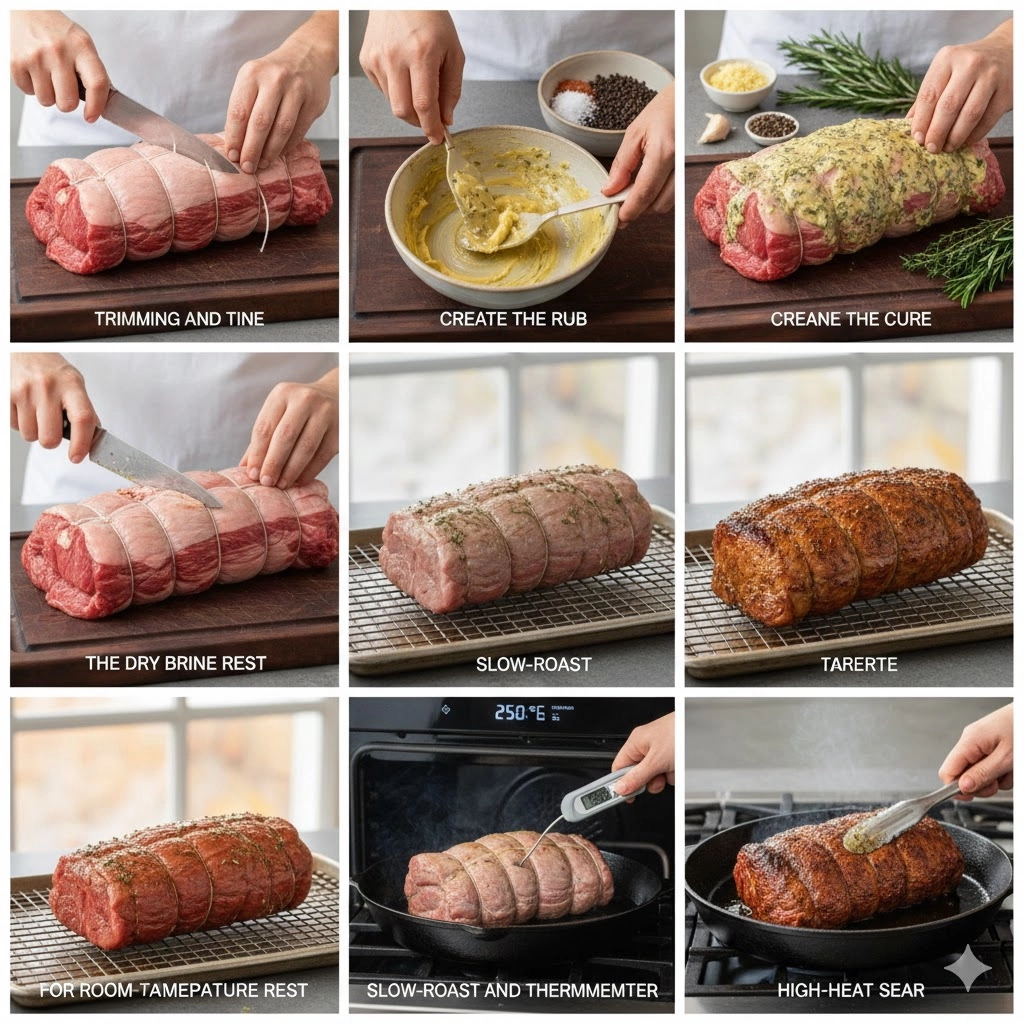
- Trimming and Tying: Inspect the tenderloin and remove any remaining silver skin and excess fat. Then, tie the roast with butcher’s twine at one and one half-inch intervals to maintain a uniform thickness.
- Seasoning Compound: Combine the softened butter, one tablespoon of the olive oil, minced garlic, herbs, salt, and pepper into a cohesive rub.
- Applying the Cure: Evenly coat the entire surface of the beef tenderloin with the prepared seasoning compound, pressing firmly to adhere the herbs and spices.
- Resting Period: Place the seasoned roast on a wire rack over a rimmed baking sheet and allow it to sit uncovered at room temperature for a minimum of two hours, or up to four hours.
- Initial Oven Setting: Preheat the oven to a very low temperature of two hundred fifty Fahrenheit.
The Slow-Roast Method: Time, Temperature, and Internal Checks
The slow-roast technique is a commitment to precision. It prioritizes a gradual, controlled temperature climb, which ensures that the protein fibers cook gently and retain maximum moisture. This section details the meticulous process required after the initial preparation.
1. Achieving Thermal Uniformity
Once the oven reaches two hundred fifty Fahrenheit, transfer the baking sheet with the seasoned tenderloin to the center rack. This low heat is critical; it’s not designed to brown the exterior but rather to gently bring the internal temperature up evenly. Do not cover or baste the meat at this stage. You are aiming for a slow, steady, and uniform cook.
Visually, the meat will appear slightly dull and dried on the exterior, but there will be little to no noticeable browning. The aroma should be subtle, featuring the gentle diffusion of the herbs and garlic. This initial roasting phase will take approximately one to one and a half hours, depending on the thickness of the roast and the specific calibration of your oven.
2. Monitoring the Core Temperature
The only reliable metric for doneness in a large, expensive cut like tenderloin is internal temperature, measured with an instant-read thermometer. Begin checking the internal temperature at the thickest part of the roast after about one hour. Insert the probe horizontally into the dead center of the cut, avoiding the bone or the pan.
For medium-rare results, you want to pull the roast when it hits an internal temperature of one hundred twenty Fahrenheit. For medium, target one hundred twenty-five Fahrenheit. Remember, the temperature will continue to rise by five to ten Fahrenheit during the resting period, a phenomenon known as carryover cooking. Therefore, pulling the meat before it reaches the final target is essential to prevent overcooking.
3. The Crucial High-Heat Sear
Once the target internal temperature (e.g., one hundred twenty Fahrenheit for medium-rare) is achieved, immediately remove the tenderloin from the oven. At this point, turn the oven temperature up to four hundred fifty Fahrenheit. While the oven heats up, heat the remaining two tablespoons of olive oil in a heavy-bottomed, oven-safe skillet (cast iron is ideal) over high heat until it shimmers and begins to smoke lightly.
Carefully transfer the tenderloin directly into the screaming-hot pan. Sear each side—the top, bottom, and all rounded edges—for thirty to sixty seconds per side. The goal is rapid color development: a deep, mahogany brown crust should form quickly, locking in the juices and adding a layer of rich, caramelized flavor that was impossible to achieve during the initial slow-roast phase.
4. Final Oven Flash and Resting
Once adequately seared on all sides, return the skillet containing the tenderloin to the oven, which is now at four hundred fifty Fahrenheit. Allow the roast to remain in the high-heat environment for only four to six minutes. This quick flash ensures the crust is set and provides a final push to the core temperature.
Immediately upon removing the tenderloin for the final time, transfer it from the searing skillet back to a clean wire rack over a cutting board. The resting period is perhaps the single most important step for a supremely tender result. Cover the roast loosely with foil and allow it to rest undisturbed for fifteen to twenty minutes. This allows the heat energy trapped within the meat to redistribute the internal moisture, ensuring that the juices remain in the meat when sliced, rather than running onto the board. Do not skip this step under any circumstances.
5. Carving and Presentation
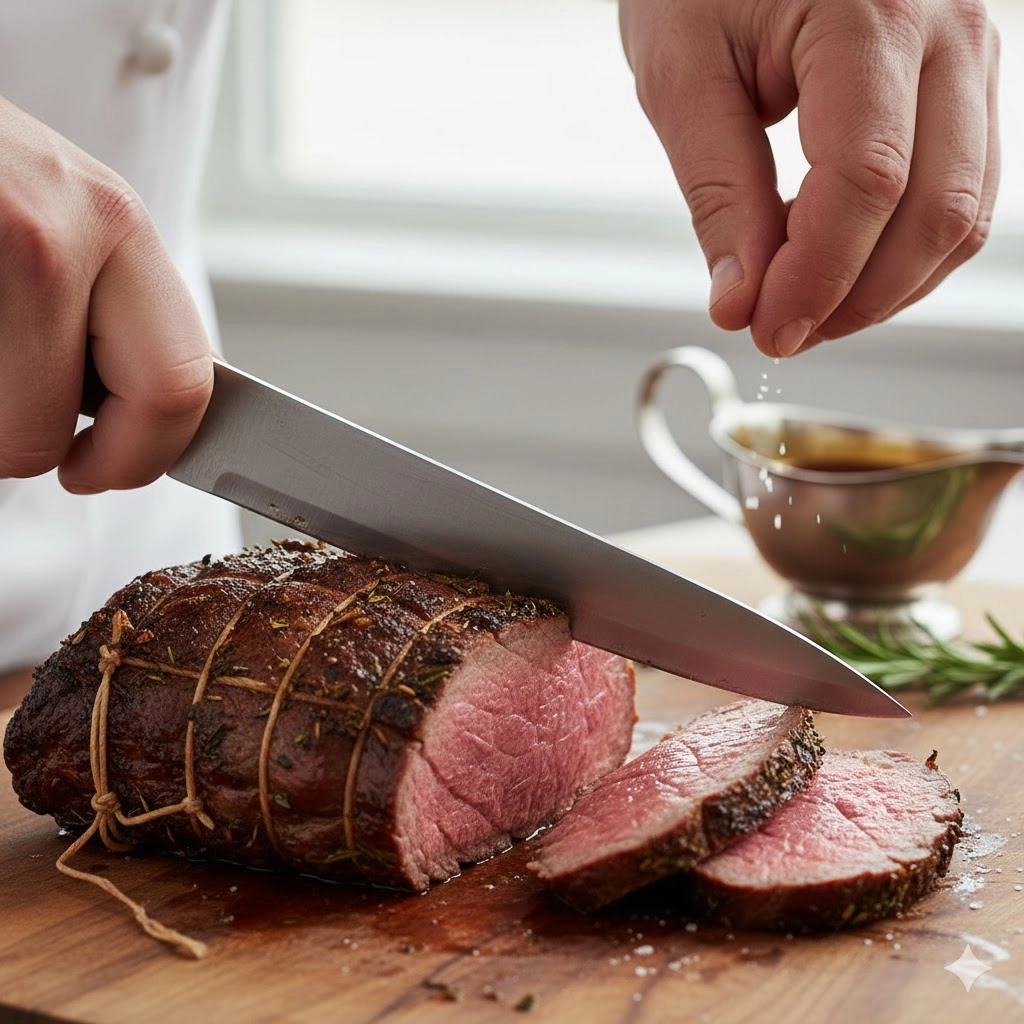
Once rested, use kitchen shears to cut and remove all the butcher’s twine. Using a long, sharp slicing knife, cut the tenderloin into half-inch thick medallions against the grain. The cross-section should reveal a uniform band of color from edge to edge, a testament to the effectiveness of the slow-roasting technique. Sprinkle the sliced meat lightly with a finishing salt, such as flaked sea salt, for a final textural contrast before serving.
Technical Pointers for Flawless Results
Achieving mastery over the slow-roast requires attention to detail. These pointers address common pitfalls and enhancements specific to cooking an Oven Beef Tenderloin.
- The Power of Trussing: If your tenderloin cut tapers significantly at one end, folding the thin tail section underneath and tying it securely is essential. This creates a uniform cylinder shape, preventing the thinner section from overcooking while the thicker section finishes. A poorly trussed tenderloin will result in uneven doneness, nullifying the benefits of the slow-roast method.
- Selecting the Right Fat: While butter provides unparalleled richness, using a combination of butter for flavor and a high-smoke-point oil (like light olive oil or refined avocado oil) for the initial rub provides the best of both worlds. The oil helps distribute the seasoning evenly and provides an initial barrier against moisture loss, while the butter adds depth of flavor.
- Thermometer Placement: Re-check your thermometer placement several times during the slow-roast. The probe must be dead center of the thickest part of the muscle, away from fat pockets and certainly not touching the baking sheet. An inaccurate reading by only a few Fahrenheit degrees can drastically change the final texture.
- The Salt Rest (Dry Brining): The resting period before cooking, when the meat is seasoned, acts as a form of dry brining. Salt draws out moisture initially, but the moisture then dissolves the salt and is reabsorbed, leading to perfectly seasoned meat that retains moisture better during cooking. Do not skip the room-temperature rest.
- Post-Rest Slicing: Never slice the roast until the full fifteen to twenty minute rest is complete. If you are serving a crowd and need to begin slicing, only slice what is needed immediately, leaving the rest of the tenderloin intact to retain residual heat and moisture.
- The Ideal Pan for Searing: A heavy-duty cast iron pan or a thick stainless steel skillet is non-negotiable for the final sear. Thin aluminum or non-stick pans simply do not retain enough heat to create that rapid, crisp crust without overcooking the delicate interior of the beef.
Adapting the Roast: Variations in Flavor and Cut
While the classic preparation allows the pure flavor of the beef to shine, the tenderloin accepts flavor additions beautifully. Consider these modifications to tailor the meal to a specific palate or occasion.
1. Herb Crust (Mustard and Horseradish): For the final sear, remove the roast from the pan and wipe out the excess fat. Immediately spread a thin layer of Dijon mustard or a blend of creamy horseradish sauce and mustard over the surface. Then, pat on a mixture of finely chopped fresh parsley, breadcrumbs, and extra black pepper. Return it to the oven for the flash cook (four to six minutes) to set the crust.
2. Mushroom Duxelles Enveloping: This complex variation involves wrapping the tenderloin in a blanket of finely chopped and sautéed mushrooms (duxelles) before the final high-heat sear. The mushroom layer provides an intensely savory barrier that protects the beef, keeping it moist and adding a profound earthy dimension to the dish. Secure the duxelles and beef with a layer of thin prosciutto or puff pastry for a true Beef Wellington adaptation.
3. Balsamic and Red Wine Glaze: Instead of a simple olive oil rub, use a glaze. Reduce one cup of robust red wine (like Cabernet Sauvignon) with one quarter cup of aged balsamic vinegar until syrupy. Brush this mixture onto the roast during the final two minutes of the initial slow-roast stage, then proceed with the high-heat sear. The glaze creates a beautiful, sweet-savory caramelized crust.
4. Utilizing a Smaller Cut (Chateaubriand): If you are only cooking for two to four people, you can use the center-cut Chateaubriand portion (often about two pounds). Adjust the cooking time down slightly, but keep the temperatures the same. The lower mass means the internal temperature will climb much faster, so monitor it every ten minutes.
Accompanying the Main Event: Serving Suggestions
The luxurious texture and flavor of the tenderloin pairs best with components that offer complementary texture or a contrasting depth of flavor. The accompaniments should enhance, not overpower, the centerpiece.
- Classic Creamy Sides: Nothing complements a perfectly cooked medium-rare beef like a side of rich starch. Consider a silken Parmesan polenta or a velvety purée of Yukon Gold potatoes, finished with heavy cream and fresh chives. These soft textures contrast with the seared crust of the beef beautifully.
- Seasonal Roasted Vegetables: Keep the vegetable component simple and flavorful. A medley of asparagus, tri-colored carrots, and small pearl onions tossed in olive oil, salt, and thyme and roasted at four hundred Fahrenheit provides a necessary pop of freshness and color. Serve them slightly crisp-tender for texture.
- Sauce Element: While not strictly necessary due to the superb flavor of the roast itself, a classic sauce elevates the dish. A simple au jus made from the pan drippings, or a reduction of red wine fortified with a touch of beef stock and finished with a knob of cold butter (a monte au beurre), adds a professional touch.
- Beverage Pairing: Due to the tenderloin’s mild, elegant flavor profile, it pairs wonderfully with medium-bodied red wines that won’t overwhelm it. A classic French Bordeaux or a smooth, slightly oaked California Pinot Noir are excellent choices. For a bold option, a well-aged Barolo offers complexity without harsh tannins.
Common Queries Answered
This section addresses specific questions frequently raised by home cooks tackling this prime cut of beef.
How do I prevent the exterior from burning during the slow-roast phase?
Burning is highly unlikely at two hundred fifty Fahrenheit. If you notice any charring, which suggests your oven thermometer is inaccurate or the meat is too close to a heating element, immediately reduce the temperature by ten to fifteen Fahrenheit degrees. The goal is gentle, low heat; any rapid browning should be saved for the final sear.
Can I use a less expensive cut of beef with this method?
The slow-roast method is specifically designed for cuts that are naturally tender, like the tenderloin. Applying this method to tougher cuts, such as sirloin or round, will not yield the same result. Those cuts require braising or higher heat methods to break down connective tissue, which is largely absent in the tenderloin.
What is the maximum time I can let the roast rest at room temperature?
For food safety and quality, the maximum recommended rest time before cooking is four hours. This allows the meat to reach an internal temperature that promotes uniform cooking without spending too much time in the “danger zone.” After cooking, the minimum rest is fifteen minutes, but you can safely go up to thirty minutes loosely tented.
My roast is coming out gray/overcooked on the ends. What did I do wrong?
The most common mistake is not trussing the thinner, tapered tail end of the tenderloin. If the roast isn’t a uniform thickness, the thin parts will absorb the heat and cook much faster. Ensure the thinnest end is folded over to match the thickest section and tied securely before seasoning and roasting.
Is it safe to sear the meat after it has already reached its done temperature?
Yes, it is entirely safe. Because the slow-roast is conducted at a very low temperature, the initial cooking does not create a desirable crust. The subsequent high-heat sear is brief and external, merely raising the surface temperature and internal temperature by a small margin (the five to ten Fahrenheit degree carryover) which is why we pull the meat early.
Nutritional Breakdown
The values provided are estimated for a four-ounce serving size of the cooked, trimmed beef tenderloin.
| Nutrient | Amount per Serving |
| Calories | 285 kcal |
| Protein | 30 g |
| Carbs | 0 g |
| Fat | 18 g |
| Fiber | 0 g |
| Sugar | 0 g |
| Sodium | 140 mg |
Disclaimer
Nutrition information is an estimate and may vary based on preparation and ingredients used.
PrintMastering the Slow Roast: Achieving a Flawless Oven Beef Tenderloin

Master the slow-roast technique for a supremely tender, edge-to-edge pink **Oven Beef Tenderloin**. This recipe uses low heat and a high-heat sear for the most elegant results.
- Prep Time: 2 hours 20 mins
- Cook Time: 1 hour 45 mins
- Total Time: 4 hours 5 mins
- Yield: 8 servings 1x
- Category: Main Course
- Method: Roasting
- Cuisine: American
Ingredients
1 whole Beef Tenderloin, center-cut, approximately four to five pounds, trimmed
4 tablespoons high-quality unsalted butter (or two ounces)
3 tablespoons olive oil, divided
2 tablespoons kosher salt, plus more for finishing
1 tablespoon finely cracked black peppercorns
4 cloves garlic, minced or pressed
2 sprigs fresh rosemary
4 sprigs fresh thyme
Instructions
1. Trim any silver skin and excess fat, then tie the roast with butcher’s twine at one and one half-inch intervals.
2. Combine softened butter, one tablespoon olive oil, minced garlic, herbs, salt, and pepper into a rub and coat the entire tenderloin.
3. Place the seasoned roast on a wire rack over a baking sheet and rest uncovered at room temperature for a minimum of two hours.
4. Preheat oven to two hundred fifty Fahrenheit. Slow-roast for one to one and a half hours, or until internal temperature reaches one hundred twenty Fahrenheit.
5. Remove roast and set oven to four hundred fifty Fahrenheit. Heat remaining olive oil in a skillet until smoking.
6. Sear the tenderloin on all sides in the screaming-hot skillet for thirty to sixty seconds per side until a deep crust forms.
7. Return skillet to the oven for four to six minutes.
8. Transfer to a clean rack, cover loosely with foil, and rest for fifteen to twenty minutes.
9. Remove twine, slice against the grain, and sprinkle with flaked sea salt before serving.
Notes
Ensure the thermometer probe is in the dead center of the thickest part of the roast for an accurate reading.
Do not skip the room-temperature rest, as this is crucial for an even cook and better crust.
Resting the roast for the full fifteen to twenty minutes allows internal juices to redistribute, ensuring maximum tenderness.
Nutrition
- Serving Size: 4 ounces
- Calories: 285
- Sugar: 0g
- Sodium: 140mg
- Fat: 18g
- Saturated Fat: 8g
- Unsaturated Fat: 7g
- Trans Fat: 0g
- Carbohydrates: 0g
- Fiber: 0g
- Protein: 30g
- Cholesterol: 85mg