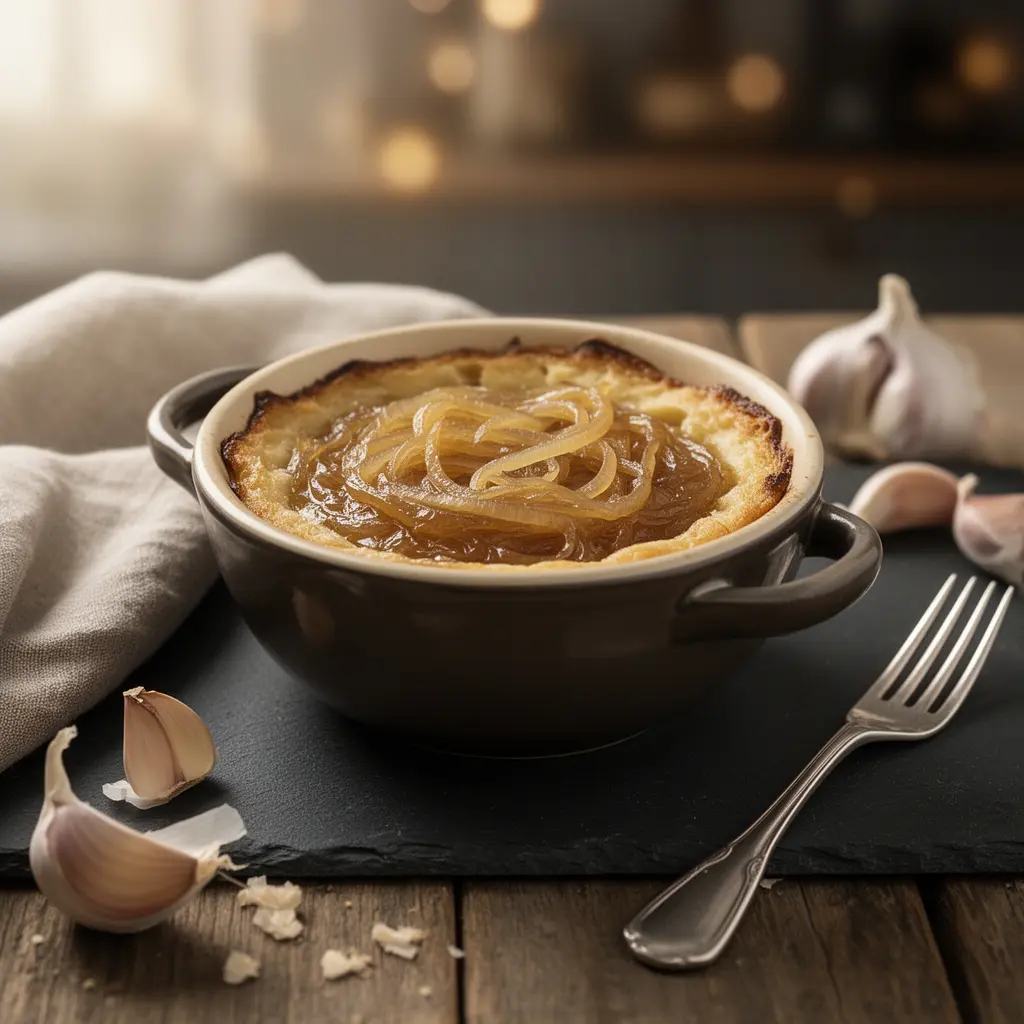

The deep, satisfying flavor of classic French onion soup is a beautiful thing—but let’s be honest, the careful, slow caramelization of onions and the precise layering of flavors can feel like a weekend-only project. This recipe for One Pot French Onion Pasta takes that foundational taste—the savory, slightly sweet, rich, and utterly comforting essence—and translates it into a weeknight-friendly meal. By transforming the traditional soup into a creamy, luscious sauce that cooks right alongside the pasta, we achieve that complex depth with remarkable efficiency. It’s the ultimate comfort food hack, delivering a familiar warmth that elevates an ordinary bowl of noodles into something truly memorable, perfect for a cozy dinner when time is short but cravings for rich, sophisticated flavor are high.
Table of Contents
The Essential Components
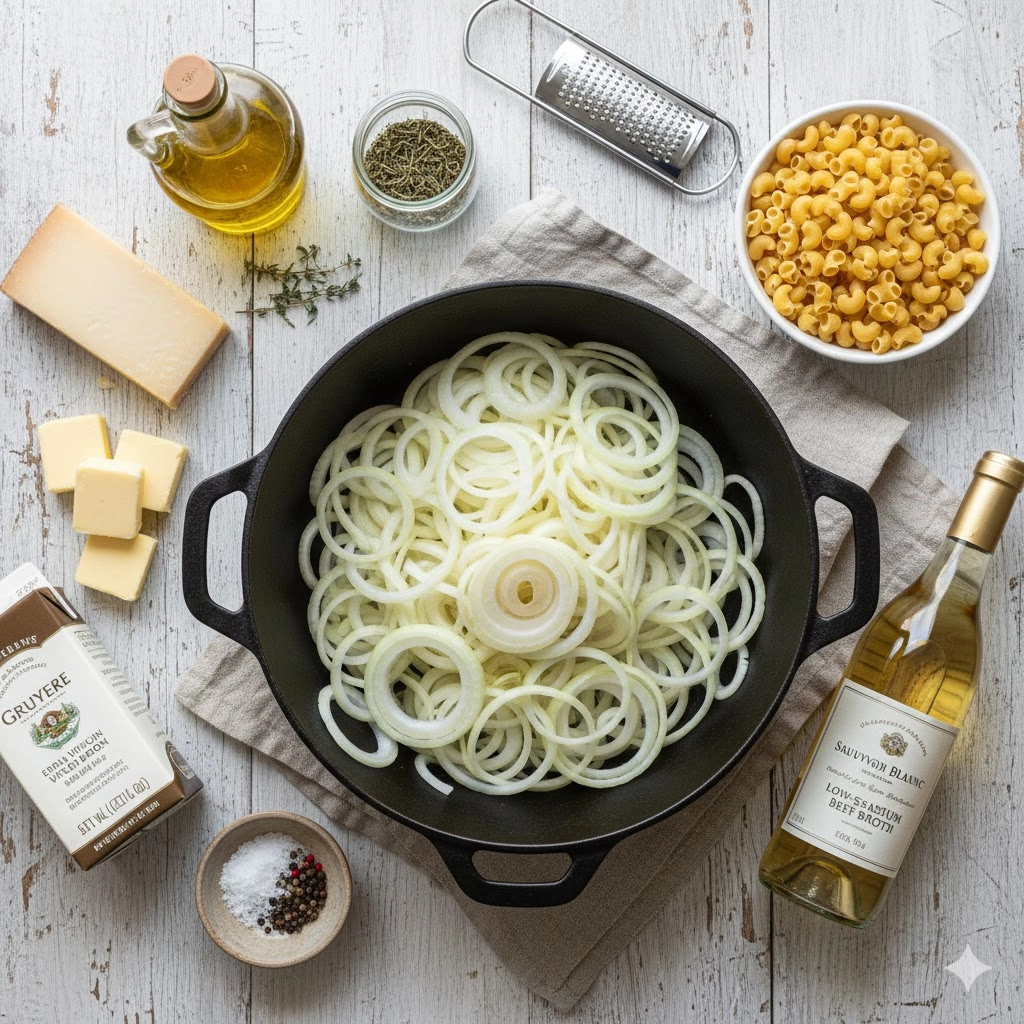
This dish relies on a surprisingly small list of ingredients, each playing a crucial role in building the signature French onion flavor profile. Good quality ingredients are particularly important here, as the simplicity of the method allows their inherent flavors to shine.
Pantry and Produce
- Three large yellow onions, thinly sliced (about 5 cups, or 570 grams)
- Four tablespoons unsalted butter (about 56 grams)
- One tablespoon olive oil
- One teaspoon dried thyme
- One quarter teaspoon freshly ground black pepper
- One teaspoon kosher salt, plus more for seasoning
Liquid and Starch
- Four cups beef broth, low-sodium is preferred (about 946 milliliters)
- One cup dry white wine, like Sauvignon Blanc or Pinot Grigio (about 237 milliliters)
- Eight ounces small pasta shape, such as campanelle, penne, or farfalle (about 227 grams)
Finishing Touches
- One half cup heavy cream (about 118 milliliters)
- One cup shredded Gruyère cheese (about 115 grams)
- One quarter cup shredded Parmesan cheese
The Recipe Arc: A Simple Path to Richness
Cooking this dish involves a strategic layering of flavor, first by developing the onions, then by building a cooking liquid that acts as both a broth and a sauce, and finally, by adding the pasta and finishing with the required creamy cheese blend.
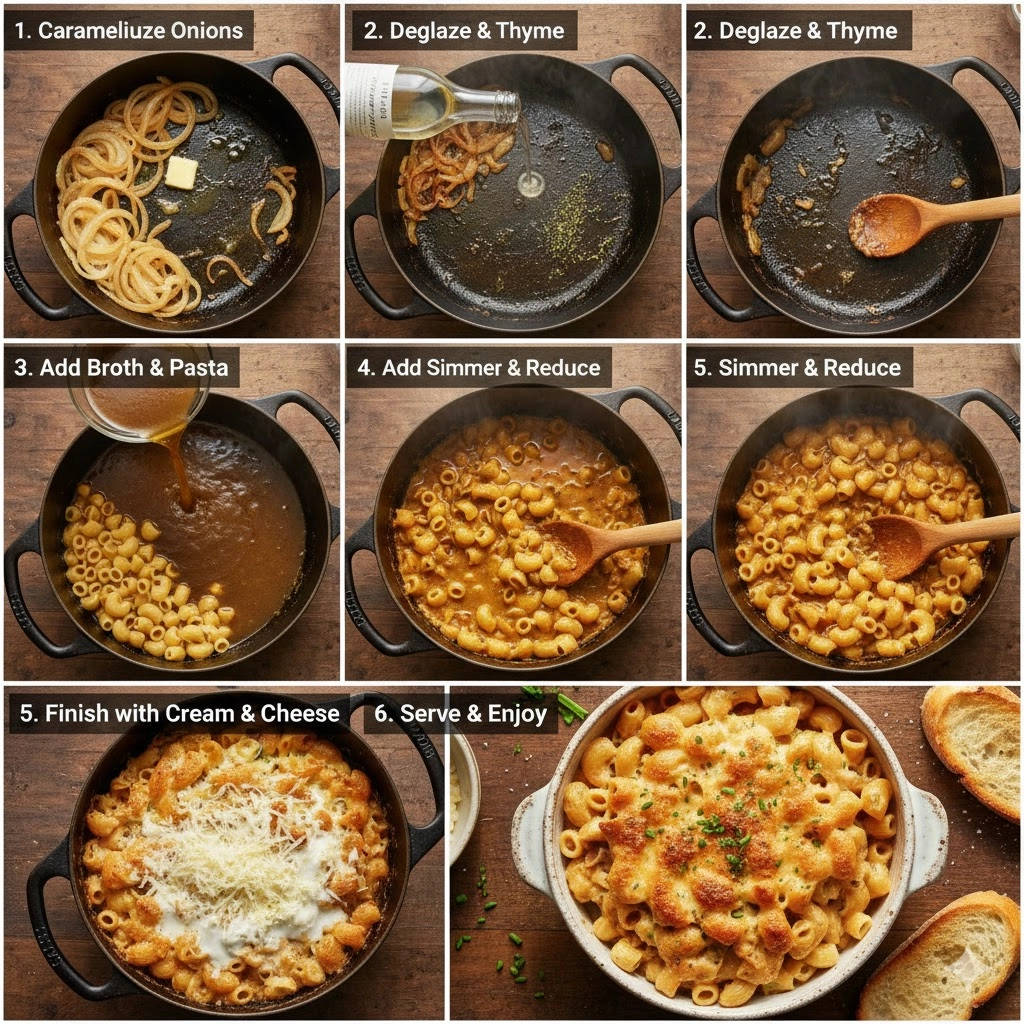
- Caramelize the Onions: Melt the butter and oil in a deep, wide pot or Dutch oven. Add the sliced onions, salt, and pepper. Cook over medium-low heat, stirring occasionally, until they are deep golden brown and significantly reduced in volume, which will take about 30 to 40 minutes.
- Deglaze and Build the Broth: Increase the heat to medium. Pour in the white wine and scrape up any browned bits on the bottom of the pot. Let the wine reduce until almost completely evaporated, about three minutes. Stir in the dried thyme.
- Add Liquid and Pasta: Pour in the beef broth and bring the mixture to a gentle boil. Add the uncooked pasta and stir well to ensure it is submerged.
- Simmer and Reduce: Reduce the heat to medium-low. Simmer, uncovered, stirring every few minutes, until the pasta is al dente and the liquid has reduced to a thick, creamy sauce, which typically takes 15 to 20 minutes, depending on the pasta shape.
- Finish the Sauce: Remove the pot from the heat. Stir in the heavy cream and the shredded Gruyère and Parmesan cheeses until the sauce is smooth, cohesive, and glossy.
- Serve Immediately: Taste and adjust seasoning with additional salt or pepper as needed. Serve hot, topped with an extra sprinkle of Gruyère, if desired.
Achieving Depth: The Detailed Steps
The success of this dish hinges entirely on the process of transforming the raw onions into a flavorful base. Rushing this initial phase will result in a flat, one-dimensional meal.
The Slow Road to Caramelization
The first step is a commitment. You are not just sautéing the onions until they are soft; you are caramelizing them. This takes time, patience, and a low, consistent heat. Start with the butter and olive oil mixture—the oil helps prevent the butter from scorching while adding richness. When the onions hit the pot, they will look voluminous. The heat must be kept low enough that the onions soften and brown slowly, coaxing out their natural sugars. Expect the color to shift from translucent to pale gold, then to a rich, burnished mahogany. The aroma is your best indicator: it should be deeply sweet, savory, and nutty, not sharp or acidic. If you see dark, scorched patches appearing too quickly, lower the heat immediately. A proper caramelization, which reduces five cups of onions down to about one and a half cups of flavor concentrate, is the bedrock of this entire One Pot French Onion Pasta.
Developing the Fond and Adding Thyme
Once the onions are perfectly caramelized, the next crucial step is deglazing. The addition of dry white wine stops the cooking process and allows you to scrape up the dark, flavor-packed residue—the fond—that has accumulated on the bottom of the pot. This is concentrated flavor gold. Use a wooden spoon to firmly scrape the bottom as the wine bubbles rapidly, dissolving the fond into the liquid. Let the wine evaporate until just a syrupy residue remains. This concentrates its acidity and fruit notes before the broth is added. Now is the perfect time to add the dried thyme. Blooming the herb in the hot, concentrated onion base for about one minute releases its volatile oils, ensuring the woody, aromatic notes are fully integrated into the sauce from the start.
The Pasta and Liquid Reduction
The beef broth should be brought up to a low boil before the pasta is introduced. Using a smaller pasta shape is key because it requires less cooking time and releases starch more rapidly, which is essential for naturally thickening the sauce. Once the pasta is added, reduce the heat to a simmer. You want the liquid to bubble gently, not aggressively. The magic here is that the starch released by the pasta—normally discarded with the cooking water—stays in the pot, transforming the remaining broth into a creamy sauce. Stir frequently, especially as the liquid level drops, to prevent the pasta from sticking to the bottom or to itself. The dish is ready when the pasta is cooked through (al dente) and the sauce coats the back of a spoon with a luxurious thickness.
The Final Emulsification
Never add the heavy cream and cheese while the pot is over high heat. Remove it from the burner entirely before stirring in the dairy. The residual heat is sufficient to melt the cheese and integrate the cream. The cream adds richness and body, while the combination of Gruyère and Parmesan delivers that essential salty, nutty depth and stretchiness. Stir until the sauce is completely smooth and glistening—this indicates a perfect emulsification. The goal is a unified sauce, not separated strings of melted cheese. Adjusting the salt at this stage is vital, as the reduction of the broth and the addition of cheese will have altered the salinity.
Expert Adjustments for a Better Bowl
Small tweaks in technique can elevate this meal from good to truly exceptional.
- The Onion Slice: Slice your onions with the grain (pole to pole) rather than across the equator. This helps them hold their shape better during the long caramelization process, preventing them from dissolving into mush and providing a better texture in the final dish.
- Broth Quality Matters: Since beef broth is the primary liquid and flavor base, use the best quality you can find. Homemade or high-quality boxed low-sodium broth is vastly superior to bouillon cubes, which can introduce too much salt or artificial flavor, overshadowing the delicate sweetness of the caramelized onions.
- The Butter Bath: Don’t skimp on the fat in the first step. The four tablespoons of butter are necessary not just for flavor, but to gently coat the onions, allowing them to steam and then caramelize without drying out or burning. It acts as a necessary medium for the low, slow cook.
- Resting Period: After stirring in the cheese and cream, let the pot sit, covered, for about two to three minutes before serving. This brief rest allows the starches to fully hydrate and the sauce to set to its optimal consistency.
- Pre-Shredded Cheese Caution: Avoid pre-shredded cheeses if possible. They often contain anti-caking agents like cellulose, which prevent them from melting smoothly, resulting in a slightly grainy or clumpy sauce. Freshly grated Gruyère and Parmesan are worth the minimal extra effort.
Exploring Culinary Detours and Alternatives
While the classic approach is sublime, there is plenty of room to adjust the formula based on dietary needs or flavor preferences.
- Vegetarian Swap: For a plant-based alternative, substitute the beef broth with a high-quality vegetable broth. To compensate for the loss of beefy savoriness, stir in one tablespoon of white miso paste or one teaspoon of umami-rich mushroom powder alongside the thyme.
- Herb Variations: While thyme is traditional, a half teaspoon of dried rosemary or a pinch of marjoram can be added for a slight variation on the herb profile. Always add dried herbs early in the cooking process to allow their flavor to release.
- Adding Protein: Cooked protein should be added at the very end. Shredded rotisserie chicken or sliced, pre-cooked Italian sausage are excellent choices. Stir them in along with the cream and cheese to warm them through.
- A Touch of Sweetness: If your onions did not caramelize deeply enough, or if you prefer a slightly sweeter note, you can stir in one teaspoon of balsamic vinegar along with the wine during the deglazing step.
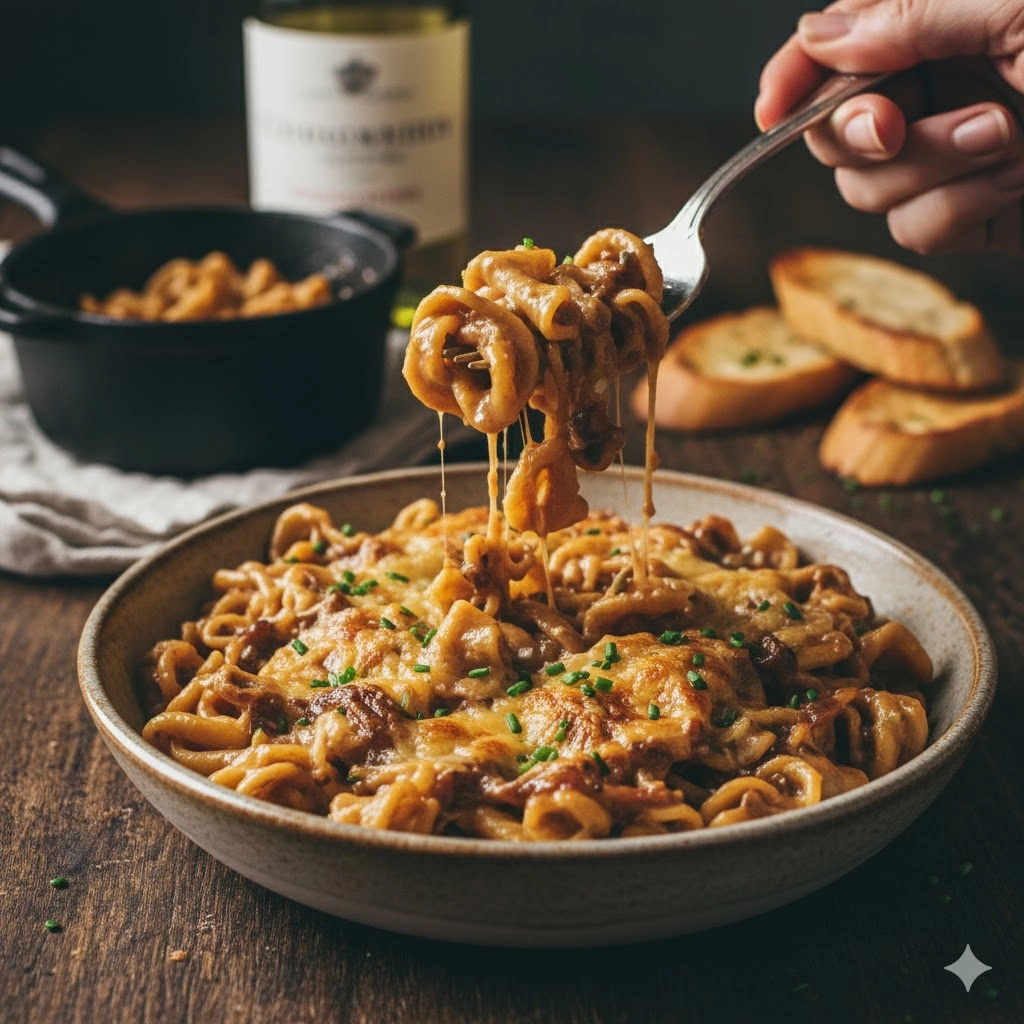
Presentation: How to Serve This Rich Dish
This pasta is a satisfying main course on its own, but a few simple additions can turn it into a complete, elegant meal suitable for company.
- The Traditional Crust: To truly echo the classic soup, consider serving the pasta in individual bowls, topping each serving with a thick slice of toasted baguette or sourdough bread. A final, generous sprinkle of Gruyère can be added to the top of the bread and placed under the broiler for one minute until bubbling and golden brown.
- A Bright Counterpoint: Because of the richness of the sauce, it pairs beautifully with something fresh and acidic. A simple side salad dressed with a bright lemon vinaigrette provides a palate cleanser and contrast.
- Wine Pairing: The same dry white wine used to deglaze the pot—a crisp Sauvignon Blanc or a light-bodied Pinot Grigio—will make an excellent drinking partner for the finished meal. The acidity cuts through the richness of the cheese and cream.
Answering Common Questions
Why does it take so long to caramelize the onions?
The long cooking time is necessary to slowly break down the cellular structure of the onions and allow their natural sugars to emerge and brown without burning. Rushing this process on high heat only burns the outsides, leaving the core raw and lacking the signature deep, complex sweetness that defines French onion flavor.
Can I use a different type of cheese?
Gruyère is highly recommended for its excellent melting properties and distinctive nutty, earthy flavor that is crucial to the French onion profile. Swiss cheese is the closest substitute in texture and flavor. Mozzarella is too mild, and cheddar will make the sauce oily and overly sharp.
How should I store and reheat leftovers?
Store any remaining pasta in an airtight container in the refrigerator for up to three days. To reheat, place the pasta in a pot with a splash of beef broth or water and warm gently over low heat, stirring occasionally. The sauce will thicken in the fridge, and the extra liquid will help restore its creamy consistency.
Can I make this with gluten-free pasta?
Yes, you can. Look for a gluten-free pasta that is made from brown rice or a corn/rice blend. Be aware that gluten-free pasta may release starch differently and often requires more liquid, so you may need to add an extra one half cup of broth during the simmering process to achieve the right sauce consistency.
Nutrition Information
| Nutrient | Amount per Serving |
| Calories | 585 kcal |
| Protein | 25 g |
| Carbs | 52 g |
| Fat | 30 g |
| Fiber | 4 g |
| Sugar | 12 g |
| Sodium | 550 mg |
Nutrition information is an estimate and may vary based on preparation and ingredients used.
PrintOne Pot French Onion Pasta: A Culinary Shortcut to Classic Flavor
The deep, satisfying flavor of classic French onion soup is translated into this weeknight-friendly, comforting pasta. The sauce and pasta cook together in one pot, achieving complex, savory depth with rich caramelized onions, beef broth, and creamy Gruyère cheese.
- Prep Time: 15 mins
- Cook Time: 45 mins
- Total Time: 60 mins
- Yield: 4 servings 1x
- Category: Main Course
- Method: Stovetop
- Cuisine: French-American
Ingredients
3 large yellow onions, thinly sliced (about 570 grams)
4 tablespoons unsalted butter
1 tablespoon olive oil
1 teaspoon dried thyme
1 quarter teaspoon freshly ground black pepper
1 teaspoon kosher salt, plus more for seasoning
4 cups beef broth, low-sodium
1 cup dry white wine, like Sauvignon Blanc
8 ounces small pasta shape (campanelle, penne, or farfalle)
1 half cup heavy cream
1 cup shredded Gruyère cheese
1 quarter cup shredded Parmesan cheese
Instructions
1. Melt the butter and oil, then cook sliced onions, salt, and pepper over medium-low heat until deep golden brown and reduced in volume (30 to 40 minutes).
2. Increase heat. Pour in white wine and scrape up any browned bits (fond). Let wine reduce until almost evaporated. Stir in thyme.
3. Pour in beef broth and bring to a gentle boil. Add the uncooked pasta and stir well.
4. Reduce heat to medium-low. Simmer, uncovered, stirring, until the pasta is al dente and the liquid has reduced to a thick, creamy sauce (15 to 20 minutes).
5. Remove the pot from the heat. Stir in the heavy cream, Gruyère, and Parmesan cheeses until the sauce is smooth and glossy.
6. Serve hot, adjusting seasoning as needed.
Notes
The key is slow caramelization; rushing this step makes the flavor flat. Use high-quality, low-sodium beef broth for the best depth. Avoid pre-shredded cheese for a smoother sauce. If you prefer a slightly sweeter note, stir in one teaspoon of balsamic vinegar during deglazing.
Nutrition
- Serving Size: 1 serving
- Calories: 585
- Sugar: 12g
- Sodium: 550mg
- Fat: 30g
- Saturated Fat: 20g
- Unsaturated Fat: 8g
- Trans Fat: 0g
- Carbohydrates: 52g
- Fiber: 4g
- Protein: 25g
- Cholesterol: 95mg