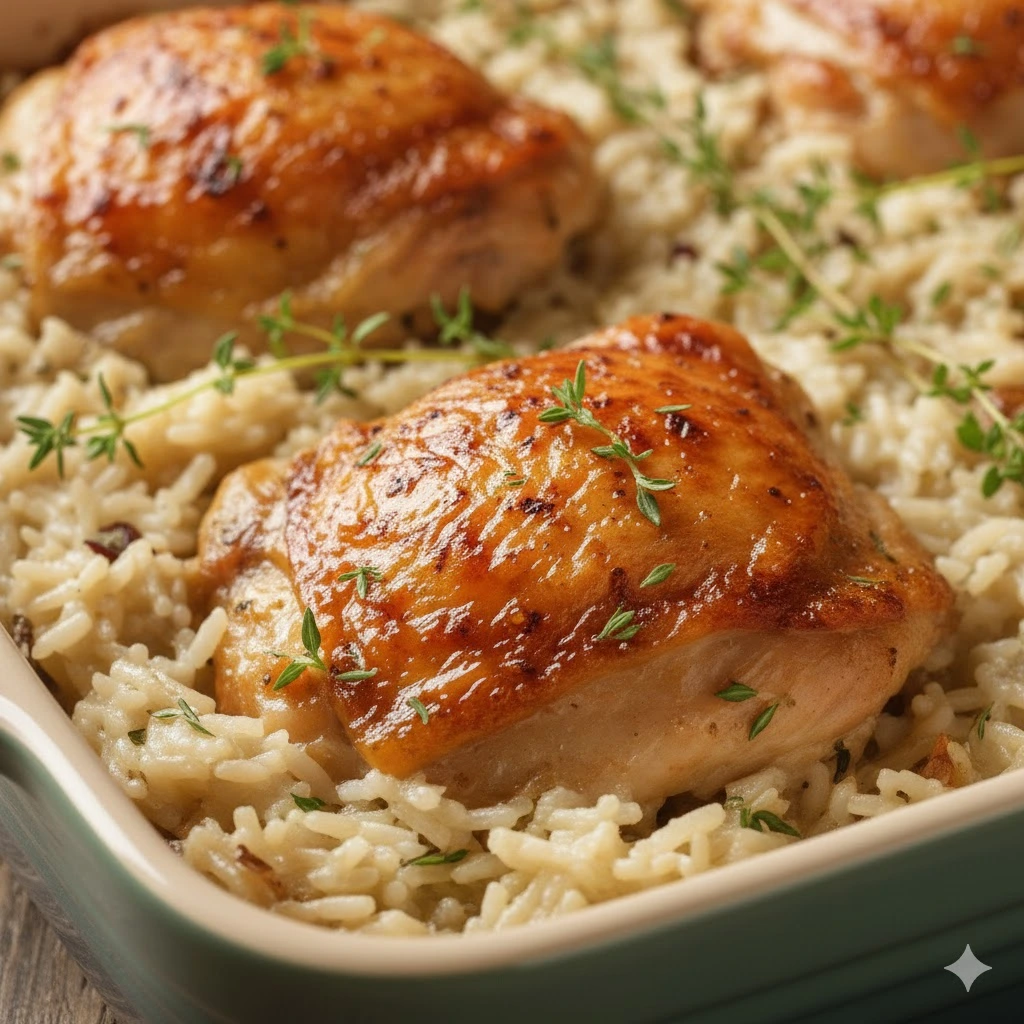
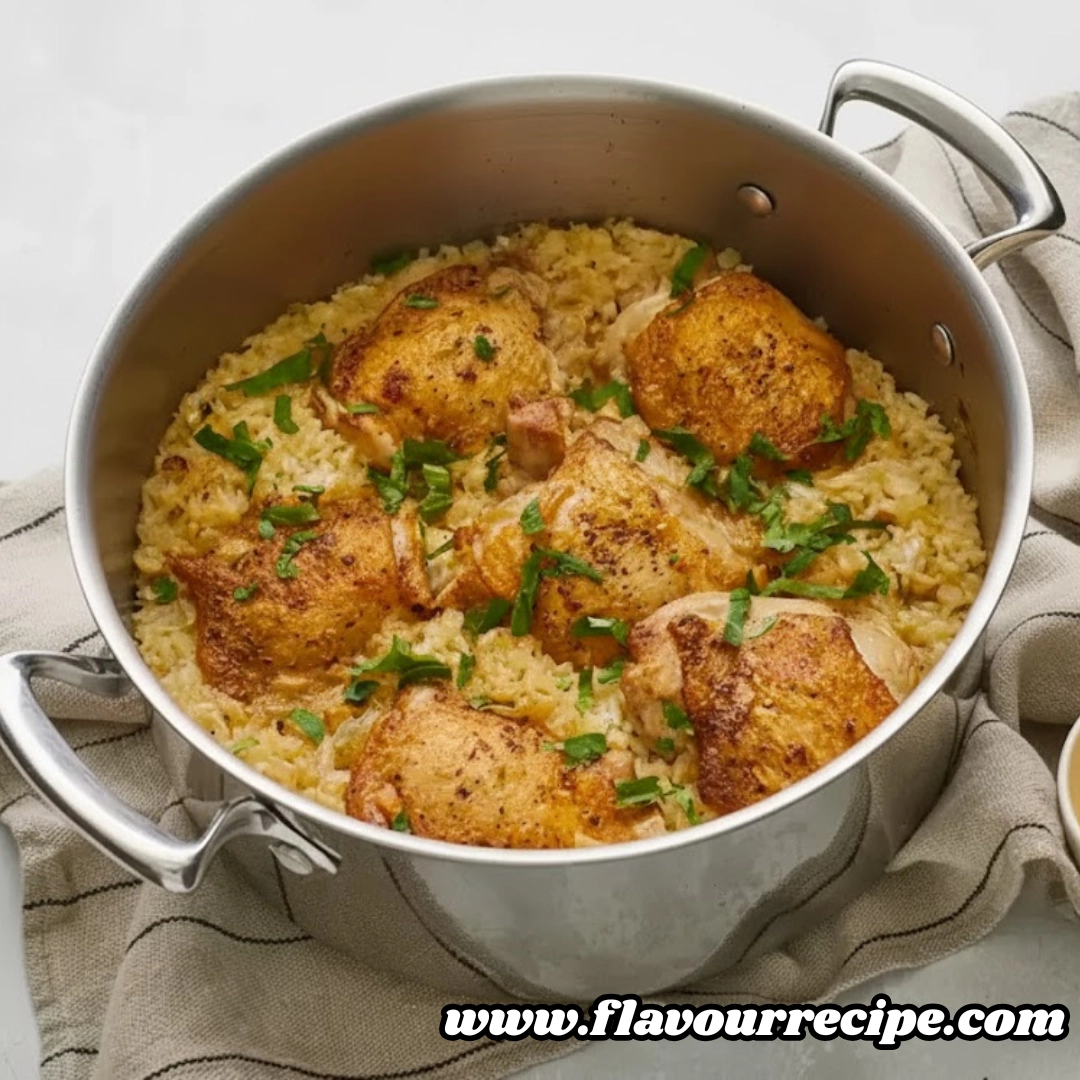
Mastering a single-vessel meal requires more than just tossing ingredients together; it is an exercise in heat management and layer building. This method for One-Pot Crispy Chicken and Rice focuses on the interplay between rendered fats and toasted starches. By treating the pot as both a high-heat sear station and a gentle steaming oven, you achieve a depth of flavor usually reserved for multi-stage professional cooking. This dish is designed for those who appreciate the technical beauty of a perfectly browned crust paired with the delicate fluffiness of long-grain rice that has absorbed every drop of seasoned stock.
The result is a composition of textures: the shattering crispness of the chicken exterior, the succulent dark meat beneath, and a base of grains that are distinct rather than gummy. It is a sophisticated, approachable meal that brings a sense of accomplishment to the home kitchen, making it a reliable choice for guests or a quiet, high-quality dinner at home. Using the One-Pot Crispy Chicken and Rice technique ensures that the kitchen remains tidy while the dining table remains impressively laden.
Table of Contents
Components of the Dish
The Protein Foundation
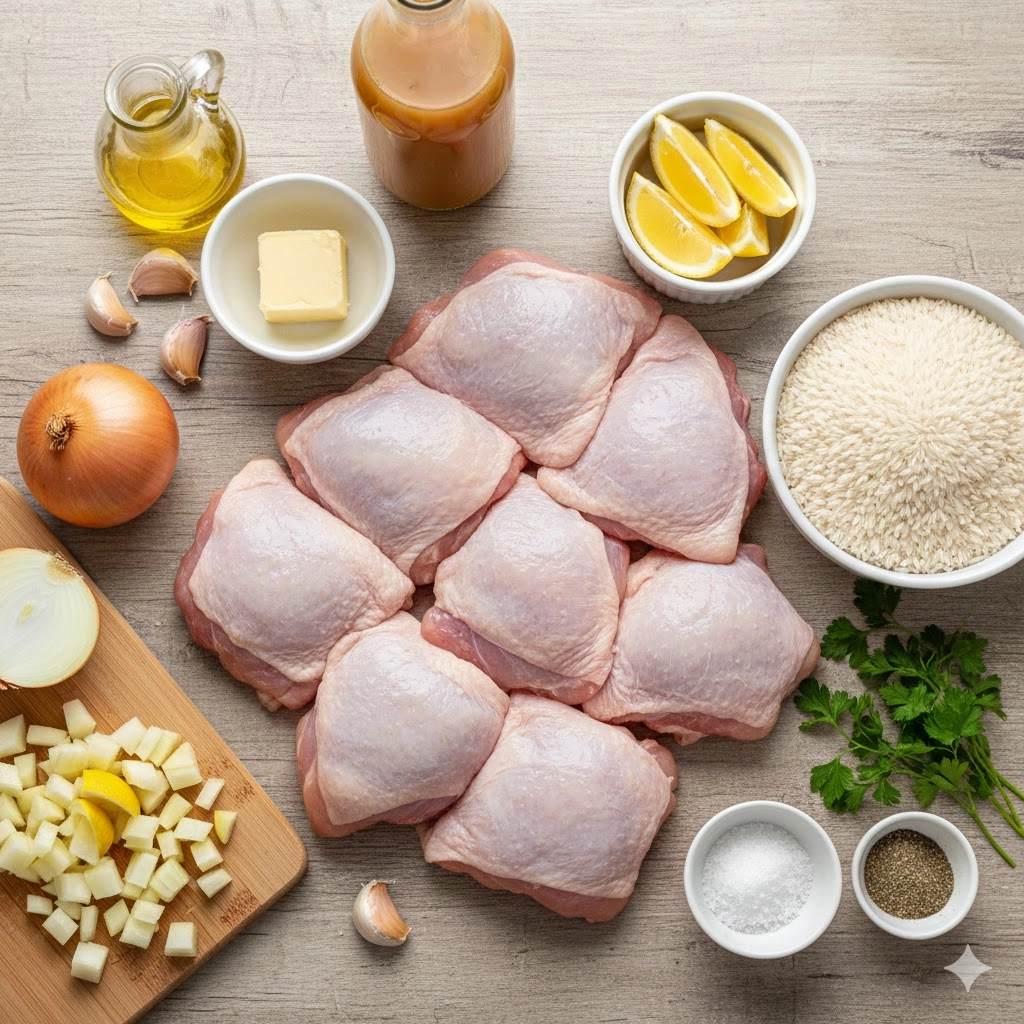
- 6 bone-in, skin-on chicken thighs (roughly 4 ounces each)
- 1 tablespoon high-smoke-point olive oil
- 1 teaspoon sea salt
- 1/2 teaspoon cracked black pepper
The Aromatic Rice Base
- 1 1/2 cups long-grain white rice (rinsed)
- 1 tablespoon unsalted dairy butter
- 2/3 cup sweet yellow onion, minced
- 2 cloves garlic, crushed and minced
- 3 cups low-sodium chicken stock
- 1/2 teaspoon kosher salt
- 1/4 teaspoon ground black pepper
Garnish and Brightness
- 1 tablespoon fresh Italian parsley, chopped
- 1 whole lemon, sliced into wedges
Preparation Path
- Set the oven rack to the center position and preheat to three hundred seventy five Fahrenheit.
- Pat the chicken thighs dry with a paper towel and season all sides with salt and pepper.
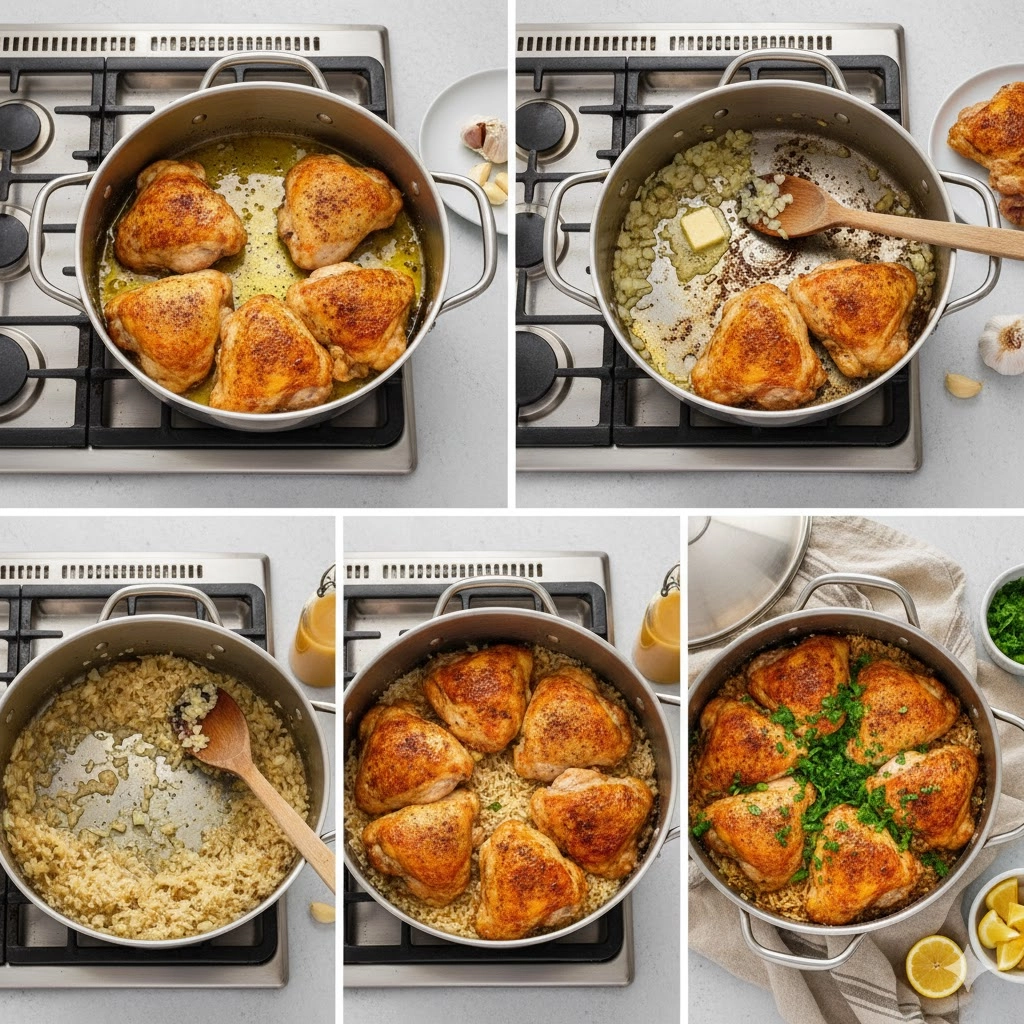
- Place a heavy Dutch oven over medium-high heat and add the olive oil.
- Sear the thighs skin-side down for five to seven minutes until the skin is deep amber.
- Turn the chicken over for three minutes to seal the bottom, then set aside on a plate.
- Reduce heat to medium; add butter and onions to the pan, scraping the bottom as they soften.
- Toss in the garlic and rice, stirring for sixty seconds to coat the grains in the fat.
- Pour in the stock and remaining seasonings, bringing the mixture to a heavy boil.
- Arrange the chicken on top of the rice, keeping the skin above the liquid level.
- Bake uncovered for forty five to fifty five minutes until the liquid is gone and the rice is tender.
Technical Keys to Flavor
The Science of the Sear
To get the best results for One-Pot Crispy Chicken and Rice, the searing phase cannot be rushed. When the skin-on thighs hit the hot oil, they will initially stick. This is normal. As the proteins undergo the Maillard reaction, the skin will naturally contract and pull away from the metal. Wait for this “release” before flipping. This not only creates the texture you want but also leaves behind the fond—those concentrated caramelized bits that give the rice its characteristic golden hue and savory punch.
Managing the Starch
The biggest risk with any rice-based dish is mushiness. Rinsing the rice under cold water until the cloudiness disappears removes excess surface starch. Furthermore, the act of “toasting” the rice in the chicken fat and butter before adding the stock creates a protective layer on each grain. This helps the rice stay separate and firm throughout the long bake in the oven.
The Role of Evaporation
Unlike many rice dishes that are cooked with a lid on, this preparation is baked uncovered. This allows the heat of the oven to hit the chicken skin directly, maintaining the crispness you achieved during the sear. The rice cooks via the liquid boiling beneath it and the ambient steam trapped in the Dutch oven’s tall sides, ensuring the meat stays juicy while the skin stays crackling.
Final Seasoning
The addition of fresh parsley and lemon at the very end is not just for visual appeal. The fats from the chicken and butter are heavy; the citric acid from the lemon juice acts as a chemical balance, cutting through the richness and making the savory notes of the garlic and onion more prominent on the palate.
Professional Enhancements
- Temperature Control: If your chicken thighs are particularly large, use a meat thermometer to ensure they reach an internal temperature of one hundred sixty five Fahrenheit at the bone.
- The Stock Quality: Since the rice absorbs three cups of liquid, the quality of your stock defines the flavor. Use a stock that is rich in collagen or a well-seasoned bone broth for a more luxurious mouthfeel.
- Pan Selection: If you do not have a Dutch oven, a deep cast-iron skillet or a heavy stainless steel saute pan will work, provided it can hold the volume of the stock without overflowing.
- Resting Period: Allow the pot to sit for five minutes after taking it out of the oven. This allows the moisture to redistribute within the rice grains, making them easier to fluff with a fork.
- Skin Prep: For an even better crunch, salt the chicken skin an hour before cooking and leave it uncovered in the fridge. This “dry brining” draws out moisture, leading to a superior sear.
Culinary Adaptations
- Herb Variations: Swap the parsley for fresh thyme or rosemary during the sautéing phase to give the dish an earthy, woodsy aroma that pairs perfectly with the poultry.
- Citrus Swap: If you want a deeper, more mellow acidity, use orange wedges instead of lemon. The sugars in the orange will caramelize slightly if you squeeze them over the chicken before the final ten minutes of baking.
- Vegetable Integration: You can add a cup of sliced mushrooms to the onions while sautéing. The mushrooms will soak up the chicken fat and provide a meaty, umami-rich texture to the rice bed.
- Rice Varieties: While long-grain white rice is the standard, Basmati provides a nutty fragrance, while Jasmine offers a slightly stickier, more floral result. Adjust liquid levels by two percent if using Jasmine to avoid over-softening.
Plating and Presentation
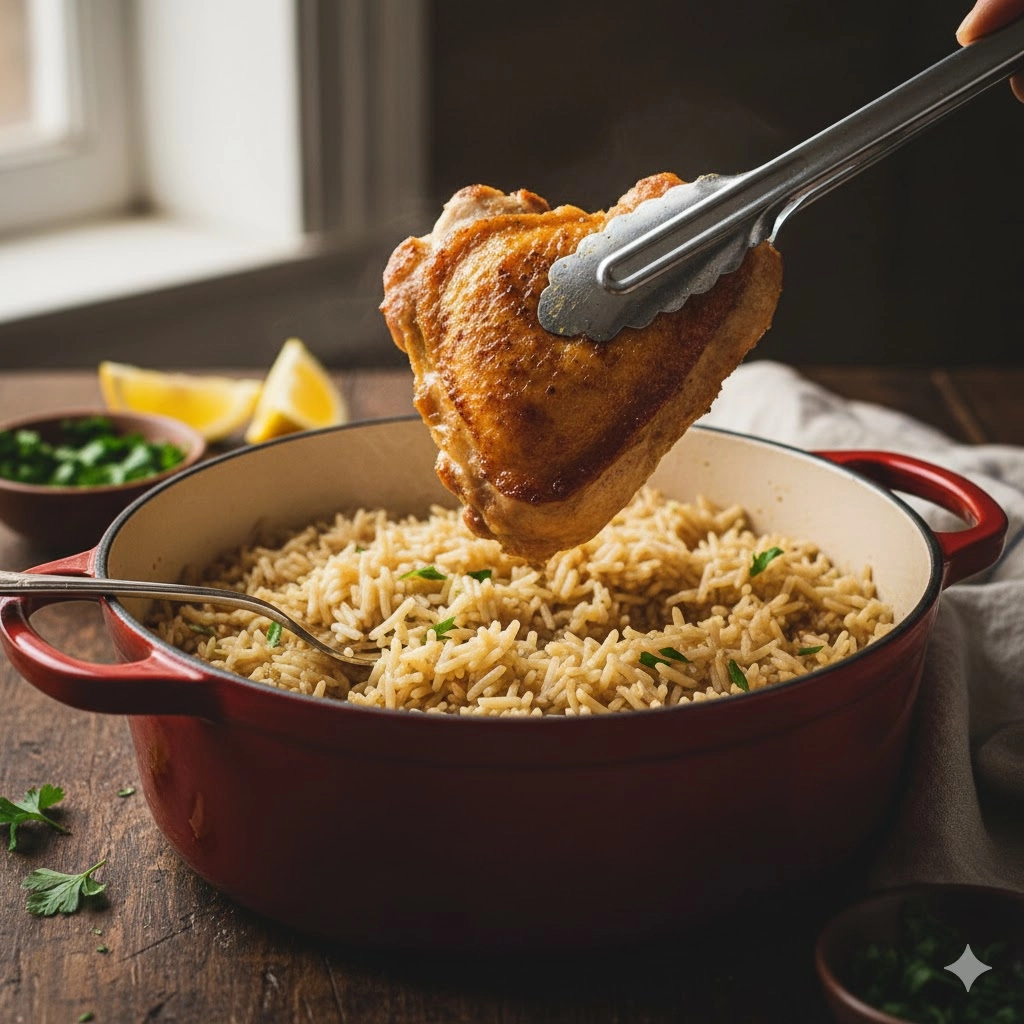
This meal is visually stunning when served directly in the vessel it was cooked in. To serve, use a wide spoon to scoop a generous portion of rice from the bottom—where the most flavor resides—and place a chicken thigh on top. A side of roasted root vegetables or a crisp garden salad provides a refreshing temperature and texture contrast. For a more formal presentation, individual plates can be garnished with extra lemon zest and a crack of fresh black pepper.
Frequently Asked Questions
Why did my rice cook unevenly?
This often happens if the chicken pieces are crowded too tightly or if the oven has “hot spots.” Ensure there is a little space between each thigh for steam to circulate, and rotate the pot halfway through the baking time if your oven heat is inconsistent.
Can I use skinless chicken thighs?
You can, but you will lose the “crispy” element that defines the dish. If using skinless meat, reduce the initial searing time to avoid drying out the exterior of the chicken, and consider adding an extra tablespoon of butter to compensate for the lack of rendered fat.
What should I do if the stock evaporates too fast?
If you see the rice is dry but still feels hard to the touch, add a quarter cup of stock or water. This can happen in convection ovens where the airflow accelerates evaporation.
Is it possible to overcook the chicken?
Because thighs are dark meat with a high fat content and are cooked on the bone, they are very forgiving. They remain juicy much longer than white meat, making them ideal for this forty five minute baking window.
Nutrition Information
| Nutrient | Amount per Serving |
| Calories | 413 kcal |
| Protein | 23 g |
| Carbs | 42 g |
| Fat | 17 g |
| Fiber | 2 g |
| Sugar | 1 g |
| Sodium | 891 mg |
Nutrition information is an estimate and may vary based on preparation and ingredients used.
PrintThe Golden Dutch Oven Method: Skillet-Style Poultry and Savory Grains

A masterclass in one-pan cooking: juicy bone-in chicken thighs with crackling golden skin served over a bed of savory, stock-infused long-grain rice.
- Prep Time: 15 mins
- Cook Time: 1 hr 5 mins
- Total Time: 1 hr 20 mins
- Yield: 6 servings 1x
- Category: Main Course
- Method: Dutch Oven
- Cuisine: American
Ingredients
1 tablespoon olive oil
6 bone-in, skin-on chicken thighs
1½ teaspoons kosher salt, divided
¾ teaspoon ground black pepper
1 tablespoon unsalted butter
⅔ cup finely chopped yellow onion
2 cloves garlic, minced
1½ cups uncooked long-grain rice
3 cups chicken stock
1 tablespoon finely chopped flat-leaf parsley
1 medium lemon, cut into wedges
Instructions
1. Preheat oven to 375 Fahrenheit.
2. Season chicken with salt and pepper. Heat oil in a Dutch oven over medium-high heat.
3. Sear chicken skin-side down until golden and crisp (about 5 minutes). Flip and cook for 3 minutes. Remove to a plate.
4. Melt butter in the same pot. Sauté onion until translucent, then add garlic and rice. Toast for 1 minute.
5. Stir in chicken stock and remaining seasoning. Bring to a rolling boil.
6. Nestle chicken on top of the rice, keeping skin above the liquid.
7. Bake uncovered for 45 to 55 minutes until liquid is absorbed and rice is tender.
8. Garnish with fresh parsley and a squeeze of lemon juice.
Notes
Pat the chicken skin completely dry before searing for maximum crispness.
Use a heavy-bottomed Dutch oven for even heat distribution.
Let the dish rest for 5 minutes after removing from the oven to allow rice to fluff perfectly.
Nutrition
- Serving Size: 1 thigh with rice
- Calories: 413
- Sugar: 1g
- Sodium: 891mg
- Fat: 17g
- Saturated Fat: 5g
- Unsaturated Fat: 10g
- Trans Fat: 0g
- Carbohydrates: 42g
- Fiber: 2g
- Protein: 23g
- Cholesterol: 77mg