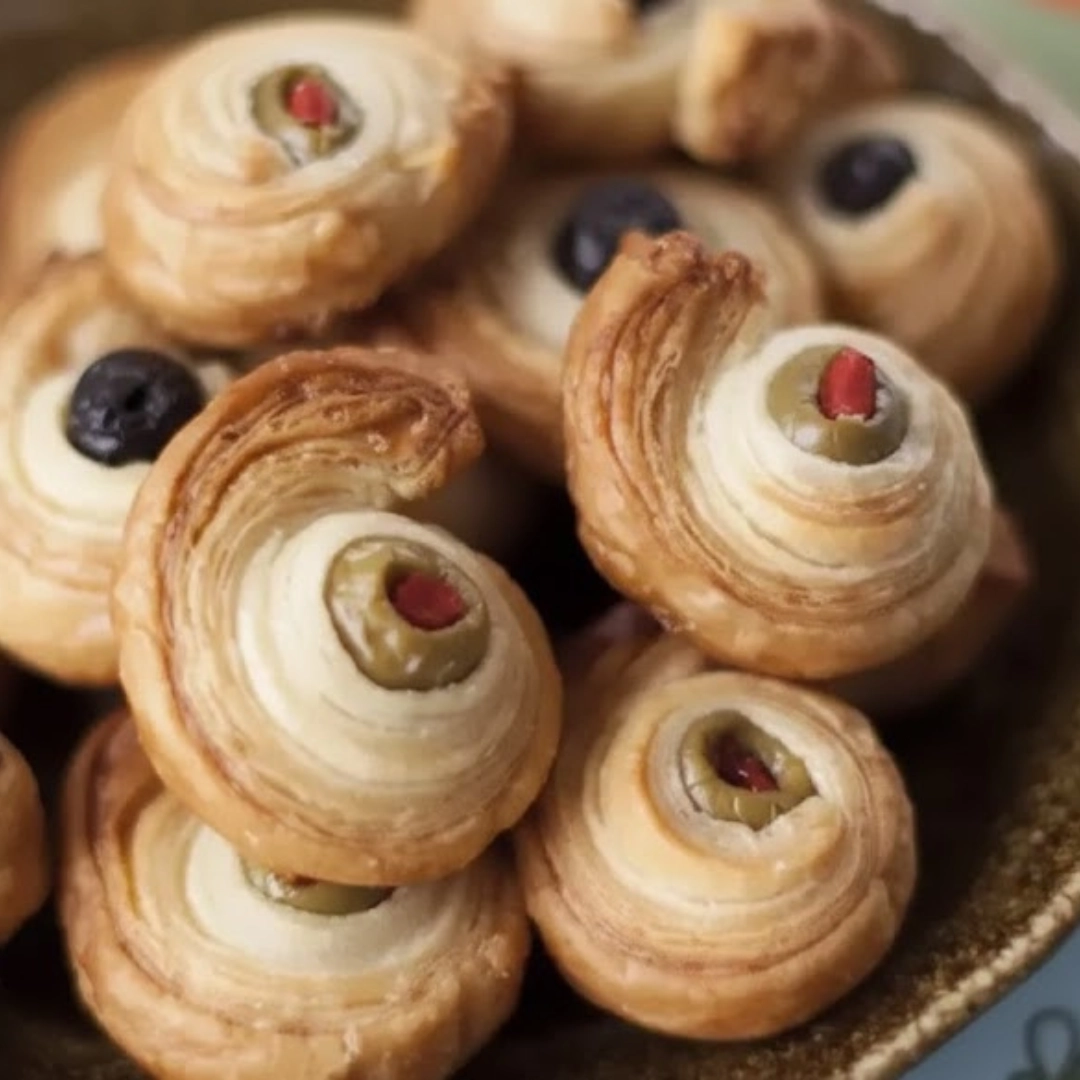
Olive Puffs represent a sophisticated yet remarkably accessible addition to any hors d’oeuvre platter, bridging the gap between rustic Mediterranean flavors and classic French pastry techniques. These bite-sized morsels feature a briny, firm olive core encased in a shatteringly crisp, buttery layer of laminated dough. The contrast between the warm, salty fruit and the airy, golden pastry creates a complex sensory experience that works equally well at a formal cocktail hour or a casual weekend gathering. Utilizing high-quality ingredients ensures that the bold characteristics of the olives shine through the rich, buttery exterior of this timeless appetizer.
Table of Contents
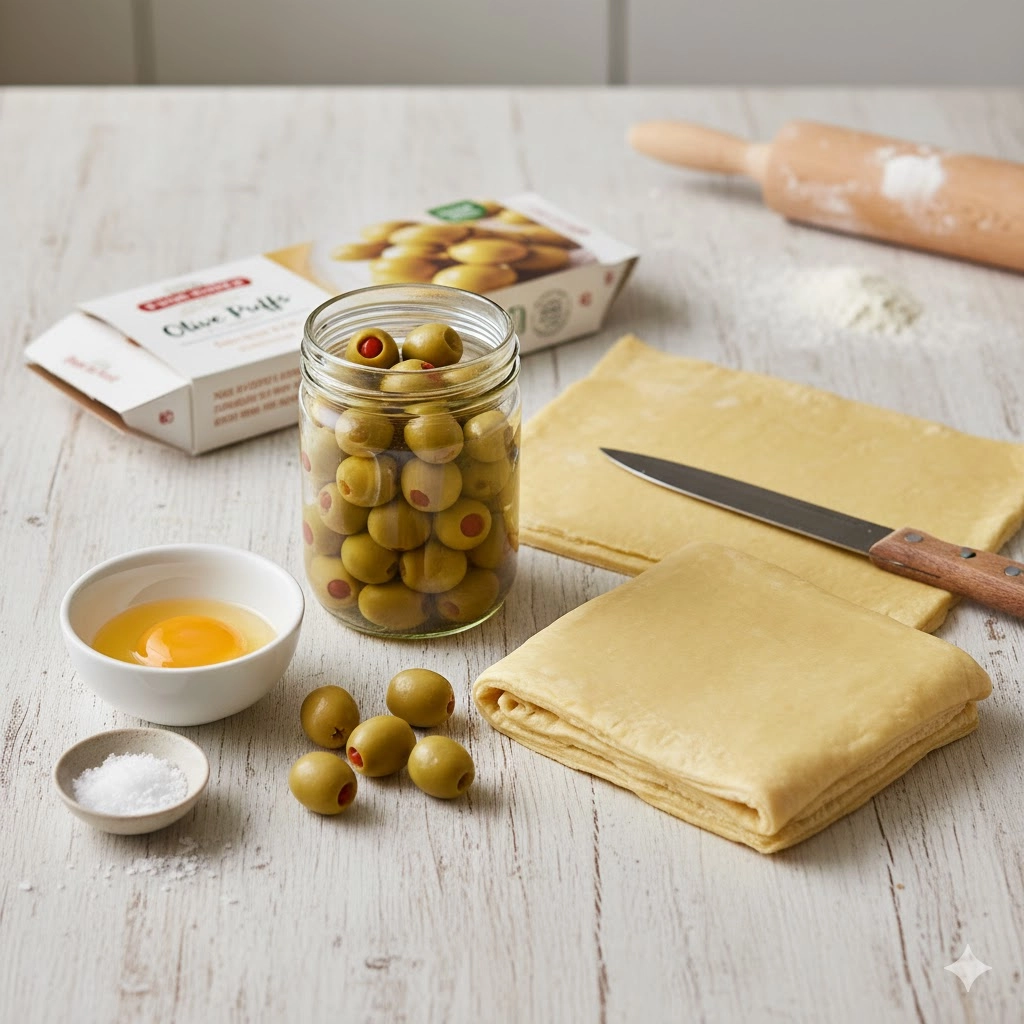
Essential Components
The Pastry
- Seventeen and one-quarter ounces frozen puff pastry (thawed but chilled)
The Core
- Twenty-four pimento-stuffed green olives (drained and patted dry)
Optional Finishing Touches
- One large egg (for egg wash)
- One tablespoon cold water
- One-quarter teaspoon coarse sea salt
Assembly and Preparation
- Heat your oven to four hundred Fahrenheit to ensure immediate pastry lift.
- Prepare a light-colored baking sheet with parchment paper or leave it ungreased.
- Dry each olive thoroughly using a clean kitchen towel or paper towels.
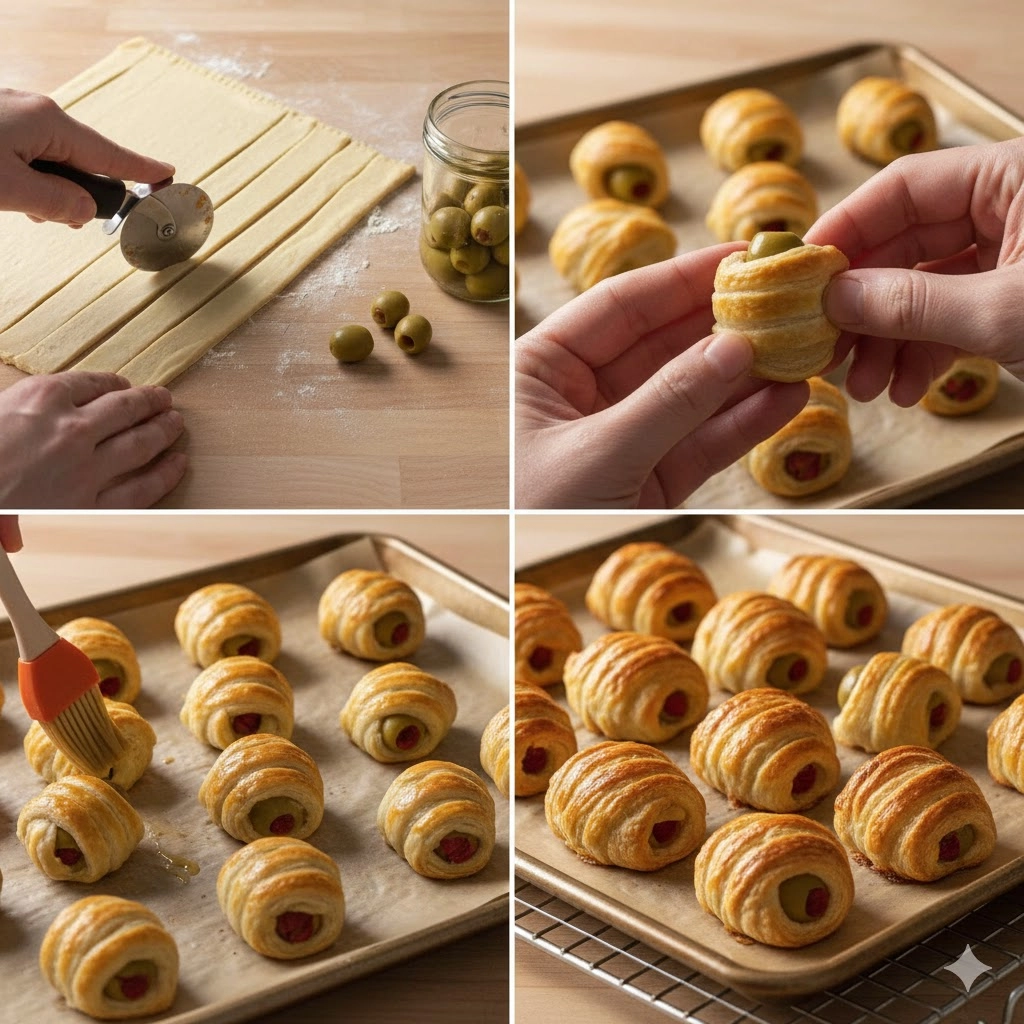
- Unfold the cold pastry sheets onto a lightly floured surface.
- Slice the dough into narrow strips measuring six inches long and one-half inch wide.
- Spiral a single strip around each olive, overlapping the edges slightly to secure.
- Arrange the prepared pieces on the sheet with two inches of space between them.
- Bake until the dough has achieved a deep, mahogany gold color, roughly twenty minutes.
Mastery of the Technique
Success with this recipe depends heavily on the temperature of your dough. Puff pastry relies on hundreds of thin layers of solid fat that melt rapidly in the oven, creating steam that lifts the flour layers. If the dough becomes too warm during the cutting and wrapping process, the fat will soak into the flour, resulting in a leaden, greasy texture rather than a light puff. If you notice the dough becoming sticky or overly soft, return it to the refrigerator for fifteen minutes before continuing your work.
The moisture content of the olives is another critical variable. If the olives are dripping with brine when wrapped, the interior of the pastry will become soggy and fail to crisp. After draining the jar, spread the olives on a towel and roll them gently to remove every drop of surface liquid. For the best visual appeal, wrap the dough “mummy-style,” leaving just a hint of the green olive or red pimento peeking through the ends. This allows the steam from the olive to escape while providing a peek at the prize inside.
When placing the tray in the oven, ensure the rack is in the center position. This allows for even air circulation. You are looking for a visual cue beyond just “light brown.” The pastry should look dry and multi-layered. If the puffing seems uneven, rotate the tray halfway through the twenty-minute duration. The aroma in the kitchen will shift from raw flour to a toasted, buttery scent when they are nearing completion.
Professional Success Strategies
- Always use olives that are pitted; biting into a surprise pit inside a soft pastry can be a dental hazard for guests.
- Keep the puff pastry in the refrigerator until the exact moment you are ready to slice it to maintain the integrity of the lamination.
- If using an egg wash, apply it only to the pastry and avoid letting it drip onto the pan, which can cause the Olive Puffs to stick or burn at the base.
- Use a pizza cutter or a very sharp chef’s knife to slice the dough; a dull blade will “smush” the layers together and prevent them from rising.
- If you choose to freeze these before baking, flash-freeze them on a tray first so they do not stick together in the storage bag.
- Avoid using “canned” black olives, as their high water content and mild flavor tend to get lost in the richness of the dough.
Flavor Adaptations
The Provencal Twist
Swap the standard green olives for oil-cured black olives or Niçoise olives. These provide a much deeper, earthier flavor profile that pairs exceptionally well with a sprinkle of dried herbes de Provence on the pastry before baking.
Spicy Mediterranean
Use olives stuffed with jalapeños or habaneros for a kick of heat. The richness of the buttery pastry acts as a natural counterpoint to the spice, mellowing the burn while highlighting the pepper’s flavor.
Blue Cheese Variation
Replace the pimento-stuffed olives with those hand-stuffed with Gorgonzola or blue cheese. The cheese will slightly melt into the inner layers of the pastry during the baking process, creating a creamy, savory center.
Presentation and Serving
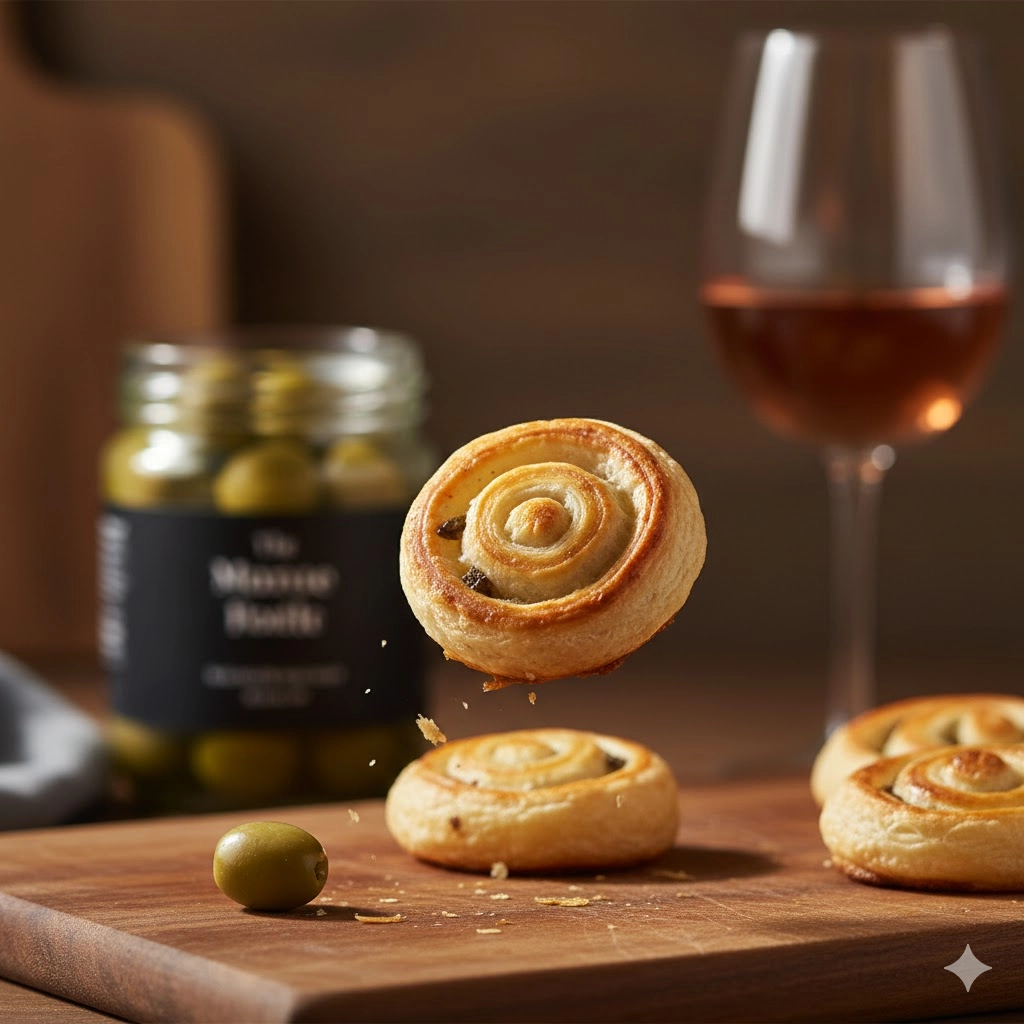
These appetizers are most impressive when served warm, as the pastry is at its maximum crispness. Arrange them in a circular pattern on a slate board or a white ceramic platter to let the golden-brown color pop. They do not strictly require a dipping sauce, but a side of spicy honey or a grainy Dijon mustard can provide a lovely acidic balance to the salt and fat. For a holiday spread, garnish the platter with fresh rosemary sprigs to add a botanical fragrance that complements the olives.
Frequently Asked Questions
Can I use homemade pie crust instead of puff pastry?
While you can wrap olives in pie dough, the result will be a short, crumbly texture rather than the airy, flaky layers characteristic of this dish. The cooking time may also vary as pie crust does not require the same high-heat “burst” as puff pastry.
Why did my pastry unroll during the baking process?
This usually happens if the dough was too floury or too cold to stick to itself. Ensure there is a slight overlap when wrapping, and press the final “tail” of the dough firmly into the rest of the wrap to create a seal.
How do I reheat leftovers without them getting soggy?
Avoid the microwave at all costs. To restore the crunch, place the puffs back in an oven at three hundred fifty Fahrenheit for five to seven minutes. This allows the fats to recrisp the flour layers.
Are these suitable for a make-ahead menu?
Absolutely. You can assemble the puffs up to twenty-four hours in advance and keep them covered in the refrigerator. Bake them straight from the fridge, perhaps adding two or three minutes to the total time.
Nutrition Information
| Nutrient | Amount per Serving |
| Calories | 230 kcal |
| Protein | 3 g |
| Carbs | 18 g |
| Fat | 16 g |
| Fiber | 1 g |
| Sugar | 0 g |
| Sodium | 266 mg |
Nutrition information is an estimate and may vary based on preparation and ingredients used.
PrintElegant Savory Appetizer: Olive Puffs
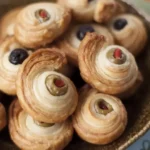
Elegant and savory Olive Puffs featuring briny pimento-stuffed green olives encased in shatteringly crisp, buttery puff pastry. A timeless three-ingredient appetizer.
- Prep Time: 20 mins
- Cook Time: 20 mins
- Total Time: 40 mins
- Yield: 12 servings 1x
- Category: Appetizer
- Method: Baking
- Cuisine: Mediterranean
- Diet: Vegetarian
Ingredients
17.25 ounces frozen puff pastry (thawed but chilled)
24 pimento-stuffed green olives (drained and dried)
1 large egg (for egg wash)
1 tablespoon cold water
1/4 teaspoon coarse sea salt
Instructions
1. Preheat your oven to four hundred Fahrenheit.
2. Prepare a baking sheet with parchment paper.
3. Thoroughly dry each olive using a clean kitchen towel.
4. Unfold the cold pastry sheets and slice into strips 6 inches long and 1/2 inch wide.
5. Spiral a single strip around each olive, overlapping the edges slightly to secure.
6. Arrange on the baking sheet with two inches of space between puffs.
7. Bake until the dough is mahogany gold, roughly twenty minutes.
8. Serve warm for maximum crispness.
Notes
Keep the puff pastry chilled until the moment of cutting to ensure maximum lift.
Always use pitted olives to avoid safety hazards.
Dry the olives completely to prevent soggy pastry bottoms.
Nutrition
- Serving Size: 2 puffs
- Calories: 230
- Sugar: 0g
- Sodium: 266mg
- Fat: 16g
- Saturated Fat: 4g
- Unsaturated Fat: 10g
- Trans Fat: 0g
- Carbohydrates: 18g
- Fiber: 1g
- Protein: 3g
- Cholesterol: 0mg