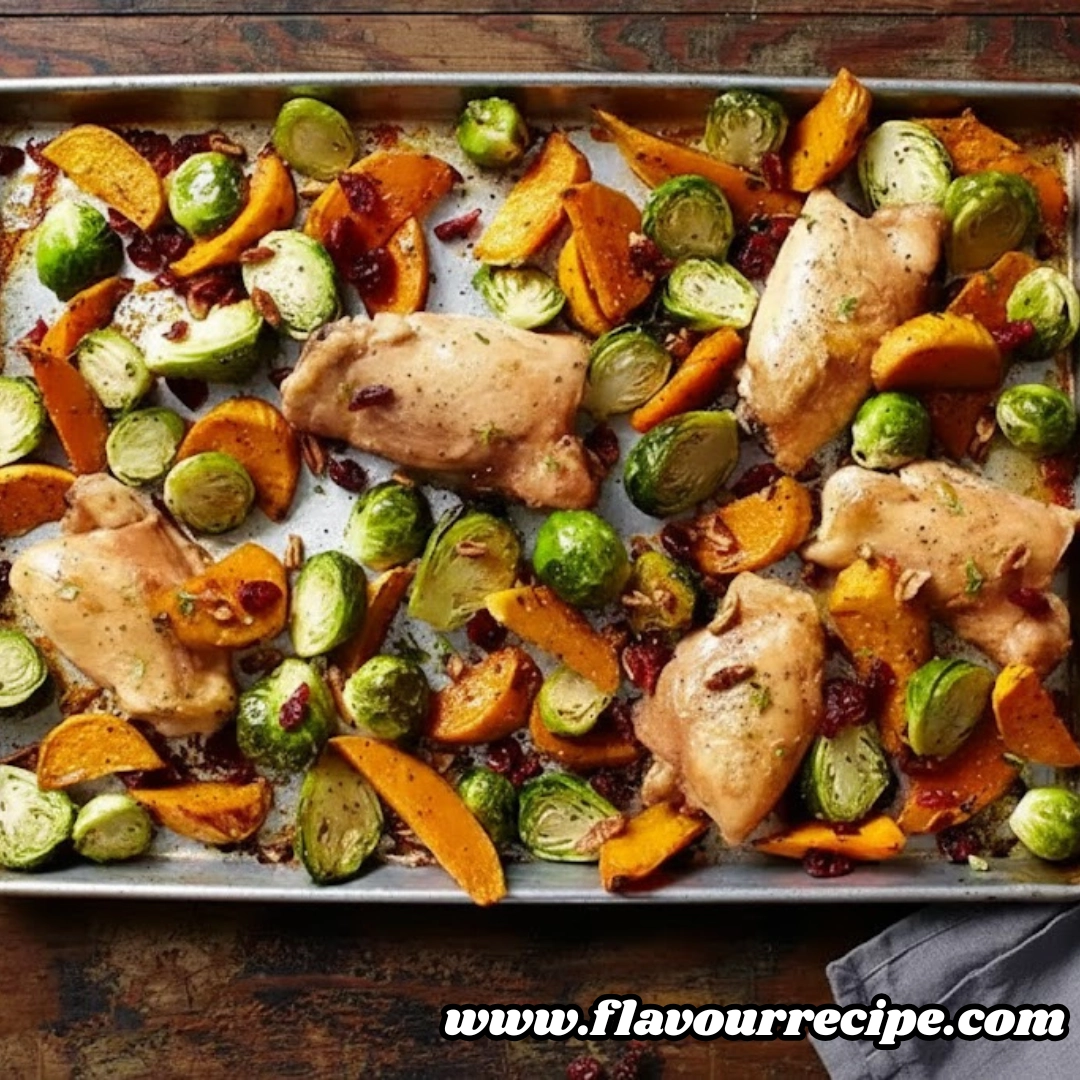
The beauty of a structured sheet-pan dinner lies in the harmony of its cooking times and the melding of flavors as they roast in close proximity. This preparation of Maple-Roasted Chicken Thighs is a masterclass in seasonal balance, utilizing the high-sugar content of root vegetables and the robust fat profile of bone-in poultry to create a self-basting environment. By pairing the savory depth of fresh herbs with the natural sugars of a forest-sourced syrup, the dish achieves a complex profile that tastes far more intricate than its simple preparation suggests. It is an ideal solution for those seeking a nutrient-dense, high-protein meal that minimizes kitchen cleanup without compromising on culinary technique.
In this specific rendition, the high heat of the oven transforms the texture of the Brussels sprouts from bitter to nutty, while the sweet potatoes provide a soft, creamy contrast to the crispy exterior of the meat. Finished with the textural pop of toasted nuts and the acidic brightness of dried fruit, this meal offers a complete sensory experience.
Table of Contents
The Necessary Components
For the Main Protein and Glaze
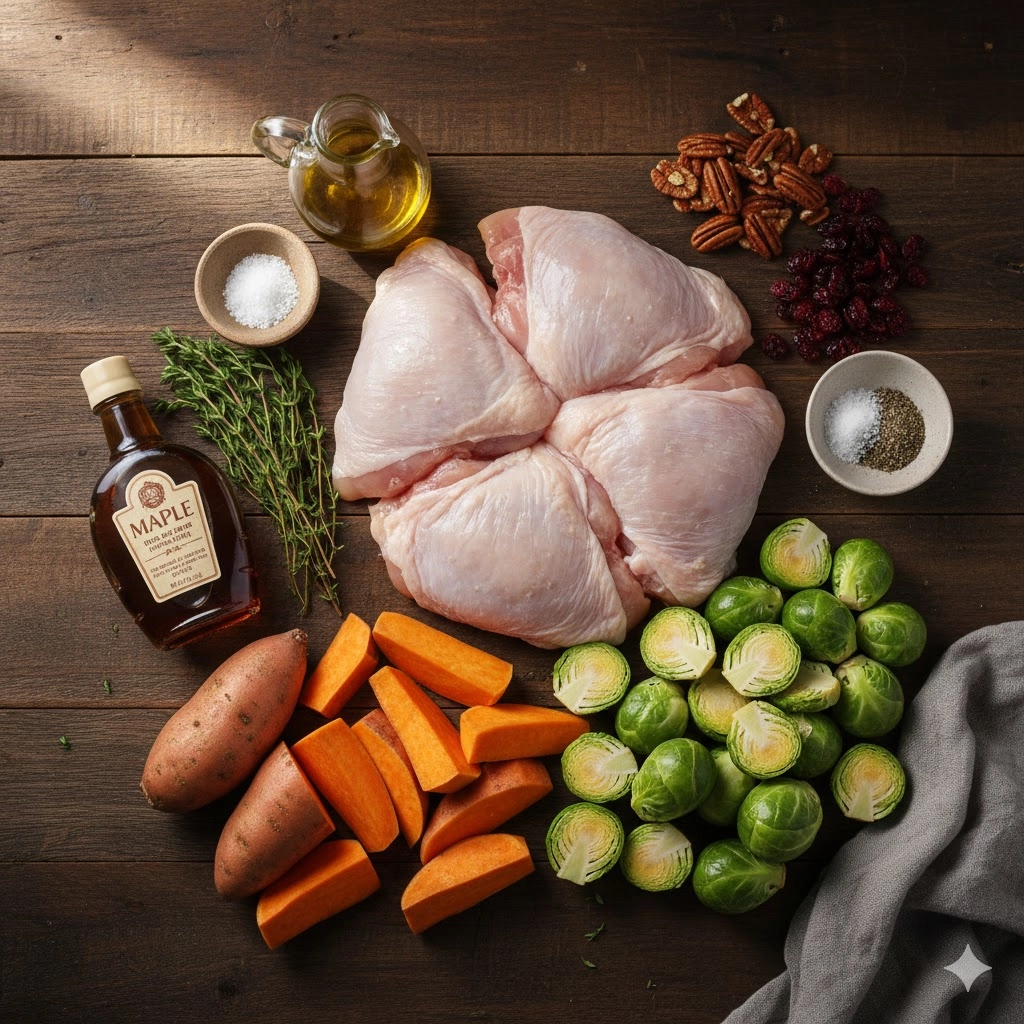
- 4 bone-in, skin-on chicken thighs (roughly one and a half pounds)
- 2 tablespoons pure maple syrup (Grade A Amber recommended)
- 1 tablespoon fresh thyme leaves, stripped from the stem
- 6 teaspoons extra virgin olive oil, partitioned
- Three-quarters teaspoon sea salt, divided
- Three-quarters teaspoon cracked black pepper, divided
For the Harvest Vegetable Medley
- 1 pound sweet potatoes, peeled and sliced into thick one-inch wedges
- 1 pound Brussels sprouts, trimmed and halved lengthwise
- One-quarter cup toasted pecans, roughly chopped
- One-quarter cup dried cranberries, minced
Sequential Cooking Methodology
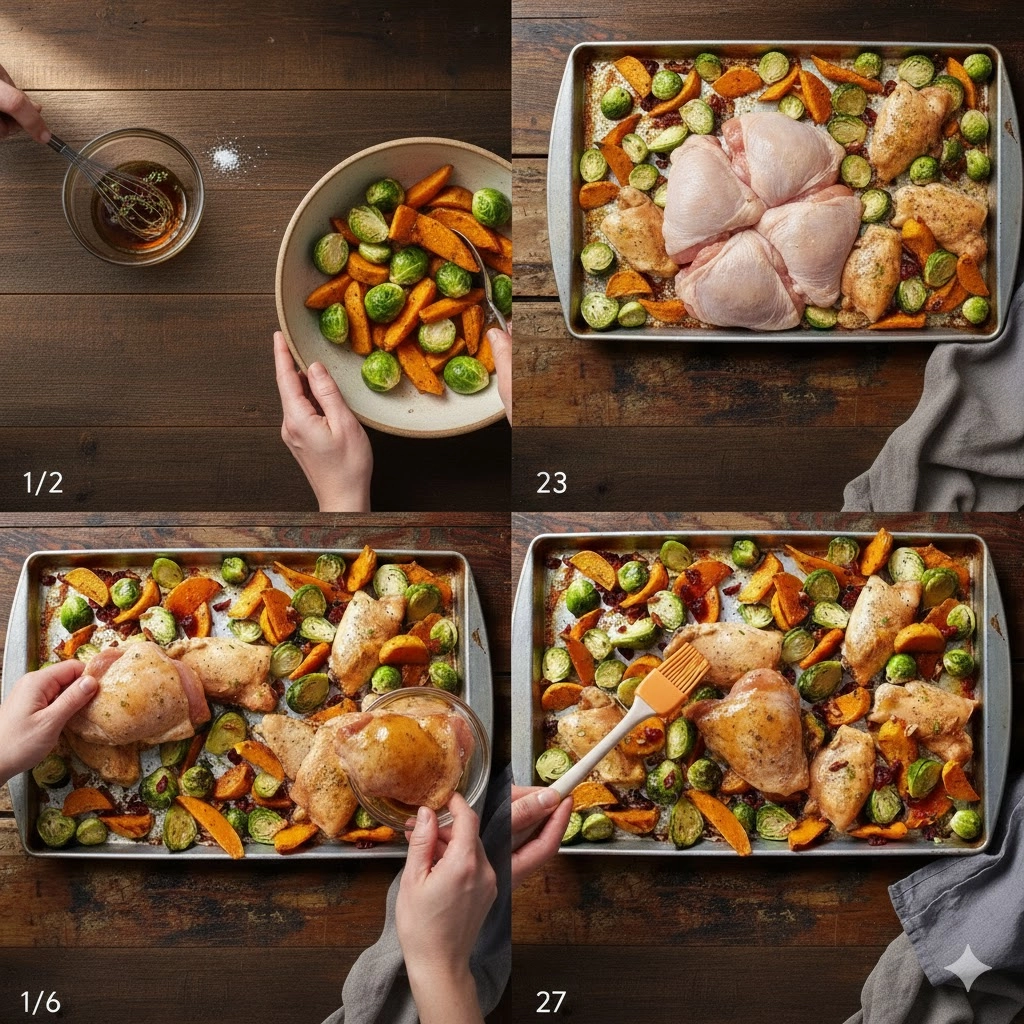
- Establish an oven temperature of four hundred twenty-five Fahrenheit and prepare a large, rimmed baking sheet by lining it with heavy foil for heat conduction and easy cleanup.
- In a small ramekin, create the glazing liquid by whisking the maple syrup, fresh thyme, one teaspoon of olive oil, and one-quarter teaspoon each of salt and pepper.
- In a separate workspace, combine the sweet potato wedges and prepared Brussels sprouts with two teaspoons of olive oil and a quarter-teaspoon each of salt and pepper, ensuring every surface is lightly coated.
- Rub the chicken thighs with the remaining three teaspoons of olive oil and the final portion of salt and pepper.
- Position the chicken thighs skin-side down in the center of the pan, distributing the vegetable mixture in the surrounding space in a single, even layer.
- Place the tray in the oven for fifteen minutes; then, carefully flip the chicken thighs over so the skin is facing upward.
- Liberally apply the prepared maple glaze over the chicken and the vegetables using a silicone brush.
- Continue roasting for an additional fifteen minutes or until the internal temperature of the thickest part of the thigh reaches one hundred sixty-five Fahrenheit.
- Scatter the toasted pecans and dried cranberries over the tray immediately upon removal from the oven.
Technical Nuances for a Superior Roast
The most common error in tray-style cooking is overcrowding. For the Maple-Roasted Chicken Thighs to reach their full potential, the air must circulate freely around each piece of produce. If the vegetables are stacked, they will release moisture and steam, resulting in a boiled texture rather than a roasted one. You are looking for “maillard reaction” markers—the deep browning of the chicken skin and the dark, caramelized edges of the Brussels sprout leaves.
Temperature management is equally vital. The initial fifteen minutes of roasting the chicken skin-side down allows the subcutaneous fat to render out onto the pan, which essentially shallow-frys the skin from the bottom up. When you flip the chicken and apply the glaze, the sugars in the syrup will create a lacquer that hardens slightly as it cools. If the syrup is applied too early in the process, the high heat of the oven will cause it to carbonize and turn bitter before the chicken reaches safety standards.
Regarding the aromatic profile, using fresh thyme is non-negotiable for the best result. The woodsy oils in the fresh herb provide a bridge between the sweetness of the syrup and the savory fat of the chicken. If you notice the vegetables are browning faster than the meat, simply toss them mid-way through the second roasting phase to ensure even coloring.
Professional Enhancements and Advice
- Standardize the Cut: Ensure your sweet potato wedges are uniform in size. Thin tips will burn while thick centers remain hard; aiming for a consistent one-inch thickness at the widest point ensures a synchronized finish.
- The Sizzle Factor: Preheat the baking sheet inside the oven for five minutes before adding the ingredients. This creates an immediate sear on the chicken and vegetables the moment they touch the metal.
- Nut Toasting Safety: Pecans can go from toasted to burnt in thirty seconds. Always toast them in a dry pan over medium heat and remove them the moment you smell a warm, buttery fragrance.
- Acidic Balance: If you find the dish too sweet, a tiny squeeze of fresh lemon juice over the chicken just before serving can brighten the entire flavor profile.
- Parchment vs. Foil: While parchment paper prevents sticking, aluminum foil is a better heat conductor for this specific recipe, helping to crisp the bottom of the vegetables more effectively.
Creative Adaptations
This recipe serves as a robust template for seasonal cooking. If you wish to vary the ingredients, consider these professional substitutions:
- The Root Swap: Parsnips or carrots can be used in place of sweet potatoes for a slightly more earth-forward flavor.
- Seed Finish: For those with nut allergies, toasted sunflower seeds or roasted pumpkin seeds provide an excellent textural substitute for pecans.
- Spiced Variation: Incorporate a half-teaspoon of smoked paprika into the dry rub for the chicken to add a layer of campfire-like smokiness that complements the maple.
- Green Exchange: If Brussels sprouts are unavailable, broccoli florets work well, though they require five minutes less cooking time than the sprouts.
Pairing and Presentation
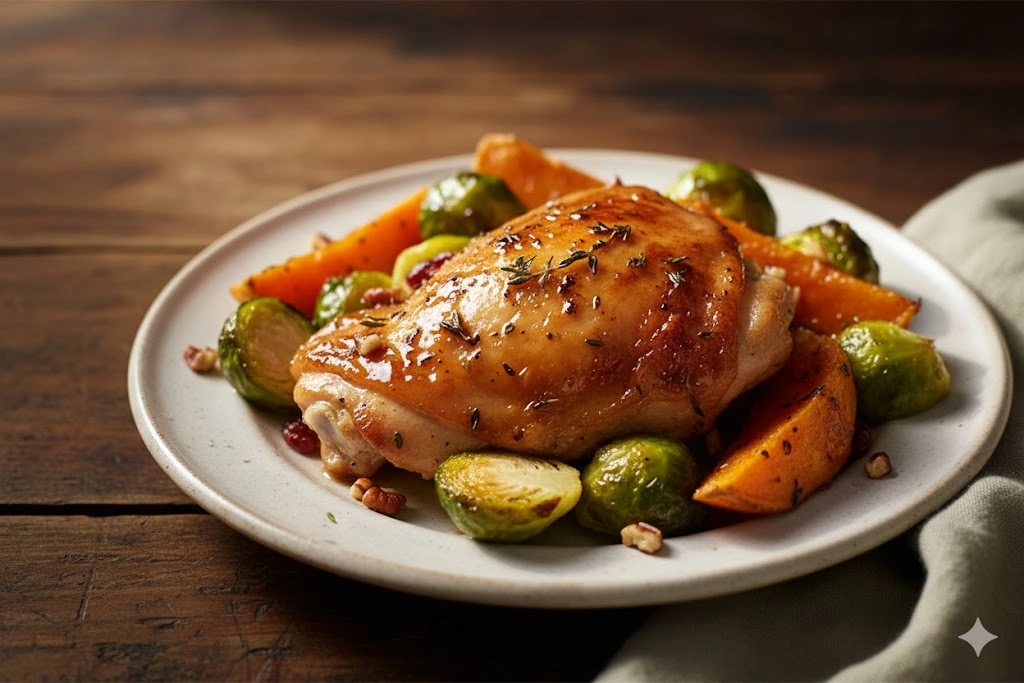
The richness of the chicken and the starchiness of the potatoes make this a heavy, satisfying meal. To provide a counterpoint, serve this dish with a side of steamed green beans or a crisp apple and fennel slaw. The crisp, watery crunch of raw fennel cuts through the syrupy glaze beautifully.
For presentation, do not feel the need to move everything to a separate bowl. A rustic, “family-style” presentation involves bringing the tray directly to a heat-safe trivet on the table. The contrast of the orange potatoes, green sprouts, and dark red cranberries creates a natural visual appeal that reflects the autumnal inspiration of the recipe.
Frequently Asked Questions
Why are my Brussels sprouts mushy?
Mushiness is usually a sign of steaming rather than roasting. This happens if the sprouts were wet when they went into the oven or if the pan was too crowded. Ensure they are bone-dry after washing.
Can I use maple-flavored pancake syrup?
No, pancake syrup is primarily high-fructose corn syrup and will not have the same chemical reaction or flavor depth as pure maple syrup. It is also more likely to burn and stick to the pan.
Is it safe to roast the cranberries?
While this recipe adds them at the end to maintain their chewy texture and bright color, you can roast them for the final five minutes if you prefer them to be soft and “popped.”
How should I store leftovers?
Store in an airtight container for up to three days. To maintain the texture, reheat in a toaster oven or air fryer at three hundred fifty Fahrenheit rather than using a microwave, which will soften the chicken skin.
Nutrition Information
| Nutrient | Amount per Serving |
| Calories | 462 kcal |
| Protein | 26 g |
| Carbs | 47 g |
| Fat | 21 g |
| Fiber | 8 g |
| Sugar | 18 g |
| Sodium | 520 mg |
Disclaimer
Nutrition information is an estimate and may vary based on preparation and ingredients used.
PrintAutumn Harvest Tray: Glazed Poultry and Root Vegetables
This Maple-Roasted Chicken Thighs recipe features a perfect balance of sweet and savory, roasting juicy bone-in chicken alongside caramelized Brussels sprouts and sweet potato wedges with a fresh thyme glaze.
- Prep Time: 20 mins
- Cook Time: 30 mins
- Total Time: 50 mins
- Yield: 4 servings 1x
- Category: Dinner
- Method: Roasting
- Cuisine: American
Ingredients
4 bone-in, skin-on chicken thighs
2 tbsp pure maple syrup
1 tbsp fresh thyme, snipped
6 tsp olive oil, divided
3/4 tsp salt, divided
3/4 tsp black pepper, divided
1 lb sweet potatoes, cut into 1-inch wedges
1 lb Brussels sprouts, halved
1/4 cup chopped toasted pecans
1/4 cup dried cranberries
Instructions
1. Preheat oven to 425 Fahrenheit and line a baking sheet with foil.
2. Whisk maple syrup, thyme, 1 tsp oil, and 1/4 tsp each salt and pepper in a small bowl.
3. Toss sweet potatoes and Brussels sprouts with 2 tsp oil and 1/4 tsp each salt and pepper.
4. Coat chicken with remaining 3 tsp oil and remaining salt/pepper; place skin-side down on the tray.
5. Roast for 15 minutes, then flip chicken and brush everything with the maple glaze.
6. Roast for another 15 minutes until chicken reaches 165 Fahrenheit.
7. Sprinkle with toasted pecans and dried cranberries before serving.
Notes
Pat chicken dry with paper towels for crispier skin.
Ensure vegetables are in a single layer to avoid steaming.
Use pure maple syrup rather than pancake syrup for best flavor.
Nutrition
- Serving Size: 1 chicken thigh with veggies
- Calories: 462
- Sugar: 18g
- Sodium: 520mg
- Fat: 21g
- Saturated Fat: 5g
- Unsaturated Fat: 16g
- Trans Fat: 0g
- Carbohydrates: 47g
- Fiber: 8g
- Protein: 26g
- Cholesterol: 95mg