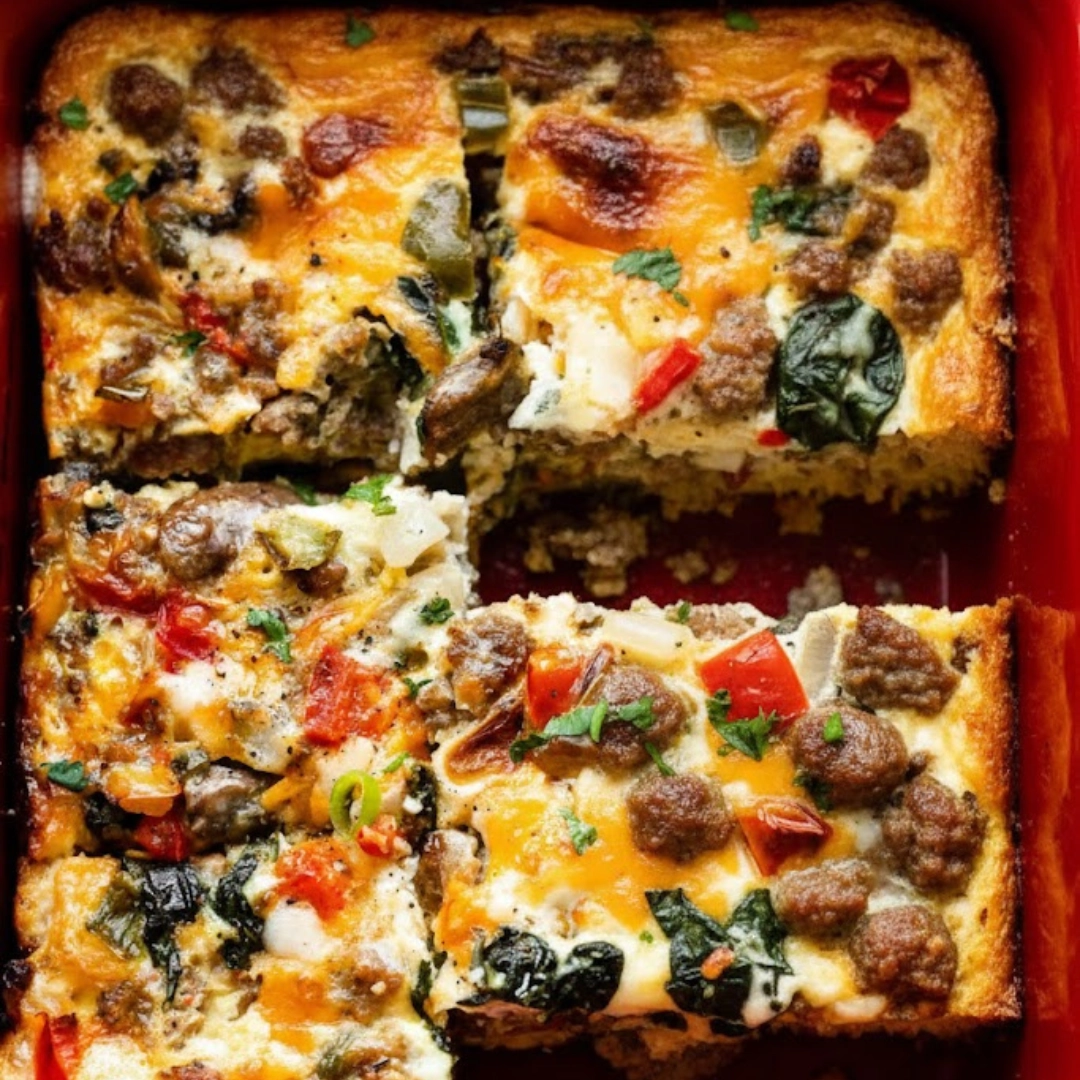
The true elegance of the perfect brunch dish is not always found in complexity, but in the simple guarantee of warm, savory satisfaction without the morning rush. This casserole delivers exactly that—a substantial, deeply flavorful main course that asks for nothing but assembly the night before, leaving you free to enjoy coffee and conversation when guests arrive, or simply claim a quiet Saturday morning for yourself. It’s an ideal recipe for feeding a crowd, but equally suited for easy meal prep, providing several days of hearty, protein-rich fuel. This Make Ahead Breakfast Casserole achieves that coveted balance: soft, flavorful bread cubes soaked in a creamy egg mixture, layered with savory meats, sharp cheese, and a gentle hint of spice.
Table of Contents
Components of a Great Morning Casserole
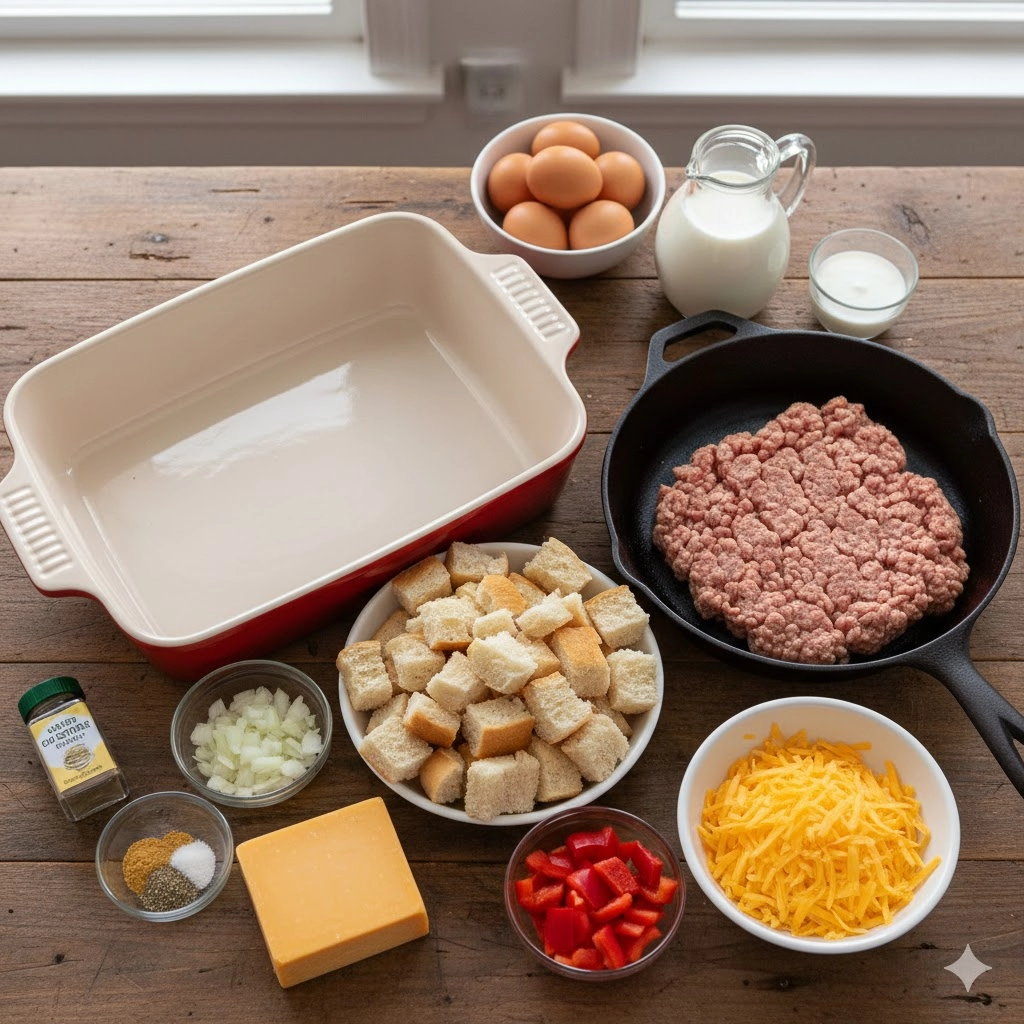
Gathering your ingredients first ensures a smooth, efficient assembly process. We rely on classic, familiar flavors here, but the choice of bread and dairy fat content can subtly shift the final texture.
For the Casserole Base
- One pound (450 grams) quality breakfast sausage, or equivalent ground meat
- Eight large eggs, cold
- Two cups (475 milliliters) whole milk
- One half cup (120 milliliters) heavy cream or half-and-half
- One teaspoon kosher salt
- One half teaspoon freshly ground black pepper
- One half teaspoon dry mustard powder
- One quarter teaspoon garlic powder
- Six cups (approximately 140 grams) cubed stale bread, such as French bread or brioche
For the Flavor Layer
- One half cup (75 grams) finely chopped yellow onion
- One half cup (75 grams) finely chopped bell pepper (any color)
- Two cups (225 grams) shredded sharp cheddar cheese, divided
- One tablespoon unsalted butter, for sautéing
Preparing the Casserole Base
The instructions are split into two phases: the initial cook of the aromatics and meat, and the final assembly and soaking. Note that the soaking time is the critical component for this to genuinely be a stress-free, make-ahead dish.
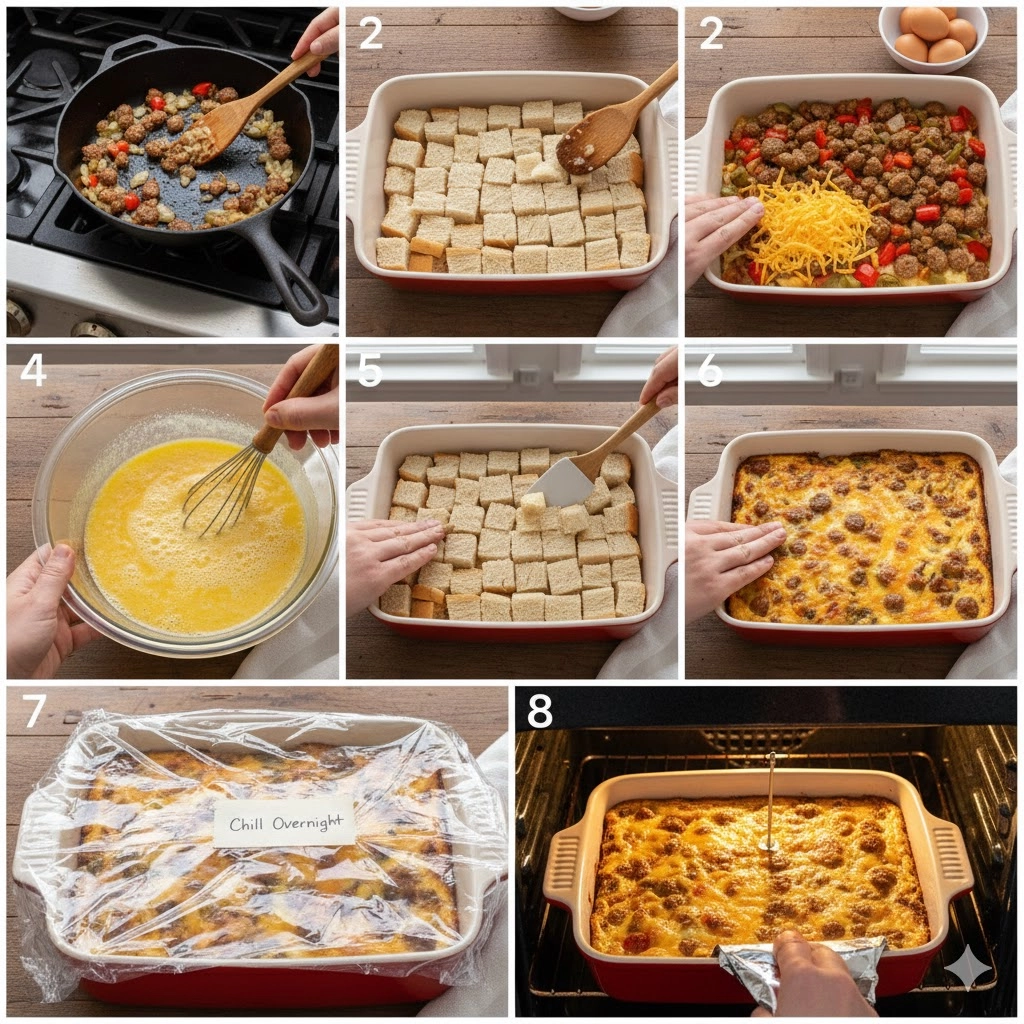
- Cook the Meat and Aromatics: In a large skillet, melt the butter and sauté the chopped onion and bell pepper until softened. Add the ground breakfast sausage and cook, breaking it up with a spoon, until fully browned. Drain off any excess fat from the skillet.
- Prep the Baking Dish: Lightly grease a nine-by-thirteen inch baking dish with butter or a non-stick spray. Set the oven temperature to three hundred fifty Fahrenheit when you are ready to bake.
- Cube and Layer the Bread: Cut the bread into one-inch cubes. Distribute about two-thirds of the bread cubes evenly across the bottom of the prepared baking dish.
- Add Fillings: Sprinkle the cooked sausage and vegetable mixture evenly over the bread layer. Reserve about one half cup of the shredded cheddar cheese for the topping, and sprinkle the remaining cheese over the meat. Top with the remaining one-third of the bread cubes.
- Whisk the Custard: In a large mixing bowl, whisk together the cold eggs, whole milk, heavy cream, salt, pepper, dry mustard, and garlic powder until completely uniform and slightly frothy.
- Pour and Soak: Slowly and evenly pour the egg and milk mixture over the contents of the baking dish, ensuring every piece of bread and filling is dampened. Gently press down on the bread cubes with the back of a spatula to ensure maximum absorption.
- Chill (The Critical Step): Cover the dish tightly with plastic wrap and refrigerate for a minimum of four hours, or preferably overnight (up to twenty-four hours).
- Bake: When ready to bake, remove the dish from the refrigerator and let it sit at room temperature for thirty minutes. Remove the plastic wrap, top with the reserved cheese, and bake for forty-five to fifty-five minutes, or until golden brown and set in the center.
Achieving the Perfect Texture: A Detailed Guide
The difference between a dry, spongy breakfast bake and a truly luxurious, custardy Make Ahead Breakfast Casserole lies entirely in the interaction between the bread and the liquid. This process demands patience and an understanding of key sensory indicators.
On Bread Choice and Saturation
The type of bread you select significantly impacts the final texture. Sturdy, slightly dry breads like day-old French bread, Italian loaf, or even brioche are superior choices. Thin, soft sandwich bread is highly discouraged as it will disintegrate into a paste when soaked. We use six cups of cubed bread—a volume that, when compressed, should form a substantial but porous layer.
The overnight soak is non-negotiable. Cold dairy and cold eggs are poured over the mixture, and this extended chilling period allows the starches in the bread to fully hydrate without dissolving. This hydration is what prevents a dry-tasting final product. If you skip or rush this step, the interior of the bread cubes will remain dry, and the texture will be uneven after baking. When you press the dish before chilling, you should see the liquid rise to just below the surface of the bread, indicating proper saturation.
Sautéing for Depth of Flavor
Before they go into the egg-soaked environment, the meat and vegetables must be fully cooked and their flavors developed. Browning the sausage creates desirable Maillard reaction compounds—those nutty, savory notes—that transfer into the overall dish. When draining the fat, aim to remove the bulk of it, leaving just enough residue to carry flavor. Too much residual grease will leach out during baking, leading to a greasy bottom layer that prevents the bread from achieving that perfect custard setting. Similarly, sautéing the onions and peppers until they are translucent and slightly sweet, rather than raw, ensures their sharp notes are mellowed into the casserole’s overall profile.
Indicators of Doneness
Baking is a heat transfer process, and for a casserole of this depth, it takes time. You will set your oven to three hundred fifty Fahrenheit. The high volume of cold liquid from the refrigerator requires a significant bake time to fully heat through and allow the proteins to set.
- Visual Cues: The top layer should be a deep, appetizing golden brown, particularly around the exposed bread edges and the melted cheddar.
- Physical Check: The most reliable test is the gentle wobble test. Shake the pan slightly. The center should show no liquid movement; it should be firm, though a slight, very minor jiggle is acceptable.
- Temperature Reading: For absolute certainty, insert an instant-read thermometer into the center. The egg mixture is fully set when it reaches an internal temperature of one hundred sixty Fahrenheit.
Allowing the casserole to rest for five to ten minutes after removing it from the oven is essential. This resting period allows the internal heat to redistribute and stops the cooking process, ensuring the custard maintains its structure upon slicing.
Essential Preparation Strategies and Baker’s Advice
Attention to detail during assembly ensures that your stress-free morning is matched by a truly excellent dish. These expert strategies address common pitfalls and maximize flavor potential.
- Use Day-Old Bread: The primary function of the bread is to absorb the custard without becoming mush. Fresh bread has too much moisture and will collapse. If you are using fresh bread, cube it and leave it exposed on a baking sheet for several hours, or briefly toast it in a two hundred fifty Fahrenheit oven for ten minutes.
- The Dairy Ratio is Key: The use of both whole milk and heavy cream (or half-and-half) is intentional. The milk provides the bulk liquid for soaking, while the higher fat content of the cream adds richness and helps create a more tender, silky custard structure, resisting the toughness that can sometimes occur with lean milk alone.
- Season the Custard Liberally: Eggs are notoriously bland without proper seasoning. Do not rely solely on the salt in the cheese or meat. The kosher salt and dry mustard powder (which enhances the savory flavor of eggs without tasting mustardy) must be thoroughly whisked into the liquid mixture before pouring. Taste the raw liquid mixture—it should taste slightly too salty, as the bread will absorb and balance the seasoning.
- Bake From Cold, But Temper First: While this recipe is designed to be made ahead, baking it immediately out of a very cold refrigerator will drastically increase the baking time and can lead to uneven cooking, where the edges are dry before the center is set. Letting the dish sit at room temperature for thirty minutes helps the temperature moderate slightly, promoting even heat penetration.
- Prevent a Soggy Top Crust: If you find the top of your casserole is browning too quickly during the last fifteen minutes of baking, simply lay a piece of aluminum foil loosely over the top of the dish. This will shield the surface from direct heat, allowing the center to finish cooking without burning the crust.
- Cheese Quality Matters: Since this is such a prominent flavor, opt for a block of sharp cheddar that you shred yourself. Pre-shredded cheeses contain anti-caking agents that can inhibit melting and result in a slightly grainy texture.
Flavor Customization and Ingredient Swaps
The beauty of a hearty casserole is its adaptability. Once you understand the basic bread-to-custard ratio, the filling becomes a blank canvas for your favorite ingredients.
Swap the Protein
Instead of traditional breakfast sausage, consider using a high-quality ham (diced and pan-fried for flavor), crispy bacon pieces, or a mixture of both. For a lighter touch, you can use ground turkey seasoned with sage and black pepper. If aiming for a vegetarian dish, substitute the meat with sautéed mushrooms (cremini or shiitake), ensuring they are fully cooked to release all their moisture before adding them to the casserole.
Change the Cheese Profile
While sharp cheddar provides a robust, classic flavor, a blend of cheeses can add complexity. Try incorporating Monterey Jack for its exceptional melt, or a touch of smoked Gouda for a deep, nutty aroma. For a slightly more upscale or savory profile, a mixture of Gruyere and Parmesan works exceptionally well, adding a nutty richness that pairs perfectly with ham.
Spice and Herb Adjustments
The recipe uses dry mustard and garlic powder, which are subtle flavor enhancers. If you prefer a sharper profile, incorporate fresh herbs like finely minced chives, sage, or thyme. For a Tex-Mex twist, replace the bell pepper with a mild diced green chile, and add a pinch of chili powder and cumin to the egg mixture. For those who enjoy heat, a small amount of diced jalapeño can be sautéed with the onions.
Use Different Breads
While we recommend French bread, a rich challah or brioche provides an almost dessert-like richness. For a savory alternative, consider using cornbread. Cornbread has a distinct texture that holds up well, offering a slight crumbly contrast to the egg custard. If using cornbread, ensure it is relatively dry (day-old or pre-toasted).

Smart Serving Pairings
A dish this substantial and rich benefits from simple, bright side components that cut through the savoriness and cleanse the palate.
- Fresh Fruit Platter: The easiest and most refreshing counterpoint. A platter of seasonal berries (strawberries, blueberries), sliced kiwi, and melon offers a welcome coolness and acidity. The sweetness is a natural foil to the salty sausage and sharp cheese.
- Simple Green Salad: For a slightly more sophisticated brunch, pair the slices with a very light salad. Mixed greens tossed simply with a bright lemon vinaigrette and a sprinkle of toasted nuts introduces a textural crunch and a necessary acidic lift.
- Pico de Gallo or Salsa: If you’ve opted for a more Southwestern-flavored casserole (perhaps with pepper jack cheese or chiles), a fresh, chunky pico de gallo is indispensable. The raw tomato, onion, and lime juice provide a fresh, zesty kick that balances the density of the casserole.
- Hot Sauce Assortment: For those who enjoy customizing their spice level, offering a small array of high-quality hot sauces—from vinegar-based to smoky chipotle—allows each diner to adjust the heat to their personal preference.
Your Casserole Questions Answered
Can I freeze the leftovers?
Yes, this casserole freezes very well. Once fully baked and cooled, cut the casserole into individual serving portions. Wrap each portion tightly in plastic wrap, then wrap again in aluminum foil, and place them in a freezer-safe bag. It can be frozen for up to three months.
What is the best way to reheat a slice?
To maintain the texture, it is best to reheat individual slices in a three hundred twenty-five Fahrenheit oven for about fifteen to twenty minutes, or until warmed through. Alternatively, a toaster oven or even a gently heated skillet on the stovetop will work for smaller portions, crisping the edges slightly. Avoid the microwave if possible, as it can cause the eggs to become rubbery.
How do I know if the eggs have completely set?
Aside from the temperature check of one hundred sixty Fahrenheit, look for a lack of visual shimmer or movement when the casserole is gently nudged. The center should appear matte and firm, not glistening. The appearance of the eggs around the edges pulling slightly away from the pan’s sides is another good indicator of full protein coagulation.
Can I prepare this in the morning and bake it later that day?
While an overnight soak is optimal, you can prepare the dish in the morning and bake it in the late afternoon, provided it has at least four hours in the refrigerator. The goal is sufficient time for the bread to absorb the liquid. If you are short on time, use slightly warmer milk and let it sit for two hours, but the overnight rest is always highly recommended for the best texture.
Why do you recommend cold eggs and milk?
Using cold ingredients slows the rate of absorption, allowing the bread to saturate evenly without immediately collapsing. It also keeps the overall mixture colder, which is essential for safe overnight storage. This slow, deliberate hydration ensures the final texture is uniformly custardy, rather than soft on the outside and dry in the middle.
Estimated Nutritional Breakdown
The values provided below are estimates based on a standard preparation using whole milk, sausage, and cheddar cheese, assuming ten servings per nine-by-thirteen inch casserole.
| Nutrient | Amount per Serving |
| Calories | 380 kcal |
| Protein | 25 g |
| Carbs | 28 g |
| Fat | 19 g |
| Fiber | 2 g |
| Sugar | 5 g |
| Sodium | 650 mg |
Disclaimer
Nutrition information is an estimate and may vary based on preparation and ingredients used.
PrintThe Ultimate Make Ahead Breakfast Casserole for Stress-Free Mornings

An expert recipe for a Make Ahead Breakfast Casserole featuring savory sausage, sharp cheddar, and a silky, custardy base. Designed for effortless entertaining and meal prep.
- Prep Time: 20 mins
- Cook Time: 55 mins
- Total Time: 4 hours 30 mins
- Yield: 10 servings 1x
- Category: Breakfast
- Method: Baking
- Cuisine: American
Ingredients
One pound (450 grams) quality breakfast sausage, or equivalent ground meat
Eight large eggs, cold
Two cups (475 milliliters) whole milk
One half cup (120 milliliters) heavy cream or half-and-half
One teaspoon kosher salt
One half teaspoon freshly ground black pepper
One half teaspoon dry mustard powder
One quarter teaspoon garlic powder
Six cups (approximately 140 grams) cubed stale bread
One half cup (75 grams) finely chopped yellow onion
One half cup (75 grams) finely chopped bell pepper (any color)
Two cups (225 grams) shredded sharp cheddar cheese, divided
One tablespoon unsalted butter, for sautéing
Instructions
1. Cook the Meat and Aromatics: In a large skillet, melt the butter and sauté the chopped onion and bell pepper until softened. Add the ground breakfast sausage and cook until fully browned. Drain off any excess fat.
2. Prep the Baking Dish: Lightly grease a nine-by-thirteen inch baking dish. Set the oven temperature to three hundred fifty Fahrenheit when you are ready to bake.
3. Cube and Layer the Bread: Cut the bread into one-inch cubes. Distribute about two-thirds of the bread cubes evenly across the bottom of the prepared baking dish.
4. Add Fillings: Sprinkle the cooked sausage and vegetable mixture evenly over the bread layer. Reserve about one half cup of the shredded cheddar cheese for the topping, and sprinkle the remaining cheese over the meat. Top with the remaining one-third of the bread cubes.
5. Whisk the Custard: In a large mixing bowl, whisk together the cold eggs, whole milk, heavy cream, salt, pepper, dry mustard, and garlic powder until completely uniform.
6. Pour and Soak: Slowly and evenly pour the egg and milk mixture over the contents, ensuring every piece of bread and filling is dampened. Gently press down on the bread cubes.
7. Chill (The Critical Step): Cover the dish tightly and refrigerate for a minimum of four hours, or preferably overnight (up to twenty-four hours).
8. Bake: Remove the dish from the refrigerator and let it sit at room temperature for thirty minutes. Remove the plastic wrap, top with the reserved cheese, and bake for forty-five to fifty-five minutes.
Notes
Use day-old bread for the best results, as fresh bread is too moist and will collapse.
For a lighter touch, you can substitute the breakfast sausage with diced, cooked ham or bacon pieces.
Allow the casserole to rest for five to ten minutes after baking before slicing to help the custard set fully.
Nutrition
- Serving Size: 1 slice
- Calories: 380
- Sugar: 5g
- Sodium: 650mg
- Fat: 19g
- Saturated Fat: 10g
- Unsaturated Fat: 5g
- Trans Fat: 0g
- Carbohydrates: 28g
- Fiber: 2g
- Protein: 25g
- Cholesterol: 200mg