
There are certain dishes in the culinary world that embody pure, unadulterated pleasure—recipes that wrap around you like a heavy, soft blanket on the chilliest evening. Traditional baked lasagna is certainly one of them. It is a masterpiece of layering, a slow-cooked promise of savory satisfaction. But what if you could capture that same deeply complex, cheesy, tomato-rich flavor profile in a fraction of the time, demanding only a single pot and offering instant, ladle-by-ladle gratification? You can, and it’s called Lasagna Soup. This is not a thin, watery imitation; this is the soulful essence of lasagna, rich with seasoned meat, robust tomato broth, and finished with a dreamy dollop of whipped, three-cheese ricotta that melts into the hot broth upon serving. It’s an ideal main course for when you crave Italian American tradition but need dinner on the table without the full commitment of an oven bake.
The beauty of this simple yet profound dish lies in the foundational layers of flavor we build on the stovetop. We bypass the architectural challenge of stacking noodles and filling by breaking down the key ingredients and allowing them to meld perfectly in a simmering liquid. The result is a vibrant, hearty, and satisfying spoonful every time.
Table of Contents
The Essential Components of a Great Lasagna Soup
To achieve the characteristic taste of true lasagna, we must treat each ingredient addition as a flavor layer. A great soup doesn’t just happen; it is engineered with intention, ensuring that the meat, the aromatics, the spices, and the dairy all contribute uniquely to the final depth of the bowl.
The Meat Foundation
For a truly savory and deeply flavored broth, a blend of meats is non-negotiable. Using only ground beef provides texture, but blending it with ground Italian sausage—specifically the sweet or mild variety—injects a critical layer of fennel and subtle spice that defines the classic flavor profile. As the meat browns, the rendered fat is the beginning of our flavor base, a crucial step we will return to in the detailed walkthrough. The goal here is a perfectly caramelized sear on the meat, not merely boiled meat, ensuring maximum savory impact.
The Broth and Spice Blend
The liquid component of the soup needs to be thick, robust, and clinging, not thin and watery. We achieve this body and richness by utilizing high-quality marinara sauce alongside broth. A touch of tomato paste is browned briefly with the aromatics to intensify its natural sweetness and depth, providing a concentrated tomato punch. The dried herbs—basil, oregano, and a pinch of red pepper flakes—are added early. This allows the heat to “wake them up,” activating their essential oils so they can infuse the liquid fully as it simmers. Choosing a low-sodium chicken or vegetable broth gives you control over the final seasoning.
The Defining Cheese Topping
Without the baked, bubbly top of a casserole, we must find a way to incorporate the creamy dairy element that contrasts the savory tomato base. This is accomplished with a blend of three cheeses: rich, fresh ricotta for texture; shredded mozzarella for that desirable melty stretch; and grated Parmesan for a sharp, nutty finish. Whipping these together creates a lighter, cloud-like dollop that slowly dissolves into the hot soup, creating ribbons of creamy richness in every spoonful. This element transforms a simple meat-and-noodle soup into true Lasagna Soup.
Gathering Your Supplies: A List of Ingredients
This recipe serves seven people and is designed for standard US kitchen measurements.
For the Meat and Aromatics:
- One half pound (approximately two hundred twenty-five grams) lean ground beef
- One half pound (approximately two hundred twenty-five grams) sweet or mild Italian sausage
- One tablespoon olive oil, divided
- One medium yellow onion, finely chopped
- Three cloves garlic, minced
- Two tablespoons tomato paste
For the Broth and Seasoning:
- Seven cups low-sodium chicken or vegetable broth
- One twenty-four ounce jar (or three cups) marinara sauce, high quality
- One teaspoon dried basil
- One half teaspoon dried oregano
- One quarter teaspoon red pepper flakes (adjust to taste)
- Salt and freshly ground black pepper, to taste
- Two tablespoons fresh parsley, chopped
For the Pasta and Garnish:
- Nine lasagna noodles, broken into rough, large pieces
- Two cups fresh spinach leaves (optional, but highly recommended)
- Fresh basil, for serving
For the Ricotta Topping:
- Ten ounces ricotta cheese (whole milk preferred)
- One cup shredded mozzarella cheese
- One half cup freshly grated Parmesan cheese

Preparation Sequence: High-Level Instructions
These steps provide the basic workflow. Refer to the next section for detailed timing and technique advice.
- Brown the Meat: In a large pot or Dutch oven, cook the ground beef and sausage together, seasoning lightly. Drain the rendered fat and set the cooked meat aside.
- Sauté the Aromatics: Add the remaining oil to the pot, then cook the chopped onion until softened. Stir in the minced garlic and tomato paste, cooking for one additional minute.
- Build the Broth: Deglaze the pot with a small amount of broth, then stir in the remaining broth, marinara sauce, and all dried spices. Return the cooked meat to the pot.
- Simmer and Cook Noodles: Bring the liquid to a rapid boil, then reduce heat to a gentle simmer. Add the broken lasagna noodles. Cook, stirring often, until the noodles are perfectly tender. Stir in the spinach, if using.
- Prepare the Cheese: While the soup simmers, combine the ricotta, mozzarella, and Parmesan in a small bowl. Season lightly.
- Serve: Ladle the hot soup into serving bowls. Top each serving with a generous scoop of the three-cheese mixture and a sprinkle of fresh basil.
Mastering the Method: Detailed Cooking Walkthrough
Creating a large batch of deeply flavored soup is a sensory experience. Pay close attention to the aromas, the colors, and the subtle texture changes throughout the cooking process.
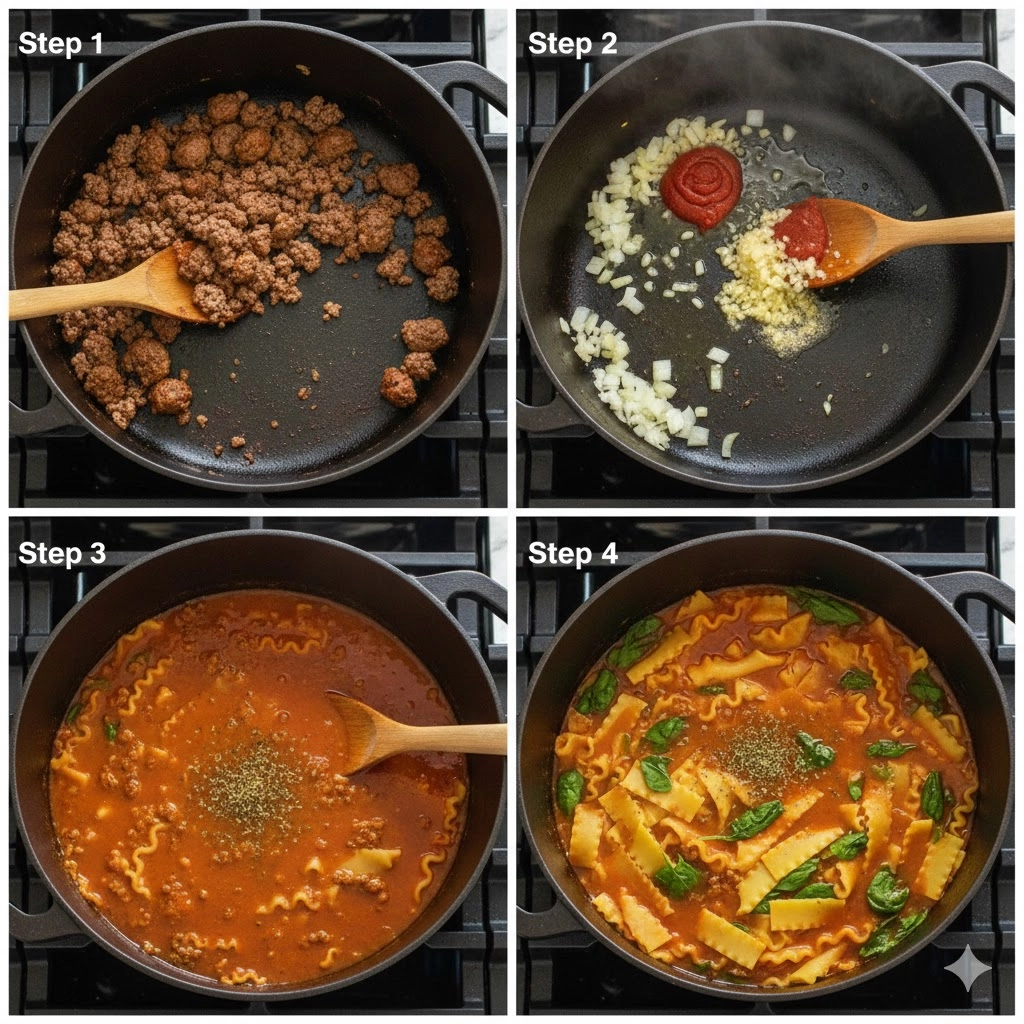
Step 1 Expansion: Building the Flavor Base
Start by heating your largest, heaviest pot over medium-high heat. Add the ground beef and sausage together. Break the meat up with a spoon as it cooks. The key here is to allow the meat to sear in its own fat; resist the urge to stir constantly. You want little pockets of deep brown, caramelized crust to form. This maillard reaction is responsible for a huge amount of savory flavor. Once the meat is fully browned, use a slotted spoon to transfer it to a separate bowl, leaving behind most of the rendered fat in the pot. If there is more than a tablespoon of fat, drain the excess, then add the one tablespoon of fresh olive oil.
Add the chopped onion to the residual fat and oil. The onions should sizzle immediately. Sauté them over medium heat for about five minutes. The goal is transparency and softness; they should smell sweet and mellow, not sharp. Next, clear a space in the center of the pot, add the tomato paste, and let it cook for sixty seconds, stirring only the paste, until it darkens slightly and smells intensely savory. This brief cooking step concentrates its sugars and eliminates any raw taste. Finally, add the minced garlic to the paste and onions, stirring for thirty to sixty seconds, just until it is fragrant. Do not let the garlic burn, as this will introduce a bitter note that permeates the entire dish.
Step 2 Expansion: The Simmer and Steep
Before adding the main bulk of liquid, pour about one cup of the chicken broth into the pot. Use a wooden spoon to scrape up all the flavorful browned bits (known as fonds) from the bottom of the pot. This deglazing process captures the concentrated essence of the meat and aromatics. Once the pot is clean, pour in the remaining broth, the marinara sauce, the dried basil, dried oregano, and red pepper flakes. Stir in the reserved cooked meat and bring the mixture up to a strong boil over high heat. Once boiling, immediately reduce the heat to a gentle simmer. Allow the soup to steep for ten to fifteen minutes. This gentle simmer is necessary to allow the spices and meat to fully infuse the broth, creating a cohesive, savory base for the pasta.
Step 3 Expansion: Noodle Taming
The way you handle the lasagna noodles is critical for this recipe. Use standard dry lasagna sheets and break them into pieces roughly one or two inches square. If the pieces are too small, they will dissolve; if they are too large, they will be cumbersome.
Add the broken noodles to the simmering soup. The broth level should fully cover the pasta. Now is the most important part: you must stir the soup frequently, every one to two minutes. Broken lasagna noodles are notorious for sticking together and sticking to the bottom of the pot. If you walk away, you risk a sticky, burnt mess. Continue to cook the noodles for approximately fifteen to twenty minutes, or until they are perfectly al dente—tender but still with a slight resistance to the bite. Once the noodles are cooked, turn off the heat and stir in the two cups of fresh spinach, if using. The residual heat of the soup will wilt the leaves perfectly within a minute, adding a fresh green color and slight vegetal bitterness to balance the richness.
Step 4 Expansion: Final Assembly
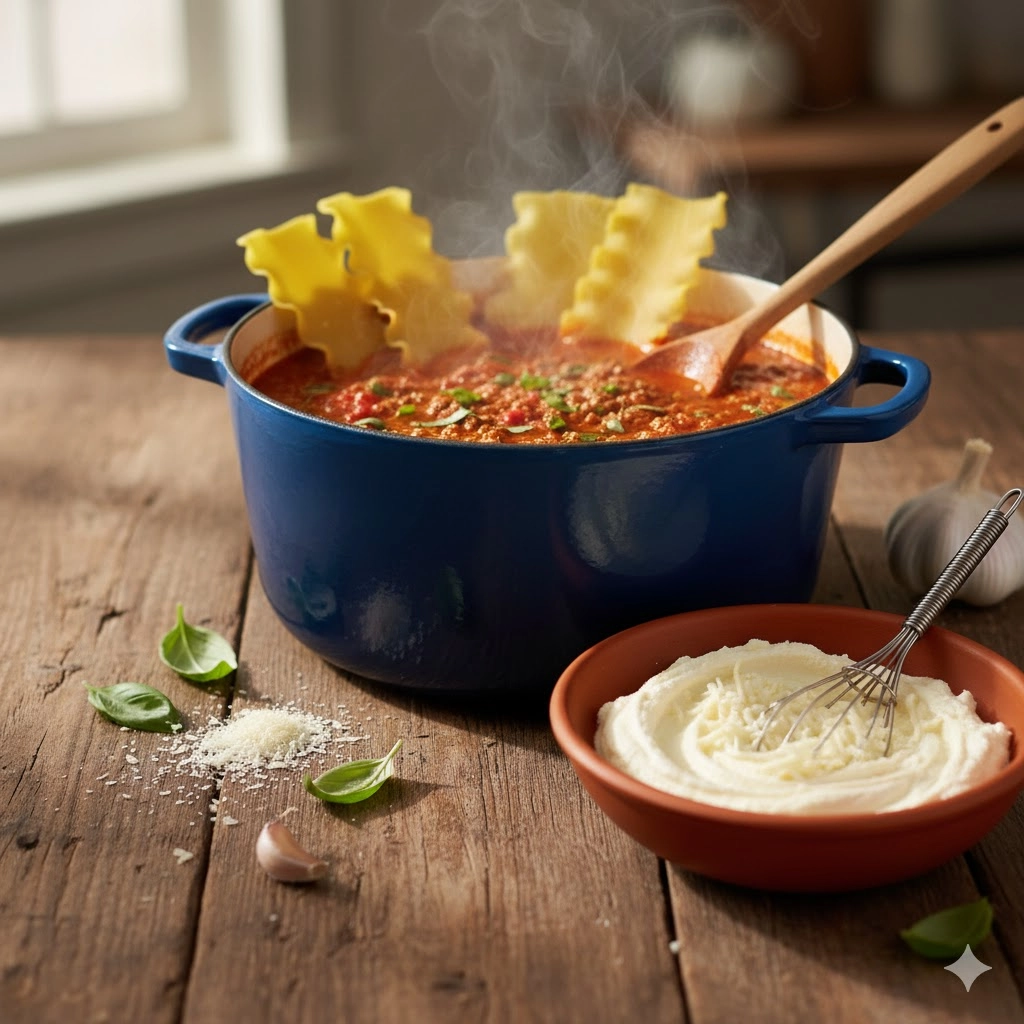
While the soup cools slightly, prepare the cheese topping. In a small bowl, combine the ricotta, mozzarella, and Parmesan. Use a fork or small whisk to stir vigorously until the mixture is light and fluffy. This aeration step is important, as it prevents the ricotta from being dense and sinking immediately. You want a creamy texture that gradually melds into the hot liquid.
To serve, ladle the soup immediately into deep bowls. The final presentation is key: spoon a generous dollop of the three-cheese mixture directly into the center of the soup. Do not stir it in until the diner is ready to eat. Finish with a light sprinkle of fresh, torn basil leaves. The contrast between the hot, spicy, savory tomato broth and the cool, creamy, herby cheese topping is what makes this dish truly special.
Troubleshooting and Technique Refinement
Even a seemingly simple soup can benefit from a few expert tips to elevate it from good to truly great. These refinements address common soup-making issues and technique errors.
- The Broth-to-Noodle Ratio: The biggest issue with any pasta soup is that the noodles continue to absorb liquid after cooking. If you plan on having leftovers, cook the noodles separately, drain them, and add them directly to the individual serving bowls, pouring the hot broth over them. Store the plain broth and the cooked noodles in separate containers. This prevents the next day’s leftovers from becoming a thick, bland stew.
- Seasoning in Stages: Taste the soup repeatedly. You should season the meat, season the aromatics, and finally, adjust the final seasoning of the broth. Since the noodles absorb flavorless liquid, you may need more salt than you think to ensure the final product tastes bright. Taste the soup after the noodles are cooked and add salt a quarter teaspoon at a time until the flavors pop.
- Boost Umami with a Rind: If you happen to have a spent rind of Parmesan cheese, throw it directly into the pot when you add the broth and spices. Let it simmer for the full cook time (remove it before serving). The rind releases rich, salty, umami notes into the broth that add incredible depth without changing the texture.
- Ricotta Quality Matters: Invest in a good quality, whole-milk ricotta cheese for the topping. The lower quality, part-skim varieties often contain stabilizers or excess moisture and do not whip up to the desired light, creamy consistency.
- Handling Heat: If you want a significant spicy kick, increase the red pepper flakes by another quarter teaspoon, and consider adding a pinch of dried chili powder when you sauté the tomato paste. If you need to tone down the heat, add a splash of heavy cream or half-and-half to the finished soup, stirring until incorporated.
Alternative Approaches and Ingredient Swaps
This recipe is incredibly versatile and allows for easy customization based on dietary needs or pantry availability.
- Vegetarian Style: Omit the ground beef and Italian sausage entirely. Instead, use a combination of hearty chopped vegetables like zucchini, sliced mushrooms, and diced carrots. Sauté them alongside the onion. For added protein, consider stirring in one fifteen-ounce can of drained and rinsed cannellini beans during the simmering stage.
- Lentil and Sausage Swap: For a leaner, plant-forward twist, substitute the ground beef with one cup of brown or green lentils, rinsed well. The lentils should be added with the broth and simmer for thirty to forty minutes before adding the noodles. Keep the Italian sausage for flavor, or omit it for a fully vegetarian dish.
- Pasta Shape Alternatives: While broken lasagna noodles offer the most authentic look and feel, any short, sturdy pasta will work wonderfully. Excellent substitutes include broken mafaldine noodles (which have ruffled edges similar to lasagna), rotini, or medium-sized shells. Adjust the cooking time based on the pasta package directions.
- Dairy-Free Topping: To achieve the creamy finish without using cow’s milk products, prepare a cashew-based ricotta. Soak one cup of raw cashews in hot water for at least thirty minutes, then drain. Blend them with a quarter cup of nutritional yeast, two tablespoons of lemon juice, a splash of water, and salt until completely smooth. This provides the necessary tang and creaminess.
Pairing and Presentation: Serving Suggestions
The deep, savory flavor and hearty nature of this soup mean it pairs best with simple, textural sides that offer contrast.
- Crusty Garlic Bread: A classic pairing for any tomato-based Italian meal. Use a loaf of crusty Italian bread, generously spread with butter, minced garlic, and parsley, then baked until the edges are golden brown. The bread is perfect for dipping into the rich, cheesy broth at the end of the meal.
- Simple Arugula Salad: The richness of the meat and cheese in the soup is perfectly cut by the peppery bite of fresh arugula. Toss the greens with a light dressing of high-quality olive oil, fresh lemon juice, and a pinch of salt. This provides a necessary lightness and brightness to the plate.
- Roasted Asparagus with Lemon: If you prefer a cooked vegetable side, roast a bundle of asparagus spears lightly tossed in olive oil, salt, and pepper at four hundred twenty-five Fahrenheit until tender-crisp. Finish with a squeeze of fresh lemon juice just before serving.
Frequently Asked Questions About Lasagna Soup
Can I make the soup ahead of time?
Absolutely, but with one important modification: Do not add the noodles until you are ready to serve. Cook the entire broth, meat, and vegetable base, cool it, and store it in the refrigerator for up to three days. When you are ready for dinner, bring the broth base to a simmer, add the broken noodles, and cook until tender. This prevents the noodles from becoming bloated and soaking up all the precious liquid.
Is it safe to freeze this soup?
Yes, the soup base freezes beautifully for up to three months. The critical element to remember is to freeze the soup without the cheese topping and without the lasagna noodles. Once the soup base is completely thawed and reheated, you can cook the noodles fresh in the pot and prepare the ricotta topping as usual. Freezing cooked pasta leads to a very mushy texture upon reheating, so cooking the pasta fresh is highly recommended.
Why did my broth turn out too thick, like a sauce?
A broth that is too thick is almost always due to the noodles absorbing too much liquid or the pot simmering uncovered for too long. If the broth seems too thick while cooking the noodles, simply add more chicken or vegetable broth, about one half cup at a time, until the soup reaches your desired consistency. Be sure to re-check the seasoning after adding any liquid.
Can I use store-bought pre-shredded cheese for the topping?
While convenient, pre-shredded mozzarella contains anti-caking agents that prevent it from melting as smoothly as cheese you shred yourself. For the best, creamiest texture in the ricotta topping, it is strongly recommended that you shred a block of mozzarella just before mixing it with the ricotta and Parmesan.
| Nutrient | Amount per Serving |
| Calories | 521 kcal |
| Protein | 31 g |
| Carbs | 36 g |
| Fat | 28 g |
| Fiber | 2 g |
| Sugar | 3 g |
| Sodium | 606 mg |
Nutrition Information
Nutrition information is an estimate and may vary based on preparation and ingredients used.
PrintLasagna Soup: The Ultimate Cozy Bowl of Comfort

A single-pot recipe that captures the savory, cheesy, and hearty flavor of traditional lasagna in a rich soup format, topped with a creamy three-cheese ricotta mixture.
- Prep Time: 15 mins
- Cook Time: 40 mins
- Total Time: 55 mins
- Yield: 7 servings 1x
- Category: Soup, Main Course
- Method: Stovetop
- Cuisine: Italian-American
Ingredients
1/2 pound lean ground beef
1/2 pound sweet or mild Italian sausage
1 tablespoon olive oil
1 medium yellow onion, finely chopped
3 cloves garlic, minced
2 tablespoons tomato paste
7 cups low-sodium chicken or vegetable broth
24 ounce jar marinara sauce
1 teaspoon dried basil
1/2 teaspoon dried oregano
1/4 teaspoon red pepper flakes
9 lasagna noodles, broken into rough pieces
2 cups fresh spinach leaves (optional)
10 ounces ricotta cheese
1 cup shredded mozzarella cheese
1/2 cup freshly grated Parmesan cheese
Fresh basil, for serving
Salt and pepper, to taste
Instructions
1. Brown and Drain the Meat: In a large pot over medium-high heat, cook the ground beef and Italian sausage, seasoning lightly with salt and pepper. Drain the rendered fat and set the cooked meat aside.
2. Sauté Aromatics and Tomato Paste: Add the olive oil to the pot. Sauté the chopped onion for about five minutes until soft. Stir in the minced garlic and tomato paste, cooking for sixty seconds until fragrant and slightly caramelized.
3. Build and Infuse the Broth: Deglaze the pot with one cup of broth, scraping up any browned bits. Add the remaining broth, marinara sauce, dried basil, oregano, and red pepper flakes. Return the cooked meat to the pot and bring to a boil. Reduce heat to a gentle simmer and let infuse for ten minutes.
4. Cook the Lasagna Noodles: Add the broken lasagna noodles to the simmering soup. Cook, stirring frequently to prevent sticking, for fifteen to twenty minutes or until the noodles are al dente. Turn off the heat and stir in the spinach, if using.
5. Prepare the Cheese Topping: In a small bowl, combine the ricotta cheese, mozzarella, and Parmesan. Whip them together with a fork until the mixture is light and creamy.
6. Serve and Garnish: Ladle the hot soup into bowls. Top each serving with a generous dollop of the three-cheese mixture and a sprinkle of fresh basil before serving.
Notes
Cook the noodles separately if you plan to save leftovers; this prevents them from soaking up all the broth.
For a deeper umami flavor, simmer a spent Parmesan rind in the broth, removing it before serving.
Use whole-milk ricotta for the creamiest topping consistency.
Nutrition
- Serving Size: 1 serving
- Calories: 521
- Sugar: 3g
- Sodium: 606mg
- Fat: 28g
- Saturated Fat: 12g
- Trans Fat: 0g
- Carbohydrates: 36g
- Fiber: 2g
- Protein: 31g
- Cholesterol: 85mg