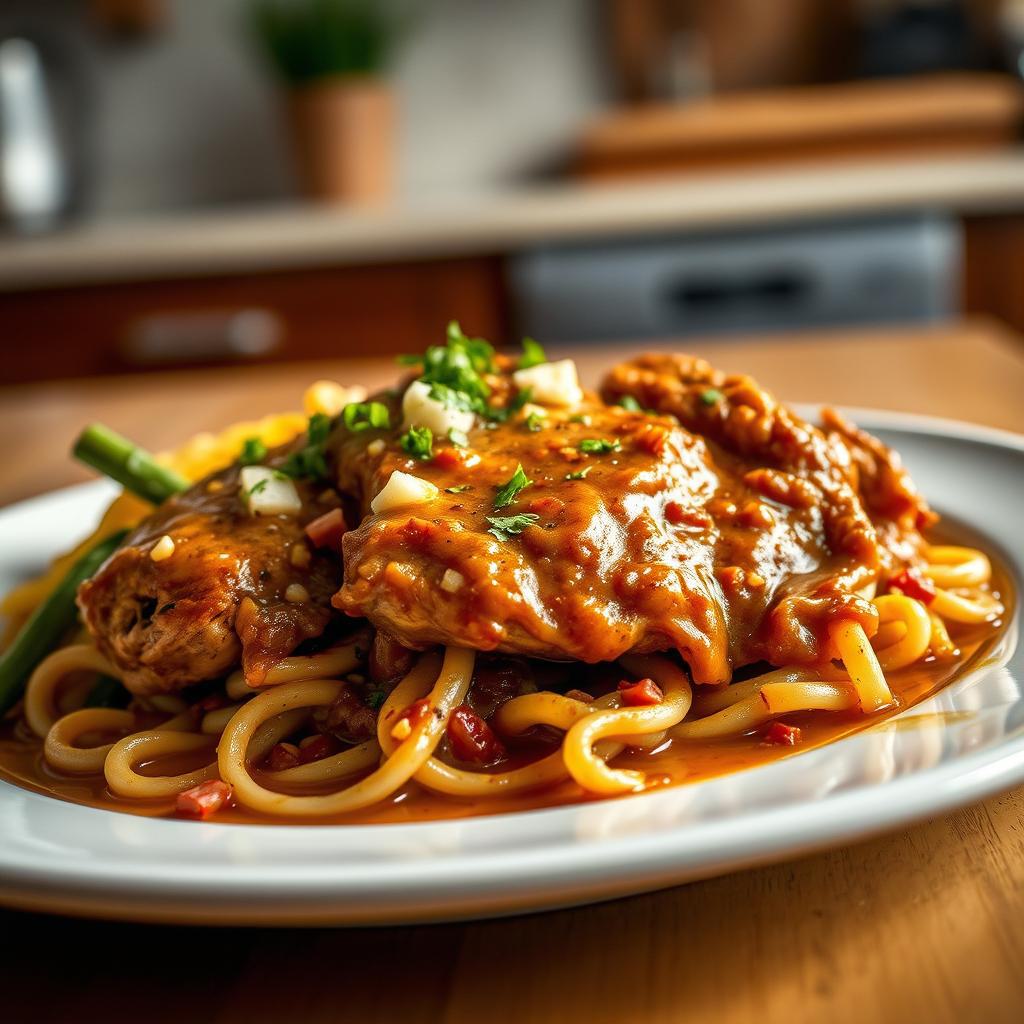
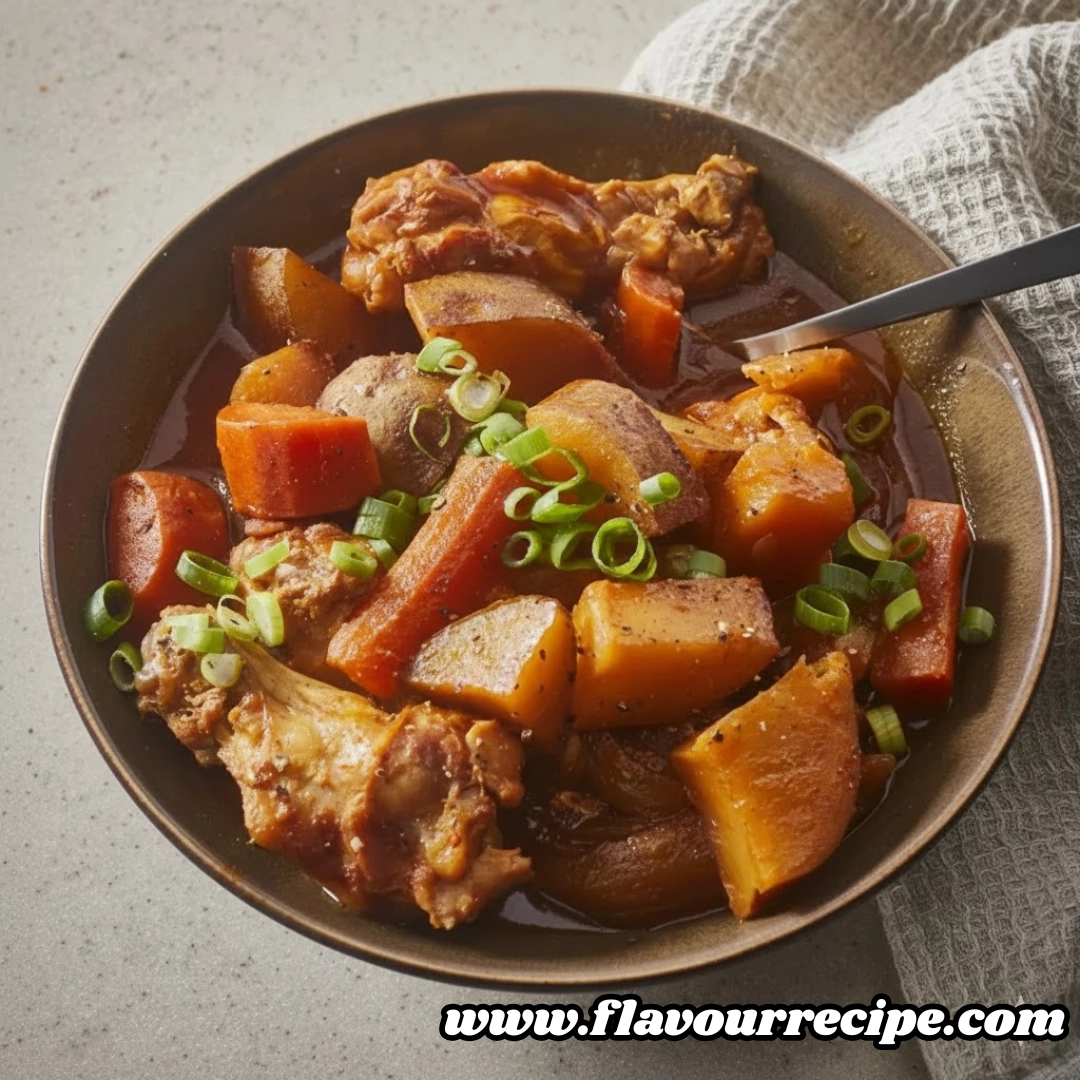
This hearty, traditional braise captures the essence of home-style Korean cooking, balancing a deep, savory heat with the natural sweetness of root vegetables. Often known as Dakdoritang, this Korean Spicy Chicken and Potato dish relies on a slow-simmered approach where the starch from the potatoes naturally thickens the sauce into a rich, glossy glaze. It is an ideal meal for communal dining, typically served in a large pot at the center of the table alongside bowls of steaming white rice to soak up the pungent, aromatic liquid.
Table of Contents
Essential Components
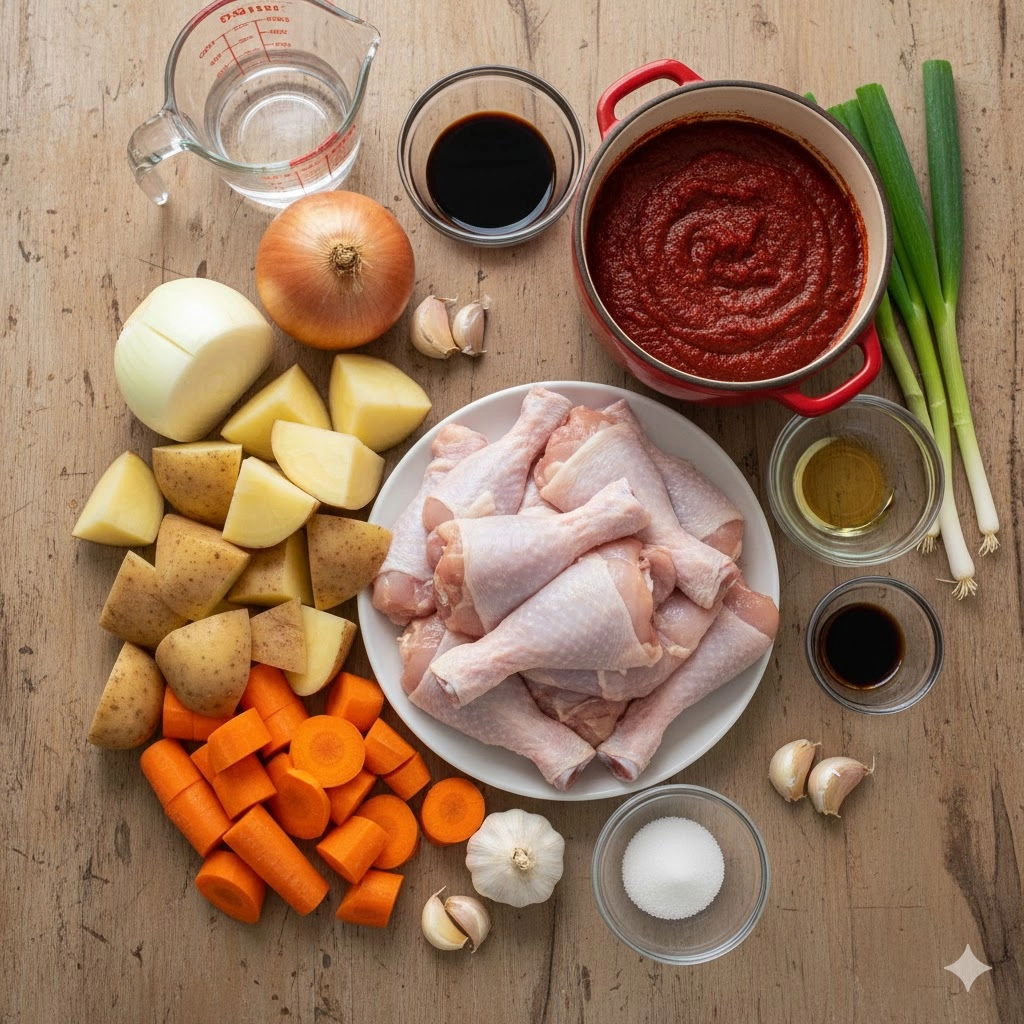
The Proteins and Vegetables
- Two and a half pounds chicken drumettes or bone-in thighs
- Two large Russet or Yukon Gold potatoes, peeled and cut into two-inch chunks
- Two large carrots, peeled and sliced into thick rounds
- One large yellow onion, sliced into eight thick wedges
- Four large cloves of garlic, crushed or finely minced
The Braising Liquid and Aromatics
- One quarter cup water
- One half cup low-sodium soy sauce
- Two tablespoons white sugar
- Three tablespoons Gochujang (Korean fermented red chili paste)
- One tablespoon sesame oil (optional for finishing)
- Two stalks green onion, chopped for garnish
Preparation Sequence
- Combine the chicken, potato chunks, carrots, onions, and garlic in a heavy-bottomed pot.
- Whisk together the soy sauce, water, sugar, and Gochujang in a small bowl until smooth.
- Pour the sauce mixture over the ingredients in the pot and stir to coat thoroughly.
- Place the pot over medium-high heat and bring the liquid to a rolling boil.
- Reduce the heat to low, cover the pot with a tight-fitting lid, and simmer for forty-five minutes.
- Uncover and increase the heat slightly for the final five minutes to reduce the sauce if desired.
- Verify that the chicken is fully cooked and the potatoes are fork-tender.
- Garnish with fresh green onions and a drizzle of sesame oil before serving.
Mastery of the Braise: Step-by-Step Details
Preparing the Foundation
When selecting your chicken, drumettes are preferred because the bone adds depth to the broth while remaining easy to manage in a stew. If you choose to use a whole chicken hacked into pieces, ensure the chunks are relatively uniform in size. Place the chicken at the bottom of the pot first; this allows the meat to take the brunt of the initial heat, rendering out a small amount of fat that will eventually emulsify with the Gochujang to create a velvety texture.
Balancing the Spicy Paste
The Gochujang is the soul of this Korean Spicy Chicken and Potato recipe. Because it is a fermented paste, it has a thick, sticky consistency. It is vital to stir the sauce well before the pot heats up. If the paste remains in a clump, it can scorch against the bottom of the pan, creating a bitter, burnt flavor. As the water and soy sauce begin to warm, the paste will dissolve, transforming the clear water into a vibrant, deep crimson broth.
The Simmering Phase
Once you reduce the heat to low, the magic of the braise begins. You are looking for a gentle bubble, not a vigorous boil. A hard boil will break the potatoes apart too early, turning the stew into a mushy mash. By simmering slowly, the chicken remains succulent and pulls away from the bone easily, while the carrots and onions soften until they are sweet and translucent.
Evaluating Doneness and Texture
Around the forty-minute mark, use a fork to pierce a potato. It should slide through with zero resistance. The sauce should have changed from a thin liquid to a syrupy consistency. If the sauce still feels too watery, remove the lid and let it simmer for an additional few minutes. The starch released from the potatoes acts as a natural thickener, so avoid adding any cornstarch or flour.

Culinary Success Tips
- Round the Potato Edges: If you have extra time, slightly round off the sharp corners of your potato chunks with a paring knife. This prevents them from breaking off into the sauce, keeping your broth clear and your vegetables intact.
- The Power of Rest: Like many stews, this dish often tastes even better the next day. The flavors of the garlic and chili paste penetrate deeper into the chicken as it cools.
- Managing Heat: Gochujang brands vary in spice levels. If you are sensitive to heat, start with two tablespoons and taste the sauce after ten minutes of simmering, adding more if you prefer a bolder kick.
- Bone-In is Best: While boneless meat is convenient, the marrow from the chicken bones provides a body to the sauce that boneless breasts simply cannot replicate.
- Aromatics First: For a deeper flavor, you can lightly sauté the garlic and onions in a teaspoon of oil before adding the liquid, though the traditional “all-in-one” simmer method is equally delicious.
Ingredient Alternatives
- The Sweetener: If you prefer to avoid refined white sugar, honey or maple syrup can be substituted in equal measurements, though they will add a slight floral note to the final sauce.
- Vegetable Additions: While potatoes and carrots are the standard, chunks of Korean radish (Mu) or even sweet potatoes provide a wonderful contrast to the spicy broth.
- Gluten-Free Option: Use Tamari in place of standard soy sauce and ensure your Gochujang brand is certified gluten-free, as many contain barley or wheat.
Ideal Pairings
The classic way to enjoy this meal is with a bowl of short-grain white rice. The rice acts as a neutral canvas for the intense, savory sauce. To round out the meal, serve with a side of chilled Kimchi or a light cucumber salad (Oi Muchim) to provide a refreshing, acidic crunch that cuts through the richness of the chicken fat. For a modern twist, some people enjoy topping the stew with a handful of shredded mozzarella cheese during the last two minutes of cooking, allowing it to melt into the spicy sauce.

Common Questions
Can I use chicken breasts instead of drumettes?
You can, but you must reduce the cooking time significantly to avoid the meat becoming dry and stringy. It is better to use boneless, skinless thighs if you prefer no bones, as they stay moist during the long simmering process.
What if I cannot find Gochujang?
There is no direct substitute that perfectly replicates the fermented depth of Gochujang. However, a mixture of red chili flakes (Gochugaru) mixed with a bit of miso paste and honey can provide a similar flavor profile in a pinch.
How should I store and reheat the leftovers?
Store leftovers in an airtight container in the refrigerator for up to three days. When reheating, add a splash of water to the pot to loosen the sauce, as the potato starch will cause it to thicken significantly while cold.
Nutrition Information
| Nutrient | Amount per Serving |
| Calories | 447 kcal |
| Protein | 26 g |
| Carbs | 55 g |
| Fat | 14 g |
| Fiber | 6 g |
| Sugar | 14 g |
| Sodium | 1994 mg |
Nutrition Disclaimer
Nutrition information is an estimate and may vary based on preparation and ingredients used.
PrintSpicy Korean Chicken and Potato Stew (Dakdoritang)

This hearty Korean Spicy Chicken and Potato stew (Dakdoritang) features tender chicken drumettes and root vegetables simmered in a bold, savory gochujang-based sauce.
- Prep Time: 15 mins
- Cook Time: 45 mins
- Total Time: 1 hour
- Yield: 4 servings 1x
- Category: Main Course
- Method: Stovetop
- Cuisine: Korean
Ingredients
2 1/2 pounds chicken drumettes
2 large potatoes, cut into large chunks
2 carrots, cut into 2 inch pieces
1 large onion, cut into 8 pieces
4 cloves garlic, crushed
1/4 cup water
1/2 cup soy sauce
2 tablespoons white sugar
3 tablespoons gochujang
Instructions
1. Combine chicken, potatoes, carrots, onion, and garlic in a large pot.
2. In a small bowl, whisk together water, soy sauce, sugar, and gochujang.
3. Pour the sauce over the chicken and vegetables in the pot.
4. Bring the mixture to a boil over medium-high heat.
5. Reduce heat to low and cover with a tight-fitting lid.
6. Simmer for 45 minutes until chicken is cooked through and vegetables are tender.
7. Remove lid and simmer for 5 more minutes if you prefer a thicker sauce.
8. Garnish with green onions and serve hot with white rice.
Notes
Round off the sharp edges of the potatoes to keep the sauce clear.
Adjust gochujang amounts to control the spice level.
Store leftovers in an airtight container for up to 3 days.
Nutrition
- Serving Size: 1 bowl
- Calories: 447
- Sugar: 14g
- Sodium: 1994mg
- Fat: 14g
- Saturated Fat: 4g
- Unsaturated Fat: 10g
- Trans Fat: 0g
- Carbohydrates: 55g
- Fiber: 6g
- Protein: 26g
- Cholesterol: 59mg