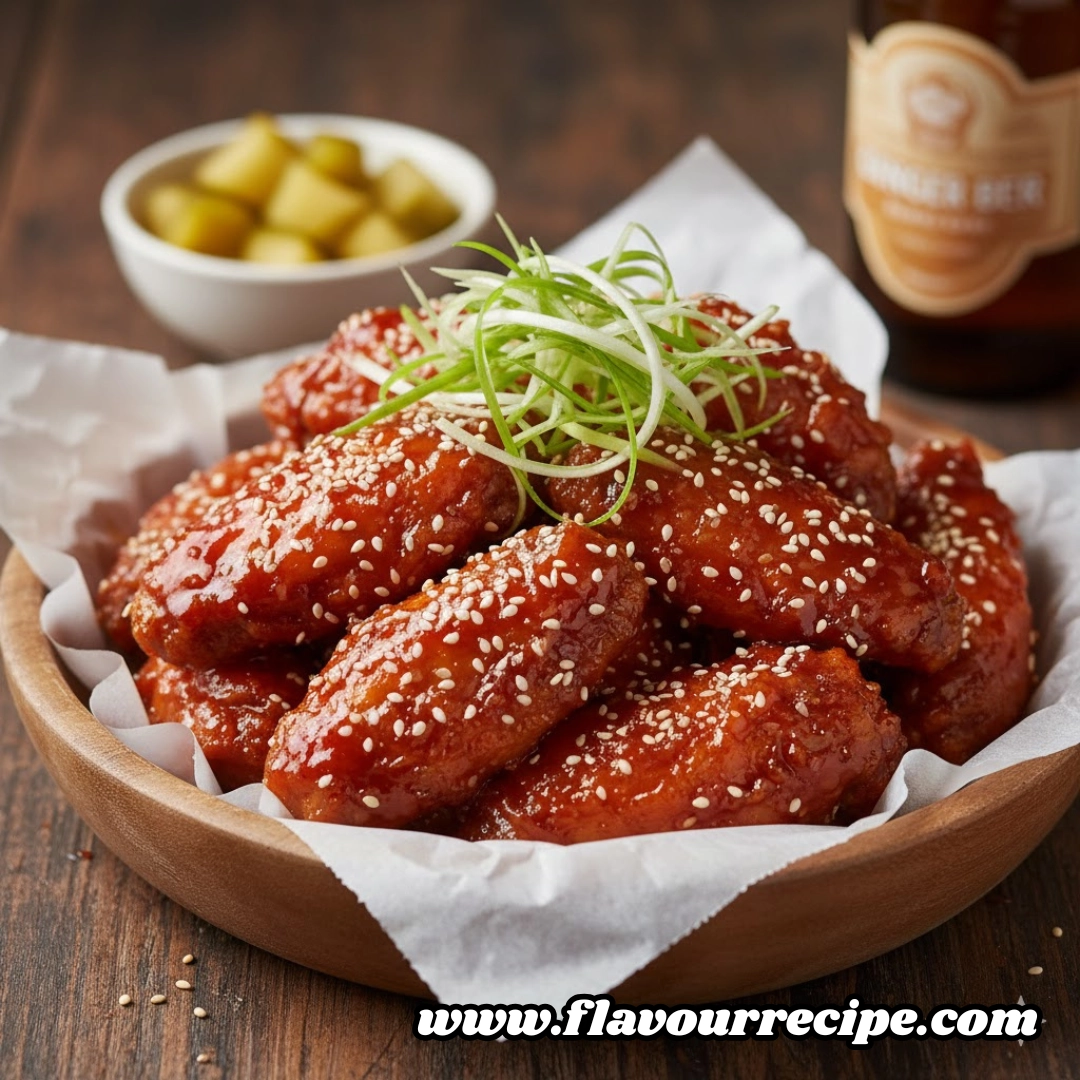
If you have ever experienced the sheer joy of biting into a piece of chicken that stays impossibly crunchy even after being tossed in a thick, sticky glaze, you have likely encountered the magic of Korean Fried Chicken. Often referred to simply as KFC in culinary circles, this dish is a cornerstone of South Korean comfort food culture. Unlike its Western counterparts, which often rely on a thick, bready crust, the Korean version is known for a thin, glass-like exterior and a double-frying method that renders out the fat to create a shatteringly crisp texture.
In this guide, we are diving deep into how you can recreate this restaurant-quality masterpiece in your own kitchen. Whether you are looking for a weekend dinner project or a show-stopping appetizer for a gathering, this recipe delivers a perfect balance of heat, sweetness, and savory depth. Let us explore the traditional techniques and precise ingredients that make Yangnyeom Chicken an international sensation.
Table of Contents
Necessary Ingredients for Authentic Results
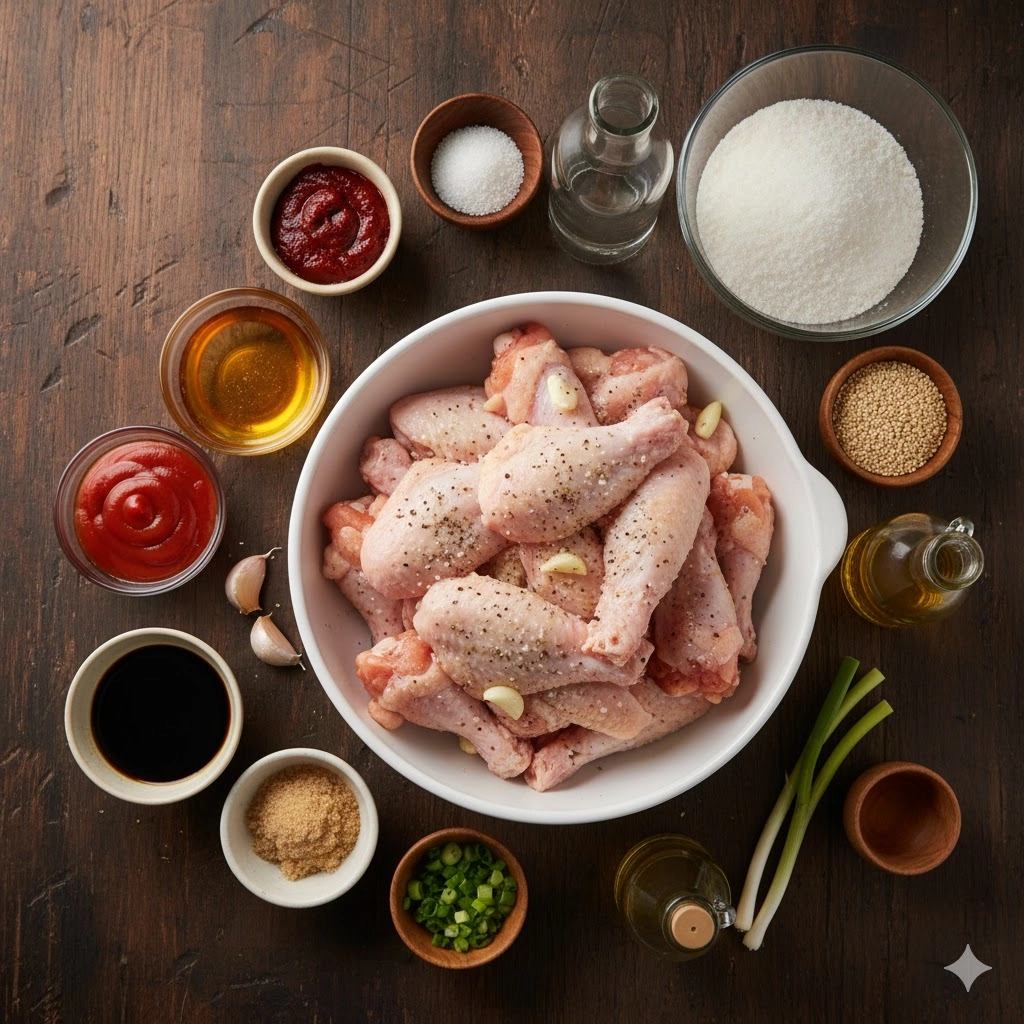
To achieve the specific texture and flavor profile required for this dish, it is important to gather your ingredients before you begin the heating process. This recipe focuses on a 1.4 kilogram (approximately 3 pounds) batch of chicken, which is sufficient for a hungry family or a small group of friends.
The Main Protein and Marinade
- 1.4 kilograms (3 pounds) of whole chicken cut into pieces, or an equivalent weight of chicken wings, drumsticks, or boneless chicken thighs based on your preference.
- 2 tablespoons of rice wine to tenderize and neutralize any gamey scents.
- 2 teaspoons of freshly minced ginger for a bright, aromatic punch.
- 1 teaspoon of fine sea salt.
- 1/2 teaspoon of ground black pepper.
- 1 cup of potato starch or corn starch for the dredging process.
- High-quality cooking oil for deep frying. Rice bran oil is highly recommended for its high smoke point and neutral flavor.
The Signature Korean Fried Chicken Sauce
- 3 tablespoons of tomato sauce or ketchup for a tangy, sweet base.
- 2 tablespoons to 2 and 1/2 tablespoons of gochujang (Korean chili paste), depending on your heat tolerance.
- 1/4 cup of honey for a floral sweetness and glossy sheen.
- 1/4 cup of brown sugar to deepen the caramelization.
- 2 tablespoons of soy sauce for essential salt and umami.
- 2 tablespoons of minced garlic to provide a pungent, savory backbone.
- 1 tablespoon of sesame oil for a nutty finish.
Optional Garnishes
- Roasted sesame seeds for a classic visual appeal.
- Green onion, finely chopped or shredded into thin curls.
Preparing Your Crispy Masterpiece
Making Korean Fried Chicken is a rewarding process that involves three primary stages: marinating, double-frying, and glazing. Follow these steps closely to ensure the best results.
Step 1: Marinating and Coating
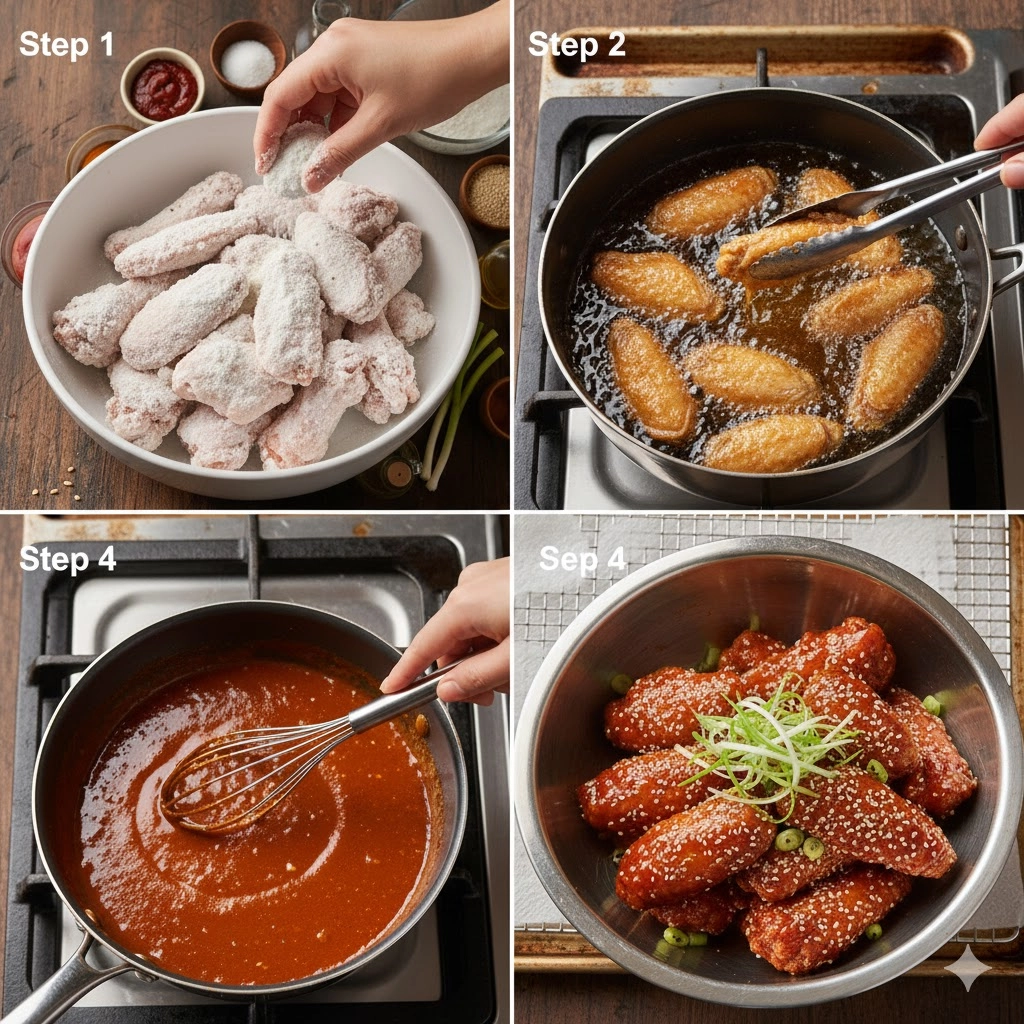
Begin by preparing your chicken. Ensure it is rinsed and patted dry. In a large mixing bowl, combine the chicken pieces with the rice wine, minced ginger, sea salt, and ground black pepper. Use your hands or a spoon to massage these seasonings into the meat, ensuring every crevice is coated.
Next, it is time for the starch. Pour your potato starch or corn starch into a bowl. To get the best texture, dip each individual chicken piece into the starch, rolling it around until it is fully covered. Shake off any excess and set the pieces aside on a tray. This creates a thin, even layer that will transform into a crisp shell during frying.
Step 2: The Double-Frying Technique
Pour a generous amount of oil into a deep saucepan or a dedicated deep fryer. Heat the oil until it reaches 175 Celsius (347 Fahrenheit). If you do not have a thermometer, you can test the heat by dropping a small bit of batter into the oil; it should bubble and rise to the surface immediately.
Carefully add the chicken pieces to the hot oil. Do not overcrowd the pan, as this will drop the oil temperature and lead to soggy chicken. Fry the pieces for 3 to 5 minutes, depending on their size, until they are cooked through. Remove the chicken and let it rest on kitchen paper.
Once the first round is done, use a skimmer to remove any floating debris from the oil. Increase the heat back to 175 Celsius. Return the chicken to the oil for a second fry, lasting about 2 to 3 minutes. This second pass is what creates that signature golden-brown, extra-crisp crust. Set the chicken aside once more.
Step 3: Preparing the Glaze and Finishing
In a separate saucepan, combine the tomato sauce, gochujang, honey, brown sugar, soy sauce, minced garlic, and sesame oil. Place the pan over low to medium heat. Stir the mixture constantly until the sugar has dissolved and the sauce begins to bubble. Once it bubbles, remove it from the heat immediately to prevent the sugars from burning.
Place your double-fried chicken into a large, clean mixing bowl. Pour the warm sauce over the chicken and toss lightly but thoroughly until every piece is glistening with the spicy glaze. Alternatively, you can serve the sauce on the side as a dipping sauce if you prefer to keep the crust as dry as possible. Serve immediately while hot.
Accompaniments and Serving Suggestions
To truly enjoy Korean Fried Chicken like a local in Seoul, you need the right side dishes. The richness of the fried chicken and the intensity of the sauce are best balanced by something cool, crisp, and acidic.
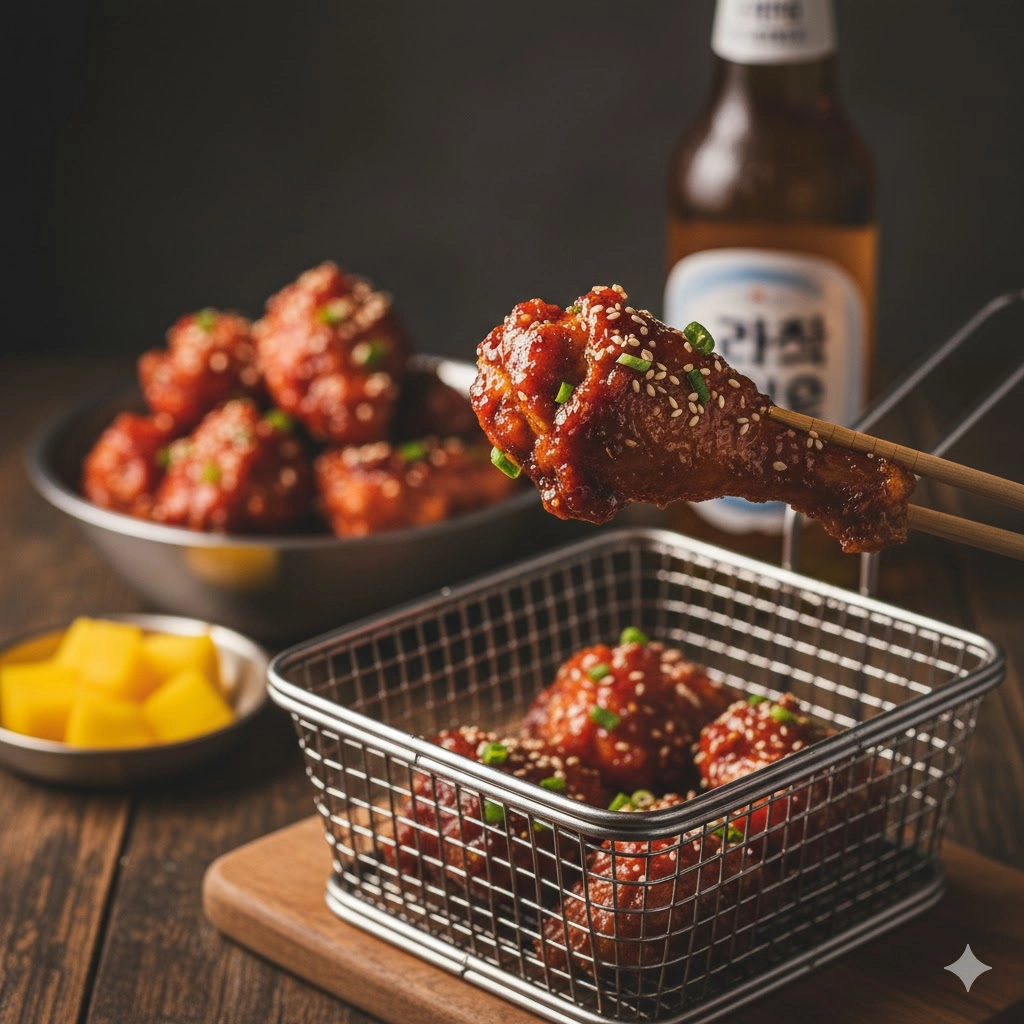
The most traditional accompaniment is pickled radish, often served in small white cubes. This provides a refreshing crunch and a vinegar-based brightness that “washes out” the oily palate between bites. Pickled cucumbers are another excellent choice for a similar effect.
In terms of beverages, this dish is famously paired with beer, a combination so popular in Korea it has its own name: Chimeak (a portmanteau of “chicken” and “maekju,” the Korean word for beer). If you prefer non-alcoholic options, a sharp ginger beer or a cold carbonated soda provides the same refreshing contrast to the spicy, savory flavors of the chicken.
Deep-Dive into Step-by-Step Details
Achieving the perfect fry is both an art and a science. When you apply the starch to the chicken, it is vital to let it sit for just a moment so the moisture from the marinade can hydrate the starch slightly. This ensures the coating sticks firmly to the skin and does not flake off in the oil. Using potato starch is a secret weapon in Korean cooking; it has a higher amylose content than wheat flour, which results in a crunchier, more translucent crust that stays crisp for longer.
The double-fry method is the most critical part of the process. During the first fry, the internal moisture of the chicken is cooked out, and the starch sets into a light crust. However, some of that moisture migrates to the surface as the chicken rests. By frying it a second time at a high temperature, you evaporate that surface moisture and “flash-fry” the skin into a rigid, crunchy state. This is why Korean Fried Chicken remains crispy even when drenched in a heavy sauce.
When heating the sauce, timing is everything. Because the sauce contains high amounts of honey and brown sugar, it can go from a perfect glaze to a bitter, burnt mess in a matter of seconds. Keep your heat at a steady low-medium and remove the pan the moment those first few bubbles break the surface. The residual heat in the pan will continue to thicken the sauce as you prepare to toss the chicken.
Unique Culinary Insights for Success
One of the best ways to ensure a clean frying experience is to use a grease splatter screen. This simple tool allows steam to escape while trapping the tiny droplets of oil that can make a mess of your stovetop. Furthermore, always maintain a clean oil environment. Small bits of starch that fall off the chicken will burn if left in the oil, which can impart a bitter flavor to subsequent batches. Use a fine-mesh skimmer to keep the oil golden and clear.
If you are cooking for a crowd and need to fry in several batches, keep the already-fried chicken on a wire rack rather than a plate. A wire rack allows air to circulate around the entire piece of chicken, preventing the bottom from becoming soggy due to trapped steam.
Regarding the ginger, do not be tempted to use dried powder. Freshly minced ginger provides a specific enzymatic reaction that helps tenderize the chicken while offering a zest that cuts through the fat. If you find the sauce too thick to coat the chicken evenly, you can add a single teaspoon of water to the sauce as it heats to help it emulsify, though the honey usually provides enough viscosity on its own.
Modifications and Substitutions
While the traditional recipe calls for a whole chicken cut into pieces, you can easily adapt this based on what you have available. Chicken wings are the most popular choice for parties because they have a high skin-to-meat ratio, leading to more crunch in every bite. Boneless thighs are a great option for a “popcorn chicken” style meal that is easier for children to eat.
If you cannot find gochujang at your local grocery store, you can look for it at an Asian supermarket, as it is a unique fermented chili paste that doesn’t have a perfect direct substitute. However, in a pinch, a mix of Sriracha and a small amount of miso paste can mimic the heat and fermented depth, though the flavor will not be entirely authentic. For the starch, corn starch is a perfectly acceptable substitute for potato starch and is much easier to find in standard American supermarkets.
For those who want to avoid alcohol entirely, the rice wine in the marinade can be substituted with an equal amount of water mixed with a pinch of sugar, or even white grape juice, though the rice wine is preferred for its ability to soften the proteins.
Deep-Dive FAQ
Why is my fried chicken not as crunchy as the restaurant version?
The most common reason for a lack of crunch is the oil temperature. If the oil is not hot enough, the chicken will absorb the oil rather than searing the exterior, resulting in a greasy texture. Additionally, ensure you are using a starch-based coating rather than a flour-based one. Starch creates a much thinner, crispier shell. Finally, do not skip the second fry; that is where the real crunch is developed.
Can I make this recipe in an air fryer?
While you can cook breaded chicken in an air fryer, the results will differ significantly from the traditional double-fried method. To get close, you would need to spray the starched chicken very generously with oil so the starch can actually “fry.” However, for the authentic, glass-like crunch of Yangnyeom chicken, deep frying in rice bran or vegetable oil is the necessary standard.
How do I store and reheat leftovers?
Leftover chicken can be stored in the refrigerator for one to two days. While it can be eaten cold—and many people enjoy it that way—it will lose its signature crunch. If you want to reheat it, avoid the microwave, as it will make the coating rubbery. Instead, place the chicken in an oven or air fryer at 350 Fahrenheit for a few minutes until it is heated through and the coating crisps up slightly.
Is this recipe very spicy?
The spice level is largely determined by the gochujang. Using 2 tablespoons will result in a mild to medium heat that most people find manageable. If you are a fan of spicy foods, increasing it to 2 and 1/2 tablespoons or adding a pinch of dried chili flakes will give it that extra kick. The honey and brown sugar do a great job of balancing the heat.
Embracing the Korean Fried Chicken Experience
There is something deeply satisfying about mastering the art of the double-fry at home. This Korean Fried Chicken recipe offers a journey through textures and flavors that are both complex and comforting. From the aromatic ginger marinade to the sticky, spicy-sweet glaze, every element serves a purpose in creating the perfect bite. Whether you are serving it as a weekend treat or the star of your next social gathering, this chicken is guaranteed to impress. Don’t forget to pair it with some cold pickled radishes and enjoy the addictive crunch that has made this dish a global favorite.
Nutrition Information
| Nutrient | Amount Per Serving |
| Calories | 685 calories |
| Total Fat | 29 grams |
| Saturated Fat | 7 grams |
| Cholesterol | 126 milligrams |
| Sodium | 1290 milligrams |
| Total Carbohydrates | 69 grams |
| Dietary Fiber | 2 grams |
| Sugars | 33 grams |
| Protein | 35 grams |
| Vitamin A | 300 IU |
| Vitamin C | 7.6 milligrams |
| Calcium | 63 milligrams |
| Iron | 2.7 milligrams |
Disclaimer
The nutrition information provided is an estimate calculated using an online database. These figures should be used for educational purposes and are not a substitute for professional nutritional or medical advice. Actual values may vary based on the specific brands of ingredients used and exact portion sizes.
PrintThe Ultimate Crispy Korean Fried Chicken Recipe with Spicy Glaze
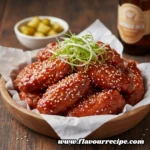
Experience the ultimate crunch with this authentic Korean Fried Chicken. Double-fried to perfection and tossed in a sticky, sweet, and spicy gochujang glaze.
- Prep Time: 20 mins
- Cook Time: 30 mins
- Total Time: 50 mins
- Yield: 4 servings 1x
- Category: Main Dish
- Method: Deep Fry
- Cuisine: Korean
Ingredients
1.4 kg whole chicken pieces
2 tbsp rice wine
2 tsp minced ginger
1 tsp fine sea salt
1/2 tsp ground black pepper
1 cup potato starch or corn starch
Cooking oil for deep frying
3 tbsp tomato sauce (ketchup)
2.5 tbsp gochujang (Korean chili paste)
1/4 cup honey
1/4 cup brown sugar
2 tbsp soy sauce
2 tbsp minced garlic
1 tbsp sesame oil
Roasted sesame seeds and green onions for garnish
Instructions
1. Season chicken with rice wine, ginger, salt, and pepper. Coat each piece evenly in starch.
2. Heat oil to 175 Celsius (347 Fahrenheit) and fry chicken for 3 to 5 minutes until cooked. Drain on paper towels.
3. Clean oil debris and reheat to 175 Celsius. Fry chicken a second time for 2 to 3 minutes until golden and extra crispy.
4. In a separate pan, simmer the sauce ingredients until bubbling, then remove from heat.
5. Toss the double-fried chicken in the warm sauce until fully coated. Serve immediately.
Notes
Always double-fry for the signature crunch.
Use potato starch for a crispier, glass-like texture compared to flour.
Serve with pickled radish to balance the richness.
Nutrition
- Serving Size: 1 portion
- Calories: 685
- Sugar: 33g
- Sodium: 1290mg
- Fat: 29g
- Saturated Fat: 7g
- Unsaturated Fat: 22g
- Trans Fat: 0g
- Carbohydrates: 69g
- Fiber: 2g
- Protein: 35g
- Cholesterol: 126mg