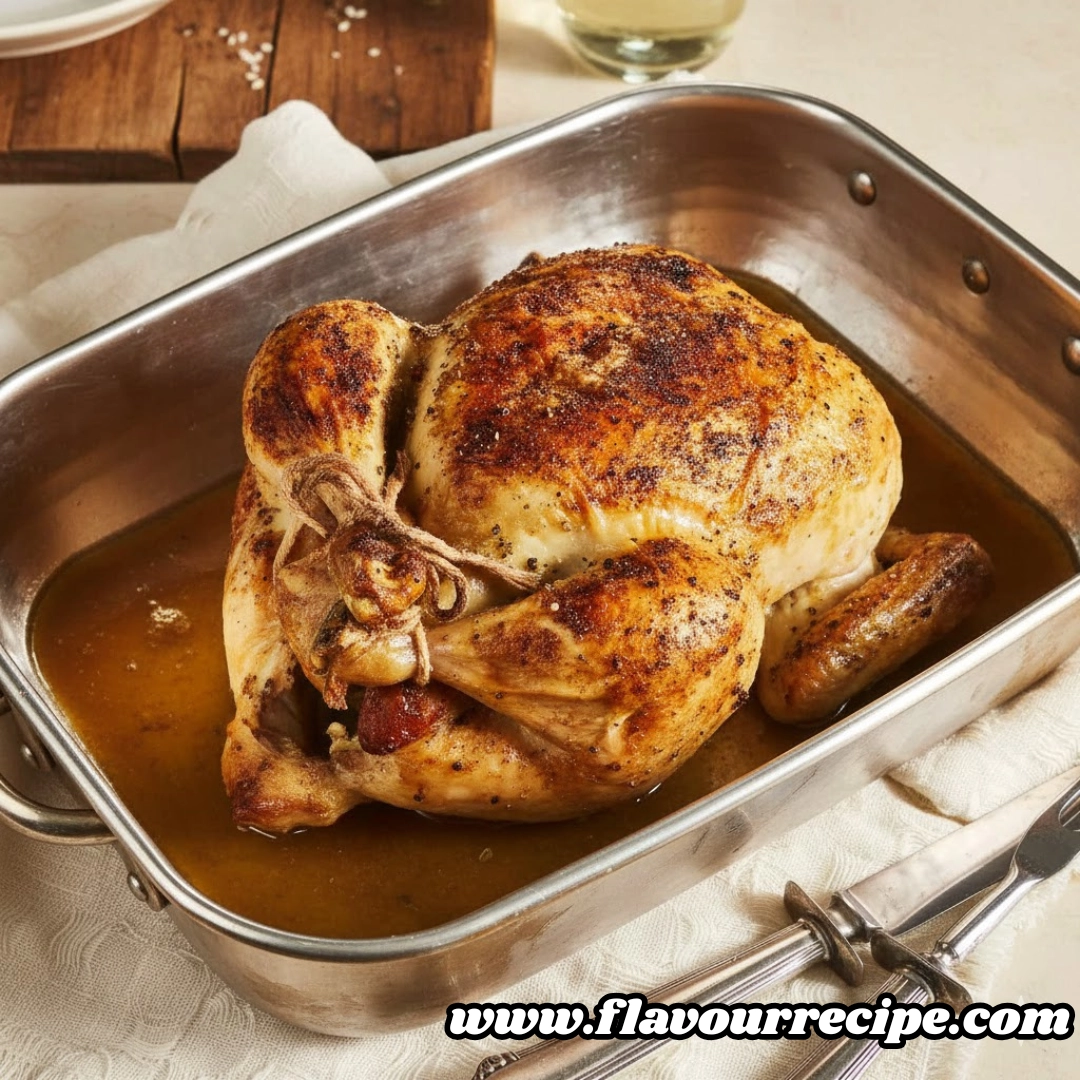
Mastering a whole bird is a fundamental skill that transforms a simple Sunday evening into a celebratory occasion. A well-executed Juicy Roasted Chicken relies on minimal intervention and high-quality heat to achieve that elusive balance of crackling, golden-brown skin and succulent, tender meat. While many recipes overcomplicate the process with intricate brines or expensive equipment, this method focuses on the essential chemistry of dry heat and moisture retention. By understanding how to properly season the cavity and manage the fat content, you can produce a centerpiece that rivals any high-end rotisserie.
Table of Contents
Ingredients
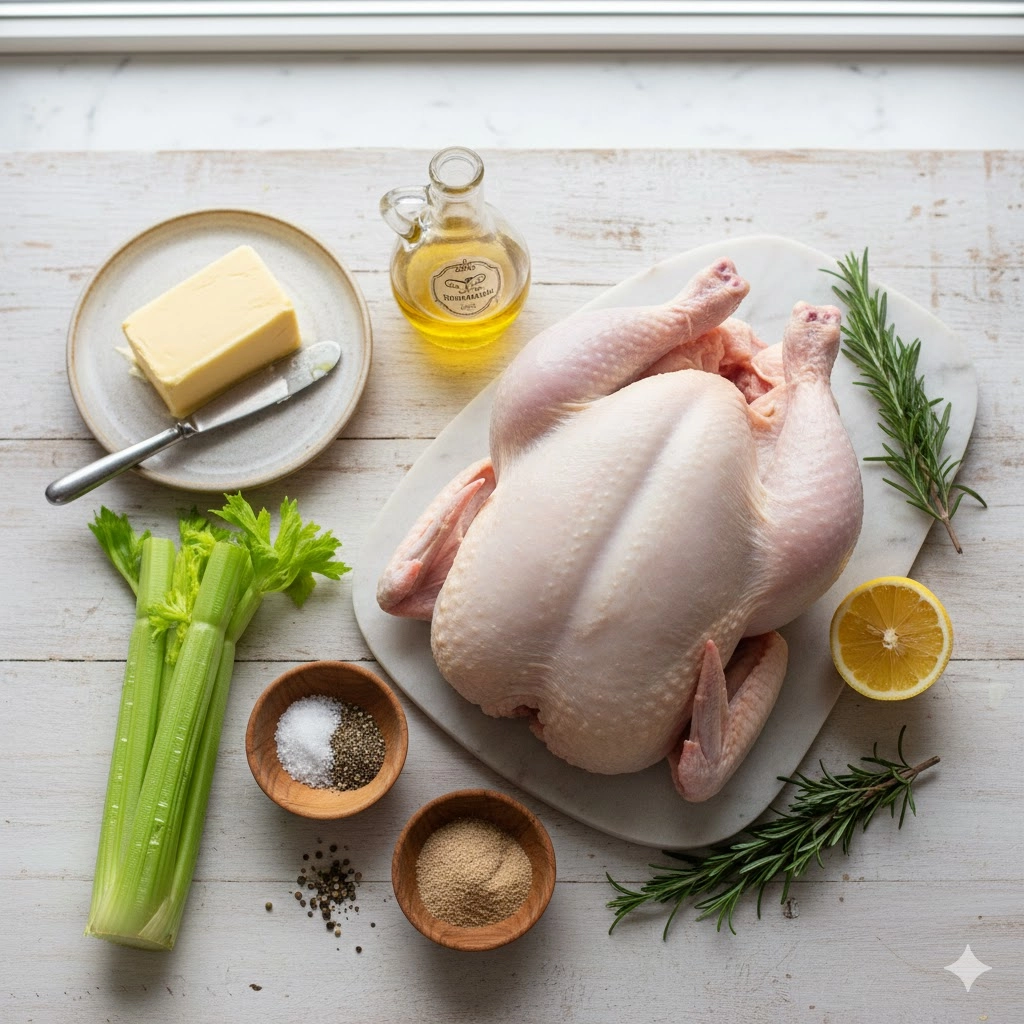
- Whole Chicken: One 3 pound whole chicken, giblets removed and patted dry.
- Butter: Three tablespoons of unsalted butter, softened to room temperature.
- Onion Powder: One tablespoon for a deep, savory aromatic base.
- Celery: Two medium stalks, roughly chopped to fit the cavity.
- Kosher Salt: Two teaspoons, or to taste, for seasoning and moisture draw.
- Black Pepper: One teaspoon of freshly cracked black pepper.
- Vegetable Oil: One tablespoon (optional, for the roasting pan).
Instructions
- Preheat your oven to three hundred fifty Fahrenheit.
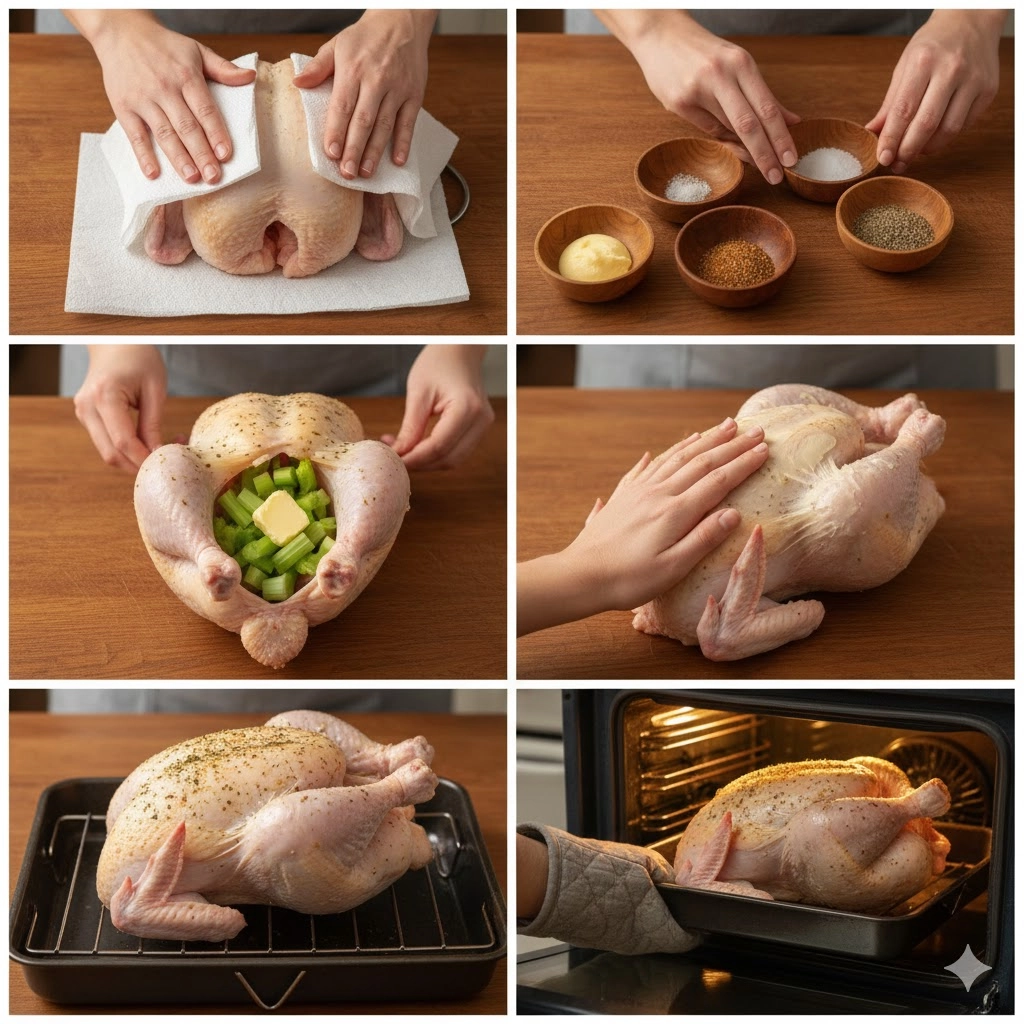
- Thoroughly pat the exterior and interior of the chicken dry with paper towels.
- Liberally season the inside of the cavity with salt, pepper, and onion powder.
- Place the chopped celery stalks and one tablespoon of the butter inside the bird.
- Rub the remaining butter over the entire exterior of the chicken skin.
- Dust the outside of the bird with the remaining seasonings.
- Position the chicken breast-side up in a roasting pan or on a wire rack over a baking sheet.
- Bake for approximately seventy-five to ninety minutes until the internal temperature reaches one hundred sixty-five Fahrenheit.
- Remove from the oven and allow the meat to rest for fifteen minutes before carving.
The Science of a Perfect Roast
To achieve a truly Juicy Roasted Chicken, the preparation starts long before the oven door closes. The most critical step is moisture management. If the skin is damp when it enters the oven, the heat will spend its energy evaporating surface water through steaming rather than crisping the skin through the Maillard reaction. Using paper towels to remove every trace of moisture from the skin ensures that the butter can bond directly to the surface, creating a waterproof barrier that traps juices inside while the skin fries in its own fat.
The inclusion of celery inside the cavity is more than just a flavor enhancer. As the celery heats up, it releases steam from the inside out. This internal hydration prevents the breast meat—which cooks faster than the dark meat—from drying out before the legs and thighs are safe to eat. When you apply the butter, try to gently lift the skin over the breast and slide a small amount of fat directly onto the meat. This “internal basting” protects the leanest part of the bird from the intense ambient heat of the oven.
Checking for doneness is best handled with a digital thermometer. While the old-fashioned “clear juices” test is a good indicator, it is not always precise. Aim for the thickest part of the thigh, making sure the probe does not touch the bone, as bone conducts heat differently and can give a false high reading. Once the bird hits the target temperature, the resting period is non-negotiable. During those fifteen minutes, the muscle fibers relax and reabsorb the hot juices; if you cut into the bird too early, those juices will end up on the cutting board rather than in your meal.
Expert Roasting Tips
- Tempering the Meat: Take the chicken out of the refrigerator about thirty minutes before cooking. Bringing it closer to room temperature ensures more even cooking between the exterior and the core.
- The Wing Tuck: To prevent the thin tips of the wings from charring, tuck them behind the back of the chicken (the “sunbathing” pose). This keeps them protected and helps the bird sit level.
- Aromatics Variation: While celery provides moisture, adding half a lemon or a head of garlic cut in half can add a bright acidity or deep earthiness to the drippings.
- The Rack Advantage: If possible, use a V-shaped roasting rack. Lifting the bird off the bottom of the pan allows hot air to circulate underneath, preventing a “soggy bottom” and ensuring the skin is crispy all the way around.
- The Salt Factor: Use coarse Kosher salt rather than fine table salt. The larger grains are easier to distribute evenly and do a better job of drawing out surface moisture for a crunchier texture.
Flavor Variations and Substitutions
- Herb-Infused Butter: Mix fresh minced rosemary, thyme, and sage into your softened butter before rubbing it on the skin for a classic Thanksgiving-style aroma.
- Smoky Rub: Replace the onion powder with smoked paprika and a pinch of cayenne pepper for a deeper color and a subtle heat that mimics a wood-fired rotisserie.
- Citrus and Garlic: Stuff the cavity with lemon slices and smashed garlic cloves, then rub the skin with lemon zest and cracked black pepper for a Mediterranean profile.
- Dry Brine Method: Season the chicken with salt twenty-four hours in advance and leave it uncovered in the fridge. This deeply seasons the meat and results in the ultimate crispy skin.
Serving Suggestions
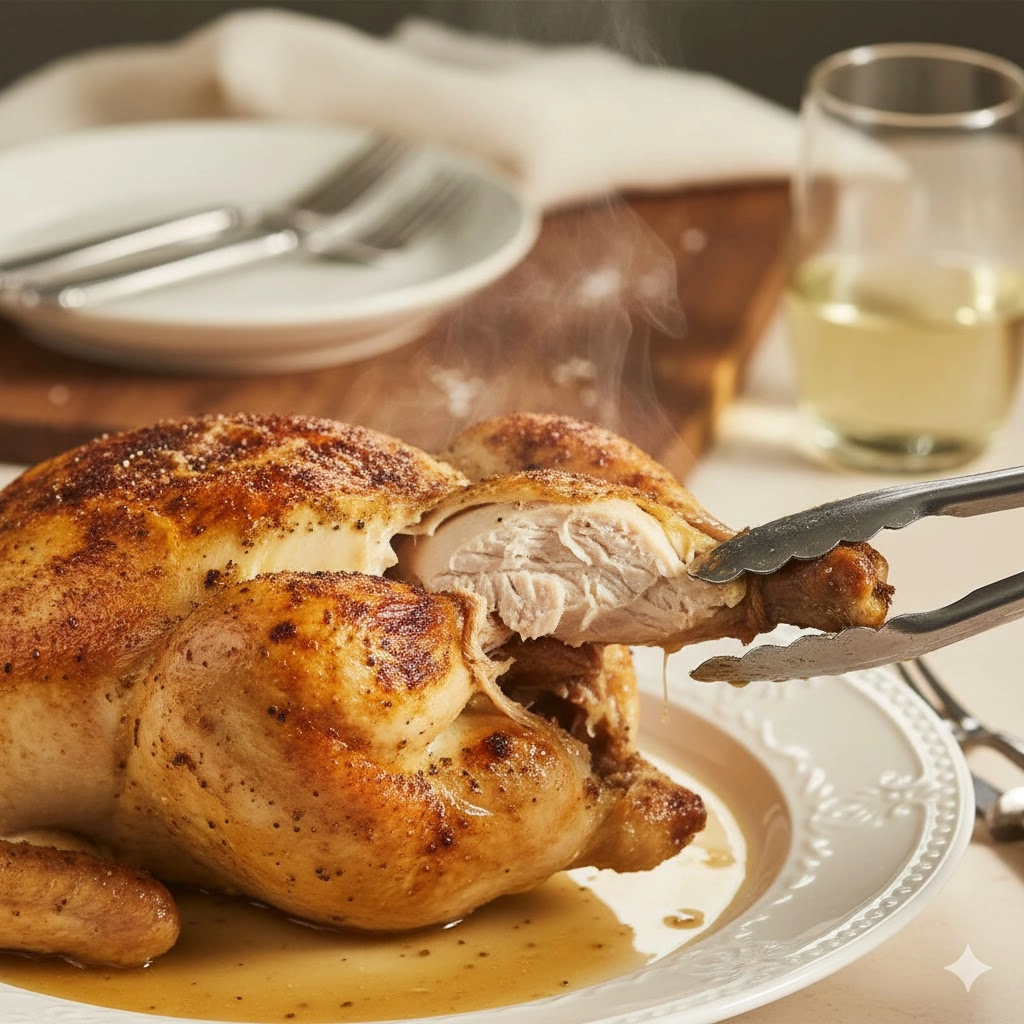
A roasted bird is a versatile centerpiece. For a traditional Sunday roast, serve it alongside garlic-heavy mashed potatoes and a side of honey-glazed carrots. The pan drippings are liquid gold; whisk them with a bit of flour and chicken stock to create a rich, velvety gravy.
If you prefer a lighter meal, carve the chicken into thick slices and serve over a bed of bitter greens like arugula or frisee, tossed in a lemon vinaigrette. The warmth of the chicken slightly wilts the greens, creating a sophisticated warm salad. Leftovers are perfect for high-end sandwiches, using thick brioche bread and a smear of herb aioli.
FAQs
How do I know if my chicken is done without a thermometer?
You can pierce the skin between the leg and the body; if the liquid that emerges is clear with no hint of pink or red, the bird is likely finished. Additionally, the drumstick should move easily in its socket when wiggled.
Can I roast a larger chicken using this same method?
Yes, but you will need to increase the cooking time. A general rule of thumb is twenty minutes of roasting for every pound of meat at three hundred fifty Fahrenheit. Always verify with a thermometer.
Why is my chicken skin not getting crispy?
This usually happens if the oven temperature is too low or if there was too much moisture on the skin. Ensure the bird is bone-dry before adding fat, and avoid crowding the roasting pan with too many watery vegetables.
Should I cover the chicken with foil while roasting?
Generally, no. Covering the bird will trap steam, which prevents the skin from crisping. If you notice the breast skin browning too quickly, you can “tent” a small piece of foil loosely over the top for the last twenty minutes.
Nutrition Information
| Nutrient | Amount per Serving |
| Calories | 425 kcal |
| Protein | 38 g |
| Carbs | 2 g |
| Fat | 29 g |
| Fiber | 1 g |
| Sugar | 1 g |
| Sodium | 680 mg |
Disclaimer
Nutrition information is an estimate and may vary based on preparation and ingredients used.
PrintJuicy Roasted Chicken

This Juicy Roasted Chicken features perfectly seasoned skin and tender meat. It is a foolproof method using butter and celery to lock in moisture for the ultimate Sunday roast.
- Prep Time: 15 mins
- Cook Time: 90 mins
- Total Time: 105 mins
- Yield: 4 servings 1x
- Category: Main Course
- Method: Roasting
- Cuisine: American
Ingredients
1 (3 pound) whole chicken
3 tbsp unsalted butter, softened
1 tbsp onion powder
2 stalks celery, chopped
2 tsp kosher salt
1 tsp black pepper
Instructions
1. Preheat oven to three hundred fifty Fahrenheit.
2. Thoroughly pat the chicken dry with paper towels.
3. Season the interior cavity with salt, pepper, and onion powder.
4. Stuff the cavity with celery and one tablespoon of butter.
5. Rub the remaining butter over the entire exterior skin.
6. Dust the outside with remaining seasonings.
7. Place chicken breast-side up in a roasting pan.
8. Bake for 75 to 90 minutes until internal temp reaches 165 Fahrenheit.
9. Rest for 15 minutes before carving.
Notes
Always pat the skin bone-dry for maximum crispiness.
Resting is essential to keep the juices inside the meat.
Use a meat thermometer in the thickest part of the thigh.
Nutrition
- Serving Size: 1/4 chicken
- Calories: 425
- Sugar: 1g
- Sodium: 680mg
- Fat: 29g
- Saturated Fat: 12g
- Unsaturated Fat: 14g
- Trans Fat: 0g
- Carbohydrates: 2g
- Fiber: 1g
- Protein: 38g
- Cholesterol: 110mg