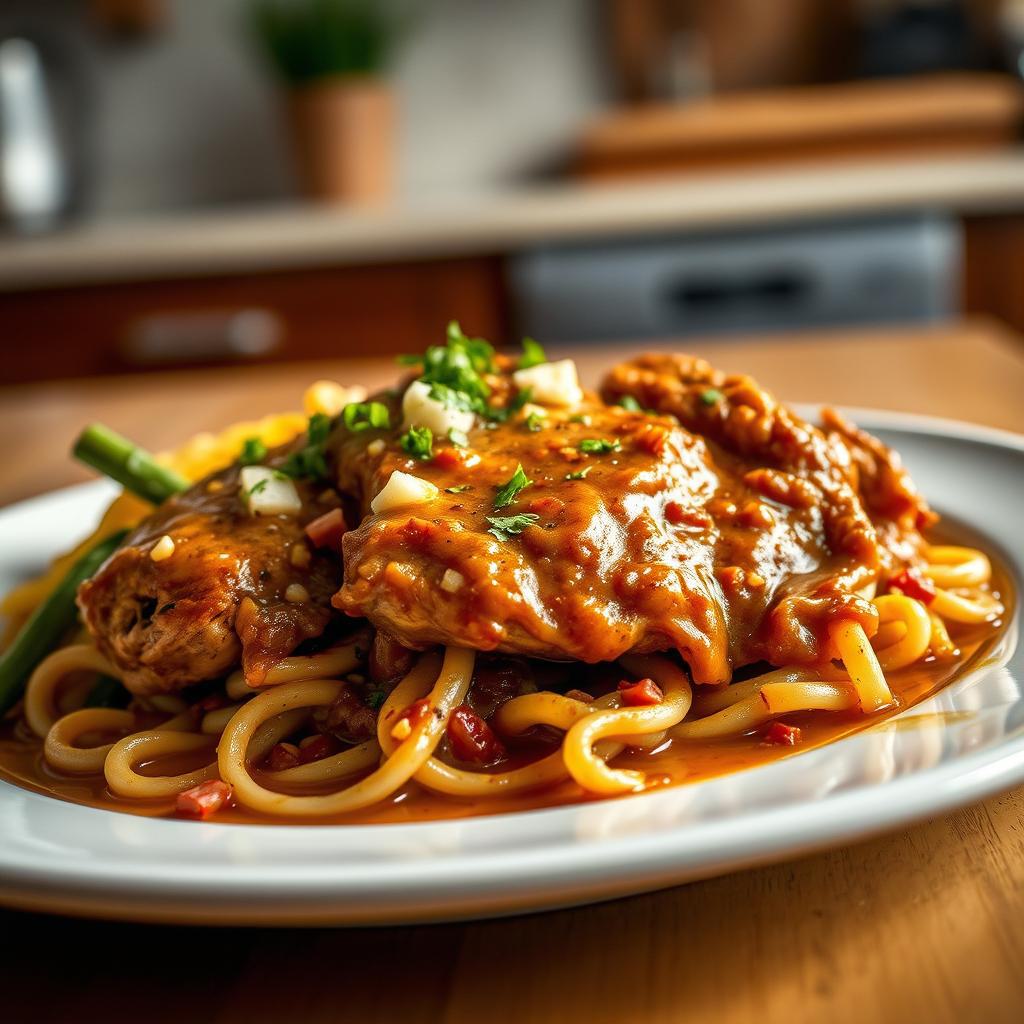
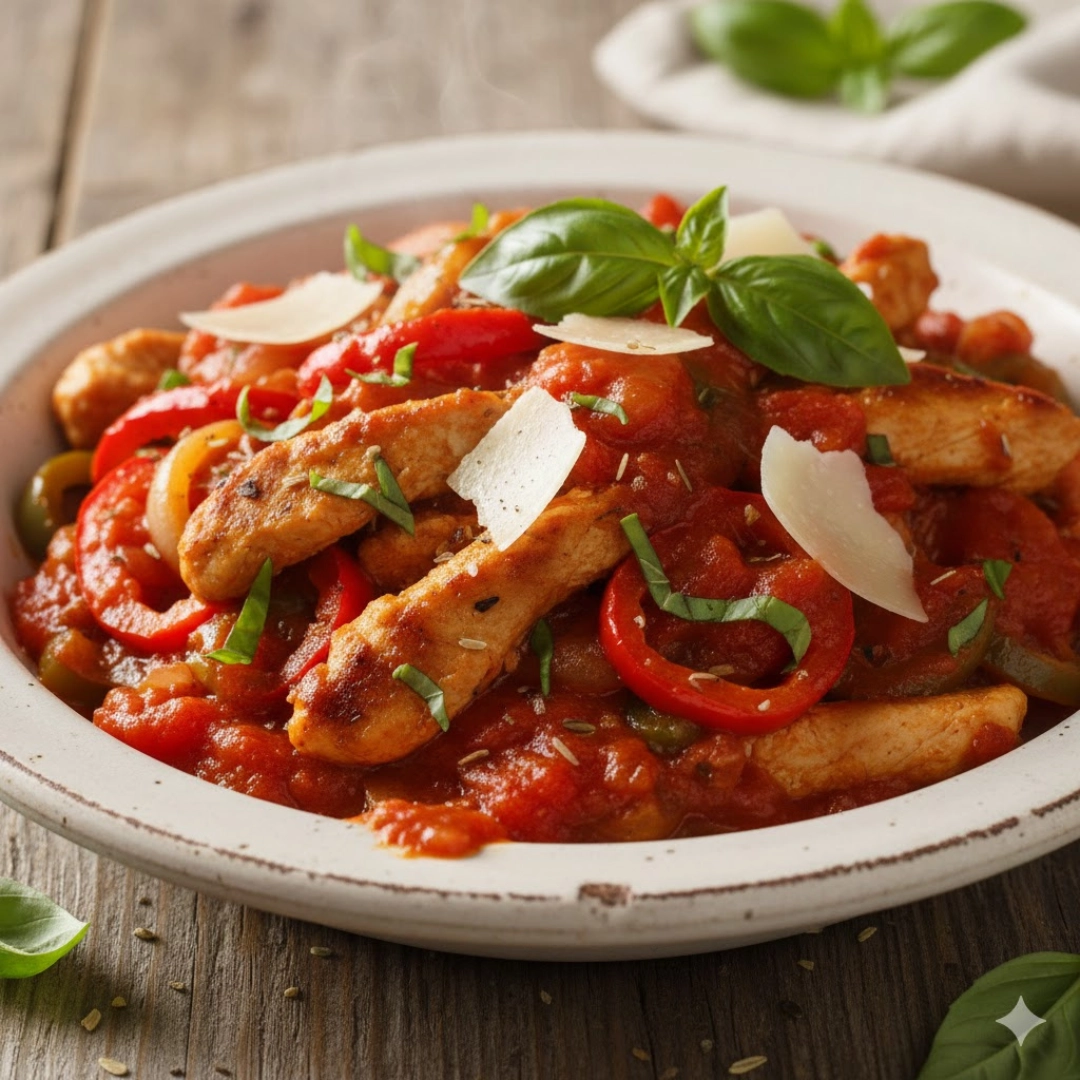
This Italian Chicken Skillet is a foundational Mediterranean meal that emphasizes the natural synergy between lean protein, bright acidity, and earthy aromatics. By searing the poultry and then simmering it within a vibrant base of bell peppers and tomatoes, the meat stays exceptionally succulent while the vegetables soften into a savory compote. It is an efficient, one-pan approach that honors the tradition of cacciatore style cooking without requiring hours of braising. Whether served over a bed of al dente pasta or alongside a crusty loaf of sourdough, this dish provides a balanced profile of nutrients and bold, herbaceous flavors.
The beauty of this preparation lies in its versatility; it functions equally well as a structured Sunday dinner or a streamlined weekday meal. The use of a heavy skillet allows for superior heat retention, ensuring the chicken develops a deep golden crust that anchors the entire flavor profile. By focusing on fresh aromatics like garlic and basil, the dish achieves a depth that pre-packaged sauces simply cannot replicate.
Table of Contents
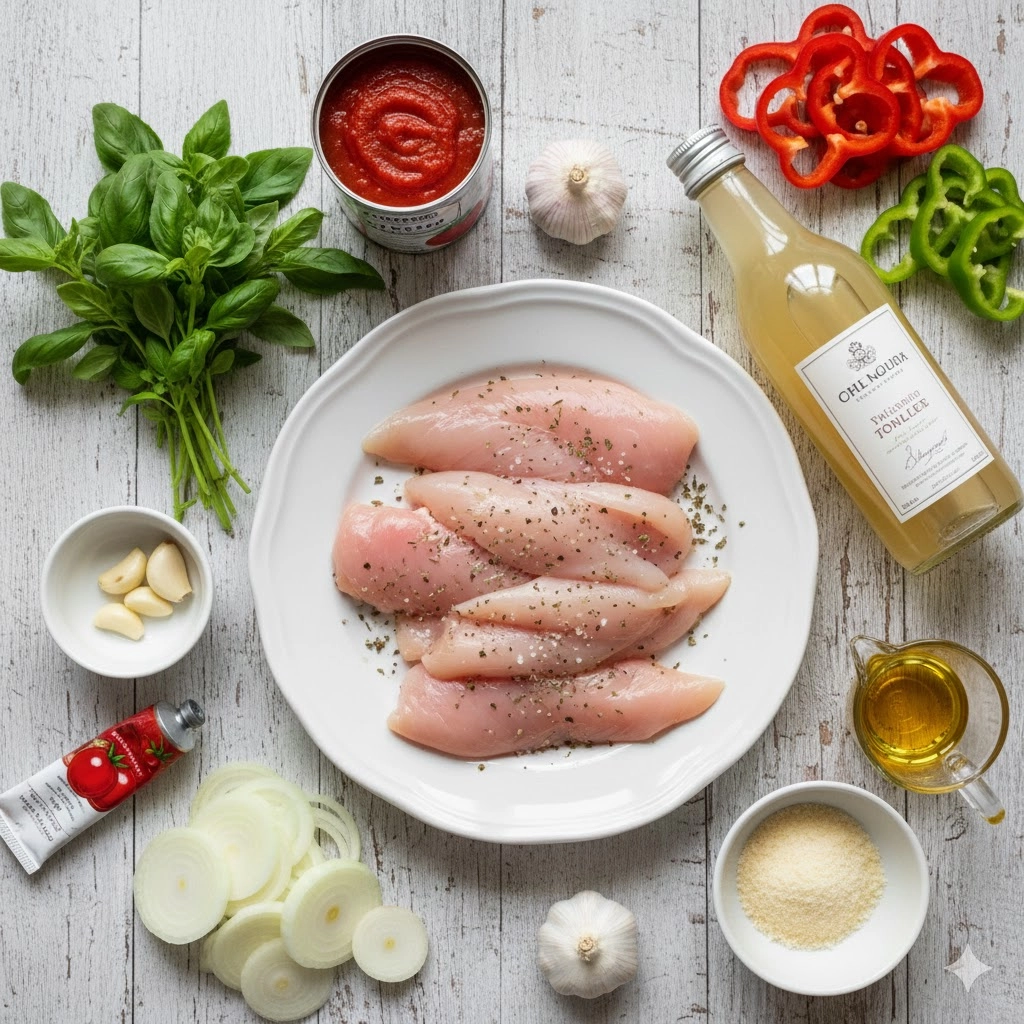
Necessary Ingredients
For the Chicken and Searing:
- One and a half pounds boneless, skinless chicken breasts, sliced into thin strips
- Two tablespoons extra virgin olive oil
- One teaspoon sea salt
- One half teaspoon freshly cracked black pepper
- One teaspoon dried oregano
The Vegetable Aromatics:
- One medium yellow onion, thinly sliced into half-moons
- Two large bell peppers (one red, one green), seeded and sliced into strips
- Three cloves garlic, finely minced
- One half cup dry white juice (such as Pinot Grigio) or low-sodium chicken broth
The Sauce and Finish:
- One can (fourteen ounces) diced tomatoes with their juices
- One tablespoon tomato paste
- One quarter cup fresh basil leaves, chiffonade
- One half cup shredded mozzarella or shaved parmesan cheese (optional)
Preparation Steps
- Season the chicken strips thoroughly with salt, pepper, and dried oregano.
- Heat the olive oil in a large cast-iron or heavy-bottomed skillet over medium-high heat.
- Brown the chicken in batches until golden on both sides, then remove to a side plate.
- In the same skillet, sauté the onions and bell peppers until they begin to soften.
- Stir in the minced garlic and cook just until fragrant, roughly sixty seconds.
- Deglaze the pan with the whitejuice, scraping up any browned bits from the bottom.
- Add the diced tomatoes and tomato paste, stirring to incorporate into a cohesive sauce.
- Return the chicken to the skillet, nesting it into the vegetable mixture.
- Simmer on medium-low for ten minutes until the sauce thickens and chicken is cooked through.
- Garnish with fresh basil and cheese before serving.

Mastering the Skillet Technique
The most critical phase of this recipe is the initial sear. To achieve a professional-grade Italian Chicken Skillet, ensure the oil is shimmering before the meat touches the pan. If the pan is too cold, the chicken will steam in its own juices rather than developing the Maillard reaction—that golden-brown crust that provides the savory “umami” foundation for the sauce. Avoid overcrowding the skillet; if necessary, sear the chicken in two separate groups to maintain high surface temperatures.
When transitioning to the vegetables, you are looking for a specific texture known as “crisp-tender.” The onions should turn translucent and slightly caramelized at the edges, while the peppers should retain a bit of structural integrity. When you add the garlic, keep it moving constantly. Garlic has a high sugar content and can turn bitter within seconds if left to scorch.
Deglazing is the secret step that elevates a home-cooked meal to restaurant quality. By adding the juice or broth to the hot pan, you release the concentrated flavors stuck to the bottom. This liquid becomes the liquid gold of your sauce. Once the tomatoes are added, the heat should be reduced to a gentle simmer. A rapid boil can toughen the chicken fibers, whereas a low, consistent bubble allows the tomato acids to further tenderize the meat.
Professional Success Tips
- Pat the Meat Dry: Before seasoning, use paper towels to remove excess moisture from the chicken. Dry meat sears; wet meat steams.
- Temperature Consistency: Allow the chicken to sit at room temperature for about fifteen minutes before cooking. This ensures the center reaches the safe internal temperature of one hundred sixty five Fahrenheit without overcooking the exterior.
- Fresh Herb Timing: Always add fresh basil at the very end. The volatile oils in basil are delicate and will dissipate if boiled for too long, losing that signature peppery sweetness.
- The Tomato Paste Trick: Cook the tomato paste for two minutes with the vegetables before adding the liquid. This “toasts” the paste, deepening its color and removing the raw metallic tin taste.
- Acid Balance: If your tomatoes are particularly acidic, a tiny pinch of granulated sugar (less than a teaspoon) can balance the sauce beautifully without making it sweet.
- Knife Skills: Try to cut the peppers and onions into uniform strips. Uniformity isn’t just for aesthetics; it ensures every piece of vegetable reaches the desired softness at the exact same time.
Variations and Component Swaps
For those looking to adjust the flavor profile, consider using boneless chicken thighs instead of breasts. Thighs contain more fat and connective tissue, which makes them more forgiving and flavorful during a simmer. If you prefer a spicy kick, add one half teaspoon of crushed red pepper flakes during the garlic sauté phase.
For a grain-free or lower-carb version, skip the pasta and serve the chicken over a bed of sautéed zoodles (zucchini noodles) or roasted spaghetti squash. You can also transform this into a “creamy” version by stirring in two tablespoons of heavy cream or mascarpone cheese just before serving. If you lack white juice, a splash of balsamic vinegar mixed with chicken broth provides a wonderful, tangy depth that mimics the acidity of the jice.

Service and Presentation
This meal is best served in shallow bowls to capture the juices from the tomato and pepper base. For a classic Italian presentation, nestle the chicken atop a mound of angel hair pasta or linguine. If you are looking for a heartier, more rustic feel, serve it alongside a wedge of warm polenta.
To garnish, use a vegetable peeler to create large, elegant curls of Parmesan cheese rather than using pre-grated varieties. A final drizzle of high-quality cold-pressed olive oil just before the bowl hits the table adds a luxurious mouthfeel and a fresh, grassy aroma that complements the cooked herbs.
Frequently Asked Questions
Can I make this recipe in advance for meal prep?
Yes, this dish actually improves after a day in the refrigerator as the flavors continue to meld. Reheat it gently on the stovetop over low heat, adding a tablespoon of water or broth to loosen the sauce if it has thickened too much during cooling.
What is the best substitute for white juice?
If you prefer not to use alcohol, an equal amount of chicken stock with a teaspoon of lemon juice or white juice vinegar works perfectly. The goal is to provide a liquid for deglazing and a touch of acidity to brighten the heavy savory notes.
How do I prevent the chicken from becoming rubbery?
The key is to avoid overcooking during the initial sear. You only want to color the outside of the meat; it will finish cooking through during the ten-minute simmer in the sauce. Use a meat thermometer to ensure the thickest part of the chicken reaches one hundred sixty five Fahrenheit.
Can I use frozen vegetables for this skillet?
While fresh bell peppers provide the best texture, frozen sliced peppers can be used in a pinch. Be sure to thaw them and pat them dry first, as they release significantly more water than fresh vegetables, which could make your sauce too thin.
Nutrition Information
| Nutrient | Amount per Serving |
| Calories | 310 kcal |
| Protein | 38 g |
| Carbs | 12 g |
| Fat | 11 g |
| Fiber | 3 g |
| Sugar | 6 g |
| Sodium | 680 mg |
Disclaimer
Nutrition information is an estimate and may vary based on preparation and ingredients used.
PrintRustic Italian Chicken Skillet with Garden Herbs and Peppers
This Rustic Italian Chicken Skillet features lean chicken breast, vibrant bell peppers, and savory aromatics simmered in a rich tomato and white wine sauce.
- Prep Time: 15 mins
- Cook Time: 20 mins
- Total Time: 35 mins
- Yield: 4 servings 1x
- Category: Main Dish
- Method: Skillet
- Cuisine: Italian
Ingredients
1.5 lbs boneless skinless chicken breasts, sliced
2 tablespoons extra virgin olive oil
1 teaspoon sea salt
0.5 teaspoon black pepper
1 teaspoon dried oregano
1 medium yellow onion, sliced
2 large bell peppers (red and green), sliced
3 cloves garlic, minced
0.5 cup dry white wine
14 oz diced tomatoes
1 tablespoon tomato paste
0.25 cup fresh basil, chiffonade
Instructions
1. Season chicken strips with salt, pepper, and dried oregano.
2. Heat olive oil in a large skillet over medium-high heat.
3. Sear chicken in batches until golden; remove and set aside.
4. Sauté onions and bell peppers in the same skillet until softened.
5. Stir in garlic and cook for sixty seconds until fragrant.
6. Deglaze the pan with white wine, scraping the bottom.
7. Mix in diced tomatoes and tomato paste.
8. Return chicken to the skillet and nestle into the sauce.
9. Simmer on medium-low for ten minutes until thickened.
10. Garnish with fresh basil and optional cheese before serving.
Notes
Pat the chicken dry before searing to ensure a golden crust.
Substitute chicken broth with a splash of lemon juice if avoiding wine.
Store leftovers in an airtight container for up to 3 days.
Nutrition
- Serving Size: 1.5 cups
- Calories: 310
- Sugar: 6g
- Sodium: 680mg
- Fat: 11g
- Saturated Fat: 2g
- Unsaturated Fat: 7g
- Trans Fat: 0g
- Carbohydrates: 12g
- Fiber: 3g
- Protein: 38g
- Cholesterol: 95mg