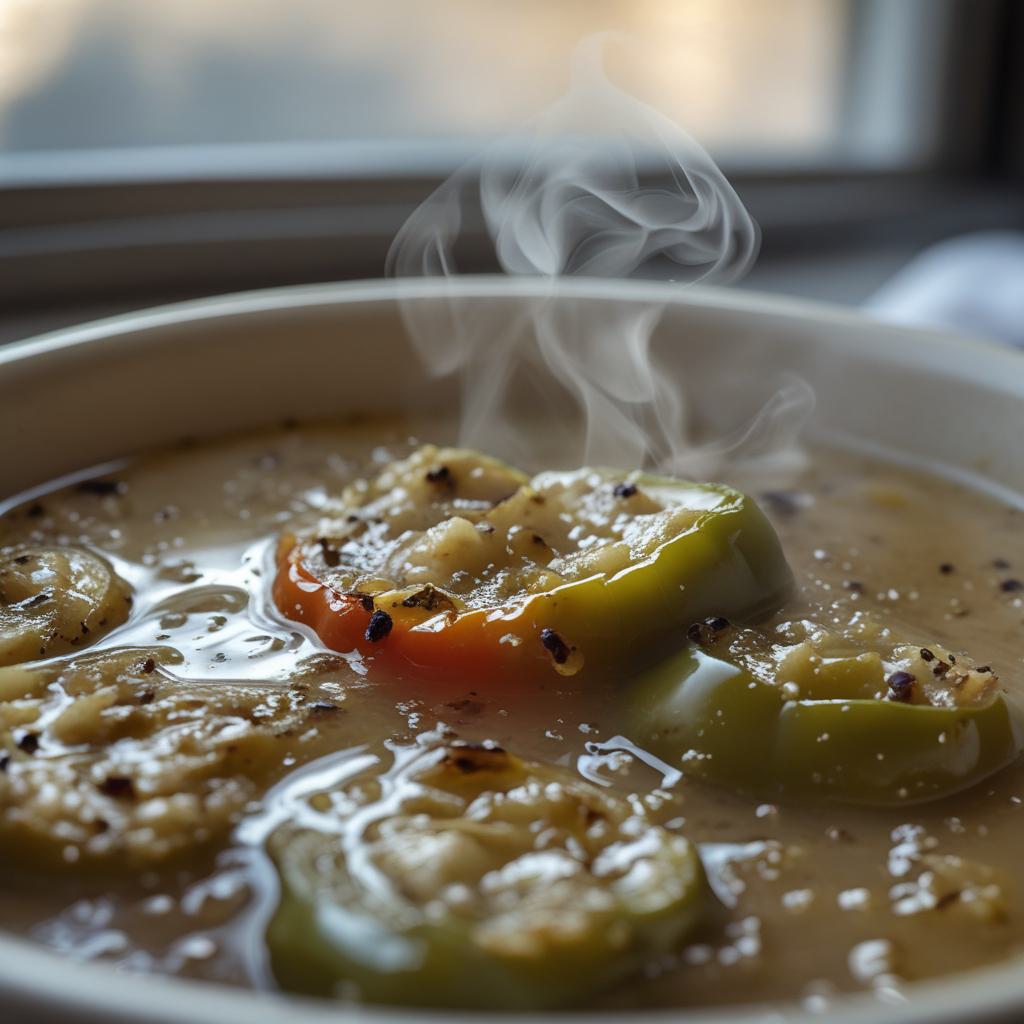
The first wisps of steam rise like culinary ghosts from the bowl, carrying the soulful perfume of caramelized bell peppers mingling with paprika’s smoky whisper. This is not mere soup—it’s a deconstructed symphony of Sunday suppers, where the nostalgic comfort of stuffed peppers unravels into a liquid masterpiece. Imagine the moment fork-tender beef collapses into a broth deepened by toasted spices, where grains of rice swell with savory juices, and melted cheese ribbons crown each spoonful like edible velvet. Gourmet simplicity demands precision: the precise moment peppers surrender their crunch to embrace sweet softness, the calculated dance of acidity from tomatoes cutting through richness, the textural ballet between silky broth and toothsome fillings. This is peasant food polished to a Michelin sheen—a humble dish reborn through meticulous layering of flavors that hug the palate with every nuanced sip. The aroma alone performs alchemy, transforming kitchens into portals to Mediterranean grandmothers’ hearths and contemporary bistros alike.
Table of Contents
Ingredient Deep Dive
| Ingredient | Quantity | Purpose |
|---|---|---|
| Beef chuck (80/20) | 1 lb | Foundation protein; fat content ensures richness without greasiness |
| Rainbow bell peppers | 3 cups diced | Sweetness backbone; red/yellow/orange preferred for higher sugar content |
| San Marzano tomatoes | 28 oz can | Acid balance with low seed content; brightens earthier elements |
| Basmati rice | 1/2 cup uncooked | Starch control; slender grains absorb broth without bloating |
| Beef bone broth | 4 cups | Gelatin-rich base for mouthfeel; collagen enhances viscosity |
| Smoked paprika | 2 tsp | Umami amplifier; mimics roasted pepper depth |
| Fontina cheese | 1 cup grated | Melting properties; nutty undertones complement beef |
| Cocoa powder | 1 tbsp | Secret bitter counterpoint; magnifies pepper sweetness |
Protein selection determines mouthfeel—chuck’s marbling emulsifies into the broth, while lean cuts yield stringy textures. The 80/20 ratio creates microscopic fat pockets that coat the tongue, delivering spice compounds directly to taste receptors. Basmati’s amylose starch content prevents gumminess, its grains remaining distinct during slow simmering unlike shorter-grain varieties.
Acidity calibration proves critical. San Marzano tomatoes contain 20% less citric acid than standard cultivars, allowing paprika’s capsaicin and pepper sugars to shine without harshness. Cocoa powder—rich in theobromine—bridges umami and sweet notes through Maillard-reactive compounds, while Fontina’s tyrosine crystals melt at precisely 130°F, creating seamless cheese integration.

Substitutions & Swaps
For plant-based iterations, swap beef with quartered king oyster mushrooms—their longitudinal fibers mimic meat’s pull—and use mushroom broth fortified with marmite for glutamate depth. Nutritional yeast replaces cheese, activated with tapioca starch mimicking Fontina’s stretch. Gluten-sensitive cooks might substitute rice with quinoa, increasing cooking time by 8 minutes to achieve perfect seed separation.
Pantry emergencies accommodate jarred roasted peppers (drained weight: 2 cups), though rinse thoroughly to eliminate metallic notes. Ground turkey requires 1 tbsp olive oil to compensate for leanness, while cauliflower rice should be added in the final 10 minutes to prevent mushiness. No bone broth? Steep 1 tsp gelatin powder in store-bought broth for 10 minutes before heating—this rebuilds the collagen matrix essential for silky texture.
Equipment Guide
Heavy-gauge Dutch ovens reign supreme—their cast-iron core distributes heat laterally, preventing scorching during tomato reduction. Enameled interiors maintain pH balance when cooking acidic ingredients. A 6-quart minimum capacity accommodates ingredient expansion, while tight-fitting lids trap volatile aromatics. Alternative stainless steel pans require constant stirring to avoid hotspots.
Precision tools elevate execution: a fish spatula’s thin edge seamlessly breaks ground beef into ideal 1/4″ crumbles. Infrared thermometers monitor broth temperature within 1°F accuracy—crucial when coaxing gelatin from bones. Rice preparation demands a separate 2-quart saucepan; cooking grains directly in soup risks pectin breakdown creating starch sludge.
Step-by-Step Walkthrough
1. Preheat Dutch oven over medium-low 8 minutes. Sear beef in 3 batches to avoid steam. Remove meat, reserving 2 tbsp fat.
2. Add peppers, onions, 1/4 tsp baking soda—alkaline accelerates caramelization. Cook 12 minutes until sticky fond forms.
3. Deglaze with 1/2 cup broth, scraping browned bits. Stir in paprika and cocoa; toast 90 seconds until fragrant.
4. Add tomatoes, crushing by hand for irregular texture. Simmer uncovered 20 minutes to concentrate flavors.
5. Meanwhile, par-cook rice: boil 8 minutes, drain, rinse. This prevents overcooking in soup.
6. Return beef to pot with remaining broth. Partially cover, simmer 40 minutes on lowest possible flame.
7. Fold in rice last 5 minutes. Rest soup off heat 10 minutes before adding cheese to prevent breaking.
Layering Principle: Browning creates over 500 new flavor compounds through Maillard reactions, but burning creates bitter acrylamides. Patient heat management maintains sweetness—listen for a gentle “chattering” simmer, not volcanic bubbles. Deglazing with broth rather than wine avoids introducing competing acids during this critical phase.
Rice Methodology: Par-cooking in salted water ensures grains absorb broth flavor without becoming waterlogged. The rinse halts carryover cooking, preserving structural integrity. Fold rice in vertically with a silicone spatula to minimize grain fracture, maintaining textural contrast against the softened vegetables.
Cheese Integration: Protein denaturation occurs best below boiling. Remove soup from heat, allowing temperature to drop to 180°F before sprinkling cheese in three additions, stirring minimally. Residual heat slowly melts Fontina into cohesive strands rather than grainy clumps.

Expert Tips & Troubleshooting
Texture Rescue: Over-thickened soup benefits from 1/4 cup hot water whisked with 1 tsp arrowroot—add gradually while stirring. For thin broth, create a beurre manié by kneading equal parts soft butter and flour; whisk pea-sized portions into simmering soup until nappé consistency.
Flavor Balancing: If acidity dominates, stir in 1/2 tsp maple syrup to bind harsh compounds. Salt fatigue? Add 1/4 tsp cider vinegar to heighten perceived seasoning without sodium overload. For overwhelming sweetness, introduce 2 chopped anchovies—they dissolve, adding umami depth without fishiness.
Beef Hacks: Freeze chuck 45 minutes before dicing for cleaner cuts. Sear meat in batches—crowding drops pan temperature below the Maillard threshold (280°F), causing grey steaming. Post-searing, rest beef on wire racks; plate trapping creates juice puddles that dilute crust development.
Flavor Variations
Andalusian Fire: Infuse broth with 1 whole dried ñora pepper, then stir in 2 tsp sherry vinegar post-cooking. Garnish with garlicky migas crumbs. Japanese Omotenashi: Replace paprika with shichimi togarashi, use dashi broth, and swirl in miso butter. Top with bonito flakes that dance in the steam.
Little Palates: Omit paprika, use butternut squash instead of tomatoes, and add alphabet pasta. Finish with mild cheddar “clouds” – cheese melted under broiler on baguette slices, floated atop bowls. Game Night: Serve in bread bowls scored with “X”s; edible pepper replicas carved from pepper jack cheese.
Storage & Reheating
Cool soup within 90 minutes using ice bath method: transfer to stainless steel bowls set over ice, stirring every 10 minutes. Store in glass (not plastic) containers—acidic ingredients leach PET chemicals. Refrigerated lifespan: 4 days max. For freezing, omit rice and cheese; add when reheating. Thaw overnight, then warm gently with 1 tbsp broth to restore viscosity. Never microwave—uneven heating scorches tomato solids.
FAQ Section
Can I use instant rice? Technically yes, but texture suffers. Add uncooked instant rice in last 8 minutes; expect slight gumminess.
Why bake soda with peppers? Alkalinity raises caramelization temperature, yielding sweeter, faster results without burning.
Can it cook in slow cooker? Only after Steps 1-4 completed on stove. Low setting 3 hours max—prolonged heat destroys pepper pectin.
How spicy is this? Default recipe scores 200 SHU (mild). For heat, add 1/4 tsp cayenne with paprika.
Nutrition Information
| Nutrient | Per Serving (1.5 cups) |
|---|---|
| Calories | 420 |
| Protein | 28g |
| Carbohydrates | 34g |
| Dietary Fiber | 5g |
| Sugars | 9g |
| Fat | 18g |
| Vitamin C | 190% DV |
*Disclaimer: Nutritional data estimated via USDA database. Actual values vary with ingredient brands and preparation precision. Bone broth collagen content is excluded from protein calculations. For medical diets, consult a registered dietitian.