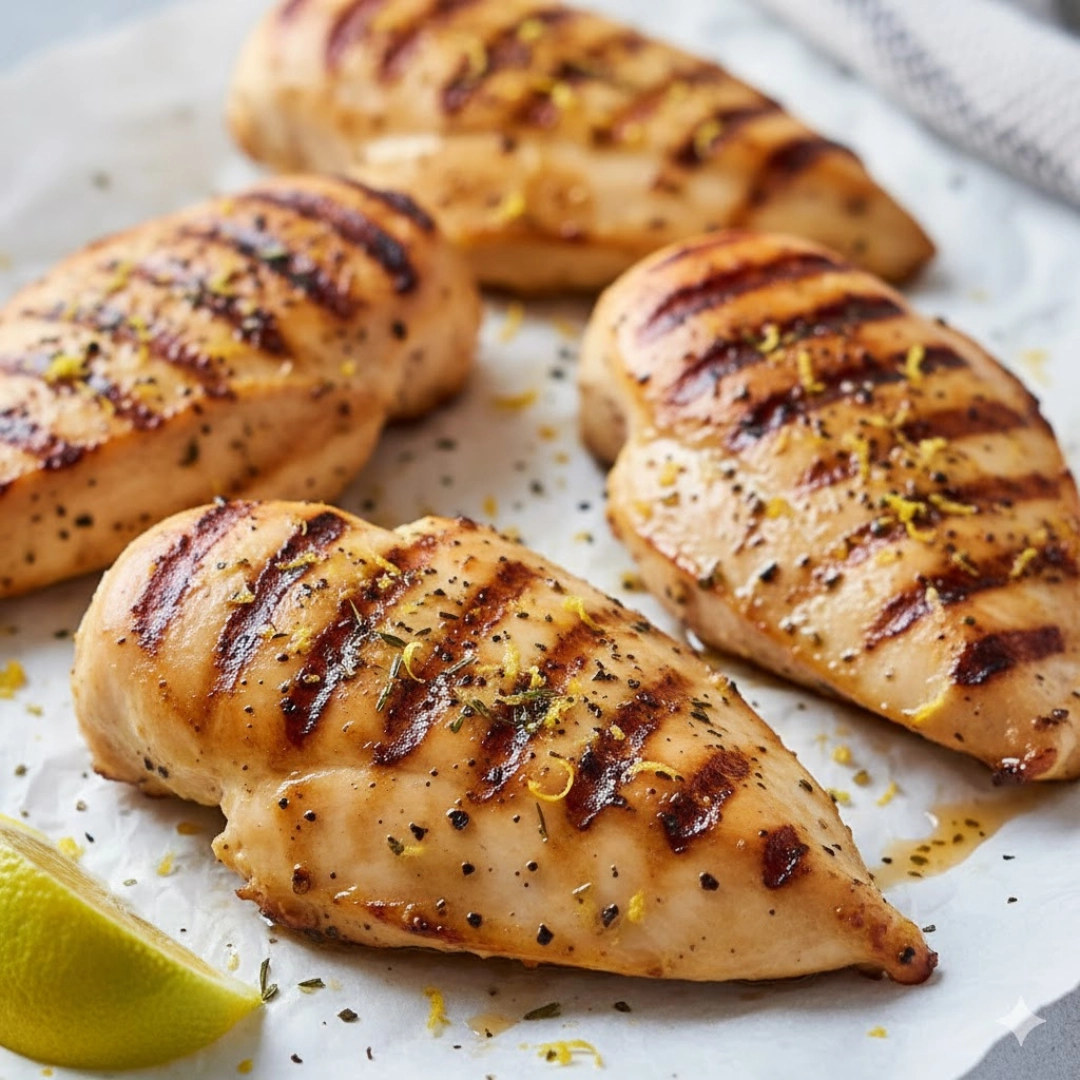
Grilled lemon pepper chicken is a classic for a reason—it’s bright, robust, and effortlessly satisfying. This is the meal you turn to when you want maximum flavor with minimal fuss, making it a star on any weekly rotation or a centerpiece for an outdoor gathering. The key to its appeal lies in the perfect balance of acidic lemon zest, the pungent bite of fresh cracked pepper, and the smoky char only a grill can provide. Unlike overly complicated marinades, the simple mixture here penetrates the meat quickly, ensuring every bite is juicy, tender, and intensely seasoned.
This particular method focuses on achieving a truly savory crust while keeping the interior moist, transforming a simple piece of poultry into a memorable main dish. We utilize both lemon juice and zest, along with a blend of coarse and fine pepper, to build layers of flavor that truly sing.
Table of Contents
The Essential Elements: Ingredients Rundown
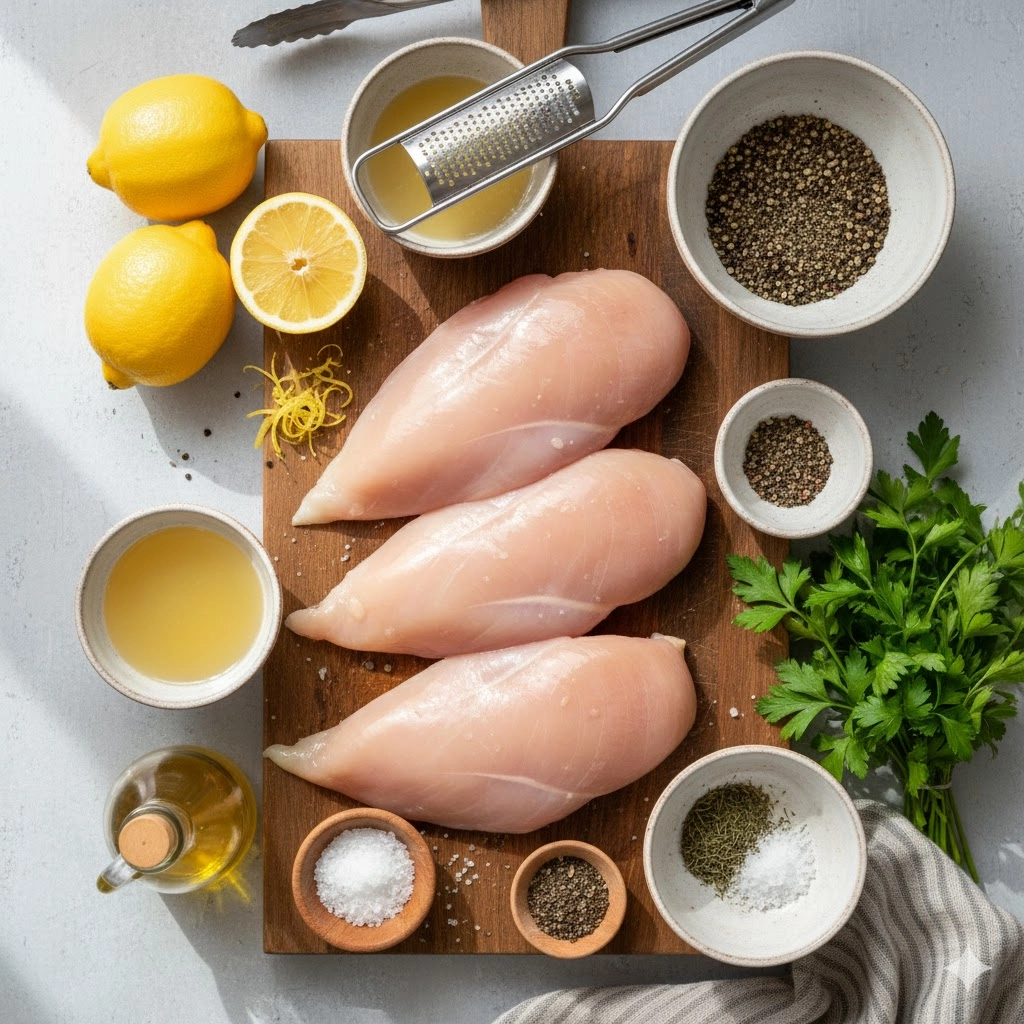
Gathering quality ingredients is the crucial first step. Use fresh lemons, as the bottled juice lacks the brightness and necessary zest oils required for this recipe’s signature taste.
For the Lemon Pepper Marinade
- Four boneless, skinless chicken breasts (about six ounces each)
- One-half cup fresh lemon juice (from 3-4 medium lemons)
- One-quarter cup olive oil
- Two tablespoons fresh lemon zest
- One tablespoon coarse ground black pepper
- One teaspoon fine ground black pepper
- One teaspoon kosher salt, plus more for seasoning
- One teaspoon garlic powder
- One-half teaspoon dried thyme
For the Grill and Garnish
- One tablespoon high smoke point oil (such as canola or grapeseed)
- Two tablespoons chopped fresh parsley, for garnish
- Lemon wedges, for serving
The Process Blueprint: How to Grill the Chicken
Follow these high-level steps to guide your cook time, ensuring perfectly tender and flavorful chicken.
- Prepare the Chicken and Marinade. Pat the chicken dry, then whisk together the marinade ingredients in a bowl.
- Marinate. Add the chicken breasts to the marinade, ensuring they are fully coated, and chill for at least thirty minutes.
- Preheat the Grill. Clean the grates and heat your grill to medium-high heat (about four hundred to four hundred twenty-five Fahrenheit).
- Oil the Grates. Carefully brush the hot grates with the high smoke point oil.
- Grill the Chicken. Place the marinated chicken on the oiled grates and cook for six to eight minutes per side.
- Check for Doneness. Verify the internal temperature has reached one hundred sixty-five Fahrenheit in the thickest part of the breast.
- Rest and Serve. Remove the chicken, let it rest for five to ten minutes, and garnish with fresh parsley and extra lemon.

Detailed Execution: Achieving the Ideal Texture and Flavor
Success in grilling is all about heat management and patience. Here is a more nuanced look at each stage to guarantee a succulent result.
Prepping the Poultry and Creating the Zesty Blend
Begin by making sure your chicken breasts are uniform in thickness. If they are very large or uneven, cover them with plastic wrap and gently pound the thickest end until the entire breast is roughly three-quarters of an inch thick. This ensures even cooking.
The marinade relies heavily on the oils from the zest. When zesting your lemons, be careful to only remove the bright yellow portion and stop before you hit the bitter white pith underneath. Whisk the zest, two types of pepper (coarse for crunch and fine for coverage), salt, garlic powder, thyme, olive oil, and lemon juice together. When combined, the mixture should smell intensely bright and peppery. Place the chicken in a sealable bag or shallow dish and pour the marinade over it. Ensure all surfaces are coated. Thirty minutes is enough time for the flavors to penetrate without the acid toughening the meat; marinating for longer than four hours can begin to “cook” the delicate proteins.
Mastering the Medium-High Grill Setting
The preheat stage is non-negotiable. A clean, hot grill is the only way to achieve those beautiful, signature sear marks. Preheat your gas grill for ten to fifteen minutes with the lid closed until it reaches the sweet spot of four hundred to four hundred twenty-five Fahrenheit. For charcoal, aim for a medium-high setup where you can hold your hand comfortably about four inches above the grate for only three to four seconds. Before placing the chicken, dip a paper towel in the high smoke point oil using tongs and carefully brush the hot grates. This acts as a non-stick layer and helps prevent the chicken from tearing when you flip it.
The Grilling Cycle and The Flip
Remove the chicken from the marinade, letting any excess drip off. Do not pat it completely dry, as the marinade provides flavor and moisture. Place the chicken on the oiled, hot grates. You should hear an immediate, satisfying sizzle. This is your cue that the sear is beginning.
- Initial Sear (Side One): Leave the chicken undisturbed for six to eight minutes. The first few minutes are critical for forming the crust. Resist the urge to peek or move the pieces.
- The Check: At the six-minute mark, gently lift one piece with tongs. If it sticks to the grate, the sear isn’t fully formed. If it releases cleanly, it’s time to flip.
- Second Cook (Side Two): Flip the chicken to the second side and grill for another six to eight minutes.
The visual cues are important: you should see the edges of the chicken beginning to turn opaque and the underside showing deep, golden-brown grill marks.
Temperature Verification and the Crucial Rest
The absolute final word on doneness is the thermometer. Insert an instant-read thermometer into the thickest part of the chicken breast, avoiding any bone if you are using bone-in pieces. When the internal temperature reads one hundred sixty-five Fahrenheit, the chicken is fully cooked and safe to eat.
Immediately transfer the finished chicken from the grill to a clean cutting board or platter. Tent it loosely with foil. The rest is perhaps the most important detail, allowing the internal juices that have rushed to the center of the meat to redistribute throughout the entire breast. Skipping this five- to ten-minute window will result in the juices running out when you cut the meat, leaving you with a dry final product. Garnish generously with fresh parsley and serve with extra lemon wedges for a final squeeze of brightness.
Expert Techniques: Secrets for Succulent Chicken
Small adjustments to your preparation and cooking can elevate your grilled lemon pepper chicken from good to truly great.
- Pounding for Consistency: Always pound the chicken breasts to an even thickness. This guarantees that one end isn’t dry while the other remains undercooked.
- Double-Dose the Pepper: Using both coarse-ground and fine-ground black pepper is key. The coarse granules provide texture and a burst of flavor upon biting, while the fine grounds ensure the seasoning adheres everywhere.
- The Zest-to-Juice Ratio: Don’t skimp on the lemon zest. The zest contains concentrated oils that provide the main aromatic component, whereas the juice provides acidity and tenderization. Balance is everything.
- Avoid Over-Marinating: Since lemon juice is acidic, four hours is the maximum time you should allow the chicken to sit in the marinade. Beyond this, the meat will take on a spongy, slightly tough texture.
- The Sizzle Test: If your chicken does not sizzle loudly the moment it hits the grate, the grill is not hot enough. Wait until the temperature is correct, as grilling at too low a temperature results in pale, rubbery chicken.
- Use Tongs Only: Never pierce the chicken with a fork while grilling. Every puncture allows precious internal moisture and juice to escape, leading to a drier breast. Use a sturdy pair of tongs for all movement.
- Clean Before and After: Cleaning the grill grates before you start cooking removes burnt residue that causes sticking and off-flavors. Cleaning immediately after cooking, while the grates are still warm, makes the job much easier for your next cook.
Culinary Shifts: Flavor Variations and Ingredient Swaps
While the classic lemon pepper combination is superb, this base recipe is robust enough to handle several exciting shifts in flavor profile.
- Spicy Lemon-Pepper: Introduce a little heat by adding one teaspoon of red pepper flakes to the marinade. For a smokier warmth, a half-teaspoon of chipotle powder works wonders.
- Herbaceous Mediterranean: Replace the dried thyme with two tablespoons of finely chopped fresh oregano and one tablespoon of fresh marjoram. A splash of red wine vinegar can also be added for extra depth.
- Garlic and Parmesan Crust: Before grilling, press the chicken gently into a mixture of two tablespoons of grated Parmesan cheese and one teaspoon of extra garlic powder. This creates a nutty, savory crust during the cook.
- Citrus Swap: For a milder, slightly sweeter take, substitute the lemon juice and zest with fresh orange juice and zest. The acidity is less aggressive but the aroma is still wonderfully bright.

The Accompaniment: Thoughtful Serving Suggestions
The versatility of grilled lemon pepper chicken means it pairs beautifully with everything from light salads to substantial starches.
- Grilled Vegetable Medley: Serve alongside colorful skewers of zucchini, bell peppers, and red onion, tossed in the residual marinade before hitting the grill. This keeps the meal light, cohesive, and uses up the leftover marinade.
- Creamy Orzo or Risotto: The bright acidity of the lemon cuts beautifully through a rich, creamy starch like a lemon-butter orzo or a light asparagus risotto.
- Simple Arugula Salad: Pair the sliced chicken with a peppery bed of fresh arugula, shaved Parmesan, and a very simple vinaigrette (olive oil, a touch of lemon juice, and salt). The peppery leaves complement the pepper crust.
- Chicken Sandwiches: Slice the cooled chicken breast thinly and layer it on a toasted brioche bun with a little mayonnaise, crisp lettuce, and a slice of provolone cheese for a substantial lunch option.
Common Questions About Grilling Chicken
The grill can be intimidating, but a few simple answers can eliminate the guesswork.
How do I prevent the chicken from sticking to the grill?
The most common reasons for sticking are dirty grates or not enough heat. Always clean your grates thoroughly with a wire brush before lighting the grill. Once the grill is hot, brush the grates with a high smoke point oil like canola or grapeseed oil immediately before placing the chicken down. Finally, do not try to move or flip the chicken until it has formed a deep-colored crust, which takes about six to eight minutes.
What is the ideal internal temperature for grilled chicken breast?
The poultry must reach an internal temperature of one hundred sixty-five Fahrenheit. Use an accurate instant-read meat thermometer inserted into the thickest part of the breast. Pulling the chicken off the heat at one hundred sixty to one hundred sixty-two Fahrenheit and letting it rest will allow it to carryover cook to the required temperature and ensure maximum juiciness.
Can I bake or pan-sear this recipe instead of grilling?
Absolutely. To bake, preheat your oven to four hundred Fahrenheit. Place the marinated chicken in a lightly oiled baking dish and bake for twenty to twenty-five minutes, or until the internal temperature reaches one hundred sixty-five Fahrenheit. For pan-searing, cook in a tablespoon of olive oil in a skillet over medium-high heat for about five to seven minutes per side until done.
What’s the best way to tenderize the chicken breasts?
The fastest way is mechanical tenderization. Place the breasts between two sheets of plastic wrap and use the smooth side of a meat mallet or a rolling pin to gently pound them until they are a uniform thickness. This breaks down muscle fibers and ensures even, fast cooking, resulting in a more tender product.
Can I freeze the marinated chicken?
Yes, you can. Place the raw chicken and all the marinade ingredients into a freezer-safe bag, push out all the air, and seal it. It can be frozen for up to three months. When ready to cook, thaw the chicken in the refrigerator overnight. The thawing process allows the marinade to fully penetrate the meat as it slowly returns to temperature.
Nutritional Breakdown
This information is provided for the main chicken breast portion and marinade. Sides are not included.
| Nutrient | Amount per Serving |
| Calories | 260 kcal |
| Protein | 35 g |
| Carbs | 3 g |
| Fat | 12 g |
| Fiber | 0 g |
| Sugar | 0 g |
| Sodium | 450 mg |
Important Note on Estimates
Nutrition information is an estimate and may vary based on preparation and ingredients used.
PrintMastering the Grate: Our Best Grilled Lemon Pepper Chicken Recipe

This grilled lemon pepper chicken recipe delivers maximum flavor with a simple, zesty marinade. It’s perfect for outdoor gatherings and quick weeknight meals.
- Prep Time: 35 mins
- Cook Time: 15 mins
- Total Time: 50 mins
- Yield: 4 servings 1x
- Category: Main Dish
- Method: Grilling
- Cuisine: American
Ingredients
4 boneless, skinless chicken breasts (about 6 oz each)
1/2 cup fresh lemon juice (from 3–4 medium lemons)
1/4 cup olive oil
2 tbsp fresh lemon zest
1 tbsp coarse ground black pepper
1 tsp fine ground black pepper
1 tsp kosher salt, plus more for seasoning
1 tsp garlic powder
1/2 tsp dried thyme
1 tbsp high smoke point oil (such as canola or grapeseed)
2 tbsp chopped fresh parsley, for garnish
Lemon wedges, for serving
Instructions
1. Pat the chicken dry, then whisk together the marinade ingredients in a bowl.
2. Add the chicken breasts to the marinade, ensuring they are fully coated, and chill for at least thirty minutes.
3. Clean the grates and heat your grill to medium-high heat (about 400–425 Fahrenheit).
4. Carefully brush the hot grates with the high smoke point oil.
5. Place the marinated chicken on the oiled grates and cook for six to eight minutes per side.
6. Verify the internal temperature has reached 165 Fahrenheit in the thickest part of the breast.
7. Remove the chicken, let it rest for five to ten minutes, and garnish with fresh parsley and extra lemon.
Notes
Pound chicken breasts to an even thickness for uniform cooking.
Do not marinate for longer than four hours to prevent the acid from toughening the meat.
Always rest the chicken for 5–10 minutes to keep it juicy.
Nutrition
- Serving Size: 1 breast
- Calories: 260
- Sugar: 0g
- Sodium: 450mg
- Fat: 12g
- Saturated Fat: 2g
- Unsaturated Fat: 8g
- Trans Fat: 0g
- Carbohydrates: 3g
- Fiber: 0g
- Protein: 35g
- Cholesterol: 105mg