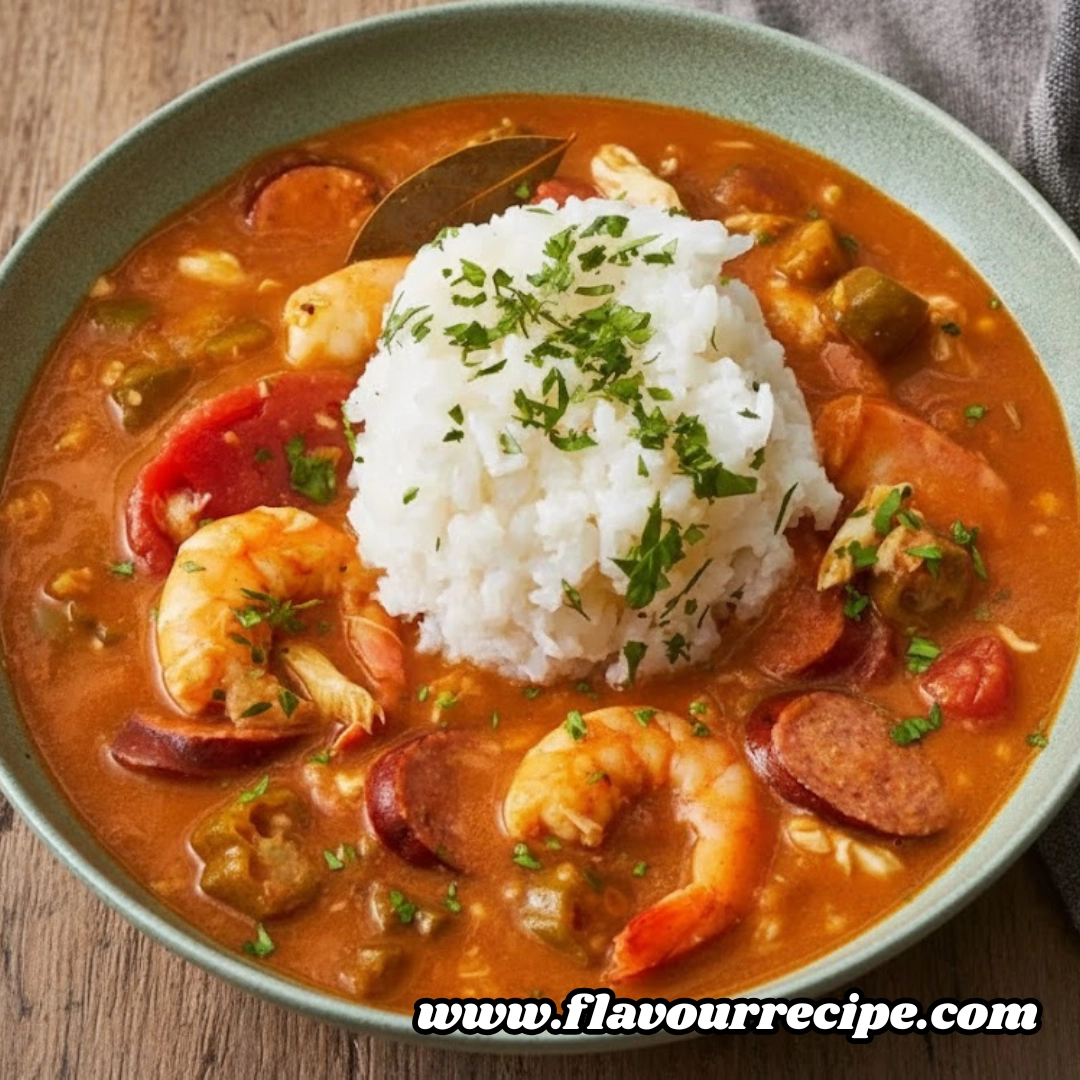
Mastering the art of a New Orleans Creole Gumbo is a rite of passage for any serious home cook. This isn’t just a soup; it is a deep, complex, and storied stew that represents the melting pot of Louisiana culture. This particular version is rooted in multi-generational New Orleans heritage, blending the earthy richness of a dark mahogany roux with the brightness of stewed tomatoes and the briny depth of fresh lump crabmeat and shrimp. Whether you are looking to impress guests at a Mardi Gras celebration or simply want a comforting, soul-warming meal on a cold evening, this authentic recipe delivers a symphony of flavors that only time and patience can produce.
Table of Contents
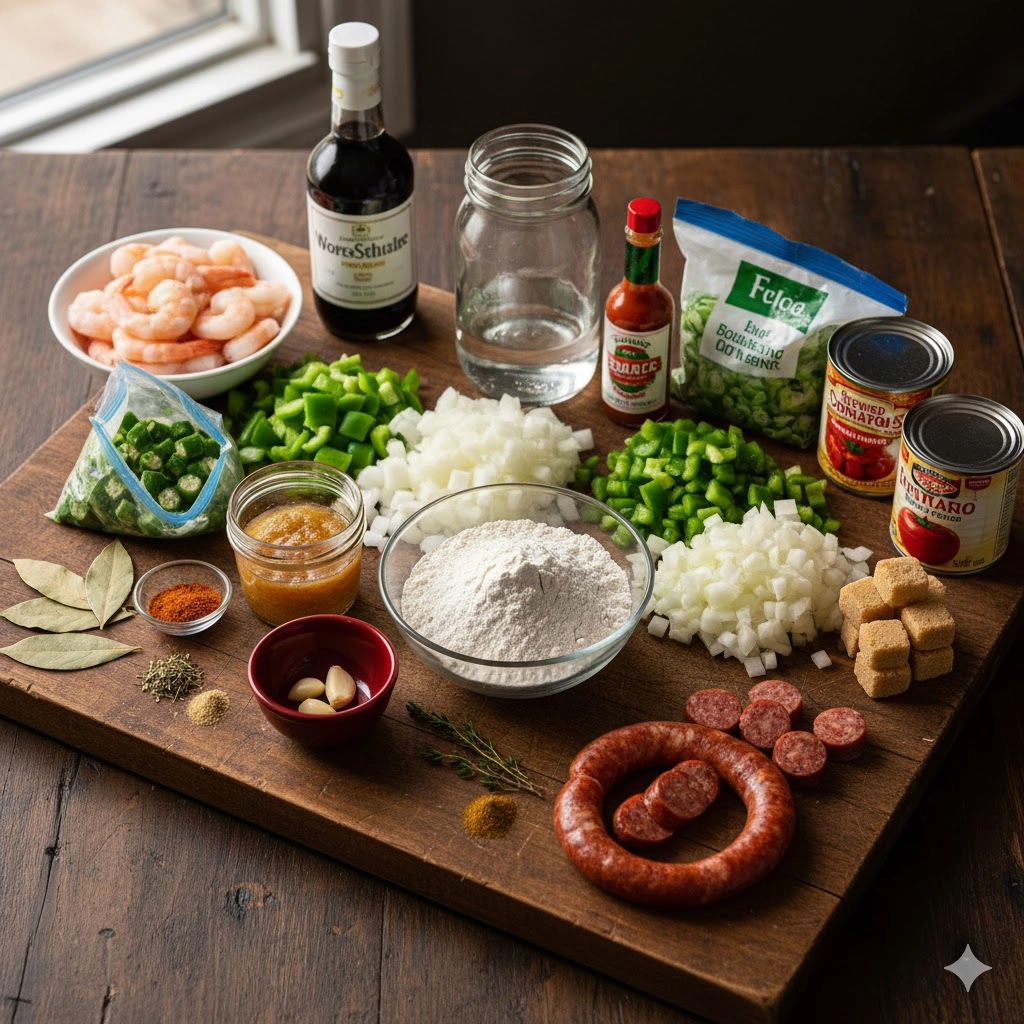
Ingredients for a True Creole Feast
To create this masterpiece, you will need to gather a variety of fresh produce, pantry staples, and high-quality proteins. This recipe makes approximately twenty servings, making it perfect for large gatherings or for freezing portions to enjoy later.
- 1 cup all-purpose flour
- 3/4 cup bacon drippings (for the roux)
- 1 cup coarsely chopped celery
- 1 large onion, coarsely chopped
- 1 large green bell pepper, coarsely chopped
- 2 cloves garlic, minced
- 1 pound andouille sausage, sliced into rounds
- 3 quarts water
- 6 cubes beef bouillon
- 1 tablespoon white sugar
- Salt, to taste
- 2 tablespoons hot pepper sauce (such as Tabasco), or more to taste
- 1/2 teaspoon Cajun seasoning blend (such as Tony Chachere’s)
- 4 dried bay leaves
- 1/2 teaspoon dried thyme leaves
- 1 (14.5 ounce) can stewed tomatoes
- 1 (6 ounce) can tomato sauce
- 4 teaspoons file powder, divided into two portions
- 2 tablespoons bacon drippings (for the okra)
- 2 (10 ounce) packages frozen cut okra, thawed
- 2 tablespoons distilled white vinegar
- 1 pound lump crabmeat
- 3 pounds uncooked medium shrimp, peeled and deveined
- 2 tablespoons Worcestershire sauce
Step-by-Step Cooking Instructions
The process of making gumbo is as much about the technique as it is about the ingredients. Follow these steps carefully to ensure a perfect result.
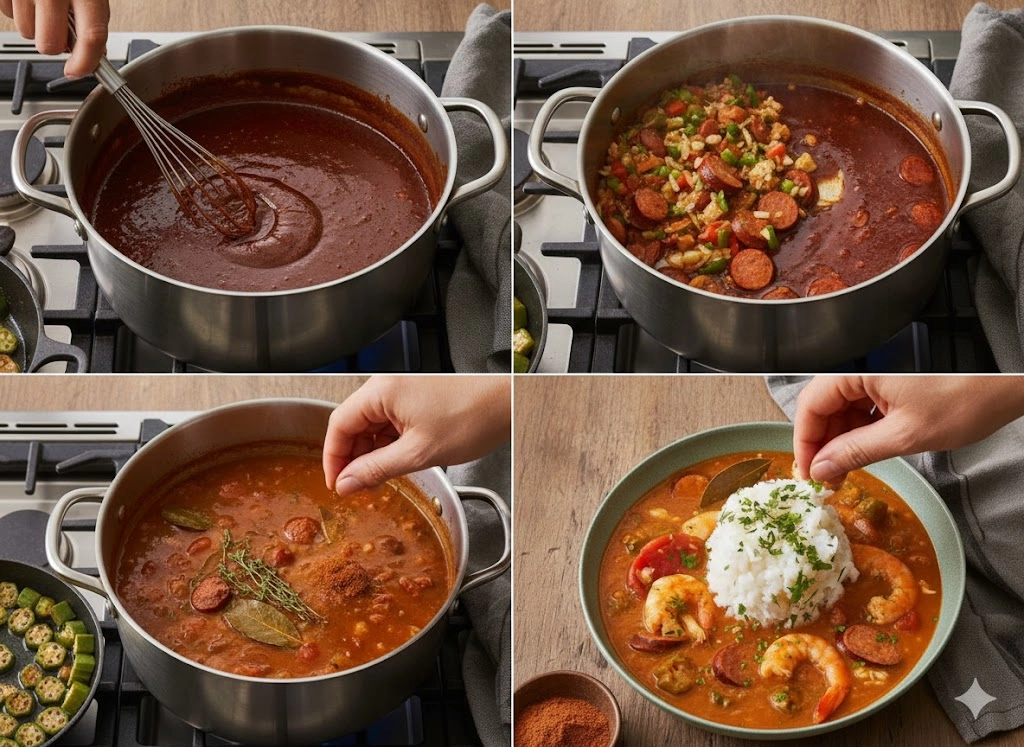
- Begin by creating the foundation of your gumbo: the roux. In a large, heavy-bottomed saucepan over medium-low heat, whisk together the flour and 3/4 cup of bacon drippings. Continue to whisk constantly for 20 to 30 minutes until the mixture reaches a rich, dark mahogany brown. If it smells burnt or shows black specks, start over. Once the color is right, remove from heat but keep whisking for a few minutes to prevent the residual heat from scorching the flour.
- Prepare your aromatics. Place the celery, onion, green bell pepper, and garlic into a food processor. Pulse the mixture until all the vegetables are very finely chopped.
- Incorporate the vegetables and the sliced andouille sausage into the warm roux. Return the pan to medium-low heat and cook, stirring frequently, for about 10 to 15 minutes until the vegetables have softened. Remove this mixture from the heat and set it aside.
- In a massive Dutch oven or a heavy soup pot, combine the 3 quarts of water and the beef bouillon cubes. Bring the liquid to a boil over medium-high heat, stirring until the cubes have completely dissolved.
- Slowly whisk the roux and vegetable mixture into the boiling bouillon water until fully incorporated.
- Reduce the heat to a steady simmer. Stir in the sugar, salt, hot sauce, Cajun seasoning, bay leaves, thyme, stewed tomatoes, and tomato sauce. Let the pot simmer uncovered over low heat for 1 hour. At the 45-minute mark of this simmer, stir in the first 2 teaspoons of file powder.
- While the main pot simmers, prepare the okra. In a separate skillet, melt 2 tablespoons of bacon drippings over medium heat. Add the thawed okra and the distilled white vinegar. Sauté for 15 minutes to reduce the “sliminess” of the okra. Use a slotted spoon to transfer the okra into the simmering gumbo pot.
- Add the lump crabmeat, peeled shrimp, and Worcestershire sauce to the pot. Continue to simmer for an additional 45 minutes to allow the seafood to cook through and the flavors to marry perfectly.
- Just before you are ready to serve, stir in the remaining 2 teaspoons of file powder. Serve the gumbo piping hot over a mound of white rice.
Massive Expansion of the Cooking Process
Understanding the “why” behind each step is what separates a good cook from a gumbo master. The most intimidating part for many is the roux. In this recipe, we use bacon drippings rather than oil or butter. Bacon fat provides an incredible smoky depth that complements the andouille sausage. When you are whisking that flour and fat together, you are looking for a color that mimics an old copper penny or a dark chocolate bar. This deep caramelization of the flour proteins provides the nutty, toasted flavor profile that defines a New Orleans stew.
The “Holy Trinity” of Creole cooking—celery, onions, and bell peppers—is processed very finely here. This allows the vegetables to almost melt into the sauce, creating a thick, cohesive body rather than a chunky soup. When you add these to the hot roux, the moisture in the vegetables deglazes the pan slightly, and the aroma that fills your kitchen will be unmistakably Southern.
The two-stage addition of file powder is a specific heritage technique. File powder, made from ground sassafras leaves, acts as both a flavoring agent and a thickener. By adding half during the simmer and half at the very end, you ensure a silky texture and a persistent earthy note that doesn’t get lost in the long cooking process.
Finally, the treatment of the okra is a “secret” step. Cooking okra in bacon drippings with a splash of vinegar is a traditional method to neutralize the mucilaginous texture (the “slime”) that many people find off-putting. The vinegar acts as an acid that breaks down those fibers before the okra ever hits the main pot, ensuring the okra adds body and flavor without making the gumbo stringy.
Unique Culinary Insights for the Perfect Pot
To elevate your New Orleans Creole Gumbo to restaurant quality, consider the temperature of your liquids. When you are whisking your hot roux into the water, it is helpful if the bouillon water is already at a rolling boil. This prevents the flour from clumping and ensures a smooth, velvety integration.
Another insight involves the “patience of the simmer.” Gumbo is famously better the next day. The long simmering times—totaling nearly three hours—allow the collagen from the seafood and the fats from the sausage to emulsify with the roux. If you have the time, make this a day in advance, let it cool, and refrigerate it. The flavors will deepen, and the spice from the hot sauce and Cajun seasoning will mellow into a complex warmth rather than a sharp bite.
Lastly, pay attention to the shrimp. We use three pounds of uncooked medium shrimp. Because shrimp can become rubbery if overcooked, adding them in the final 45-minute window with the crabmeat ensures they stay succulent while still absorbing the rich tomato and beef broth.
Accompaniments and Serving Suggestions
Tradition dictates that this gumbo must be served over a scoop of fluffy, long-grain white rice. The rice acts as a neutral canvas for the intense, savory broth. However, for a truly authentic Louisiana experience, you might consider serving a side of potato salad. Some families in the Bayou actually place a scoop of cold potato salad directly into the bowl of hot gumbo—the contrast of temperature and creaminess is a local favorite.
To round out the meal, a loaf of crusty French bread is essential. You’ll want it to soak up every last drop of the mahogany sauce. For greens, a simple side of vinegar-based coleslaw or a bright garden salad provides a refreshing acidity that cuts through the richness of the bacon fat and sausage.
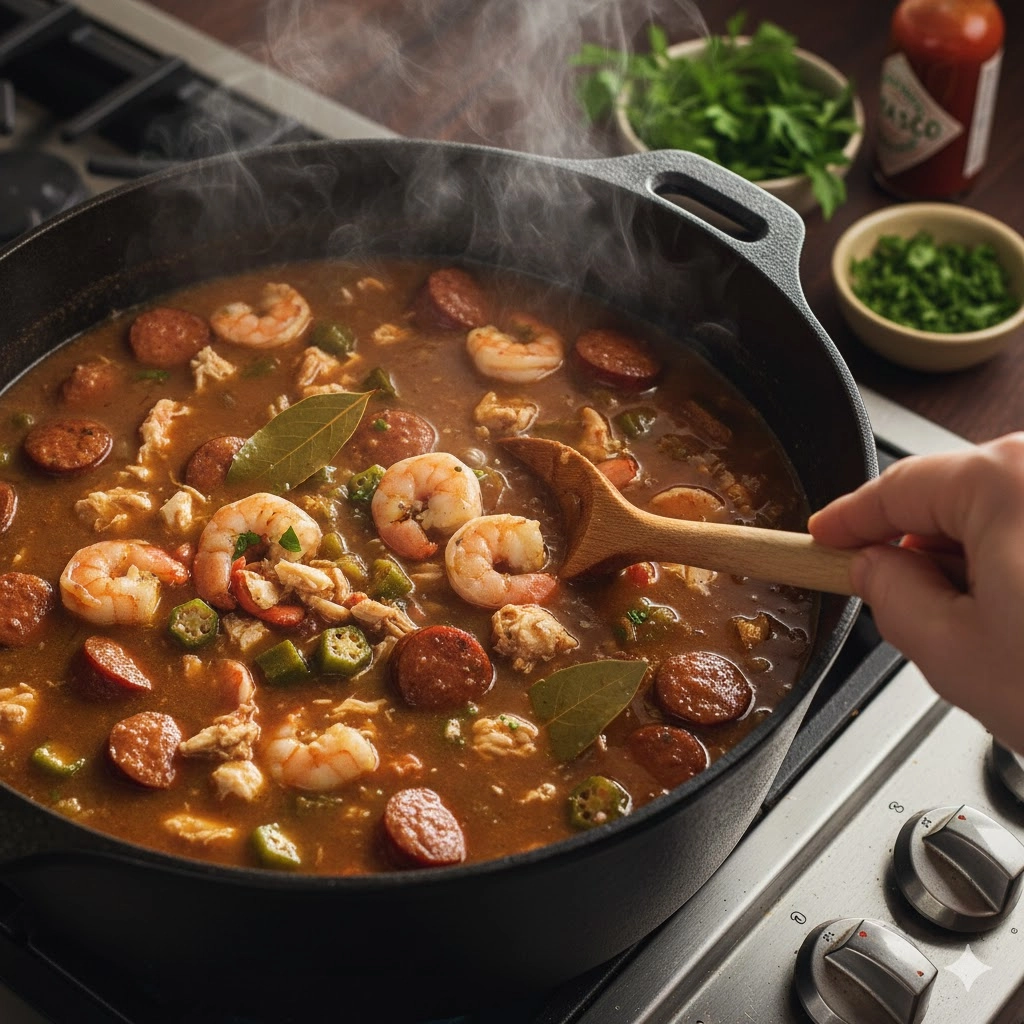
Modifications and Substitutions
While bacon drippings provide the most traditional flavor, you can substitute them with lard or a high-smoke-point oil like vegetable or canola oil if you are monitoring your intake of specific fats. If you cannot find andouille sausage, a good quality smoked kielbasa or any spicy smoked sausage will work, though you may want to add an extra pinch of Cajun seasoning to mimic the andouille’s heat.
For the seafood, if lump crabmeat is unavailable or out of your budget, you can use claw meat, which is often more affordable and has a stronger “crab” flavor that holds up well in long simmers. If you have access to fresh seafood, adding a few whole blue crabs (cleaned and halved) into the pot during the final hour adds incredible visual flair and even deeper oceanic flavor to the broth.
Deep-Dive Frequently Asked Questions
Why does my roux look like it is separating or looks grainy?
A grainy roux usually happens if the heat is too high or if the flour-to-fat ratio is off. In this recipe, we use a generous amount of bacon drippings to ensure the flour stays suspended. If it separates, it usually means the fat has reached its smoke point too quickly. Constant whisking and a low, steady flame are your best defenses against a broken roux.
Can I use fresh tomatoes instead of canned stewed tomatoes?
You certainly can, but you will need to peel and de-seed them first. The reason this recipe calls for canned stewed tomatoes and tomato sauce is for consistency and the specific sweetness that stewed tomatoes provide. Creole gumbo is distinguished from Cajun gumbo by the inclusion of tomatoes, and the canned versions provide a reliable acidity that balances the heavy fats.
What is the difference between file powder and okra as thickeners?
In this recipe, we actually use both! Historically, okra was used in the summer when it was fresh, and file powder (sassafras) was used in the winter. Combining them gives you the best of both worlds: the structural body of the okra and the unique, woodsy flavor of the file. Just remember not to boil the gumbo vigorously after adding the final dose of file, as it can occasionally become stringy if overheated.
Nutrient Profile and Details
This recipe yields a hearty, protein-rich meal that is satisfying and filling.
| Nutrient | Amount Per Serving |
| Calories | 283 |
| Total Fat | 17 grams |
| Carbohydrates | 12 grams |
| Protein | 21 grams |
| Cholesterol | 125 milligrams |
| Sodium | 980 milligrams |
Disclaimer
Please note that nutritional values are estimates based on standard ingredient measurements. Actual nutritional content may vary depending on the specific brands of sausage, bacon drippings, and seafood used. Always consult with a healthcare professional for specific dietary needs.
A Final Note on This Coastal Classic
Bringing a pot of this Good New Orleans Creole Gumbo to the table is more than just serving dinner; it is sharing a piece of culinary history. The layers of flavor—from the smoky bacon and spicy andouille to the sweet crab and earthy file—create an experience that lingers long after the meal is over. It takes time, yes, but the reward is a dish that tastes of tradition, family, and the vibrant spirit of the Crescent City. Once you master this roux, you’ll find yourself coming back to this recipe year after year.
PrintThe Ultimate Authentic New Orleans Creole Gumbo Recipe

An authentic New Orleans Creole gumbo featuring a dark mahogany roux, andouille sausage, fresh seafood, and the traditional holy trinity of vegetables. This multi-generational recipe is the ultimate taste of Louisiana soul food.
- Prep Time: 60 minutes
- Cook Time: 160 minutes
- Total Time: 220 minutes
- Yield: 20 servings 1x
- Category: Main Dish
- Method: Stovetop
- Cuisine: Creole
Ingredients
1 cup all-purpose flour
3/4 cup bacon drippings
1 cup coarsely chopped celery
1 large onion, coarsely chopped
1 large green bell pepper, coarsely chopped
2 cloves garlic, minced
1 pound andouille sausage, sliced
3 quarts water
6 cubes beef bouillon
1 tablespoon white sugar
salt to taste
2 tablespoons hot pepper sauce
1/2 teaspoon Cajun seasoning blend
4 bay leaves
1/2 teaspoon dried thyme leaves
1 (14.5 ounce) can stewed tomatoes
1 (6 ounce) can tomato sauce
4 teaspoons file powder, divided
2 tablespoons bacon drippings
2 (10 ounce) packages frozen cut okra, thawed
2 tablespoons distilled white vinegar
1 pound lump crabmeat
3 pounds uncooked medium shrimp, peeled and deveined
2 tablespoons Worcestershire sauce
Instructions
1. Make the roux by whisking flour and 3/4 cup bacon drippings over medium-low heat until mahogany brown.
2. Pulse celery, onion, bell pepper, and garlic in a food processor until finely chopped.
3. Stir vegetables and sausage into the roux and cook for 10 to 15 minutes.
4. Boil water and bouillon cubes in a Dutch oven, then whisk in the roux mixture.
5. Add seasonings, sugar, and tomatoes. Simmer for 1 hour, adding 2 teaspoons file powder at 45 minutes.
6. Sauté okra in bacon drippings and vinegar for 15 minutes, then add to the gumbo.
7. Mix in crabmeat, shrimp, and Worcestershire sauce. Simmer for 45 more minutes.
8. Stir in remaining file powder and serve.
Notes
Do not leave the roux unattended; it can burn in seconds.
Serve over fluffy white rice or with a side of potato salad.
Gumbo tastes even better the next day after flavors have fully married.
Nutrition
- Serving Size: 1 bowl
- Calories: 283
- Sugar: 3g
- Sodium: 980mg
- Fat: 17g
- Saturated Fat: 6g
- Unsaturated Fat: 9g
- Trans Fat: 0g
- Carbohydrates: 12g
- Fiber: 2g
- Protein: 21g
- Cholesterol: 125mg