
Capturing the essence of a cozy morning at a coffee shop, these Gingerbread Latte Cookies offer a sophisticated twist on a nostalgic holiday favorite. These treats combine the deep, earthy warmth of molasses and traditional spices with the bold, wake-up call of espresso, all finished with a velvety white chocolate dip. Unlike a standard ginger snap, these cookies prioritize a chewy, substantial texture thanks to a specific preparation of oats that mimics the heartiness of a classic oatmeal cookie. They are an ideal choice for holiday dessert platters or as a thoughtful homemade gift for the coffee lover in your life.
Whether you are hosting a festive gathering or simply want a sweet companion for your afternoon tea, these cookies deliver a layered flavor profile that feels far more complex than the simple preparation suggests. By balancing the bite of ginger with the creaminess of cocoa butter-based white chocolate, you achieve a dessert that is both comforting and elevated.
Table of Contents
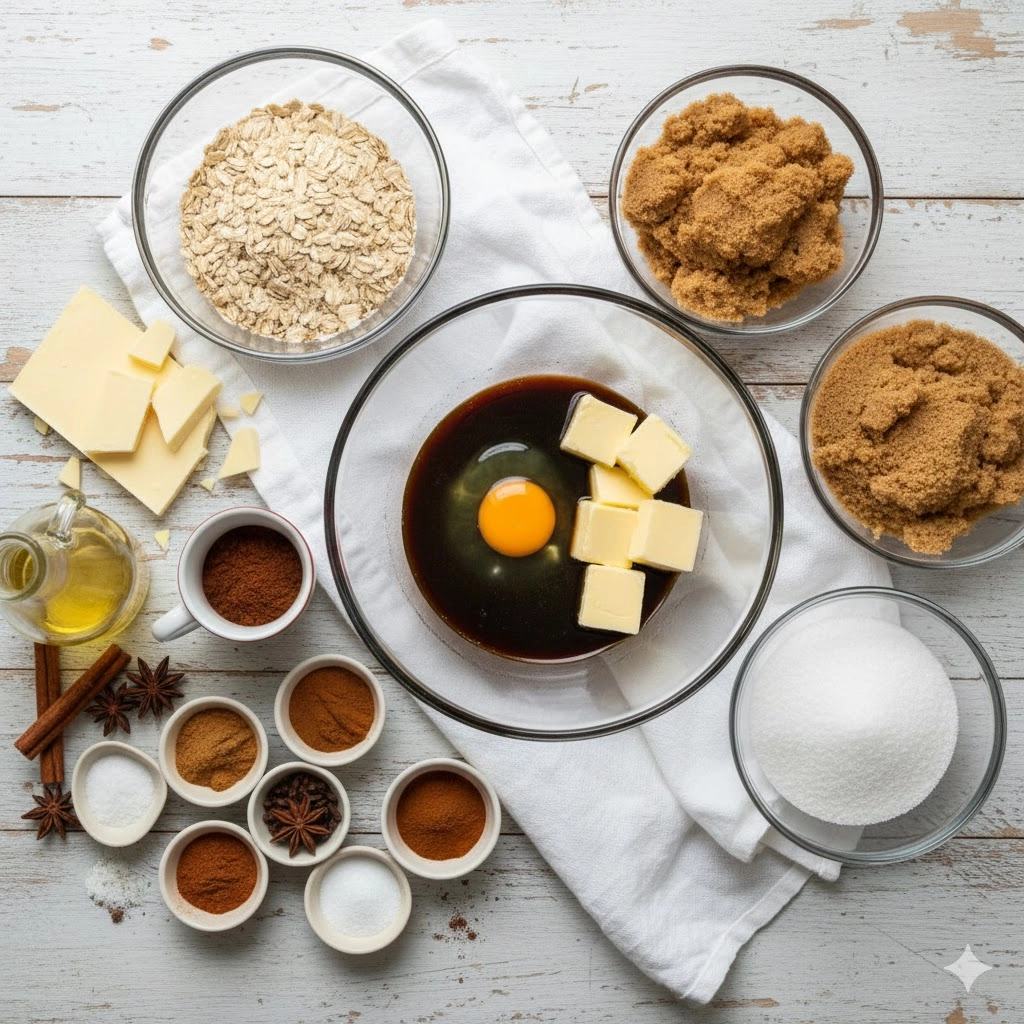
Ingredients for the Cookies
The Base Components
- 2 cups (170 grams) old-fashioned whole rolled oats
- 1 and 2/3 cups (210 grams) all-purpose flour
- 3/4 cup (170 grams) unsalted butter, softened to room temperature
- 1 cup (200 grams) packed brown sugar (light or dark)
- 1/4 cup (50 grams) granulated white sugar
The Flavor Makers
- 1/4 cup (60 milliliters) unsulphured dark molasses
- 1 large egg, room temperature
- 2 teaspoons espresso powder
- 1 teaspoon ground ginger
- 1 teaspoon ground cinnamon
- 1/4 teaspoon ground nutmeg
- 1/8 teaspoon ground cloves
- 1 teaspoon baking soda
- 1/4 teaspoon salt
Ingredients for the Espresso White Chocolate Dip
- 8 ounces (226 grams) high-quality white chocolate, finely chopped
- 1 teaspoon vegetable oil or coconut oil
- 1/2 teaspoon espresso powder
- A pinch each of cinnamon and nutmeg for dusting
Preparation Instructions
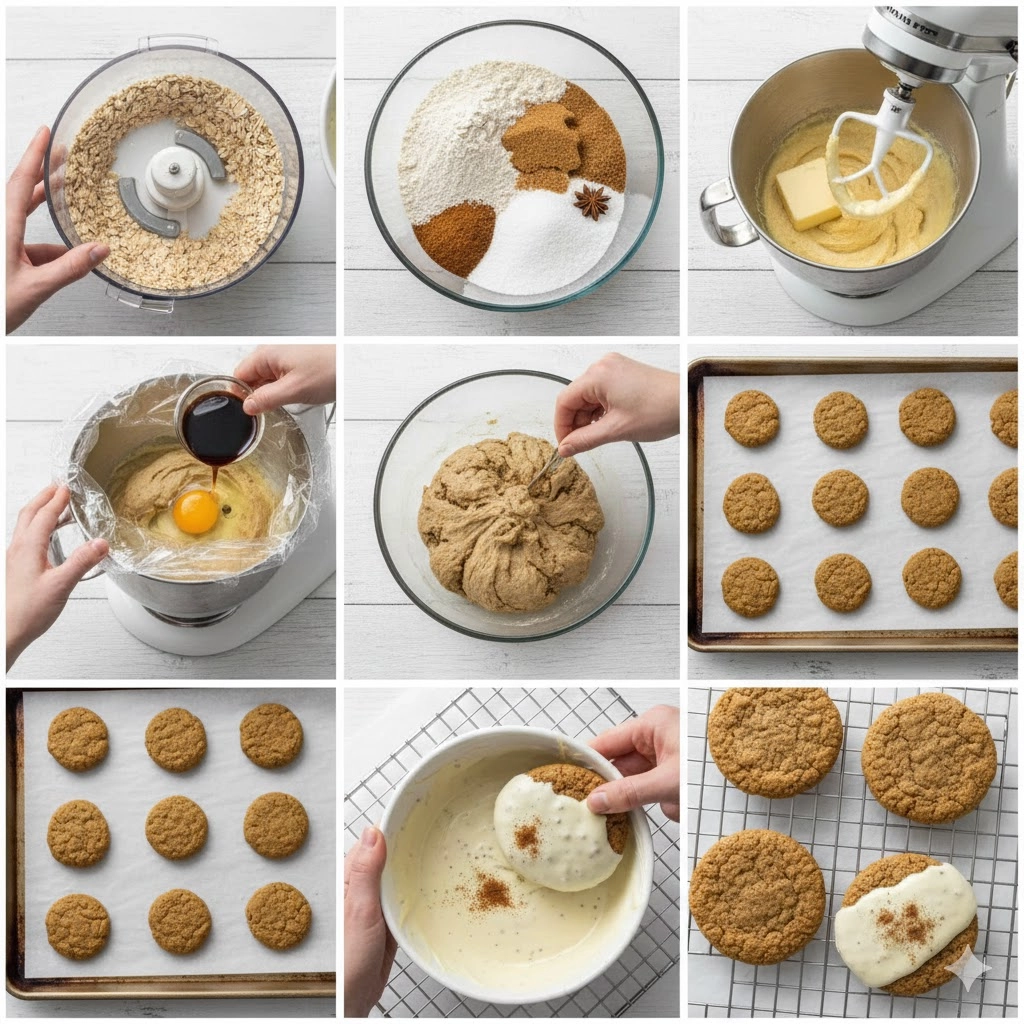
- Process the oats in a food processor or blender using short pulses until they reach a coarse, sandy consistency with some larger bits remaining.
- In a medium-sized bowl, whisk the processed oats with the flour, espresso powder, baking soda, salt, and all four spices until perfectly incorporated.
- Using a stand mixer or hand mixer, cream the softened butter with both sugars on medium-high speed for three minutes until the mixture is light and aerated.
- Incorporate the egg and molasses into the butter mixture, beating on high for sixty seconds until the batter is smooth and dark.
- Set the mixer to low and gradually add the dry ingredients to the wet, mixing just until no streaks of flour remain; the dough will be quite tacky.
- Cover the bowl and refrigerate the dough for at least thirty to forty-five minutes to allow the oats to hydrate and the fats to firm up.
- Preheat your oven to three hundred fifty Fahrenheit and line two large baking sheets with parchment paper.
- Portion the dough into rounded tablespoons (about thirty-five grams each) and space them three inches apart on the sheets.
- Bake for twelve to thirteen minutes until the edges are set and lightly golden, though the centers should still appear soft.
- Cool on the pan for ten minutes before moving to a wire rack to cool completely.
- Melt the white chocolate, oil, and espresso powder together in twenty-second intervals in the microwave, stirring until glossy.
- Submerge half of each cooled cookie into the chocolate, sprinkle with a dash of spices, and let set on parchment paper.
Step-by-Step Details and Culinary Cues
Refining the Texture
The most critical step in this recipe is the treatment of the oats. We are not looking for a fine flour, nor do we want whole flakes that create a crumbly mess. By pulsing them roughly ten times, you create a “medley” of textures. This variety allows the cookie to remain compact and ultra-chewy. When you mix the dough, you will notice it is remarkably thick—this is a good sign, as it prevents the cookies from spreading too thin in the oven.
Managing the Chill
Do not skip the refrigeration period. Because of the molasses and the sugar ratio, this dough is naturally sticky. Chilling the dough for forty-five minutes ensures that the cookies puff slightly and then “crinkle” as they cool, which is the hallmark of a professional-grade molasses cookie. If you leave the dough in the fridge overnight, let it sit on the counter for thirty minutes before scooping, or it will be too hard to portion.
The Dipping Process
When melting the white chocolate, heat is your enemy. White chocolate has a lower scorching point than dark chocolate. Use a glass bowl and stir vigorously between every heat burst. The addition of a small amount of oil is a professional baker’s secret; it thins the chocolate just enough to create a clean, thin coating rather than a thick, clumpy shell. When you dip the Gingerbread Latte Cookies, ensure they are entirely cold to the touch, or the chocolate will slide right off.
Expert Baking Tips
- Select the Right Espresso: Use a true espresso powder rather than ground coffee beans. Espresso powder is dehydrated brewed coffee that dissolves instantly, providing a smooth flavor without a gritty texture.
- Avoid Blackstrap: Ensure your molasses is “unsulphured” or “dark.” Blackstrap molasses is too bitter and salty for this delicate balance of coffee and cream.
- Measure by Weight: For the most consistent results, use a kitchen scale to measure the flour and oats. Flour is easily packed down in measuring cups, leading to dry, tough cookies.
- Room Temperature Ingredients: Ensure your egg is not cold from the fridge. A cold egg can cause the creamed butter to seize, resulting in an uneven bake.
- The Chocolate Quality: Use bar chocolate found in the baking aisle rather than chocolate chips. Bars contain more cocoa butter and fewer stabilizers, allowing for a much smoother melt.
Recipe Variations
- The Mocha Twist: Replace the white chocolate dip with a high-quality semi-sweet chocolate dip for a deeper, more cocoa-forward “Mocha” experience.
- Nutty Crunch: Add half a cup of finely chopped toasted pecans to the dough during the final mixing stage for added texture.
- Dairy-Free Option: Substitute the butter with a high-fat vegan buttery stick and use a dairy-free white chocolate alternative for the coating.
- The Double Espresso: If you prefer a very strong coffee flavor, increase the espresso powder in the dough to one tablespoon.

Suggested Pairings
These cookies are substantial enough to stand on their own, but they pair beautifully with a warm cup of steamed milk or a flat white. For a festive dessert board, arrange them alongside tart cranberry bars or dark chocolate truffles to provide a flavor contrast. They also make an excellent “sandwich” base; try pressing a scoop of vanilla bean or coffee-flavored ice cream between two undipped cookies for a sophisticated ice cream sandwich.
Frequently Asked Questions
Can I use quick oats instead of old-fashioned oats?
Yes, you can use quick-cooking oats if that is what you have on hand. However, you should still pulse them a few times in the processor to ensure the texture is uniform and the cookies remain chewy rather than crumbly.
How do I store these cookies to keep them soft?
Store the finished cookies in an airtight container at room temperature for up to three days. For longer storage, keep them in the refrigerator for up to one week; the cool temperature helps the white chocolate remain crisp while the cookie stays moist.
My white chocolate is seizing and turning lumpy. What happened?
White chocolate is very sensitive to moisture and heat. Ensure your bowl and spatula are completely dry, as even a drop of water can cause the chocolate to seize. If it gets too hot, it will also clump; if this happens, try stirring in another teaspoon of room-temperature oil to see if it smooths out.
Can I freeze the dough for later?
Absolutely. You can roll the dough into balls and freeze them on a tray before transferring them to a zip-top bag. When you are ready to bake, simply add one to two minutes to the total baking time; there is no need to thaw the dough first.
Nutrition Information
| Nutrient | Amount per Serving |
| Calories | 195 kcal |
| Protein | 3 g |
| Carbs | 28 g |
| Fat | 9 g |
| Fiber | 1 g |
| Sugar | 16 g |
| Sodium | 110 mg |
Disclaimer
Nutrition information is an estimate and may vary based on preparation and ingredients used.
PrintGingerbread Latte Cookies

These Gingerbread Latte Cookies combine warm holiday spices with bold espresso and a creamy white chocolate dip for the ultimate seasonal treat. They are soft, chewy, and inspired by your favorite coffeehouse beverage.
- Prep Time: 45 mins
- Cook Time: 15 mins
- Total Time: 1 hour 30 mins
- Yield: 24 cookies 1x
- Category: Dessert
- Method: Baking
- Cuisine: American
- Diet: Vegetarian
Ingredients
2 cups old-fashioned whole rolled oats
1 and 2/3 cups all-purpose flour
3/4 cup unsalted butter, softened
1 cup brown sugar
1/4 cup granulated sugar
1/4 cup dark molasses
1 large egg
2 teaspoons espresso powder
1 teaspoon ground ginger
1 teaspoon ground cinnamon
1/4 teaspoon ground nutmeg
1/8 teaspoon ground cloves
1 teaspoon baking soda
1/4 teaspoon salt
8 ounces white chocolate, chopped
1 teaspoon vegetable oil
Instructions
1. Pulse oats in a food processor until coarsely ground.
2. In a medium bowl, whisk the processed oats with flour, espresso powder, baking soda, salt, and spices.
3. Cream softened butter with both sugars on medium-high speed for 3 minutes.
4. Add the egg and molasses; beat on high for 60 seconds until smooth.
5. Add dry ingredients to wet on low speed until just combined.
6. Chill the dough in the refrigerator for 45 minutes.
7. Preheat oven to 350 Fahrenheit and line baking sheets with parchment.
8. Scoop 1.5 tablespoon sized balls and space 3 inches apart.
9. Bake for 12 to 13 minutes until edges are set but centers are soft.
10. Cool completely on a wire rack.
11. Melt white chocolate with oil and espresso powder in 20-second bursts.
12. Dip half of each cookie into the chocolate and sprinkle with a pinch of cinnamon and nutmeg.
Notes
Use high-quality bar chocolate for dipping rather than chips.
Do not use blackstrap molasses as it is too bitter.
Pulse the oats—don’t turn them into fine flour; texture is key.
Store in an airtight container for up to 1 week.
Nutrition
- Serving Size: 1 cookie
- Calories: 195
- Sugar: 16g
- Sodium: 110mg
- Fat: 9g
- Saturated Fat: 5g
- Unsaturated Fat: 4g
- Trans Fat: 0g
- Carbohydrates: 28g
- Fiber: 1g
- Protein: 3g
- Cholesterol: 25mg